


What Is a Sales Engagement Platform? A 2026 Guide for Sales Teams
Modern sales teams are often caught in a whirlwind of activity. They juggle leads in a CRM, send emails from one app, make calls from another, and try to track social media interactions separately. This fragmented approach leads to missed follow-ups, inconsistent messaging, and a frustrating lack of insight into what actually works. This guide explains what a sales engagement platform is, how it solves these problems by unifying the sales workflow, and why it has become an essential part of the modern sales technology stack.
- In a Nutshell
- What Is a Sales Engagement Platform, Really?
- How Sales Engagement Software Works: From Contact to Close
- Integration with Your CRM
- Building Multi-Channel Sequences (Cadences)
- Executing the Workflow
- Capturing Data and Analytics
- Core Features and Benefits of Sales Engagement Tools
- Multi-Channel Sequencing & Automation
- Email Tracking and Templates
- AI-Powered Insights and Personalisation
- Sales Dialer and Call Analytics
- Robust Analytics and Reporting
- Seamless CRM Integration
- Top Sales Engagement Platforms for 2026
- How to Choose the Right Sales Engagement Platform
- Assess Your Team's Needs and Size
- Evaluate CRM Integration
- Consider the Channels You Use
- Analyse Reporting and Analytics Capabilities
- Look at Ease of Use and Onboarding
- Compare Pricing and Scalability
- Understanding Pricing and Cost Structures
- The Pros and Cons of Using a Sales Engagement Platform
- Frequently Asked Questions (FAQ)
- What is an example of an engagement platform?
- What is the difference between CRM and sales engagement platform?
- Is Salesforce a sales engagement platform?
- What is the 3-3-3 rule in sales?
- Final Thoughts: Is a Sales Engagement Platform Right for You?
Sales engagement software acts as a command centre for sales representatives. It sits between the CRM (the system of record) and the various communication channels (email, phone, social media), creating a streamlined, data-driven process for interacting with prospects. By automating repetitive tasks and providing clear guidance on the next best action, these platforms empower sales teams to work smarter, not just harder.
In a Nutshell
- Core Definition: A sales engagement platform (SEP) is a software layer that sits on top of your CRM to automate, track, and analyse sales outreach across multiple channels like email, phone, and social media.
- Primary Function: It helps sales representatives execute their sales process more efficiently and effectively, ensuring no lead falls through the cracks and every interaction is logged.
- Key Benefit: SEPs provide deep analytics on which messaging, sequences, and channels perform best, enabling data-driven coaching and strategy optimisation to close more deals.
- CRM vs. SEP: A sales engagement platform is not a replacement for a CRM. It enhances it by focusing on the execution of sales activities, while the CRM remains the central database for customer information.
What Is a Sales Engagement Platform, Really?
A sales engagement platform is a system designed to help sales teams connect with prospects and customers in a more structured and effective way. Think of it this way: if your Customer Relationship Management (CRM) system is your address book and filing cabinet, the sales engagement platform is the intelligent personal assistant who makes the calls, sends the emails, schedules the meetings, and takes detailed notes on every conversation.
The core problem these platforms solve is the persistent gap between sales strategy and sales execution. A CRM holds valuable data about who to contact, but it doesn't actively help a sales rep decide how or when to contact them for the best results. A rep might know they need to follow up with 50 leads today, but the process of finding each contact, writing personalised emails, making calls, and logging every activity is incredibly time-consuming and prone to human error.
This is where sales engagement software steps in. It organises a rep's daily workflow into a clear, manageable set of tasks. It automates manual work, such as sending follow-up emails and logging calls, freeing up reps to focus on what they do best: building relationships and having meaningful conversations with potential customers.
How Sales Engagement Software Works: From Contact to Close
Sales engagement platforms create a systematic workflow that guides reps through their day. They integrate key tools and data sources into a single interface, transforming a chaotic process into an organised and measurable one. Here’s a breakdown of how it typically works.
Integration with Your CRM
The process begins by connecting the sales engagement platform to your existing CRM. This creates a two-way sync, ensuring that all contact data, lead information, and account details are consistent across both systems. When a rep adds a new prospect to a sequence in the SEP, that activity is automatically logged back to the contact's record in a CRM like HubSpot CRM or Zoho CRM.
This seamless integration eliminates the need for manual data entry, which is a major source of administrative burden for sales reps. It guarantees that the CRM remains the single source of truth for all customer interactions, providing managers with a complete picture of team activity.
Building Multi-Channel Sequences (Cadences)
Once connected, sales managers or reps can build “sequences” or “cadences.” These are pre-defined series of touchpoints that guide a rep’s outreach to a prospect over a period of days or weeks. A sequence isn't just a series of automated emails; it's a multi-channel strategy.
A typical sequence might look like this:
Day 1: Send a personalised email. * Day 3: Make a phone call. If no answer, leave a voicemail and send a follow-up email. * Day 5: Connect with the prospect on LinkedIn and send a message.
Day 7: Send another email with a valuable resource, like a case study.
These sequences can include a mix of automated steps (like sending an email) and manual tasks (like making a call or personalising a LinkedIn request). This blend of automation and human touch ensures efficiency without sacrificing personalisation.
Executing the Workflow
For the sales rep, the platform provides a “single pane of glass” to work from. Instead of jumping between their inbox, CRM, dialer, and LinkedIn, the rep gets a prioritised task list for the day directly within the SEP. The platform tells them exactly who to call, who to email, and which manual tasks to complete next.
When a rep clicks “start call,” the platform’s built-in dialer makes the call and records it. When they send an email, they can use proven templates with personalisation fields that pull data directly from the CRM. This guided workflow ensures that every rep follows the company's best practices and that no lead is forgotten.
Capturing Data and Analytics
Perhaps the most powerful aspect of a sales engagement platform is its ability to capture and analyse data from every single interaction. Every email open, click, and reply is tracked. Every call is logged, timed, and can be recorded for coaching purposes. This data is then compiled into easy-to-understand dashboards and reports.
Managers can see which email templates get the highest reply rates, which call scripts lead to the most meetings booked, and which sequences are most effective at converting leads. This allows for continuous optimisation of the sales process and provides concrete data for coaching reps on what works and what doesn't.


Core Features and Benefits of Sales Engagement Tools
While different platforms offer unique features, a core set of capabilities defines what sales engagement tools do. Understanding these features is key to grasping the value they bring to a sales organisation.
Multi-Channel Sequencing & Automation
This is the heart of any SEP. It allows you to build automated and semi-automated outreach cadences across email, phone, and social media (primarily LinkedIn). The primary benefit is a massive boost in efficiency and consistency. It ensures every prospect receives the right amount of follow-up at the right time, preventing leads from going cold due to neglect.
Email Tracking and Templates
SEPs provide detailed tracking for every email sent, including open rates, click-through rates, and reply rates. Reps can save their most effective messages as templates for the whole team to use, ensuring consistent and high-quality communication. This feature saves countless hours of repetitive writing and provides clear data on which messages resonate with prospects.
AI-Powered Insights and Personalisation
Modern platforms use artificial intelligence to enhance outreach. AI can analyse email content and suggest improvements to tone, clarity, and length. It can also identify the best time to send an email to a specific prospect based on their past activity. This leads to more effective messaging and significantly higher reply rates, helping reps personalise their communication at scale.
Sales Dialer and Call Analytics
An integrated sales dialer allows reps to make calls directly from the platform with a single click. These systems often include features like local presence dialing (showing a local number to increase answer rates), call recording, and transcription. The analytics provide insights into call volume, connection rates, and conversation duration, which are invaluable for coaching and performance management.
Pro Tip: Use call recording and AI-powered conversation intelligence to identify keywords and phrases used by top-performing reps. You can then build coaching programmes and sales playbooks around this data to elevate the performance of the entire team.
Robust Analytics and Reporting
Sales engagement software provides granular analytics that go far beyond what a CRM typically offers. You can A/B test different email subject lines, compare the performance of different sequences, and track individual and team performance against key metrics. This data-driven approach allows sales leaders to make informed decisions to optimise their strategy and forecast revenue more accurately.
Seamless CRM Integration
As mentioned, deep integration with your CRM is non-negotiable. A good SEP automatically logs all activities—emails sent, calls made, meetings booked—to the correct contact or lead record in the CRM. This keeps the CRM clean and up-to-date, eliminates administrative work for reps, and gives leadership a 360-degree view of all sales activities.
Top Sales Engagement Platforms for 2026
The market for sales engagement software is competitive, with several excellent options available. The best choice depends on your team's size, budget, and specific needs. Here are some of the top platforms to consider.
1. Outreach
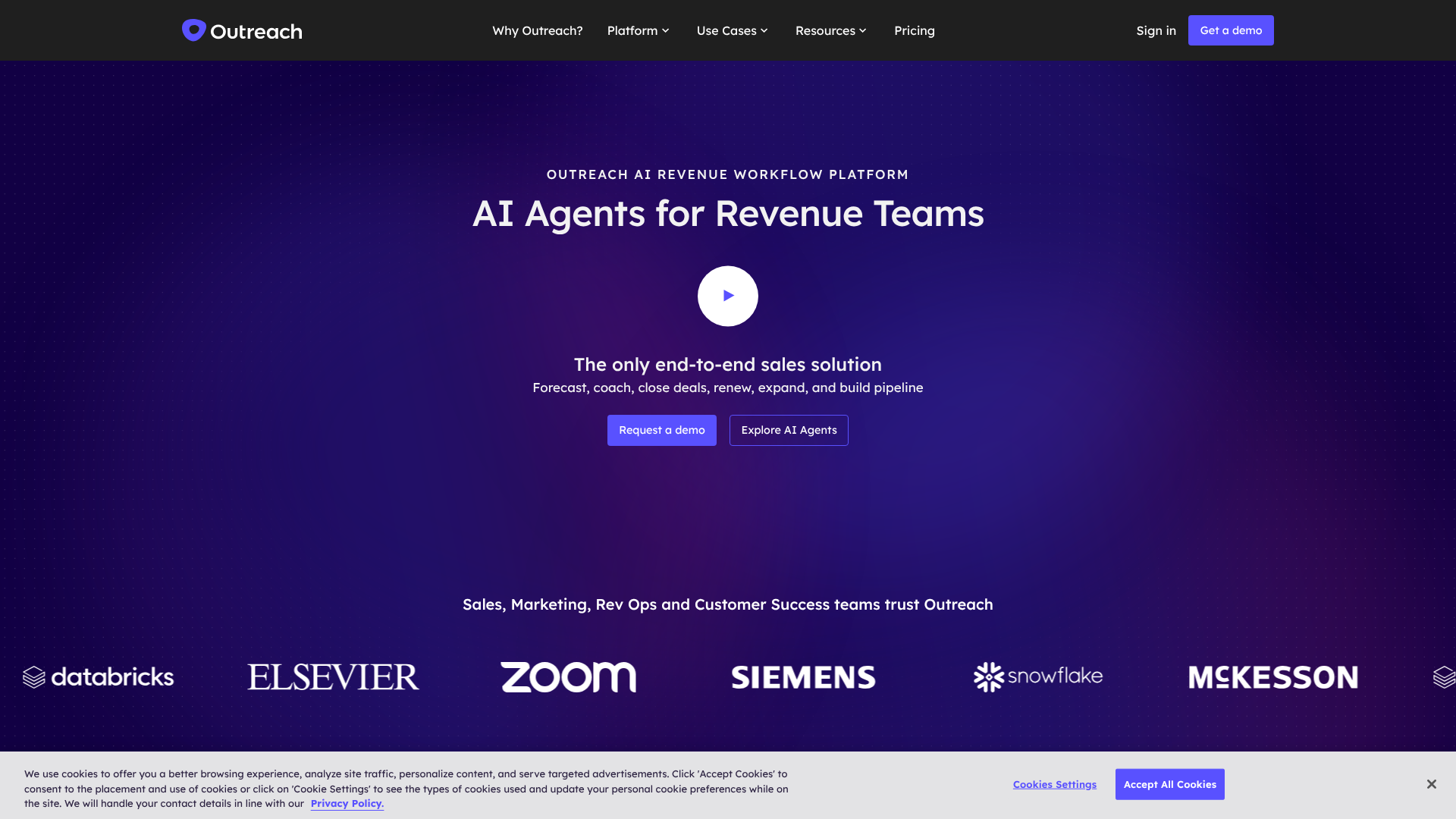
Outreach is widely regarded as the market leader, particularly for enterprise and large mid-market companies. It offers a comprehensive suite of tools designed to manage the entire sales cycle, from prospecting to closing and expansion. Its powerful AI, named Kaia, provides real-time assistance during sales calls.
- Pros: Extremely powerful and feature-rich, deep analytics and reporting, excellent for managing complex sales processes, strong AI capabilities for conversation intelligence.
- Cons: Can be one of the more expensive options, the extensive feature set might be overwhelming for smaller teams with simpler needs.
- Best for: Enterprise and fast-growing mid-market companies that require a robust, all-in-one platform to standardise their sales process at scale.
2. Reply.io
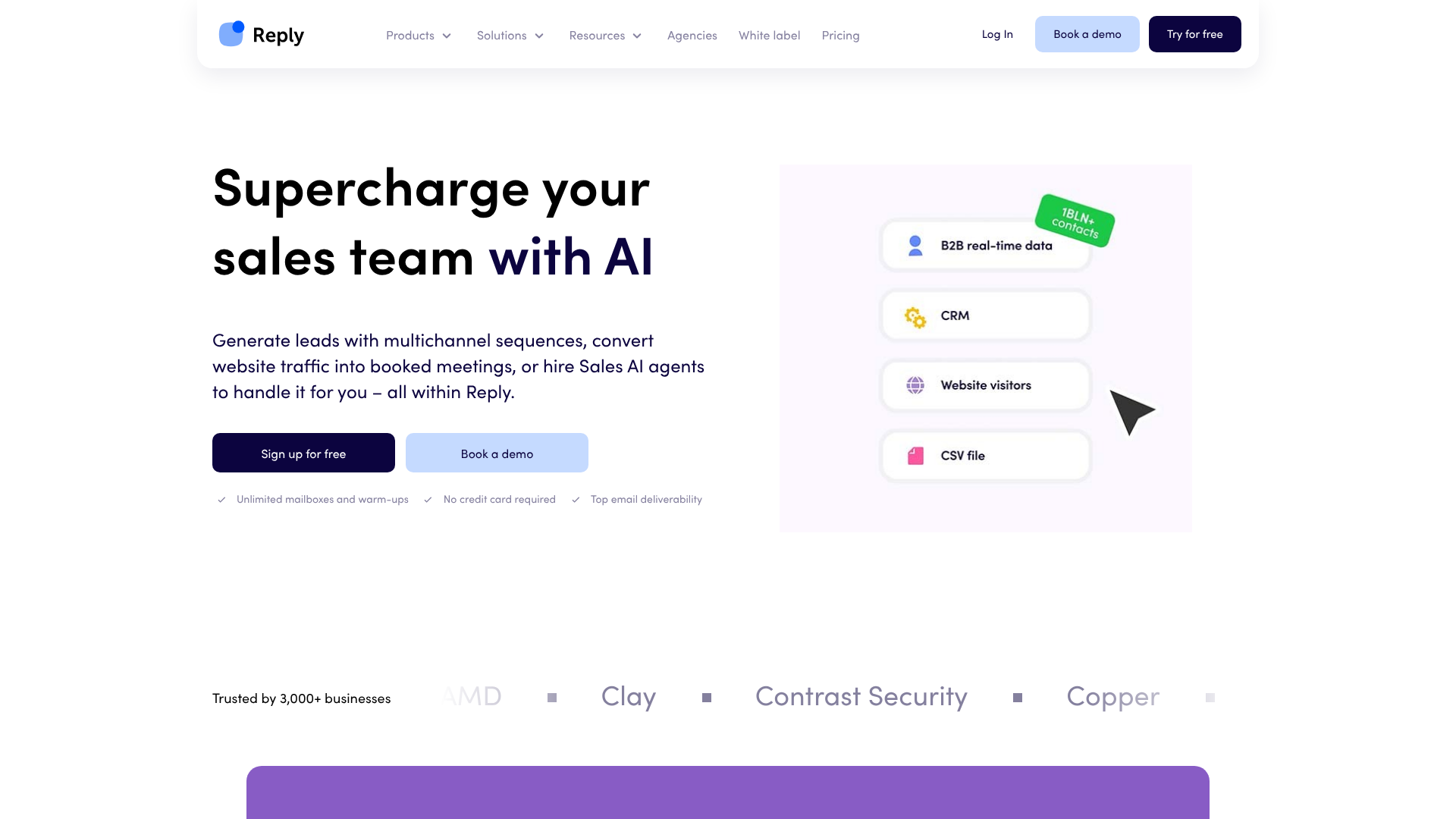
Reply.io is a versatile multi-channel sales engagement platform that excels at automating outreach across email, phone, LinkedIn, and even WhatsApp. It includes a B2B contact database and an AI-powered email assistant to help reps craft effective messages quickly. It strikes a great balance between powerful features and ease of use.
- Pros: Strong multi-channel capabilities, includes a data enrichment feature to find contact information, AI assistance for writing emails, offers good value for its feature set.
- Cons: The user interface can take some time to master for new users, especially when setting up complex sequences.
- Best for: Small to medium-sized businesses (SMBs) and sales teams looking to scale their outbound and inbound engagement with a powerful, AI-driven tool.
3. Apollo.io
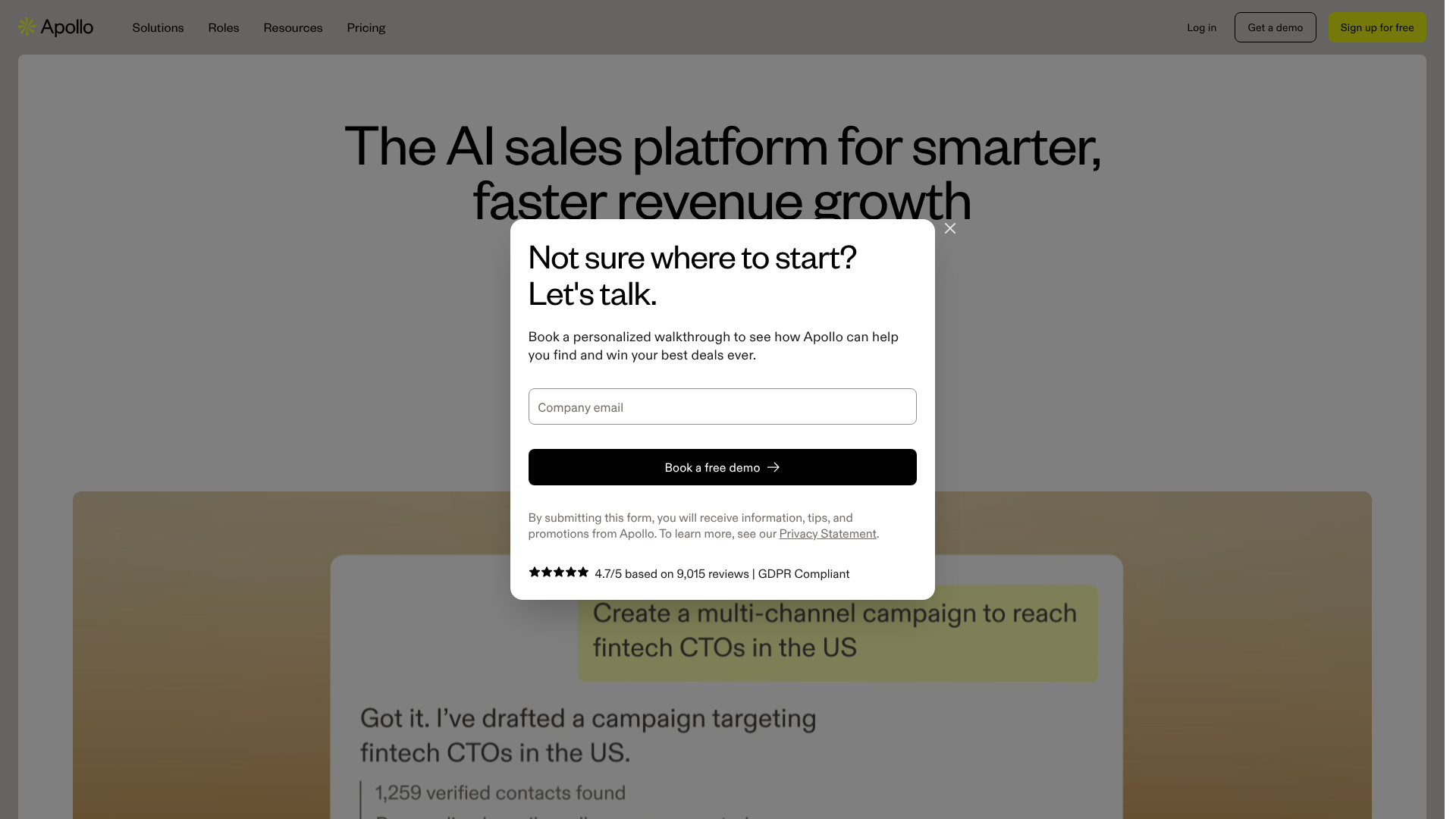
Apollo.io is unique because it combines a massive B2B contact database with a full-featured sales engagement platform. This all-in-one approach allows teams to find prospects and engage with them using a single tool, which can be very cost-effective. Its database contains over 275 million contacts.
- Pros: Combines lead generation and sales engagement in one platform, very cost-effective compared to buying data and an SEP separately, easy to use.
- Cons: While the engagement features are solid, they may not be as deep or customisable as dedicated platforms like Outreach. Data accuracy can occasionally be a concern, as with any large database.
- Best for: Startups and sales teams who need both a reliable source of lead data and a powerful outreach tool without breaking the bank.
Other Notable Sales Engagement Tools
Beyond these three, other strong contenders include Instantly.ai, which is highly regarded for its email warm-up and deliverability features, making it great for high-volume cold email campaigns. Hunter Campaigns, part of the popular Hunter.io suite, offers a simple and effective solution for teams focused primarily on email outreach.
How to Choose the Right Sales Engagement Platform
Selecting the right sales engagement software is a critical decision that can have a major impact on your team's performance. Instead of just picking the most popular option, take a systematic approach to find the best fit for your unique needs.
Assess Your Team's Needs and Size
A small startup with five sales reps has very different needs from an enterprise organisation with 500. Smaller teams might prioritise ease of use and an all-in-one solution like Apollo.io. Larger teams will likely need the advanced analytics, role-based permissions, and governance features found in platforms like Outreach.
Evaluate CRM Integration
Your sales engagement platform must have a deep and reliable integration with your CRM. Check if the platform offers a native, bi-directional sync with your specific CRM (e.g., Salesforce, HubSpot, Zoho). A poor integration will lead to data silos and manual work, defeating one of the primary purposes of the tool.
Consider the Channels You Use
Does your team rely heavily on cold calling? If so, look for a platform with a robust, integrated sales dialer and call analytics. Is LinkedIn a key channel for your outreach? Ensure the platform has strong LinkedIn integration and automation features. Don't pay for features you won't use.
Analyse Reporting and Analytics Capabilities
What do you need to measure? Define your key performance indicators (KPIs) before you start looking at platforms. Make sure the software you choose can track and report on the metrics that matter most to your business, whether that's meetings booked, reply rates, or pipeline generated.
Look at Ease of Use and Onboarding
A powerful tool is useless if your team doesn't adopt it. Look for a platform with an intuitive user interface and a straightforward onboarding process. Consider asking for a team demo or a trial period to let your reps get a feel for the software before you commit.
Pro Tip: During the evaluation process, involve at least one or two of your sales reps. They are the end-users and will often spot usability issues or workflow challenges that a manager might overlook. Their buy-in is crucial for successful adoption.
Compare Pricing and Scalability
Understand the pricing model—is it a flat monthly fee, a per-user cost, or a usage-based model? Consider any additional costs for onboarding, implementation, or premium support. Choose a platform that not only fits your current budget but can also scale with your team as you grow.
Understanding Pricing and Cost Structures
Pricing for sales engagement platforms can vary significantly, so it's important to understand the different models. Most platforms charge on a per-user, per-month basis, often with discounts for annual billing. The price per user typically depends on the feature tier you select.
- Basic Tiers: These are best for small teams or individuals and usually include core email sequencing and tracking features. They may have limits on the number of active contacts or emails you can send.
- Pro/Business Tiers: This is the most common choice for growing sales teams. These tiers unlock multi-channel capabilities (like a sales dialer and LinkedIn integration), advanced automation, A/B testing, and more detailed analytics.
- Enterprise Tiers: Designed for large organisations, these plans offer advanced features like conversation intelligence, predictive analytics, granular security controls, and dedicated support. Pricing is almost always quote-based.
Here is a general overview of the pricing structures for our top recommendations:
| Platform | Typical Pricing Model | Best For |
|---|---|---|
| Outreach | Per User/Year (Custom Quote) | Enterprise & Large Teams |
| Reply.io | Per User/Month (Tiered Plans) | SMBs & Mid-Market |
| Apollo.io | Per User/Month (Tiered, includes data credits) | Startups & All-in-One Seekers |
Always remember to visit the platform's official website for the most current pricing information, as plans and features can change. Be sure to ask about any one-time setup or implementation fees, especially for enterprise-level platforms.
The Pros and Cons of Using a Sales Engagement Platform
While sales engagement tools offer tremendous benefits, it's also important to be aware of the potential challenges. A balanced view will help you make an informed decision and implement the software successfully.
The Advantages (Pros)
- Massive Productivity Increase: By automating repetitive tasks, SEPs can give each rep several hours back every week to focus on high-value activities.
- Improved Consistency: Sequences ensure that every rep follows a proven process, leading to more consistent messaging and follow-up across the entire team.
- Data-Driven Insights: The analytics provided by SEPs move sales coaching from guesswork to a data-backed science. Managers can pinpoint exactly where reps need help.
- Fewer Dropped Leads: Automated follow-ups ensure that no lead is forgotten, maximising the value of every lead that enters your pipeline.
- Personalisation at Scale: Templates and dynamic fields allow reps to send highly personalised messages to hundreds of prospects without writing each one from scratch.
The Potential Downsides (Cons)
- Cost: These platforms represent a significant financial investment, especially for larger teams. The cost per user can add up quickly.
- Complexity and Learning Curve: Powerful platforms can be complex to set up and master. Proper training and onboarding are essential for success.
- Risk of Over-Automation: If used incorrectly, SEPs can lead to generic, robotic outreach that alienates prospects. It's crucial to maintain a human touch.
- Data Hygiene is Critical: The platform is only as good as the data in your CRM. If your contact data is inaccurate or outdated, your outreach efforts will fail.
- Email Deliverability: Sending a high volume of emails can put your domain's reputation at risk if not managed carefully. It's important to follow best practices for email deliverability.
Frequently Asked Questions (FAQ)
What is an example of an engagement platform?
Great examples of sales engagement platforms include Outreach, Salesloft, Reply.io, and Apollo.io. Each of these tools helps sales teams structure their outreach by creating multi-step, multi-channel sequences to connect with prospects. They all integrate with CRMs to automate data entry and provide detailed analytics on sales activities.
What is the difference between CRM and sales engagement platform?
This is a common and important question. A CRM is a system of record—it's a database that stores all information about your customers and prospects. A sales engagement platform is a system of action—it's the tool reps use to execute their outreach and communication strategies based on the data in the CRM.
Think of it this way: your CRM, like HubSpot CRM, tells you who to contact. Your SEP, like Reply.io, helps you manage how and when you contact them in the most effective way possible. The two systems work together, with the SEP acting as an action layer on top of the CRM database.
Is Salesforce a sales engagement platform?
No, Salesforce is fundamentally a CRM. It is the leading platform for storing and managing customer data. However, Salesforce does offer an add-on product called Salesforce Sales Engagement (previously known as High Velocity Sales), which provides SEP-like functionality directly within the Salesforce ecosystem. So, while the core Salesforce platform is a CRM, it can be extended with features that allow it to function as an SEP.
What is the 3-3-3 rule in sales?
The 3-3-3 rule is a guideline for sales outreach that suggests making 3 attempts to contact a prospect, across 3 different channels (e.g., email, phone, LinkedIn), over a period of 3 days or weeks. The idea is to create a persistent but varied approach to cut through the noise. A sales engagement platform is the perfect tool to execute this rule systematically, as you can build a 3-3-3 sequence and have the platform automatically schedule the tasks for you.
Final Thoughts: Is a Sales Engagement Platform Right for You?
For nearly any modern sales team, the question is no longer if you need a sales engagement platform, but which one is the right fit. These tools have become fundamental for scaling outreach, enforcing a consistent sales process, and making data-driven decisions. They bridge the critical gap between having customer data in a CRM and effectively acting on that data to generate revenue.
If your team struggles with inconsistent follow-up, spends too much time on manual administrative tasks, or lacks clear insight into what sales activities are actually working, then a sales engagement platform is almost certainly a worthwhile investment. It brings structure, efficiency, and intelligence to the entire sales process.
If you're ready to bring this power to your sales outreach, exploring tools like Reply.io for its balanced feature set or Apollo.io for its all-in-one data and engagement capabilities is a great next step. By choosing the right platform, you can empower your team to close more deals and drive predictable growth.