

Online Courses for Web Development: A 2026 Buyer's Guide for Beginners
Choosing from the vast sea of online courses for web development can feel overwhelming, with options ranging from free, community-driven platforms to university-backed certificate programmes. The right course can launch a new career or add a powerful skill to your toolkit, but the wrong one can lead to wasted time and frustration. This guide cuts through the noise, providing a clear framework to help you select the best web development courses based on your personal goals, learning style, and budget.
- What You'll Learn
- What Exactly Are Online Courses for Web Development?
- The Key Benefits of Learning Web Development Online
- How to Choose the Right Web Development Course: A Decision-Making Framework
- Step 1: Define Your Goal
- Step 2: Assess Your Current Skill Level
- Step 3: Determine Your Learning Style
- Step 4: Set Your Budget
- Step 5: Evaluate the Curriculum
- Step 6: Look for Project-Based Learning
- Step 7: Check for Community and Support
- Top Recommendations: The Best Online Web Development Classes for Different Needs
- Best for Self-Starters (Free & Comprehensive): The Odin Project & freeCodeCamp
- Best for University-Backed Certificates: Coursera & edX
- Best for Beginners on a Budget (Paid): Udemy
- Best for Interactive, In-Browser Learning: Codecademy & Scrimba
- For Course Creators: Building Your Own Learning Platform
- Understanding Pricing and Cost: What Should You Expect to Pay?
- The Pros and Cons of Learning Web Development Online
- Frequently Asked Questions (FAQ)
- Is web development dead due to AI?
- Is 40 too old to become a web developer?
- Can I learn HTML in 7 days?
- Is it possible to learn web development online?
- Which is harder, HTML or Python?
- Final Thoughts: Your Next Steps to Becoming a Web Developer
We'll break down the different types of courses available, from self-paced video lessons to intensive online bootcamps. You'll learn what core technologies to look for in a curriculum, how to evaluate course quality, and which platforms offer the best value for beginners in 2026. Whether you're aiming to become a full-stack developer or just want to build your own website, this guide will help you make an informed decision.
What You'll Learn
- Goal-Oriented Selection: The best course for you depends entirely on your goals, whether it's a complete career change, a side project, or upskilling in your current role.
- Core Curriculum Essentials: A quality course must cover the fundamentals: HTML for structure, CSS for styling, and JavaScript for interactivity. Advanced courses should include modern frameworks and back-end technologies.
- Free vs. Paid Paths: Free resources like The Odin Project and freeCodeCamp offer incredible value and comprehensive learning paths, while paid platforms like Coursera and Udemy provide more structure, support, and formal certification.
- Portfolio is Paramount: Building real projects is the most critical part of learning. Prioritise courses that are project-based, as a strong portfolio often carries more weight with employers than a certificate.
What Exactly Are Online Courses for Web Development?
Online courses for web development are structured digital programmes designed to teach individuals how to build and maintain websites and web applications. Unlike a random collection of tutorials, these courses provide a curated learning path that takes you from foundational concepts to advanced skills in a logical sequence. They are the primary way a huge number of today's professional developers got their start, offering a flexible and accessible alternative to traditional university degrees.
These programmes come in various formats to suit different learning preferences. Many are based on pre-recorded video lectures, supplemented with written materials and quizzes. Others offer highly interactive environments where you code directly in your browser, receiving instant feedback. More intensive options include online bootcamps, which are full-time, cohort-based programmes that mimic an in-person classroom experience with live instruction and strict deadlines.
When exploring these options, you'll encounter three main learning tracks:
- Front-End Development: This focuses on the client-side—everything a user sees and interacts with in their browser. Core technologies include HTML, CSS, and JavaScript, along with popular frameworks like React or Angular.
- Back-End Development: This deals with the server-side—the hidden machinery that powers a website. It involves databases, servers, and application logic, using languages like Python, Node.js, Ruby, or PHP.
- Full-Stack Development: This is the most comprehensive track, covering both front-end and back-end development. Full-stack developers are versatile professionals who can build a complete web application from start to finish.
The Key Benefits of Learning Web Development Online
Opting to learn web development online offers a set of powerful advantages that have made it the preferred route for millions of aspiring coders. The most significant benefit is unparalleled flexibility. You can learn from anywhere in the world, fitting your studies around your existing job, family, or other commitments. Whether you're a night owl or an early bird, the content is available 24/7, allowing you to learn at your own pace.
Cost-effectiveness is another major draw. Compared to the tens of thousands of pounds for a traditional computer science degree, online courses are incredibly affordable. Many of the best resources are completely free, while paid options range from the price of a few coffees for a single course to a manageable monthly subscription for a full platform. This accessibility dramatically lowers the financial barrier to entering a high-demand tech field.
Furthermore, the digital nature of these courses ensures the content is current. The web development landscape changes rapidly, with new tools and frameworks emerging constantly. Online platforms can update their curriculum far more quickly than traditional institutions, ensuring you're learning relevant, modern skills that employers are actively seeking. You gain access to a massive variety of specialisations, from mobile app development to data visualisation, allowing you to tailor your learning to your specific interests.
How to Choose the Right Web Development Course: A Decision-Making Framework
With countless options available, selecting the right course requires a thoughtful approach. Instead of randomly picking the most popular one, use this step-by-step framework to find a programme that aligns perfectly with your needs.
Step 1: Define Your Goal
First, be clear about why you want to learn web development. Is your goal a complete career change into a full-time developer role. Are you looking to get a promotion by adding new skills. Or is this a hobby to help you build a personal project or a website for your small business.
Your end goal dictates the depth and intensity of the course you need. A career changer needs a comprehensive, portfolio-building curriculum, while a hobbyist might only need a beginner's course on HTML and CSS.
Step 2: Assess Your Current Skill Level
Be honest about your starting point. Are you a complete beginner who has never written a line of code, or do you have some foundational knowledge from tinkering with websites in the past. Courses are typically labelled as beginner, intermediate, or advanced. Starting with a course that is too advanced can be discouraging, while one that's too basic will be a waste of time.
Look for platforms that offer skill assessments or clearly defined learning paths for different levels.
Step 3: Determine Your Learning Style
Consider how you learn best. Do you prefer watching video lectures, reading documentation, or jumping straight into hands-on coding exercises? Some people thrive with the structure of a cohort-based bootcamp with deadlines and instructors, while others prefer the freedom of a self-paced, project-based curriculum. Choosing a format that matches your natural learning style will dramatically increase your chances of sticking with it.
Step 4: Set Your Budget
Decide how much you are willing and able to invest in your education. Your budget can range from £0 to several thousand pounds. As we'll explore later, free resources can be just as effective as paid ones if you have the self-discipline. Don't assume that a more expensive course is automatically better.
Evaluate each option based on its curriculum, projects, and community support, not just its price tag.
Step 5: Evaluate the Curriculum
The curriculum is the heart of any course. A solid programme for a beginner should, at a minimum, cover the 'big three' of the front end: HTML5, CSS3 (including concepts like Flexbox and Grid), and modern JavaScript (ES6+). From there, a comprehensive full-stack course should introduce you to a popular front-end framework (like React), back-end development (with Node.js or Python), database management (SQL or NoSQL), and essential developer tools like Git for version control.
Step 6: Look for Project-Based Learning
This is arguably the most important factor. You don't learn to code by just watching videos; you learn by building things. The best online web development classes are heavily focused on projects. Look for a curriculum that has you building multiple real-world projects, starting small and gradually increasing in complexity.
These projects will form your professional portfolio, which is the single most important asset you'll have when applying for jobs.
Step 7: Check for Community and Support
Learning to code can be a lonely and challenging journey. Having a support system is invaluable. Check if the course or platform offers a community forum (like Discord or Slack), access to mentors or teaching assistants, or a system for peer code reviews. Being able to ask questions when you're stuck and connect with other learners can make the difference between giving up and succeeding.
Pro Tip: Before committing to a paid course, try a free introductory module or a short free course on the same topic. This helps you test the instructor's teaching style and the platform's interface without any financial risk. Most platforms offer free trials or beginner-friendly tasters.
Top Recommendations: The Best Online Web Development Classes for Different Needs
Navigating the options is easier when you group them by what they do best. Here are our top recommendations for 2026, categorised by learning style and goals.
Best for Self-Starters (Free & Comprehensive): The Odin Project & freeCodeCamp
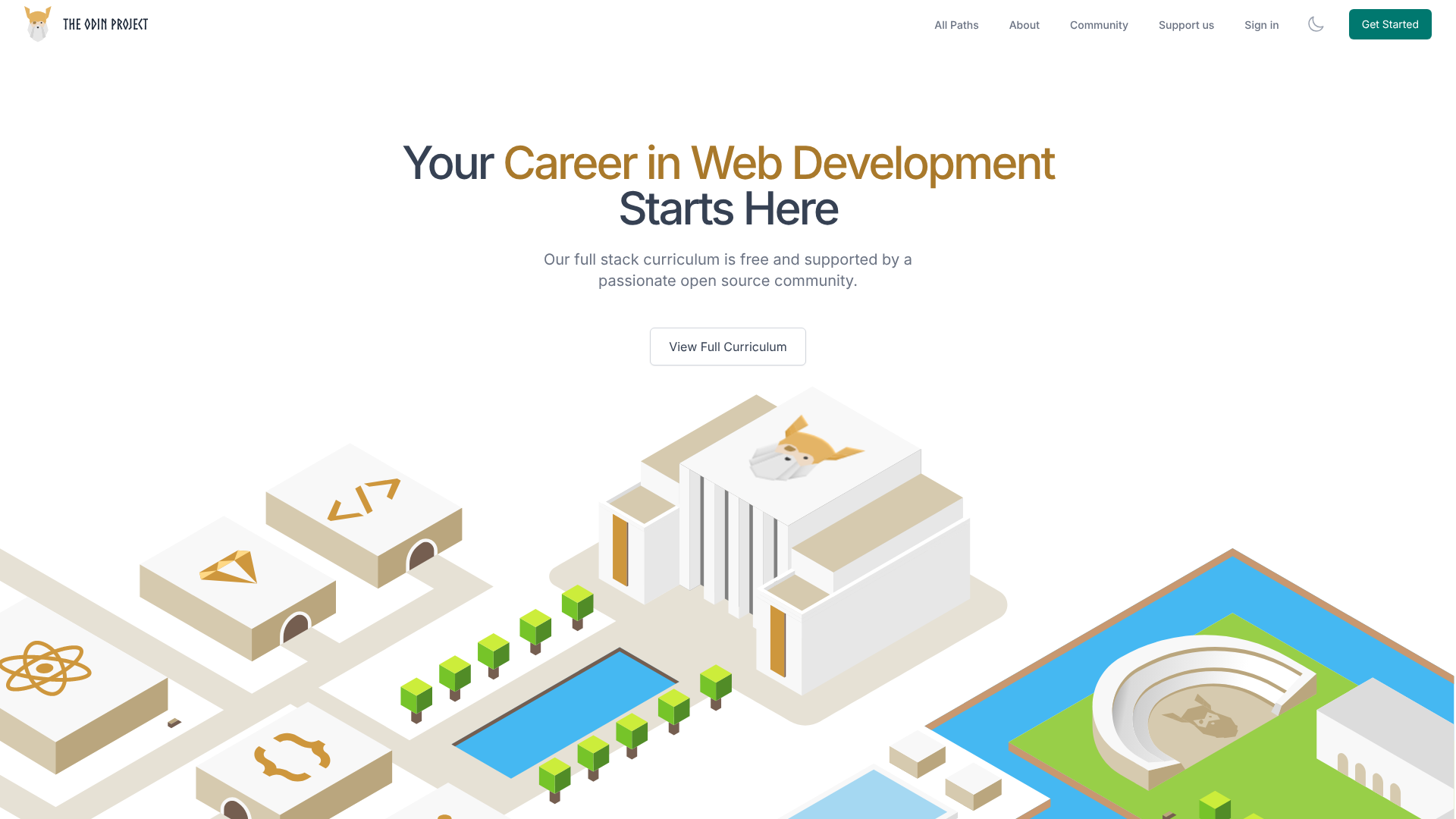
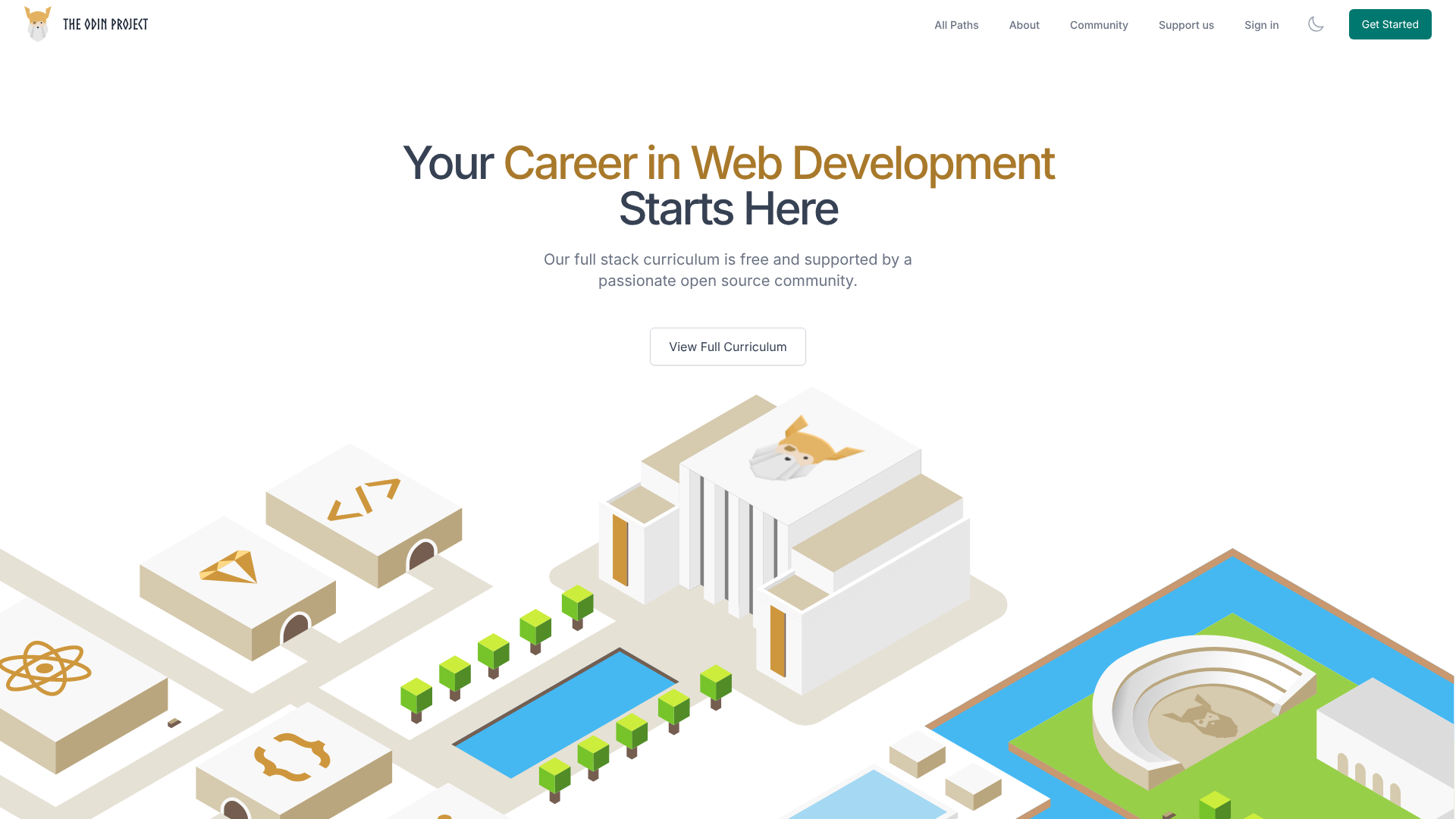
For learners with strong self-discipline, you can't beat the value offered by these two free platforms. They are responsible for getting thousands of developers their first job without charging a penny.
- The Odin Project: This is an open-source curriculum that guides you through the best free resources on the web, curating them into a logical, project-based path. It doesn't hold your hand; it teaches you how to think and problem-solve like a real developer. Its full-stack JavaScript path is considered one of the most thorough and effective free programmes available.
- freeCodeCamp: This non-profit offers a massive, interactive curriculum where you learn by completing coding challenges directly in your browser. It covers everything from responsive web design to data structures and algorithms. Upon completing sections, you build five required projects to earn a certification.
Pros: Completely free, strong communities, focus on portfolio-building.
Cons: Requires immense self-motivation, no direct instructor support.
Best for University-Backed Certificates: Coursera & edX
If a formal certificate from a top university or a major tech company is important to you, these platforms are the gold standard. They host courses and professional certificate programmes created by institutions like Harvard, MIT, and companies like Google, Meta, and IBM.
- Coursera: Home to the popular Meta Front-End Developer Professional Certificate and the IBM Full Stack Software Developer Professional Certificate. These multi-course programmes are designed to be job-ready in under six months and are highly regarded by many employers.
- edX: Founded by Harvard and MIT, edX offers university-level courses, including Harvard's legendary CS50's Introduction to Computer Science, which has a dedicated web programming follow-up course. These are rigorous, high-quality programmes.
Pros: Credible certificates, structured curriculum, high-quality instruction.
Cons: Can be more expensive (subscription-based), pace may be slower than other platforms.
Best for Beginners on a Budget (Paid): Udemy
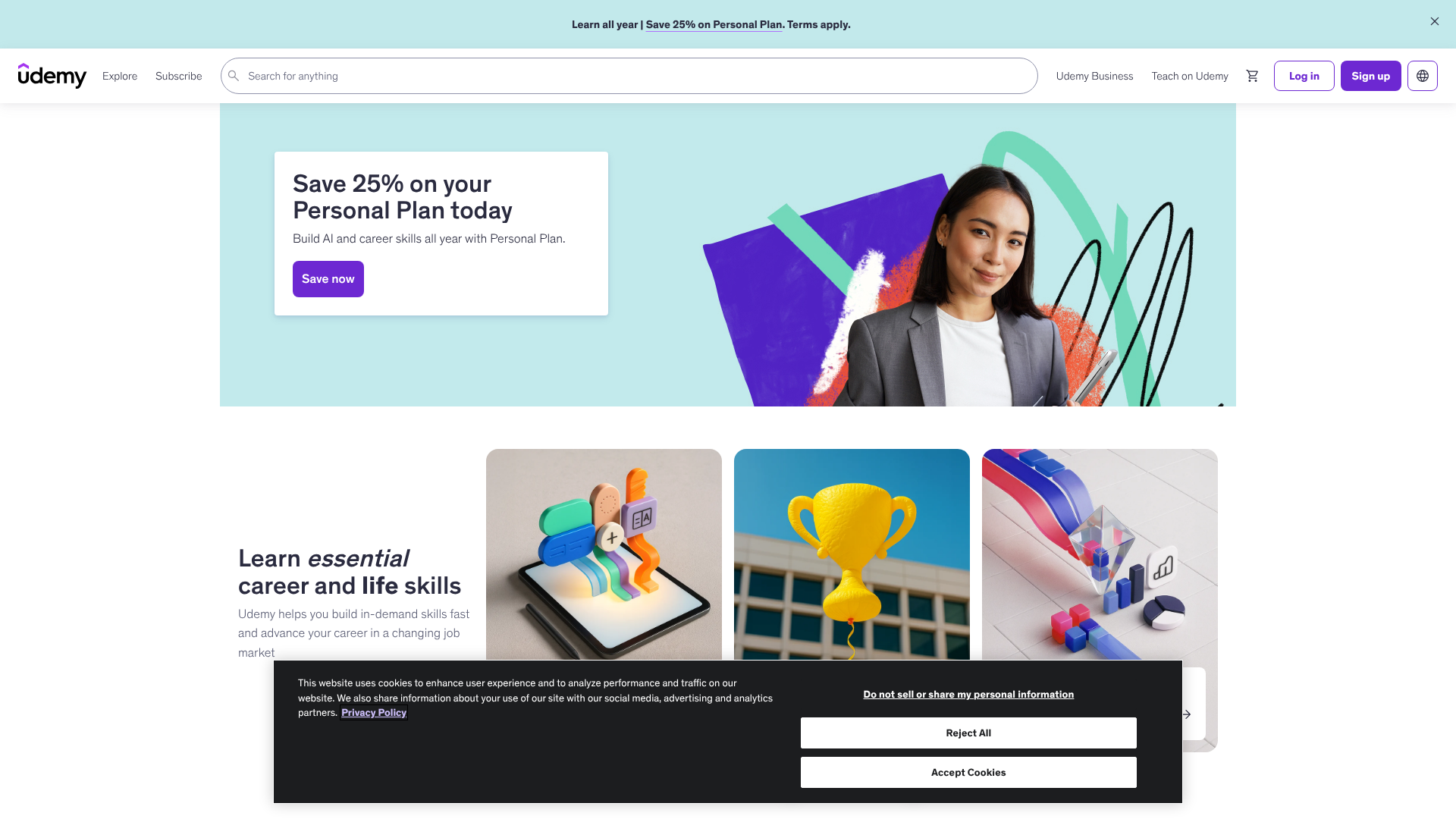
Udemy is a massive online course marketplace where individual instructors publish their own content. The quality can vary, but the best courses are exceptional and offer incredible value, especially since they are frequently on sale for under £20.
Look for highly-rated, best-selling courses like Angela Yu's "The Complete Web Development Bootcamp" or Colt Steele's "The Web Developer Bootcamp". These courses are incredibly comprehensive, often containing over 60 hours of video content, and cover a full-stack curriculum. You buy a course once and get lifetime access, including future updates.
Pros: Extremely affordable, lifetime access, huge variety of topics.
Cons: Quality varies by instructor, less community support than dedicated platforms.
Best for Interactive, In-Browser Learning: Codecademy & Scrimba
For those who learn best by doing, these platforms offer a seamless, interactive experience. You spend less time setting up a local development environment and more time coding.
- Codecademy: One of the pioneers of interactive learning. Its career paths (like the Full-Stack Engineer path) guide you through a mix of text-based lessons and in-browser coding exercises, providing instant feedback on your work.
- Scrimba: This platform features a unique video format where you can pause the instructor's screencast at any point and start editing the code directly in the video. It's a highly engaging and effective way to learn.
Pros: Hands-on from the start, low friction to get started, great for kinesthetic learners.
Cons: Can be a crutch; you still need to learn to set up your own local environment.
For Course Creators: Building Your Own Learning Platform
Many of the best web development instructors are expert developers who decided to share their knowledge by creating their own courses. If you're an experienced developer considering this path, you'll need a platform to host, market, and sell your content. This is where a Learning Management System (LMS) becomes essential.
Platforms like Teachable and LearnWorlds provide all the tools needed to build a professional online school. You can upload videos, create quizzes, design a branded website, and manage payments without needing to write any back-end code yourself. They empower experts to create high-quality online web development classes and build a business around their skills, contributing to the rich ecosystem of online learning.
Understanding Pricing and Cost: What Should You Expect to Pay?
One of the most confusing aspects of choosing a course is the wide range of pricing models. There's no single "best" price, as value depends on what's included. Here’s a breakdown of the common pricing structures you'll encounter.
Free Options
As mentioned, platforms like The Odin Project, freeCodeCamp, and resources like MDN Web Docs offer complete, professional-grade curricula for free. The trade-off isn't in quality but in support and accountability. You are entirely responsible for managing your own learning schedule and finding answers when you get stuck, which requires a high level of motivation.
Subscription Models
This is a popular model used by platforms like Coursera, Codecademy, and LinkedIn Learning. You pay a recurring monthly or annual fee (typically £15 – £50 per month) for access to their entire library of courses. This model is excellent for learners who want to explore multiple topics or who can dedicate enough time each month to make the cost worthwhile. However, if you're a slow learner or take breaks, you'll continue to pay for access you aren't using.
One-Time Purchase Courses
Marketplaces like Udemy are the primary example of this model. You pay a one-time fee for a specific course and receive lifetime access. This is highly cost-effective, as you can often buy a comprehensive 60+ hour bootcamp for less than the cost of a single month's subscription on another platform. The main risk is that the content could become outdated, though reputable instructors regularly update their courses.
High-Investment Bootcamps
At the top end of the price spectrum are online bootcamps, which can cost anywhere from £5,000 to over £15,000. These are intensive, full-time or part-time programmes that offer live instruction, dedicated career support, and a structured, cohort-based environment. They are designed for serious career changers who want the fastest, most direct path into the industry and are willing to make a significant financial investment to get there.
| Pricing Model | Typical Cost | Best For | Key Consideration |
|---|---|---|---|
| Free | £0 | Self-motivated learners, those on a tight budget | Requires high discipline and resourcefulness. |
| Subscription | £15 – £50 / month | Learners who want access to a wide catalogue | Cost-effective only if you use it consistently. |
| One-Time Purchase | £10 – £150 / course | Learners who prefer to own content forever | Ensure the instructor has a history of updating content. |
| Bootcamp | £5,000 – £15,000+ | Serious career changers needing structure and support | A significant financial and time commitment. |
The Pros and Cons of Learning Web Development Online
While online learning has democratised tech education, it's important to have a balanced view of its strengths and weaknesses. Understanding both sides can help you prepare for the challenges and make the most of the opportunities.
Advantages
- Unmatched Flexibility: The ability to learn anytime, anywhere is the biggest pro. You can fit your education around your life, not the other way around.
- Affordability: The cost of entry is incredibly low compared to traditional education, with many high-quality resources available for free.
- Content Variety and Relevance: The online space moves at the speed of the industry. You can find courses on niche, cutting-edge technologies that universities won't teach for years.
- Practical, Portfolio-Driven Approach: Most online courses are focused on practical skills and building real projects, which is exactly what employers want to see.
Disadvantages
- Requires Self-Discipline: Without a professor or classmates to hold you accountable, the responsibility to stay on track is entirely on you. It's easy to fall behind or give up.
- Potential for Isolation: Learning alone can be a difficult experience. It's crucial to actively seek out online communities to combat this and get help when you're stuck.
- Risk of Information Overload: The sheer number of courses, tutorials, and opinions can lead to "analysis paralysis," where you spend more time researching what to learn than actually learning.
- Variable Quality: Not all online courses are created equal. It takes research to distinguish high-quality, up-to-date programmes from low-effort cash grabs or outdated content.
Frequently Asked Questions (FAQ)
Here are answers to some of the most common questions aspiring developers ask when considering online courses.
Is web development dead due to AI?
No, web development is not dead, but it is evolving. AI tools like GitHub Copilot are becoming powerful assistants for developers, automating repetitive tasks and helping to write code faster. However, they are not replacing the core skills of a developer: problem-solving, architectural design, user experience considerations, and critical thinking. AI is a tool that enhances a developer's productivity, it doesn't make the developer obsolete.
Learning to use these AI tools is now becoming another important skill for modern developers.
Is 40 too old to become a web developer?
Absolutely not. Age is irrelevant in web development; skills and a strong portfolio are what matter. In fact, older career changers often bring valuable soft skills from their previous careers, such as project management, client communication, and a mature approach to problem-solving. Many companies value the diverse perspectives and life experience that career changers bring to their teams.
It's never too late to start.
Can I learn HTML in 7 days?
You can certainly learn the basic syntax and core concepts of HTML in a week. It is a markup language, not a programming language, so its rules are relatively straightforward. You could build a simple, static webpage within that time. However, truly mastering HTML—understanding semantic markup for accessibility, SEO best practices, and how it integrates with CSS and JavaScript—takes much longer.
It's better to think of it as a skill you will continuously refine throughout your career.
Is it possible to learn web development online?
Yes, it is not only possible but extremely common. A significant portion of the current web development workforce is self-taught or learned their skills primarily through online courses, bootcamps, and free resources. The industry largely operates as a meritocracy where the ability to build and demonstrate your skills through a portfolio is far more important than a traditional degree.
Which is harder, HTML or Python?
Python is significantly harder to learn than HTML. HTML is a markup language used to define the structure of a webpage; its syntax is simple and declarative. Python is a high-level programming language used for a vast range of tasks, including back-end web development, data science, and automation. It involves complex concepts like logic, algorithms, data structures, and object-oriented principles.
Learning the basics of HTML might take a few days, while becoming proficient in Python takes many months or years.
Final Thoughts: Your Next Steps to Becoming a Web Developer
Choosing the right online course for web development is the first major step on an exciting and rewarding journey. The best path is not a one-size-fits-all solution but one that is tailored to your unique goals, budget, and learning preferences. By focusing on a curriculum that prioritises project-based learning and covers modern, in-demand technologies, you set yourself up for success.
Remember that consistency is more important than intensity. It's better to code for one hour every day than for eight hours once a week. Start with a free, highly-regarded resource like freeCodeCamp or The Odin Project to see if you enjoy the process of coding. Once you've built some momentum, you can decide whether to invest in a paid course for more structure and support.
Ultimately, the platform you choose is less important than the work you put in. Build projects, stay curious, engage with the developer community, and never stop learning. And if you become an expert yourself and want to share your knowledge, remember that platforms like Teachable and LearnWorlds are available to help you build and launch your very own course.