


HubSpot CRM vs Zoho: Which is Better for Your Business in 2026?
Choosing the right Customer Relationship Management (CRM) platform is a pivotal decision for any business. It’s the central hub for your customer data, sales pipeline, and marketing efforts. Two of the most prominent names in the industry are HubSpot and Zoho, and the debate over HubSpot CRM vs Zoho is a common one for businesses looking to organise and scale their operations. Both offer powerful tools, but they cater to very different needs, budgets, and technical abilities.
- In a Nutshell
- An Introduction to the CRM Contenders: HubSpot vs Zoho
- HubSpot CRM vs Zoho: A Detailed Feature Comparison
- User Interface and Ease of Use
- Sales Automation and Workflow Capabilities
- Marketing Automation Tools
- Customisation and Flexibility
- Pricing Breakdown: A HubSpot vs Zoho Cost Comparison
- The Good and The Bad: Pros and Cons of Each Platform
- Making the Right Choice: HubSpot or Zoho?
- Frequently Asked Questions About HubSpot and Zoho
- Is Zoho or HubSpot better for small businesses?
- Is HubSpot CRM really free?
- What is the biggest disadvantage of Zoho CRM?
- Can I migrate from Zoho to HubSpot (or vice-versa)?
- Final Thoughts: The Verdict on HubSpot CRM vs Zoho
This comprehensive comparison will break down everything you need to know. We'll explore their core features, pricing structures, ease of use, and customisation capabilities. By the end, you'll have a clear understanding of which platform is the superior choice for your specific business goals, whether you're a startup finding your feet or an established company seeking greater control.
In a Nutshell
- HubSpot for Ease of Use: HubSpot CRM is widely recognised for its incredibly intuitive user interface, making it perfect for teams that need to get up and running quickly with minimal training. Its free tools are genuinely powerful for small businesses.
- Zoho for Customisation & Value: Zoho CRM offers deeper customisation and more advanced features at lower price points, making it an excellent value proposition for businesses that need a tailored solution and have the resources to configure it.
- Marketing vs. Sales Focus: While both are strong, HubSpot's DNA is in marketing automation, and its tools reflect that seamless integration. Zoho provides a more traditional, sales-focused CRM experience with extensive features for managing complex sales processes.
- Ecosystem Philosophy: HubSpot provides a tightly integrated, all-in-one platform where all the parts work together smoothly. Zoho offers a vast suite of over 50 applications that can be bundled, offering immense flexibility but sometimes a less cohesive user experience.
An Introduction to the CRM Contenders: HubSpot vs Zoho
Before we dive into a feature-by-feature analysis, it's important to understand the philosophy behind each platform. Their origins and core missions have shaped them into the distinct products they are today. This context is crucial for any HubSpot vs Zoho evaluation.
What is HubSpot CRM?
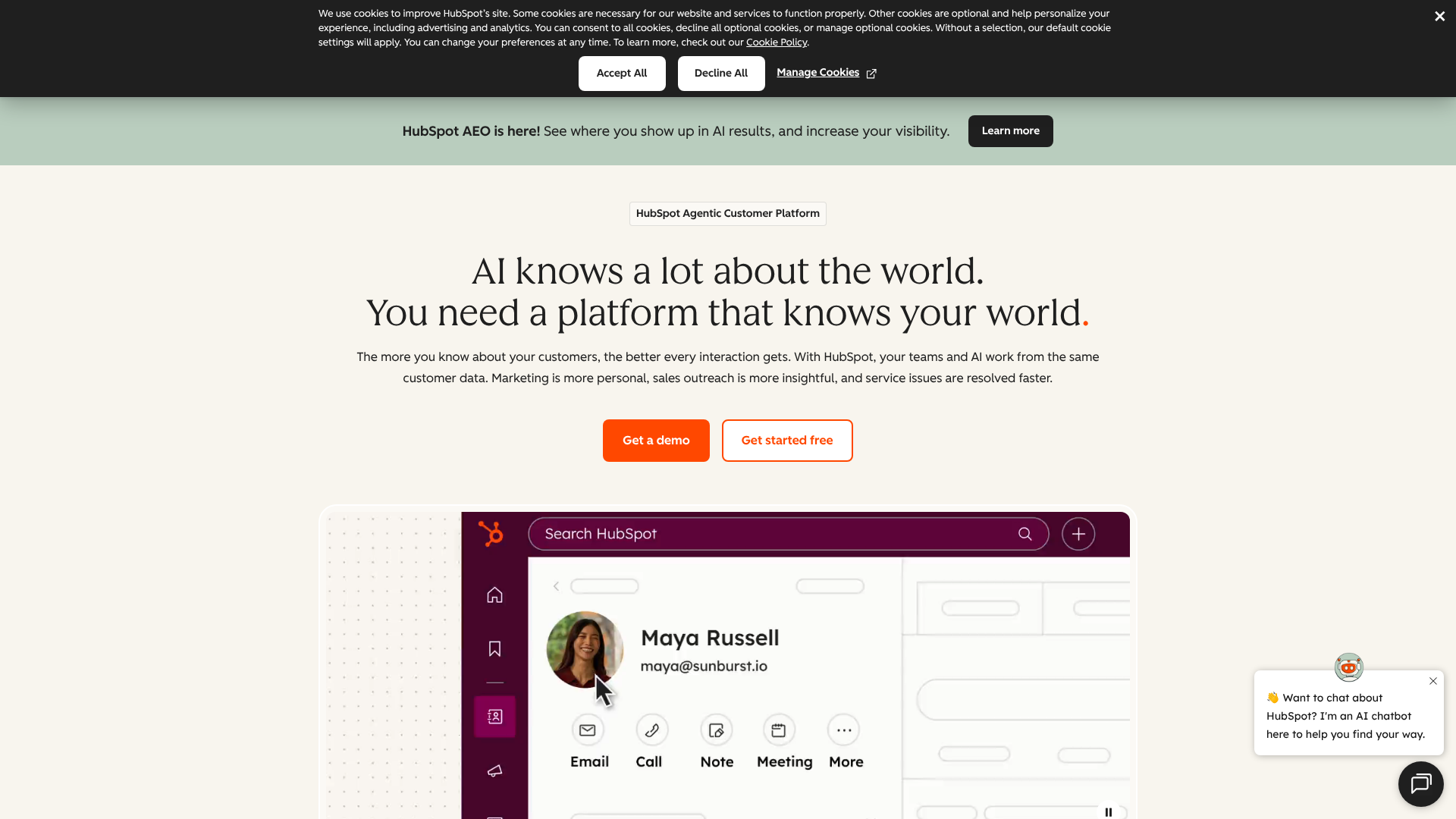
HubSpot was founded on the principle of 'inbound marketing'—the idea of attracting customers with valuable content rather than interrupting them with traditional advertising. This philosophy is baked into its entire platform. The HubSpot CRM is the free foundation of its ecosystem, which includes paid 'Hubs' for Marketing, Sales, Service, and Operations.
Its primary strength is its user-friendliness. HubSpot is designed for marketing and sales professionals, not IT experts. The interface is clean, the setup is guided, and the focus is on providing a single source of truth for all customer interactions. It excels at helping businesses grow by aligning their sales and marketing teams around a unified customer view.
For many, HubSpot is the go-to choice when looking for HubSpot CRM alternatives that are less complex than giants like Salesforce. It offers a gentle learning curve while still providing powerful automation and reporting tools, especially in its paid tiers.
What is Zoho CRM?
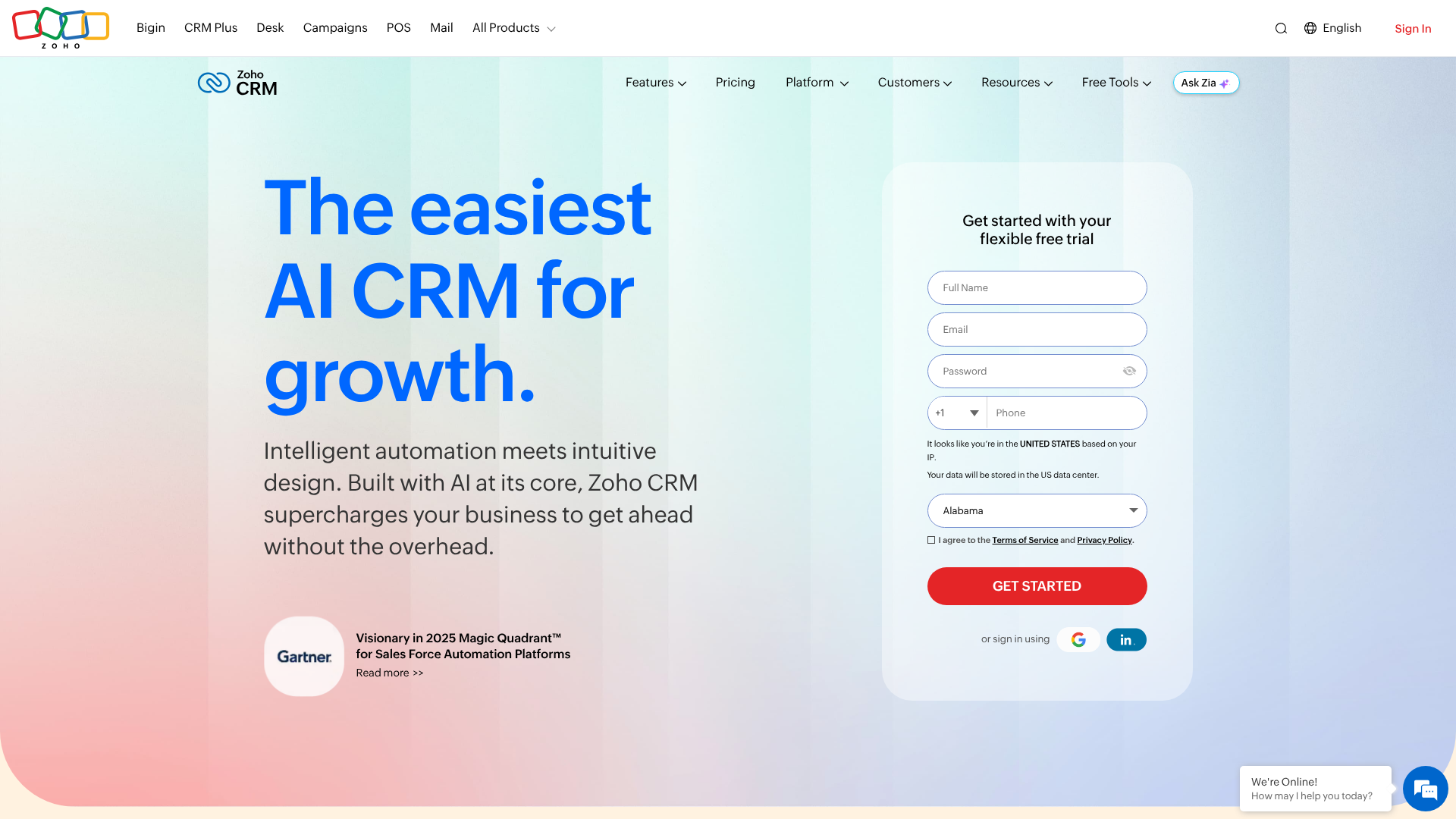
Zoho operates on a different model. It's part of Zoho Corporation, a company that offers a massive suite of business applications, from finance and HR to project management and email. Zoho CRM is the flagship product in this suite, designed to be a powerful, customisable, and highly affordable solution.
Where HubSpot prioritises simplicity, Zoho prioritises flexibility. It allows businesses to modify modules, create custom layouts, and build complex workflow rules to match their unique processes. This makes it a favourite among companies with non-standard sales cycles or those that need to manage intricate operational details within their CRM.
This extensive capability means there's a steeper learning curve. However, for businesses willing to invest time in setup, Zoho offers an enterprise-level feature set for a fraction of the cost of its competitors, making it a top contender in any Zoho CRM comparison.
HubSpot CRM vs Zoho: A Detailed Feature Comparison
Now, let's get into the specifics. How do these two platforms stack up when it comes to the features that matter most to your daily operations? We'll compare them across several key categories to see where each one shines.
| Feature | HubSpot CRM | Zoho CRM | Winner |
|---|---|---|---|
| Ease of Use | Excellent, intuitive interface. | Good, but can be cluttered. Steeper learning curve. | HubSpot |
| Free Plan | Very generous with unlimited users. | Limited to 3 users, fewer features. | HubSpot |
| Sales Automation | Good, user-friendly workflows. | Excellent, with advanced blueprints and rules. | Zoho |
| Marketing Tools | Best-in-class, native integration. | Good, but full power requires Zoho Campaigns. | HubSpot |
| Customisation | Good, with custom properties. Advanced objects are pricey. | Excellent, highly flexible modules and layouts. | Zoho |
| Integrations | 1,000+ apps, strong ecosystem. | 900+ apps, plus the entire Zoho Suite. | Tie |
| Reporting | Clean, easy-to-understand dashboards. | Powerful, granular reporting options. | Tie |
User Interface and Ease of Use
This is arguably HubSpot's biggest advantage. The platform is designed to minimise friction. Dashboards are clean, navigation is logical, and creating new contacts, deals, or tasks is straightforward. New team members can typically become productive within hours, not weeks.
This focus on user experience reduces the need for extensive training and increases user adoption rates across the company.
Zoho, on the other hand, presents a more traditional CRM interface. It's packed with features, which can make the initial experience feel overwhelming for new users. While it's highly customisable, finding the right settings and organising the layout to fit your team's needs requires a significant upfront investment of time. The power is there, but you have to work a bit harder to access it.
Sales Automation and Workflow Capabilities
Both platforms offer robust sales automation. HubSpot's workflows are visual and easy to build. You can automate email sequences, task creation, and property updates based on a wide range of triggers. It’s designed to help sales reps save time on repetitive tasks and focus on selling.
Zoho takes automation a step further with its 'Blueprints' feature. This allows you to define and enforce a specific sales process, guiding reps through each stage and ensuring compliance. Zoho's workflow rules are also more granular, offering complex, multi-layered conditional logic that can automate almost any business process. For companies with rigid sales methodologies, Zoho's automation is more powerful, especially in its lower-priced tiers.
Marketing Automation Tools
Here, HubSpot's inbound philosophy gives it a clear edge. The integration between the free CRM and the paid Marketing Hub is second to none. Features like email marketing, landing pages, forms, and ad management are all part of a single, cohesive system. This allows for incredibly sophisticated lead nurturing and scoring based on a contact's every interaction with your brand.
Zoho offers strong marketing tools as well, but they are often split into separate applications like Zoho Campaigns for email and Zoho Forms for lead capture. While they integrate well with Zoho CRM, the experience isn't as unified as HubSpot's. For businesses where marketing and sales alignment is a top priority, HubSpot's all-in-one approach is hard to beat.
Customisation and Flexibility
This is Zoho's home turf. Almost every aspect of Zoho CRM can be tailored to your business. You can create custom modules to track anything you want, design unique page layouts for different teams, and add custom fields and buttons. This level of control is ideal for businesses in niche industries or those with unique operational requirements.
HubSpot allows for customisation, primarily through custom properties (fields) on your contact, company, and deal records. It's sufficient for most standard business needs. However, creating entirely new custom objects is reserved for its expensive Enterprise plans. If your business process doesn't fit neatly into a standard sales model, you may find HubSpot's structure restrictive compared to Zoho's.

Pricing Breakdown: A HubSpot vs Zoho Cost Comparison
Cost is a major factor in the HubSpot CRM vs Zoho decision. The two companies approach pricing very differently, and the best value depends entirely on your team size, feature needs, and long-term growth plans.
HubSpot's Pricing Model Explained
HubSpot's strategy is 'freemium'. The HubSpot CRM platform is 100% free forever for unlimited users. This free version is remarkably capable, offering contact management, deal pipelines, live chat, email tracking, and a meeting scheduler. For many startups and small businesses, the free CRM is all they need to get started.
The cost comes when you need more advanced features. These are bundled into the paid 'Hubs':
- Sales Hub: Starts at around £38/month per user for the 'Professional' tier, which unlocks advanced automation, analytics, and sales tools.
- Marketing Hub: Starts at around £650/month (billed annually) for the 'Professional' tier, which includes marketing automation, SEO tools, and blogging.
The price can escalate quickly, especially as you add more users or contacts. HubSpot's model is designed to grow with you, but it's best suited for businesses that see it as an investment and are prepared for the higher costs associated with scaling.
Zoho's Pricing Structure
Zoho is known for its straightforward and affordable pricing. It offers several tiers, with even the entry-level paid plans providing a wealth of features.
- Free Edition: For up to 3 users, but it's quite limited.
- Standard: Around £12/user/month. Includes sales forecasting and workflow rules.
- Professional: Around £20/user/month. Adds process management (Blueprints) and inventory management.
- Enterprise: Around £35/user/month. Unlocks Zoho's AI assistant, Zia, and advanced customisation.
Zoho also offers Zoho One, an all-inclusive bundle of over 40 of their applications (including the Enterprise CRM) for a flat fee of around £30/user/month. For businesses that can use other apps in the Zoho ecosystem, this represents incredible value.
Pro Tip: When evaluating Zoho, always look at the Zoho One bundle. It can offer unparalleled value if you plan to use more than just the CRM, potentially replacing several other software subscriptions your business pays for.
Which Offers Better Value for Money?
For solo entrepreneurs or small teams just starting out, HubSpot's free CRM offers more value than Zoho's free plan. It's more generous and provides a better foundation.
However, as soon as you need to upgrade to a paid plan, Zoho almost always offers more features per pound. A team of five on Zoho's Enterprise plan would pay less than a single user on HubSpot's Sales Hub Professional plan, while getting comparable (and in some cases, more advanced) features. The long-term cost of ownership is significantly lower with Zoho.
The Good and The Bad: Pros and Cons of Each Platform

No platform is perfect. Understanding the inherent strengths and weaknesses of each CRM is key to avoiding buyer's remorse. Here’s a balanced look at the pros and cons.
HubSpot CRM: Strengths and Weaknesses
Pros
- Unmatched Ease of Use: The intuitive design leads to high user adoption and requires minimal training.
- Powerful Free Version: The free CRM is one of the best on the market, providing immense value for startups.
- Seamless Marketing Integration: The native connection between the CRM and Marketing Hub is a huge advantage for growth-focused companies.
- Excellent Educational Resources: HubSpot Academy offers free courses and certifications that are valuable for any marketing or sales professional.
Cons
- Expensive to Scale: The jump from the free/starter plans to the Professional tiers is substantial.
- Limited Customisation on Lower Tiers: True flexibility and custom objects are locked behind the highest-priced Enterprise plans.
- Contact-Based Pricing for Marketing: Marketing Hub pricing is based on the number of marketing contacts, which can become costly as your list grows.
Zoho CRM: Strengths and Weaknesses
Pros
- Highly Affordable: Zoho delivers enterprise-grade features at a price point accessible to small and medium-sized businesses.
- Extreme Customisability: The ability to tailor the platform to your exact business processes is a major selling point.
- All-in-One Suite (Zoho One): The value of the Zoho One bundle is unmatched if you need more than just a CRM.
- Powerful Automation: Features like Blueprints and advanced workflow rules allow for deep process automation.
Cons
- Steeper Learning Curve: The sheer number of features and settings can be intimidating for new users.
- Cluttered User Interface: The UI can feel dated and less intuitive compared to HubSpot's modern design.
- Support Can Be Inconsistent: While support is available, user reviews suggest the quality can vary, especially on lower-tier plans.
Making the Right Choice: HubSpot or Zoho?
So, how do you decide? The best choice in the HubSpot vs Zoho debate comes down to your company's priorities, budget, and technical comfort level. There is no single 'best' CRM, only the one that is best for you.
Choose HubSpot If…
- Ease of use is your top priority. You have a team that is not technically savvy and you need them to adopt the platform quickly.
- Your business is heavily focused on inbound marketing. You need a tightly integrated system for your content, email, and social media marketing efforts.
- You are starting out and need a powerful free CRM. You want a platform that can provide immediate value without an initial financial investment.
- You value a clean, modern user experience and are willing to pay a premium for it as you scale.
Choose Zoho If…
- Budget is a primary concern. You need the most functionality for the lowest possible price per user.
- You have unique or complex business processes. You need a CRM that can be customised extensively to match how you operate.
- You have some technical resources (or are willing to learn) to manage the initial setup and configuration.
- You plan to use other business applications and see the value in the all-in-one Zoho One ecosystem.
Pro Tip: Before making a final decision, sign up for the free trials of both platforms. Import a small sample of your data and have your team run through their daily tasks. Real-world usage is the best way to determine which platform feels right for your team.
Frequently Asked Questions About HubSpot and Zoho
Here are answers to some of the most common questions that arise when comparing these two CRM giants.
Is Zoho or HubSpot better for small businesses?
It depends on the small business. If the business prioritises simplicity and has a strong marketing focus, HubSpot's free CRM is an excellent starting point. If the small business is budget-conscious and needs advanced features like sales process enforcement and deep customisation, Zoho offers better long-term value and scalability at a lower cost.
Is HubSpot CRM really free?
Yes, the core HubSpot CRM platform is 100% free forever. It includes contact, company, and deal management, pipelines, email tracking, and more for an unlimited number of users. However, advanced features for sales, marketing, and service automation require upgrading to their paid 'Hubs', which can be expensive.
What is the biggest disadvantage of Zoho CRM?
The most commonly cited disadvantage of Zoho CRM is its learning curve and user interface. While incredibly powerful, the platform can feel overwhelming and less intuitive than more modern competitors like HubSpot. It often requires a dedicated administrator or a significant time investment to configure it optimally for a business's needs.
Can I migrate from Zoho to HubSpot (or vice-versa)?
Yes, migration between the two platforms is possible. Both HubSpot and Zoho offer built-in data import tools that support CSV files. You can export your contacts, companies, deals, and other data from one platform and import it into the other. For more complex migrations involving notes, activities, and custom data, you may need to use a third-party migration service to ensure data integrity.
Final Thoughts: The Verdict on HubSpot CRM vs Zoho
Ultimately, the choice between HubSpot CRM and Zoho CRM is a choice between two different business philosophies. HubSpot offers a guided, user-friendly path to growth, centred around a seamless user experience and powerful inbound marketing tools. It's an investment in a platform that makes life easier for your sales and marketing teams, though that simplicity comes at a premium price as you scale.
Zoho, in contrast, is the powerful and pragmatic choice. It provides a toolkit of immense depth and flexibility, allowing you to build a CRM that perfectly mirrors your business operations. It demands more from you in terms of setup and learning, but it rewards that effort with enterprise-level power at a price that is almost impossible to beat. It's the ideal solution for businesses that value control and cost-effectiveness over guided simplicity.
Evaluate your team's skills, your budget constraints, and your long-term business goals. If you prioritise speed and ease of adoption, start with HubSpot. If you prioritise power, customisation, and value, Zoho is likely the better long-term partner for your business.