


What Is Sales Engagement Software? A Guide for Modern Sales Teams
Sales engagement software is a category of tools designed to help sales teams connect with prospects more efficiently and effectively. It acts as a central hub for sales representatives to manage, automate, and track all their interactions across multiple channels, including email, phone calls, and social media. By structuring outreach into organised sequences, these platforms ensure no lead falls through the cracks and that every prospect receives timely, personalised follow-up.
- What You'll Learn
- What Exactly is Sales Engagement Software?
- The Core Features of Modern Sales Engagement Tools
- Multi-Channel Cadences (Sequences)
- Automation and Task Management
- Personalisation at Scale
- Integrated Communication (Diallers & Email Clients)
- Analytics and A/B Testing
- Key Benefits: Why Your Sales Team Needs an SEP
- Increased Productivity and Efficiency
- Improved Prospect Engagement and Response Rates
- Better Sales Process Consistency and Scalability
- Data-Driven Coaching and Optimisation
- How to Choose the Right Sales Engagement Solution
- 1. Assess Your Current Sales Process and Needs
- 2. Define Your Must-Have Features
- 3. Check for Deep CRM Integration
- 4. Consider User Experience and Onboarding
- Top Sales Engagement Platforms to Consider in 2026
- Understanding Pricing and Cost Structures
- The Pros and Cons of Sales Engagement Software
- Frequently Asked Questions (FAQ)
- What is a sales engagement tool?
- What is the difference between CRM and sales engagement?
- What is the best sales engagement platform?
- Is sales engagement software worth the cost?
- Final Thoughts
Think of it this way: a Customer Relationship Management (CRM) system is your database—it stores all your customer information. A sales engagement platform, however, is your action engine. It uses the data from your CRM to power the actual outreach, helping reps execute their sales process with precision and scale. This technology bridges the gap between planning and doing, transforming a static contact list into a dynamic pipeline of conversations.
What You'll Learn
- Core Definition: Sales engagement software is a tool that automates and organises multi-channel communication (email, phone, social) to help sales reps engage prospects more effectively.
- CRM vs. Sales Engagement: A CRM is a system of record for customer data, while a sales engagement platform is a system of action that executes outreach and syncs activity back to the CRM.
- Key Benefits: The main advantages include massive productivity gains for reps, consistent and scalable sales processes, improved prospect engagement, and data-driven insights for coaching.
- Essential Features: Look for capabilities like multi-channel sequencing (cadences), automation, personalisation tools, integrated diallers, and robust analytics.
What Exactly is Sales Engagement Software?
Sales engagement software is a specialised platform that streamlines and optimises the way sales teams interact with potential customers. Its primary function is to help sales development representatives (SDRs) and account executives (AEs) manage the high volume of activities required in modern selling, from initial outreach to booking a meeting. It sits on top of a CRM, pulling contact data and pushing activity logs back to ensure everything is recorded.
The core problem these tools solve is the inefficiency and inconsistency of manual outreach. Before the rise of sales engagement solutions, a rep's day was a chaotic mix of sending one-off emails, making calls from a separate phone, manually logging notes in the CRM, and trying to remember who to follow up with and when. This process was not only time-consuming but also prone to human error, leading to missed opportunities and a lack of visibility into what was actually working.
A sales engagement platform organises this chaos into structured workflows called 'cadences' or 'sequences'. These are pre-defined series of touchpoints—for example, an email on day one, a LinkedIn connection request on day three, a phone call on day five, and so on. The software automates many of these steps and reminds the rep when a manual task, like a phone call, is due, ensuring a persistent and methodical approach to prospecting.
Sales Engagement Platform vs. CRM: What's the Difference?
One of the most common points of confusion is understanding the distinction between a sales engagement platform (SEP) and a Customer Relationship Management (CRM) system. While they are closely related and work best together, they serve fundamentally different purposes.
A CRM is your system of record. Its main job is to be the central database for all information related to your customers and prospects. It stores contact details, company information, deal stages, historical interactions, and notes. A CRM gives you a 360-degree view of the customer relationship.
Leading platforms like HubSpot CRM and Zoho CRM are excellent at managing this data over the long term.
A Sales Engagement Platform (SEP) is your system of action. Its focus is on the execution of sales activities. It takes the contact data from the CRM and empowers reps to engage with those contacts at scale. It manages the day-to-day outreach, automates follow-ups, tracks engagement metrics (like email opens and clicks), and provides analytics on which sales activities are most effective.
After an interaction occurs within the SEP, the platform automatically logs that activity back into the CRM, keeping the system of record up to date without manual data entry.
In short: the CRM holds the 'who' and the 'what' (who the contact is and what their history is), while the SEP drives the 'how' and the 'when' (how and when you will reach out to them next). A modern sales tech stack requires both to function at peak performance.
The Core Features of Modern Sales Engagement Tools
Effective sales engagement solutions are packed with features designed to make a salesperson's life easier and more productive. While the exact feature set can vary, most leading platforms are built around a few key pillars that define their value.
Multi-Channel Cadences (Sequences)
This is the heart of any sales engagement platform. Cadences, or sequences, are automated, multi-step outreach plans that guide a rep's interaction with a prospect over days or weeks. They allow you to combine different communication channels into a single, cohesive strategy.
A typical cadence might look like this:
- Day 1: Send personalised Email #1.
- Day 3: View prospect's LinkedIn profile and send a connection request.
- Day 5: Make a phone call (call script provided within the platform).
- Day 7: Send follow-up Email #2 if no reply.
This structured approach ensures persistence without requiring the rep to manually track every single step. It also standardises the sales process across the entire team, ensuring everyone follows best practices.
Automation and Task Management
Automation is what gives reps their time back. Sales engagement tools automate the most repetitive parts of the job. This includes sending scheduled emails, creating follow-up tasks, and logging activities in the CRM. When an email is sent, a call is made, or a meeting is booked, the platform records it automatically.
This eliminates hours of administrative work each week, allowing reps to focus on high-value activities like having conversations with interested prospects, running product demos, and negotiating deals. The platform essentially acts as a personal assistant, managing the rep's to-do list and ensuring nothing gets missed.
Personalisation at Scale
Sending generic, mass emails is a recipe for failure. Modern sales engagement platforms solve this by enabling personalisation at scale. They use templates with custom fields (or variables) that automatically pull data from the CRM, such as {first_name}, {company_name}, or {job_title}.
Beyond basic fields, reps can use 'snippets'—small, pre-written blocks of text—to quickly insert relevant case studies or value propositions tailored to a prospect's industry. This combination of automation and customisation allows a rep to send hundreds of highly relevant emails per day that still feel personal and one-to-one.
Integrated Communication (Diallers & Email Clients)
To maximise efficiency, these platforms integrate communication tools directly into the workflow. Most include a built-in VoIP dialler, allowing reps to click-to-call contacts directly from their task list. These diallers often include features like call recording, local number presence (to increase answer rates), and pre-recorded voicemail drops.
Similarly, they sync with the rep's email inbox (like Gmail or Outlook), so all communication happens within a single interface. This prevents the constant tab-switching that kills productivity and ensures all email activity is tracked and logged correctly.
Analytics and A/B Testing
How do you know which email subject line gets the most opens? Or which call script leads to the most meetings booked? Sales engagement solutions provide the data to answer these questions. They offer detailed analytics on every aspect of the outreach process.
Managers and reps can see open rates, click-through rates, reply rates, and meeting conversion rates for every template, cadence, and team member. Most platforms also support A/B testing, allowing you to test different versions of an email or sequence against each other to see what performs best. This data-driven approach replaces guesswork with optimisation.
Key Benefits: Why Your Sales Team Needs an SEP

The adoption of a sales engagement platform isn't just about getting new technology; it's about transforming the way a sales organisation operates. The benefits are felt across the board, from individual reps to sales leaders and the company as a whole.
Increased Productivity and Efficiency
This is the most immediate and tangible benefit. By automating repetitive tasks and streamlining workflows, SEPs give salespeople a significant amount of their time back. Instead of spending hours on manual data entry, scheduling follow-ups, and switching between tools, reps can focus on selling.
Industry reports often suggest that reps using these tools can see a 2-3x increase in the number of activities (calls, emails, social touches) they can perform each day. This higher volume of quality outreach directly translates into more conversations and a fuller pipeline.
Improved Prospect Engagement and Response Rates
Consistency and persistence are critical in sales. Most deals are not won on the first touchpoint. SEPs ensure that every prospect receives a structured, multi-touch follow-up, dramatically increasing the chances of getting a response.
Furthermore, the ability to personalise outreach at scale means that messages are more relevant and resonant. When a prospect receives an email that speaks to their specific pain points and industry, they are far more likely to engage than if they receive a generic blast.
Better Sales Process Consistency and Scalability
For sales leaders, one of the biggest challenges is ensuring that every member of the team is following the same proven process. Sales engagement platforms solve this by codifying best practices into shared cadences and templates.
This makes it incredibly easy to onboard new hires, as they can be plugged directly into a winning playbook from day one. It also ensures that the entire team is delivering a consistent message to the market, which is vital for brand integrity and building a predictable revenue engine.
Pro Tip: Use your sales engagement platform's analytics to identify the cadences and templates used by your top-performing reps. Clone these and make them the standard for the rest of the team to quickly lift everyone's performance.
Data-Driven Coaching and Optimisation
Sales management often involves a lot of guesswork. With an SEP, managers gain clear visibility into team and individual performance. They can see exactly who is hitting their activity targets, which reps are struggling, and what messaging is resonating with the market.
This data allows for highly specific, targeted coaching. A manager can sit down with a rep and review their call recordings, analyse their email reply rates, and identify specific areas for improvement. It transforms coaching from subjective feedback into an objective, data-informed process.
How to Choose the Right Sales Engagement Solution
With dozens of sales engagement tools on the market, selecting the right one for your business can feel overwhelming. A systematic approach can help you narrow down the options and find a platform that aligns with your team's specific needs and goals.
1. Assess Your Current Sales Process and Needs
Before you even look at a demo, map out your current sales process. Identify the biggest bottlenecks and areas of friction. Are your reps spending too much time on admin. Are you struggling with inconsistent follow-up.
Is your data a mess.
Create a list of the key problems you need to solve. This will become your checklist when evaluating different platforms. For example, if your primary challenge is low call connection rates, a platform with a powerful, feature-rich dialler should be a top priority.
2. Define Your Must-Have Features
Based on your needs assessment, create a list of non-negotiable features. This might include:
Multi-channel capabilities: Do you need email, phone, and LinkedIn automation, or is email-only sufficient. * CRM Integration: Does it offer a deep, native integration with your specific CRM. * Ease of Use: Is the interface intuitive for your sales reps.
Analytics: Does it provide the reports you need to track KPIs and coach your team. * AI Features: Are you interested in advanced features like sentiment analysis or AI-powered email writing.
Distinguish between 'must-haves' and 'nice-to-haves'. This will help you avoid being swayed by flashy features that you won't actually use.
3. Check for Deep CRM Integration
This is arguably the most critical factor. A sales engagement platform that doesn't sync flawlessly with your CRM will create more problems than it solves. Look for a solution that offers a native, bi-directional integration.
This means data should flow seamlessly in both directions. New contacts in the CRM should be easily imported into the SEP, and all activities (emails, calls, tasks) completed in the SEP should be automatically and accurately logged back to the correct contact and opportunity records in the CRM. Poor integration leads to data silos and frustrated reps.
4. Consider User Experience and Onboarding
A powerful tool is useless if your team doesn't adopt it. During demos and free trials, pay close attention to the user interface (UI) and overall user experience (UX). Is it clean and easy to navigate? Can a new rep get up and running quickly?
Ask potential vendors about their onboarding and support process. Do they offer dedicated training sessions? Is customer support responsive and helpful? A smooth implementation and strong support are crucial for long-term success and maximising your return on investment.
Top Sales Engagement Platforms to Consider in 2026
While the market is crowded, a few platforms consistently stand out for their features, reliability, and innovation. Here are some of the top sales engagement tools your team should consider.
1. Outreach
Outreach is often considered the enterprise leader in the sales engagement space. It's a comprehensive and powerful platform designed for large, sophisticated sales organisations that need deep functionality and extensive customisation.
- Pros: It boasts some of the most advanced AI capabilities on the market, including real-time conversation intelligence and deal health scores. Its analytics and reporting are incredibly detailed, providing deep insights for sales leaders. The platform is robust and highly scalable.
- Cons: Outreach is one of the more expensive options, and its complexity can create a steeper learning curve for new users. It may be overkill for smaller teams or businesses with simpler sales processes.
2. Reply.io
Reply.io is an all-in-one, multi-channel sales engagement platform that excels at automating contact across email, LinkedIn, calls, SMS, and even WhatsApp. It's particularly strong for teams that want to combine lead data with outreach execution.
- Pros: It includes a built-in B2B contact database and email finder, which is a huge value-add. Its AI appointment setting feature can handle initial email conversations to book meetings automatically. The platform is known for being user-friendly and offers flexible pricing plans suitable for SMBs and mid-market companies.
- Cons: While powerful, its CRM integrations might not be as deep or customisable as some enterprise-focused competitors. The sheer number of features can be a bit much for teams looking for a very simple tool.
3. Apollo.io
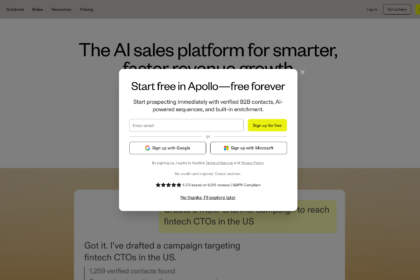
Apollo.io has carved out a unique position by combining a massive, accurate B2B database with a full-featured sales engagement suite. It's an excellent choice for teams that need to both find new prospects and engage with them within a single platform.
- Pros: The integration of lead data and engagement tools is its biggest strength, offering incredible value for money. Its database is extensive and generally high-quality. The platform is intuitive and includes robust sequencing, dialler, and analytics features.
- Cons: Because it does so much, it can sometimes feel less specialised in certain areas compared to a dedicated tool. For example, its conversation intelligence features may not be as advanced as those in Outreach.
4. Hunter Campaigns (Hunter.io)
Hunter is widely known for its email finder tool, but its Hunter Campaigns feature offers a simple yet effective solution for cold email outreach. It's a great starting point for individuals or small teams focused primarily on email.
- Pros: It's incredibly easy to use and set up. The integration with Hunter's core email-finding and verification tools is seamless. It's also one of the most affordable options for getting started with automated email sequencing.
- Cons: It is almost exclusively focused on email. It lacks the multi-channel capabilities (like a built-in dialler or LinkedIn integration) of a true, all-in-one sales engagement platform. It's best for email-centric outreach only.
Understanding Pricing and Cost Structures
Pricing for sales engagement software can vary significantly based on the vendor, feature set, and number of users. However, most platforms follow a similar pricing model, which makes comparison a bit easier.
The most common model is a per-user, per-month subscription, often billed annually. This means you pay a set fee for each sales rep who needs a licence. Prices can range from around £30 per user/month for simpler, email-focused tools to over £120 per user/month for enterprise-grade platforms with all the bells and whistles.
Here's a general breakdown of what to expect:
| Platform | Best For | Typical Pricing Model | Free Trial? |
|---|---|---|---|
| Outreach | Enterprise & Large Teams | Per User / Per Month (Annual Contract) | No (Demo Only) |
| Reply.io | SMBs & Mid-Market | Per User / Per Month (Flexible Plans) | Yes |
| Apollo.io | Teams Needing Data & Engagement | Per User / Per Month (Generous Free Tier) | Yes (Free Plan) |
| Hunter Campaigns | Individuals & Small Teams (Email-focused) | Tiered Plans Based on Contacts/Sends | Yes (Free Plan) |
It's crucial to visit each provider's website for the most current pricing information, as plans and features change frequently. When calculating the total cost, be sure to factor in any one-time implementation or onboarding fees.
Pro Tip: Don't just look at the sticker price. Calculate the total value. A more expensive tool that saves each rep five hours per week and increases their meeting booking rate by 20% will deliver a far greater return on investment than a cheaper tool that the team struggles to use effectively.
The Pros and Cons of Sales Engagement Software
Like any technology, sales engagement platforms come with a host of benefits and a few potential drawbacks. A balanced understanding is key to making an informed decision and implementing the software successfully.
The Advantages (Pros)
- Massive Efficiency Gains: Automation of manual tasks frees up significant time for reps to focus on selling.
- Improved Consistency: Standardised cadences ensure every prospect gets the right amount of follow-up, and the team's messaging is consistent.
- Deeper Insights: Analytics provide clear data on what's working and what isn't, enabling data-driven decisions and coaching.
- Enhanced Scalability: New reps can be onboarded faster by plugging them into a proven, structured sales process.
- Increased Pipeline: Higher activity levels and more effective outreach naturally lead to more conversations and opportunities.
The Potential Downsides (Cons)
- Risk of Impersonal Automation: If not used correctly, these tools can make outreach feel robotic and spammy. It's vital to train reps on proper personalisation.
- Cost: These platforms represent an additional subscription cost per salesperson, which can add up for larger teams.
- Learning Curve: There is an initial period of adjustment as reps learn a new workflow and technology.
- Dependence on Good Data: The mantra 'garbage in, garbage out' applies here. The effectiveness of the platform is highly dependent on the quality of the contact data in your CRM.
Frequently Asked Questions (FAQ)
What is a sales engagement tool?
A sales engagement tool is a piece of software designed to help sales teams streamline, automate, and track their communication with prospects across multiple channels like email, phone, and social media. It organises outreach into structured sequences (or cadences) to ensure consistent follow-up and provides analytics to measure effectiveness. Its main goal is to make salespeople more productive and effective at their job.
What is the difference between CRM and sales engagement?
The simplest way to think about it is that a CRM is a 'system of record' while a sales engagement platform is a 'system of action'. A CRM stores all your customer data—contact info, deal history, notes. A sales engagement platform takes that data and helps you act on it by executing outreach campaigns, automating tasks, and tracking interactions, then syncing all that activity back to the CRM.
What is the best sales engagement platform?
There is no single 'best' platform for everyone; the right choice depends entirely on your team's size, budget, sales process, and specific needs. For large enterprises needing advanced features, Outreach is a top contender. For teams wanting an all-in-one solution with lead data and multi-channel outreach, Reply.io and Apollo.io are excellent, versatile options. For those just starting with email automation, Hunter Campaigns is a simple and affordable choice.
Is sales engagement software worth the cost?
For most modern sales teams, the answer is a resounding yes. The productivity gains alone often provide a clear return on investment. When you factor in the benefits of a more consistent sales process, better data for coaching, and increased pipeline generation, the value becomes even more apparent. The cost of a licence is typically far less than the value of the extra time it gives back to a salesperson each month.
Final Thoughts
In today's competitive market, sales is a game of inches where efficiency and effectiveness make all the difference. Sales engagement software has moved from being a luxury for tech-forward companies to a foundational element of any high-performing sales organisation. These platforms empower representatives to spend less time on administrative tasks and more time building relationships and closing deals.
By providing a structured framework for outreach, automating repetitive work, and delivering crucial insights, sales engagement solutions help teams work smarter, not just harder. They ensure that every lead is pursued with persistence and personalisation, turning a chaotic, manual process into a predictable, scalable revenue engine.
If your sales team is still operating out of their email inbox and a spreadsheet, it's time to explore what a dedicated sales engagement platform can do. Exploring a versatile tool like Reply.io or an integrated data solution like Apollo.io could be the first step toward unlocking your team's true potential.