



9 Best AI for Content Generation in 2026 (For Marketers & Creators)
Creating high-quality content consistently is one of the biggest challenges for marketers, bloggers, and business owners. Finding the best AI for content generation can transform your workflow, helping you produce everything from blog posts to videos faster than ever before. These tools are no longer just simple article spinners; they are sophisticated assistants that can brainstorm ideas, draft copy, optimise for search engines, and even create multimedia content.
- In a Nutshell
- What Exactly is AI Content Generation?
- The Core Benefits: Why Use AI Content Creators?
- How to Choose the Best AI Writing Software for Your Needs
- Top 9 AI Content Tools Ranked & Reviewed for 2026
- 1. Jasper (formerly Jarvis): Best Overall for Marketing Copy & Brand Voice
- 2. Writesonic: Best for SEO-Optimised Long-Form Content
- 3. Semrush: Best for Integrating Content Creation with SEO Strategy
- 4. Copy.ai: Best for High-Volume Social Media & Ad Copy
- 5. Pictory: Best for Turning Text into Engaging Videos
- 6. Synthesia: Best for Creating Professional AI Avatar Videos
- 7. Murf AI: Best for Realistic AI Voiceovers & Narration
- 8. QuillBot: Best for Paraphrasing and Improving Existing Content
- 9. Grammarly: Best for AI-Powered Editing and Proofreading
- AI Content Generation Tools: A Feature Comparison
- Understanding Pricing Models and Costs
- The Pros and Cons of Using AI Content Creators
- Frequently Asked Questions (FAQ)
- What is the best AI tool to generate content?
- What AI is better than ChatGPT?
- Can I legally write a book with AI?
- Which AI is best for AI influencers?
- Final Thoughts: Integrating AI into Your Content Workflow
But with so many options available, choosing the right platform can feel overwhelming. Some tools excel at writing marketing copy, others are built for long-form SEO articles, and a new wave of AI is now focused on creating video and audio. This guide breaks down the top choices for 2026, helping you find the perfect fit for your specific needs, whether you're a solo creator or part of a large marketing team.
In a Nutshell
- Beyond Text: Modern AI content tools have expanded far beyond just writing. They now generate high-quality video, realistic voiceovers, and unique images, covering the full spectrum of digital content.
- Use Case is Key: The best tool for you depends entirely on your primary goal. Your needs for writing SEO blogs, creating social media ads, or producing training videos will point to very different solutions.
- Essential Features: When comparing options, look for a wide variety of templates, high-quality and factual output, seamless integrations with your existing software, and an intuitive user interface.
- Top Contenders: For written content, tools like Jasper and Writesonic lead the pack with advanced features for marketing and SEO. For video, platforms like Pictory and Synthesia are transforming how visual content is made.
What Exactly is AI Content Generation?
AI content generation refers to the use of artificial intelligence, specifically large language models (LLMs), to create human-like text, images, video, and audio. These models are trained on vast amounts of data from the internet, allowing them to understand context, grammar, style, and nuance. When you provide a prompt or command, the AI uses this training to predict the most logical sequence of words or pixels to generate new, original content.
This technology goes far beyond simply rearranging existing sentences. Modern AI content creators can write a complete blog post from a simple outline, design an image from a text description, or produce a marketing video from a script. They act as a creative partner, helping to automate the more time-consuming parts of the content creation process.
The core purpose is to augment human creativity, not replace it. These tools are exceptionally good at overcoming writer's block, scaling production, and handling repetitive tasks, which frees up creators to focus on strategy, editing, and adding their unique human touch to the final product.
The Core Benefits: Why Use AI Content Creators?

Integrating AI into your content workflow offers significant advantages that can give you a competitive edge. The benefits go beyond just speed; they impact efficiency, cost, and creativity across your entire content strategy. Understanding these perks helps clarify the powerful role these tools can play.
One of the most immediate benefits is the dramatic increase in speed and efficiency. A task that might take a human writer several hours, like drafting a 1,500-word blog post, can be accomplished by an AI in minutes. This acceleration allows content teams to meet tighter deadlines and increase their publishing frequency without sacrificing quality, assuming a proper human editing process is in place.
This leads directly to the ability to scale content production. A small business or a solo entrepreneur can use AI to generate a volume of content that was previously only possible for large corporations with big marketing departments. This includes social media updates, email newsletters, ad copy, and blog articles, allowing for a consistent and powerful online presence. It levels the playing field, enabling smaller players to compete more effectively.
Finally, AI content creators are excellent for overcoming creative blocks. Instead of staring at a blank page, you can use the AI to brainstorm headlines, generate outlines, or create initial drafts to get the creative process started. This makes them invaluable partners for ideation, helping you explore new angles and ideas you might not have considered on your own.
How to Choose the Best AI Writing Software for Your Needs
Selecting the right AI tool is critical, as the best option is highly dependent on your specific goals. A platform that's perfect for a social media manager might be a poor fit for an SEO specialist. To make an informed decision, evaluate potential tools against a few key criteria that align with your workflow and objectives.
First, clearly define your primary use case. Are you focused on writing long-form, SEO-optimised blog posts. Do you need to generate high volumes of short-form copy for social media and ads. Or is your main goal to repurpose written content into videos.
Your answer will narrow the field considerably.
Next, carefully assess the quality of the output. The best AI writing software produces content that is coherent, contextually relevant, and requires minimal editing. Many platforms offer free trials or credit-based plans, which you should use to test the same prompts across different tools. Pay attention to factual accuracy, tone of voice, and overall readability.
Remember, every AI-generated piece will need a human review, but a better tool means less editing time.
Finally, consider the available features and integrations. Look for a robust library of templates for different content types (e.g., blog intros, Google Ads, video scripts), brand voice features that learn your style, and plagiarism checkers. Also, check if the tool integrates with software you already use, such as WordPress, Google Docs, or marketing platforms like HubSpot, to ensure a smooth workflow.
Top 9 AI Content Tools Ranked & Reviewed for 2026
Navigating the crowded market of AI content tools can be tough. To help, we've tested and ranked the top platforms based on their primary strengths, features, and ideal use cases. This list covers everything from all-in-one writing suites to specialised tools for video and audio.
1. Jasper (formerly Jarvis): Best Overall for Marketing Copy & Brand Voice
Jasper has established itself as a leader in the AI writing space, particularly for marketing teams and businesses. Its key strength lies in its ability to understand and replicate a specific brand voice. You can upload documents, scan your website, and provide style guides, and Jasper will learn to write in your company's tone, ensuring consistency across all content.
With over 50 templates for everything from ad copy and product descriptions to blog posts and video scripts, it's an incredibly versatile tool. Its long-form editor, now called Documents, is powerful for creating detailed articles, and its collaboration features make it a great choice for teams. While it's one of the pricier options, the quality of its output often justifies the investment for serious content creators.
Pros
- High-Quality Output: Consistently generates well-written, coherent, and creative copy.
- Brand Voice Feature: Excellent at learning and maintaining a consistent tone.
- Team Collaboration: Features like user permissions and shared folders are ideal for marketing teams.
Cons
- Higher Price Point: Can be expensive for solo creators or small businesses.
- Learning Curve: Getting the most out of its advanced features requires some practice.
2. Writesonic: Best for SEO-Optimised Long-Form Content
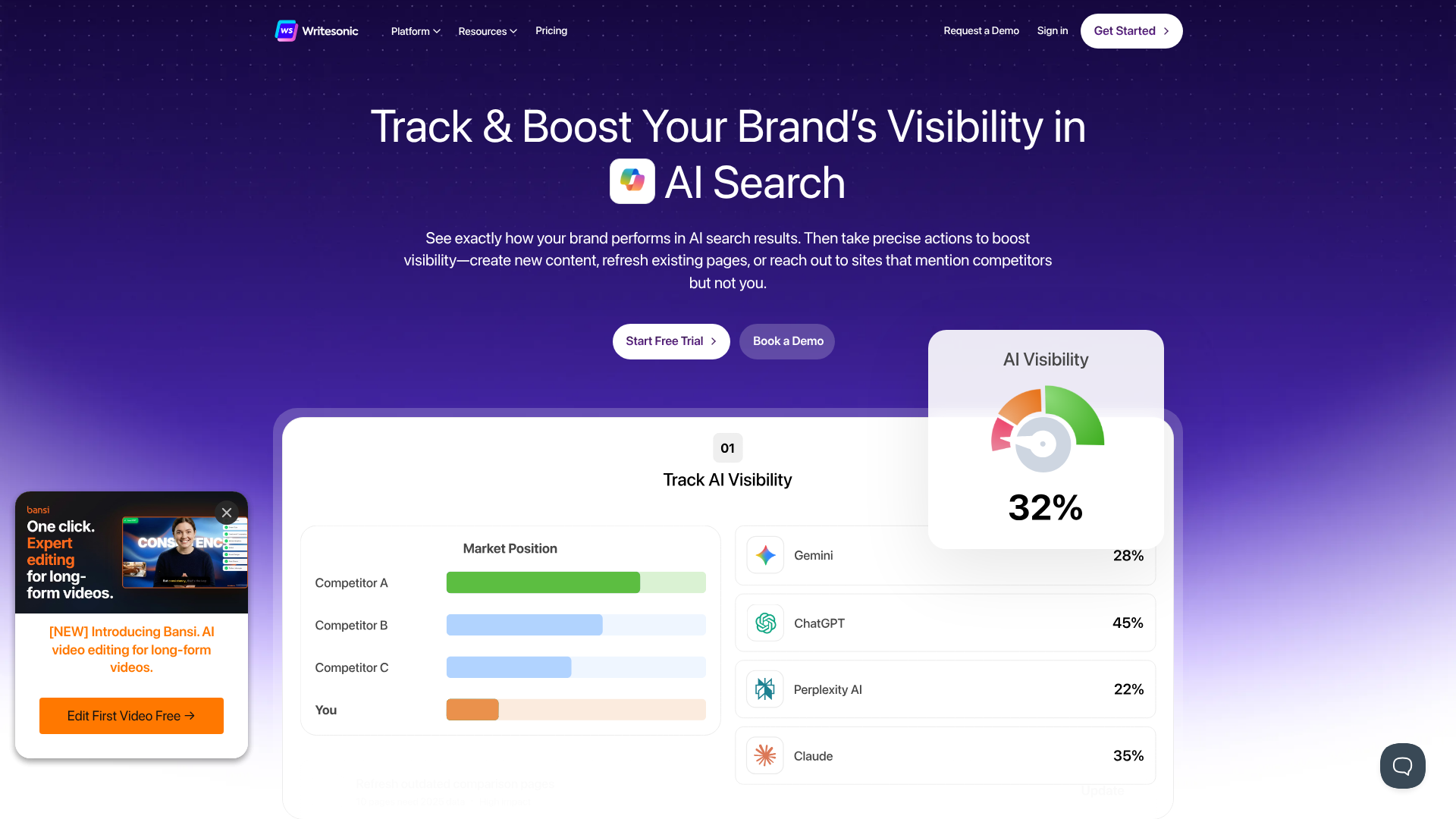
Writesonic is a powerful, all-in-one content platform that directly competes with Jasper but places a stronger emphasis on SEO. Its integration with Surfer SEO allows you to create articles that are optimised for specific keywords right within the editor. This makes it a favourite among bloggers, affiliate marketers, and SEO agencies who need to produce rank-worthy content efficiently.
Beyond its writing capabilities, Writesonic offers a full suite of AI tools, including Photosonic for AI image generation and Audiosonic for text-to-speech. This makes it an excellent value proposition, as you get multiple creative tools under one subscription. Its AI Article Writer 5.0 can generate a 1,500-word, fact-checked article from a single topic, complete with internal linking suggestions.
Pros
- Excellent SEO Integration: Built-in Surfer SEO analysis helps create content that ranks.
- All-in-One Platform: Includes AI image, audio, and chatbot features.
- Great Value for Money: Offers a competitive feature set at a reasonable price point.
Cons
- UI Can Be Busy: With so many features, the user interface can sometimes feel cluttered.
- Output Can Vary: While generally good, some outputs may require more editing than top competitors.
3. Semrush: Best for Integrating Content Creation with SEO Strategy
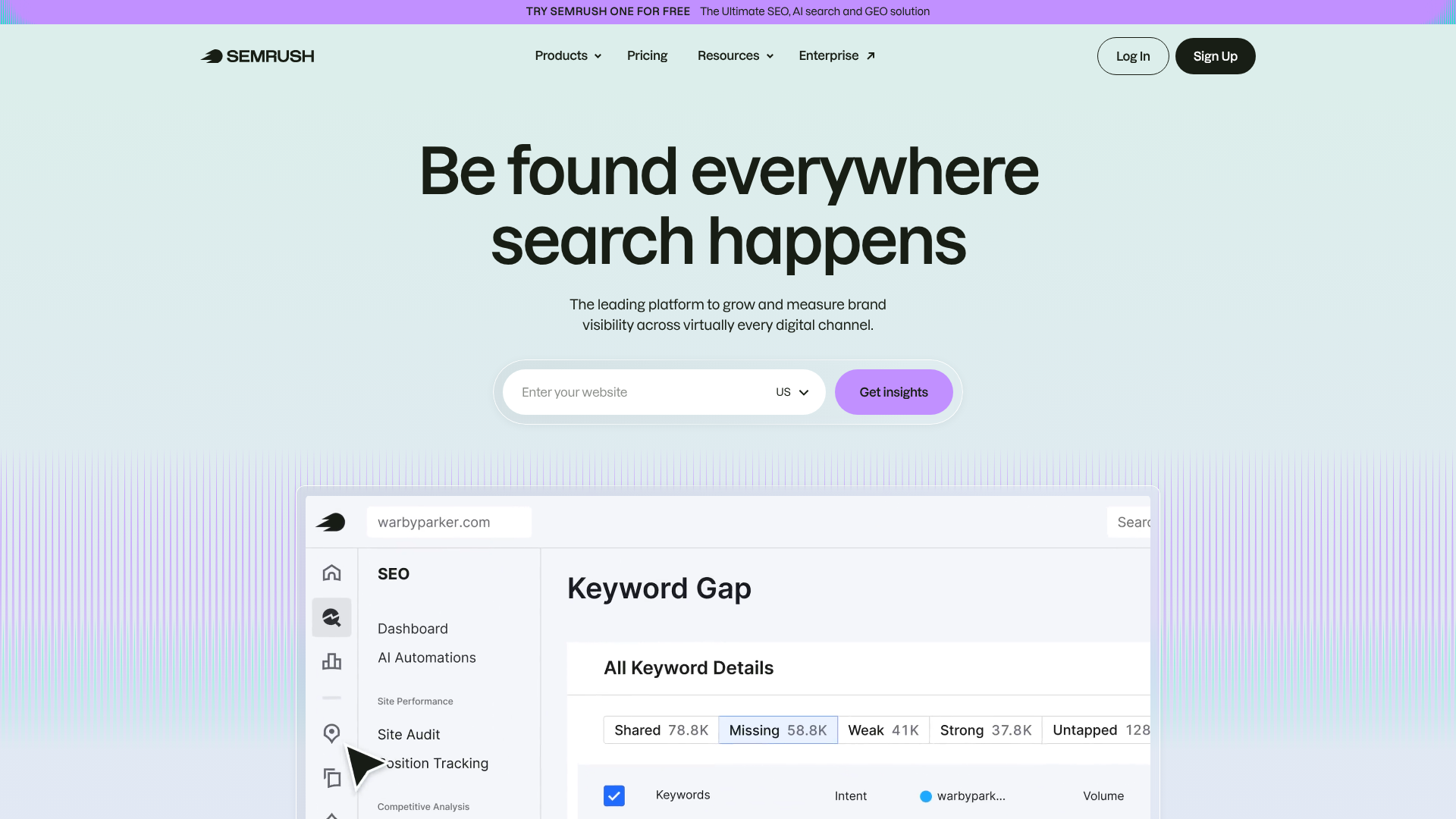
While primarily known as a world-class SEO platform, Semrush has integrated powerful AI content creation tools directly into its ecosystem. This is a huge advantage for marketers who want a data-driven approach. You can conduct keyword research, analyse competitors, and then use tools like ContentShake AI to generate articles based on that data, all within one platform.
Its SEO Writing Assistant provides real-time feedback on your content's readability, tone of voice, and SEO optimisation as you write. While its generative capabilities might not be as expansive as dedicated AI writers like Jasper, its strength is in its strategic foundation. It ensures that the content you create is perfectly aligned with your SEO goals from the very beginning.
Pros
- Data-Driven Content: AI suggestions are based on comprehensive SEO and competitor data.
- Seamless Workflow: Move from keyword research to content creation without leaving the platform.
- Holistic SEO Tool: Part of a complete suite for managing all aspects of digital marketing.
Cons
- Expensive: Full access to Semrush is a significant investment.
- Not a Dedicated Writer: The AI writing features are less robust than specialised tools.
4. Copy.ai: Best for High-Volume Social Media & Ad Copy
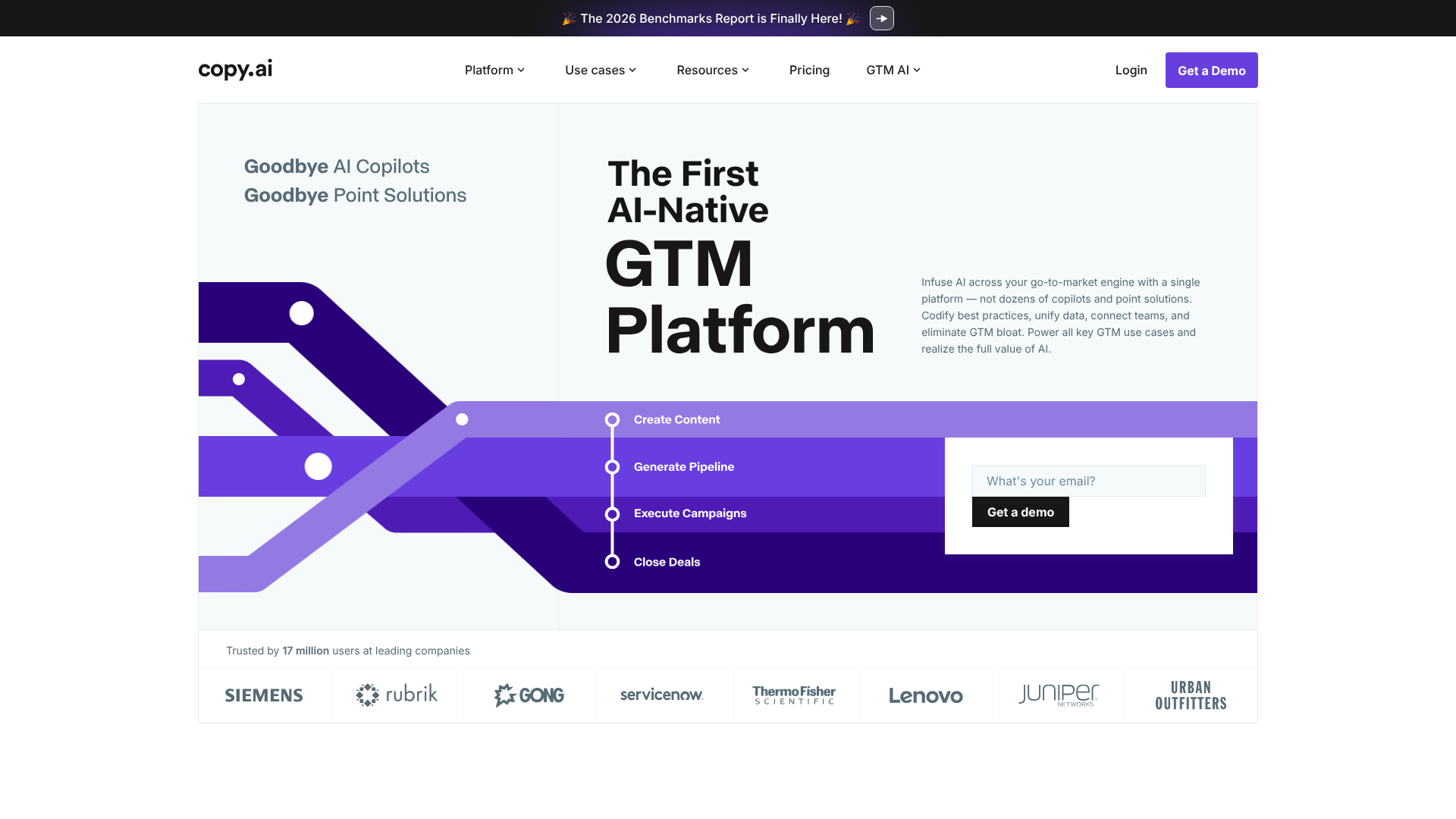
Copy.ai is designed for speed and simplicity, making it a fantastic choice for social media managers, advertisers, and anyone who needs to produce a high volume of short-form content quickly. Its user interface is clean and intuitive, and it offers a generous free plan that allows users to generate up to 2,000 words per month.
The platform excels at brainstorming and generating multiple variations of copy at once. If you need ten different hooks for a Facebook ad or five different captions for an Instagram post, Copy.ai can deliver them in seconds. While its long-form editor has improved, its core strength remains in short, punchy, and persuasive copy.
Pros
- Generous Free Plan: A great starting point for those new to AI writers.
- Very Easy to Use: The interface is straightforward and requires minimal training.
- Excellent for Brainstorming: Quickly generates dozens of ideas and copy variations.
Cons
- Inconsistent Long-Form Quality: Blog posts may require more significant editing compared to competitors.
- Fewer Advanced Features: Lacks some of the deep customisation options of other platforms.
5. Pictory: Best for Turning Text into Engaging Videos
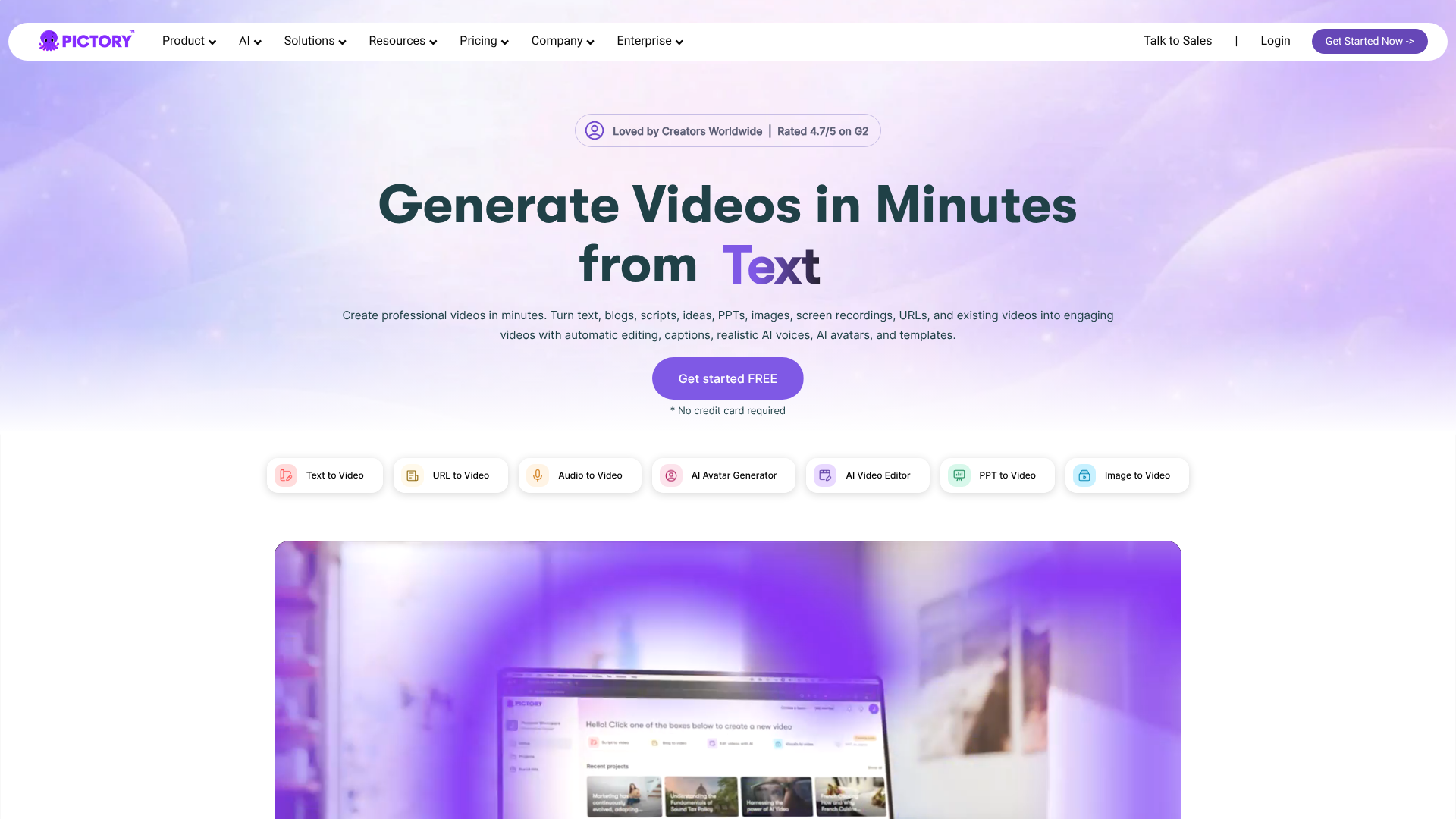
Pictory is a specialised AI tool that solves a major problem for content creators: repurposing. It allows you to transform long-form text content, such as blog posts or scripts, into professional-looking videos in minutes. The AI reads your text, selects relevant stock video clips and images from its vast library, and automatically adds captions.
This is ideal for bloggers who want to create a YouTube channel or marketers who need to produce social media videos at scale. You can choose from a range of AI voices for narration or upload your own voiceover. It dramatically lowers the barrier to video production, making it accessible to everyone, regardless of their video editing experience.
Pros
- Incredibly Fast Video Creation: Go from script to video in under 10 minutes.
- Massive Stock Media Library: Access to millions of licensed video clips and images.
- Automatic Captions: Essential for social media videos where many users watch with the sound off.
Cons
- AI Voiceovers Can Lack Emotion: While convenient, the AI voices may not suit all brand styles.
- Limited Customisation: Not as flexible as a traditional video editor like Adobe Premiere Pro.
6. Synthesia: Best for Creating Professional AI Avatar Videos
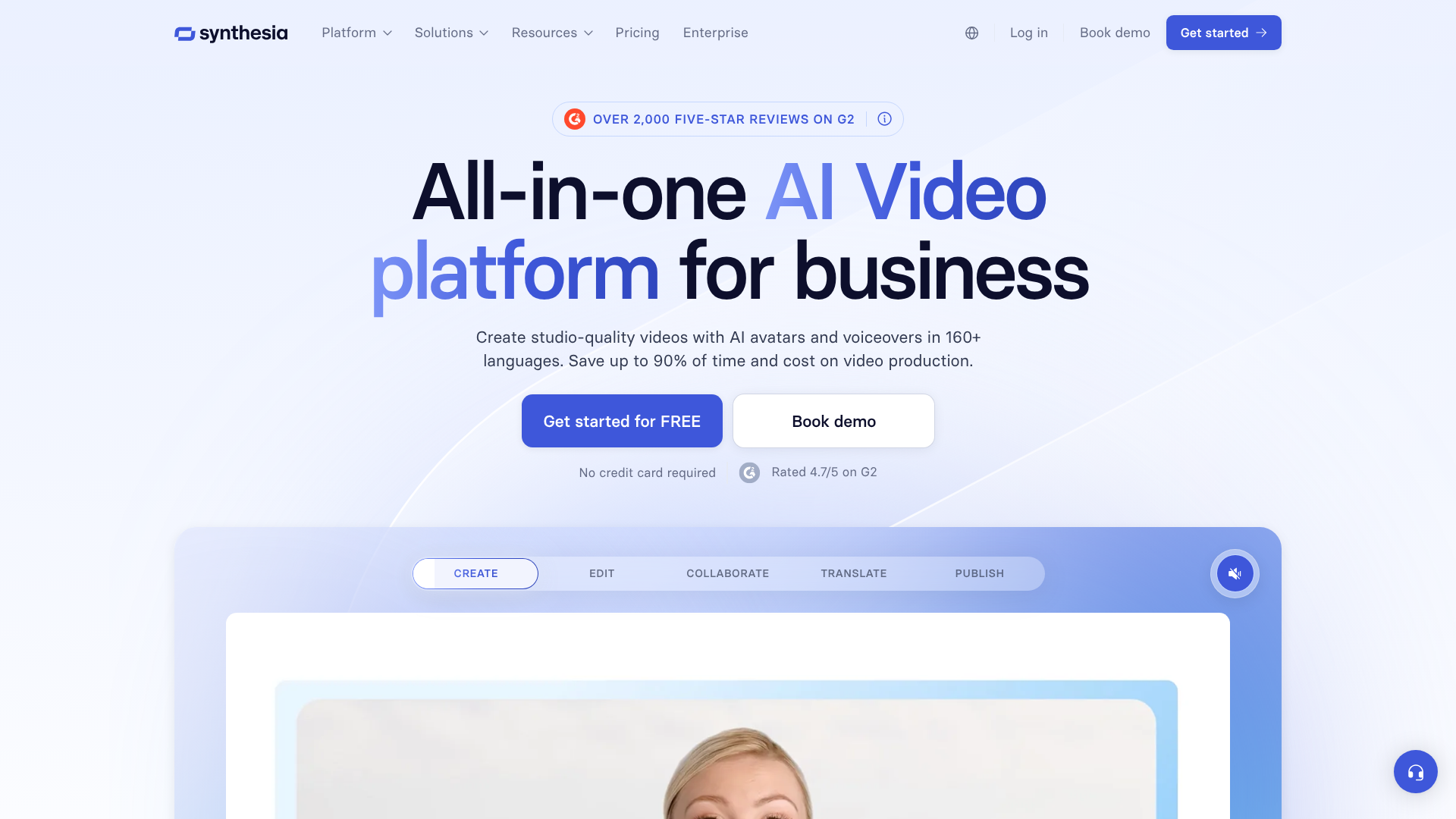
Synthesia takes AI video generation a step further by using hyper-realistic AI avatars. You can choose from over 140 diverse avatars, type in your script, and the AI will generate a video of the avatar speaking your text. This is a powerful tool for creating corporate training videos, product demonstrations, and marketing messages without the need for cameras, actors, or studios.
The platform supports over 120 languages, making it easy to localise content for a global audience. You can even create a custom avatar of yourself. The ability to quickly edit and update videos by simply changing the text script is a massive time-saver for corporate communication teams.
Pros
- Realistic AI Avatars: High-quality presenters for professional videos.
- Extensive Language Support: Easily create videos for international markets.
- Simple to Update: Edit videos as easily as editing a text document.
Cons
- Costly: Subscription plans can be expensive for smaller users.
- Avatar Movements: While good, the avatars can sometimes feel slightly unnatural.
7. Murf AI: Best for Realistic AI Voiceovers & Narration
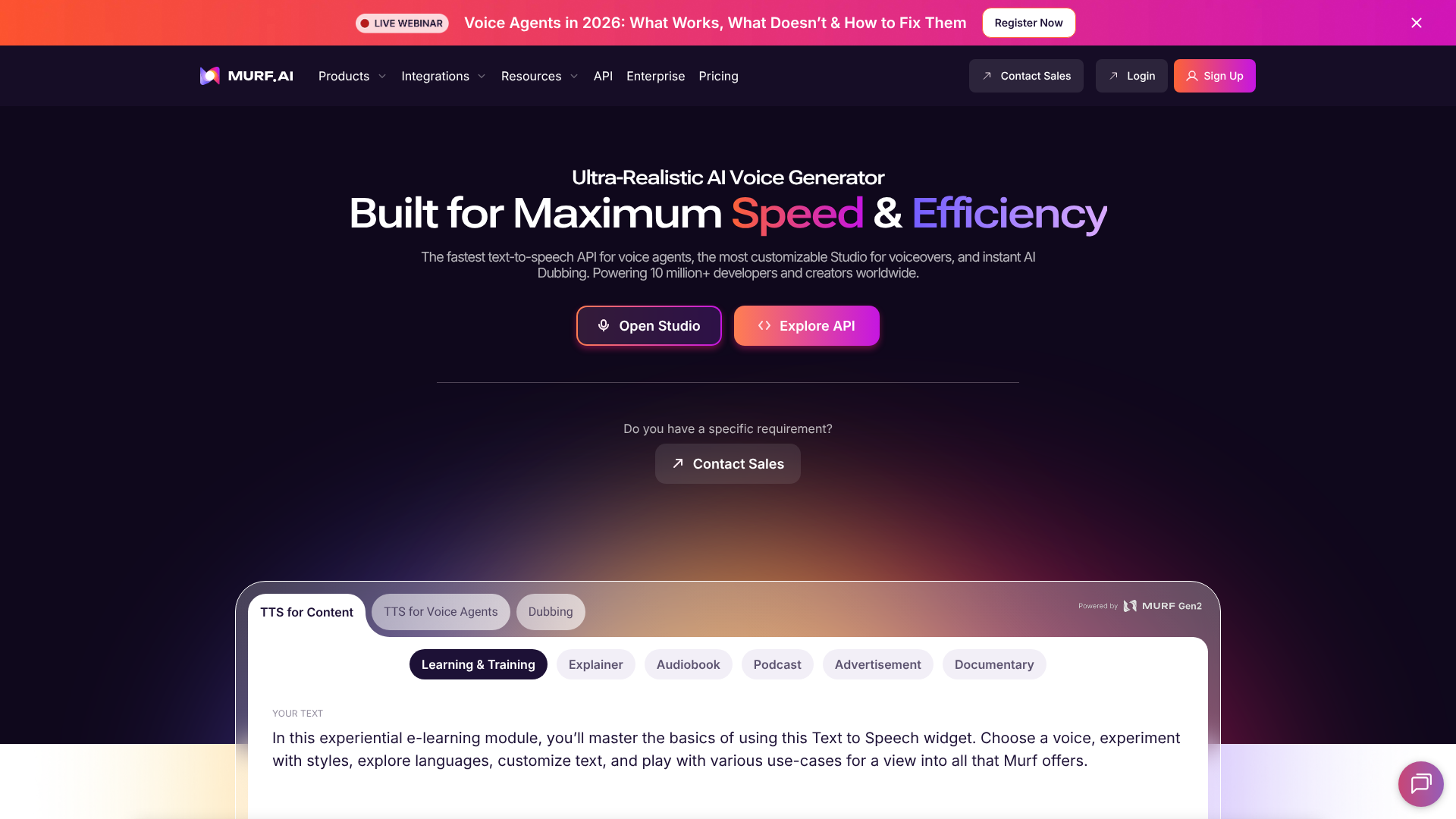
Murf AI specialises in one thing and does it exceptionally well: generating high-quality, human-like voiceovers. It offers a massive library of AI voices across different ages, genders, and accents. You can adjust the pitch, speed, and emphasis to create the perfect narration for your videos, podcasts, or presentations.
One of its standout features is voice cloning, which allows you to create a digital replica of your own voice. This is perfect for creators who want to scale their audio content without having to record every single word themselves. Murf AI's voices are a significant step up from the robotic text-to-speech of the past, making them suitable for professional projects.
Pros
- Studio-Quality Voices: Extremely realistic and emotionally expressive AI narration.
- Voice Cloning Feature: Create a custom AI voice for ultimate brand consistency.
- Versatile Use Cases: Ideal for YouTubers, podcasters, and e-learning course creators.
Cons
- Limited Free Plan: The free version has significant restrictions.
- Can Be Pricey: Costs can add up for users with high-volume audio needs.
8. QuillBot: Best for Paraphrasing and Improving Existing Content
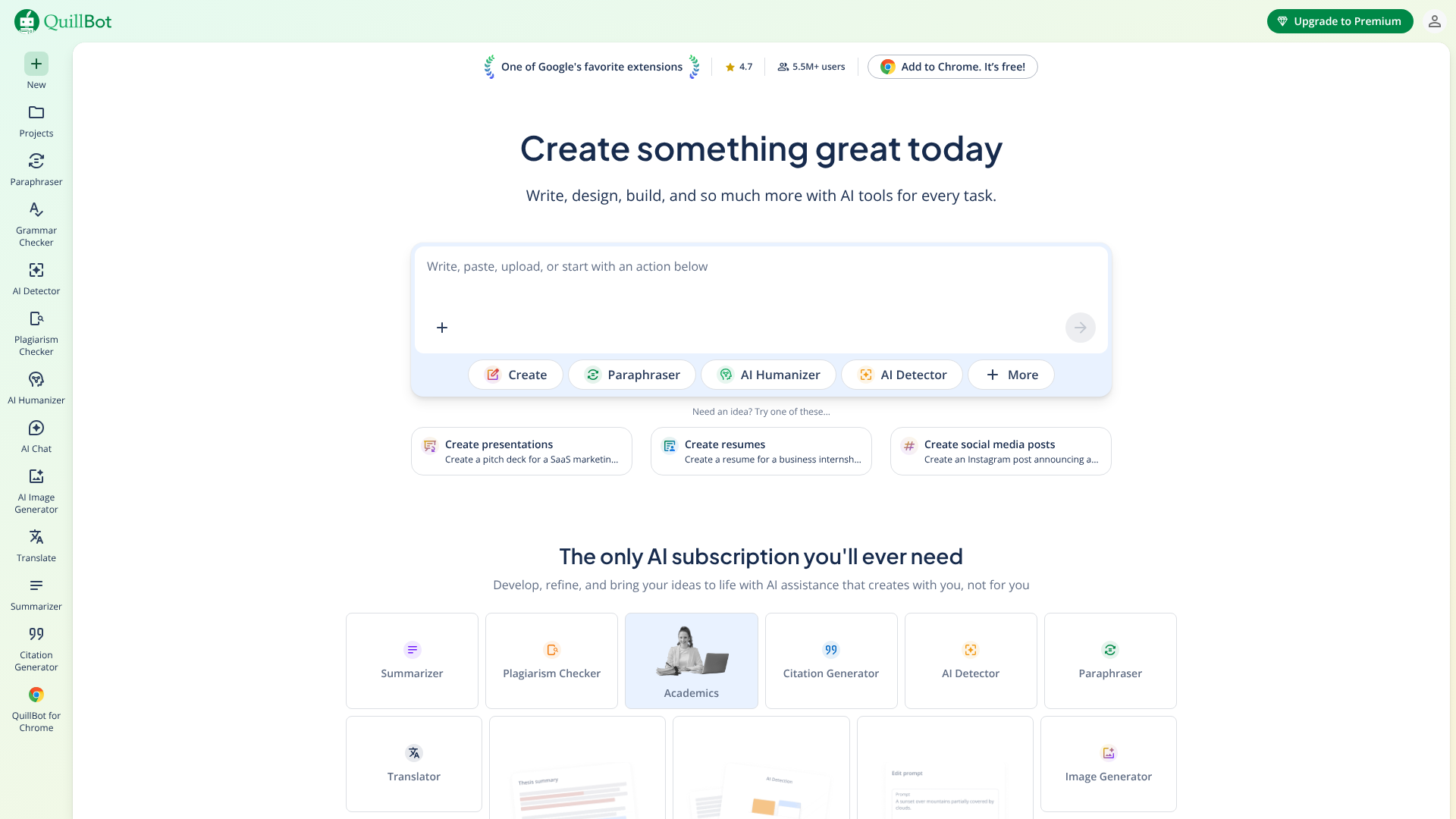
QuillBot is best described as an AI-powered writing companion rather than a pure content generator. Its core strength is its paraphrasing tool, which can rewrite sentences, paragraphs, or entire articles in different tones, such as formal, simple, or creative. This is incredibly useful for avoiding plagiarism, simplifying complex text, or repurposing content for different audiences.
In addition to the paraphraser, QuillBot includes a grammar checker, summariser, and citation generator, making it a favourite among students, academics, and writers who need to refine their work. It's not designed to create new content from scratch, but it's an essential tool for improving the quality and clarity of what you've already written.
Pros
- Powerful Paraphrasing Engine: Excellent for rewriting and rephrasing content.
- Affordable Pricing: The premium plan is very budget-friendly.
- Useful Browser Extension: Integrates directly into your writing workflow in Google Docs, email, and more.
Cons
- Not a Content Generator: Doesn't create new articles from a prompt.
- Can Sometimes Lose Nuance: Over-reliance on the paraphraser can strip the original meaning.
9. Grammarly: Best for AI-Powered Editing and Proofreading
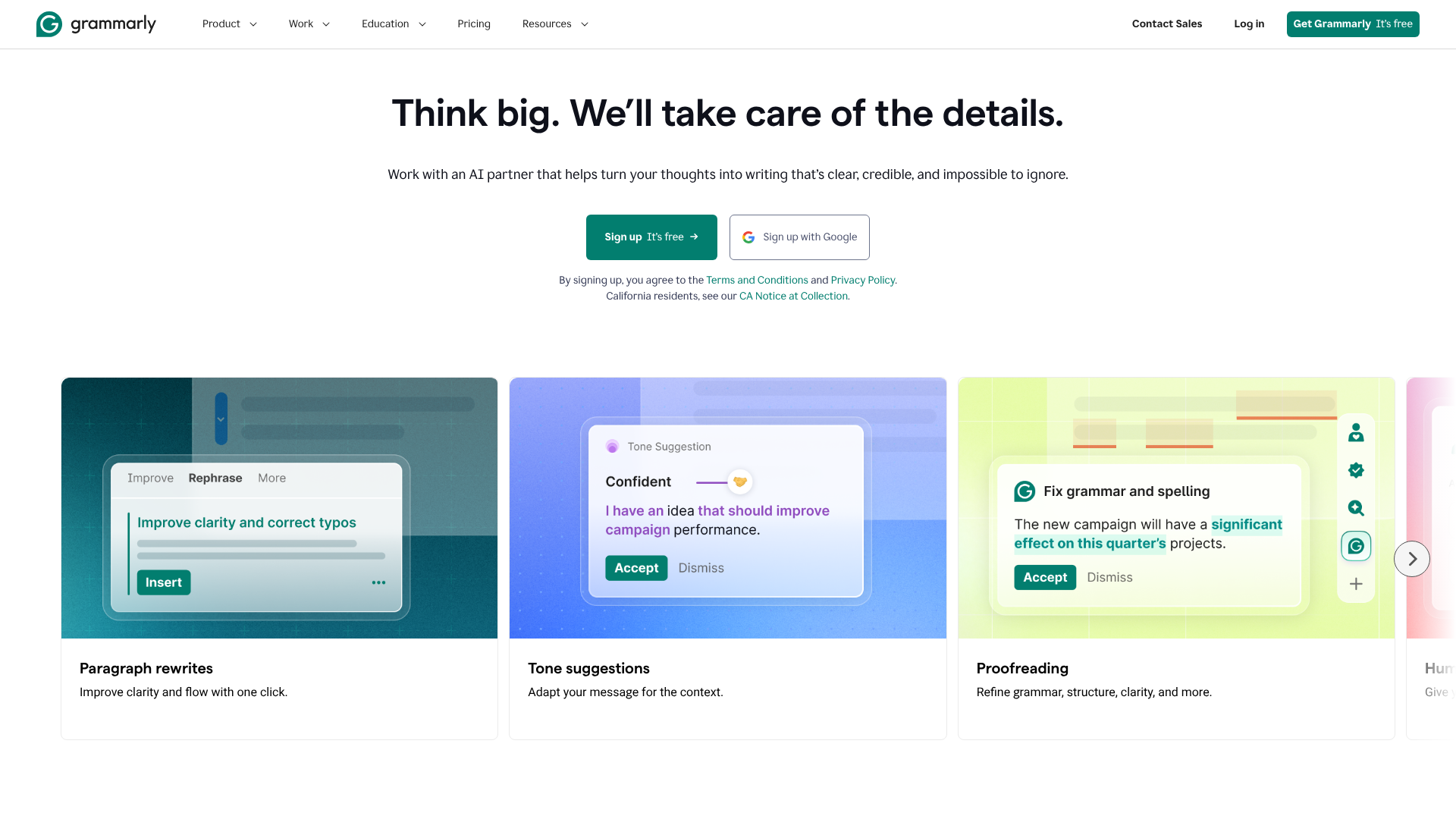
No content creation workflow is complete without a final editing step, and Grammarly is the undisputed leader in this area. It's an AI-powered assistant that checks for spelling, grammar, punctuation, and clarity. Its suggestions go beyond simple corrections, helping you improve sentence structure, word choice, and overall tone.
With the introduction of GrammarlyGO, it now includes generative AI features that can help you compose, ideate, and reply to text. While these features aren't as powerful as dedicated AI writers, they are a convenient addition to its core editing capabilities. Grammarly acts as the essential quality control layer, ensuring that any content—whether written by a human or AI—is polished and professional.
Pros
- Industry-Standard Proofreading: Catches errors that other tools miss.
- Improves Writing Style: Provides suggestions for clarity, conciseness, and engagement.
- Seamless Integration: Works everywhere you write, from your browser to your desktop.
Cons
- Generative AI is Basic: GrammarlyGO is not a replacement for a full-featured AI writer.
- Premium is Required for Advanced Checks: The most valuable suggestions are behind a paywall.
AI Content Generation Tools: A Feature Comparison
To help you visualise the differences between the top contenders, here is a side-by-side comparison of their key strengths and features.
| Feature | Jasper | Writesonic | Semrush | Pictory | Synthesia |
|---|---|---|---|---|---|
| Best For | Marketing & Brand Voice | SEO & Long-Form Content | Data-Driven Strategy | Text-to-Video | AI Avatar Videos |
| Primary Function | Writing | Writing & SEO | SEO & Writing | Video | Video |
| Key Feature | Brand Voice & Recipes | Surfer SEO Integration | SEO Writing Assistant | AI Video Selection | Realistic Avatars |
| Pricing Model | Subscription | Subscription/Credits | Subscription | Subscription | Subscription |
Understanding Pricing Models and Costs

AI content generation tools typically use a few different pricing structures, and understanding them is key to finding a plan that fits your budget and usage needs. The most common model is a monthly or annual subscription, which gives you access to a certain number of words or a set of features.
Many platforms, especially writers like Jasper and Writesonic, offer tiered subscriptions. Basic tiers might limit you to a lower word count per month and exclude advanced features like plagiarism checking or team collaboration. Higher-priced tiers unlock more words, premium features, and support for multiple users. Annual plans usually offer a significant discount compared to paying month-to-month.
Another popular model is credit-based. Instead of a word count, you purchase credits that are consumed each time you generate content. The number of credits used can vary depending on the length and quality of the generation. This model can be flexible for users with inconsistent needs but may be harder to budget for.
Always take advantage of free trials to get a feel for a tool's output and user experience before committing to a paid plan.
Pro Tip: When testing a tool, pay close attention to how it consumes your word or credit allowance. Some tools count every word generated, even if you don't use it, while others only count the words in the final document you export. Understanding this can save you a lot of money.
The Pros and Cons of Using AI Content Creators
While AI content tools offer incredible benefits, it's important to approach them with a balanced perspective. They are powerful assistants, but they also have limitations that require human oversight. Recognising both the advantages and disadvantages will help you integrate them into your workflow effectively.
Pros
- Unmatched Speed: Generate drafts, outlines, and ideas in a fraction of the time it would take a human.
- Massive Scalability: Enable small teams or individuals to produce a large volume of content consistently.
- Cost-Effective: A monthly subscription is often far cheaper than hiring freelance writers or a content agency.
- Idea Generation: An excellent tool for brainstorming and overcoming writer's block.
Cons
- Factual Inaccuracies: AI models can "hallucinate" and present incorrect information as fact. Human fact-checking is non-negotiable.
- Lack of True Creativity: AI learns from existing data, so it struggles with creating truly original concepts or conveying deep emotional nuance.
- Potential for Generic Content: Without careful prompting and editing, AI-generated content can sound bland and lack a unique perspective.
- Ethical and SEO Risks: Using AI to create low-quality, spammy content can lead to search engine penalties. Google's official stance is that it rewards high-quality content, regardless of how it's produced, but the emphasis is on quality.
Frequently Asked Questions (FAQ)
What is the best AI tool to generate content?
There is no single "best" tool for everyone, as the ideal choice depends entirely on your needs. For general-purpose marketing copy and maintaining a consistent brand voice, Jasper is often considered a top contender. If your focus is on creating long-form blog posts that are optimised for search engines, Writesonic with its Surfer SEO integration is an excellent choice. For turning articles into videos, Pictory is a market leader.
What AI is better than ChatGPT?
"Better" is subjective and depends on the task. ChatGPT is a powerful, general-purpose conversational AI that is excellent for brainstorming, research, and quick drafts. However, specialised tools like Jasper or Writesonic are often better for specific marketing and content creation workflows. They offer structured templates, brand voice controls, and integrations (like SEO tools) that are built specifically for content production, which can make them more efficient for those tasks.
Can I legally write a book with AI?
This is a complex and evolving area of law. According to current guidance from the U.S. Copyright Office, content generated entirely by AI is not eligible for copyright protection because it lacks human authorship. However, if a human author significantly selects, arranges, and modifies AI-generated text, the resulting work may be copyrightable.
It is crucial to be transparent about the use of AI and to consult with a legal professional for specific advice, as laws may vary by country and are subject to change.
Which AI is best for AI influencers?
Creating an AI influencer requires a combination of tools. For generating the visual avatar, platforms like Synthesia or HeyGen are the best choices, as they create realistic digital humans that can speak scripted content. For writing the scripts, social media captions, and backstory for the influencer, a powerful AI writer like Jasper would be ideal, as it can help develop a consistent personality and voice.
Final Thoughts: Integrating AI into Your Content Workflow
Artificial intelligence has fundamentally changed the content creation landscape. The tools available today can act as powerful co-pilots, helping you produce more content, faster, and with greater consistency. From drafting SEO-optimised articles to generating entire videos from a script, AI is an undeniable asset for any modern marketer or creator.
However, the key to success is viewing these tools as assistants, not replacements. The best results come from a partnership between human creativity and AI efficiency. Your strategy, unique insights, and final polish are what will always set your content apart. By choosing the right tool for your specific needs and committing to a process of review and refinement, you can elevate your content strategy to new heights.
If you're looking for the best all-around AI writer for marketing, we recommend exploring Jasper. For a feature-rich suite focused on SEO content, Writesonic is a fantastic option. And to effortlessly turn your written work into engaging videos, be sure to give Pictory a try.