


5 Best Non Disclosure Agreement Templates for UK Businesses (2026)
Protecting your business's sensitive information is not just good practice; it's essential for survival and growth. Using reliable non disclosure agreement templates is one of the most effective first steps you can take to safeguard your intellectual property, trade secrets, and client data. Whether you're hiring a new employee, collaborating with a freelancer, or discussing a potential partnership, a well-drafted NDA sets clear legal boundaries from the outset.
- In a Nutshell
- What Exactly Are Non Disclosure Agreement Templates?
- The Key Features and Benefits of Using an NDA
- How to Choose the Right Non-Disclosure Agreement Template
- Top 5 Non Disclosure Agreement Templates for 2026
- 1. LegalContracts
- 2. LawDepot
- 3. UK Government Website (GOV.UK)
- 4. Docusign
- 5. DIY with a Basic Template
- Comparison of Top NDA Template Options
- Pricing and Cost: Free vs. Paid Templates
- Pros and Cons of Using Templates vs. Hiring a Solicitor
- Frequently Asked Questions (FAQ)
- Are free non-disclosure agreement templates legally binding in the UK?
- What are the most important clauses to look for in an NDA template?
- How long should an NDA last?
- Can I edit a non-disclosure agreement template?
- Final Thoughts
This guide breaks down everything you need to know about choosing and using these critical documents. We'll explore the key clauses every agreement should have, compare the pros and cons of free versus paid options, and provide our top recommendations for 2026. Our goal is to help you find the right solution to protect your valuable information without the hefty legal fees.
In a Nutshell
- Purpose of an NDA: A Non-Disclosure Agreement (NDA), or confidentiality agreement, is a legal contract that obligates parties to keep specified information confidential for a set period.
- Key Clauses are Crucial: A strong NDA must clearly define what constitutes 'confidential information', outline the obligations of the receiving party, and specify the duration of the agreement.
- Types of NDAs: Agreements can be unilateral (one-way), bilateral (two-way), or multilateral, depending on how many parties are sharing sensitive information.
- Free vs. Paid Templates: Free templates can be a good starting point but often lack jurisdiction-specific clauses and support. Paid services offer customisation, legal compliance, and greater peace of mind.
- Choosing a Template: Select a template based on the specific relationship (e.g., employee, contractor, business partner) and the nature of the information being shared to ensure adequate protection.
What Exactly Are Non Disclosure Agreement Templates?
A non-disclosure agreement (NDA), often referred to as a confidentiality agreement, is a legally binding contract between at least two parties. Its primary function is to protect sensitive information shared between them. A template for such an agreement provides a pre-structured framework that you can adapt to your specific circumstances, saving you the time and expense of drafting a legal document from scratch.
These templates outline the confidential material, knowledge, or information that the parties wish to share with one another for certain purposes, but wish to restrict access to by third parties. Think of it as a formal promise to keep a secret. If that promise is broken, the wronged party has legal recourse to seek damages or an injunction to stop further disclosures.
There are three main types of NDAs, and the right template depends on your situation:
- Unilateral NDA: This is the most common type. Information flows in one direction, from a disclosing party to a receiving party. This is typical when a company shares proprietary information with a contractor, employee, or potential investor.
- Bilateral (or Mutual) NDA: In this scenario, two parties agree to share confidential information with each other and agree to protect it. This is common in joint ventures or business partnerships where both sides are disclosing sensitive data.
- Multilateral NDA: This involves three or more parties, where at least one party will be disclosing confidential information. It's more complex but efficient as it avoids the need for multiple separate bilateral NDAs. For example, a startup founder might use a multilateral NDA when pitching to a group of investors simultaneously.
Using a template simplifies the process, but it's crucial to understand that not all NDA templates are created equal. A generic form found online might not be suitable for UK law or your specific industry, which is why careful selection is paramount.
The Key Features and Benefits of Using an NDA

A well-structured NDA is more than just a formality; it's a critical tool for risk management. Its effectiveness hinges on the clarity and comprehensiveness of its clauses. Understanding these key features helps you appreciate the significant benefits they provide for your business.
Core Components of a Strong NDA
Every robust confidentiality agreement form should contain several essential elements:
- Identification of Parties: The agreement must clearly name the disclosing and receiving parties. This seems basic, but errors here can render the document unenforceable.
- Definition of Confidential Information: This is arguably the most important clause. It must be specific enough to be enforceable but broad enough to cover all intended information. It often excludes information that is already public knowledge or independently developed by the recipient.
- Obligations of the Recipient: The template should clearly state what the receiving party can and cannot do with the information. This usually includes a duty to keep the information secret and only use it for the agreed-upon purpose.
- Duration of the Agreement: The NDA must specify how long the duty of confidentiality lasts. This can be a fixed period (e.g., 3-5 years) or can last indefinitely for certain types of information, like trade secrets.
- Return or Destruction of Information: The agreement should outline the procedure for returning or destroying all confidential materials once the business relationship ends.
- Governing Law and Jurisdiction: This clause specifies which country's or region's laws will govern the agreement. For UK businesses, it's vital to ensure the template is governed by the laws of England and Wales, Scotland, or Northern Ireland.
Major Benefits for Your Business
By incorporating these features, using non disclosure forms offers substantial advantages:
- Protection of Intellectual Property (IP): Your ideas, inventions, and trade secrets are valuable assets. An NDA is the first line of defence in protecting them from being stolen or copied before you have patents or copyrights in place.
- Preservation of Trust in Business Relationships: Presenting an NDA shows that you take confidentiality seriously. It establishes a professional tone and clear expectations for new employees, partners, and contractors from day one.
- Legal Recourse: If a breach occurs, a signed NDA provides a clear legal framework for you to seek remedies, such as financial damages or a court order to prevent further disclosure. Without it, proving a breach of confidence is significantly more difficult and expensive.
- Control Over Information Flow: It gives you control over how your sensitive information is used. You can define the exact purpose for which the information is shared, preventing it from being used for any other reason.
How to Choose the Right Non-Disclosure Agreement Template
Selecting the right template is not a one-size-fits-all process. The context of your business relationship and the nature of the information being shared dictate the type of agreement you need. Making the wrong choice can leave you with a document that offers a false sense of security. Here’s a practical guide to help you choose wisely.
First, assess the flow of information. Is only one party disclosing sensitive data. If so, a unilateral NDA is appropriate. This is common when pitching an idea to an investor or bringing on a freelance developer.
If both parties are sharing confidential information, such as in a potential merger or joint venture, you need a bilateral (mutual) NDA to ensure both sides are equally protected.
Second, consider the specific relationship. An NDA for a new employee will differ from one for a temporary contractor. An employee NDA might be more comprehensive, covering client lists and internal processes, and may be integrated with their employment contract. A contractor NDA might be more focused on the specific project they are working on and the data they will access.
Third, evaluate the sensitivity and type of information. If you are sharing a highly valuable trade secret, like a unique recipe or a proprietary algorithm, your NDA needs to be extremely specific about what that information is and impose stricter confidentiality obligations. For less sensitive general business plans, a more standard template might suffice.
Here is a checklist to guide your decision:
- Relationship Type: Is it for an employee, contractor, business partner, or potential investor?
- Information Flow: Is it one-way (unilateral) or two-way (bilateral)?
- Jurisdiction: Is the template compliant with UK law (England & Wales, Scotland, etc.)?
- Scope: Does the definition of 'confidential information' accurately cover everything you need to protect?
- Duration: Is the confidentiality period reasonable for the type of information being shared?
- Exclusions: Does the template include standard exclusions for publicly known information?
- Remedies: Does it specify the consequences of a breach?
Pro Tip: Always have a legal professional review your chosen template, especially for high-stakes situations. While services like LegalContracts offer legally vetted documents, a quick review from a solicitor can tailor it perfectly to your unique circumstances and provide maximum protection.
Top 5 Non Disclosure Agreement Templates for 2026
Navigating the world of legal documents can be daunting. To simplify your search, we've compiled a list of the best non disclosure agreement templates, including both premium services for robust protection and reliable free options for those on a tight budget.
1. LegalContracts
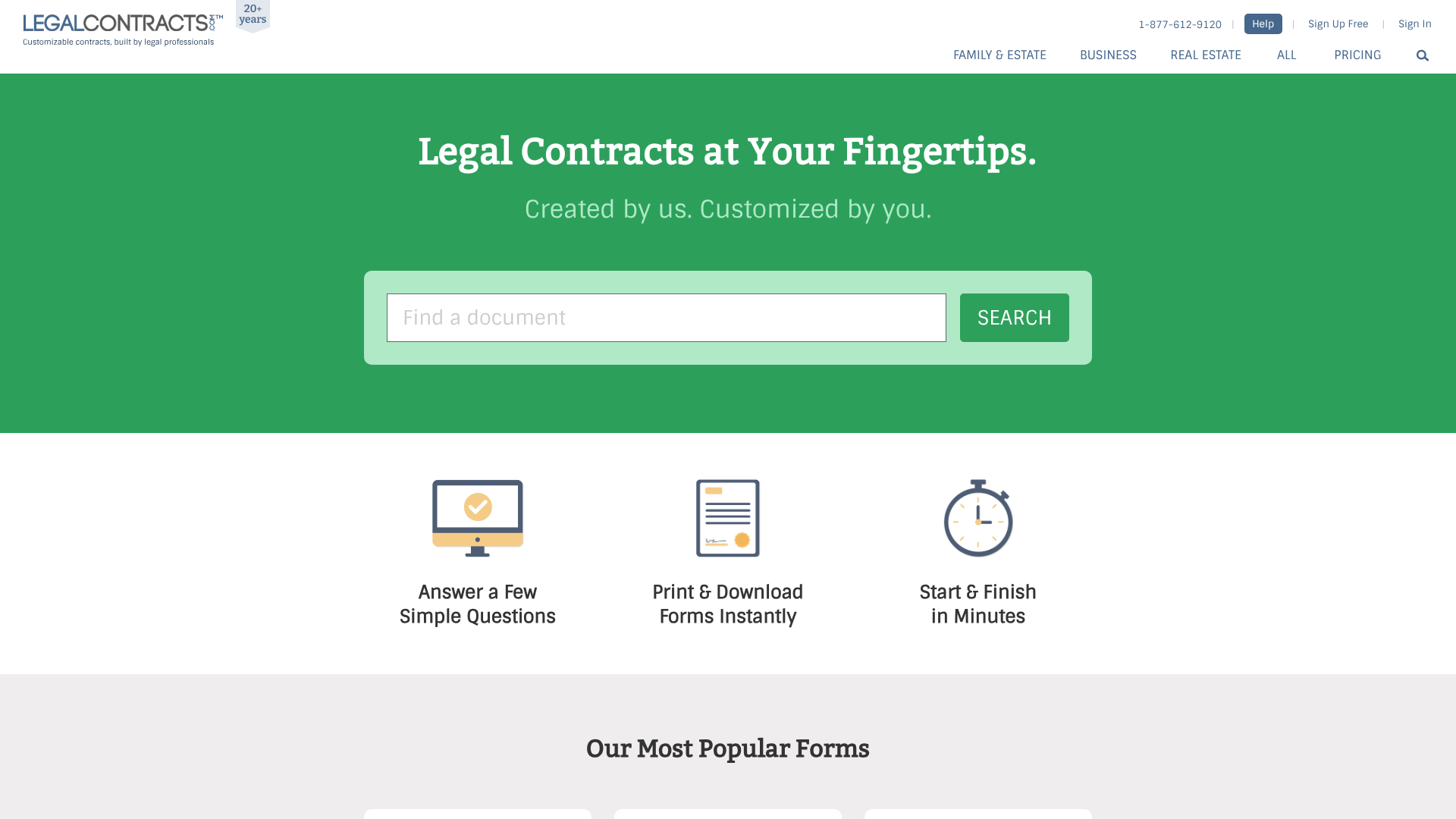
Best for: Small businesses, startups, and individuals seeking reliable, customisable, and legally vetted documents without the high cost of a solicitor.
LegalContracts is a leading online platform that allows you to create professional legal documents tailored to your specific needs. Their step-by-step questionnaire is intuitive, guiding you through the process of creating a comprehensive NDA that is specific to UK law. You answer simple questions, and the platform generates a customised document based on your answers.
This service is ideal for those who want more than a generic template. It helps you consider clauses you might not have thought of, ensuring your agreement is thorough. The final document is available to download in multiple formats, and the platform offers excellent customer support if you have questions along the way.
Pros
- Highly Customisable: The questionnaire-based approach creates a document tailored to your situation.
- Legally Vetted: Templates are created and reviewed by lawyers and legal professionals.
- User-Friendly: The process is simple and easy to follow, even for those with no legal background.
- Cost-Effective: Far cheaper than hiring a solicitor to draft a document from scratch.
Cons
- Subscription-Based: While you can purchase single documents, the best value comes from a subscription, which may not be ideal for one-off needs.
- Not a Law Firm: The service provides templates, not legal advice. For complex situations, you should still consult a solicitor.
2. LawDepot
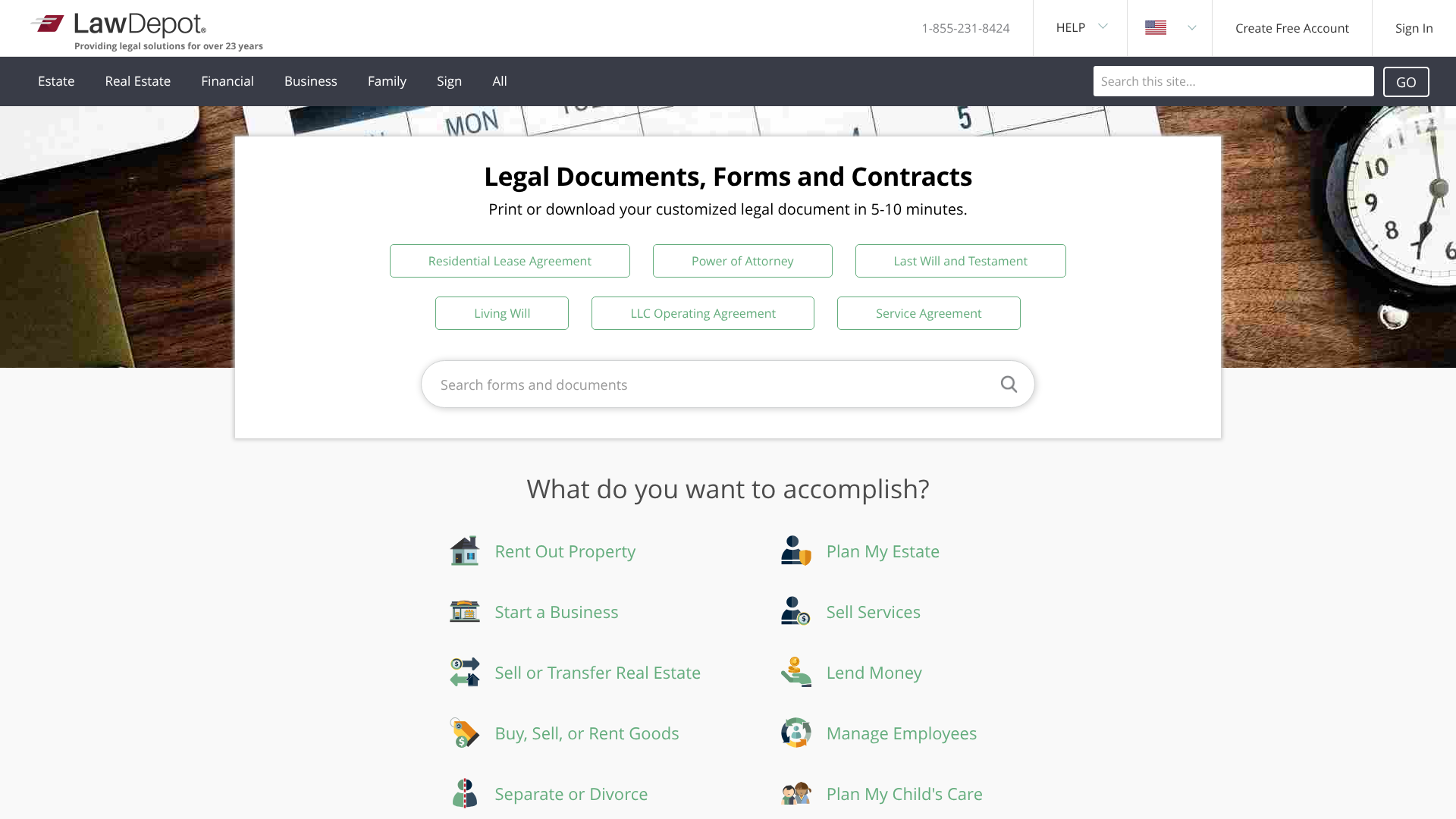
Best for: Users who want a similar experience to LegalContracts and value a well-established platform with a wide range of legal documents.
LawDepot is another major player in the online legal document space and a strong competitor to LegalContracts. It offers a very similar service, with an easy-to-use document builder that generates customised NDAs. You can create agreements for various scenarios, including employee confidentiality, trade secrets, and business negotiations.
Their platform is known for its clarity and comprehensive library of templates covering personal, business, and real estate needs. Like LegalContracts, it ensures that the documents are specific to your jurisdiction, providing peace of mind that your agreement is compliant with local laws.
Pros
- Wide Range of Templates: Offers a vast library of legal forms beyond just NDAs.
- Jurisdiction-Specific: Creates documents that adhere to the laws of your country and region.
- Free Trial: Often offers a free trial period where you can create and download documents.
Cons
- Automatic Subscription Renewal: The free trial typically rolls into a paid monthly subscription if not cancelled, which can catch users by surprise.
- Similar to Competitors: The core offering is very similar to other platforms, making it hard to differentiate.
3. UK Government Website (GOV.UK)
Best for: Startups and individuals looking for a basic, no-cost, and authoritative starting point for a confidentiality agreement.
For those who need a simple, free option, the UK Government's own website provides basic confidentiality agreement forms. These templates are designed to be straightforward and cover the essential clauses needed for a simple NDA. You can find them by searching for 'keep your business idea safe' on the GOV.UK website.
While these templates are a great resource, they are very basic. They are not tailored to specific industries or complex situations. You will need to manually fill in the details and ensure they accurately reflect your agreement. It's a solid starting point, but it may require significant customisation to be truly effective.
Pros
- Completely Free: No cost to download and use the templates.
- Authoritative Source: Comes directly from the UK Government, so it's a trustworthy resource.
- Simple and Clear: Easy to understand for those unfamiliar with legal jargon.
Cons
- Very Basic: Lacks the detail and customisation options of paid services.
- No Support: You are on your own to fill it out correctly.
- May Not Cover All Scenarios: Not suitable for complex business relationships or highly sensitive information.
4. Docusign
Best for: Businesses that not only need an NDA template but also a secure, integrated platform for sending, signing, and managing the document electronically.
Docusign is primarily known as an e-signature platform, but it also offers a library of common business document templates, including NDAs. The main advantage of using Docusign is the seamless integration of document creation and execution. You can generate an NDA, send it to the other party for a legally binding electronic signature, and store the executed agreement securely in one place.
Their templates are generally well-drafted, but the real value lies in the workflow efficiency. If you already use Docusign for other contracts, using their NDA template is a logical and convenient choice. It streamlines the entire process, from drafting to signing and archiving.
Pros
- Integrated e-Signature: Simplifies the process of getting the document signed and stored.
- Audit Trail: Provides a complete, legally admissible audit trail of when the document was opened, viewed, and signed.
- Efficient Workflow: Great for businesses that need to process a high volume of agreements.
Cons
- Template Quality Can Vary: The templates are more of an add-on to their core e-signature service and may not be as customisable as dedicated document builders.
- Cost: Docusign's plans are priced based on usage and features, which can be more expensive if you only need a few documents.
5. DIY with a Basic Template
Best for: Very simple, low-risk situations where the information being protected is not critically valuable, and legal budgets are non-existent.
This option involves finding a generic, free NDA template online from a reputable source (like a university's law department website) and customising it yourself. This is the most hands-on approach and carries the most risk, but it can be viable for straightforward scenarios, such as sharing initial ideas with a potential collaborator.
If you choose this route, you must be diligent. Cross-reference multiple templates, ensure all key clauses are present, and be extremely careful when defining the confidential information. This approach requires a good understanding of what you need to protect and a willingness to accept the associated risks.
Pros
- No Cost: The only investment is your time.
- Full Control: You have complete control over every word in the document.
Cons
- High Risk of Errors: Without a legal background, it's easy to create loopholes or unenforceable clauses.
- Not Jurisdiction-Specific: A template from a US source will not be suitable for a UK agreement.
- Time-Consuming: Researching, drafting, and reviewing the document yourself takes significant effort.
Comparison of Top NDA Template Options
| Feature | LegalContracts | LawDepot | GOV.UK Template | Docusign | DIY Template |
|---|---|---|---|---|---|
| Best For | Customised, reliable documents | Wide variety of legal forms | Basic, free starting point | Integrated e-signature workflow | Low-risk, simple situations |
| Customisation | High | High | Low | Medium | High (Manual) |
| Legal Compliance | UK-specific | UK-specific | UK-based, but basic | General | Varies (High Risk) |
| Ease of Use | Very Easy | Very Easy | Moderate | Easy | Difficult |
| Cost | Subscription / Per-document | Subscription / Trial | Free | Subscription | Free |
| Support | Yes | Yes | No | Yes | No |
Pricing and Cost: Free vs. Paid Templates

The decision between a free and a paid non-disclosure agreement template often comes down to a trade-off between cost and risk. While 'free' is always tempting, it's important to understand what you're getting—and what you're not—with each option.
The Allure of Free Templates
Free NDA templates, like those from GOV.UK or university websites, are an excellent resource for individuals or early-stage startups with no legal budget. They provide a basic structure that covers the fundamental principles of a confidentiality agreement. For a simple, low-stakes conversation, a free template can be sufficient to formalise the expectation of confidentiality.
However, the risks are significant. Free templates are generic by nature. They are not tailored to your specific industry, the nuances of your business relationship, or the unique laws of your jurisdiction. This can lead to vague definitions of confidential information or unenforceable clauses, leaving you exposed if a dispute arises.
The Value of Paid Services
Paid services, such as LegalContracts, typically operate on a subscription model or offer per-document pricing. While this involves an upfront cost, the value they provide often justifies the investment. These platforms use intelligent questionnaires to build a document that is customised to your answers. This process ensures that the final agreement is far more relevant and robust than a generic template.
Key advantages of paid services include:
- Jurisdiction-Specific Language: They automatically include clauses relevant to UK law.
- Comprehensive Clauses: They prompt you to consider aspects you might overlook, such as specific exclusions, dispute resolution methods, and remedies for breach.
- Professional Formatting: The final document is clean, professionally formatted, and ready to be signed.
- Support and Updates: These platforms often provide customer support and regularly update their templates to reflect changes in legislation.
Ultimately, the cost of a paid template service is a small fraction of what you would pay a solicitor. It represents a middle ground, offering a level of customisation and legal rigour that free templates lack, at a price point accessible to most small businesses.
Pros and Cons of Using Templates vs. Hiring a Solicitor
While templates are a powerful tool, they aren't the right solution for every situation. It's crucial to weigh their advantages and disadvantages against the alternative: hiring a solicitor to draft a bespoke agreement.
Advantages of Using Templates
- Cost-Effectiveness: This is the most significant advantage. A template from a service like LegalContracts can cost under £50, whereas a solicitor might charge several hundred pounds or more for a custom-drafted NDA.
- Speed and Convenience: You can generate a customised NDA online in minutes, any time of day. The process of engaging a solicitor, having consultations, and waiting for drafts can take days or even weeks.
- Educational: Using a guided template builder can help you understand the key components of an NDA and what they mean for your business.
Disadvantages of Using Templates
- Lack of Legal Advice: Template services provide documents, not legal advice. They cannot assess your specific situation and advise you on the best course of action. If your situation is complex or involves extremely high-value IP, a template might not provide sufficient protection.
- Risk of Incorrect Use: If you misunderstand a question in the builder or select the wrong options, you could inadvertently weaken the agreement. There's no professional oversight to catch such mistakes.
- Limited Scope for Negotiation: A template is a starting point. If the other party wishes to negotiate terms, you may find yourself needing legal advice to understand the implications of their proposed changes.
Pro Tip: A hybrid approach can be very effective. Use a high-quality template service like LegalContracts to create a strong initial draft. Then, if the stakes are high, pay a solicitor for a one-hour review. This is far cheaper than having them draft it from scratch but gives you the peace of mind of professional oversight.
Frequently Asked Questions (FAQ)
Here are answers to some of the most common questions people have about non-disclosure agreement templates.
Are free non-disclosure agreement templates legally binding in the UK?
Yes, a free non-disclosure agreement can be legally binding in the UK, provided it contains all the essential elements of a valid contract. This includes a clear offer and acceptance, consideration (something of value exchanged), an intention to create legal relations, and certainty of terms. The source of the template (free or paid) does not determine its legal validity.
However, the risk with free templates is that they may be poorly drafted, ambiguous, or missing key clauses required by UK law, which could make them difficult to enforce in court. A judge might find a clause too broad or unreasonable, rendering it invalid. Using a reputable, jurisdiction-specific source increases the likelihood of enforceability.
What are the most important clauses to look for in an NDA template?
The three most critical clauses are the Definition of Confidential Information, the Obligations of the Recipient, and the Duration of the agreement. The definition of confidential information must be precise, clearly stating what is covered and what is not. The obligations clause should explicitly forbid disclosure and limit the use of the information to the agreed-upon purpose. Finally, the duration clause must set a reasonable timeframe for how long the confidentiality must be maintained.
How long should an NDA last?
The duration of an NDA depends entirely on the nature of the information being protected. For general business information or details about a project, a term of 2 to 5 years is common. After this period, the information may no longer be sensitive or commercially valuable.
However, for trade secrets (like the formula for Coca-Cola), the confidentiality obligation should last indefinitely, or for as long as the information remains a trade secret. A good template will allow you to specify different time periods for different types of information.
Can I edit a non-disclosure agreement template?
Absolutely. The entire purpose of a template is to serve as a starting point. You should always review and edit a template to ensure it accurately reflects your specific agreement and circumstances. This includes filling in the names of the parties, precisely defining the confidential information, and setting the appropriate duration.
When using an online service like LegalContracts, the platform does this customisation for you through its questionnaire. If you're using a static template, you will need to make these edits yourself. Be cautious not to alter the core legal language unless you are confident you understand the implications.
Final Thoughts
In today's competitive business environment, protecting your confidential information is not optional. Non disclosure agreement templates offer a powerful, accessible, and cost-effective way to establish a legal framework for safeguarding your most valuable assets. They provide clarity and security when entering into new business relationships, allowing you to share ideas and data with confidence.
While free templates can serve a purpose in low-risk scenarios, paid services provide a superior level of customisation, legal rigour, and peace of mind. They bridge the gap between a risky generic document and expensive bespoke legal advice, making robust protection accessible to everyone from freelancers to growing startups.
For businesses and individuals in the UK looking for a reliable and user-friendly solution, a service like LegalContracts is an excellent choice. It guides you through creating a tailored, jurisdiction-specific NDA, ensuring you have a strong and enforceable agreement in place. By taking this simple step, you are making a crucial investment in the long-term security and success of your business.