



Zoho CRM vs HubSpot CRM: Which is Best for Small Business Growth?
Choosing the right Customer Relationship Management (CRM) platform is a critical decision for any growing business. It’s the central hub for your customer data, sales pipeline, and marketing efforts. Two of the biggest names in the CRM space are Zoho and HubSpot, and making a decision in the Zoho CRM vs HubSpot CRM debate can feel overwhelming. Both offer powerful tools, but they cater to different business needs, priorities, and budgets.
- In a Nutshell
- What Are HubSpot CRM and Zoho CRM? A Quick Introduction
- HubSpot vs Zoho: A Side-by-Side Feature Comparison
- User Interface and Ease of Use: HubSpot's Clear Advantage
- Sales Automation and Workflows
- Marketing Tools: Where HubSpot Shines
- Customisation and Flexibility: Zoho's Domain
- Pricing and Cost Comparison: A Tale of Two Models
- Pros and Cons: The HubSpot vs Zoho Breakdown
- How to Choose the Right CRM for Your Business
- Frequently Asked Questions (FAQ)
- Is Zoho CRM better than HubSpot?
- What are the disadvantages of Zoho?
- Is Zoho CRM really free?
- Who is the no. 1 CRM provider?
- Is Zoho a Chinese company?
- Final Thoughts: Making the Right Decision
This guide provides a comprehensive breakdown, comparing everything from features and pricing to ease of use and customisation. We'll move beyond the marketing jargon to give you a clear picture of which platform is the right fit for your team. Whether you prioritise an intuitive, all-in-one system or a deeply customisable, budget-friendly powerhouse, this comparison will help you make an informed choice.
In a Nutshell
- HubSpot is for you if: You prioritise ease of use, rapid team adoption, and a tightly integrated platform for marketing, sales, and service. It's ideal for businesses focused on inbound marketing, even if it comes at a higher long-term cost.
- Zoho is your best bet if: Your primary concerns are budget and customisation. It's the top choice for businesses needing to tailor a CRM to unique processes and who are comfortable with a steeper learning curve.
- Pricing Philosophy: HubSpot CRM offers an exceptional free plan, but its paid tiers scale in price quickly. Zoho provides more advanced features at lower price points across all its paid plans, offering outstanding value for money.
- The Core Difference: The choice ultimately boils down to a trade-off. You're choosing between HubSpot's beautifully simple, unified marketing and sales ecosystem and Zoho's incredibly powerful, affordable, and endlessly customisable platform.
What Are HubSpot CRM and Zoho CRM? A Quick Introduction
Before diving into a feature-by-feature analysis, it's important to understand the philosophy behind each platform. Their origins and core missions directly influence their strengths and weaknesses, shaping the user experience and overall functionality.
HubSpot CRM: The All-in-One Growth Platform
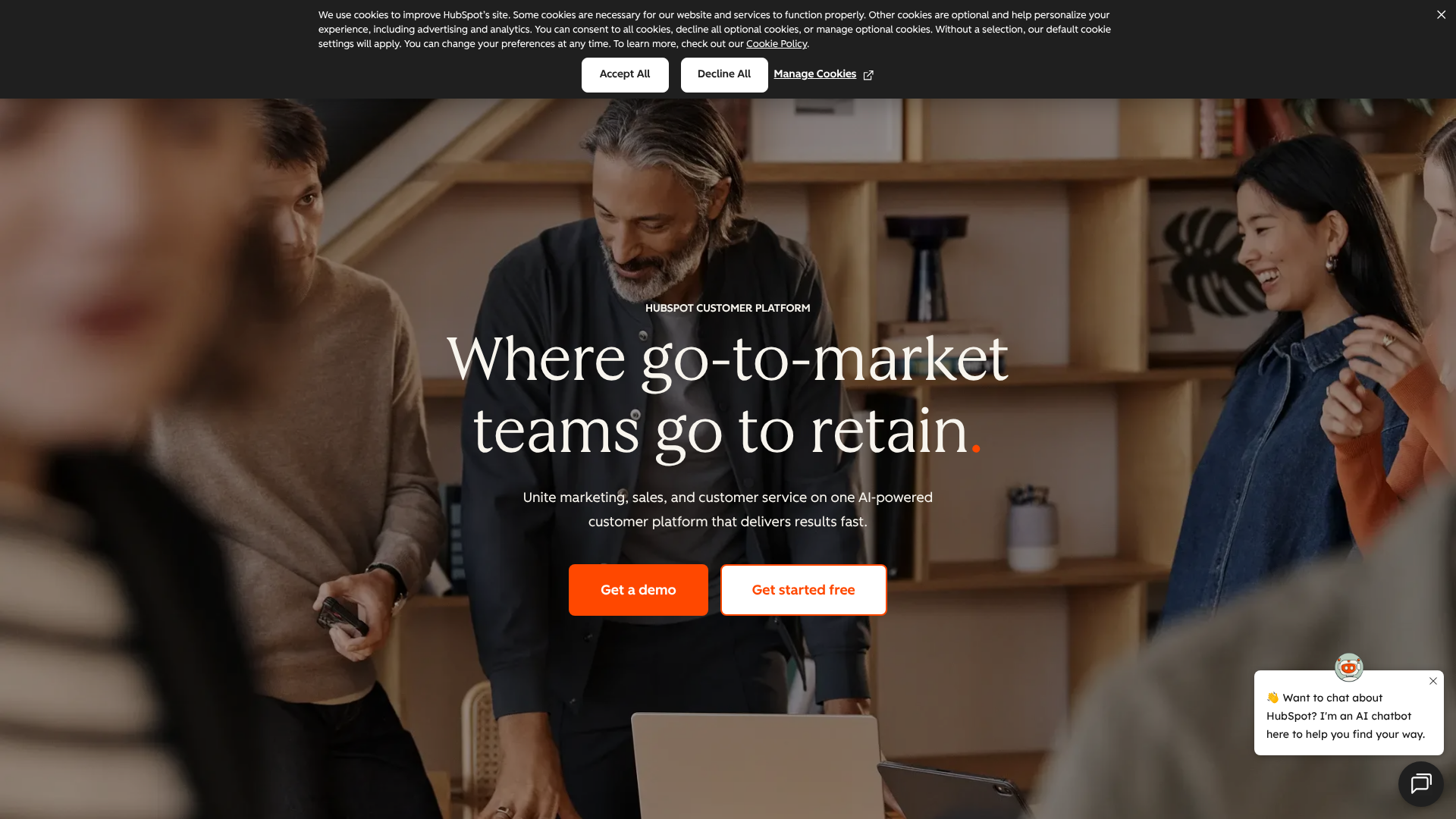
HubSpot was built from the ground up around the concept of inbound marketing. Its entire platform is designed to help businesses attract, engage, and delight customers through valuable content and seamless experiences. It’s not just a CRM; it's a complete growth platform divided into several 'Hubs': Marketing Hub, Sales Hub, Service Hub, CMS Hub, and Operations Hub.
The key benefit of HubSpot is its integration. All the Hubs work together flawlessly, providing a single source of truth for all customer interactions. This makes it incredibly powerful for aligning your sales and marketing teams. The platform is renowned for its clean, modern, and intuitive user interface, which significantly lowers the barrier to entry and encourages team adoption.
HubSpot is ideal for small to medium-sized businesses (SMBs) and even enterprise companies that want a user-friendly system that just works out of the box. If your strategy revolves around content marketing, SEO, and creating a smooth customer journey, HubSpot's DNA is perfectly aligned with your goals.
Zoho CRM: The Customisable Business Operating System
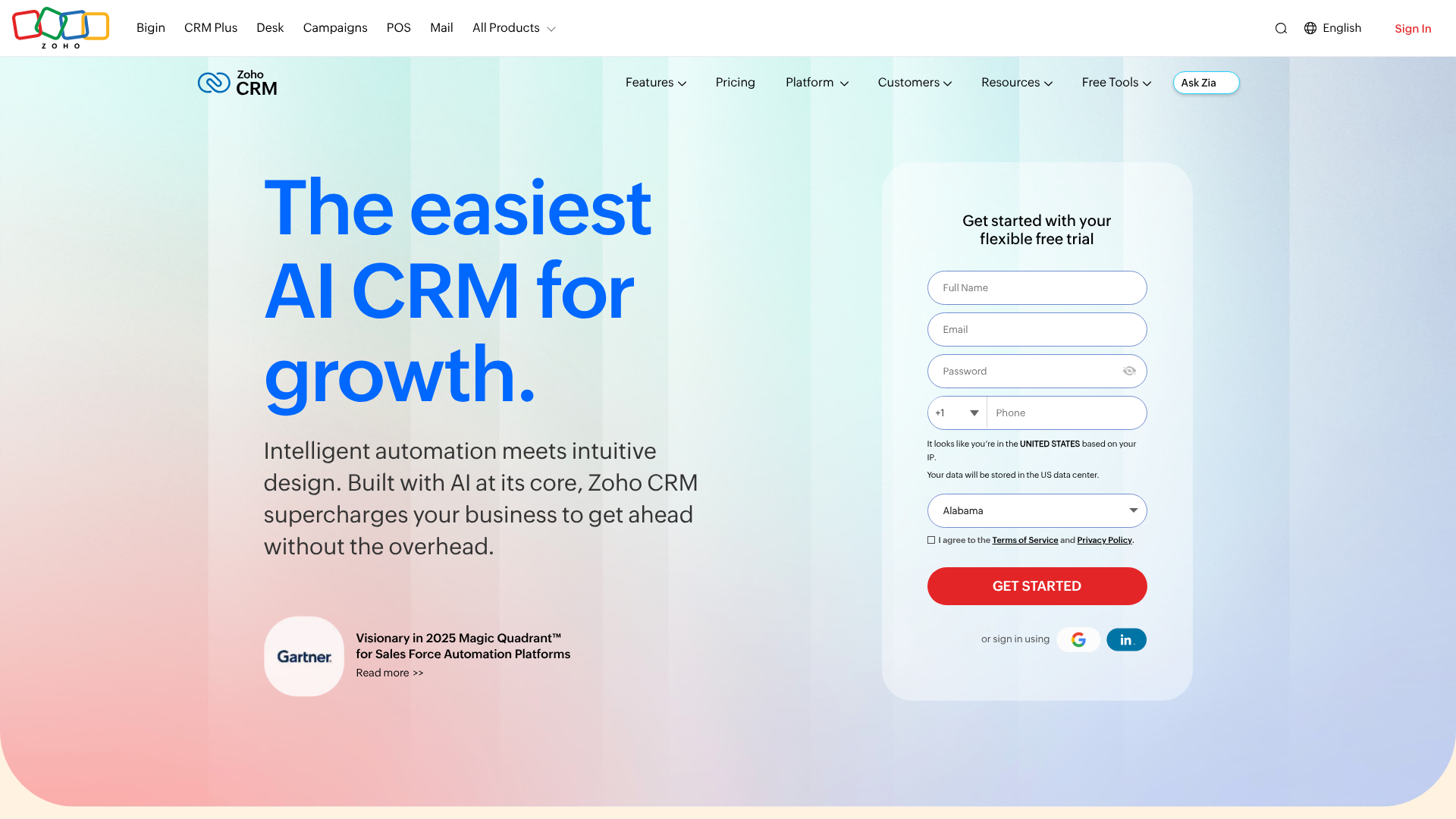
Zoho's philosophy is entirely different. Zoho CRM is just one piece of a much larger puzzle: the Zoho suite, which includes over 50 different business applications covering everything from finance and HR to project management and business intelligence. This makes Zoho more of a complete 'business operating system' than just a CRM.
Its greatest strength lies in its immense flexibility and customisation. While HubSpot guides you towards a specific way of working, Zoho gives you the building blocks to create a system that perfectly matches your unique business processes. You can create custom modules, automate complex workflows, and tailor almost every aspect of the platform to your needs.
This power comes with a trade-off: a steeper learning curve. The interface, while functional, can feel more traditional and less intuitive than HubSpot's. However, for businesses that need granular control and are willing to invest time in setup, Zoho offers unparalleled power at an extremely competitive price point. It's a favourite among businesses that have outgrown off-the-shelf solutions or are already invested in the broader Zoho ecosystem.

HubSpot vs Zoho: A Side-by-Side Feature Comparison
Now, let's get into the specifics. How do these two platforms stack up when it comes to the features that matter most to your sales and marketing teams? This HubSpot vs Zoho comparison highlights the key differences.
| Feature | HubSpot CRM | Zoho CRM |
|---|---|---|
| Ease of Use | Excellent, highly intuitive | Moderate, steeper learning curve |
| Free Plan | Very generous and powerful | Good, but more limited (3 users max) |
| Contact Management | Simple and effective | Highly detailed and customisable |
| Sales Pipeline | Visual, drag-and-drop | Highly customisable, rule-based (Blueprint) |
| Automation | User-friendly visual builder | Extremely powerful, even on lower tiers |
| Marketing Tools | Tightly integrated, all-in-one | Powerful, but often in separate apps |
| Reporting | Good, with beautiful dashboards | Advanced, highly granular analytics |
| Integrations | Large marketplace (1,000+ apps) | Very large marketplace (1,000+ apps) |
| AI Capabilities | AI Assistant for content/productivity | Zia AI for predictions and automation |
| Best For | Teams needing simplicity and marketing alignment | Teams needing customisation and value |
User Interface and Ease of Use: HubSpot's Clear Advantage
When it comes to user experience, HubSpot is the undisputed winner. Its interface is clean, modern, and logically organised. New users can typically get up and running with minimal training, which is a massive advantage for small businesses without dedicated IT staff. Everything from creating a deal to building a report is designed to be as straightforward as possible.
Zoho, on the other hand, presents a more significant learning curve. While it has made improvements over the years, its interface can still feel cluttered and overwhelming to newcomers. The sheer number of features and customisation options means that navigating the system requires more initial effort and training. It's a powerful tool, but it's not one your team will master overnight.
Sales Automation and Workflows
Both platforms offer robust automation capabilities, but they approach it differently. HubSpot's workflow builder is visual and incredibly easy to use. You can create complex sequences for lead nurturing, task assignment, and internal notifications with a simple drag-and-drop interface. However, the most powerful automation features are reserved for its more expensive Professional and Enterprise plans.
Zoho offers powerful automation tools, like its workflow rules and Blueprint feature (which enforces a specific sales process), even on its lower-priced tiers. This makes it a fantastic option for businesses that want to implement sophisticated automation without a hefty price tag. Zoho's AI assistant, Zia, can also suggest workflow rules and macros, helping you automate repetitive tasks more efficiently.
Pro Tip: When evaluating automation, map out your most critical sales or marketing process. Then, during your free trial of each platform, try to build that exact workflow. This hands-on test will quickly reveal which system's logic and interface work better for your team.
Marketing Tools: Where HubSpot Shines
A core part of the Zoho vs HubSpot CRM debate centres on marketing. HubSpot's Marketing Hub is a fully integrated suite of tools that includes email marketing, landing page creation, social media scheduling, SEO recommendations, and blogging. Because it's all part of the same platform, you get a seamless view of a contact's entire journey, from their first website visit to becoming a loyal customer.
Zoho's marketing tools are also powerful, but they are typically housed in separate applications like Zoho Campaigns (for email) and Zoho Social (for social media). While they integrate well with Zoho CRM, the experience isn't as unified as HubSpot's. This can sometimes lead to a slightly disjointed workflow, requiring you to switch between different apps to manage your marketing efforts.
Customisation and Flexibility: Zoho's Domain
If your business has unique processes that don't fit a standard sales model, Zoho is the clear choice. Its customisation capabilities are vast. You can create custom modules to track anything you want, add countless custom fields, and design page layouts specific to different user roles. This level of flexibility allows you to build a CRM that is truly bespoke to your business operations.
HubSpot is significantly more rigid. It's designed around a set of best practices for inbound sales and marketing. While you can create custom properties (fields), you cannot create entirely new modules, and layout customisation is limited. HubSpot's approach is to provide a proven framework for success, whereas Zoho provides a toolbox to build your own.
Pricing and Cost Comparison: A Tale of Two Models

Pricing is often the deciding factor in the Zoho CRM comparison, and the two companies have fundamentally different approaches. Understanding these models is key to forecasting your long-term costs.
HubSpot's "Free-to-Expensive" Model
HubSpot's free CRM is one of the best on the market. It provides unlimited users with access to core CRM functionality, contact management, deal tracking, and a range of free marketing and sales tools. It's a fantastic starting point for any small business or startup.
However, once you need more advanced features, the costs escalate quickly. HubSpot's paid products are sold as individual Hubs (e.g., Sales Hub, Marketing Hub), each with Starter, Professional, and Enterprise tiers. A small team needing professional-level sales and marketing features could easily find themselves paying several hundred or even thousands of pounds per month. The pricing is also based on the number of marketing contacts and paid users, which can make budgeting complex.
Zoho's "Affordable Power" Model
Zoho's pricing is much more straightforward and budget-friendly. Its paid plans start at a low per-user, per-month fee and offer a wealth of features that would cost significantly more with HubSpot. For example, Zoho CRM's Professional edition includes advanced workflow automation and inventory management for a fraction of the cost of HubSpot's Sales Hub Professional.
Furthermore, Zoho offers the Zoho One bundle. This is an all-in-one suite of over 45 applications, including the enterprise version of Zoho CRM, for a single, incredibly low per-employee price. For businesses looking to overhaul their entire tech stack, Zoho One presents a value proposition that is almost impossible to beat.
The Verdict on Value for Money
From a pure features-per-pound perspective, Zoho is the clear winner. It consistently delivers more functionality at a lower price. However, value isn't just about features. HubSpot's value lies in its ease of use, integrated platform, and the time saved on training and administration.
A system that your team actually uses is always more valuable than a powerful one that gathers dust.
Pros and Cons: The HubSpot vs Zoho Breakdown
To simplify your decision, here's a direct look at the strengths and weaknesses of each platform.
HubSpot CRM: Pros and Cons
Pros
- Unmatched Ease of Use: The intuitive interface makes it easy for teams to get started quickly, ensuring high adoption rates.
- Powerful Free Version: The free CRM is incredibly generous, offering essential tools for an unlimited number of users.
- Integrated Marketing Suite: The seamless connection between the CRM and marketing tools provides a complete view of the customer lifecycle.
- Excellent Educational Resources: HubSpot Academy offers free courses and certifications that are valuable for any marketing or sales professional.
Cons
- High Cost at Scale: Paid plans are significantly more expensive than Zoho's, and costs can add up rapidly as your team and contact list grow.
- Limited Customisation: The platform is less flexible, which can be a problem for businesses with non-standard processes.
- Complex Pricing Tiers: Understanding the costs across different Hubs, user seats, and contact limits can be confusing.
Zoho CRM: Pros and Cons
Pros
- Exceptional Value for Money: Zoho offers advanced features at a fraction of the cost of its competitors.
- Extreme Customisability: You can tailor almost every aspect of the CRM to fit your exact business needs.
- Vast Software Ecosystem: It's part of the huge Zoho suite, with the Zoho One bundle offering incredible value.
- Powerful Automation: Advanced workflow automation is available even on the more affordable plans.
Cons
- Steeper Learning Curve: The interface and feature set can be overwhelming for new users, requiring more training and setup time.
- Less Unified Experience: Marketing and other functions are often in separate apps, which can feel less integrated than HubSpot's all-in-one approach.
- User Interface Feels Dated: While functional, the UI lacks the modern polish and intuitive design of HubSpot.
How to Choose the Right CRM for Your Business
So, how do you make the final call in the Zoho vs HubSpot CRM showdown? The right choice depends entirely on your business's specific priorities, resources, and long-term goals. Ask yourself the following questions.
Choose HubSpot CRM If…
You should lean towards HubSpot CRM if your business aligns with these statements:
Your top priority is ease of use. If you need a system your team can adopt quickly with minimal training, HubSpot is the best choice. * Your strategy is built on inbound marketing. If you rely on content, SEO, and email marketing to generate leads, HubSpot's integrated platform is tailor-made for you. * You want an all-in-one solution. If you prefer a single platform for sales, marketing, and customer service to ensure seamless data flow, HubSpot delivers.
You have the budget to grow. If you're willing to invest in a premium platform as your business scales, HubSpot's higher-tier plans offer immense power.
Choose Zoho CRM If…
Zoho CRM is likely the better fit if these points resonate with your business:
Budget is a primary concern. If you need the most powerful features for the lowest possible cost, Zoho offers unbeatable value. * You have unique or complex business processes. If you need to heavily customise your CRM with custom fields, modules, and workflows, Zoho's flexibility is essential. * You're already using other Zoho apps. If your business uses Zoho Books, Zoho Projects, or other tools from the suite, adding Zoho CRM is a natural and cost-effective choice.
You have technical resources available. If you have a dedicated administrator or a tech-savvy team member who can manage the initial setup and customisation, you can unlock Zoho's full potential.
Frequently Asked Questions (FAQ)
Here are answers to some of the most common questions that come up when comparing Zoho CRM and HubSpot CRM.
Is Zoho CRM better than HubSpot?
Neither CRM is objectively "better"; they are better for different types of businesses. HubSpot is better for companies that prioritise user-friendliness, rapid adoption, and an integrated inbound marketing platform. Its clean interface and seamless workflow between sales and marketing are its key strengths.
Zoho CRM is better for businesses that need deep customisation, powerful features on a budget, and flexibility. If you have a unique sales process or want to build a CRM that perfectly mirrors your operations, Zoho provides the tools to do so at a much more accessible price point.
What are the disadvantages of Zoho?
The main disadvantages of Zoho CRM are its steeper learning curve and a user interface that can feel less intuitive and more dated compared to HubSpot. The sheer number of features can be overwhelming for new users. Additionally, because its full power is spread across multiple applications (like Zoho Campaigns for email), the experience can feel less unified than HubSpot's all-in-one approach.
Is Zoho CRM really free?
Yes, Zoho CRM offers a free-forever edition for up to three users. This plan includes essential features like lead, contact, and deal management, as well as some basic workflow automation. It's a good starting point for very small teams or solo entrepreneurs. However, it is more limited than HubSpot's free plan, which allows for unlimited users and offers a wider range of free marketing and sales tools.
Who is the no. 1 CRM provider?
By global market share, Salesforce is consistently ranked as the number one CRM provider, particularly in the enterprise sector. However, for small and medium-sized businesses, HubSpot and Zoho are two of the most popular and dominant players. HubSpot has a very strong brand presence and is often the first choice for businesses focused on inbound marketing, while Zoho has a massive user base thanks to its affordability and the breadth of its software suite.
Is Zoho a Chinese company?
No, Zoho is not a Chinese company. It is an Indian multinational technology company with its global headquarters in Chennai, India, and its corporate headquarters in Austin, Texas. The company was founded in 1996 by Sridhar Vembu and Tony Thomas and has remained privately owned and profitable for its entire history.
Final Thoughts: Making the Right Decision
The Zoho CRM vs HubSpot CRM decision is a classic battle between simplicity and power, between an integrated suite and a customisable ecosystem. There is no single right answer, only the right answer for your business.
HubSpot offers a smooth, guided experience that empowers sales and marketing teams to work together effectively from day one. It's an investment in usability and alignment. Zoho, in contrast, offers a box of powerful, affordable tools that you can assemble to create the exact system your business requires. It's an investment in flexibility and long-term value.
Your best next step is to take advantage of the free offerings from both companies. Sign up for HubSpot's free CRM and Zoho's free trial. Import a small list of contacts, build a sample pipeline, and try to execute a few daily tasks. The platform that feels more natural and aligns better with your team's workflow is likely the right choice for your journey to growth.
If you prioritise a seamless, user-friendly experience to get your team running fast, you can explore HubSpot CRM to see if it's the right fit.