



Semrush vs Surfer SEO: Which is Better for Content Marketers in 2026?
Choosing the right SEO tool can feel like picking between a multi-tool and a specialised scalpel. On one hand, you have an all-in-one suite that does everything. On the other, you have a precision instrument designed for one job. This is the core of the debate when comparing Semrush vs Surfer SEO; one is a comprehensive digital marketing toolkit, while the other is a master of on-page content optimisation.
- Quick Summary
- What Are Semrush and Surfer SEO? A Tale of Two Tools
- What is Semrush? The All-in-One SEO Powerhouse
- What is Surfer SEO? The Content Optimisation Specialist
- Semrush vs Surfer SEO: A Side-by-Side Feature Comparison
- Content Creation & Optimisation (Winner: Surfer SEO)
- Keyword Research (Winner: Semrush)
- Competitor Analysis (Winner: Semrush)
- Technical SEO & Site Audits (Winner: Semrush)
- How to Choose: Semrush or Surfer SEO?
- Pricing and Value for Money
- The Pros and Cons of Each Platform
- Frequently Asked Questions
- Is Surfer SEO better than Semrush?
- Which SEO tool is best for beginners?
- Who competes with Semrush?
- Is SEO dead because of AI?
- Is Semrush a Russian company?
- Final Thoughts: The Specialist vs. The Generalist
Many marketers and content creators find themselves stuck at this crossroads. Do you invest in the platform that covers keyword research, backlink analysis, and technical audits, or the one that gives you a data-driven blueprint to write articles that rank on Google? The answer depends entirely on your primary goals, workflow, and budget.
This guide breaks down the key differences between these two powerful platforms. We'll compare their features, ideal use cases, pricing structures, and overall value to help you decide whether Semrush or Surfer SEO is the right fit for your strategy in 2026.
Quick Summary
- Different Core Purposes: Semrush is an all-encompassing SEO and digital marketing platform designed for strategy, research, and analysis. Surfer SEO is a specialised content intelligence tool focused exclusively on optimising articles for on-page SEO.
- Best for Content Creation: Surfer SEO is the clear winner for writing and optimising content. Its Content Editor provides real-time, data-driven feedback to help you craft articles that meet Google's expectations.
- Best for Overall Strategy: Semrush is superior for high-level SEO strategy. Its strengths lie in keyword research, competitor analysis, backlink tracking, and site-wide technical audits.
- Ideal Workflow: For those with the budget, the most powerful approach is to use both tools together. Use Semrush to identify strategic keywords and analyse the competitive landscape, then use Surfer to execute the content creation and optimisation.
- Who Should Choose Which: Content writers, bloggers, and on-page SEO specialists will get more direct value from Surfer. Digital marketing managers, SEO agencies, and professionals needing a 360-degree view should opt for Semrush.
What Are Semrush and Surfer SEO? A Tale of Two Tools
Before we dive into a feature-by-feature breakdown, it's crucial to understand the fundamental philosophy behind each tool. They aren't direct competitors in the traditional sense; they are complementary tools that solve different problems within the SEO workflow. Thinking about the surfer seo vs semrush debate is less about which is better overall and more about which is better for a specific task.
What is Semrush? The All-in-One SEO Powerhouse
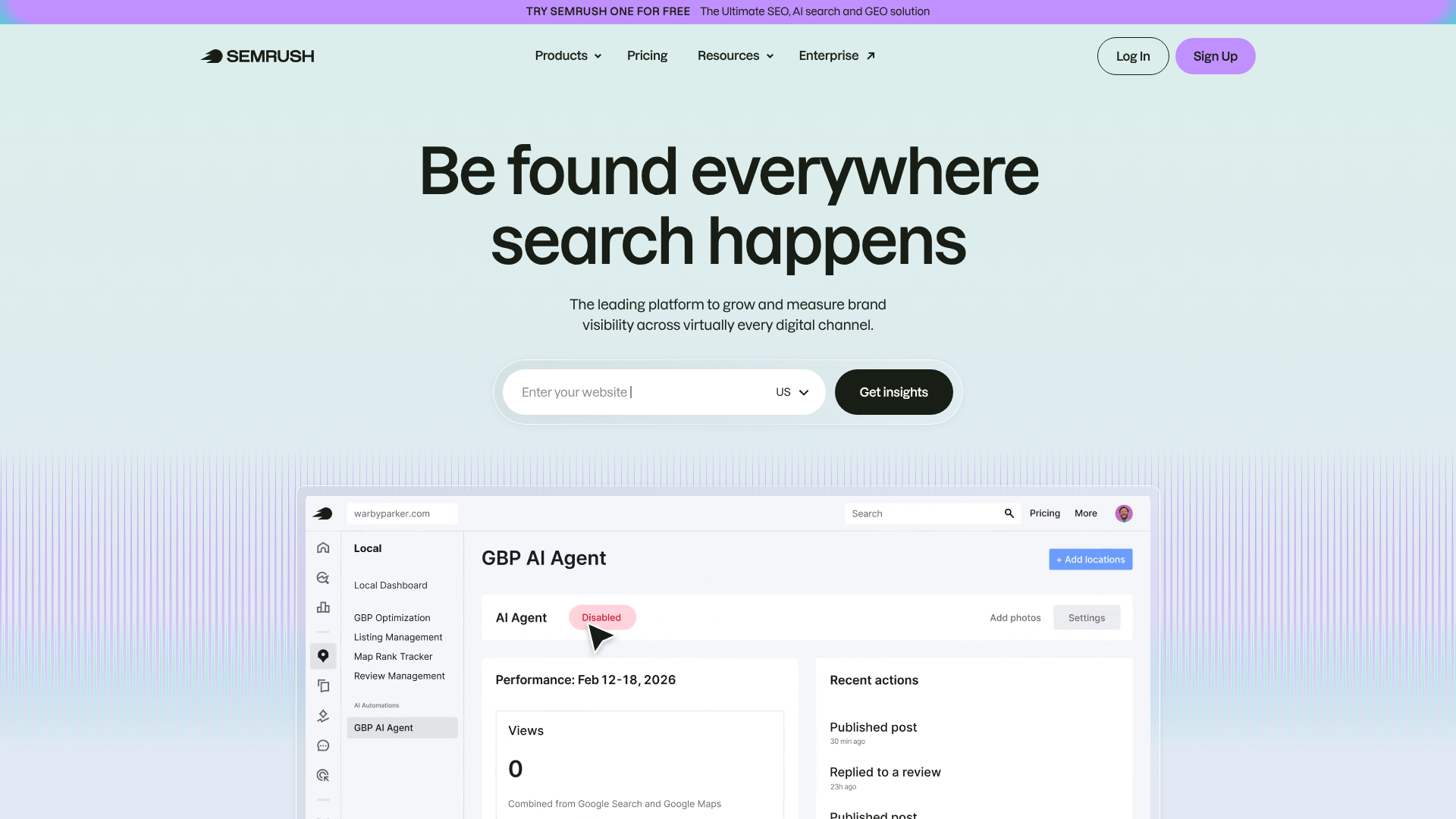
Semrush is one of the most recognised names in digital marketing, and for good reason. It's a vast, multi-faceted platform that aims to be the central hub for all your marketing activities. While it has strong content marketing features, its scope extends far beyond just writing articles.
Think of Semrush as your SEO command centre. It provides data and tools for nearly every aspect of online visibility, including SEO, content marketing, competitor research, PPC, and social media marketing. Its core strength lies in its massive database of keywords, backlinks, and competitor data, allowing you to build a comprehensive, data-backed strategy from the ground up.
Professionals use Semrush to perform deep keyword research, track ranking positions over time, conduct thorough technical site audits, analyse competitor backlink profiles, and manage advertising campaigns. It answers the big-picture questions: What keywords should we target? How does our traffic compare to competitors? Where are our biggest technical SEO issues?
What is Surfer SEO? The Content Optimisation Specialist
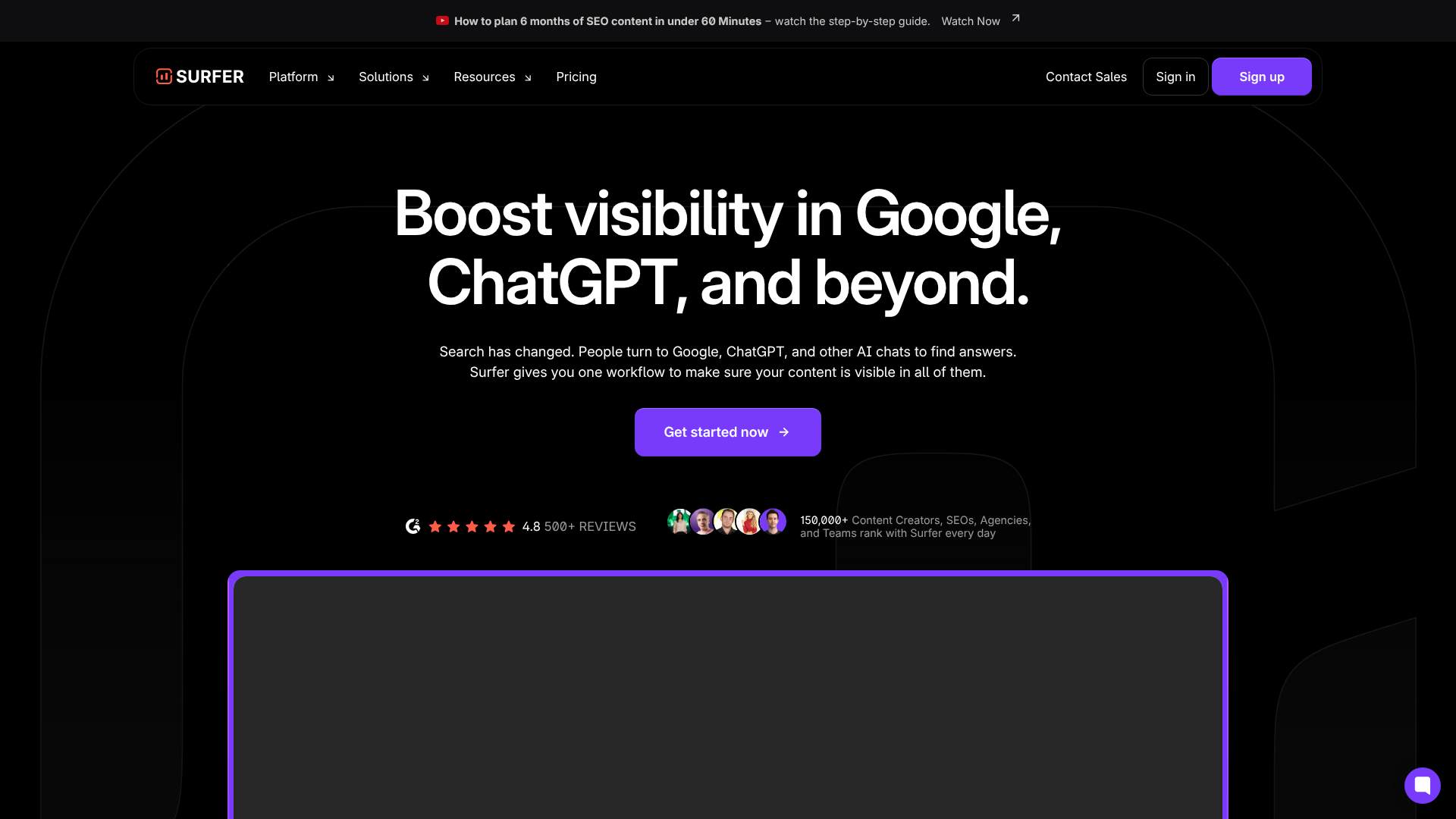
Surfer SEO, in contrast, has a much tighter focus. It was built to solve one of the most challenging parts of SEO: creating content that is perfectly optimised to rank for a specific keyword. It doesn't try to be an all-in-one solution; instead, it aims to be the absolute best at on-page and content optimisation.
Surfer works by analysing the top-ranking pages for your target query. It deconstructs what's already successful on Google—looking at over 500 different on-page signals—and translates that data into a clear, actionable blueprint for your own content. This includes recommendations for word count, article structure, image usage, and, most importantly, the exact keywords and phrases (LSI keywords) to include.
Its flagship feature, the Content Editor, gives writers a real-time score as they type, guiding them to include the right terms and build the right structure. It's a tool designed for execution, turning the strategic insights from a tool like Semrush into a perfectly tuned piece of content. It answers the specific question: How do I write this article so it has the best possible chance of ranking on page one?
Semrush vs Surfer SEO: A Side-by-Side Feature Comparison
To truly understand the difference in the semrush vs surfer debate, we need to compare their core features head-to-head. This is where their distinct purposes become crystal clear.
| Feature | Semrush | Surfer SEO |
|---|---|---|
| Primary Focus | All-in-one SEO & Marketing Suite | On-Page & Content Optimisation |
| Content Editor | SEO Writing Assistant (Good) | Content Editor (Excellent) |
| Keyword Research | Extensive, with huge database | Focused, for content clustering |
| Competitor Analysis | Domain-level, deep analysis | SERP-level, for content creation |
| Technical SEO Audit | Comprehensive site-wide audits | Basic on-page audit for one URL |
| Backlink Analysis | In-depth backlink tools | No dedicated backlink tools |
| AI Writing | Integrated AI features | Core AI for outlining & drafting |
| Best For | SEO Strategists, Agencies | Content Writers, Editors |

Content Creation & Optimisation (Winner: Surfer SEO)
This is Surfer's home turf. The Surfer SEO Content Editor is the gold standard for data-driven content writing. When you enter a target keyword, it analyses the top results and provides a dynamic brief. As you write in the editor (or its Google Docs/WordPress integrations), it gives you a content score from 0-100, updating in real-time.
The editor suggests hundreds of relevant terms and phrases, categorised by importance, and tells you how often to use them. It also provides guidance on headings, paragraphs, and word count. This process removes the guesswork from on-page SEO, ensuring your article is topically relevant and comprehensive.
Semrush has its SEO Writing Assistant, which is a useful tool. It also gives you a score and suggests keywords based on your rivals. However, it's less detailed and granular than Surfer's analysis. It provides good general guidance, but it lacks the depth and the 500+ factor analysis that makes Surfer so precise.
For pure content optimisation, there is no contest.
Keyword Research (Winner: Semrush)
When it comes to finding new keyword opportunities and building a content strategy, Semrush is in a league of its own. Its Keyword Magic Tool has a database of over 20 billion keywords. You can filter by search volume, keyword difficulty, search intent (informational, commercial, etc.), and cost-per-click.
Semrush excels at discovering keyword gaps—terms your competitors rank for, but you don't. This is invaluable for strategic planning. You can build out entire topic clusters and content plans directly within the platform. It provides a macro-level view of the entire keyword landscape.
Surfer's keyword research tool is designed for a different purpose. It's excellent at finding related keyword clusters for a single article. You give it a seed keyword, and it generates dozens of related topics and long-tail keywords that you can target within that one piece of content. It’s perfect for building a comprehensive article, but not for mapping out an entire six-month content strategy.
Competitor Analysis (Winner: Semrush)
Semrush offers a suite of powerful tools for deep competitor analysis. You can enter any domain and get a complete overview of its organic traffic, top keywords, backlink profile, and advertising strategy. The Traffic Analytics tool even provides estimates on traffic sources, audience demographics, and user engagement.
Tools like the Keyword Gap and Backlink Gap are essential for competitive intelligence. They allow you to see exactly where you are falling behind and identify opportunities to close the gap. This is strategic, high-level analysis that informs your entire marketing plan.
Surfer's approach to competitor analysis is microscopic by comparison. Its SERP Analyzer breaks down the top 10-20 results for a single keyword. It shows you their content structure, keyword usage, and domain authority. This is incredibly useful for creating a better article than what's currently ranking, but it doesn't give you insight into your competitor's overall business strategy.
Technical SEO & Site Audits (Winner: Semrush)
This is another area where Semrush's all-in-one nature gives it a massive advantage. Its Site Audit tool is a comprehensive technical SEO crawler. It scans your entire website and identifies over 130 different technical and on-page issues, such as broken links, crawl errors, slow loading pages, and missing meta tags.
It categorises these issues by severity and provides clear instructions on how to fix them. Regular site audits are essential for maintaining a healthy website, and Semrush makes this process straightforward.
Surfer offers an 'Audit' feature, but it functions very differently. It analyses a single URL against the top-ranking competitors for its target keyword. It provides on-page recommendations, like pointing out missing keywords in your title tag or suggesting a better word count. It's a content audit, not a technical site audit.
It's useful for optimising an existing page but won't help you find site-wide technical problems.
How to Choose: Semrush or Surfer SEO?
Deciding between semrush or surfer seo comes down to identifying the primary bottleneck in your SEO workflow. Are you struggling with high-level strategy and keyword discovery, or are you struggling with the actual execution of writing optimised content?
Choose Surfer SEO if…
You are a content writer, a blogger, an editor, or an agency focused on content production. Your main job is to create high-quality articles that rank well. Surfer is the right choice if:
- Your primary goal is on-page SEO: You want to ensure every article you publish is perfectly optimised from the start.
- You need to create clear content briefs: Surfer is fantastic for creating data-driven briefs that you can hand off to writers, eliminating ambiguity.
- You want to improve existing content: The Audit feature is excellent for identifying quick wins to boost the rankings of underperforming articles.
- You value an efficient writing workflow: The real-time feedback and integrations with Google Docs and WordPress streamline the entire content creation process.
Choose Semrush if…
You are an SEO professional, a digital marketing manager, or an agency that provides a wide range of services. You need a 360-degree view of your marketing efforts. Semrush is the better option if:
- You need to build a complete SEO strategy: From keyword research to rank tracking, you need tools to manage the entire lifecycle.
- Competitor intelligence is critical: You need to know what your competitors are doing, what keywords they're ranking for, and where they're getting their backlinks.
- Technical SEO is a priority: You need to regularly audit your website to find and fix technical issues that could be holding you back.
- You manage more than just SEO: If your role also involves PPC, social media, or market research, Semrush's broad toolset provides immense value.
Pro Tip: Don't think of it as an either/or choice if you have the resources. The most successful content teams often use both tools in tandem. They form a powerful combination that covers both strategy and execution.
The Power Combo: Using Semrush and Surfer Together
The ultimate workflow involves leveraging the strengths of both platforms. It looks something like this:
- Strategy in Semrush: Use Semrush's Keyword Magic Tool and Keyword Gap analysis to identify a high-potential, low-competition keyword to target.
- Briefing in Surfer: Plug that target keyword into Surfer SEO. Generate a detailed content brief based on its SERP analysis, including word count, structure, and a list of NLP terms.
- Execution in Surfer: Write the article using Surfer's Content Editor, aiming for a high content score (typically over 80).
- Tracking in Semrush: Once the article is published, add the keyword to a project in Semrush to track its ranking performance over time.
This process ensures your content is not only strategically sound but also perfectly optimised at a granular level, giving you the best of both worlds.
Pricing and Value for Money

Cost is a significant factor for any business, and the pricing models for Semrush and Surfer reflect their different scopes. Please note that pricing can change, so it's always best to check their official websites for the most current information.
Surfer SEO Pricing Plans
Surfer's pricing is typically based on the number of articles you can write and audit each month. They usually offer several tiers aimed at different user levels, from individual bloggers to large content teams and agencies.
- Lower-tier plans are great for freelancers or small businesses publishing a handful of articles per month.
- Mid-tier and upper-tier plans offer more article credits, more team member seats, and access to features like the API and white-labeling, which are essential for agencies.
The value of Surfer SEO is directly tied to your content output. If you publish content regularly, the cost per optimised article becomes very reasonable, and the potential ROI from higher rankings is significant.
Semrush Pricing Plans
Semrush uses a more traditional SaaS subscription model with three main tiers: Pro, Guru, and Business. The price difference between tiers is based on the limits of the platform—how many projects you can have, keywords you can track, pages you can crawl per month, and access to more advanced features.
- Pro Plan: Aimed at freelancers, startups, and in-house marketers with a limited budget. It provides access to all the core tools but with lower usage limits.
- Guru Plan: The most popular choice, designed for SMEs and growing marketing agencies. It includes more features, like the Content Marketing Platform, and has higher limits.
- Business Plan: Built for large agencies, e-commerce projects, and enterprises with extensive web presences, offering the highest limits and API access.
Semrush is a more significant investment, but its price is justified by the sheer breadth and depth of its toolset. It can replace multiple other subscriptions (rank tracker, audit tool, competitor analysis tool), potentially offering good value when consolidated.
The Pros and Cons of Each Platform
No tool is perfect. Understanding the strengths and weaknesses of each is key to making an informed decision in the surfer seo vs semrush comparison.
Surfer SEO: Pros and Cons
Pros
- Unmatched Content Optimisation: It is simply the best tool on the market for on-page SEO and content writing guidance.
- Intuitive and Actionable: The Content Editor provides clear, real-time feedback that is easy for writers of any skill level to follow.
- Excellent for Briefs: It automates the process of creating detailed, data-driven content briefs, saving hours of manual work.
- Great Integrations: The seamless integration with Google Docs, WordPress, and Jasper makes it fit easily into existing workflows.
Cons
- Limited Scope: It does one thing exceptionally well but lacks tools for technical SEO, backlink analysis, or broad keyword strategy.
- Can Feel Prescriptive: Some creative writers may find the data-driven suggestions restrictive, though the guidelines are not strict rules.
- Cost Can Add Up: For users with high content volume, the credit-based system can become expensive.
Semrush: Pros and Cons
Pros
- Truly All-in-One: It provides a comprehensive suite of tools that covers almost every aspect of digital marketing.
- Incredible Data: The sheer size of its keyword and backlink databases is a major competitive advantage.
- Powerful Competitor Analysis: Its tools for analysing competitor strategies are second to none.
- Excellent for Technical SEO: The Site Audit tool is robust and essential for maintaining website health.
Cons
- Steep Learning Curve: The sheer number of tools and reports can be overwhelming for new users.
- Higher Price Point: It is a significant financial commitment, especially for smaller businesses.
- Content Tools are Weaker: While functional, its content optimisation features are not as advanced or detailed as Surfer's.
Frequently Asked Questions
Let's address some of the most common questions that come up when people are comparing these two platforms.
Is Surfer SEO better than Semrush?
This question has a nuanced answer: it depends entirely on the task. For the specific job of writing and optimising a piece of content to rank on Google, Surfer SEO is better. Its specialised tools and data analysis are more advanced for that single purpose.
However, for almost every other SEO task—like strategic keyword research, competitor backlink analysis, rank tracking, and technical site audits—Semrush is far more powerful and comprehensive. One is a scalpel, the other is a multi-tool; neither is universally 'better' without context.
Which SEO tool is best for beginners?
For a beginner focused solely on learning how to write SEO-friendly content, Surfer SEO is arguably easier to start with. Its interface is clean, and the Content Editor provides very direct, easy-to-follow instructions. You don't need a deep understanding of SEO theory to use it effectively.
Semrush can be overwhelming for a true beginner due to its vast array of features. However, its core functions like keyword research are relatively straightforward. Many beginners start with Semrush to learn the fundamentals of SEO strategy and grow into its more advanced features over time.
Who competes with Semrush?
Semrush's main competitors in the all-in-one SEO platform space are Ahrefs and Moz. Both offer similar comprehensive toolsets for keyword research, site audits, and backlink analysis. Other tools like Mangools (KWFinder) offer a more budget-friendly alternative with a strong focus on keyword research.
Is SEO dead because of AI?
No, SEO is not dead; it is evolving rapidly because of AI. The rise of AI has made SEO more complex and competitive, not obsolete. AI tools like Surfer and the AI features within Semrush are now essential for working efficiently and effectively.
AI helps automate data analysis and content generation, but the strategic element of SEO—understanding user intent, building authority, and creating a great user experience—remains a human-driven skill. AI is a powerful assistant, not a replacement for a sound SEO strategy.
Is Semrush a Russian company?
This is a common misconception. Semrush was founded in 2008 by Oleg Shchegolev and Dmitry Melnikov, who are of Russian origin. However, the company relocated its headquarters to the United States and is now a publicly traded American company (NYSE: SEMR) headquartered in Boston, Massachusetts.
Final Thoughts: The Specialist vs. The Generalist
The semrush vs surfer seo debate ultimately boils down to a classic choice: do you need a specialist or a generalist? There is no single right answer for everyone. Your choice should be a direct reflection of your role, your goals, and your budget.
If you are a content creator at heart, and your primary measure of success is getting individual articles to rank, Surfer SEO is an invaluable tool that will provide a clear and immediate return on investment. It sharpens the execution of your content strategy like no other tool can.
If you are a strategist responsible for the entire digital marketing picture, from technical health to competitive positioning, Semrush is the indispensable command centre. It provides the high-level data and broad toolset necessary to build, manage, and measure a complete SEO strategy.
For those who can afford it, the answer is not one or the other, but both. Combining Semrush's strategic insights with Surfer's executional precision creates a workflow that is greater than the sum of its parts, giving you a formidable advantage in the competitive landscape of search.