

Lead Generation vs Lead Nurturing: A Marketer's Guide to a Stronger Sales Funnel
Many marketers find themselves with a pipeline full of contacts but struggle to see a corresponding increase in sales. This common frustration often stems from a misunderstanding of two critical, yet distinct, marketing functions. The discussion around lead generation vs lead nurturing isn't about choosing one over the other; it's about understanding their unique roles and how they work together to create a seamless journey from prospect to loyal customer. Without a steady flow of new leads, your business can't grow, but without a system to build relationships with those leads, your acquisition efforts are wasted.
- Quick Summary
- What is Lead Generation vs Lead Nurturing? A Side-by-Side Look
- Defining Lead Generation: Casting the Wide Net
- Lead Nurturing Explained: Building Trust and Guiding the Journey
- At a Glance: Lead Gen vs Lead Nurture
- Key Features and Benefits: Why You Need Both
- Choosing Your Strategy: When to Focus on Lead Gen vs Lead Nurture
- When to Prioritise Lead Generation
- When to Double Down on Lead Nurturing
- The Symbiotic Relationship: How They Work Together
- Top Tools for Lead Generation and Nurturing
- Cost and Pricing Considerations
- Pros and Cons: A Balanced View
- Frequently Asked Questions (FAQ)
- What is the difference between lead generation and lead nurture?
- What are the two types of lead generation?
- What comes after lead nurturing?
- Which tool is best for lead generation?
- What is the meaning of lead nurturing?
- Final Thoughts: Unifying Your Funnel for Maximum Growth
This guide breaks down the essential differences between these two concepts. We'll explore their individual goals, the strategies and tools that power them, and how to integrate them into a single, cohesive strategy. By mastering both lead generation and nurturing, you can stop leaving money on the table and start building a predictable, scalable engine for growth.
Quick Summary
- Different Goals, Same Team: Lead generation focuses on capturing new interest and filling the top of your sales funnel. Lead nurturing is all about building relationships with those captured leads to guide them through the middle of the funnel.
- A Sequential Partnership: These two processes are not in competition. Effective marketing requires a seamless hand-off from generation to nurturing; you cannot nurture a lead that you haven't first generated.
- Not One-Size-Fits-All: Each stage demands different strategies, content, and metrics. Lead generation uses broad-appeal content to attract attention, while nurturing relies on personalised communication to build trust.
- Tools for the Job: Capturing leads often involves tools like landing page builders and form creators. Nurturing depends heavily on marketing automation platforms and CRMs to manage relationships at scale.
What is Lead Generation vs Lead Nurturing? A Side-by-Side Look
To truly grasp how these two functions create a powerful marketing engine, it's essential to define them clearly and understand their distinct roles within the customer journey. Think of it as a relay race: lead generation is the first runner who gets the baton, and lead nurturing is the second runner who takes it to the finish line.
Defining Lead Generation: Casting the Wide Net
Lead generation is the process of attracting prospects and converting them into someone who has indicated an interest in your company's product or service. It's the very first step in building a relationship. The primary goal here is quantity and initial qualification—to fill your pipeline with as many potentially suitable contacts as possible.
This process happens at the Top of the Funnel (ToFu). The content and offers used are typically broad and educational, designed to solve a problem or answer a question for a wide audience. Examples include blog posts optimised for search engines, downloadable ebooks, checklists, free templates, or webinars that promise valuable information in exchange for contact details.
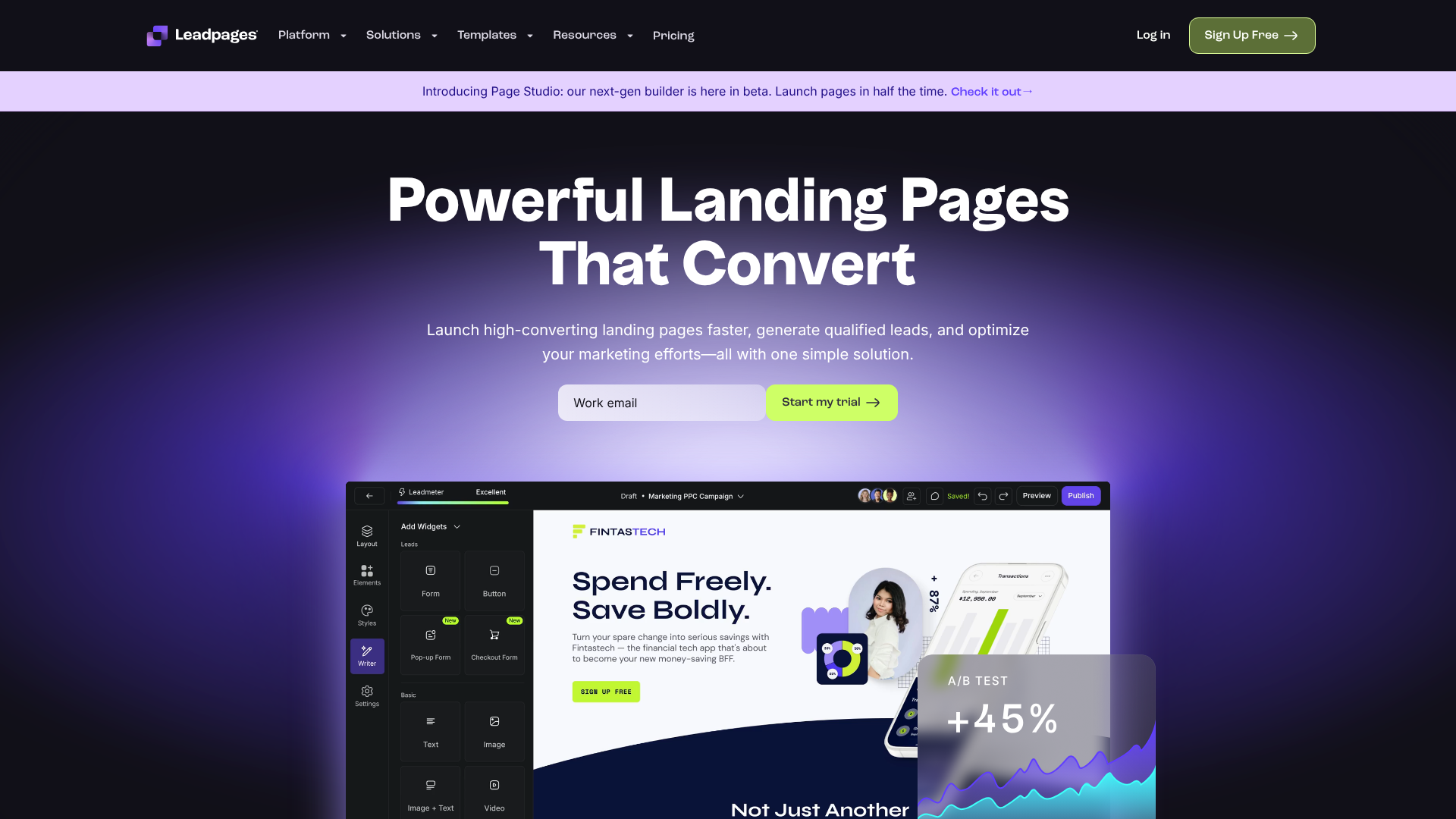
To make this happen, businesses use a variety of channels like content marketing, social media advertising, pay-per-click (PPC) campaigns, and SEO. The capture mechanism is just as important. This is where tools like landing page builders such as Leadpages or form builders like Jotform become indispensable. They provide a focused, frictionless way for a visitor to exchange their information for your valuable offer.
Lead Nurturing Explained: Building Trust and Guiding the Journey
Once you've generated a lead, the job is far from over. In fact, research consistently shows that around 96% of visitors to your website are not ready to buy yet. This is where lead nurturing comes in. Lead nurturing explained simply is the process of developing and reinforcing relationships with buyers at every stage of the sales funnel.
Its goal is to build trust, establish authority, and gently guide leads toward a purchasing decision by providing relevant, timely, and personalised information. This happens in the Middle of the Funnel (MoFu). Instead of casting a wide net, you're now using a fishing rod, carefully selecting the right bait for specific fish.
Effective lead nurturing relies on segmentation and automation. You can't send the same message to everyone. Instead, you group leads based on their behaviour, interests, or demographic data. Then, you use marketing automation platforms like ActiveCampaign to deliver targeted content sequences.
This could include personalised email drip campaigns, case studies, product demos, free trial offers, and retargeting ads that speak directly to their needs.
At a Glance: Lead Gen vs Lead Nurture
This table breaks down the core differences between the two concepts, helping you see where each fits into your overall marketing strategy.
| Aspect | Lead Generation | Lead Nurturing |
|---|---|---|
| Primary Goal | Capture new leads and fill the pipeline | Build relationships and convert leads into customers |
| Funnel Stage | Top of Funnel (ToFu) | Middle of Funnel (MoFu) |
| Target Audience | Broad, often unidentified prospects | Segmented, identified leads who have shown interest |
| Key Metrics | Cost Per Lead (CPL), Lead Volume, Conversion Rate | Engagement Rate, Click-Through Rate, Sales Qualified Leads (SQLs) |
| Timeframe | Short-term, focuses on immediate capture | Long-term, focuses on gradual relationship building |
| Content Type | Ebooks, whitepapers, checklists, blog posts | Case studies, webinars, product demos, personalised emails |
Key Features and Benefits: Why You Need Both

Understanding the definitions is the first step. The next is appreciating why a modern marketing strategy is incomplete without a strong focus on both lead generation and nurturing. Neglecting one severely cripples the effectiveness of the other, leading to a leaky sales funnel and wasted resources.
The Unmissable Benefits of Strong Lead Generation
A consistent lead generation effort is the lifeblood of business growth. It's the engine that continuously feeds your sales and marketing machine with new opportunities. Without it, even the most sophisticated nurturing system has no one to talk to.
First, it expands your market reach and builds brand awareness. Every lead magnet you create, every blog post you publish, and every ad you run introduces your brand to a new audience. This process builds a valuable database of potential customers—an asset you own and can market to over time, reducing your reliance on paid channels.
Furthermore, lead generation provides invaluable market insights. By analysing which offers and channels generate the most (and best) leads, you learn what your audience truly cares about. This data can inform product development, content strategy, and overall business direction, ensuring you stay aligned with customer needs.
The Compounding Power of Effective Lead Nurturing
If lead generation fills the bucket, lead nurturing stops the leaks and makes sure the contents are valuable. Its benefits are directly tied to revenue and efficiency. According to industry research, companies that excel at lead nurturing generate 50% more sales-ready leads at a 33% lower cost.
Effective nurturing dramatically increases conversion rates. By building trust and providing value over time, you move leads from being merely 'aware' of your brand to being 'ready to buy'. This process also helps shorten the sales cycle, as nurtured leads are better educated and more qualified when they finally speak to a sales representative.
Perhaps most importantly, it builds brand loyalty and increases customer lifetime value. Nurtured leads don't just buy; they often become better customers. Statistics show they tend to make larger purchases and are more likely to become repeat buyers and brand advocates. This transforms your marketing from a simple acquisition function into a long-term relationship-building machine.
Choosing Your Strategy: When to Focus on Lead Gen vs Lead Nurture
While the ideal strategy always involves a balance of both, your business's current stage and challenges will dictate where you should allocate more resources and attention. It's not about choosing one and abandoning the other, but about knowing when to press the accelerator on each.
When to Prioritise Lead Generation
There are specific scenarios where ramping up your lead generation efforts should be your top priority. If your pipeline is looking thin, this is your first port of call.
- New Business or Product Launch: When you're just starting or launching a new offering, your primary goal is to build awareness and populate your database from scratch. You need to cast a wide net to let the market know you exist.
- Entering a New Market: Expanding into a new geographical region or industry vertical is similar to a new launch. You have little to no brand recognition and need to build an audience of prospects quickly.
- An Empty Sales Pipeline: If your sales team is consistently reporting a lack of qualified opportunities, the problem starts at the top of the funnel. You need to increase the volume of incoming leads to ensure enough flow through to the bottom.
When to Double Down on Lead Nurturing
Conversely, there are times when your biggest opportunity for growth lies within the contacts you already have. Focusing on nurturing can be a highly efficient way to boost revenue without increasing your acquisition budget.
- A Large, Inactive Database: Do you have thousands of contacts who downloaded an ebook months ago but haven't engaged since? A targeted nurturing campaign can reactivate this 'sleeping' audience and uncover hidden sales opportunities.
- Low Conversion Rates: If you're generating plenty of leads but very few are becoming customers, you have a nurturing problem. Your leads are getting lost or going cold somewhere in the middle of the funnel.
- Long or Complex Sales Cycles: For B2B companies or those selling high-ticket items, the decision-making process can take months. Consistent, valuable nurturing is essential to stay top-of-mind and build the trust required for a significant purchase.
Pro Tip: Use lead scoring to bridge the gap between generation and nurturing. Assign points to leads based on their demographic data and actions (like visiting the pricing page or opening emails). When a lead reaches a certain score, they are automatically passed to sales, ensuring your team only talks to the most engaged prospects.
The Symbiotic Relationship: How They Work Together
Ultimately, the lead generation and nurturing processes are two halves of the same whole. Lead generation creates the opportunity, and lead nurturing capitalises on it. A successful strategy sees a seamless hand-off from one to the other.
A new lead downloads a whitepaper (generation). This action triggers an automated email sequence that sends them related blog posts and a case study over the next few weeks (nurturing). Their engagement with this content increases their lead score until they are identified as a sales-qualified lead (SQL) and a sales rep is alerted. This smooth, automated journey is only possible when both systems are working in harmony.
Top Tools for Lead Generation and Nurturing

Executing these strategies effectively requires the right technology stack. Different tools are designed to excel at different stages of the funnel. Here are some top recommendations for both capturing and cultivating leads.
Essential Tools for Capturing Leads
These platforms are designed to make the initial conversion from anonymous visitor to known contact as efficient as possible.
- Landing Page Builders: Tools like Leadpages and Unbounce are specialists in creating high-converting, standalone web pages. They offer drag-and-drop editors and templates optimised to persuade visitors to fill out a form, removing the distractions of a full website.
- Sales Funnel Builders: For more complex conversion paths, a tool like ClickFunnels helps you design multi-step journeys. It can guide a user from an ad to a landing page, then to an upsell page, creating a structured path towards a purchase or a high-value conversion.
- Form & Survey Tools: Platforms like Jotform offer incredible flexibility for capturing data. You can create simple contact forms, complex registration forms, or interactive quizzes that act as lead magnets, all without needing to write any code.
- Webinar Platforms: Hosting a live event is a powerful way to generate high-quality leads. Software such as EasyWebinar handles everything from registration pages to live broadcasting and follow-up sequences, making it a complete lead generation machine.
Powerful Platforms for Nurturing Relationships
Once a lead is in your system, these tools help you manage the relationship at scale, delivering personalised experiences automatically.
- Marketing Automation & CRM: This is the core of any nurturing strategy. A platform like ActiveCampaign combines a customer relationship manager (CRM) with powerful marketing automation. It allows you to segment your audience based on countless triggers and send highly personalised email campaigns that adapt to user behaviour.
- Email Marketing Services: For businesses focused primarily on email communication, services like GetResponse or Selzy provide robust tools for designing newsletters, A/B testing campaigns, and automating welcome series or other drip campaigns.
- Social Media Management: Nurturing doesn't just happen via email. Tools like Hootsuite and Buffer help you maintain a consistent presence on social media, engage with your audience, and share valuable content that keeps your brand top-of-mind.
Cost and Pricing Considerations
Budgeting for growth requires understanding the costs associated with both filling your funnel and guiding leads through it. The financial models and investments for lead generation and nurturing are quite different, but both are essential for a healthy return on investment (ROI).
The Economics of Lead Generation
The cost of lead generation is often direct and measurable. If you're using paid channels, you'll encounter pricing models like:
- Cost Per Click (CPC): You pay every time someone clicks on your ad (e.g., Google Ads, Facebook Ads).
- Cost Per Mille (CPM): You pay for every thousand impressions (views) of your ad.
- Cost Per Lead (CPL): You pay a fixed amount for every lead generated, common with affiliate or partner marketing.
These costs can range from a few pence to hundreds of pounds per lead, depending on your industry's competitiveness. Inbound methods like SEO and content marketing have upfront costs in time and resources but can deliver a lower CPL over the long term. You must also factor in the subscription costs for tools like landing page builders and ad management software.
Investing in Lead Nurturing
The costs of lead nurturing are more focused on technology and content. The primary expense is typically a marketing automation or CRM platform. Most of these services, like ActiveCampaign or GetResponse, use a tiered pricing model based on the number of contacts in your database or the volume of emails you send per month.
Beyond the software, there's the investment in creating high-value nurturing content. This includes the time and resources needed to produce case studies, record customer testimonials, host webinars, and write personalised email copy. While less direct than ad spend, this investment is crucial for converting the leads you've already paid to acquire.
Which is More Cost-Effective?
This is a trick question. The most cost-effective strategy is one that balances both. It's a well-known business principle that acquiring a new customer can be five to 25 times more expensive than retaining an existing one. Lead nurturing applies this logic to your prospect database.
Spending thousands on lead generation without investing in nurturing is like paying to fill a bucket with holes in it. Conversely, having a world-class nurturing system with no new leads to feed it is equally inefficient. The smartest approach is to view nurturing as an investment that maximises the ROI of your generation spend. By converting more of the leads you already have, you make every pound spent on acquisition work harder.
Pros and Cons: A Balanced View
No strategy is without its trade-offs. To build a resilient marketing plan, it's important to understand the potential upsides and downsides of focusing too heavily on either lead generation or lead nurturing.
Lead Generation: The Pros and Cons
Pros:
- Fills the Pipeline Quickly: Aggressive lead gen campaigns can rapidly increase the number of contacts in your database.
- Provides Fresh Data and Insights: It constantly brings in new information about your market and audience interests.
- Highly Scalable: Paid advertising and content marketing efforts can often be scaled up or down quickly based on budget and goals.
Cons:
- Can Generate Low-Quality Leads: A focus on volume over quality can lead to a pipeline full of contacts who are a poor fit for your product.
- Can Be Expensive: Paid channels, in particular, can have a high and ongoing cost per lead.
- Requires Constant Effort: The flow of leads often stops as soon as you turn off the campaign or stop creating content.
Lead Nurturing: The Pros and Cons
Pros:
- Higher Conversion Rates: Building relationships naturally leads to more sales-ready leads and a better close rate.
- Builds Brand Equity and Trust: Consistent, valuable communication positions your brand as a trusted authority.
- Improves Customer Lifetime Value: Nurtured leads often become more loyal and valuable customers over time.
Cons:
- It's a Slower Process: Building trust takes time, and the results from nurturing are not always immediate.
- Requires Patience and Persistence: You may not see a direct ROI from a single email or piece of content; the effect is cumulative.
- Needs Sophisticated Content and Segmentation: To be effective, nurturing requires a deep understanding of your audience and the ability to deliver personalised content.
Pro Tip: Create a content map that aligns specific assets to different stages of the buyer's journey. A top-of-funnel blog post (lead gen) should lead to a middle-of-funnel case study (nurturing), which then leads to a bottom-of-funnel demo request. This ensures a logical and helpful path for every lead.
Frequently Asked Questions (FAQ)
Here are answers to some of the most common questions marketers have when comparing lead generation and lead nurturing.
What is the difference between lead generation and lead nurture?
The core difference lies in their primary goal and timing. Lead generation is the initial act of capturing a prospect's interest and contact information, happening at the top of the sales funnel. Lead nurturing is the ongoing process of building a relationship with that lead over time, providing value and guidance to move them through the middle of the funnel toward a purchase decision.
What are the two types of lead generation?
Lead generation is broadly categorised into two main approaches: inbound and outbound. Inbound generation focuses on attracting customers through valuable content and experiences they seek out, such as SEO, blogging, and social media marketing. Outbound generation involves proactively reaching out to prospects through methods like cold calling, email outreach, and direct mail.
What comes after lead nurturing?
After a lead has been successfully nurtured, they become a Sales Qualified Lead (SQL), meaning they are ready to engage with a sales representative. The next stage is the sales process, where the sales team works to close the deal. Following a successful sale, the focus shifts to customer onboarding, retention, and ultimately, turning that happy customer into a brand advocate who can help generate new referrals.
Which tool is best for lead generation?
There is no single 'best' tool, as the right choice depends on your specific strategy and channels. However, a foundational tool for most digital lead generation efforts is a high-quality landing page builder like Leadpages or Unbounce. These platforms are specifically designed to maximise conversions from your marketing campaigns, making them a critical component for capturing leads effectively.
What is the meaning of lead nurturing?
Lead nurturing is the strategic process of building and maintaining relationships with potential customers who are not yet ready to buy. It involves using targeted, automated, and personalised communication—primarily through email, content, and social media—to educate, inform, and build trust. The ultimate goal is to guide these leads through the buyer's journey until they are ready to make a purchase.
Final Thoughts: Unifying Your Funnel for Maximum Growth
The debate of lead generation vs lead nurturing is ultimately a false choice. A successful, modern marketing strategy doesn't pick a side; it builds a bridge between the two. One cannot function effectively without the other. Lead generation fills the top of your funnel with potential, while lead nurturing ensures that potential is realised.
By understanding their distinct roles, employing the right tools for each job, and creating a seamless hand-off process, you transform your marketing from a series of disconnected tactics into a cohesive, powerful engine for growth. Stop thinking in terms of 'versus' and start thinking in terms of 'and'. This unified approach is the key to building a stronger sales funnel, increasing revenue, and creating lasting customer relationships.
If you're looking to improve your ability to capture new interest, tools like Leadpages and ClickFunnels provide a great foundation. For building those crucial relationships and automating your follow-up, platforms like ActiveCampaign offer the power and flexibility needed to nurture leads effectively.