




How to Build Real Estate Lead Capture Landing Pages for More Clients
In the competitive property market, waiting for leads to find you is no longer a viable strategy. You need a proactive system that consistently attracts and converts potential buyers and sellers. This is where building effective real estate lead capture landing pages becomes not just an advantage, but a necessity for growing your agency and closing more deals.
- What You'll Learn
- What Exactly Are Real Estate Lead Capture Landing Pages?
- The Core Components of a High-Converting Real Estate Landing Page
- A Compelling Headline and Subheading
- High-Quality Visuals
- Persuasive Copy and Bullet Points
- A Clear and Irresistible Offer (The Lead Magnet)
- A Simple, Low-Friction Form
- A Strong Call-to-Action (CTA) Button
- Social Proof and Trust Signals
- Why Every Real Estate Agent Needs Dedicated Lead Capture Pages
- Sky-High Conversion Rates
- Targeted Marketing Campaigns
- Improved Lead Quality and Segmentation
- Measurable ROI on Marketing Spend
- How to Build Your First Real Estate Landing Page: A Step-by-Step Guide
- Step 1: Define Your Goal and Target Audience
- Step 2: Choose Your Lead Magnet
- Step 3: Select a Landing Page Builder
- Step 4: Design and Write Your Page
- Step 5: Integrate with Your CRM and Email Marketing Software
- Step 6: Publish and Promote Your Page
- Step 7: Test, Measure, and Optimise
- Top Tools for Creating Real Estate Landing Pages
- 1. Leadpages: Best for Ease of Use and Templates
- 2. Unbounce: Best for A/B Testing and Optimisation
- 3. Instapage: Best for Teams and Personalisation
- 4. ClickFunnels: Best for Building Complete Sales Funnels
- Pricing and Cost: What to Expect
- Common Mistakes to Avoid with Your Real Estate Lead Generation Pages
- Frequently Asked Questions
- How many landing pages do I need for my real estate business?
- What is a good conversion rate for a real estate landing page?
- Can I just build a landing page on my existing WordPress website?
- What is the most effective lead magnet for real estate agents?
- Final Thoughts: Turning Clicks into Clients
A generic website homepage serves many purposes—it tells your story, showcases all your listings, and provides general contact information. A landing page, however, is a specialist. It has one job and one job only: to convert a visitor into a lead by capturing their contact details in exchange for something of value. This focused approach is why dedicated real estate landing pages consistently outperform standard web pages for lead generation.
This guide will walk you through everything you need to know. We'll cover the essential components of a page that converts, the step-by-step process to build one, the best tools for the job, and the common pitfalls to avoid. By the end, you'll have a clear roadmap for creating a powerful lead generation engine for your real estate business.
What You'll Learn
- What a Landing Page Is: A real estate lead capture page is a standalone web page with a single goal—to persuade a visitor to provide their contact information in exchange for a specific offer.
- Essential Components: A high-converting page must include a compelling headline, high-quality visuals, a valuable offer (lead magnet), a simple form, and a clear call-to-action (CTA).
- Key Benefits: Using dedicated landing pages leads to higher conversion rates, more targeted marketing campaigns, better lead quality, and a measurable return on investment.
- Top Tool Recommendations: Platforms like Leadpages, Unbounce, and ClickFunnels provide the templates and features needed to build effective pages without coding knowledge.
- The Building Process: A successful strategy involves defining your audience, choosing a compelling offer, designing the page, integrating it with your CRM, and consistently testing for improvements.
What Exactly Are Real Estate Lead Capture Landing Pages?
A real estate lead capture landing page is a standalone web page created specifically for a marketing or advertising campaign. Unlike your website's homepage, which has multiple navigation links and serves various purposes, a landing page is designed with a single, focused objective: to capture a visitor's contact information. This is why they are often called "squeeze pages"—they are designed to squeeze contact details out of a prospect.
Imagine you're running a Facebook ad campaign offering a free guide on "The Top 5 Mistakes First-Time Home Buyers Make". When a user clicks that ad, they shouldn't be sent to your busy homepage where they can get distracted. Instead, they should arrive at a page dedicated solely to that guide. This page would explain the guide's benefits and have a simple form to download it in exchange for an email address.
That's a lead capture page in action.
These real estate lead generation pages are the cornerstone of modern digital marketing for agents and brokers. They act as the digital equivalent of an open house sign-in sheet, but far more powerful. They allow you to create highly targeted funnels for different segments of your audience—buyers, sellers, investors, or renters—and offer them something of specific value, dramatically increasing the likelihood of them becoming a lead in your pipeline.
The Core Components of a High-Converting Real Estate Landing Page

Effective lead capture pages for real estate aren't built by accident. They follow a proven formula and include several key elements that work together to guide the visitor towards conversion. Omitting any of these can significantly reduce your page's performance.
A Compelling Headline and Subheading
Your headline is the first thing a visitor reads and has about three seconds to grab their attention. It must be benefit-driven and clearly communicate the value of your offer. For example, instead of "Sign Up," a better headline would be "Discover Your Home's True Value in 60 Seconds."
The subheading provides a little more detail and reinforces the promise made in the headline. It could be something like, "Get a free, no-obligation property valuation report sent directly to your inbox."
High-Quality Visuals
Real estate is a visual industry. Your landing page must feature professional, high-resolution images or a short video. This could be a stunning photo of a property, a slideshow of a beautiful neighbourhood, or a short video of you introducing the offer. Visuals build trust and help the visitor emotionally connect with the potential outcome.
Persuasive Copy and Bullet Points
The body copy should be concise and focused on the benefits for the visitor. Don't just list features; explain what those features do for them. Use bullet points to make the information easy to scan and digest. For a seller's guide, you might list benefits like:
- Learn how to stage your home to sell 20% faster.
- Avoid the 3 costliest mistakes sellers make.
- Discover simple fixes that can add thousands to your sale price.
A Clear and Irresistible Offer (The Lead Magnet)
No one gives away their contact information for free. You need to offer something valuable in return. This is your lead magnet. Popular lead magnets for real estate include:
- For Sellers: Free Home Valuation Report, Seller's Checklist, Guide to Selling for Top Dollar.
- For Buyers: First-Time Home Buyer's Guide, List of Off-Market Properties, Neighbourhood Market Report.
A Simple, Low-Friction Form
Your form is the gateway to conversion, so make it as easy as possible to complete. Only ask for the absolute essential information. For an initial lead, a name and email address are often enough. You can always gather more information later in the follow-up process. Every additional field you add increases friction and reduces your conversion rate.
A Strong Call-to-Action (CTA) Button
Your CTA button should stand out with a contrasting colour and use clear, action-oriented text. Avoid generic terms like "Submit" or "Click Here." Instead, use text that reinforces the value proposition, such as "Get My Free Valuation Now" or "Download My Buyer's Guide."
Social Proof and Trust Signals
People trust other people. Including social proof can significantly boost your credibility. This can be in the form of client testimonials, star ratings, or logos of local media outlets you've been featured in. Trust signals like an award logo or a mention of how many families you've helped can also make a big difference.

Why Every Real Estate Agent Needs Dedicated Lead Capture Pages
If your current strategy is to simply drive traffic to your website's homepage and hope for the best, you're leaving a significant number of leads on the table. Creating dedicated real estate landing pages for your campaigns isn't just a nice-to-have; it's a fundamental shift that produces tangible results for your business.
Sky-High Conversion Rates
The primary benefit is a dramatic increase in conversion rates. Because a landing page is free from distractions like navigation menus and sidebars, it focuses the visitor's attention on a single action. While a typical website might convert visitors at 1-3%, a well-optimised landing page can achieve conversion rates of 10%, 20%, or even higher. This means you get more leads from the same amount of traffic, lowering your cost per lead.
Targeted Marketing Campaigns
Landing pages allow you to create a unique, tailored experience for different segments of your audience. You can design a page specifically for first-time buyers responding to a Facebook ad, another for luxury property sellers who clicked a Google Ad, and a third for people interested in a specific neighbourhood. This level of targeting ensures your message resonates deeply with each visitor, making them far more likely to convert.
Improved Lead Quality and Segmentation
When a lead comes through a specific landing page, you immediately know what they're interested in. A lead from a "What's My Home Worth?" page is almost certainly a potential seller. A lead from a "Downsizing Checklist" page is likely an empty-nester looking to sell. This automatic segmentation allows you to tailor your follow-up communication, providing relevant information that nurtures them more effectively than a generic welcome email.
Pro Tip: Connect your landing page forms directly to your CRM and tag leads based on the page they converted on. This automates your segmentation and ensures each new lead enters the correct follow-up sequence immediately, saving you time and preventing valuable leads from slipping through the cracks.
Measurable ROI on Marketing Spend
It's difficult to measure the effectiveness of sending ad traffic to your homepage. But with landing pages, tracking is simple. You can see exactly how many people visited the page, how many converted, and what your cost per lead was for that specific campaign. This data is invaluable for optimising your marketing budget, allowing you to double down on what's working and cut what isn't.
How to Build Your First Real Estate Landing Page: A Step-by-Step Guide
Building your first landing page might seem daunting, but with modern tools, the process is straightforward. Following a structured approach ensures you cover all the essential bases for creating a page that generates results.
Step 1: Define Your Goal and Target Audience
Before you write a single word, be crystal clear on two things. First, what is the single action you want a visitor to take? (e.g., download a guide, request a valuation). Second, who are you trying to attract? A page for a millennial first-time buyer will look and sound very different from one targeting a retiree looking to downsize. Your audience determines the offer, the language, and the design.
Step 2: Choose Your Lead Magnet
Your lead magnet is the ethical bribe you offer in exchange for contact details. It must be valuable and solve a specific problem for your target audience. Brainstorm ideas based on your audience's pain points. A seller's biggest question is often "What is my house worth?", making a free home valuation a classic and effective lead magnet.
Step 3: Select a Landing Page Builder
You don't need to be a web developer to create stunning landing pages. Dedicated landing page builders offer drag-and-drop editors and pre-built templates designed for conversion. Popular choices include:
- Leadpages: Known for its ease of use and extensive library of mobile-responsive templates.
- Unbounce: A more advanced platform with powerful A/B testing and AI-powered optimisation features.
- Instapage: Excellent for teams and for personalising the ad-to-page experience.
- ClickFunnels: A great option if you want to build an entire multi-step funnel, not just a single page.
Step 4: Design and Write Your Page
Start with a template that matches your goal. Customise it with your branding, colours, and logo. Write your copy using the component guidelines from earlier: a strong headline, benefit-focused bullet points, and a clear CTA. Ensure your design is clean, uncluttered, and guides the visitor's eye towards the form.
Step 5: Integrate with Your CRM and Email Marketing Software
This step is crucial for automation. Connect your landing page form to your CRM (like Follow Up Boss or Wise Agent) and your email marketing tool (like ActiveCampaign or GetResponse). This ensures that when a lead fills out the form, their details are automatically added to your database and they receive the promised lead magnet via an automated email. This instant follow-up is key to converting leads into clients.
Step 6: Publish and Promote Your Page
Once your page is ready, it's time to drive traffic to it. Share the link in your email signature, on your social media profiles, and—most importantly—use it as the destination for your paid advertising campaigns on platforms like Google, Facebook, and Instagram. The more targeted your traffic, the higher your conversion rate will be.
Step 7: Test, Measure, and Optimise
Building the page is just the beginning. To get the best results, you need to test different elements. This is known as A/B testing, where you create two versions of a page with one element changed (e.g., a different headline) and see which one performs better. Continuously testing your headlines, CTAs, images, and form length will lead to incremental improvements that can double or triple your conversion rate over time.
Top Tools for Creating Real Estate Landing Pages
Choosing the right software can make all the difference in how quickly and effectively you can launch your lead generation campaigns. Here’s a closer look at some of the best options on the market.
1. Leadpages: Best for Ease of Use and Templates
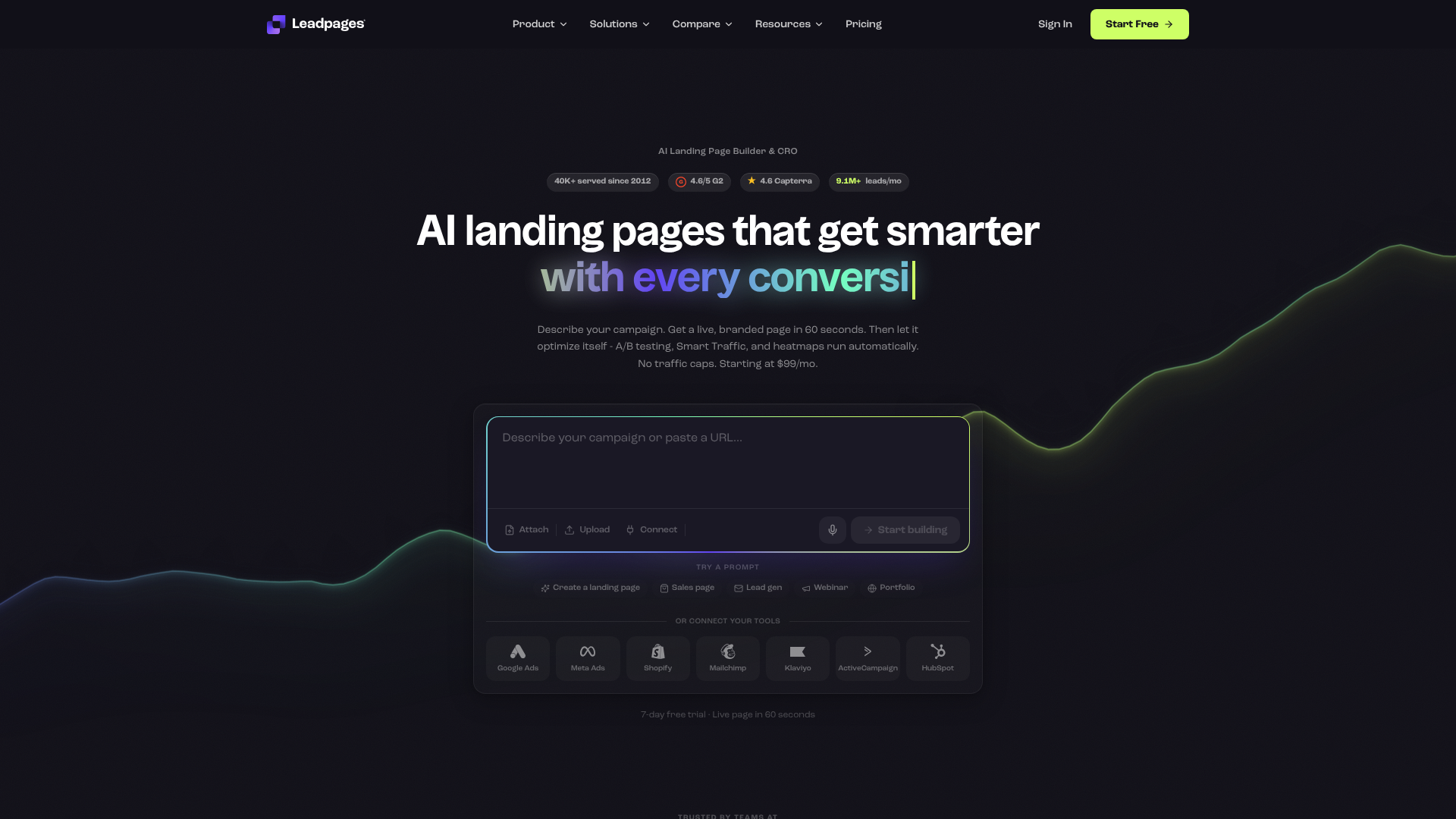
Leadpages is a fantastic starting point for most real estate agents. Its main strength lies in its simplicity and vast library of professionally designed templates, many of which are specifically created for real estate. You can find templates for property listings, home valuations, open house registrations, and more.
Its drag-and-drop editor is intuitive, allowing you to build and publish a page in under an hour without any technical skills. Leadpages also boasts some of the fastest page loading speeds in the industry, which is a critical factor for keeping visitors engaged and for SEO.
Pros:
- Extremely beginner-friendly and easy to use.
- Large selection of high-converting, mobile-responsive templates.
- Affordable pricing plans for solo agents and small teams.
Cons:
- The drag-and-drop editor is less flexible than some competitors.
- A/B testing is only available on their higher-tier plans.
2. Unbounce: Best for A/B Testing and Optimisation
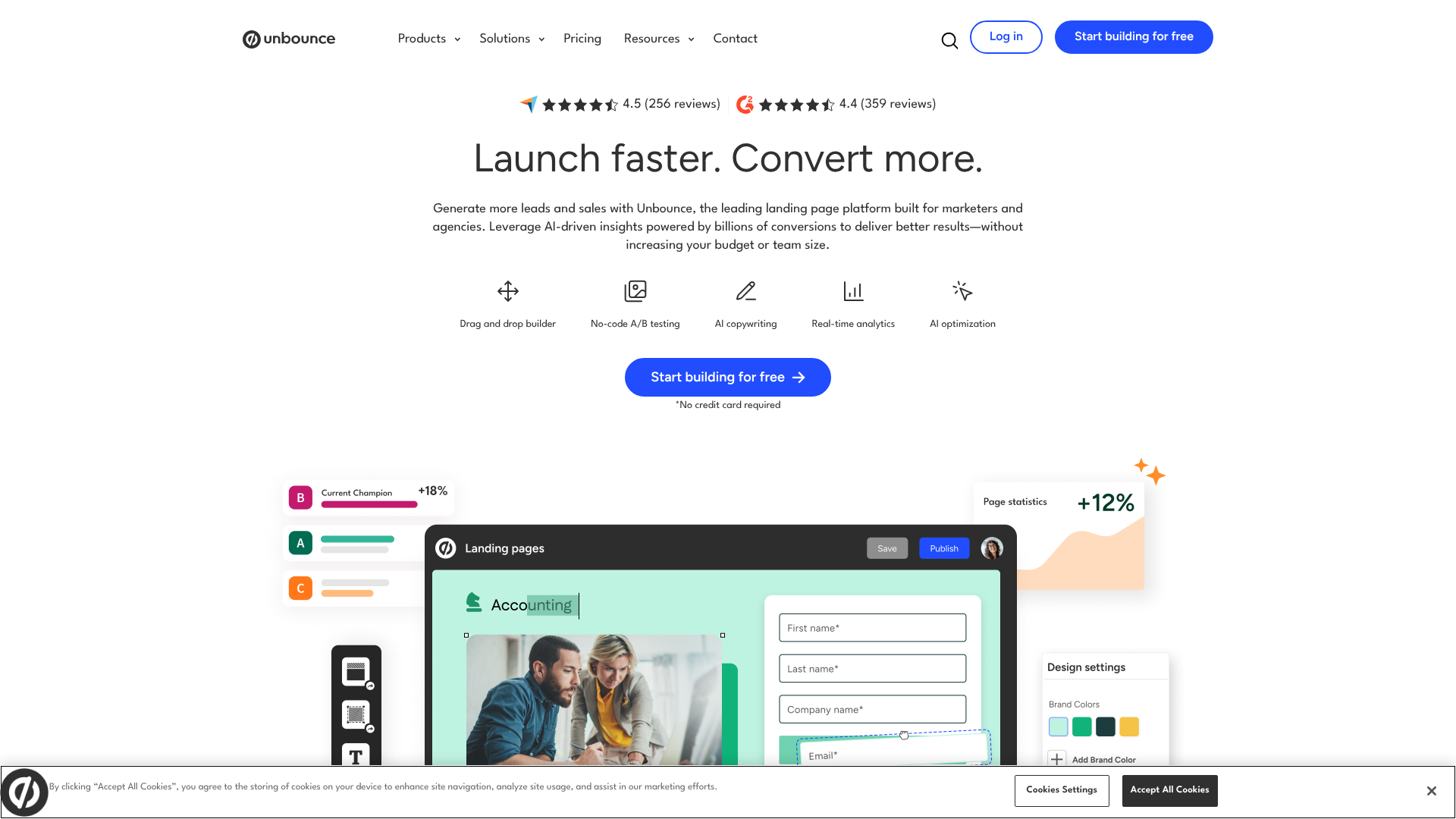
Unbounce is a more powerful and flexible platform designed for marketers who are serious about optimisation. While it has a slightly steeper learning curve than Leadpages, it offers unparalleled control over your page design and functionality. Its true power lies in its conversion intelligence tools.
Features like Smart Traffic use AI to automatically send visitors to the landing page variant they're most likely to convert on. Its A/B testing capabilities are robust, making it the ideal choice for agents who run significant paid ad campaigns and want to maximise their return on ad spend through data-driven decisions.
Pros:
- Powerful A/B testing and AI-driven optimisation tools.
- Highly customisable drag-and-drop editor.
- Excellent for maximising conversions from paid traffic.
Cons:
- More expensive than many other options.
- Can be more complex for complete beginners.
3. Instapage: Best for Teams and Personalisation
Instapage is a premium landing page platform that excels at personalisation and team collaboration. Its standout feature, AdMap®, allows you to visualise your ad campaigns and easily create unique, message-matched landing page experiences for every ad group. This 1:1 ad-to-page personalisation is proven to increase conversion rates.
It also includes features for real-time collaboration, making it a great fit for larger real estate teams or agencies managing multiple campaigns. While it's a significant investment, its ability to scale paid advertising efforts effectively can provide a substantial ROI for those with the budget.
Pros:
- Advanced personalisation features for ad campaigns.
- Built-in collaboration tools for teams.
- Fast loading speeds with their proprietary Thor Render Engine.
Cons:
- High-end pricing makes it unsuitable for most solo agents.
- May be overly complex for simple lead capture needs.
4. ClickFunnels: Best for Building Complete Sales Funnels
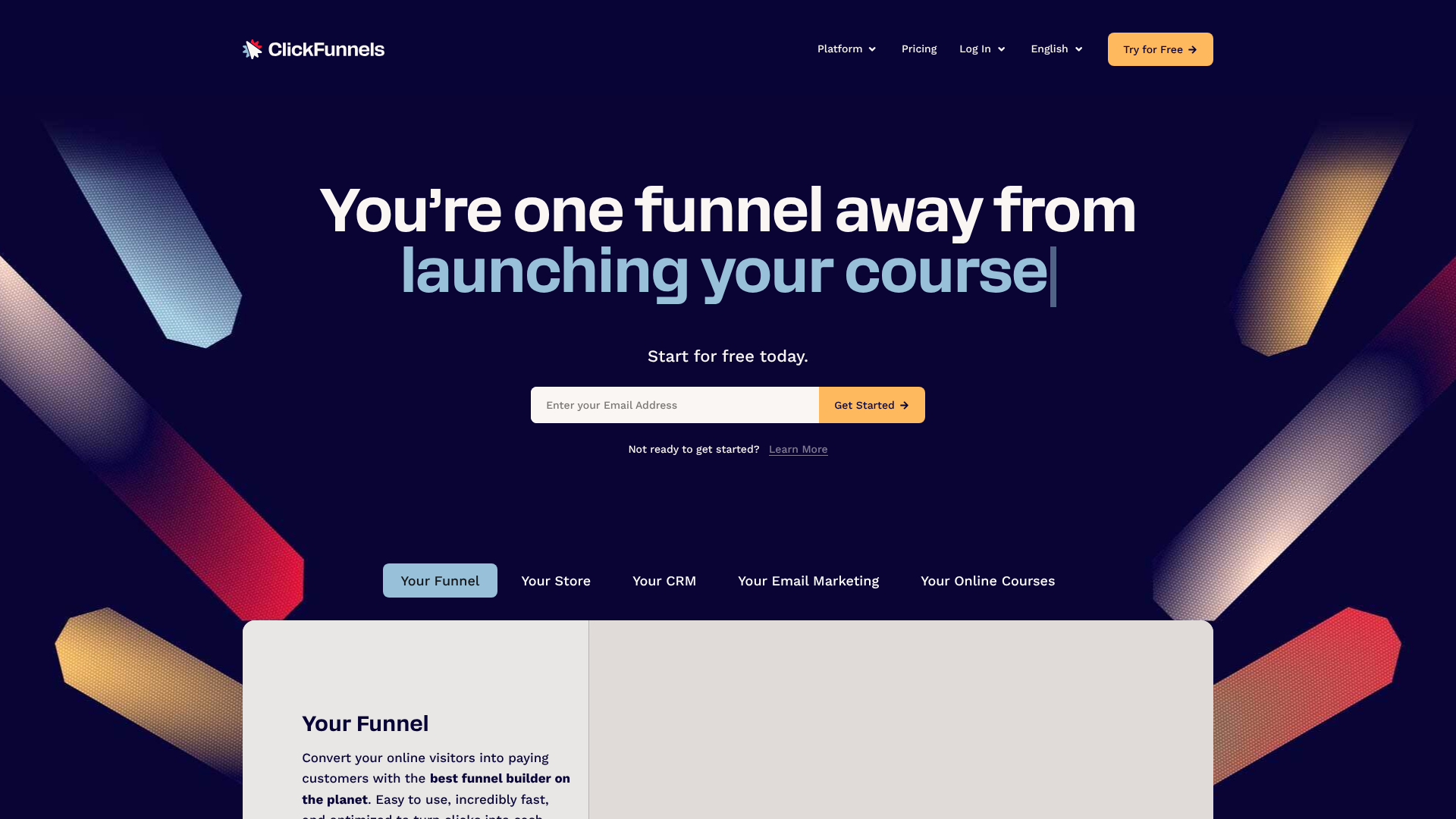
ClickFunnels takes a different approach. Instead of just building single landing pages, it’s designed to create entire multi-step funnels. For a real estate agent, this could look like a landing page offering a home valuation, which then leads to a thank you page with a video, followed by an application page to book a listing appointment.
It's an all-in-one platform that can handle landing pages, email automation, and even membership sites. It's a great choice if your strategy involves a more complex client journey and you want one tool to manage the entire process.
Pros:
- Excellent for building comprehensive, multi-step marketing funnels.
- All-in-one platform includes email and affiliate marketing tools.
- Strong community and extensive training resources.
Cons:
- Can be more complicated than a simple landing page builder.
- The page editor is not as flexible as Unbounce or Instapage.
Pricing and Cost: What to Expect
The cost of landing page software varies widely, typically based on features, traffic limits, and the number of pages you can publish. Most platforms operate on a monthly or annual subscription model. Understanding the different tiers can help you choose the right investment for your business.
Most entry-level plans are geared towards solo agents and small businesses. They usually include core features like a drag-and-drop builder, templates, and standard integrations. As you move up to higher-priced tiers, you unlock advanced features such as A/B testing, AI optimisation, dynamic text replacement, and higher traffic or conversion limits. It's important to assess your needs realistically.
If you're just starting out, a basic plan is often more than sufficient.
Here’s a general comparison of what to expect from the leading platforms. Please note that pricing changes, so it's always best to check their websites for the most current information.
| Feature | Leadpages | Unbounce | Instapage | ClickFunnels |
|---|---|---|---|---|
| Best For | Beginners & Speed | Optimisation | Teams & Ads | Sales Funnels |
| Ease of Use | Very High | Medium | Medium | Medium-High |
| Typical Starting Price | Around £30/month | Around £80/month | Around £160/month | Around £105/month |
| A/B Testing | On higher plans | Yes (Advanced) | Yes (Advanced) | Yes |
| Key Feature | Templates | Smart Traffic | AdMap | Funnel Builder |
Pro Tip: Before committing to an annual plan, take advantage of the free trials offered by most platforms. This allows you to test the interface, explore the templates, and ensure the tool is a good fit for your technical comfort level and marketing goals.
Common Mistakes to Avoid with Your Real Estate Lead Generation Pages
Creating a landing page is easy, but creating one that consistently converts requires avoiding some common pitfalls. Steering clear of these mistakes will put you well ahead of the competition.
Mistake 1: Too Many Goals or CTAs
The number one rule of a landing page is one page, one goal. Don't include links to your homepage, your blog, or your social media profiles. Every extra link is a potential leak in your funnel, giving visitors an escape route before they've converted. The only clickable action should be your main CTA button.
Mistake 2: Asking for Too Much Information
It can be tempting to ask for a lead's life story on your form, but this is a conversion killer. A long form feels like work and can raise privacy concerns. Stick to the essentials: name and email. For a home valuation, you'll need the address, but save questions about timeline or mortgage status for your follow-up call.
Mistake 3: A Weak or Unclear Offer
Your offer must be compelling and clearly articulated. "Sign up for updates" is not a strong value proposition. "Get a Free, Personalised Report on Your Home's Current Market Value" is. Ensure the benefit to the visitor is immediately obvious and outweighs the cost of giving you their contact information.
Mistake 4: Not Being Mobile-Friendly
According to recent industry data, over 50% of web traffic comes from mobile devices. If your landing page is difficult to read or navigate on a mobile phone, you're likely losing half of your potential leads. All modern landing page builders create mobile-responsive pages by default, but always preview and test your page on your own phone before launching a campaign.
Mistake 5: Slow Page Load Speed
In today's fast-paced world, patience is thin. If your page takes more than three seconds to load, a significant portion of visitors will click away. Optimise your image sizes and use a high-quality landing page builder (like Leadpages, known for its speed) to ensure your page loads almost instantly.
Mistake 6: Mismatched Ad and Landing Page Message
This is a critical error that erodes trust. If your ad promises a "List of Foreclosed Homes Under £200k," your landing page headline must reflect that exact promise. If the visitor lands on a generic page about buying a home, they will feel misled and immediately leave. This concept, known as "message match," is vital for high conversion rates.
Frequently Asked Questions
How many landing pages do I need for my real estate business?
There's no magic number, but the best practice is to have at least one unique landing page for each specific marketing campaign or offer you run. For example, you should have a separate page for your home valuation offer, your first-time buyer's guide, and any specific property you're promoting. The more you can tailor the page to the ad and the audience, the better your results will be.
What is a good conversion rate for a real estate landing page?
Conversion rates can vary widely based on the traffic source, the offer, and the page design. However, a good benchmark to aim for is anywhere between 5% and 15%. Some highly optimised pages with very targeted traffic can achieve rates of 25% or more. The key is to establish your own baseline and then use A/B testing to continuously improve it.
Can I just build a landing page on my existing WordPress website?
Yes, you can build landing pages on WordPress using page builder plugins like Elementor or Divi. However, dedicated landing page platforms often offer significant advantages. They are typically easier to use for non-technical users, come with conversion-optimised templates, provide faster hosting, and have built-in A/B testing and analytics that are more robust than what's available through most WordPress plugins.
What is the most effective lead magnet for real estate agents?
This depends on whether you are targeting buyers or sellers. For sellers, the "Free Home Valuation" or "What's My Home Worth?" offer is consistently the most effective lead magnet because it directly addresses their most pressing question. For buyers, popular options include guides (e.g., "First-Time Buyer's Checklist"), market reports for specific neighbourhoods, or exclusive access to a list of off-market or coming-soon properties.
Final Thoughts: Turning Clicks into Clients
In today's digital-first real estate market, a well-crafted landing page is one of the most powerful tools in your arsenal. It transforms passive website visitors into active, engaged leads by offering clear value and a simple path to conversion. By moving beyond a generic homepage and creating targeted real estate lead capture landing pages, you build a predictable and scalable system for growing your client base.
The process is straightforward: define your audience, create an irresistible offer, use a dedicated builder to design a focused page, and then drive targeted traffic. Remember that launching the page is only the start; the real magic happens when you test, measure, and continuously optimise your pages to turn more clicks into clients.
If you're ready to start building, consider the tools we've discussed. For agents looking for an easy and affordable start, Leadpages offers fantastic templates. If you're focused on optimising ad spend with data, Unbounce is a powerful choice. And for those who want to build a complete client journey from click to close, ClickFunnels provides an all-in-one system to manage the entire process.