




How to Succeed in Epic Healthcare Software Training: A Guide for Professionals
Mastering any new system can feel daunting, especially one as critical as an Electronic Health Record (EHR). For many clinicians and administrative staff, undertaking Epic healthcare software training is a crucial step in their career, enabling them to navigate one of the most widely used patient record systems in the world. This training is more than just learning software; it's about enhancing patient care, improving workflow efficiency, and ensuring data accuracy across a healthcare organisation.
- What You'll Learn
- What Exactly is Epic Healthcare Software Training?
- The Core Benefits of Mastering Epic Software Training
- Navigating Your Training Path: How to Choose the Right Option
- Building a Custom Healthcare Training Program: Top Platforms
- Understanding the Investment: Epic Training Pricing and Costs
- Weighing the Options: Pros and Cons of Epic Training Models
- Frequently Asked Questions About Epic Training
- Is Epic software hard to learn?
- How much does Epic training cost?
- How long does it take to learn the Epic system?
- Can I get Epic certified on my own?
- Final Thoughts
This guide breaks down everything you need to know about the process. We'll cover what the training involves, the different paths you can take, how much it costs, and how to get the most out of your learning experience. Whether you're a nurse, doctor, or IT professional preparing for implementation, this information will help you succeed.
What You'll Learn
- What Epic Training Is: Understand that Epic training is a role-specific, structured program designed to teach proficiency in its EHR system, which is essential for modern healthcare delivery.
- The Sponsorship Requirement: Learn why official Epic certification almost always requires sponsorship from a healthcare employer and is not typically available to the general public.
- Alternative Learning Paths: Discover how you can still gain valuable knowledge through unofficial channels and supplementary tools if you don't have an employer sponsor.
- Costs and Investment: Get a clear picture of the costs involved, which are usually covered by the implementing healthcare organisation as part of a larger contract.
- Building Custom Training: For organisations, learn how platforms like Learning Management Systems (LMS) can supplement official training for better long-term adoption and skill retention.
What Exactly is Epic Healthcare Software Training?
Epic healthcare software training is a formal educational programme designed to equip healthcare professionals with the skills needed to use the Epic EHR system effectively. Epic is one of the dominant EHR platforms in the UK and globally, used by large hospitals and health systems to manage patient data. The training isn't a one-size-fits-all course; it's highly specialised and tailored to the user's specific role within the organisation.
A surgeon, a pharmacist, a nurse, and a front-desk administrator all interact with patient records differently. Because of this, the training is broken down into modules that correspond to these roles. For example, a clinician might focus on the ClinDoc (Clinical Documentation) and Orders modules, while a scheduler would master Cadence (Scheduling) and Prelude (Registration).
The primary goal of this healthcare training program is to ensure that every user can perform their job functions accurately and efficiently within the system. This includes everything from admitting a patient and documenting clinical notes to ordering medications and processing billing. Effective training is critical for a successful go-live implementation, as it directly impacts user adoption, patient safety, and the overall return on investment for the health system.
The Core Benefits of Mastering Epic Software Training
Engaging deeply with Epic software training offers substantial benefits that extend beyond simply learning how to click buttons. For both the individual and the healthcare organisation, proficiency in Epic is a powerful asset that translates into tangible improvements in daily operations and patient outcomes.
First and foremost is the enhancement of patient safety. A well-trained user is less likely to make errors in documentation, medication ordering, or allergy notation. The system has built-in safety checks, but they are only effective if users know how to interpret and respond to them. Proper training ensures that clinicians use these features correctly, reducing the risk of adverse events.
Efficiency is another major advantage. Users who have mastered their workflows can navigate the system quickly, find information faster, and complete documentation in less time. This frees up valuable minutes that can be redirected towards direct patient care. For an entire hospital, these individual time savings add up to a significant increase in overall operational productivity.
Finally, comprehensive training empowers staff, leading to higher job satisfaction and better user adoption rates. When employees feel confident and competent using a core tool of their trade, they are more engaged and less frustrated. This confidence fosters a positive attitude towards the technology, which is essential for the long-term success of any major EHR implementation.

Navigating Your Training Path: How to Choose the Right Option
When it comes to learning Epic, there are two distinct paths: the official, employer-sponsored route and the alternative, self-directed route. Understanding the difference is key to setting realistic expectations and finding the right approach for your situation.
The Official Path: Employer-Sponsored Training
This is the primary and, for certification, the only way to receive official Epic training. Healthcare organisations that purchase and implement the Epic system are contractually obligated to have their staff properly trained. They sponsor key employees—from clinicians to IT analysts—to attend training sessions, which are often conducted by Epic-certified trainers or directly at Epic's headquarters in the US.
This path leads to official proficiency and, for certain roles, full certification. The training is intensive, role-based, and provides access to Epic's live training environment. The cost is absorbed by the employer as part of the multi-million-pound implementation budget. If you work for or are about to be hired by a hospital that uses Epic, this is the training you will receive.
The Alternative Path: Self-Directed Learning
What if you don't have a sponsoring employer? Unfortunately, you cannot simply sign up and pay for official Epic certification on your own. Epic's business model restricts official training to its customers (the healthcare systems). However, you can still build familiarity with the system and general EHR concepts through other means.
Many resources are available online, including video tutorials and walkthroughs that demonstrate common workflows. While these won't provide hands-on access or lead to certification, they can give you a significant head start. Watching these can help you understand the user interface, common terminology, and the logic behind how different modules connect. This knowledge can be a valuable asset on your CV and during job interviews with healthcare providers that use Epic.
Building a Custom Healthcare Training Program: Top Platforms
For healthcare organisations, the initial go-live training provided by Epic is just the beginning. Continuous education is vital for keeping staff skills sharp, onboarding new hires, and rolling out system updates. While Epic provides its own materials, many organisations find value in creating their own supplementary training content tailored to their specific workflows and policies. This is where a Learning Management System (LMS) becomes an invaluable tool.
An LMS allows you to build, host, and track your own online courses. You can create modules on specific tasks, produce short video tutorials for common issues, and develop assessments to ensure comprehension. This approach provides a flexible and scalable healthcare training program that complements the official Epic curriculum.
Here are a few top-tier LMS platforms that are well-suited for developing custom training content:
1. LearnWorlds
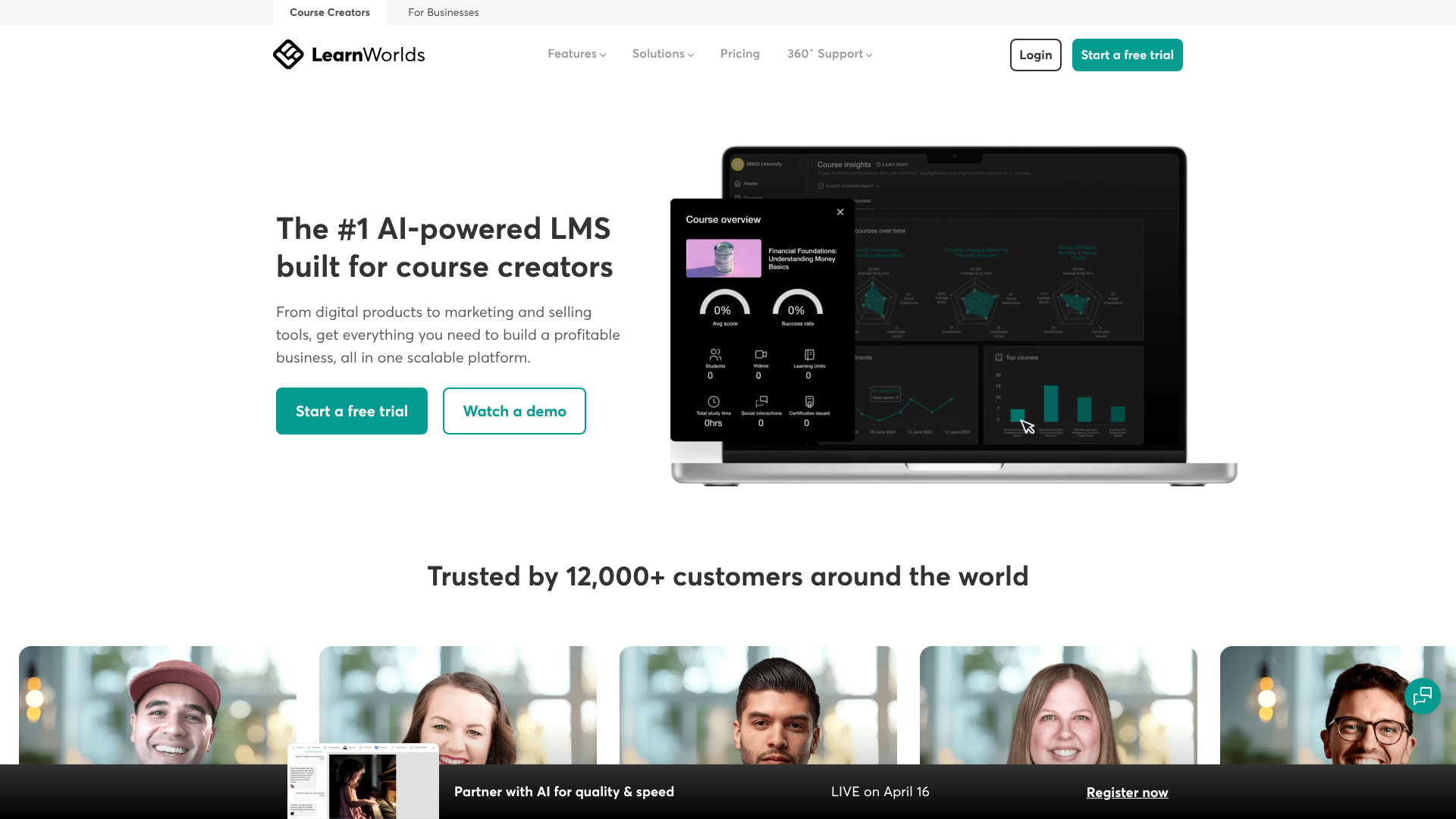
LearnWorlds is a powerful and versatile platform that excels at creating interactive and engaging learning experiences. It's an excellent choice for organisations that want to go beyond simple video lectures and build comprehensive courses with quizzes, interactive videos, and certificates of completion.
Its strength lies in its robust feature set, which allows for the creation of a fully-fledged online training academy. You can build a library of resources that staff can access on-demand, helping to reinforce their initial Epic training and provide support long after the go-live date.
Pros
- Highly Interactive: Features like interactive video, assessments, and SCORM compliance make learning engaging.
- White-Label Solution: You can fully brand the platform to match your organisation's identity.
- Powerful Course Builder: Offers extensive customisation options for creating sophisticated learning paths.
Cons
- Steeper Learning Curve: The sheer number of features can be overwhelming for beginners.
- Higher Price Point: It's a premium solution, and pricing reflects its advanced capabilities.
2. Teachable

If simplicity and ease of use are your top priorities, Teachable is a fantastic option. It's known for its intuitive interface, which allows you to upload content and build a professional-looking course in a matter of hours, not weeks. This makes it ideal for smaller departments or teams that need to get training materials online quickly without a dedicated IT team.
While it may not have all the advanced interactive features of LearnWorlds, Teachable provides all the essential tools needed for effective online training, including video hosting, quizzes, and course completion tracking. It's a straightforward solution for delivering supplementary Epic software training.
Pros
- User-Friendly: Incredibly easy to set up and manage, even for non-technical users.
- All-in-One Platform: Handles everything from content hosting to user management.
- Reliable and Stable: A well-established platform with excellent uptime and support.
Cons
- Limited Customisation: Less flexibility in course design and branding compared to other platforms.
- Transaction Fees: Some plans include transaction fees on top of the monthly subscription.
3. Tutor LMS
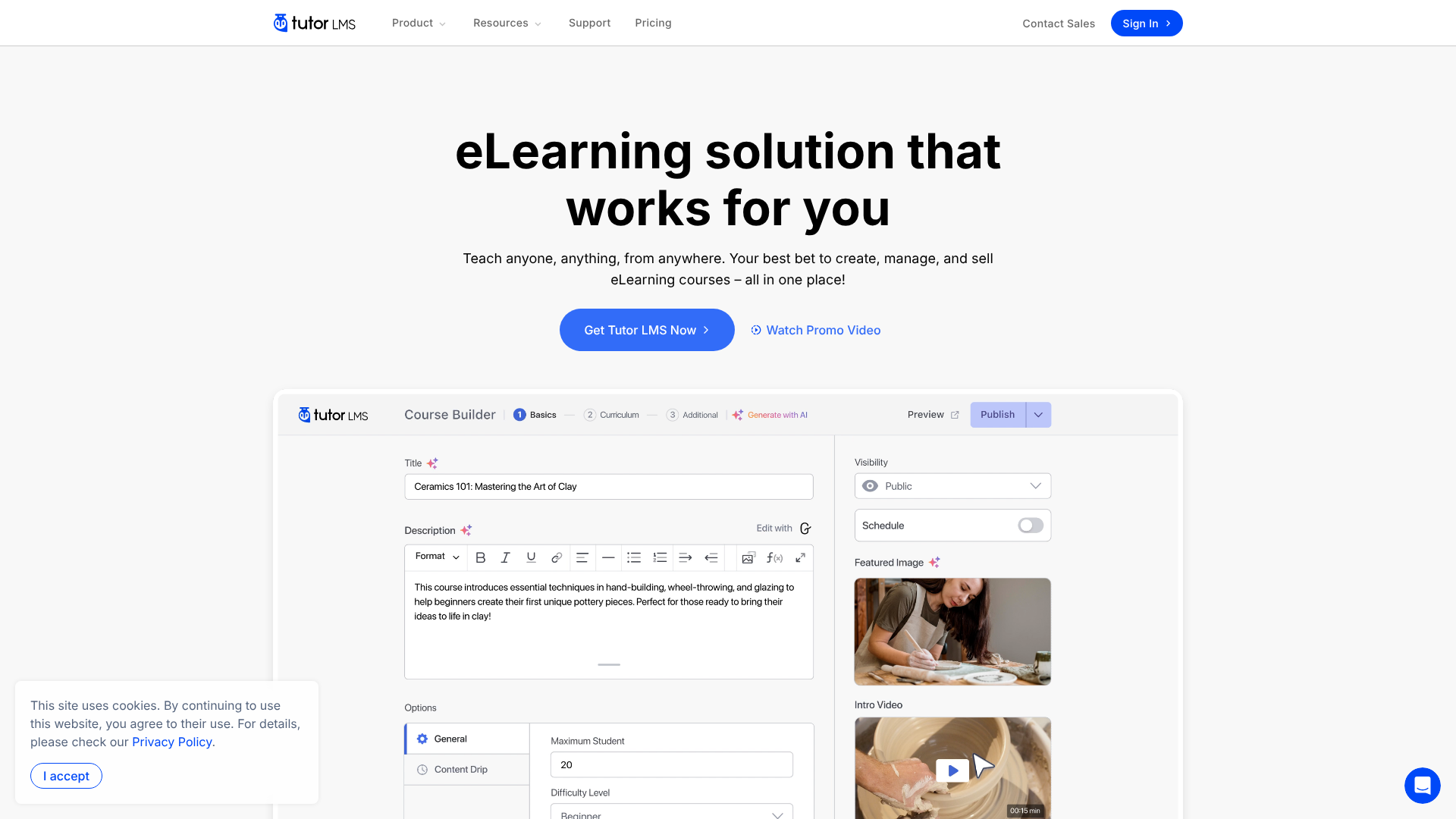
For organisations that already have a website built on WordPress, Tutor LMS is a leading choice. As a WordPress plugin, it integrates directly into your existing site, giving you complete control over the look, feel, and functionality of your training portal. This is perfect for those who want to own their platform fully and avoid monthly subscription fees from hosted solutions.
Tutor LMS offers a rich set of features, including a drag-and-drop course builder, advanced quizzing, and detailed analytics. It provides the power of a dedicated LMS within the familiar WordPress ecosystem, offering a great balance of control and functionality for any healthcare training program.
Pros
- Full Control: Since it's a WordPress plugin, you have complete ownership and control over your data and platform.
- Cost-Effective: Often more affordable in the long run compared to subscription-based platforms.
- Extensible: Can be extended with countless other WordPress plugins to add new features.
Cons
- Requires WordPress: You must have a self-hosted WordPress site to use it.
- Technical Management: You are responsible for your own hosting, security, and updates, which requires some technical knowledge.
Understanding the Investment: Epic Training Pricing and Costs
One of the most common questions from individuals is, "How much does Epic training cost?" The answer, however, isn't straightforward because you generally can't purchase it directly. The cost of training is almost always bundled into the massive, multi-million-pound contract a healthcare system signs when it decides to implement Epic.
For a hospital, the total cost of an Epic implementation can range from tens of millions to over a billion pounds, depending on the size of the organisation. A significant portion of this budget is allocated to training. This covers the cost of certified trainers, access to Epic's training materials and environments, and the administrative overhead of scheduling thousands of employees for classes.
For an individual employee at one of these hospitals, the training is effectively free. It's a mandatory part of their job, and the employer covers all associated costs. The real "cost" for an individual seeking certification is securing a job with a healthcare organisation that uses Epic and is willing to sponsor their training. There is no public price list or course catalogue for individuals to browse and purchase.
For organisations looking at supplementary training tools like the LMS platforms mentioned earlier, costs are much more transparent. These platforms typically operate on a monthly or annual subscription model. Pricing can range from around £30 per month for a basic plan on a platform like Teachable to several hundred pounds per month for an advanced solution like LearnWorlds. For the latest information, it's best to visit their websites for current pricing structures.
Pro Tip: When interviewing for a clinical or IT role at a hospital, ask about their ongoing training and professional development opportunities related to the EHR. A strong commitment to continuous education is a sign of a well-run organisation that invests in its staff.
Weighing the Options: Pros and Cons of Epic Training Models
Choosing a path for learning Epic involves understanding the trade-offs between the official, sponsored model and the informal, self-directed approach. Each has distinct advantages and disadvantages depending on your goals and current employment situation.

Official Employer-Sponsored Training
This is the gold standard for learning the system and the only route to official certification.
Pros:
- Comprehensive and In-Depth: Provides a deep, role-based understanding of the software with hands-on practice in a live environment.
- Leads to Certification: Successful completion results in an official Epic certification or proficiency, a highly valued credential in the healthcare industry.
- No Direct Cost to You: Your employer covers all expenses, which are substantial.
- Structured Learning: Follows a professionally designed curriculum taught by certified experts.
Cons:
- Requires Sponsorship: It's inaccessible unless your employer sponsors you, making it exclusive.
- Time-Intensive: Requires a significant time commitment, often involving days or even weeks of dedicated classes.
- Paced for Groups: The training is often paced for a group, which may be too fast or too slow for some individuals.
Informal Self-Directed Learning
This path is for individuals who want to gain familiarity with Epic but lack a sponsor.
Pros:
- Highly Accessible: Anyone with an internet connection can find videos and articles about Epic.
- Low to No Cost: Most resources, like YouTube tutorials, are free.
- Flexible and Self-Paced: You can learn whenever you have free time, at your own speed.
- Provides a Good Overview: Can give you a solid foundational understanding of the interface and workflows, which is useful for interviews.
Cons:
- No Certification: This path will never lead to an official Epic certification.
- No Hands-On Access: You can watch others use the software, but you can't practice in a live system yourself.
- Variable Quality: The quality and accuracy of unofficial resources can vary widely.
- Surface-Level Knowledge: It's difficult to gain the deep, nuanced understanding that comes from formal training.
Frequently Asked Questions About Epic Training
Here are answers to some of the most common questions people have about getting trained on Epic's healthcare software.
Is Epic software hard to learn?
The difficulty of learning Epic depends heavily on your role, your technical aptitude, and the quality of your training. For most users, the system is complex but not necessarily difficult to learn. It has a steep learning curve initially because it contains a vast amount of information and functionality. However, since the training is role-specific, you only need to master the parts of the system relevant to your job, which makes it much more manageable.
Clinicians who are comfortable with technology often pick it up quickly, while others may find it less intuitive. The key is to engage fully in the training, ask questions, and spend time practising in the provided "playground" or test environment. With good training and practice, most users become proficient within a few weeks of regular use.
How much does Epic training cost?
For an individual, official Epic training is typically free because it is paid for by their sponsoring employer. The costs are part of the healthcare system's overall implementation contract with Epic, which can run into the millions of pounds. There is no option for an individual to purchase official training or certification directly from Epic.
If you are pursuing self-directed learning through unofficial channels, your costs can be very low or even zero. Many video tutorials and guides are available for free on platforms like YouTube. Some general EHR courses on platforms like Udemy or Coursera may have a small fee, but these are not specific to Epic.
How long does it take to learn the Epic system?
The duration of Epic training varies significantly by role. A front-desk staff member might complete their training in 4-8 hours. A nurse or physician, whose workflows are much more complex, might require 12-16 hours of classroom instruction, plus additional time for hands-on practice labs and at-the-elbow support during go-live.
For IT analysts or system builders who need to configure the system, certification tracks can be much longer, involving several weeks of intensive training and project work. After the initial training, it generally takes a few weeks of consistent, daily use for most staff to feel comfortable and proficient in their core workflows.
Can I get Epic certified on my own?
No, you cannot get Epic certified on your own. This is one of the most critical points to understand. Epic's policy restricts certification to individuals who are sponsored by a customer organisation (like a hospital) or are employees of Epic Systems itself. The company does not offer certification programmes to the general public.
To become certified, you must be selected by your employer to attend an official training track and then pass a series of exams and projects. If you see third-party companies promising "Epic certification," you should be extremely cautious, as these are not recognised by Epic or the healthcare industry.
Final Thoughts
Embarking on Epic healthcare software training is a significant step for any healthcare professional. It's an investment in skills that are highly sought after in a rapidly digitising industry. While the path to official certification is exclusively through employer sponsorship, the wealth of informal resources available means that anyone can start building their knowledge base.
For healthcare organisations, remember that training is not a one-time event. Fostering a culture of continuous learning is key to maximising the value of your EHR investment. Using powerful LMS tools like LearnWorlds or user-friendly platforms like Teachable can help you build a robust, ongoing healthcare training program that supports your staff long-term.
Ultimately, whether you're an individual looking to break into the field or an organisation aiming for operational excellence, a strategic approach to Epic training is essential for success. By understanding the pathways, costs, and tools available, you can navigate the process effectively and unlock the full potential of this powerful system.