


Online Courses for Web Development: A 2026 Buyer's Guide for Beginners
Starting a career in web development is an exciting prospect, offering creativity, problem-solving, and strong job prospects. The first step for many is finding the right training, and the sheer number of online courses for web development can feel overwhelming. With options ranging from free YouTube tutorials to intensive, multi-thousand-pound bootcamps, making the wrong choice can cost you time and money. This guide is designed to help you navigate the landscape and select a course that aligns perfectly with your personal goals, learning style, and budget.
- What You'll Learn
- What Exactly Are Online Web Development Courses?
- The Core Benefits of Choosing Online Web Dev Classes
- How to Choose the Right Online Web Development Course: A Buyer's Framework
- 1. Define Your Goal: Career Change, Hobby, or Skill Upgrade?
- 2. Front-End, Back-End, or Full-Stack: Which Path is for You?
- 3. Assess Your Learning Style: Structured vs. Self-Paced
- 4. Check the Curriculum: What Technologies Should You Learn in 2026?
- 5. Look for Project-Based Learning and a Strong Portfolio
- Top Online Courses for Web Development: A Comparison
- For Structured, University-Style Learning: Coursera & edX
- For a Massive Library of Specific Skills: Udemy
- For Interactive, Hands-On Practice: Codecademy & freeCodeCamp
- For Courses from Independent Experts
- Understanding Pricing: How Much Do Web Development Courses Cost?
- The Pros and Cons of Online Learning
- Frequently Asked Questions
- Is web development dead due to AI?
- Is 40 too old to become a web developer?
- Can I learn HTML in 7 days?
- Is it possible to learn web development entirely online?
- Final Thoughts: Your Next Step to Becoming a Web Developer
This isn't just a list of popular courses. It's a framework for making an informed decision. We'll break down the different types of courses, what to look for in a curriculum, how to match a course to your career ambitions, and how to spot quality programmes that deliver real-world skills. By the end, you'll have a clear roadmap to find the best online learning path to become a confident web developer.
What You'll Learn
- How to Define Your Goal: Understand whether you're aiming for a full career change, a new skill, or a hobby, and how that choice impacts the course you need.
- Key Course Features: Learn to evaluate a course based on its curriculum, project-based work, instructor support, and community, ensuring you get real value.
- Types of Learning Platforms: Discover the difference between massive open online courses (MOOCs), interactive platforms, bootcamps, and courses from independent experts.
- Budgeting for Your Education: Get a clear overview of pricing models, from free resources to subscription services and high-investment bootcamps, to find an option that fits your finances.
- Making the Final Decision: Use a structured framework to compare your options and confidently choose the right online web development course to launch your journey.
What Exactly Are Online Web Development Courses?
At its core, an online web development course is a structured programme of study delivered over the internet, designed to teach the skills required to build websites and web applications. Unlike traditional education, these courses come in a wide variety of formats, each catering to different needs, schedules, and learning preferences. Understanding these formats is the first step in narrowing down your options.
The most common format is the self-paced video course. Platforms like Udemy and Coursera host vast libraries of these, where an instructor guides you through topics via pre-recorded videos, often supplemented with quizzes and downloadable resources. They offer incredible flexibility, allowing you to learn whenever and wherever you want. You can pause, rewind, and revisit complex topics as many times as you need, making them ideal for those balancing learning with work or family commitments.
Another popular type is the interactive learning platform. Services like Codecademy or Scrimba integrate learning directly into a coding environment. Instead of just watching a video, you're prompted to write code directly in your browser, receiving immediate feedback. This hands-on approach is excellent for reinforcing concepts and building muscle memory.
It turns learning from a passive activity into an active one, which can significantly speed up comprehension for many learners.
Finally, there are online bootcamps. These are intensive, cohort-based programmes that aim to take you from beginner to job-ready in a matter of months. They are often full-time commitments and feature live-streamed lectures, daily assignments, group projects, and dedicated career support. Bootcamps are the most expensive option but provide the highest level of structure, accountability, and direct support, simulating a real-world work environment to prepare you for your first developer role.
The Core Benefits of Choosing Online Web Dev Classes

Deciding to learn web development online opens up a world of advantages that traditional, in-person learning often can't match. The most significant benefit is unparalleled flexibility. You aren't tied to a physical classroom or a rigid schedule. This means you can learn at 10 p.m.
after the kids are in bed, during your lunch break, or on a weekend morning. This adaptability makes a career change accessible to people who can't afford to quit their jobs to return to full-time study.
Cost-effectiveness is another major draw. While intensive bootcamps can be expensive, the overall cost to learn web development online is significantly lower than a university degree. There are countless high-quality, low-cost courses available for the price of a few cups of coffee, and an abundance of free resources on platforms like YouTube and freeCodeCamp. This low barrier to entry democratises tech education, allowing anyone with an internet connection and a desire to learn to get started.
Beyond flexibility and cost, the sheer variety of online web dev classes is staggering. You can find a course on almost any technology, framework, or specialisation imaginable. Whether you want to master the popular React library, dive into the world of back-end development with Python and Django, or explore a niche area like WebGL for 3D graphics, there's a course for it. This allows you to tailor your learning path precisely to your interests and the demands of the job market, rather than being restricted to a fixed, one-size-fits-all curriculum.
How to Choose the Right Online Web Development Course: A Buyer's Framework
With thousands of options available, selecting the right course requires a strategic approach. Instead of randomly picking a highly-rated course, use this framework to analyse your needs and evaluate your options systematically. This will ensure you invest your time and money wisely.
1. Define Your Goal: Career Change, Hobby, or Skill Upgrade?
Your primary motivation is the most important factor. Someone looking to become a professional, full-time developer has very different needs from someone who wants to build a personal blog as a hobby.
- For the Career Changer: You need a comprehensive, in-depth curriculum that covers both front-end and back-end technologies (a full-stack path). Look for courses that emphasise portfolio-building projects, offer career services like CV reviews and interview prep, and have a strong community. An intensive bootcamp or a structured, multi-course specialisation on a platform like Coursera is often the best fit.
- For the Skill Upgrader: Perhaps you're a designer who wants to understand HTML/CSS better, or a marketer who needs to work with JavaScript. In this case, you don't need a full-stack curriculum. Look for shorter, specialised courses that focus on the specific technology you need to learn. A subscription to a platform like Codecademy or a one-off course on Udemy would be perfect.
- For the Hobbyist: If you're learning for fun or a personal project, your focus should be on enjoyment and practical application. An interactive platform that makes learning feel like a game or a project-based course that walks you through building something cool (like a personal portfolio site) is an excellent choice. There's no pressure, so prioritise a format you find engaging.
2. Front-End, Back-End, or Full-Stack: Which Path is for You?
Web development is broadly divided into three paths. Understanding them will help you focus your search.
- Front-End Development: This is the part of the website you see and interact with—the layout, fonts, colours, and menus. It involves technologies like HTML, CSS, and JavaScript, along with frameworks like React, Angular, or Vue. If you have a visual eye and enjoy crafting user experiences, this is the path for you.
- Back-End Development: This is the server-side logic that powers the website from behind the scenes. It involves databases, servers, and application logic, using languages like Python, Node.js (JavaScript), Ruby, or PHP. If you enjoy logic, data, and problem-solving, you might prefer the back-end.
- Full-Stack Development: This covers both front-end and back-end. Full-stack developers are versatile and can work on all parts of a web application. Most comprehensive online courses and bootcamps are designed to teach full-stack skills, as they make you a more flexible and valuable candidate in the job market.
For beginners aiming for a career, a full-stack path is generally recommended as it provides the broadest foundation.
3. Assess Your Learning Style: Structured vs. Self-Paced
Be honest about how you learn best. Do you thrive with deadlines and external accountability, or do you prefer to learn at your own pace without pressure?
- Structured Learners: If you need deadlines, live classes, and instructor feedback to stay motivated, a cohort-based online bootcamp is your best bet. The fixed schedule and sense of community provide the structure many people need to succeed.
- Self-Paced Learners: If you are disciplined and self-motivated, the flexibility of pre-recorded video courses on platforms like Udemy is ideal. You have complete control over your learning schedule, but the onus is entirely on you to stay on track.
Pro Tip: A hybrid approach can work well. Use a self-paced course for the core material, but join a developer community on Discord or Slack to find accountability partners. This gives you flexibility with a dose of external motivation.
4. Check the Curriculum: What Technologies Should You Learn in 2026?
A course is only as good as its content. A curriculum that is outdated is a waste of time. For a full-stack web development course in 2026, look for these core technologies:
- Foundations: HTML5, CSS3, and modern JavaScript (ES6+).
- Front-End Framework: At least one major JavaScript framework. React is currently the most in-demand, followed by Angular and Vue.
- Back-End Language & Framework: Node.js with Express is a popular choice because it uses JavaScript, meaning you only need to learn one language for both front and back-end. Python with Django or Flask is another excellent, in-demand option.
- Database: Experience with both SQL (like PostgreSQL) and NoSQL (like MongoDB) databases is valuable.
- Essential Tools: Git and GitHub for version control are non-negotiable. You should also be exposed to command-line basics and deployment platforms like Netlify or Vercel.
Avoid courses that focus heavily on older technologies like jQuery without treating it as a legacy tool.
5. Look for Project-Based Learning and a Strong Portfolio
You don't get a job by showing certificates; you get a job by showing what you can build. The best online courses for web development are heavily project-based. They don't just teach you syntax; they guide you through building real, functional applications. When evaluating a course, look at the projects you'll be building.
Are they generic to-do lists, or are they complex applications that you would be proud to show a potential employer.
A good course will have you build 3-5 significant portfolio pieces. These projects are your proof of skill. They demonstrate to recruiters that you can apply your knowledge to solve real-world problems. A course that ends with you having a polished portfolio of projects is infinitely more valuable than one that just gives you a certificate of completion.
Top Online Courses for Web Development: A Comparison

There is no single "best" course, only the best course for you. Here’s a breakdown of the top platforms, categorised by their strengths, to help you find your fit.
| Platform Category | Best For | Key Features | Price Model | Example Platforms |
|---|---|---|---|---|
| MOOCs | Structured, academic-style learning from universities. | University partnerships, formal certificates, structured specialisations. | Audit for free, pay for certificate, or subscription. | Coursera, edX |
| Course Marketplaces | A huge variety of specific, self-paced video courses. | Massive library, frequent sales, lifetime access to courses. | One-time purchase per course. | Udemy |
| Interactive Platforms | Hands-on, in-browser coding practice. | Interactive exercises, gamified learning, immediate feedback. | Freemium or monthly/annual subscription. | Codecademy, Scrimba, freeCodeCamp |
| Online Bootcamps | Intensive, career-focused, structured training. | Live instruction, cohort-based, career services, high accountability. | High one-time cost or Income Share Agreement (ISA). | General Assembly, Flatiron School |
| Independent Creators | Niche topics and specialised expertise. | Deep dives into specific technologies, direct access to expert. | One-time purchase or subscription. | Various (often on Teachable, LearnWorlds) |
For Structured, University-Style Learning: Coursera & edX
If you appreciate the structure and credibility of university-level education, platforms like Coursera and edX are excellent choices. They partner with top universities and companies (like Google, Meta, and IBM) to offer professional certificates and specialisations. These are a series of connected courses that provide a deep, comprehensive understanding of a subject. For example, Meta's Front-End Developer Professional Certificate on Coursera is a highly-regarded programme that prepares you for an entry-level role.
For a Massive Library of Specific Skills: Udemy
Udemy is a marketplace with an almost endless library of courses on every imaginable tech topic. Its strength lies in its variety and affordability. You can find top-rated, comprehensive bootcamps from instructors like Colt Steele or Angela Yu for a very low price during one of Udemy's frequent sales. The model is a-la-carte; you buy a course and get lifetime access.
This is perfect for self-motivated learners who want to pick and choose specific skills to learn at their own pace.
For Interactive, Hands-On Practice: Codecademy & freeCodeCamp
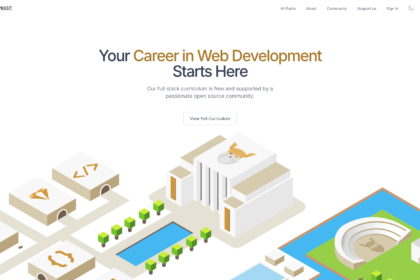
If you learn best by doing, interactive platforms are fantastic. Codecademy offers a guided, step-by-step path where you write code directly in the browser and get instant feedback. Its Pro subscription unlocks career paths and real-world projects. Similarly, freeCodeCamp is a non-profit organisation offering a full-stack curriculum completely for free, built around projects and certifications.
Its hands-on approach has helped millions of people learn to code.
For Courses from Independent Experts
Beyond the big platforms, there's a thriving ecosystem of independent experts who create and sell their own high-quality courses. These instructors often provide a level of depth and a unique perspective on niche topics that you won't find elsewhere. They build their own online schools using powerful platforms designed for education.
For example, many top developers use platforms like Teachable to host their content, offering a focused and polished learning experience. Others may use a platform like LearnWorlds, which provides interactive video and community features. Finding a course from a respected expert in a field you're passionate about can be a fantastic way to get specialised knowledge directly from a professional.
Understanding Pricing: How Much Do Web Development Courses Cost?
The cost of learning web development can range from absolutely nothing to tens of thousands of pounds. Here’s a breakdown of the common pricing structures you'll encounter.
- Free Resources: There is a wealth of free content available. Platforms like freeCodeCamp offer a full curriculum at no cost. YouTube channels like Traversy Media and Web Dev Simplified provide thousands of hours of high-quality tutorials. The main trade-off is the lack of structure and support; you have to curate your own curriculum and find help when you get stuck.
- Subscription Models: Many platforms operate on a monthly or annual subscription. Codecademy, Scrimba, and Coursera (for its Plus subscription) fall into this category. This model gives you access to a wide catalogue of courses for a recurring fee, typically ranging from £15 to £50 per month. It's a cost-effective way to access a lot of material, but you lose access if you stop paying.
- One-Time Purchases: This is the model used by Udemy. You buy a course and own it forever. Prices can range from £10 during a sale to over £100 at full price. This is great for building a personal library of resources you can refer back to anytime.
- High-Investment Bootcamps: Online bootcamps are the most expensive option, with tuition often ranging from £8,000 to £15,000 or more. You are paying for live instruction, a structured curriculum, a cohort of peers, and intensive career support. Some also offer Income Share Agreements (ISAs), where you pay nothing upfront but agree to pay back a percentage of your salary once you land a job in the industry.
The Pros and Cons of Online Learning
While online learning offers incredible opportunities, it's important to have a balanced perspective. It's not the right fit for everyone, and understanding the potential downsides can help you prepare for them.
Advantages
- Flexibility: As mentioned, the ability to learn on your own schedule is the biggest advantage, making it accessible to almost everyone.
- Affordability: Compared to traditional education, online courses offer a much lower-cost entry point into the tech industry.
- Variety and Specialisation: You can learn virtually any technology you want, allowing you to craft a custom skill set that matches your career goals.
- Pacing: You control the speed of your learning. You can breeze through topics you find easy and spend extra time on those you find challenging.
Disadvantages
- Lack of Accountability: Without a teacher looking over your shoulder or a fixed class schedule, it's easy to procrastinate. Success in self-paced learning requires a high degree of self-discipline.
- Isolation: Learning alone can be lonely and frustrating. When you get stuck on a difficult bug, you don't have a classmate or teacher next to you to ask for help. This is why choosing a course with a strong community forum or Discord server is so important.
- Variable Quality: The quality of online courses can vary dramatically. Some are created by world-class instructors, while others are outdated or poorly explained. It's crucial to read reviews, check the instructor's credentials, and preview the course material before you buy.
Frequently Asked Questions
Here are answers to some of the most common questions aspiring developers have before they start their journey.
Is web development dead due to AI?
No, web development is not dead, but it is evolving. AI tools like GitHub Copilot are becoming powerful assistants for developers, helping to write boilerplate code, debug issues, and even suggest solutions. However, they are tools, not replacements. These tools can't understand business requirements, design user experiences, or make high-level architectural decisions.
AI is changing how developers work, making them more productive. The core skills of problem-solving, logical thinking, and creativity remain essential and are uniquely human. Learning to use AI tools effectively will likely become another important skill for developers, but the demand for skilled humans to build, manage, and direct web projects remains strong.
Is 40 too old to become a web developer?
Absolutely not. The tech industry is more open to career changers from diverse backgrounds than ever before. Many people successfully transition into web development in their 30s, 40s, and beyond. Your age is irrelevant; what matters are your skills, your portfolio, and your passion for learning.
In fact, older career changers often bring valuable soft skills from their previous careers—like communication, project management, and client handling—that are highly sought after in development teams. Don't let your age be a barrier. Focus on building your skills and projects, and you will find opportunities.
Can I learn HTML in 7 days?
You can certainly learn the basic syntax of HTML in a week. HTML is a markup language, not a programming language, and its core concepts (tags, attributes, elements) are relatively straightforward. Within seven days of focused effort, you could be comfortable building a simple, static webpage.
However, mastering HTML and understanding how it works with CSS and JavaScript to create modern, responsive, and accessible websites takes much longer. Learning the syntax is just the first step. True proficiency comes from building many projects and learning how to structure documents semantically for both browsers and search engines.
Is it possible to learn web development entirely online?
Yes, it is 100% possible. Thousands of professional developers working today are entirely self-taught or learned their skills through online courses and bootcamps without ever stepping into a traditional university classroom for computer science. The resources available online today are more than sufficient to take you from a complete beginner to a job-ready professional.
The key is to be structured and disciplined. You must focus on building a strong portfolio of projects to demonstrate your skills to employers. A certificate alone is not enough. If you can prove you can build things, it doesn't matter where you learned how to do it.
Final Thoughts: Your Next Step to Becoming a Web Developer
Choosing from the vast array of online courses for web development is the first major decision on your path to a new career or skill. The key isn't to find a single, perfect course, but to find the right learning path that matches your specific circumstances. Start by clearly defining your goals, be honest about your learning style, and carefully vet the curriculum of any course you consider.
Remember that learning to code is a marathon, not a sprint. The course you choose is your starting line. The real learning happens when you start applying your knowledge to build projects. Focus on courses that prioritise hands-on building, as your portfolio will be your most valuable asset.
Whether you choose a free self-guided path, a structured bootcamp, or a specialised course from an independent creator, the most important step is to begin.
If you decide to explore courses from individual experts, you'll find many are hosted on excellent platforms like Teachable or LearnWorlds, which are designed to provide an engaging and effective learning environment. Whatever you choose, commit to the process, stay curious, and start building.