



Digital Signature vs eSignature: Which to Use for Your Business?
In the world of digital documents, the terms 'electronic signature' and 'digital signature' are often used interchangeably, but they represent two very different things. Understanding the comparison between a digital signature vs esignature is crucial for ensuring your agreements are secure, compliant, and legally sound. Choosing the wrong one can expose your business to unnecessary risk, while the right one can streamline your operations securely.
- In a Nutshell
- The Fundamental Difference: Concept vs. Technology
- Digital Signature vs eSignature: A Side-by-Side Comparison
- Key Features and Benefits Explored
- How to Choose the Right Option for Your Needs
- When to Use an Electronic Signature (Low-Risk Scenarios)
- When a Digital Signature is Essential (High-Risk Scenarios)
- A Decision-Making Framework: 3 Questions to Ask
- Top eSignature and Digital Signature Platforms
- PandaDoc: The All-in-One Document Workflow Solution
- eSignly: A Focused and Secure Signing Experience
- Better Proposals: Streamlining the Sales Process
- Understanding Pricing and Cost Structures
- The Cost of Electronic Signature Software
- The Cost of Digital Signatures
- Is a Free Solution Ever Enough?
- Pros and Cons: A Balanced View
- Frequently Asked Questions (FAQ)
- Is DocuSign a digital signature or electronic signature?
- How do I create my digital signature?
- Which is more secure, an electronic signature or a digital signature?
- Why is an e-signature not valid?
- What documents cannot be electronically signed?
- Does a digital signature hold up in court?
- Conclusion: Making the Right Choice for Security and Efficiency
An electronic signature is a broad legal concept representing a person's intent to sign a document, much like its pen-and-paper counterpart. A digital signature, however, is a specific, highly secure technology that uses cryptographic encryption to verify a signer's identity and protect the integrity of the document itself. Think of it this way: all digital signatures are a type of electronic signature, but not all electronic signatures have the advanced security of a digital signature.
This guide will break down the essential differences, explore the technology behind them, and provide a clear framework to help you decide which is the right fit for your specific business needs, from simple HR forms to high-stakes financial contracts.
In a Nutshell
- eSignature is a Legal Concept: An electronic signature (or eSignature) is a broad legal term for any electronic process that indicates acceptance of an agreement. This can be as simple as typing your name, ticking a box, or drawing your signature with a mouse.
- Digital Signature is a Secure Technology: A digital signature is a specific, highly secure type of eSignature. It uses a certificate-based digital ID and cryptographic encryption to authenticate the signer's identity and ensure the document hasn't been altered after signing.
- Security is the Key Difference: Digital signatures offer far superior security, identity verification, and tamper-proofing compared to standard eSignatures. This makes them essential for high-value or legally sensitive documents.
- All Digital Signatures are eSignatures: A digital signature legally fulfils the function of an eSignature, but it comes with added layers of security. However, a simple eSignature (like a typed name) is not a digital signature.
- Your Choice Depends on Risk: The right option depends entirely on the document's legal requirements, the financial or business risk involved, and any specific industry regulations you must follow.
The Fundamental Difference: Concept vs. Technology
To truly grasp the esignature vs digital signature debate, you must understand that you're comparing a broad legal idea to a specific piece of technology. One defines intent, while the other provides a secure method of proving that intent and protecting the document.
What is an Electronic Signature (eSignature)?
An electronic signature is a legal concept defined by laws like the UK's Electronic Identification and Trust Services for Electronic Transactions Regulations (eIDAS) and the US's ESIGN Act. It is legally recognised as any electronic sound, symbol, or process attached to a contract or record, executed by a person with the intent to sign.
This definition is intentionally broad to cover a wide range of technologies. Common examples of eSignatures include:
- Typing your name at the bottom of an email or into a form.
- A scanned image of your handwritten signature pasted into a document.
- Drawing your signature on a screen with your finger or a stylus.
- Ticking an "I agree" box on a website's terms and conditions page.
- Using a dedicated eSignature platform to apply a stylised signature.
The primary purpose of an eSignature is to capture the signer's intent to be bound by the terms of the document. While legally binding for many common agreements, its security relies heavily on the process used to create it, which can sometimes be simple to forge or dispute.
What is a Digital Signature?
A digital signature is not a concept; it's a specific, technical implementation of a signature that is cryptographically secure. It is the gold standard for signature security and is a more advanced and secure subset of electronic signatures.
Instead of just capturing an image or typed name, a digital signature creates a unique "digital fingerprint" (known as a cryptographic hash) of the document. This fingerprint is then encrypted using the signer's private key, which is part of a secure digital ID issued by a trusted third-party Certificate Authority (CA). This encrypted hash is the digital signature.
When the recipient opens the document, their software uses the signer's public key to decrypt the signature. It then calculates a new fingerprint of the document. If the two fingerprints match, it proves two critical things:
- Authenticity: The signature was created by the person who owns the digital ID.
- Integrity: The document has not been altered in any way since it was signed. If even a single character is changed, the fingerprints won't match, and the signature will be invalidated.
Digital Signature vs eSignature: A Side-by-Side Comparison
Seeing the features laid out next to each other makes the difference between digital and esignature clear. While both serve to execute documents, their underlying mechanisms and the level of assurance they provide are vastly different.
| Feature | Electronic Signature (eSignature) | Digital Signature |
|---|---|---|
| Definition | A broad legal term for showing intent to sign electronically. | A specific technology using cryptography to secure a document. |
| Underlying Technology | Varies widely; can be as simple as a typed name or a checkbox. | Public Key Infrastructure (PKI) with cryptographic hashing. |
| Security Level | Basic to moderate, depending on the platform's audit trail. | High; provides a tamper-evident seal and strong encryption. |
| Identity Authentication | Relies on methods like email verification or IP address logging. | Verified by a trusted third-party Certificate Authority (CA). |
| Tamper-Proofing | Limited. It can be difficult to detect minor changes to a document. | Yes. Any change to the document after signing invalidates the signature. |
| Legal Standing | Legally binding for most common business agreements. | Legally binding with a much stronger evidence trail, reducing risk of disputes. |
| Common Use Cases | HR forms, NDAs, sales quotes, registration forms. | High-value contracts, legal filings, financial loans, government documents. |
Key Features and Benefits Explored
Understanding the core differences is one thing, but knowing how they translate into real-world benefits is what helps you make an informed decision. Each type of signature excels in different scenarios, driven by its unique features.
Electronic Signatures: Speed and Simplicity
The primary advantage of standard eSignatures lies in their ease of use and accessibility. They are designed to remove friction from everyday processes, making them perfect for high-volume, low-risk agreements.
- User-Friendliness: The process is incredibly intuitive. Signers typically just need to click a link in an email, type or draw their name, and click a button to finalise. There are no complex technical steps, which leads to higher completion rates.
- Rapid Document Turnaround: Because they are so simple, eSignatures can reduce the time it takes to get a contract signed from days or weeks to mere minutes. This is a massive benefit for sales teams, HR departments, and anyone who needs to move processes along quickly.
- Cost-Effectiveness: For many businesses, the high-level security of a digital signature is overkill for routine paperwork. eSignature platforms offer affordable plans that cover the vast majority of common business documents, providing a significant return on investment through efficiency gains.
Digital Signatures: Security and Trust
When a document's integrity and the signer's identity are non-negotiable, a digital signature is the only choice. Its benefits are centred on providing the highest possible level of assurance and trust.
- Unmatched Identity Verification: A digital signature is tied to a digital certificate issued by a Certificate Authority. To get this certificate, the signer must go through a rigorous identity verification process. This means you can be certain that the person signing is who they claim to be.
- Tamper-Evident Seal: This is perhaps the most powerful feature. The moment a document is digitally signed, it's sealed. The cryptographic hash ensures that if anyone tries to alter the document—even by changing a comma—the signature will show as invalid. This guarantees the document's integrity from the moment of signing.
- Non-Repudiation: This legal term means that a signer cannot later deny having signed the document. Because a digital signature is uniquely linked to the signer's verified identity and private key, it provides strong, court-admissible evidence that they were the one who executed the agreement.

How to Choose the Right Option for Your Needs

Now for the practical application: which one should you use? The answer almost always comes down to an assessment of risk and legal requirements. A simple framework can help guide your decision.
When to Use an Electronic Signature (Low-Risk Scenarios)
Standard eSignatures are the workhorse for the majority of day-to-day business agreements where the risk of fraud or dispute is low. They are perfect for situations that prioritise speed and convenience over ironclad security.
Choose an eSignature for:
- Internal HR Documents: Onboarding paperwork, leave requests, policy acknowledgements, and employee handbooks.
- Simple Sales Agreements: Standard sales quotes, statements of work, and basic service agreements.
- Non-Disclosure Agreements (NDAs): For routine business discussions.
- Consent and Registration Forms: Event registrations, marketing consent forms, and client intake forms.
When a Digital Signature is Essential (High-Risk Scenarios)
When you're dealing with documents that carry significant financial, legal, or regulatory weight, the enhanced security of a digital signature is not just recommended—it's often required. These are situations where you need absolute certainty about the signer's identity and the document's integrity.
Choose a digital signature for:
- Legally Binding Financial Documents: Loan agreements, mortgage applications, and insurance contracts.
- Government Contracts and Filings: Submitting official documents to government bodies that require PKI (Public Key Infrastructure) signatures.
- Healthcare Documents: Documents that fall under strict data privacy regulations like HIPAA.
- High-Value Commercial Contracts: Multi-year partnerships, intellectual property licensing, and merger and acquisition paperwork.
Pro Tip: In the European Union, the eIDAS regulation defines different levels of electronic signatures. A Qualified Electronic Signature (QES) is a specific type of digital signature that is legally equivalent to a handwritten one across all EU member states, making it essential for cross-border European business.
A Decision-Making Framework: 3 Questions to Ask
If you're still unsure, ask yourself these three questions about the document you need signed:
- What are the legal or regulatory requirements? Does the law or an industry body (like the FDA or a financial regulator) mandate a specific type of signature for this document?
- What is the risk if this document is altered or repudiated? Consider the financial loss, legal liability, or damage to your reputation. The higher the risk, the stronger the case for a digital signature.
- How important is it to have irrefutable proof of the signer's identity? If the identity of the signer could ever be called into question, a digital signature provides the strongest possible evidence.
Top eSignature and Digital Signature Platforms
Many modern software platforms offer robust signing solutions that cater to different business needs. While some focus on simple eSignatures integrated into a larger workflow, others provide options for higher security when required.
PandaDoc: The All-in-One Document Workflow Solution
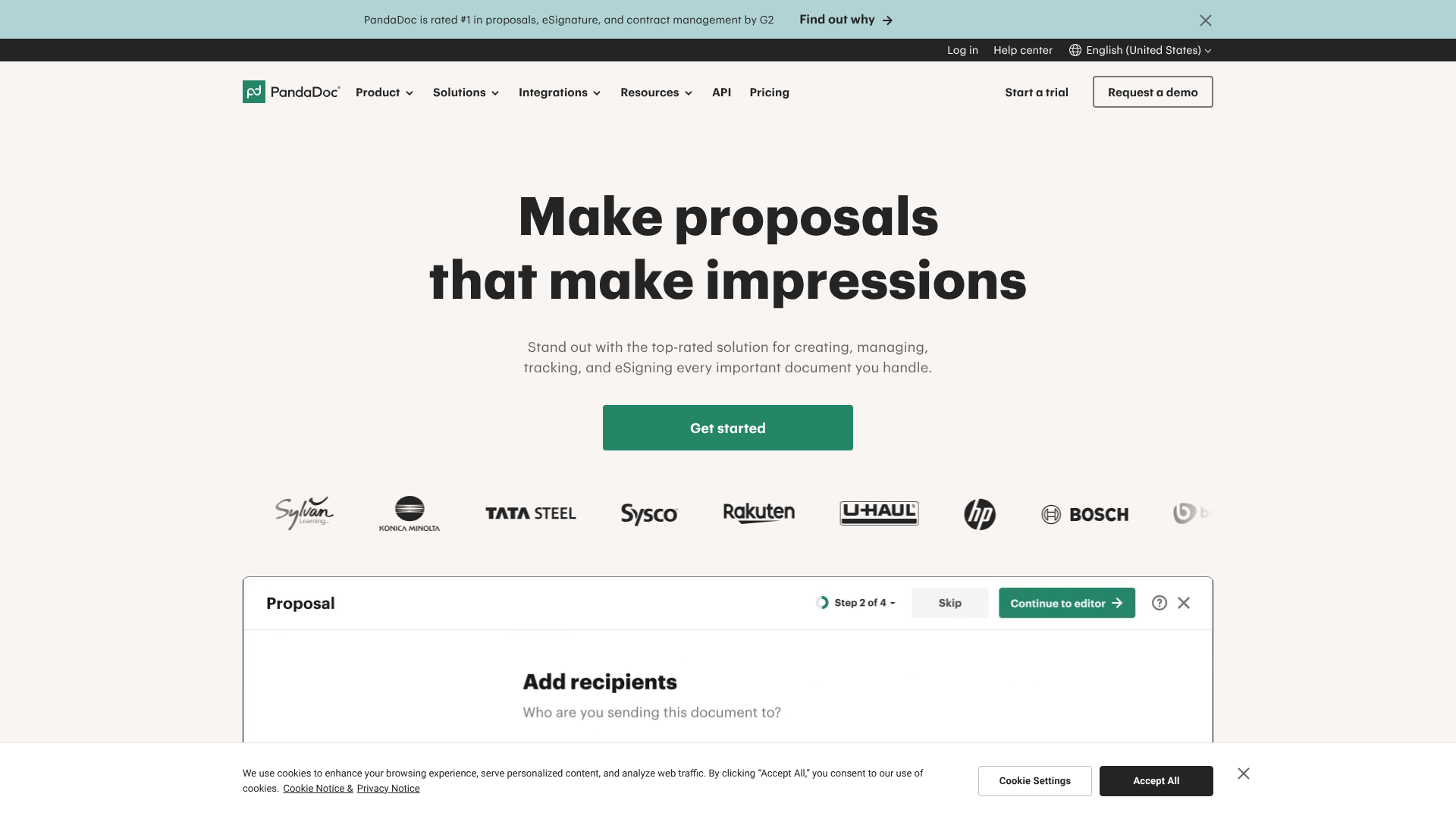
PandaDoc is a comprehensive platform designed to manage the entire document lifecycle, from creation and collaboration to signing and storage. Its core strength lies in streamlining sales and contract management processes.
The platform provides legally binding electronic signatures that are compliant with ESIGN and UETA laws. Each signed document comes with a detailed certificate containing an audit trail, which includes the signer's IP address and timestamps. This makes it an excellent choice for businesses that need to create, send, and track proposals, quotes, and contracts efficiently.
Pros
- Integrated Document Editor: Create professional-looking documents directly within the platform.
- Advanced Analytics: Track when documents are opened, viewed, and completed.
- CRM Integrations: Works well with popular CRMs like HubSpot and Zoho CRM.
Cons
- May be too feature-rich for simple signing needs.
- Pricing can be higher than basic, single-purpose signature tools.
eSignly: A Focused and Secure Signing Experience
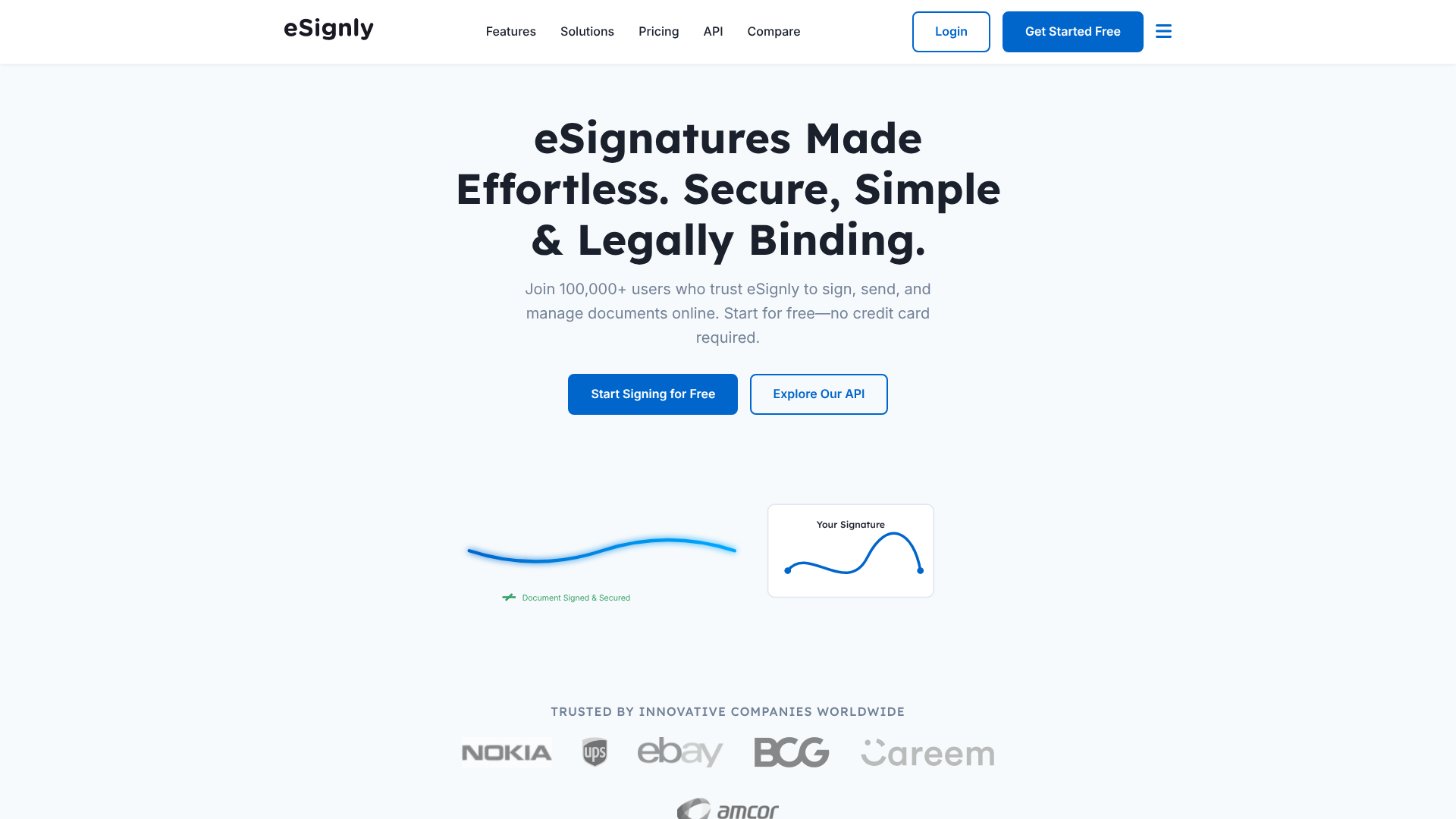
For businesses looking for a dedicated and secure signing solution, eSignly offers a focused experience. It provides a range of electronic signature types, allowing users to choose the level of security appropriate for their documents.
eSignly is built with compliance in mind, catering to industries with strict regulatory requirements. It offers features like detailed audit logs, two-factor authentication, and tamper-evident technology, bridging the gap between standard eSignatures and the high security of digital signatures. This makes it a versatile option for companies that handle a mix of low-risk and high-risk documents.
Pros
- Strong focus on security and compliance.
- Flexible options for different levels of signature assurance.
- User-friendly interface for both senders and signers.
Cons
- Lacks the broader document creation features of platforms like PandaDoc.
- Primarily focused on the signing process itself.
Better Proposals: Streamlining the Sales Process

As the name suggests, Better Proposals is designed to help you win more business by creating stunning, high-converting proposals. The eSignature feature is a critical component of its seamless workflow, allowing clients to accept and sign a proposal in a single, fluid motion.
The signatures are legally binding and secure, turning a beautiful proposal into an executed contract instantly. The platform's value comes from its combination of design, analytics, and signing capabilities, all aimed at accelerating the sales cycle. It's an ideal choice for agencies, freelancers, and sales teams who want to impress clients and close deals faster.
Pros
- Excellent proposal templates and design editor.
- Tracks client engagement with the proposal in real-time.
- Simplifies the sign-off process to increase conversion rates.
Cons
- Not a general-purpose document signing tool; it's specifically for proposals.
- May not be suitable for internal HR or legal workflows.
Understanding Pricing and Cost Structures
The cost associated with signing solutions can vary significantly based on the type of signature, the number of users, and the feature set. Generally, the more security and compliance features you need, the higher the cost.
The Cost of Electronic Signature Software
Most eSignature platforms operate on a Software-as-a-Service (SaaS) model, typically billed per user, per month or annually. Pricing is often tiered based on usage and features.
- Entry-Level Plans: These often start around £10-£20 per user per month and may limit the number of documents (sometimes called "envelopes") you can send for signature each month.
- Business Plans: Mid-tier plans offer more features, such as custom branding, advanced workflows, and integrations, with prices ranging from £25-£50 per user per month.
- Enterprise Plans: These are custom-priced and include advanced features like API access, single sign-on (SSO), and compliance modules for specific industries.
The Cost of Digital Signatures
Digital signature pricing can be more complex. In some cases, digital signature capabilities are included in the higher-priced enterprise tiers of eSignature platforms. In other scenarios, it involves a separate cost.
The core component of a digital signature is the digital certificate from a Certificate Authority (CA). These certificates often come with an annual fee per user, which can range from £20 to several hundred pounds, depending on the level of identity validation required. This cost is in addition to any platform fees.
Is a Free Solution Ever Enough?
Many platforms offer free plans, but they are almost always designed for personal or very light use. These plans typically have strict limits on the number of documents you can send per month and lack the business-critical features like audit trails, custom branding, and team management.
While a free tool might be fine for signing a personal document once in a while, it's not a viable or professional solution for any business. The lack of a comprehensive audit trail could leave you exposed in the event of a dispute.
Pros and Cons: A Balanced View
No solution is perfect for every situation. A balanced digital signature comparison requires looking at the drawbacks as well as the benefits.
Electronic Signatures: The Good and The Bad
Pros
- Extremely Fast and Convenient: Reduces friction and speeds up business processes.
- Low Barrier to Entry: Easy for anyone to use without technical knowledge.
- Widely Accepted: Legally recognised for a vast range of everyday agreements.
- Affordable: Many cost-effective solutions are available for businesses of all sizes.
Cons
- Lower Security: Relies on basic authentication, which can be less secure.
- Potential for Disputes: It can be easier for a signer to dispute they signed if identity verification is weak.
- Not Suitable for All Documents: Lacks the integrity assurance needed for high-risk transactions.
Digital Signatures: The Good and The Bad
Pros
- Highest Level of Security: Cryptographic encryption provides a tamper-proof seal.
- Strong Identity Authentication: Verified by a trusted third-party CA.
- Legally Robust: Provides very strong, court-admissible evidence of who signed, when, and what they signed.
- Essential for Compliance: Meets the strict requirements of many regulated industries.
Cons
- More Complex User Experience: Signers may need to obtain and manage a digital ID.
- Can Be More Expensive: Involves costs for both the platform and the digital certificates.
- Overkill for Simple Documents: The high level of security is unnecessary for low-risk paperwork and can slow down the process.
Frequently Asked Questions (FAQ)
Here are answers to some of the most common questions people have when comparing eSignature vs digital signature options.
Is DocuSign a digital signature or electronic signature?
DocuSign is primarily an electronic signature platform. Its core product provides legally binding eSignatures with a comprehensive audit trail. However, DocuSign also supports digital signatures that comply with specific standards like the EU's QES. This functionality is typically part of their more advanced or enterprise-level plans and may require integration with a trust service provider.
How do I create my digital signature?
Creating a digital signature involves obtaining a digital certificate from a trusted Certificate Authority (CA) or Trust Service Provider (TSP). The process typically involves submitting an application, proving your identity (often through documentation or a video call), and then installing the certificate on your computer or a secure hardware device like a USB token. Once you have your certificate, you can use it with compatible software (like Adobe Acrobat or specialised signing platforms) to apply digital signatures to documents.
Which is more secure, an electronic signature or a digital signature?
A digital signature is unequivocally more secure. Its security is built on a foundation of public-key cryptography, which ensures signer authentication, document integrity, and non-repudiation. A standard electronic signature's security is based on the audit trail and authentication methods (like email) provided by the platform, which, while often sufficient, does not offer the same mathematical certainty as a digital signature.
Why is an e-signature not valid?
An eSignature is legally valid in most countries for most types of agreements. However, its validity can be challenged in court if the opposing party can create doubt about the signer's intent or identity. For an eSignature to be upheld, you must be able to prove who signed the document and that they intended to be bound by it. This is why platforms that provide a strong audit trail are crucial.
An eSignature might be deemed invalid if it was applied without the person's knowledge or if the signing process itself was not secure.
What documents cannot be electronically signed?
While most documents can be signed electronically, some specific legal documents are still required to have a physical, handwritten signature in many jurisdictions. According to UK law, this includes certain documents that must be registered, such as some transactions involving land. Documents like Wills also traditionally require a physical signature in the presence of witnesses. It's always best to consult legal advice for high-stakes documents to ensure compliance with local laws.
Does a digital signature hold up in court?
Yes, a digital signature holds up extremely well in court. Because it provides a tamper-evident seal and is linked to a verified identity, it creates a very strong and clear evidentiary trail. It is much more difficult for a signer to repudiate a digital signature than a standard electronic signature because the cryptographic evidence is so robust. This high level of assurance is precisely why digital signatures are preferred for legal and financial documents.
Conclusion: Making the Right Choice for Security and Efficiency
The debate over digital signature vs esignature isn't about which one is better overall, but which one is right for the specific task at hand. Electronic signatures are the fast, simple, and efficient choice for the vast majority of everyday business agreements, helping you close deals and complete paperwork in record time.
Digital signatures, on the other hand, are the specialised tool for situations where security, identity, and integrity are paramount. They provide an unparalleled level of trust and legal assurance, making them essential for high-risk, high-value, and highly regulated documents. Understanding this core difference empowers you to manage risk effectively while keeping your business moving forward.
For most businesses, the ideal solution is a platform that provides secure and reliable electronic signatures for day-to-day needs. If your work involves proposals and sales contracts, consider exploring how a streamlined tool can improve your workflow. Platforms like PandaDoc and Better Proposals are excellent starting points for integrating fast and secure signing directly into your sales process.