

Top 10 Healthcare Software Development Companies for 2026: A Detailed Review
Finding the right technology partner in the healthcare sector is more than just a business decision; it's a critical step towards improving patient outcomes and operational efficiency. With complex regulations like HIPAA and the need for absolute data security, choosing from the many top healthcare software development companies can be a daunting task. This guide is designed to simplify that process, offering a clear, detailed review of the leading firms that can help you build secure, compliant, and innovative medical software.
- What You'll Learn
- What Defines a Top Healthcare Software Development Company?
- Key Features and Benefits of Partnering with an Expert Firm
- How to Choose the Right Healthcare Software Developers
- 1. Verify Their Healthcare Domain Expertise
- 2. Scrutinise Their Knowledge of Regulatory Compliance
- 3. Assess Their Technical Capabilities and Team Structure
- 4. Evaluate Their Project Management and Communication Style
- 5. Check Client References and Online Reviews
- Top 10 Healthcare Software Development Companies in 2026
- 1. ScienceSoft
- 2. Itransition
- 3. Vention
- 4. ELEKS
- 5. Arkenea
- 6. Dogtown Media
- 7. Simform
- 8. TATEEDA | HIT
- 9. Saritasa
- 10. Epic Systems
- Comparing the Best Healthcare Software Firms: A Quick Overview
- Understanding Pricing Models and Development Costs
- Frequently Asked Questions
- What is the average cost to develop healthcare software?
- What is HIPAA compliance in software development?
- How long does it take to build a medical app?
- What is the difference between EHR and EMR software?
- Final Thoughts
Whether you're a hospital looking to modernise your patient management system, a startup developing a new telehealth platform, or a research institution needing custom data analysis tools, selecting the right team of healthcare software developers is crucial. We'll break down what to look for, compare the leading players, and provide the insights you need to make an informed choice for your organisation's future.
What You'll Learn
- Key Selection Criteria: The most important factors to consider when choosing a development partner, including their expertise in HIPAA, GDPR, and FDA regulations.
- Top-Tier Providers: Our curated list highlights companies with proven track records in creating sophisticated healthcare solutions, from Electronic Health Records (EHR) to AI-powered diagnostic tools.
- Understanding Costs: An overview of common pricing models in software development, helping you budget effectively for your project.
- Core Service Offerings: A look beyond coding to the full range of services offered by the best healthcare software firms, including consulting, UI/UX design, and ongoing support.
What Defines a Top Healthcare Software Development Company?
Before diving into our list, it's important to understand what sets a specialised healthcare software development company apart from a generalist IT firm. These organisations aren't just proficient in coding; they possess deep domain knowledge of the medical industry's unique challenges and stringent regulatory landscape. Their expertise is the foundation upon which secure and effective medical technology is built.
A key differentiator is their comprehensive understanding of interoperability standards like HL7 and FHIR, which allow different health IT systems to communicate with each other. This is essential for creating a connected healthcare ecosystem where patient data can be shared securely between providers, labs, and pharmacies. Without this expertise, a system might work well in isolation but fail to integrate with the broader healthcare infrastructure, limiting its usefulness.
Furthermore, these leading health tech companies prioritise security and compliance above all else. They design software with regulations like the Health Insurance Portability and Accountability Act (HIPAA) in the US and the General Data Protection Regulation (GDPR) in Europe in mind from the very first line of code. This proactive approach to compliance helps healthcare organisations avoid costly fines and damaging data breaches, ensuring patient information remains confidential and secure.
Key Features and Benefits of Partnering with an Expert Firm
Choosing a specialised partner brings tangible benefits that directly impact project success and long-term value. These firms offer more than just development services; they act as strategic partners who guide you through the complexities of health tech innovation.
One of the primary benefits is accelerated development and deployment. Because these companies have built similar solutions before, they don't need to start from scratch. They often have pre-built components, frameworks, and a deep understanding of common healthcare workflows, which significantly reduces development time and helps you get your product to market faster.
Another critical advantage is risk mitigation. The healthcare industry is fraught with regulatory risks. An experienced firm understands the nuances of FDA approvals for medical devices, the specifics of HIPAA's Security Rule, and the requirements for CE marking in Europe. This expertise minimises the risk of non-compliance, saving you from potential legal issues and redesign costs down the line.
They build solutions that are not only functional but also auditable and defensible.
Finally, the focus on user experience (UX) tailored for clinicians and patients is a major benefit. A generalist developer might create a functional interface, but a specialist understands the high-stakes environment of a hospital or clinic. They design intuitive workflows that reduce clicks, minimise cognitive load for doctors and nurses, and create patient portals that are easy for people of all technical abilities to navigate. This focus on usability leads to higher adoption rates and better engagement from both staff and patients.
How to Choose the Right Healthcare Software Developers

Selecting the right development partner is a strategic process that requires careful evaluation. Rushing this decision can lead to budget overruns, compliance failures, and a product that doesn't meet user needs. Follow these steps to ensure you find a firm that aligns with your project's goals and your organisation's values.
1. Verify Their Healthcare Domain Expertise
Look beyond their technical skills. Does the company have a portfolio of successful healthcare projects? Ask for case studies relevant to your needs, whether it's telehealth, EMR integration, or medical device software. A firm that has navigated similar challenges will anticipate roadblocks and offer more insightful solutions.
2. Scrutinise Their Knowledge of Regulatory Compliance
This is non-negotiable. Your potential partner must have demonstrable experience with HIPAA, GDPR, HITECH, and any other regulations relevant to your target market. Ask them to describe their process for ensuring compliance throughout the development lifecycle. They should be able to speak confidently about data encryption, access controls, audit trails, and secure data storage.
3. Assess Their Technical Capabilities and Team Structure
Evaluate their proficiency in the technologies required for your project. Do they have experience with cloud platforms like AWS or Azure, which are often used for healthcare solutions? Inquire about their team's structure, including the experience level of the developers, project managers, and quality assurance engineers who will be assigned to your project.
Pro Tip: Ask about their experience with data interoperability standards like FHIR (Fast Healthcare Interoperability Resources). A partner fluent in FHIR can build a solution that seamlessly connects with other health systems, which is crucial for modern healthcare delivery.
4. Evaluate Their Project Management and Communication Style
Effective communication is the backbone of any successful software project. Ask about their project management methodology (e.g., Agile, Scrum) and the tools they use to keep clients updated (e.g., Jira, Slack). You need a partner who is transparent, responsive, and provides regular progress reports. Schedule a call with the project manager who would lead your project to gauge their communication skills and approach.
5. Check Client References and Online Reviews
Don't just rely on the case studies they provide. Ask for contact information for previous clients so you can have a candid conversation about their experience. Additionally, check third-party review sites like Clutch or GoodFirms to get unbiased feedback on their performance, reliability, and ability to deliver on promises.
Top 10 Healthcare Software Development Companies in 2026
Here is our curated list of the top firms in the healthcare software space. These companies have been selected based on their industry experience, client reviews, compliance expertise, and a proven track record of delivering high-quality medical technology solutions.
1. ScienceSoft
With over three decades in IT and a significant focus on healthcare for the last 18 years, ScienceSoft is a veteran in the field. They offer a full spectrum of services, from IT consulting to the development of complex medical software, and are known for their strong adherence to safety and quality standards like ISO 13485.
Their portfolio is extensive, covering everything from hospital management systems and EHRs to software for medical devices and advanced data analytics solutions. They serve a wide range of clients, including hospitals, clinics, medical device manufacturers, and research institutions.
Pros
- Extensive experience (18+ years) specifically in the healthcare domain.
- Certified for ISO 13485, demonstrating a commitment to quality management for medical devices.
- Offers a wide range of services, including data analytics and cybersecurity.
Cons
- As a large company, they may be less agile than smaller, more specialised boutiques.
- Pricing can be higher than that of smaller or offshore firms.
2. Itransition
Itransition is another major player with a strong global presence and a dedicated healthcare practice. They are well-regarded for their ability to handle large-scale, complex projects, including modernising legacy systems and developing enterprise-level patient management platforms.
They have a strong focus on compliance with FDA and HITECH regulations, making them a reliable choice for projects that require rigorous regulatory oversight. Their services cover custom software development, cloud migration, and the implementation of AI and machine learning in healthcare workflows.
Pros
- Proven ability to manage large and complex enterprise projects.
- Deep expertise in FDA-regulated software and legacy system modernisation.
- Strong focus on emerging technologies like AI, IoT, and blockchain.
Cons
- Project management processes can sometimes feel more corporate and less personal.
- May not be the most cost-effective option for early-stage startups.
3. Vention
Vention provides access to a large pool of engineering talent and is known for its ability to assemble dedicated development teams quickly. They cater to a variety of industries, but their health tech division is particularly strong, with experience building HIPAA-compliant mobile apps, telehealth platforms, and wearable device software.
Their model is flexible, allowing clients to scale their development teams up or down as needed. This makes them a popular choice for startups and established companies alike that need to augment their existing teams or build a new product from the ground up.
Pros
- Access to a large pool of vetted engineering talent.
- Flexible engagement models, including dedicated teams and staff augmentation.
- Strong expertise in mobile health (mHealth) and wearable technology.
Cons
- Less of a pure-play healthcare firm compared to some others on this list.
- Quality can vary depending on the specific engineers assigned to a project.
4. ELEKS
ELEKS is a technology partner that excels in product design, data science, and custom software engineering. In the healthcare space, they focus on creating solutions that improve operational efficiency and patient care through technology. They have a strong reputation for their design-led approach, ensuring that the final product is not only powerful but also intuitive for users.
Their expertise includes AI-powered diagnostic tools, IoT solutions for remote patient monitoring, and data analytics platforms for clinical research. They often work with clients looking to innovate and build truly next-generation health tech products.
Pros
- Strong focus on product design and user experience (UI/UX).
- Expertise in advanced technologies like data science, AI, and IoT.
- Collaborative and advisory approach to partnership.
Cons
- May be more expensive due to their focus on high-end consulting and design.
- Headquartered in Eastern Europe, which could present time zone challenges for some clients.
5. Arkenea
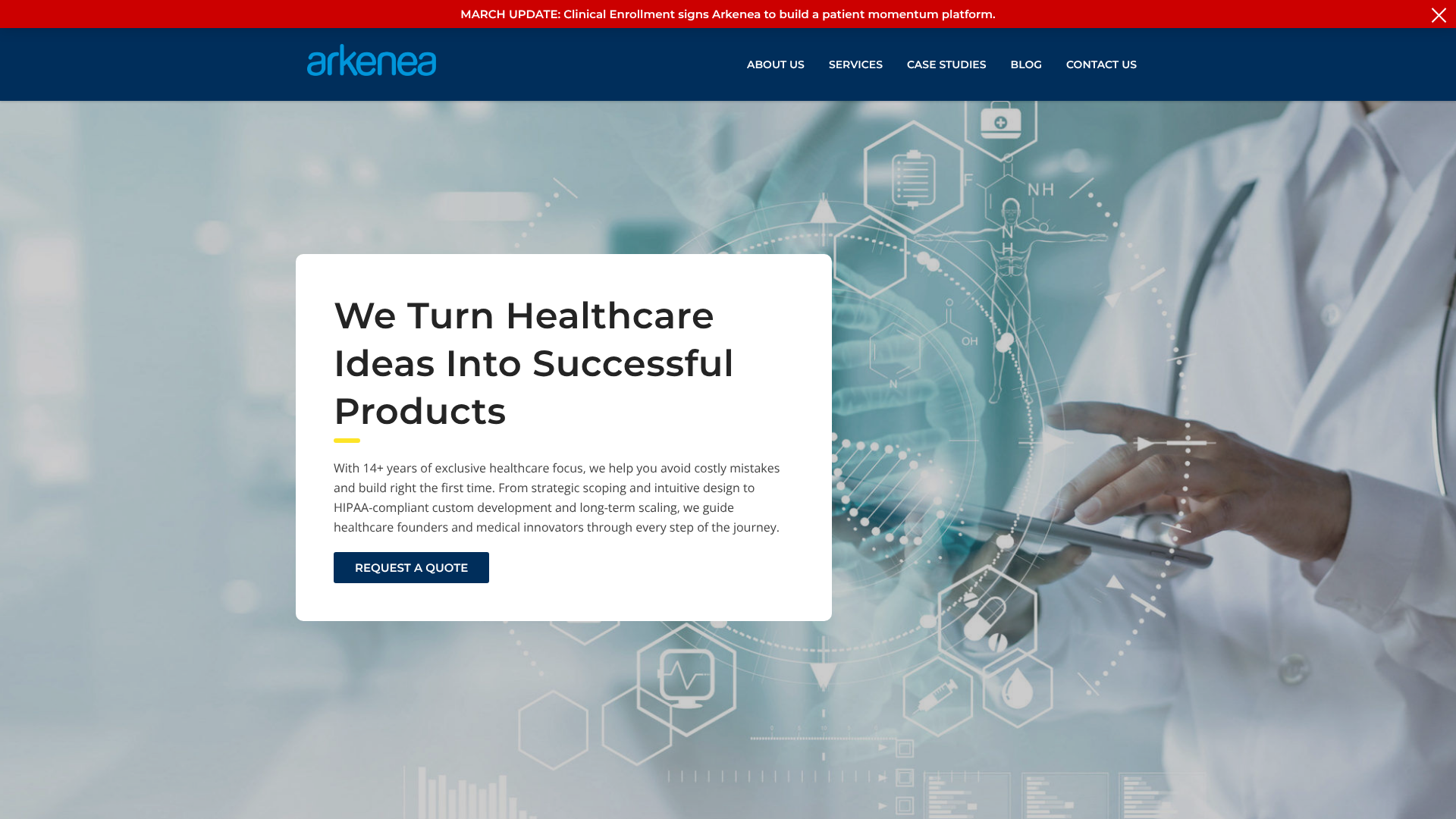
Arkenea is a boutique firm that focuses exclusively on the healthcare industry. This singular focus gives them an incredibly deep understanding of the market, from physician workflows to patient expectations. They specialise in developing custom mHealth apps, EHR/EMR solutions, and HIPAA-compliant software for startups and healthcare providers.
Their services are tailored to the unique needs of health tech entrepreneurs, offering guidance on product strategy, market positioning, and navigating the complex regulatory environment. They are an excellent choice for founders who need more than just a development team.
Pros
- Exclusive focus on the healthcare industry provides deep domain knowledge.
- Strong expertise in HIPAA compliance and building market-ready mHealth apps.
- Offers strategic consulting in addition to development.
Cons
- As a smaller firm, they may have limited capacity for very large-scale projects.
- Their specialised focus means they are not a fit for non-healthcare projects.
6. Dogtown Media
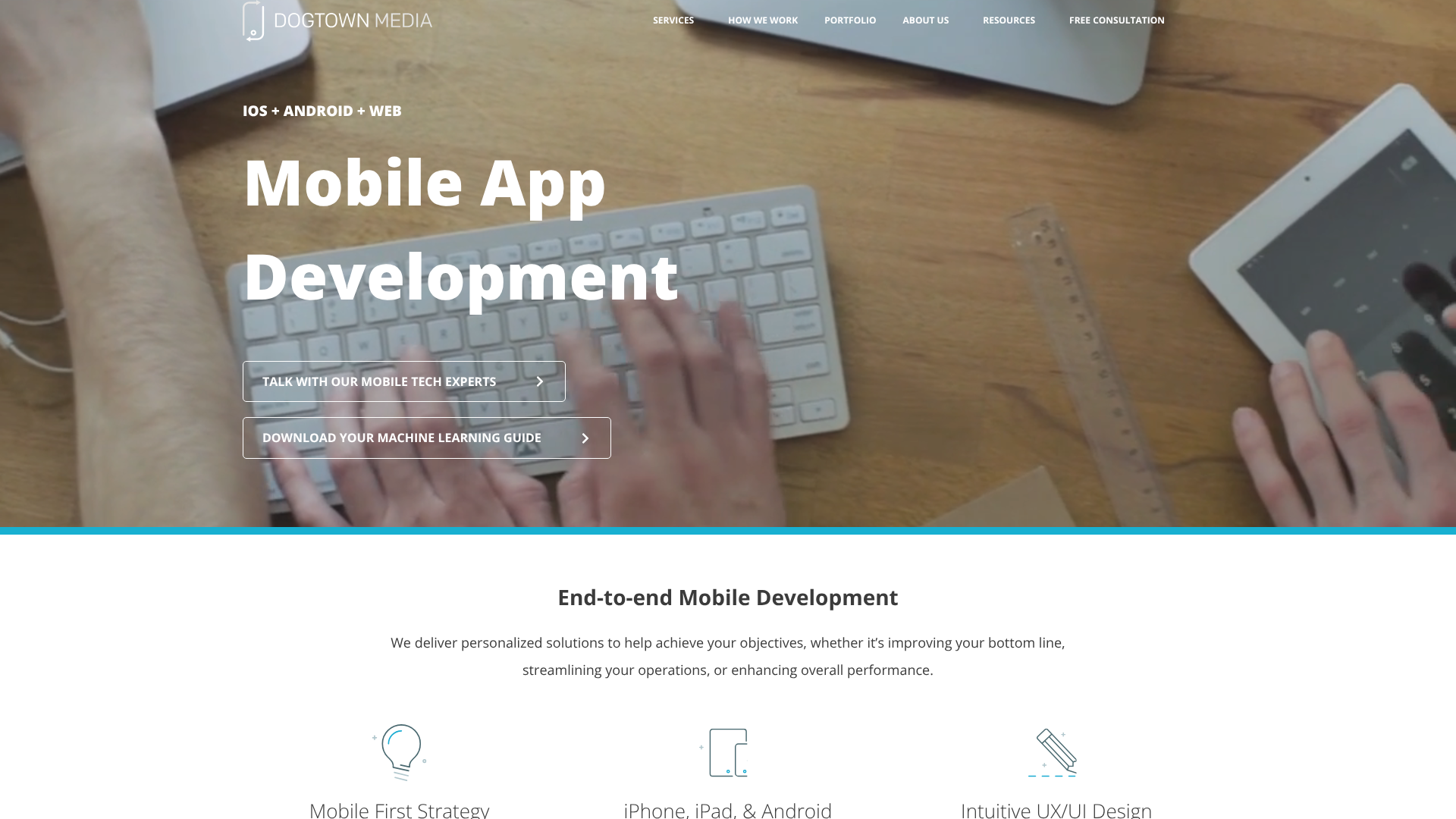
Based in the US, Dogtown Media is a mobile app development company with a significant specialisation in mHealth. They have been recognised for their innovative work in creating apps that leverage AI, machine learning, and IoT to solve real-world healthcare problems. Their design philosophy is centred on creating engaging and user-friendly experiences for patients and clinicians.
They have worked on a variety of projects, including apps for mental wellness, remote patient monitoring, and medical device connectivity. Their team is adept at navigating the FDA approval process for mobile medical applications.
Pros
- Award-winning expertise in mobile app design and development.
- Strong focus on AI and IoT integration for mHealth solutions.
- US-based team, which can be an advantage for communication and collaboration.
Cons
- Primarily focused on mobile applications, so may not be the best fit for large enterprise web platforms.
- Higher cost structure due to being based in the US.
7. Simform
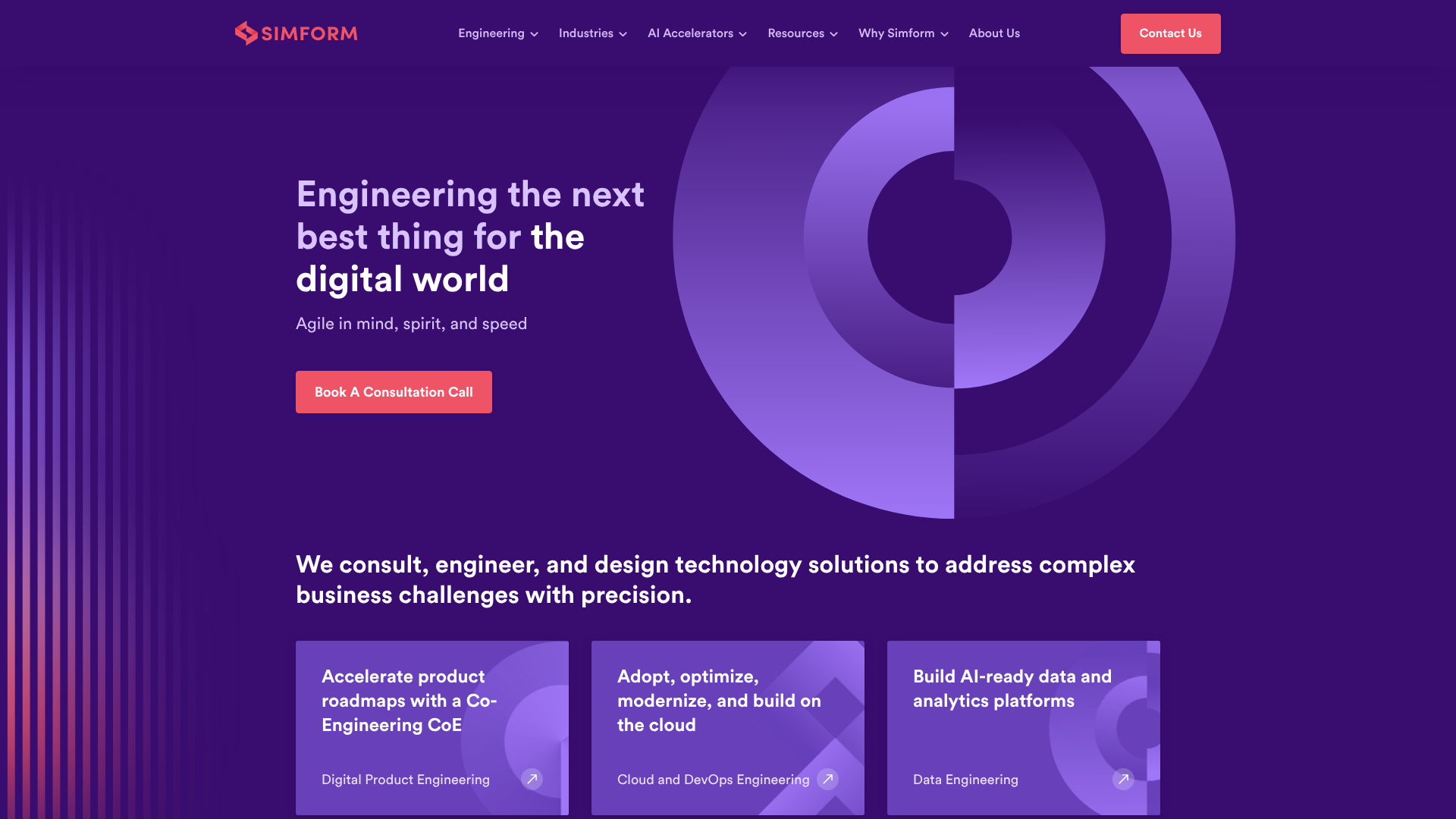
Simform is a digital product engineering company that helps businesses with their technology strategy and development. Their healthcare practice is robust, offering services that range from building custom telehealth platforms to developing secure patient portals and modernising legacy healthcare IT systems.
They are known for their agile development process and their commitment to transparency. Simform provides clients with dedicated teams and a clear roadmap, ensuring projects stay on track and within budget. Their technical expertise is broad, covering cloud, AI, and data analytics.
Pros
- Strong engineering culture and agile development practices.
- Transparent process with a focus on clear communication.
- Broad technical expertise across various modern technologies.
Cons
- Healthcare is one of several industries they serve, so they lack the singular focus of a firm like Arkenea.
- The initial discovery and onboarding process can be extensive.
8. TATEEDA | HIT
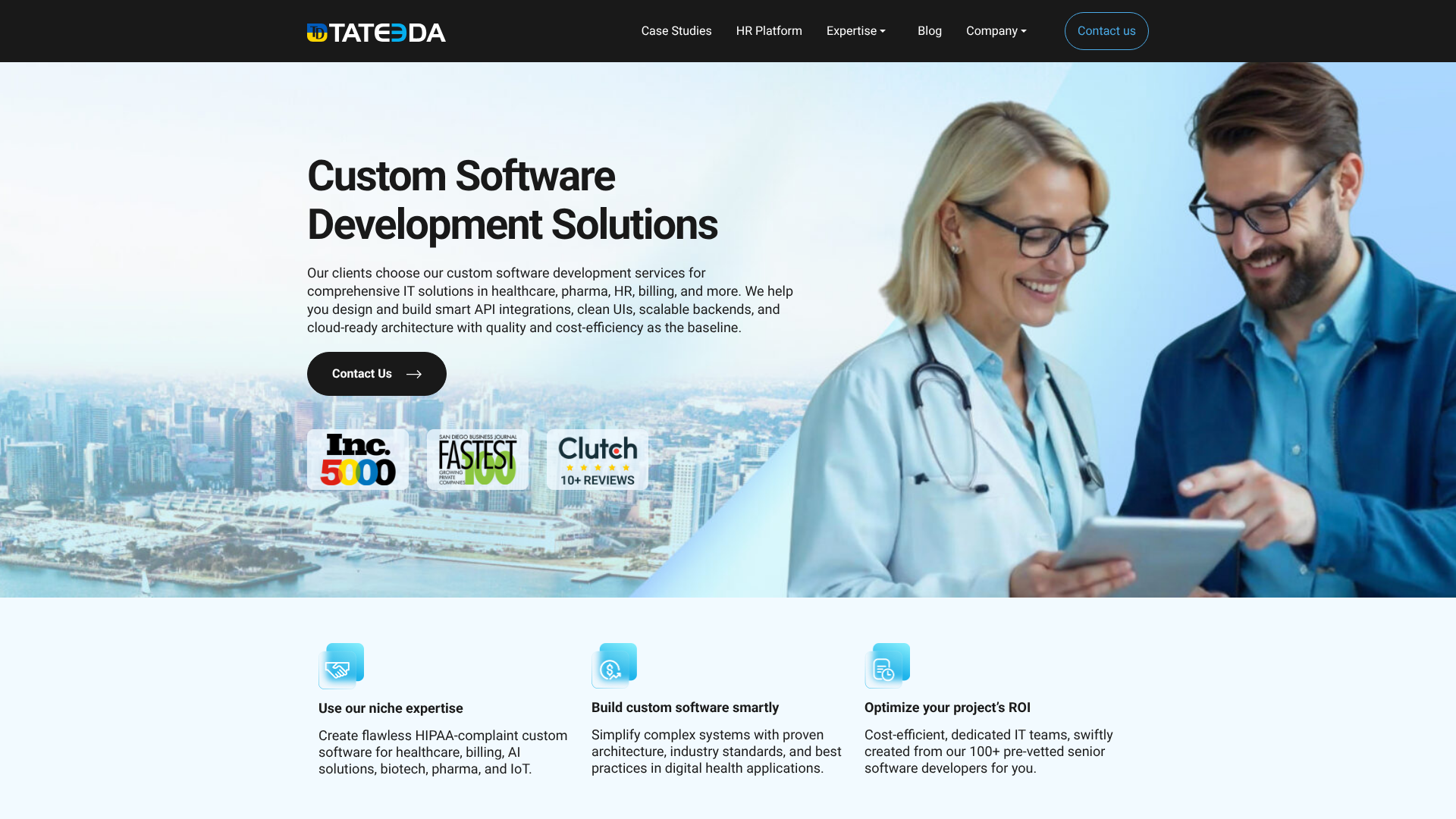
TATEEDA | HIT is a US-based company that specialises in custom healthcare software development. They have a strong focus on building HIPAA-compliant solutions and have particular expertise in IoT for healthcare, patient and staff portals, and medical data management systems. Their team is composed of full-time, US-based engineers.
They are an ideal partner for organisations that require close collaboration and need a team that deeply understands the US healthcare market. Their services include both new product development and augmenting the teams of existing healthcare organisations.
Pros
- Entirely US-based, full-time engineering team.
- Specialised expertise in IoMT (Internet of Medical Things) and medical data management.
- Strong focus on HIPAA compliance and data security.
Cons
- Being fully US-based, their rates are at the higher end of the market.
- Smaller team size may limit their ability to take on multiple large projects simultaneously.
9. Saritasa
Saritasa is a full-service software development company that delivers custom solutions across multiple industries, with a notable practice in healthcare. They develop web, mobile, and IoT applications, as well as complex backend systems. Their healthcare portfolio includes patient engagement platforms, medical device integration, and pharmacy management software.
They pride themselves on their engineering-driven culture and their ability to tackle complex technical challenges. Saritasa's team is located in the US and Vietnam, offering a blended-shore model that can provide a balance of cost-effectiveness and local project management.
Pros
- Full-service capabilities, from mobile and web to IoT and VR/AR.
- Blended-shore model can offer a cost advantage over fully US-based firms.
- Strong technical expertise in handling complex integrations.
Cons
- The blended-shore model can introduce communication complexities across time zones.
- Not exclusively focused on healthcare, similar to other multi-industry firms.
10. Epic Systems
While not a custom development shop in the same way as the others on this list, no discussion of leading health tech companies is complete without mentioning Epic. Epic is one of the largest providers of EHR software in the world, and its systems are used by a majority of large hospitals and health systems in the US.
Organisations typically don't hire Epic to build a new product from scratch, but they do work with Epic's teams and certified consultants to customise, implement, and integrate their extensive suite of products. Understanding Epic is crucial for any company building software that needs to connect with major hospital systems.
Pros
- Market leader in the EHR space, offering a comprehensive and integrated platform.
- Extensive ecosystem of apps and integrations through the Epic App Orchard.
- Deeply embedded in the US healthcare system, ensuring wide compatibility.
Cons
- Not a custom development company; they offer a platform that can be configured and integrated.
- The system is known for being extremely expensive and complex to implement.
Comparing the Best Healthcare Software Firms: A Quick Overview
To help you see how these companies stack up, here’s a comparison table highlighting their key attributes. This can serve as a starting point for creating your shortlist.
| Company | Primary Focus | Key Compliance Expertise | Noteworthy For | Location Model |
|---|---|---|---|---|
| ScienceSoft | Enterprise Healthcare Solutions | HIPAA, HITECH, ISO 13485 | 18+ years of healthcare focus, medical device software | Global Delivery |
| Itransition | Large-Scale & Legacy Systems | HIPAA, FDA, GDPR | Modernising complex enterprise systems | Global Delivery |
| Vention | Dedicated Development Teams | HIPAA, GDPR | Fast team assembly, mHealth & wearables | Global Talent Pool |
| ELEKS | Product Design & Data Science | HIPAA, GDPR | Strong UI/UX, AI-powered solutions | Eastern Europe/US |
| Arkenea | Healthcare Startups & mHealth | HIPAA, FDA | 100% healthcare-focused, strategic consulting | Global Delivery |
| Dogtown Media | Mobile Health (mHealth) Apps | HIPAA, FDA | AI and IoT integration in mobile apps | US-Based |
| **TATEEDA | HIT** | Custom Medical Software | HIPAA | IoMT solutions, 100% US-based team |
Understanding Pricing Models and Development Costs

The cost of developing custom healthcare software can vary dramatically, ranging from £40,000 for a simple mobile app to several million pounds for a complex hospital management system. The final price depends on the project's complexity, the size of the development team, and the pricing model you choose. Understanding these models is key to managing your budget.
1. Fixed Price Model: This model is best for small-to-medium projects with clearly defined requirements and scope. You agree on a total fixed cost for the entire project upfront. It's predictable, but any changes to the scope will require a new contract and additional costs.
This model offers budget certainty but less flexibility.
2. Time & Materials (T&M) Model: With T&M, you pay for the actual time and resources spent on the project, typically on an hourly or monthly basis. This model is highly flexible and well-suited for complex, long-term projects where requirements may evolve. It allows for agility but requires close monitoring to keep costs under control.
3. Dedicated Team Model: In this model, you hire an entire development team from the company that works exclusively on your project. You pay a monthly fee that covers the salaries of the team members and the provider's overhead. This offers the most control and is ideal for large-scale projects requiring a long-term development partnership.
Pro Tip: When requesting quotes, provide as much detail as possible in your project brief. A detailed brief with user stories, technical requirements, and compliance needs will result in a much more accurate cost estimate from potential partners.
Frequently Asked Questions
Here are answers to some common questions that arise when searching for a healthcare software development partner.
What is the average cost to develop healthcare software?
There is no single average cost, as it depends heavily on the project's scope. A simple Minimum Viable Product (MVP) for a mobile health app might start around £40,000 – £60,000. A more complex platform, like a custom telehealth solution with EHR integration, could range from £120,000 to £400,000 or more. Enterprise-level systems for large hospitals can easily run into the millions. Always get detailed quotes from multiple vendors.
What is HIPAA compliance in software development?
HIPAA compliance in software development means building an application that adheres to the standards of the Health Insurance Portability and Accountability Act. This involves implementing specific administrative, physical, and technical safeguards to protect electronic Protected Health Information (ePHI). Key technical safeguards include robust access controls, audit logs, data encryption (both in transit and at rest), and secure data disposal methods.
How long does it take to build a medical app?
The timeline also varies with complexity. A simple MVP could take 4-6 months to develop and launch. A full-featured application with multiple integrations, advanced features, and rigorous testing can take 9-18 months or longer. Factors that influence the timeline include the clarity of requirements, the size of the development team, and the complexity of regulatory approvals.
What is the difference between EHR and EMR software?
Electronic Medical Records (EMR) are digital versions of the paper charts in a clinician's office. They contain the medical and treatment history of the patients in one practice. Electronic Health Records (EHR) do all that and more. EHRs focus on the total health of the patient, and they are designed to share information with other healthcare providers, such as laboratories and specialists, so they contain information from all the clinicians involved in the patient's care.
Final Thoughts
Choosing from the top healthcare software development companies is a pivotal decision that will shape the future of your organisation's technological capabilities. The right partner will do more than just write code; they will serve as a strategic advisor, guiding you through the intricate maze of regulatory compliance, clinical workflows, and user-centric design.
As you evaluate your options, prioritise firms with proven, verifiable experience in the healthcare domain. Scrutinise their understanding of HIPAA and other relevant regulations, and look for a partner whose communication style and project management approach align with your own. By investing time in this selection process, you set your project up for success and take a significant step towards leveraging technology to deliver better care.