




47 Best Subject Lines for Cold Email for Sales Reps to Boost Opens
Your cold email could contain the most compelling, value-packed message ever written, but it means nothing if it never gets opened. The subject line is the gatekeeper to your entire outreach effort. In a crowded inbox, it’s the single line of text that determines whether you get a click or get ignored. Finding the best subject lines for cold email isn't just a small optimisation; it's the most critical factor for success.
- What You'll Learn
- What Makes a Cold Email Subject Line Effective?
- The Core Principles: How to Craft Your Own Winning Subject Lines
- Keep It Short and Mobile-Friendly
- Personalise, Personalise, Personalise
- Spark Curiosity, Don't Give Everything Away
- Be Ultra-Specific and Relevant
- Avoid Spam Trigger Words and Deceptive Tactics
- 47 Best Subject Lines for Cold Email (Categorised Examples)
- The Personalised Connection (Examples 1-10)
- The Curiosity Gap (Examples 11-20)
- The Direct & Honest Approach (Examples 21-30)
- The Social Proof & Value Prop (Examples 31-40)
- The Short & Sweet (Examples 41-47)
- Tools and Technology for Optimising Your Subject Lines
- Common Mistakes to Avoid
- Frequently Asked Questions
- What to put in the subject line for a cold email?
- What is the 30/30/50 rule for cold emails?
- What is a catchy subject line for an email?
- Is cold email illegal?
- What subject line gets the most opens?
- Final Thoughts
Crafting effective email subject lines is both an art and a science. It requires understanding human psychology, being direct without being pushy, and personalising your approach at scale. This guide breaks down the strategies, formulas, and examples you need to write subject lines that cut through the noise and demand to be opened.
What You'll Learn
- Personalisation is Paramount: The most effective cold email subject lines are tailored to the individual recipient, referencing their company, a recent achievement, or a mutual connection to build instant rapport.
- Brevity Wins: Keep your subject lines short, ideally between 3-5 words. This ensures they are fully visible on mobile devices, where over half of all emails are read.
- Curiosity Drives Clicks: A great subject line piques interest without giving everything away. It creates a small information gap that compels the reader to click to learn more.
- Avoid Spam Triggers: Using words like "free," "sale," or excessive punctuation (like ALL CAPS or multiple exclamation marks!!!) can land your email directly in the spam folder, making it invisible.
- Constant Testing is Crucial: There is no single "perfect" subject line. You must continuously A/B test different approaches to discover what resonates best with your specific audience and industry.
What Makes a Cold Email Subject Line Effective?
A subject line has one job: to convince the recipient to open the email. It's a 3-to-7-word sales pitch for the content inside. The difference between a subject line that gets a 40% open rate and one that gets a 4% open rate is often a few subtle tweaks grounded in psychology. Understanding these principles is the first step to writing better cold email titles.
The core of an effective subject line lies in its ability to quickly answer the recipient's subconscious questions: "Is this relevant to me?" and "Is this worth my time?" If the answer to either is no, your email is destined for the bin. The best subject lines achieve this by leveraging a combination of curiosity, relevance, and personalisation.
They act as a pattern interrupt. Most inboxes are filled with generic, automated, and sales-focused messages. A subject line that feels human, personal, and intriguing stands out immediately. It doesn't scream "I'm trying to sell you something." Instead, it whispers, "I have something interesting and relevant to share with you."
The Psychology Behind a High-Performing Subject Line
To craft truly effective email subject lines, you need to tap into basic human psychology. These are the emotional and cognitive triggers that make someone pause and click.
- Curiosity: Humans are naturally inquisitive. A subject line that creates an information gap—hinting at a solution or an interesting idea without revealing it all—is incredibly powerful. For example,
"Idea for [Their Company's Goal]"makes the recipient wonder what the idea is. - Personalisation & Relevance: People are wired to pay attention to things that are about them. Seeing their name, their company's name, or a reference to a recent project creates an instant connection. It shows you've done your homework and aren't just blasting a generic template to thousands of people.
- Urgency (Use with Caution): Creating a sense of timeliness can encourage immediate action. However, this must be used authentically. False urgency like
"Last Chance!"on a cold email can feel manipulative and damage trust. A better approach is subtle urgency, such as referencing a current event or a recent change in their industry. - Value Proposition: The subject line should hint at a clear benefit for the recipient. What's in it for them? A subject line like
"A better way to manage [Pain Point]"immediately communicates value and relevance to their professional life.
The Core Principles: How to Craft Your Own Winning Subject Lines
Before jumping into a list of examples, it's vital to understand the foundational rules for writing your own. A template is a good starting point, but the ability to create custom, high-performing subject lines on the fly is a superpower for any sales professional. Mastering these principles will allow you to adapt your approach for any audience or industry.
Keep It Short and Mobile-Friendly
Over 50% of emails are opened on a mobile phone. This means your beautifully crafted, 12-word subject line might get cut off, destroying its impact. The ideal length for a cold email subject line is between 3 and 5 words. This ensures it's fully visible on almost any device.
Short subject lines also feel more personal and less like a marketing blast. Think about how you email a colleague. You probably use short, direct subjects like "quick question" or "meeting notes". Emulating this style can make your cold email feel more like a one-to-one communication, increasing the likelihood of an open.
Consider these two examples:
- Too Long:
"An introduction to our company and a proposal for a potential partnership opportunity" - Just Right:
"[Your Company] <> [Their Company]"
The second option is short, intriguing, and perfectly suited for a mobile screen.
Personalise, Personalise, Personalise
Generic subject lines get generic results (which is to say, they get ignored). Personalisation is the single most effective technique for boosting open rates. It goes far beyond simply using a [FirstName] mail merge tag. True personalisation shows you've done your research.
Effective personalisation can include:
- Their Company:
"Idea for [Company Name]'s marketing" - A Recent Trigger Event:
"Congrats on the new funding round"or"Saw you hired a new VP of Sales" - A Mutual Connection:
"[Mutual Connection] suggested I get in touch" - Content They Created:
"Loved your LinkedIn post on [Topic]"
This level of detail requires research, but the payoff is enormous. It proves your email is not spam and that you have a legitimate reason for reaching out. Tools like a well-organised CRM, such as HubSpot CRM, can be invaluable for tracking these personal details and trigger events for your prospects.
Spark Curiosity, Don't Give Everything Away
The purpose of the subject line is to sell the open, not the product. A common mistake is to try and cram the entire value proposition into the subject line. This leaves no reason for the recipient to click and read the rest of the email.
Instead, create a curiosity gap. Hint at something valuable or interesting inside the email. This makes the recipient feel compelled to open it to satisfy their curiosity. The key is to be intriguing without being deceptive or clickbaity.
For example, instead of "Our software saves you 20% on costs", try "A different approach to [Their Goal]". The first one is a sales pitch that can be easily dismissed. The second one creates a question in the prospect's mind: "What is this different approach?" To find out, they have to open the email.
Be Ultra-Specific and Relevant
While sparking curiosity is important, it must be paired with relevance. The subject line should connect directly to the prospect's role, company, or industry. A vague subject line like "Quick question" can work, but a more specific version like "Question about your sales process" is often more effective because it's tailored to their professional world.
This shows you understand their context and have a specific reason for contacting them. It frames your email as a professional communication rather than a random interruption. The more relevant the subject line feels to their immediate challenges and priorities, the higher the chance of an open.
Pro Tip: Combine specificity with curiosity for maximum impact. For instance, "Idea for [Specific Project Name]" is powerful because it's both highly relevant (mentioning a real project) and curiosity-driven (what's the idea?).
Avoid Spam Trigger Words and Deceptive Tactics
Email service providers have sophisticated algorithms to filter out spam. Using certain words or formatting can get your email flagged before it ever reaches the inbox. It's crucial to write like a human, not a 2005-era marketing machine.
Common spam triggers to avoid include:
- Words like
Free,Sale,Discount,Offer,Guarantee. - Using ALL CAPS or excessive exclamation points!!!!
- Misleading prefixes like
Re:orFwd:to imply a previous conversation. While this tactic might trick someone into opening the email once, it instantly destroys trust and can earn you a spam report, which hurts your domain's sending reputation.
Honesty and authenticity are your best assets in cold emailing. A straightforward, relevant subject line will always outperform a deceptive one in the long run.

47 Best Subject Lines for Cold Email (Categorised Examples)
Here is a comprehensive list of field-tested cold email subject lines, organised by the strategy they use. Mix and match these, adapt them to your audience, and most importantly, test them to see what works best for you.
The Personalised Connection (Examples 1-10)
These subject lines show you've done your research and have a specific reason for reaching out. They are among the most effective because they build immediate rapport.
"[Mutual Connection] recommended I reach out""Saw your post on LinkedIn about [Topic]""Congrats on the [Recent Achievement/Award]""Following up from the [Event Name] conference""Loved your company's feature in [Publication]""[First Name], I noticed you manage [Responsibility]""Impressed by your work at [Their Company]""Hoping to connect with another [Their University] alum""Question about your recent article on [Topic]""Your comment on [Influencer]'s post"
The Curiosity Gap (Examples 11-20)
These subject lines create an information gap that makes the recipient want to click to find the answer. They are intriguing without being misleading.
"Quick question about [Their Project]""[Your Company] <> [Their Company]""Idea for [Their Company's Goal]""A different approach to [Pain Point]""Thought you might find this interesting""Is [Challenge] a priority for you?""Don't open this email"(Use with extreme caution and only for specific, creative audiences)"A question I haven't seen asked""Your thoughts?""Next steps"
The Direct & Honest Approach (Examples 21-30)
Sometimes, the best approach is to be straightforward. These subject lines are transparent about your intent, which can be refreshing in a world of vague outreach.
"15 minutes to discuss [Specific Benefit]?""Idea for your [Department] team""Hoping to help with [Pain Point]""Introduction: [Your Name] from [Your Company]""Appropriate person?""Can I help with [Their Goal]?""My proposal for [Their Company]""Looking for the right person to talk to""Hoping to be a resource for you""Quick chat about [Topic]?"
The Social Proof & Value Prop (Examples 31-40)
These subject lines leverage results, name-drop similar companies, or state a clear benefit to establish credibility and relevance.
"How [Competitor/Similar Company] achieved [Result]""Helping [Their Industry] companies with [Problem]""A better way to [Achieve Goal]""[Result] for companies like [Their Company]""[Case Study] for your team""Save 10 hours/week on [Task]""The tool used by [Well-Known Company]""[Statistic] about your industry""A proven strategy for [Pain Point]""What [Industry Leader] is doing for [Goal]"
The Short & Sweet (Examples 41-47)
These ultra-brief, often lowercase subject lines mimic internal emails, making them feel personal and less threatening.
"quick question""your thoughts""[Their Company Name]""checking in"(Use sparingly, best for follow-ups)"meeting?""hey [First Name]""contact info"
Tools and Technology for Optimising Your Subject Lines
Crafting great subject lines is one thing, but knowing which ones actually work for your audience requires data. This is where sales engagement and outreach platforms become indispensable. Manually tracking the performance of different subject lines across hundreds of emails is nearly impossible. These tools automate the process, providing clear insights into what drives opens and replies.
Sales Engagement Platforms for A/B Testing
A/B testing, or split testing, is the process of sending two variations of an email to a small portion of your audience to see which one performs better. For cold outreach, this almost always involves testing two different cold email subject lines.
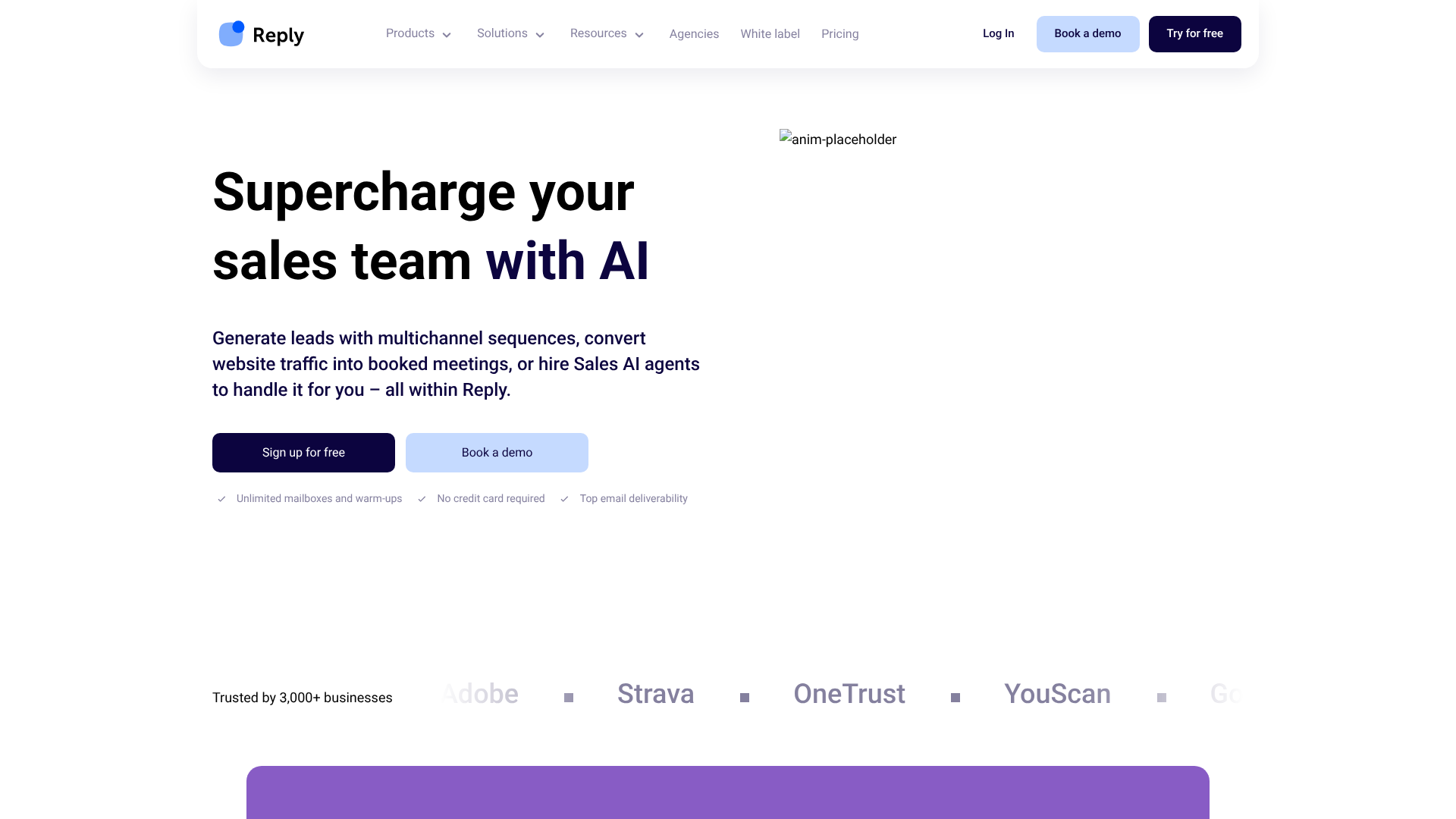
Platforms like Reply.io and Outreach are built for this. You can set up a campaign where 50% of your prospects receive Subject Line A and the other 50% receive Subject Line B. The platform then automatically tracks the open rates for each. After sending to a sample size, you can see which subject line was the winner and use that for the rest of your campaign.
This data-driven approach removes guesswork and systematically improves your results over time.
All-in-One Outreach Tools
For teams focused heavily on cold email, specialised tools can provide even more functionality. Platforms like Instantly.ai and Hunter Campaigns (Hunter.io) are designed specifically for sending and managing cold email campaigns at scale.
These tools not only offer robust A/B testing for subject lines but also help with email warm-up to improve deliverability, manage multiple sender accounts, and provide detailed analytics on every aspect of your campaigns. Pricing for these platforms typically varies based on the number of contacts you have or the volume of emails you send per month. It's always best to visit their websites for the most current pricing information.
Common Mistakes to Avoid
Even with the best intentions, it's easy to make small mistakes that can sabotage your open rates. Being aware of these common pitfalls is just as important as knowing what to do right.
Using All Caps or Excessive Punctuation
WRITING IN ALL CAPS FEELS LIKE YOU'RE SHOUTING AT THE RECIPIENT. It's aggressive and a classic spam indicator. Similarly, using multiple exclamation marks or question marks ("Great deal!!!" or "Do you have a minute???") looks unprofessional and desperate. Stick to standard sentence case and punctuation to maintain a professional tone.
Being Vague or Generic
Subject lines like "Checking in", "Business proposal", or "Information" are doomed to fail. They offer no value, spark no curiosity, and give the recipient no reason to prioritise your email. Always strive for specificity and relevance. Even a simple "Question about [Their Company]" is far better than a generic "Quick question".
Forgetting the Preview Text
The preview text is the short snippet of text that appears next to or underneath the subject line in most email clients. It's a critical and often overlooked piece of real estate. Your preview text should complement your subject line, not repeat it or show something unhelpful like "To unsubscribe, click here."
Use the preview text to add context, ask a compelling question, or provide a hint of the value inside. For a subject line like "Idea for [Company Name]", the preview text could be "I was thinking about your goal to expand into Europe and had a thought...". This combination is far more powerful than the subject line alone.
Pro Tip: Write the first sentence of your email with the preview text in mind. Since most email clients pull the first line of text as the preview, you can strategically craft it to support your subject line and entice the reader to open.
Frequently Asked Questions
Here are answers to some of the most common questions about writing the best subject lines for cold email.
What to put in the subject line for a cold email?
The best things to put in a cold email subject line are elements of personalisation, curiosity, and relevance. Mention the prospect's name, company, a mutual connection, or a recent achievement. Ask an intriguing question or hint at a valuable idea related to their professional goals or pain points. Keep it short (3-5 words) and avoid spammy language.
What is the 30/30/50 rule for cold emails?
The 30/30/50 rule is a guideline for allocating your time when crafting a cold email to maximise its effectiveness. It suggests spending 30% of your time on the subject line, 30% on the first sentence (the hook), and the remaining 50% on the body of the email. This framework highlights the immense importance of the subject line and opening hook in capturing your prospect's attention.
What is a catchy subject line for an email?
In a business context, "catchy" doesn't mean funny or clever; it means intriguing and relevant. A catchy subject line is one that interrupts the pattern of a user's inbox and makes them pause. It achieves this by being highly personalised ("Congrats on the new role, [Name]"), creating a curiosity gap ("A different approach to [Their Goal]"), or providing clear, specific value ("How [Competitor] grew 30%").
Is cold email illegal?
Cold email is not illegal in most regions, including the UK, US, and EU, provided you follow specific regulations. In the US, the CAN-SPAM Act requires you to have a clear way to opt-out and not use deceptive headers. In Europe, GDPR requires you to have a "legitimate interest" in contacting the person, meaning your product or service must be genuinely relevant to their professional role. Always target your outreach carefully and provide an easy unsubscribe option.
What subject line gets the most opens?
There is no single subject line that gets the most opens across all industries and audiences. However, data consistently shows that subject lines with high degrees of personalisation perform the best. Subject lines that reference a mutual connection, a recent company event, or a piece of content the prospect created often see the highest open rates because they feel like a one-to-one communication, not a mass email.
Final Thoughts
Mastering the art of the cold email subject line is a journey of continuous learning and testing. While the 47 examples in this guide provide a powerful starting point, the ultimate goal is to internalise the underlying principles of personalisation, curiosity, and relevance. The best subject line is not a template you copy but one you create based on genuine research and a clear understanding of your prospect's world.
Remember that the subject line's only job is to earn the open. From there, the body of your email must deliver on the promise you've made. By combining a compelling subject line with a value-packed email body, you transform your cold outreach from an interruption into a welcome conversation.
If you're ready to scale your outreach and find the best cold email titles for your audience, consider exploring tools like Reply.io or Instantly.ai to start A/B testing your campaigns. The data you gather will be the most valuable asset in refining your approach and turning cold prospects into warm leads.