


HubSpot CRM vs Zoho: Which is Better for Small Businesses in 2026?
Choosing the right Customer Relationship Management (CRM) platform is a critical decision for any business. It’s the central hub for your customer data, sales pipeline, and marketing efforts. When it comes to comparing HubSpot CRM vs Zoho, you’re looking at two of the most powerful and popular options on the market. Both offer a compelling suite of tools, but they cater to different business needs, philosophies, and budgets.
- Quick Summary
- What is HubSpot CRM vs Zoho? An Introduction
- Feature Deep Dive: HubSpot vs Zoho Side-by-Side
- Pricing and Cost Comparison: Which Offers Better Value?
- Pros and Cons: The Honest Breakdown
- How to Choose: Which CRM is Right for Your Business?
- Frequently Asked Questions
- Is Zoho CRM better than HubSpot?
- Which is the no. 1 CRM?
- What are the cons of HubSpot CRM?
- What are the top 5 CRM systems?
- Final Thoughts: Making the Right Choice
This guide provides a comprehensive breakdown of the HubSpot vs Zoho debate. We'll examine their core features, pricing models, ease of use, and ideal use cases. By the end, you’ll have a clear understanding of which platform is the right fit to help your business grow and manage customer relationships effectively.
Quick Summary
- Best for Ease of Use: HubSpot is widely recognised for its clean, intuitive interface. Teams can get up and running quickly with minimal training, making it ideal for businesses that prioritise user adoption.
- Best for Budget & Customisation: Zoho CRM generally offers more features at a lower price point. Its deep customisation options allow businesses to tailor the platform precisely to their unique workflows.
- The All-in-One vs. The Ecosystem: HubSpot excels as a tightly integrated, all-in-one platform for marketing, sales, and service. Zoho operates as a powerful CRM within a massive ecosystem of over 50 other business applications (Zoho One), offering unparalleled scalability.
- Ideal User: Start-ups and small to medium-sized businesses (SMBs) focused on inbound marketing often lean towards HubSpot. Businesses of all sizes needing a highly customisable, budget-friendly solution that can scale into a full business operating system often choose Zoho.
What is HubSpot CRM vs Zoho? An Introduction
Before we dive into a feature-by-feature comparison, it's important to understand the fundamental philosophy behind each platform. Their origins and core missions have shaped them into distinct solutions, even though they often compete for the same customers.
HubSpot CRM: The Inbound Marketing Powerhouse
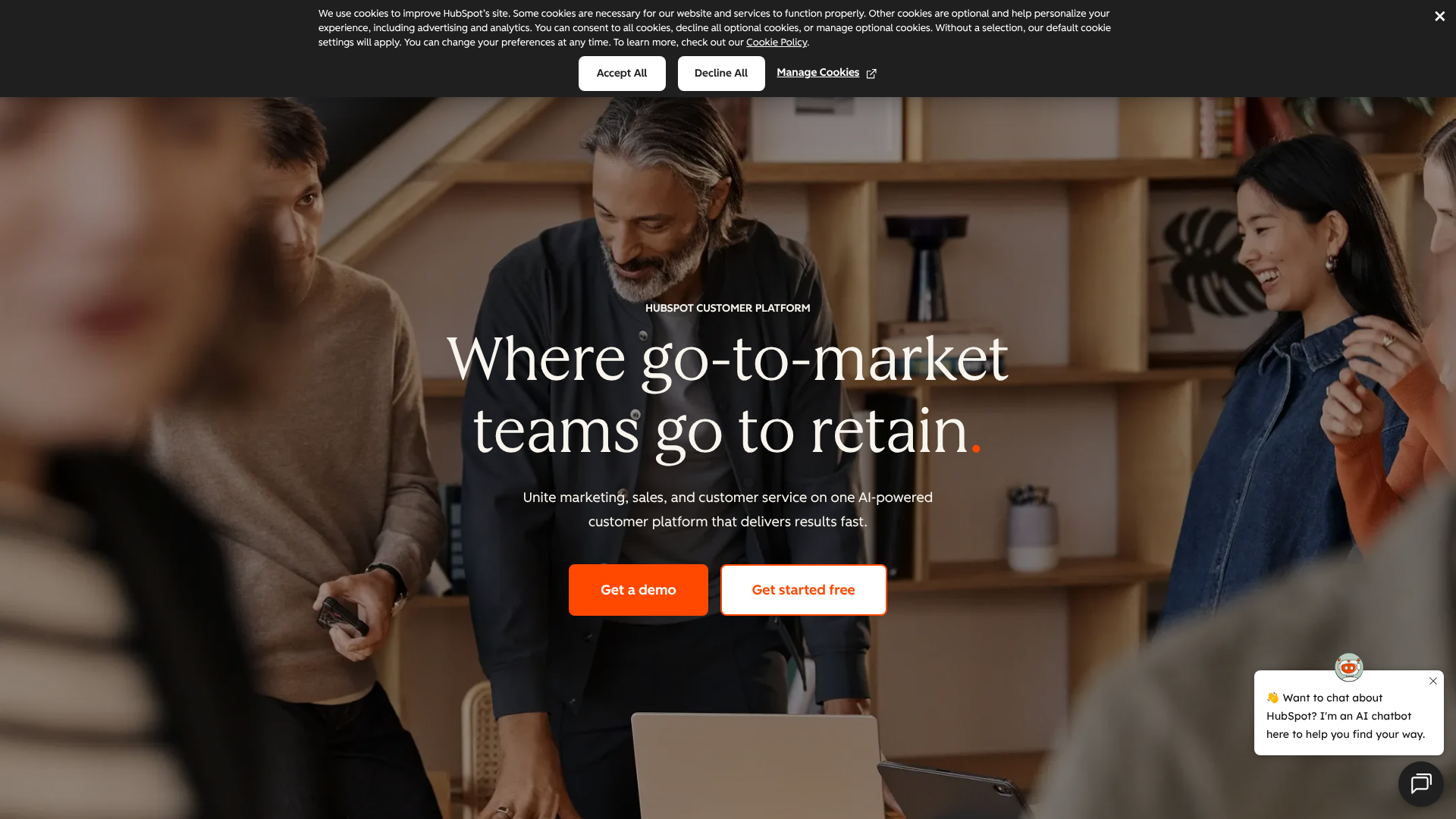
HubSpot was founded on the principle of inbound marketing—attracting customers through valuable content and tailored experiences. Its CRM platform is the free foundation of a much larger ecosystem, known as the HubSpot Growth Platform. This platform is divided into 'Hubs': Marketing Hub, Sales Hub, Service Hub, CMS Hub, and Operations Hub.
The core idea is to provide a single source of truth for all customer interactions. From the first time a visitor lands on your website to the moment they become a loyal customer, every touchpoint is tracked in one unified system. This makes HubSpot CRM exceptionally powerful for businesses that want to align their sales and marketing teams around a shared view of the customer journey. Its free CRM is incredibly generous, offering tools that many competitors charge for, making it a popular entry point for small businesses.
Zoho CRM: The Customisable Business Engine
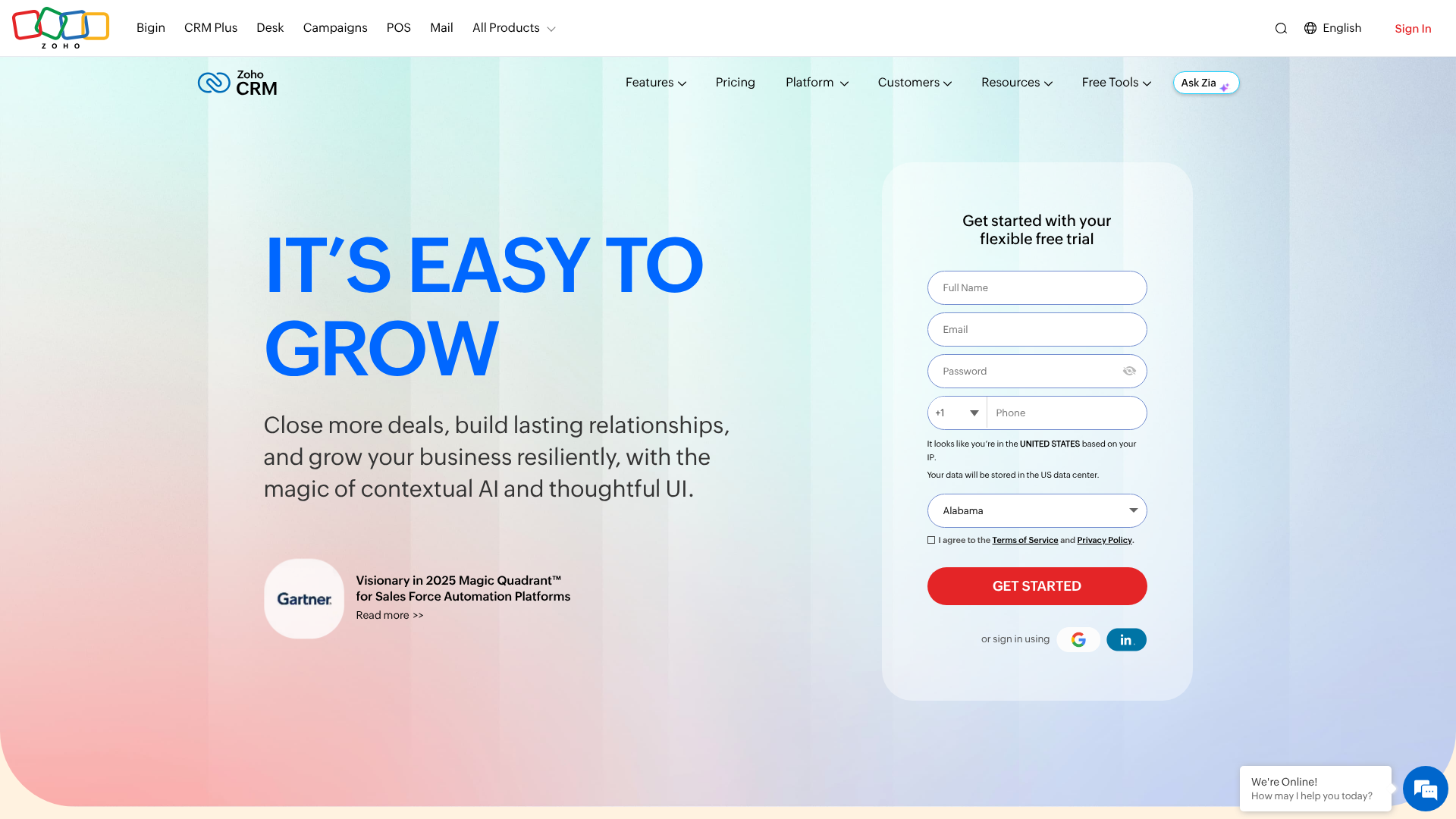
Zoho began as a software company offering a wide range of business applications. Zoho CRM is the flagship product in a massive suite of tools that covers everything from finance and HR to project management and IT. This heritage is key to understanding its strength: it's designed to be the customisable core of your entire business operations.
Where HubSpot offers an all-in-one solution, Zoho offers an all-in-one ecosystem. This makes Zoho CRM incredibly flexible and scalable. You can start with just the CRM and later integrate other Zoho apps like Zoho Books for accounting or Zoho Projects for task management. This deep customisation and integration potential make it a favourite among businesses with complex or non-standard sales processes that need a CRM moulded to their specific way of working.
Feature Deep Dive: HubSpot vs Zoho Side-by-Side
Both platforms offer a robust set of features, but they excel in different areas. Here’s a detailed zoho crm comparison against HubSpot's offerings across the most critical functions for any business.
| Feature | HubSpot CRM | Zoho CRM | Winner |
|---|---|---|---|
| Free Plan | Very generous; unlimited users, 1M contacts, core CRM tools. | Limited free plan for up to 3 users. | HubSpot |
| Ease of Use | Industry-leading intuitive design and clean interface. | Steeper learning curve but highly customisable interface. | HubSpot |
| Sales Automation | Powerful visual workflow builder in paid plans. | Advanced workflow rules, macros, and AI-powered suggestions. | Zoho |
| Marketing Tools | Excellent email marketing, landing pages, and forms. | Comprehensive tools, but often requires other Zoho apps for full power. | HubSpot |
| Customisation | Good custom properties, but limited layout changes. | Extensive customisation of modules, fields, and layouts. | Zoho |
| Reporting | Clean, easy-to-understand dashboards. Advanced reporting is costly. | Powerful, granular reporting and analytics. | Zoho |
| Pricing | Free CRM is excellent, but paid Hubs get expensive quickly. | Very affordable, with transparent and scalable pricing tiers. | Zoho |
| Ecosystem | Tightly integrated suite of five Hubs. | Massive ecosystem of 50+ integrated business apps (Zoho One). | Tie |

Contact and Lead Management
Both platforms provide excellent tools for managing contacts, companies, and deals. HubSpot automatically enriches contact data with information from its database, such as company size and industry. Its timeline view, which shows every interaction with a contact (emails, page views, calls), is exceptionally clear and easy to follow.
Zoho also offers a comprehensive 360-degree view of contacts. It includes powerful features like scoring rules to prioritise leads and Zia, its AI assistant, which can suggest the best time to contact a lead. While both are effective, HubSpot's automatic data enrichment and clean timeline give it a slight edge in usability for day-to-day contact management.
Sales Pipeline and Automation
Visualising your sales process is simple in both CRMs. HubSpot offers a clean, drag-and-drop deal pipeline in its free version, which is perfect for small teams. Its sales automation features, available in paid Sales Hub plans, include email sequences and a visual workflow builder that makes automating follow-ups straightforward.
Zoho, however, pulls ahead in the depth of its sales automation. Even on its lower-priced tiers, it offers advanced workflow rules that can trigger a wide range of actions based on specific criteria. You can create complex, multi-step processes without needing the highest-tier plan. For businesses with a sophisticated sales process, Zoho's automation capabilities are more powerful and accessible at a lower cost.
Marketing Tools
This is where HubSpot truly shines, thanks to its inbound marketing roots. The free CRM includes basic email marketing, forms, and landing pages. As you move into the paid Marketing Hub, you get access to a world-class suite of tools for SEO, social media management, blogging, and marketing automation that are all seamlessly connected to your CRM data.
Zoho’s marketing capabilities are also strong but are often spread across different applications within the Zoho ecosystem, like Zoho Campaigns for email marketing and Zoho Social for social media. While powerful when combined (especially with the Zoho One bundle), it doesn't feel as unified as HubSpot's all-in-one Marketing Hub. For a business wanting a single, cohesive platform for marketing and sales, HubSpot is the clear winner.
Pro Tip: When evaluating marketing tools, consider your team's structure. If your sales and marketing teams are closely aligned and work from the same playbook, HubSpot's unified platform can be a massive advantage. If your teams operate more independently or you already have marketing tools you love, Zoho's flexibility might be a better fit.
Reporting and Analytics
HubSpot's reporting is designed for clarity and ease of use. Its pre-built dashboards give you a quick overview of your sales pipeline, team activity, and marketing performance. Creating custom reports is possible, but the most advanced analytics features are reserved for its expensive Professional and Enterprise tiers.
Zoho offers more powerful and granular reporting capabilities at a much lower price point. You can build highly detailed, custom reports and dashboards to track almost any metric imaginable. For data-driven businesses that need to slice and dice their information in complex ways, Zoho provides superior analytical power without the hefty price tag.
Pricing and Cost Comparison: Which Offers Better Value?

Pricing is one of the most significant differentiators in the HubSpot vs Zoho debate. Their models are fundamentally different and cater to different budget strategies. Please note that pricing structures change, so always visit the official websites for the most current information.
HubSpot's Pricing Model: The 'Freemium' Gateway
HubSpot’s strategy is built around its free CRM. It's a powerful, full-featured tool that is genuinely free forever for unlimited users. This is an incredible entry point for start-ups and small businesses. The costs begin when you need more advanced functionality from the paid Hubs (Marketing, Sales, Service, etc.).
- Free Tools: Includes the CRM, live chat, basic email marketing, and more.
- Starter Plans: Typically start around £15-£40 per month per Hub. These unlock more features but still have limitations.
- Professional & Enterprise Plans: This is where the cost escalates significantly, often running into hundreds or thousands of pounds per month. These plans are necessary for advanced automation, reporting, and team management features.
The main challenge with HubSpot's pricing is that costs can rise very quickly. A business might start on the free plan but soon find it needs features from the Professional tier of both the Sales and Marketing Hubs, leading to a substantial monthly bill.
Zoho's Pricing Model: Affordable and Scalable
Zoho is known for its straightforward and affordable pricing. It offers several tiers for its CRM, each adding more features at a predictable cost per user.
- Free Edition: Available for up to 3 users, but it's quite basic compared to HubSpot's free offering.
- Paid Tiers: Zoho offers several paid plans, such as Standard, Professional, and Enterprise, with prices typically ranging from around £12 to £40 per user per month.
- Zoho One: This is Zoho's ultimate value proposition. For a single, flat fee per employee (around £35-£45 per month), you get access to over 45 applications in the Zoho suite, including the enterprise version of the CRM. This is an almost unbeatable value for businesses that want to run their entire operation on one platform.
Overall, Zoho is the more budget-friendly option, especially as your business scales. The value offered by the Zoho One bundle is particularly compelling for businesses looking for an all-encompassing software solution.
Pros and Cons: The Honest Breakdown
A detailed HubSpot CRM review wouldn't be complete without an honest look at the strengths and weaknesses of each platform.
HubSpot CRM
Pros:
- Unmatched Ease of Use: The user interface is clean, modern, and incredibly intuitive. This leads to higher user adoption rates and less time spent on training.
- Powerful Free CRM: The free offering is one of the best in the industry, providing immense value to businesses just starting out.
- Seamless All-in-One Platform: The tight integration between the CRM and the Marketing, Sales, and Service Hubs creates a truly unified customer view.
- Excellent Educational Resources: HubSpot Academy offers free courses and certifications that are valuable for any marketing or sales professional.
Cons:
- High Cost of Paid Plans: The jump from Starter to Professional plans is substantial, making it one of the more expensive options on the market as you scale.
- Limited Customisation: Compared to Zoho, HubSpot offers fewer options for customising layouts, modules, and workflows.
- Contact-Based Pricing: In the Marketing Hub, pricing is based on the number of marketing contacts you have, which can become expensive as your list grows.
Zoho CRM
Pros:
- Affordable and Transparent Pricing: Zoho offers incredible value for money, especially with the Zoho One bundle.
- Deep Customisation: You can tailor almost every aspect of the CRM to fit your business processes perfectly.
- Vast Application Ecosystem: The ability to integrate with over 50 other Zoho apps allows you to build a comprehensive business operating system.
- Powerful Automation and Analytics: Zoho provides advanced features for workflow automation and reporting at a much lower cost than HubSpot.
Cons:
- Steeper Learning Curve: The sheer number of features and customisation options can be overwhelming for new users.
- Less Polished User Interface: While functional, the UI can sometimes feel dated or less intuitive compared to HubSpot's modern design.
- Support Can Be Inconsistent: Some users report that the quality of customer support can vary, especially on lower-tier plans.
How to Choose: Which CRM is Right for Your Business?
The best choice in the HubSpot CRM vs Zoho showdown depends entirely on your company's priorities, budget, and technical resources. There is no single right answer, only the right fit for you.
You Should Choose HubSpot CRM if…
- Ease of use is your top priority. If you need your team to adopt a new system quickly with minimal friction, HubSpot is the undisputed leader.
- Your business is built on inbound marketing. If content marketing, SEO, and lead nurturing are at the core of your growth strategy, HubSpot's integrated platform is tailor-made for you.
- You want a powerful free CRM to start. You can run your entire sales process on the free plan and only upgrade when you have the revenue to support it.
- You value a single, unified platform over a collection of apps. If you prefer one login and one interface for sales, marketing, and service, HubSpot provides that seamless experience.
You Should Choose Zoho CRM if…
- Budget is a primary concern. Zoho consistently delivers more features for a lower price, and the Zoho One bundle is an incredible value.
- You have unique or complex business processes. If you need to heavily customise your CRM with custom fields, modules, and layouts, Zoho's flexibility is unmatched.
- You plan to build an integrated business operating system. If you want your CRM to connect natively with your accounting, project management, and HR software, the Zoho ecosystem is the way to go.
- You are a data-driven organisation that needs advanced analytics. Zoho's powerful reporting tools allow you to dig deep into your data without paying enterprise-level prices.
Frequently Asked Questions
Is Zoho CRM better than HubSpot?
Neither platform is objectively "better"; they are better for different types of businesses. Zoho CRM is generally considered better for businesses that need deep customisation, operate on a tight budget, and want a CRM that can scale into a full suite of business applications. Its value for money is exceptional.
HubSpot is better for businesses that prioritise ease of use, user adoption, and a tightly integrated, all-in-one solution for inbound marketing and sales. Its free CRM is far superior to Zoho's, making it a better starting point for new companies. The choice depends on whether you value flexibility and affordability (Zoho) or usability and a unified platform (HubSpot).
Which is the no. 1 CRM?
There isn't a single "number one" CRM, as leadership varies by market segment. Salesforce is often cited as the market leader in terms of overall market share, particularly in the enterprise space. However, for small and medium-sized businesses, HubSpot and Zoho are consistently ranked as top contenders.
HubSpot often leads in user satisfaction and ease of use, while Zoho frequently wins on affordability and breadth of features. The "best" CRM is the one that best aligns with a specific company's goals, processes, and budget.
What are the cons of HubSpot CRM?
The primary disadvantage of HubSpot CRM is its cost, especially as you scale. While the free CRM is excellent, the paid Marketing, Sales, and Service Hubs can become very expensive, particularly at the Professional and Enterprise tiers. Another con is its relative lack of deep customisation compared to platforms like Zoho or Salesforce; you have to work within HubSpot's framework. Finally, some users find the sheer number of features in the full Growth Platform can be overwhelming if they only need basic CRM functionality.
What are the top 5 CRM systems?
The top CRM systems are frequently debated, but a consensus list for 2026 typically includes a few key players catering to different market needs. The most commonly cited top 5 are:
- Salesforce: The enterprise market leader, known for its power and customisability.
- HubSpot CRM: A leader in the SMB space, celebrated for its ease of use and inbound marketing tools.
- Zoho CRM: A top choice for businesses of all sizes looking for affordability, flexibility, and a wide ecosystem of apps.
- monday.com: A popular choice for its visual interface and strong project management capabilities integrated with CRM features.
- Freshworks CRM (formerly Freshsales): Known for its user-friendly interface and AI-powered features designed to help sales teams.
Final Thoughts: Making the Right Choice
The HubSpot CRM vs Zoho decision is a classic battle between an elegant, all-in-one solution and a powerful, customisable ecosystem. HubSpot offers a frictionless user experience and a world-class inbound marketing platform, making it the perfect choice for businesses that want to get started quickly and align their sales and marketing efforts.
Zoho, on the other hand, is the pragmatic choice for businesses that need power, flexibility, and affordability. Its deep customisation capabilities and the incredible value of the Zoho One suite make it a scalable engine that can grow to run your entire business. Evaluate your budget, your team's technical comfort, and your long-term operational goals. Your answer to those questions will point you clearly to the CRM that is right for you.
If you believe an easy-to-use, integrated platform is the key to your growth, then HubSpot CRM is an excellent place to start.