



Semrush vs Surfer SEO: Which Tool is Best for Your Content Strategy in 2026?
Choosing the right SEO tool can feel like navigating a minefield. Two of the biggest names you'll encounter are Semrush and Surfer SEO, but they serve fundamentally different purposes. Making a direct comparison of Semrush vs Surfer SEO isn't about finding a winner; it's about understanding which tool aligns with your specific role and goals. Semrush is an all-encompassing SEO suite designed for deep analysis, while Surfer SEO is a highly specialised tool built to perfect on-page content.
- In a Nutshell
- What is Semrush vs Surfer SEO? The Core Difference
- What is Semrush? The All-in-One SEO Powerhouse
- What is Surfer SEO? The Content Optimisation Specialist
- Feature Face-Off: Semrush vs Surfer SEO Compared
- How to Choose: Semrush or Surfer SEO for Your Needs?
- Pricing and Cost Comparison
- Pros and Cons: An Honest Look at Surfer SEO vs Semrush
- Frequently Asked Questions (FAQ)
- Can Surfer SEO replace Semrush?
- Is Surfer SEO good for beginners?
- Do I need both Semrush and Surfer SEO?
- Which is better for keyword research, Surfer or Semrush?
- Does Surfer SEO help with technical SEO?
- Final Thoughts
This guide breaks down the key differences, features, and ideal use cases for each platform. We'll explore everything from content creation and keyword research to technical audits and pricing, helping you decide whether you need the broad power of Semrush, the focused precision of Surfer, or a combination of both to elevate your digital strategy.
In a Nutshell
- Broad vs. Specialised: Semrush is a comprehensive, all-in-one SEO platform covering keyword research, backlink analysis, and technical site audits.
- Content-First Focus: Surfer SEO is a specialised tool designed exclusively for data-driven on-page content optimisation and AI-assisted writing.
- Who It's For: Choose Surfer for content creation and optimisation tasks. Choose Semrush for overall SEO strategy, competitor analysis, and technical website health.
- Better Together: Many professionals use both tools in tandem. They use Semrush for high-level strategy and keyword discovery, then use Surfer to execute the content creation and optimisation.
What is Semrush vs Surfer SEO? The Core Difference
To properly understand the debate between surfer seo vs semrush, you must first recognise they aren't direct competitors in the traditional sense. They are more like two different specialists on a marketing team. One is the strategist who sees the entire battlefield, and the other is the elite operative who executes a specific, critical mission.
What is Semrush? The All-in-One SEO Powerhouse
Semrush is a vast digital marketing toolkit that goes far beyond content. Think of it as the Swiss Army knife for SEO professionals, digital marketing agencies, and in-house teams. Its primary function is to provide a 360-degree view of a website's online visibility.
It offers a massive suite of tools for tasks like in-depth keyword research across a huge database, comprehensive competitor analysis to see what your rivals are ranking for, detailed backlink audits to understand your link profile, and technical site audits to find and fix website errors. Semrush is built for planning, strategy, and monitoring the entire SEO landscape.
What is Surfer SEO? The Content Optimisation Specialist
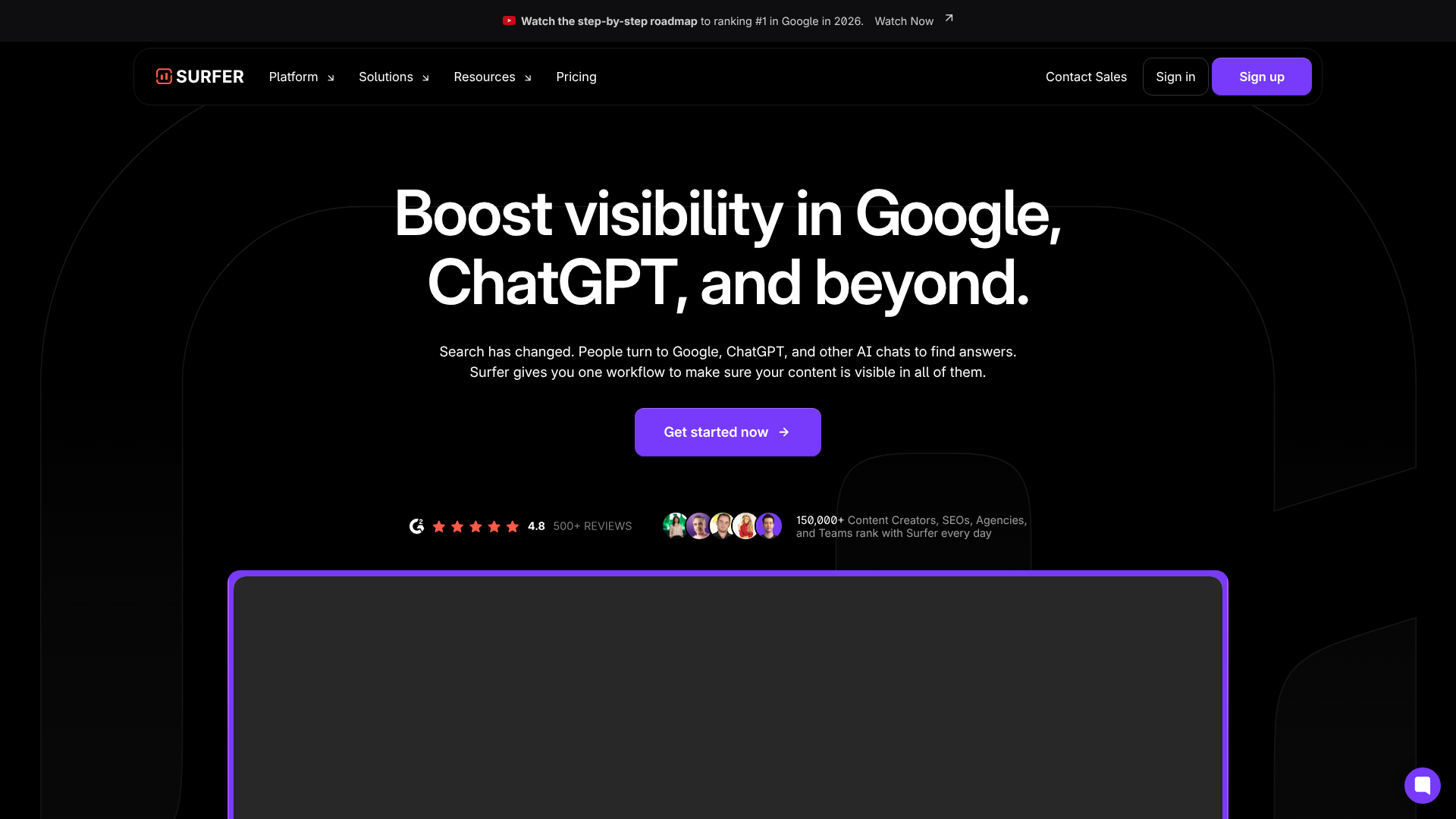
Surfer SEO, on the other hand, has a laser focus on one thing: helping you create and optimise content that ranks on search engines. It doesn't concern itself with your site's technical health or backlink profile. Instead, it analyses the top-ranking pages for your target keyword and gives you a data-driven blueprint for creating content that can outperform them.
Its core feature, the Content Editor, provides real-time feedback on your writing, suggesting keywords to include, ideal word count, heading structure, and more. It's a tool built for content writers, editors, and content marketers who are responsible for the hands-on task of writing and refining articles, blog posts, and landing pages.
Feature Face-Off: Semrush vs Surfer SEO Compared
When you place the features of semrush vs surfer side-by-side, their different philosophies become crystal clear. One offers breadth, while the other offers depth in a specific area. Let's break down how they stack up in key categories.
| Feature | Semrush | Surfer SEO | Best For… |
|---|---|---|---|
| Primary Focus | All-in-One SEO & Marketing | On-Page Content Optimisation | Depends on your role |
| Content Editor | SEO Writing Assistant (Good) | Content Editor (Excellent) | Content Writers & Editors |
| Keyword Research | Extensive Database & Strategy Tools | Content-Specific & Clustering | SEO Strategists |
| Technical SEO Audit | Yes, Comprehensive | No | SEO Managers & Agencies |
| Backlink Analysis | Yes, In-Depth | No | Off-Page SEO Specialists |
| AI Writing | Integrated AI Features | Surfy AI (Specialised for SEO) | Creating first drafts quickly |
| Competitor Analysis | Domain-Level (Traffic, Keywords) | SERP-Level (Content Structure) | Both, for different purposes |
Content Creation & Optimisation
This is Surfer SEO's main arena. Its Content Editor is the star of the show, providing a real-time content score based on over 500 on-page signals. As you write, it suggests NLP-driven terms, checks keyword density, recommends a word count, and guides your heading structure, all based on what's already working on page one of Google.
Semrush has its SEO Writing Assistant, which integrates with Google Docs and WordPress. It's a helpful tool that checks for readability, tone of voice, and basic keyword usage. However, it lacks the deep, data-driven granularity of Surfer's analysis. For writers aiming to create perfectly optimised content from scratch, Surfer has a distinct advantage.
Keyword Research
Semrush is an industry leader in keyword research. Its Keyword Magic Tool provides access to a database of over 25 billion keywords. You can filter by search intent, question-based queries, keyword difficulty, and cost-per-click data. It's designed for building a comprehensive content strategy from the ground up.
Surfer's keyword research tool is designed with a different goal in mind. It excels at finding topic clusters related to your main keyword, helping you build topical authority. It's less about discovering thousands of new opportunities and more about identifying all the related subtopics you need to cover in one or more articles to be seen as an expert on the subject.

Technical SEO & Site Audits
This category is a clear win for Semrush. Its Site Audit tool is incredibly powerful, crawling your entire website to identify over 140 technical and on-page SEO issues. It checks for broken links, slow-loading pages, duplicate content, crawlability errors, and much more, providing actionable recommendations to fix them.
Surfer SEO does not offer technical site audit functionality. Its focus is purely on the content within a page, not the technical health of the website it lives on. If you need to diagnose and fix site-wide technical problems, Semrush is the only option between the two.
Backlink Analysis
Similar to technical SEO, backlink analysis is solely the domain of Semrush in this comparison. Off-page SEO is a critical ranking factor, and Semrush provides a robust suite of tools to manage it. You can analyse your own backlink profile, spy on your competitors' backlinks to find new opportunities, and identify and disavow toxic links.
Surfer SEO does not have any features for backlink analysis. It operates on the principle that if you create the best, most comprehensive content (on-page SEO), the backlinks (off-page SEO) will follow. While this is often true, managing and proactively building a backlink profile requires a tool like Semrush.
How to Choose: Semrush or Surfer SEO for Your Needs?
Deciding between semrush or surfer seo comes down to a simple question: What is your primary job? Are you the strategist planning the campaign, or the writer creating the assets for that campaign? Your answer will point you directly to the right tool.
Choose Surfer SEO if…
You should choose Surfer SEO if your daily work revolves around content. This tool is built for you if:
- You are a content writer, blogger, or copywriter. Your main goal is to produce high-quality articles that are optimised to rank. Surfer's Content Editor will become your best friend.
- Your primary focus is on-page SEO. You want to ensure every piece of content you publish is perfectly structured and contains the right language to satisfy both users and search engines.
- You need to optimise existing content. Surfer's Audit feature can analyse a published page and give you a prioritised list of actions to improve its performance.
- You want to scale content production. The data-driven briefs generated by Surfer make it easy to outsource writing to freelancers while maintaining high standards of SEO optimisation.
Choose Semrush if…
You should choose Semrush if your responsibilities extend across the entire marketing spectrum. This platform is the right choice if:
- You are an SEO professional, agency owner, or marketing manager. You need a holistic view of a website's performance, from keywords and traffic to technical health and backlinks.
- You need to conduct deep competitor research. You want to understand your competitors' entire digital strategy, not just the structure of one of their blog posts.
- Technical SEO is part of your job. Finding and fixing site errors is crucial, and Semrush's Site Audit tool is essential for this.
- You manage paid advertising campaigns. Semrush offers a suite of tools for PPC research and management that Surfer does not.
Pro Tip: A common workflow for agencies and marketing teams is to use Semrush for initial keyword research and strategy. Once a target keyword is identified, they create a content brief in Surfer SEO and assign it to a writer. This combines the strategic power of Semrush with the executional precision of Surfer.
The "Both" Strategy: Why They Work Better Together
As many experts have found, the ultimate solution isn't choosing one over the other. The most effective approach is often to use both tools together, as they complement each other perfectly. The workflow is logical and powerful.
First, you use Semrush for the high-level strategic work. You identify valuable, low-competition keywords with its Keyword Magic Tool. You analyse competitors' domains to find content gaps and strategic weaknesses. You ensure your website is technically sound with the Site Audit tool.
Once you have your target keyword and a solid strategy, you switch to Surfer SEO for execution. You plug the keyword into Surfer's SERP Analyzer to generate a data-driven brief. Then, you or your writer use the Content Editor to craft an article that is perfectly optimised to rank for that specific query. This two-step process leverages the strengths of both platforms for maximum impact.
Pricing and Cost Comparison
Pricing is often a major factor in the decision-making process. Both platforms operate on a subscription model, but their pricing structures and the value they offer are quite different. Please note that pricing is subject to change, and it's always best to check the official websites for the most current information.
Surfer SEO Pricing
Surfer SEO's pricing is generally considered more accessible, especially for freelancers and smaller teams. Its plans are primarily based on the number of articles you can write or audit in the Content Editor per month.
- Essential Plan: Aimed at freelancers and small websites, offering a limited number of Content Editor credits per month.
- Advanced Plan: Designed for in-house teams, providing more credits, team collaboration features, and API access.
- Max Plan: Geared towards agencies that need a high volume of content creation and auditing.
Surfer also offers pay-as-you-go credits for its AI writer, allowing you to scale your use of AI without committing to a higher-tier plan.
Semrush Pricing
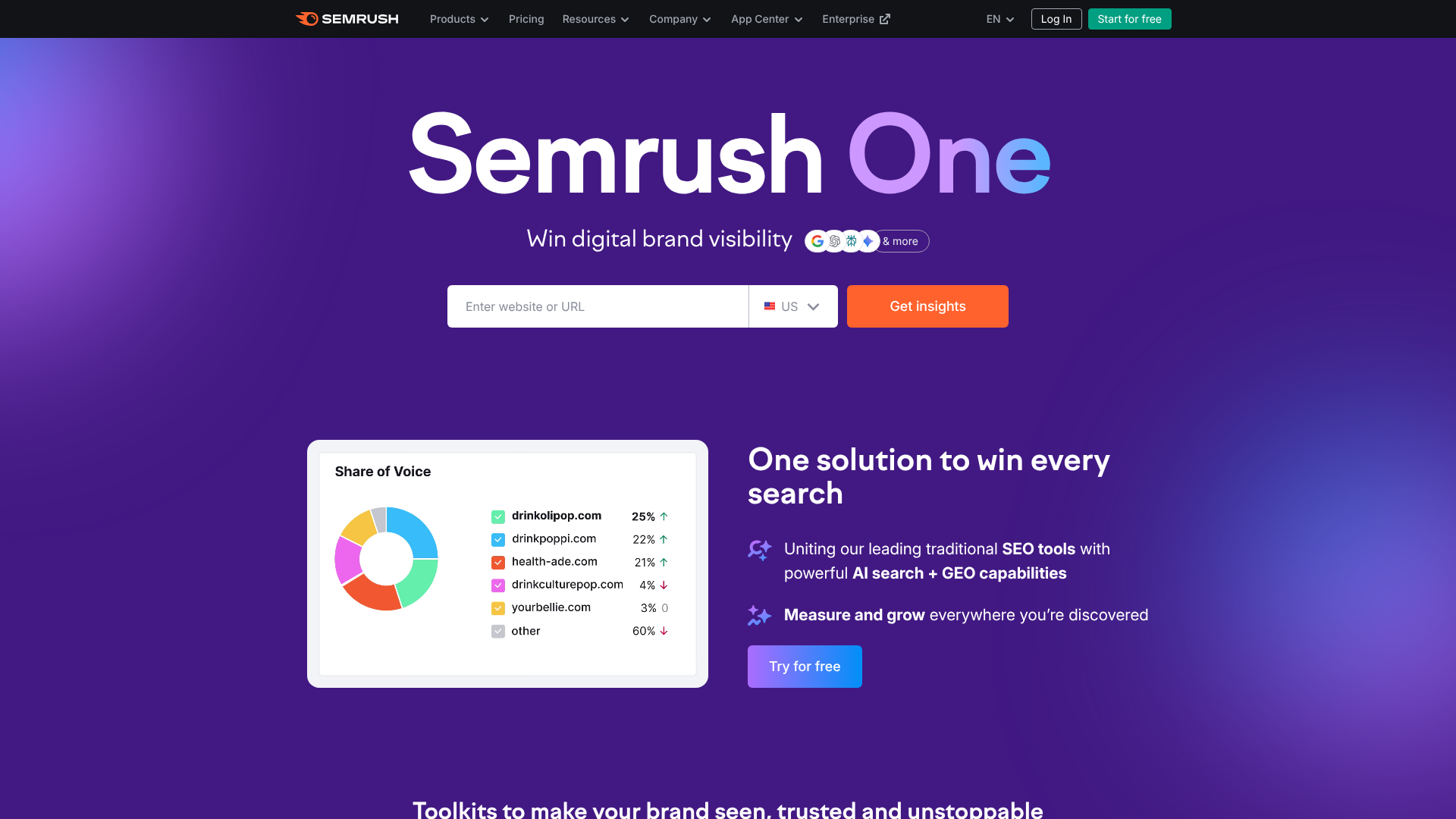
Semrush has a higher entry price point, which reflects its vast range of features. Its plans are structured around the volume of data you need, such as the number of keywords you can track, reports you can run, and pages you can crawl per month.
- Pro Plan: Suitable for freelancers, startups, and marketers with a limited budget. It offers access to all the core toolkits but with lower usage limits.
- Guru Plan: The most popular choice, designed for small to medium-sized businesses and growing marketing agencies. It includes features like the Content Marketing Platform and historical data.
- Business Plan: Built for large agencies and enterprises with extensive needs, offering the highest limits, API access, and advanced reporting features.
Which Offers Better Value?
Value is subjective and depends entirely on your needs. If you are a content writer, Surfer SEO offers exceptional value. For a relatively low monthly cost, you get a tool that can directly improve the performance of your primary work output. The return on investment is clear and easy to measure.
For an SEO agency or a larger business, Semrush provides immense value across multiple departments. The insights gained from its competitor analysis, site audit, and rank tracking tools can inform entire marketing strategies, making its higher price tag a worthwhile investment.

Pros and Cons: An Honest Look at Surfer SEO vs Semrush
No tool is perfect. Understanding the strengths and weaknesses of each platform is key to making an informed decision. Here’s a balanced look at the pros and cons of both.
Surfer SEO: Pros & Cons
Pros
- Unmatched On-Page Optimisation: Its data-driven approach to content creation is second to none. The real-time feedback is incredibly effective.
- Excellent User Interface: The Content Editor is intuitive and easy for writers to adopt, making the optimisation process smooth.
- Actionable Content Briefs: It quickly generates comprehensive briefs that can be handed off to writers, ensuring SEO is baked in from the start.
- Strong AI Writing Features: Surfy AI is specifically trained on top-ranking content, making it great for generating SEO-focused first drafts.
Cons
- Lack of Broader SEO Features: It has no tools for technical SEO, backlink analysis, or comprehensive rank tracking.
- Limited Keyword Research: While useful for clustering, its keyword research capabilities can't replace a full-featured tool like Semrush for strategy.
- Can Lead to Over-Optimisation: Inexperienced users might focus too much on hitting a perfect score, sometimes at the expense of natural readability.
Semrush: Pros & Cons
Pros
- Truly All-in-One: It covers nearly every aspect of digital marketing, from SEO and PPC to social media and content marketing.
- Industry-Leading Data: Its keyword and backlink databases are among the largest and most accurate available.
- Powerful Technical Audits: The Site Audit tool is essential for maintaining a healthy, search-engine-friendly website.
- Deep Competitor Insights: It provides unparalleled intelligence on what your competitors are doing online.
Cons
- Steep Learning Curve: The sheer number of tools and reports can be overwhelming for beginners.
- Higher Price Point: The entry-level plan can be a significant investment for freelancers or small businesses.
- Content Tools are Less Advanced: While the SEO Writing Assistant is useful, it doesn't offer the same level of granular, data-driven guidance as Surfer.
Frequently Asked Questions (FAQ)
Here are answers to some of the most common questions people ask when comparing these two powerful tools.
Can Surfer SEO replace Semrush?
No, Surfer SEO cannot replace Semrush. Surfer is a specialist tool for on-page content optimisation, while Semrush is a comprehensive suite that covers technical SEO, off-page SEO (backlinks), keyword strategy, and competitor analysis. You need a tool like Semrush for the functions that Surfer does not provide.
Is Surfer SEO good for beginners?
Yes, Surfer SEO is very good for beginners, especially for those new to content writing for SEO. Its interface is intuitive, and the real-time scoring system provides clear, actionable guidance. It simplifies the complex process of on-page optimisation, making it accessible to writers who may not have a deep technical SEO background.
Do I need both Semrush and Surfer SEO?
While you don't strictly need both, using them together creates a powerful and efficient workflow. If your budget allows, combining Semrush for strategy and research with Surfer for content execution is the ideal setup for many marketing professionals and agencies. It allows you to leverage the best of both worlds.
Which is better for keyword research, Surfer or Semrush?
Semrush is significantly better for comprehensive keyword research. Its massive database, advanced filtering options, and strategic tools are designed for building an entire content plan. Surfer's keyword research is more tactical, focused on finding related keywords and clusters for a single piece of content you're about to write.
Does Surfer SEO help with technical SEO?
No, Surfer SEO does not help with technical SEO. It does not have features to crawl your site, check for broken links, analyse site speed, or audit your site's technical health. For all technical SEO tasks, you would need a tool like Semrush.
Final Thoughts
The Semrush vs Surfer SEO debate is less of a competition and more of a clarification of roles. They are both excellent tools that excel in their respective areas. The right choice for you depends entirely on your primary responsibilities and strategic goals.
If you are a content creator, editor, or a marketer whose main KPI is producing high-ranking blog posts, Surfer SEO is an invaluable asset. It streamlines the optimisation process and provides the data-driven insights needed to compete in crowded SERPs. It empowers you to execute content strategy with precision.
If you are an SEO strategist, a marketing manager, or an agency, Semrush is the command centre you need. It provides the market intelligence, technical diagnostics, and competitive analysis required to build and monitor a successful, long-term digital strategy. It gives you the map and the compass. For many, the ultimate answer is to equip your team with both the map and the tools to conquer the territory it marks.