




How to Master the Cold Email Follow Up: A Step-by-Step Guide for B2B Sales
You’ve crafted the perfect cold email. It’s personalised, value-packed, and has a clear call-to-action. You hit send, feeling optimistic. Then.
- What You'll Learn
- The Unspoken Rule of Sales: Why Your First Email is Just the Beginning
- The Tangible Benefits of a Persistent Cold Email Follow Up Strategy
- Crafting Your Follow-Up Cadence: How to Choose the Right Timing and Frequency
- Step-by-Step Guide: How to Write a Follow-Up Email That Gets Replies
- Step 1: Set the Context (The Gentle Reminder)
- Step 2: Add New Value
- Step 3: Keep it Short and Scannable
- Step 4: Personalise, Personalise, Personalise
- Step 5: End with a Clear, Low-Friction Call-to-Action (CTA)
- Top Strategies and Templates for Your Next Cold Email Reminder
- Automating Your Outreach: Top Tools for Cold Email Follow Up
- Understanding the Investment: Pricing for Cold Email Tools
- The Two Sides of Following Up: Pros and Cons of Different Approaches
- The Aggressive Approach (Frequent, Quick Follow-Ups)
- The Value-Driven Approach (Slower, More Resourceful)
- The Automated Approach (Using Software)
- Frequently Asked Questions About Cold Email Follow Ups
- How do you professionally follow up on an email with no response?
- How long should you wait before following up on a cold email?
- How do you send a follow-up email without being pushy?
- What is the 3 email rule?
- Is cold email illegal?
- Why don't people respond to cold emails?
- Final Thoughts: Turning Silence into Sales
silence. This is a familiar story for anyone in sales or marketing, but it’s not the end of the road. The real opportunity often lies in the cold email follow up, a critical step that separates amateur outreach from professional, revenue-generating campaigns. Mastering the art of the follow up email is what turns a single attempt into a successful conversation.
Many people give up after one unanswered email, assuming a lack of interest. However, data consistently shows that the majority of responses come from follow-up messages, not the initial outreach. Your prospect is likely busy, your first email might have been buried, or the timing just wasn't right. A strategic follow-up sequence ensures you stay on their radar, demonstrate persistence, and provide additional value, significantly increasing your chances of getting a reply.
This guide will walk you through everything you need to know. We'll cover the strategy behind effective follow-ups, provide step-by-step instructions for writing them, and explore the tools that can automate the process, helping you convert silence into meaningful business relationships.
What You'll Learn
- The Importance of Persistence: Understand why the majority of positive responses come from follow-up emails, not the initial contact.
- Crafting the Perfect Cadence: Learn the ideal timing and frequency for your follow-up sequence to maximise engagement without being annoying.
- Value-Driven Messaging: Discover how to add new value in every follow-up email, making each message a welcome touchpoint rather than a pestering reminder.
- Automation and Tools: Explore the top software platforms designed to streamline and automate your cold email follow-up process, saving you time and boosting efficiency.
- Common Mistakes to Avoid: Identify the key pitfalls that cause follow-up emails to fail and learn how to ensure your messages land effectively.
The Unspoken Rule of Sales: Why Your First Email is Just the Beginning
A cold email follow up is a subsequent email or series of emails sent to a prospect who did not reply to your initial cold outreach. It’s not simply a “nudge” or a “bump.” A well-executed follow-up is a strategic continuation of the conversation you tried to start, designed to re-engage the prospect by offering new information, value, or a different perspective.
Think of it this way: your first email is an introduction. Your prospect doesn't know you, and your message is one of dozens, if not hundreds, they receive daily. According to industry benchmarks, a typical cold email campaign might see a 1-5% response rate on the first email. This isn't a sign of failure; it's the baseline.
The real work, and the real results, begin with the follow-up.
Research from Iko System suggests that while only 18% of sellers follow up more than once, a staggering 80% of sales require at least five follow-ups. This disconnect highlights a massive opportunity. By implementing a structured follow-up sequence, you immediately place yourself ahead of the vast majority of your competitors who give up too soon. A good follow up email serves as a polite and professional reminder, showing that you are genuinely interested in helping them and are persistent in your efforts.
The Tangible Benefits of a Persistent Cold Email Follow Up Strategy

Implementing a structured approach to your follow-up emails does more than just get you more replies; it builds a stronger foundation for your entire sales process. The benefits are clear, measurable, and can have a significant impact on your pipeline and revenue. Ignoring this step is like leaving money on the table.
First and foremost, the most obvious benefit is a dramatically increased response rate. A single email can easily be missed, but a sequence of 3-5 messages increases your visibility exponentially. Campaigns with at least one follow-up can see reply rates jump by over 25%. Each message is another chance to catch your prospect at the right time with the right value proposition.
This persistence is often interpreted as professionalism and genuine interest, not annoyance, provided it's done correctly.
Beyond just replies, a consistent follow-up strategy builds brand recognition and trust. When a prospect sees your name and company appear in their inbox multiple times with helpful content, you transition from a complete stranger to a familiar name. This familiarity is crucial. Even if they don't need your solution today, your persistent, value-driven approach ensures you'll be the first person they think of when the need arises in the future.
It's a long-term play that builds your reputation as a helpful expert rather than just another salesperson.
Crafting Your Follow-Up Cadence: How to Choose the Right Timing and Frequency
One of the most common questions about sending a cold email reminder is about timing. How soon is too soon. How long is too long. The answer isn't set in stone, but a well-structured cadence is key to staying top-of-mind without becoming a nuisance.
A good starting point is the 1-3-7 day rule, but this can be adapted based on your industry and audience.
Here’s a sample cadence that works well for many B2B sales cycles:
- Email 1 (Initial Outreach): Day 0
- Follow-Up 1: Day 2 or 3. A short, polite check-in. This is often just to bring your original message back to the top of their inbox.
- Follow-Up 2: Day 7. Add a new piece of value. This could be a link to a relevant case study, a blog post, or a short tip that addresses a pain point you mentioned in your first email.
- Follow-Up 3: Day 14. Try a different angle. If your first emails focused on a specific benefit, perhaps this one can focus on another. You could also ask a simple, open-ended question to encourage a reply.
- Follow-Up 4 (The Breakup Email): Day 21-28. This is the final email in the sequence. It’s a polite closing message that assumes they are not interested and lets them know you won't be contacting them again about this. Paradoxically, these emails often get high response rates because they create a sense of urgency or prompt a reply from those who were interested but busy.
Remember, the goal is to be persistent, not pushy. The content of your emails matters just as much as the timing. If every message provides value, your prospect is far more likely to see your persistence as helpful. Tools that automate email sequences can be incredibly useful here, allowing you to set your preferred cadence and focus on the prospects who actually respond.
Pro Tip: Pay attention to engagement signals. If a prospect opens your email multiple times or clicks a link but doesn't reply, you might want to shorten the time before your next follow-up. Many sales engagement platforms can track this activity for you, providing valuable intelligence for your outreach.
Step-by-Step Guide: How to Write a Follow-Up Email That Gets Replies
Writing an effective follow up email is a skill. It requires a delicate balance of being persistent, providing value, and respecting the recipient's time. Following a structured approach can help you craft messages that cut through the noise and prompt a response.
Step 1: Set the Context (The Gentle Reminder)
Never send a follow-up in a new email thread. Always reply to your previous message. This keeps the entire history of your conversation in one place, making it easy for the prospect to recall who you are and what you initially reached out about. Your opening line should be a simple and polite reference to your last email.
Avoid passive-aggressive phrases like “As per my last email” or “Just wondering if you saw my previous message.” Instead, opt for something friendlier and more direct. A simple “Just wanted to quickly follow up on my email from last week about [topic]” is perfect. It’s professional, non-accusatory, and immediately sets the context for the rest of your message.
Step 2: Add New Value
This is the most critical part of any cold email follow up. Simply “bumping” your email to the top of their inbox with a message like “Just checking in” adds no value and can be irritating. Each follow-up is an opportunity to provide a new reason for them to engage with you. Your goal is to be helpful, not just persistent.
Value can come in many forms. You could share a link to a blog post you wrote that solves a common problem in their industry. You could attach a case study showing how you helped a similar company achieve impressive results. Or, you could offer a quick, valuable insight based on your research of their company.
For example: “I noticed on your website that you’re expanding into the European market. We recently helped [Similar Company] navigate that process and put together a short guide on common pitfalls. Thought you might find it useful.”.
Step 3: Keep it Short and Scannable
Your prospects are busy, and many will be reading your email on a mobile phone. Long blocks of text are intimidating and likely to be ignored. Keep your follow-up emails to three or four sentences maximum. Use short paragraphs—ideally one sentence per paragraph—to make the message easy to scan.
The structure should be simple: context, value, and call-to-action. Get straight to the point. The shorter and clearer your email, the higher the probability that it will be read and acted upon. Respecting their time is a form of value in itself.
Step 4: Personalise, Personalise, Personalise
Personalisation goes beyond using their first name. In a follow-up, you can demonstrate that you’ve done your homework. Reference a recent company announcement, a post they shared on LinkedIn, or an award they won. This shows that you’re not just blasting out a generic template to hundreds of people.
For example, you could say, “Congratulations on the launch of your new product line! I imagine scaling your support team is a top priority right now.” This simple line connects your outreach to their current reality, making your message far more relevant and compelling. The more specific and genuine your personalisation, the more likely you are to get a positive response.
Step 5: End with a Clear, Low-Friction Call-to-Action (CTA)
Your initial email might have asked for a 15-minute meeting, which can feel like a big commitment to a stranger. In your follow-up emails, consider using a lower-friction CTA. The goal is to start a conversation, not necessarily to book a demo right away. A simple, interest-based question is often more effective.
Instead of “Are you free for a call next Tuesday?”, try something like: “Is improving your team’s productivity something on your radar for this quarter?” This is a simple yes/no question that is easy to answer. If they say yes, you’ve opened the door for a more detailed conversation. If they say no, you’ve still received a reply and can qualify them out, saving you both time.
Top Strategies and Templates for Your Next Cold Email Reminder
Having a few proven templates can save you time and provide a solid foundation for your outreach. Remember to always customise these templates to fit your specific prospect and situation. Here are a few strategies and corresponding templates that you can adapt for your own use.
The Value-Add Follow-Up
This is perfect for your second or third touchpoint. The goal is to provide a resource that is genuinely helpful, positioning you as an expert.
Template:
Subject: Re: [Original Subject]
Hi [First Name],
I was thinking about our conversation regarding [their goal/pain point] and thought you might find this [case study/blog post/report] useful.
It details how a company in your space was able to achieve [specific result] by implementing [strategy].
Let me know if this is a priority for you right now.
Best,
[Your Name]
The Quick Question Follow-Up
This template is designed to be extremely easy to reply to. It’s short, direct, and asks a simple question to gauge interest.
Template:
Subject: Re: [Original Subject]
Hi [First Name],
Just wanted to quickly follow up on my previous email. Is [solving X problem] a priority for your team at the moment?
Thanks,
[Your Name]
The Breakup Email
This is your final email in the sequence. It creates a sense of scarcity and often prompts a reply from prospects who were interested but hadn't found the time to respond.
Template:
Subject: Closing the loop
Hi [First Name],
I've reached out a few times regarding [your solution] but haven't heard back, which usually means it's not a priority right now.
I'm closing your file for now. If you're ever interested in exploring how we can help with [achieve X result], please feel free to get in touch.
All the best,
[Your Name]
For a deeper look into building an effective follow-up sequence, this video from Woodpecker.co offers some excellent insights for 2025 and beyond.
Automating Your Outreach: Top Tools for Cold Email Follow Up
Manually tracking and sending follow-up emails is time-consuming and prone to human error. As you scale your outreach, using a dedicated tool becomes essential. These platforms automate sequences, track engagement, and provide valuable data to help you refine your strategy. Here are some of the top recommendations for managing your cold email follow-up process.
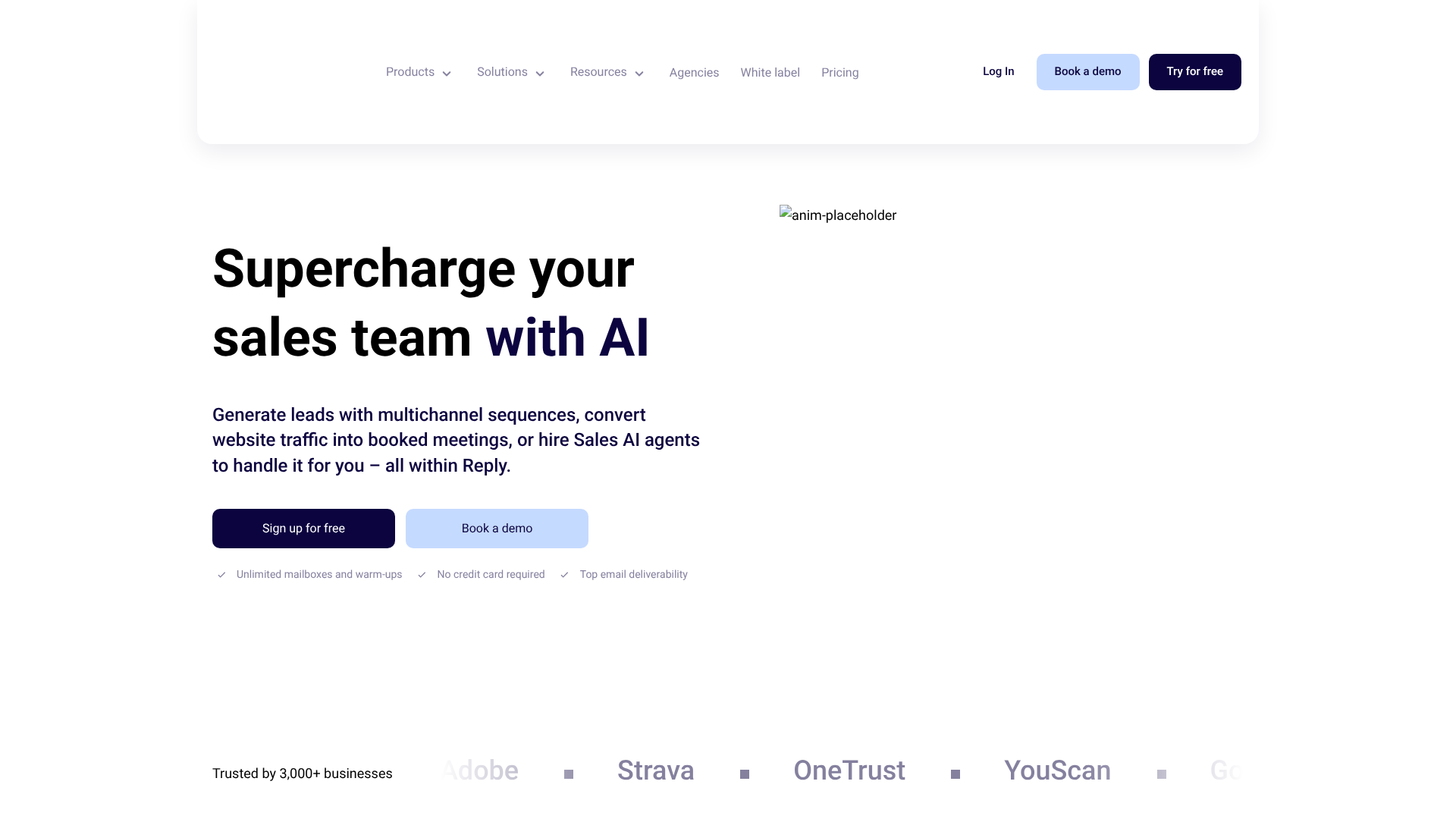
1. Reply.io
Reply.io is a comprehensive sales engagement platform designed to automate multichannel outreach. It allows you to create complex sequences that include not just email follow-ups but also phone calls, LinkedIn interactions, and other tasks. This helps you connect with prospects across their preferred channels.
Pros
- Multichannel Sequences: Go beyond email by incorporating social touches, calls, and manual tasks into your outreach cadence.
- AI-Powered Features: Includes an AI assistant to help write emails and a meeting booking tool to streamline scheduling.
- Robust Analytics: Provides detailed reports on sequence performance, email open/reply rates, and team activity.
Cons
- Learning Curve: With its extensive feature set, it can take some time for new users to get fully up to speed.
- Pricing: Can be more expensive than simpler, email-only tools, making it better suited for established sales teams.
2. Instantly.ai
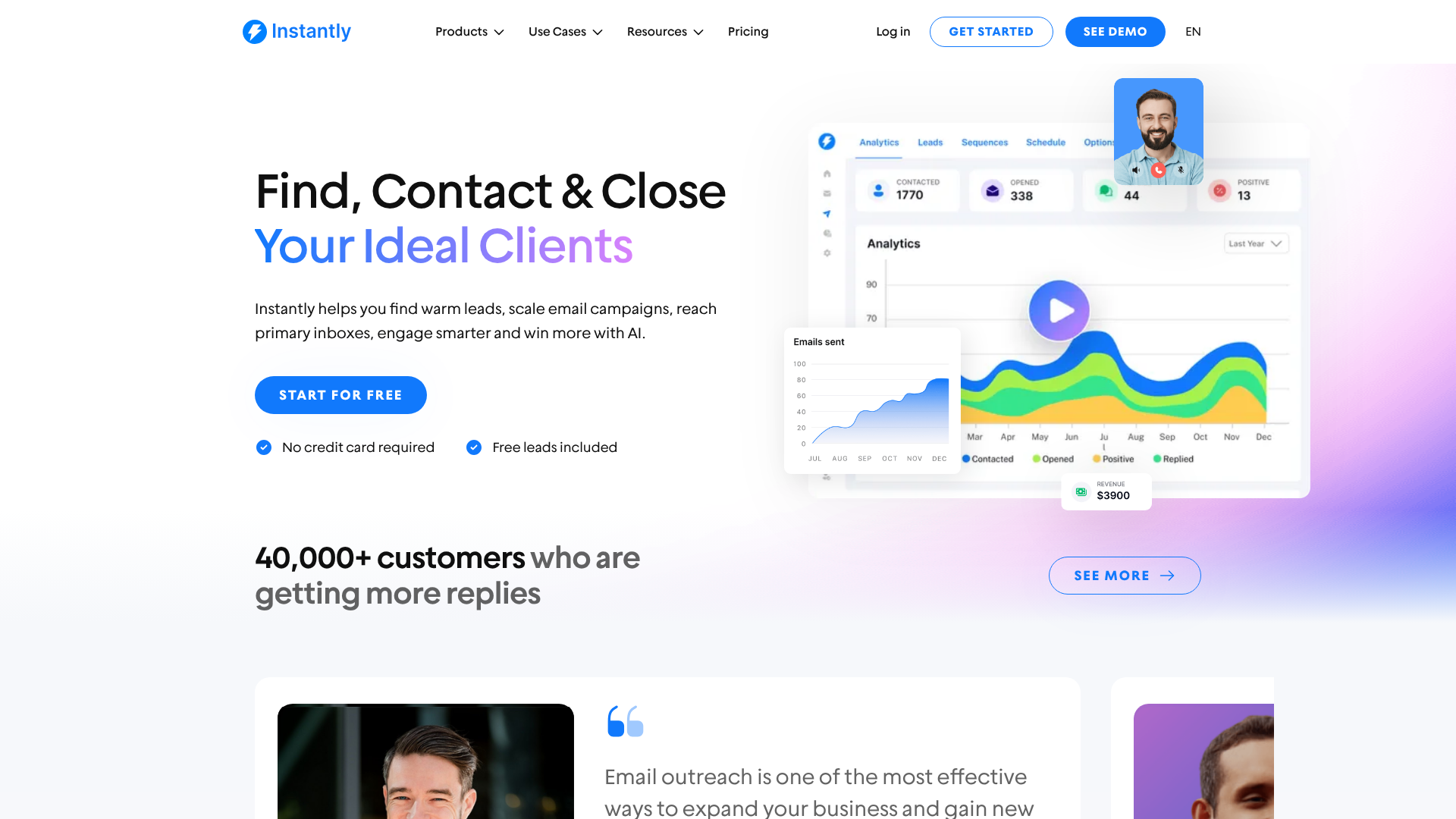
Instantly.ai has quickly become a favourite for cold email outreach, particularly for its focus on deliverability. It includes unlimited email account warm-ups, which is crucial for ensuring your emails land in the inbox, not the spam folder. Its primary function is to help you scale cold email campaigns effectively.
Pros
- Unlimited Email Warm-Up: Helps protect your sender reputation and improve deliverability across all your sending accounts.
- Scalability: Designed to handle high-volume outreach with features built for sending thousands of emails per day.
- Simple Interface: The platform is clean and easy to navigate, making it straightforward to set up and launch campaigns.
Cons
- Email-Focused: Lacks the multichannel capabilities of platforms like Reply.io. It's built specifically for cold email.
- Newer Platform: While popular, it may not have all the enterprise-level integrations of more established players.
3. Hunter Campaigns (Hunter.io)
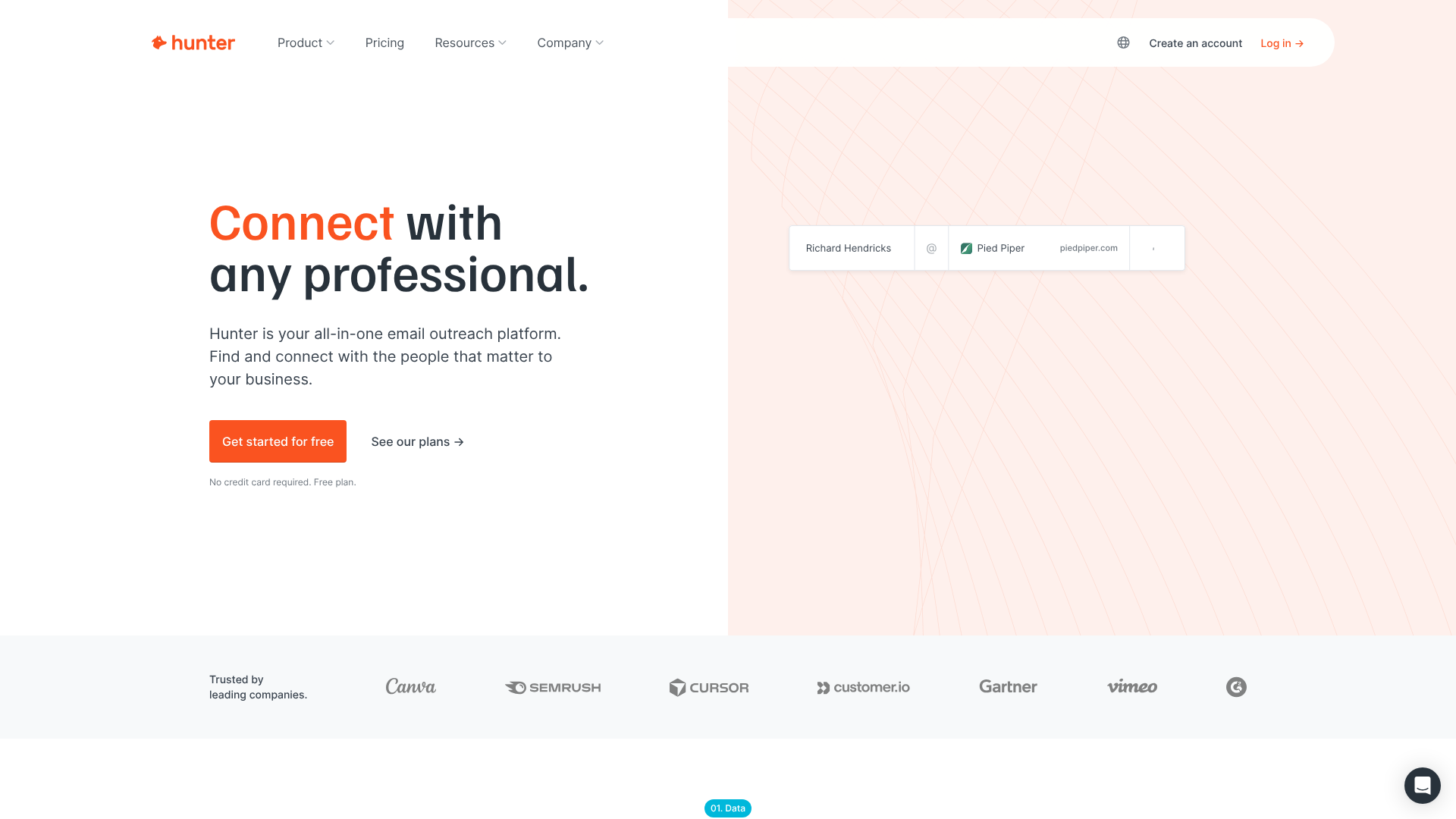
Many know Hunter.io for its powerful email finder tool, but it also offers a simple and effective cold email outreach platform called Hunter Campaigns. It's an excellent choice for those who want to find verified email addresses and immediately enrol them in a follow-up sequence within the same tool.
Pros
- Integrated Email Finder: Seamlessly find and verify prospects' email addresses and add them directly to your campaigns.
- Ease of Use: The interface is incredibly simple and intuitive, making it perfect for beginners or small teams.
- Good Value: Offers a generous free plan and affordable paid tiers, providing great value for its core features.
Cons
- Basic Features: Lacks some of the advanced analytics, A/B testing, and AI features found in more specialised platforms.
- Limited Customisation: The sequence builder is more basic compared to competitors, offering less flexibility for complex cadences.
How CRMs Fit In
While dedicated outreach tools are powerful, many modern CRMs also include sales automation features. Platforms like HubSpot CRM and Zoho CRM allow you to build email sequences directly within the CRM, keeping all your sales activities and customer data in one central location. This is a great option for teams that want an all-in-one solution rather than managing a separate outreach tool.
Understanding the Investment: Pricing for Cold Email Tools
Investing in a cold email automation tool is an investment in efficiency and scalability. The pricing for these platforms can vary widely based on features, the number of users, and the volume of emails you plan to send. Understanding the common pricing models will help you choose the right option for your budget and needs.
Most tools use a subscription-based model, typically billed per user, per month. Here’s a general breakdown of what you can expect:
| Tool | Typical Pricing Model | Best For | Free Plan/Trial |
|---|---|---|---|
| Reply.io | Per user, per month (tiered) | Sales teams needing multichannel outreach | 14-day free trial |
| Instantly.ai | Per month (tiered by contacts/emails) | High-volume emailers focused on deliverability | Trial available |
| Hunter Campaigns | Per month (tiered by verifications/campaigns) | Individuals and small teams needing an all-in-one finder and sender | Free plan available |
| HubSpot CRM | Tiered (Sales Hub add-on) | Businesses wanting an all-in-one CRM and sales platform | Free CRM, paid sales features |
Key Cost Factors to Consider:
- Number of Users: Most platforms charge on a per-seat basis, so the cost will scale with the size of your team.
- Number of Contacts/Emails: Some tools, especially those focused on volume, will price their tiers based on how many contacts you can email per month.
- Feature Set: Advanced features like AI writing assistants, A/B testing, detailed analytics, and multichannel capabilities are usually reserved for higher-priced tiers.
- Email Warm-Up: Tools like Instantly.ai include this in their core offering, while with others it might be an add-on or require a third-party service.
When comparing costs, it's important to look beyond the monthly price. Consider the value the tool brings in terms of time saved, increased response rates, and better data. For the most current pricing, it's always best to visit the official websites of Reply.io, Instantly.ai, and Hunter Campaigns directly, as plans and features can change.
The Two Sides of Following Up: Pros and Cons of Different Approaches
There is no single “best” way to follow up; the right strategy depends on your industry, audience, and goals. Understanding the pros and cons of different approaches can help you tailor your cadence to what works best for your prospects. Let's explore three common styles.
The Aggressive Approach (Frequent, Quick Follow-Ups)
This strategy involves a high frequency of touchpoints in a short period, such as sending 4-5 emails within the first two weeks. The goal is to get a quick yes or no and move on.
- Pros: You get fast feedback and can quickly qualify or disqualify leads. It keeps you top-of-mind in a crowded inbox and can be effective in fast-paced industries where decisions are made quickly.
- Cons: This approach carries a higher risk of being perceived as spammy or annoying. It can lead to prospects marking your emails as spam, which hurts your sender reputation and overall deliverability. It leaves little room for building a relationship.
The Value-Driven Approach (Slower, More Resourceful)
This method focuses on building a relationship over time by providing value in every interaction. The cadence is slower, perhaps one email per week, and each message contains a helpful resource, insight, or piece of content.
- Pros: It positions you as a trusted advisor rather than a pushy salesperson. This approach builds brand equity and is excellent for long sales cycles or high-ticket items where trust is paramount. It's less likely to be marked as spam.
- Cons: It requires more effort and content creation. The sales cycle is inherently slower, and it can be difficult to scale without a library of valuable resources to share. It may not be effective for transactional sales.
Pro Tip: Combine approaches. You can start with a slightly more aggressive cadence for the first week to establish contact, then transition to a slower, value-driven approach for prospects who don't respond immediately but show signs of engagement (like opening emails).
The Automated Approach (Using Software)
This involves using a platform like Reply.io or Instantly.ai to manage your entire follow-up sequence. The sequence is pre-defined, and emails are sent automatically until a prospect replies.
- Pros: It's incredibly efficient and scalable, allowing you to manage hundreds of conversations simultaneously. It provides valuable data and analytics to optimise your strategy. It ensures no prospect ever falls through the cracks.
- Cons: If not set up carefully, automated emails can feel impersonal and generic. There's a risk of sending an automated follow-up at an inappropriate time if you're not monitoring your campaigns. It also represents an additional software cost.
Frequently Asked Questions About Cold Email Follow Ups
Navigating the nuances of following up can be tricky. Here are answers to some of the most common questions people have about the process.
How do you professionally follow up on an email with no response?
To follow up professionally, always reply in the same email thread to provide context. Keep your message short, polite, and focused on adding new value. Avoid guilt-tripping language. A simple opening like, “Hi [Name], I'm just following up on my email below,” is effective.
The key is to shift the focus from their lack of response to your continued effort to provide help.
How long should you wait before following up on a cold email?
A good rule of thumb is to wait 2-3 business days before sending your first follow-up. This gives the recipient enough time to see and consider your initial message without letting it go stale. Subsequent follow-ups can be spaced further apart, such as 4-5 days later, and then a week after that. The goal is to create a cadence that is persistent but not overwhelming.
How do you send a follow-up email without being pushy?
The key to not being pushy is to make every email about them, not you. Instead of saying, “I’m just checking in,” provide a new resource, a helpful tip, or a relevant piece of information. When your follow-ups are genuinely valuable, they are perceived as helpful gestures rather than nagging reminders. Also, end with a low-friction CTA that makes it easy for them to respond without feeling pressured.
What is the 3 email rule?
The “3 email rule” is a common guideline suggesting that you should send a maximum of three emails (one initial and two follow-ups) before stopping if you don't get a response. While it's a decent starting point to avoid being overly aggressive, it's not a hard-and-fast rule. Many successful campaigns involve 5-7 touchpoints. The right number depends on your industry, the value of the potential deal, and the feedback you get from your campaigns.
Is cold email illegal?
Cold emailing is legal in most places, including the UK, as long as you comply with relevant regulations. In the UK and EU, you must adhere to GDPR, which means you should have a legitimate interest in contacting the person and your outreach should be relevant to their professional role. You must also provide a clear and easy way for them to opt out of future communications. It is crucial to research and understand the laws applicable to the regions you are targeting.
Why don't people respond to cold emails?
There are many reasons for a lack of response. The most common is simply that they are busy and your email got buried. Other reasons include a lack of interest in your offer, poor timing, an uncompelling subject line, or an email that is too long or generic. Often, your email might not have even reached their primary inbox due to spam filters.
This is why a persistent, value-driven follow-up strategy is so important—it helps overcome many of these obstacles.
Final Thoughts: Turning Silence into Sales
In the world of sales and outreach, silence is rarely a definitive 'no'. More often, it's a 'not right now' or a 'lost in the noise'. A strategic cold email follow up is your most powerful tool to navigate that ambiguity, turning potential dead ends into promising conversations. The key is to approach it with a mindset of helpful persistence rather than relentless pestering.
By providing value with every touchpoint, you build trust and establish yourself as a credible resource.
Remember the core principles: keep your messages short, always add new value, personalise your outreach, and maintain a consistent yet respectful cadence. This approach respects your prospect's time while ensuring your message gets the attention it deserves. It transforms the follow-up from a chore into a strategic advantage that can dramatically improve your outreach results.
To make this process manageable and scalable, leveraging technology is a must. For teams looking to build sophisticated, multichannel sequences, a platform like Reply.io is an excellent choice. If your focus is on high-volume email outreach with top-tier deliverability, Instantly.ai is built for the job. And for those who want a simple, integrated tool for finding and contacting prospects, Hunter Campaigns offers a streamlined solution.
Whichever path you choose, embracing the follow-up is the first step toward unlocking the full potential of your cold outreach efforts.