




Lead Generation for IT Services: A Beginner's Guide to Getting Clients
Finding a steady stream of clients is the biggest challenge for most IT service providers. You might offer best-in-class cybersecurity, managed services, or cloud solutions, but without a consistent pipeline of potential customers, growth is nearly impossible. A systematic approach to lead generation for IT services is the solution, transforming your client acquisition from a game of chance into a predictable, scalable process that fuels your business.
- What You'll Learn
- Understanding the Foundations of IT Lead Acquisition
- Top Digital Marketing Strategies to Generate Leads for IT
- Account-Based Marketing (ABM): A Targeted Approach
- Pay-Per-Click (PPC) Advertising
- Building High-Converting Landing Pages
- The Crucial Role of SEO in IT Services Lead Generation
- Keyword Research for IT Services
- On-Page SEO for Your Website
- Local SEO for MSPs and Local IT Providers
- Using Social Media for Effective IT Lead Generation
- Powerful Email Marketing Tactics for IT Leads
- Content Marketing: Your Engine for Inbound Leads
- Creating High-Value Lead Magnets
- Blogging About Technical Problems and Solutions
- Hosting Webinars to Showcase Expertise
- The Importance of a CRM in Managing and Nurturing Leads
- How to Measure Your Lead Generation Success
- Building a Strong Online Presence to Attract IT Leads
- Best Practices for Converting IT Leads into Paying Customers
- The Speed of Response Matters
- The Discovery Call: Understanding Client Needs
- Crafting Compelling Proposals
- Frequently Asked Questions about IT Lead Generation
- How long does it take to see results from IT lead generation?
- What is the most effective lead generation channel for IT services?
- Should I buy a list of leads for my IT company?
- How much should I budget for lead generation?
- Final Thoughts: Building Your IT Lead Generation Machine
This guide is designed for beginners, breaking down the essential strategies you need to build a reliable system for attracting, nurturing, and converting leads. We'll move beyond simple tactics and focus on building a comprehensive engine that consistently brings qualified prospects to your door. Forget the feast-or-famine cycle; it's time to create a sustainable flow of new business.
What You'll Learn
- Lead generation is a process, not a one-time task. Success comes from building a consistent, multi-stage system to guide prospects from awareness to purchase.
- A multi-channel digital marketing strategy is essential. Relying on a single channel is risky; a mix of SEO, social media, and email marketing creates a more resilient lead pipeline.
- Content marketing and SEO build long-term, sustainable lead flow. These inbound strategies attract qualified prospects who are actively searching for the solutions you provide.
- Nurturing leads with a CRM is as important as generating them. Most leads aren't ready to buy immediately. A Customer Relationship Management (CRM) system helps you stay top-of-mind.
- Measuring key metrics is crucial for optimising your efforts. You can't improve what you don't measure. Tracking performance indicators helps you invest your time and budget wisely.
Understanding the Foundations of IT Lead Acquisition
Before diving into specific tactics, it's vital to understand the core concepts behind IT lead acquisition. A 'lead' isn't just any contact; it's a potential customer who has shown interest in your services. In the IT world, these leads can be categorised to help your sales team focus their efforts effectively.
A Marketing Qualified Lead (MQL) is someone who has engaged with your marketing materials but isn't ready for a sales call yet. They might have downloaded a whitepaper or subscribed to your newsletter. A Sales Qualified Lead (SQL), on the other hand, is a prospect who has been vetted and is ready to speak with a salesperson. They may have requested a demo or filled out a 'contact us' form for a specific service.
This process is often visualised as a funnel. At the top (Awareness), a broad audience becomes aware of your brand. In the middle (Consideration), they evaluate your services against their needs. At the bottom (Decision), they are ready to choose a provider.
Your goal is to guide prospects through this journey, using different strategies at each stage to build trust and demonstrate value.
Top Digital Marketing Strategies to Generate Leads for IT
A robust digital marketing plan is the cornerstone of modern efforts to generate leads for IT. It involves using multiple online channels to reach and engage your target audience. Instead of a scattergun approach, a well-planned strategy focuses your resources where they will have the most impact.
Account-Based Marketing (ABM): A Targeted Approach
Account-Based Marketing (ABM) flips the traditional marketing funnel on its head. Instead of casting a wide net, you identify a list of high-value companies that are a perfect fit for your services and create highly personalised campaigns to engage them. For an IT service provider, this could mean targeting companies in a specific industry, of a certain size, or that use complementary technologies.
This approach is incredibly effective because every piece of communication, from emails to ads, is tailored to the specific challenges and goals of that target account. It requires close alignment between your marketing and sales teams but results in higher-quality leads and a more efficient sales process.
Pay-Per-Click (PPC) Advertising
PPC advertising on platforms like Google Ads and LinkedIn Ads allows you to get your services in front of potential clients who are actively searching for solutions. With Google Ads, you can bid on keywords like "managed IT services for law firms" or "cybersecurity audit London," ensuring your ad appears at the exact moment a prospect needs help.
LinkedIn Ads are particularly powerful for B2B IT lead generation. You can target users based on their job title, industry, company size, and even the specific groups they are in. This allows you to run campaigns aimed directly at IT Directors, CIOs, or business owners in your target market, driving them to a dedicated landing page.
Building High-Converting Landing Pages
Whether you're using PPC, email, or social media, you need a destination that converts visitors into leads. A landing page is a standalone web page designed with a single goal: to capture a visitor's information via a form. For an IT service, this could be a page offering a free network assessment, a downloadable guide to cloud migration, or a webinar registration.
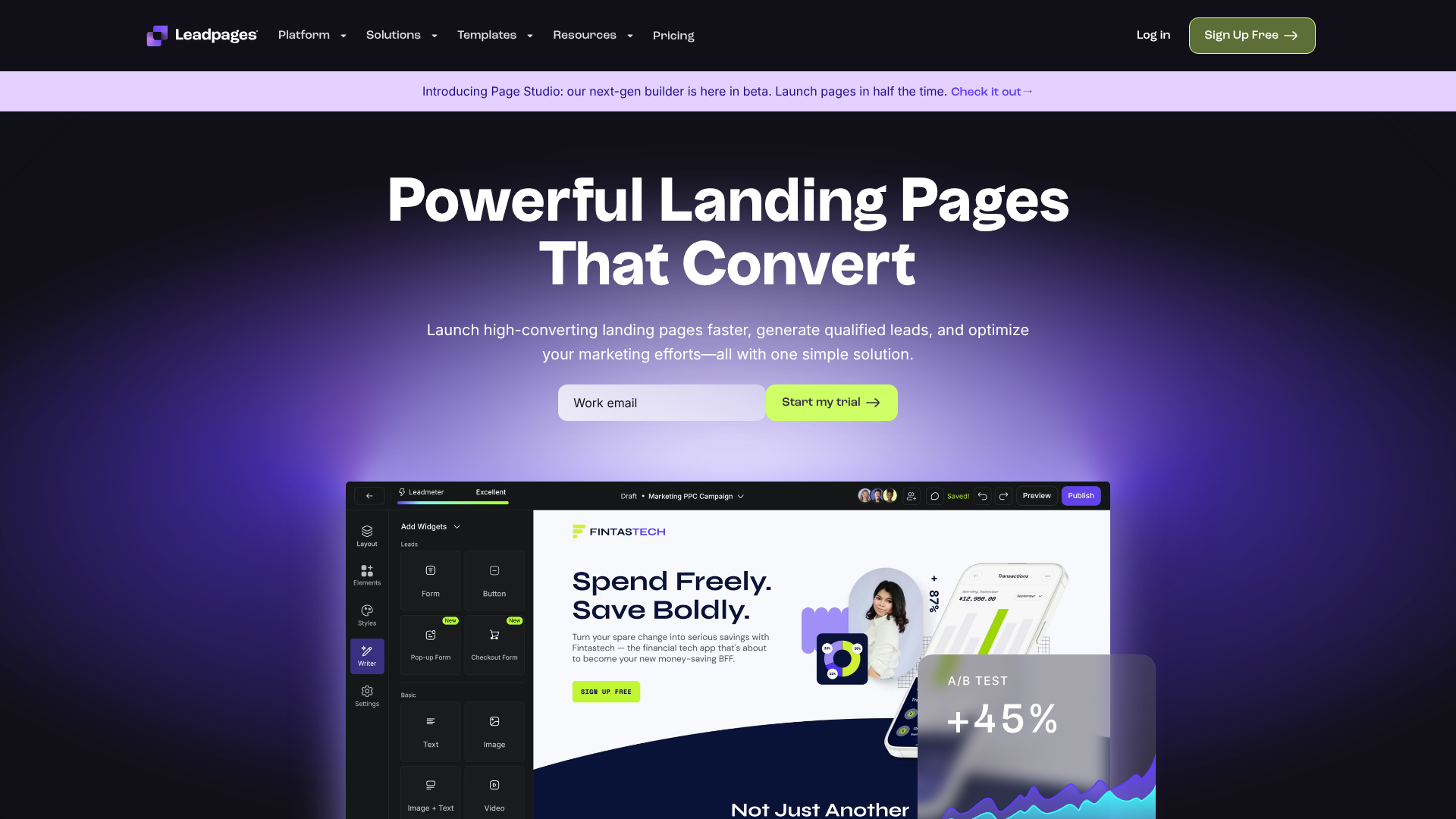
A great landing page has a clear headline, compelling copy that focuses on benefits, a simple form, and a strong call-to-action (CTA). Tools like Leadpages and Unbounce make it easy to create and test professional-looking landing pages without needing to code, helping you maximise the return on your marketing campaigns.

The Crucial Role of SEO in IT Services Lead Generation
Search Engine Optimisation (SEO) is the practice of optimising your website to rank higher in search engine results for relevant queries. While PPC offers immediate visibility, SEO is a long-term strategy that builds a sustainable pipeline of high-quality, inbound leads. When a potential client searches for a solution to their IT problem and finds your website, they are already highly qualified.
Effective SEO establishes your company as an authority in the IT space. By consistently appearing in search results for your core services, you build brand recognition and trust before a prospect even speaks to your sales team. This is a powerful way to generate leads for IT without the high cost of continuous advertising.
Keyword Research for IT Services
The foundation of any SEO strategy is understanding what your potential clients are searching for. Keyword research involves identifying the terms and phrases they use when looking for IT solutions. These can range from broad terms like "IT support" to highly specific, long-tail keywords like "disaster recovery solutions for small businesses."
Tools like Mangools (KWFinder) and Semrush are invaluable for this process. They help you discover relevant keywords, analyse their search volume and competition, and identify opportunities to create content that directly answers your audience's questions. Focusing on keywords with clear commercial intent is key to attracting visitors who are likely to convert.
On-Page SEO for Your Website
On-page SEO refers to optimising the individual pages of your website. This includes creating dedicated service pages for everything you offer (e.g., Managed Services, Cloud Computing, Cybersecurity). Each page should be optimised for its primary keyword, with clear title tags, meta descriptions, and headings that tell both users and search engines what the page is about.
The content itself must be comprehensive and valuable, clearly explaining the service, its benefits, and why a client should choose you. Using a tool like Surfer SEO can help you analyse top-ranking pages and ensure your content is structured and written in a way that search engines favour.
Local SEO for MSPs and Local IT Providers
If you serve a specific geographic area, local SEO is non-negotiable. This involves optimising your online presence to attract clients from your local community. The most important element is your Google Business Profile (GBP). A fully optimised GBP listing with your services, hours, address, and positive reviews can make you highly visible in local search results and on Google Maps.
Beyond GBP, building local citations (mentions of your business name, address, and phone number on other websites) and getting reviews from local clients can significantly boost your local ranking. This ensures that when a business owner in your town searches for "IT support near me," your company is the one they find.
Using Social Media for Effective IT Lead Generation
Social media is more than just a platform for brand awareness; it's a powerful tool for IT services lead generation when used correctly. The key is to focus on the platforms where your ideal clients—business owners and decision-makers—spend their time. For virtually all B2B IT companies, that platform is LinkedIn.
LinkedIn provides a professional environment where you can connect directly with prospects, share valuable insights, and establish your company as a thought leader. It's not about hard-selling; it's about building relationships and trust over time. By consistently providing value, you position your company as the go-to expert when a prospect eventually needs IT services.
Optimising Your LinkedIn Profile and Company Page
Your personal profile and your company page are your digital business cards on LinkedIn. Your personal profile should be fully completed, with a professional headshot and a headline that clearly states who you help and how (e.g., "Helping SMEs in Manchester Secure Their Networks with Managed IT Services").
Your company page should be a resource hub, showcasing your services, sharing case studies, and highlighting your company culture. Encourage all your employees to connect their profiles to the company page to expand your collective reach. A well-optimised presence makes a strong first impression and provides a solid foundation for your outreach efforts.
Engaging in Relevant Groups and Discussions
LinkedIn Groups focused on specific industries, technologies, or business challenges are goldmines for lead generation. Join groups where your ideal clients are active and participate in discussions by offering helpful advice and insights. Avoid direct selling. Instead, answer questions and share your expertise freely.
This positions you as a helpful expert, not a salesperson. Over time, members of the group will come to recognise your name and associate it with IT expertise. When they or someone they know has an IT need, you'll be top-of-mind. Social media management platforms like Hootsuite or Buffer can help you schedule content and monitor conversations efficiently.
Pro Tip: Use LinkedIn Sales Navigator to perform advanced searches for prospects who fit your Ideal Customer Profile (ICP). You can filter by company size, industry, job title, and geography to build highly targeted lead lists for your outreach campaigns.
Powerful Email Marketing Tactics for IT Leads
Email marketing remains one of the most effective channels for B2B lead generation. It allows you to communicate directly with prospects, nurture relationships over time, and guide them through the sales funnel at their own pace. The key to success is focusing on personalisation and value, rather than sending generic, unsolicited sales pitches.
Building an email list should be a priority. You can do this by offering valuable resources (lead magnets) on your website, such as a free cybersecurity checklist or an e-book on cloud migration, in exchange for an email address. This ensures you're building a list of contacts who have already expressed an interest in the topics relevant to your services.
Crafting Personalised Cold Outreach Campaigns
While building an inbound list is ideal, targeted cold outreach can also be effective if done correctly. This involves identifying key decision-makers at your target companies and sending them a highly personalised email. Research the individual and their company, and craft a message that speaks to a specific pain point they might be experiencing.
Your goal in the first email is not to sell your services, but to start a conversation. Offer a piece of valuable insight or a helpful resource. Keep it short, focused, and easy to reply to. Tools like Hunter can help you find the email addresses of professionals at specific companies.
Lead Nurturing Email Sequences
Once a prospect is on your email list, you can use automated email sequences to nurture them. A lead nurturing sequence is a series of emails sent over time, designed to build trust and educate the lead about how you can solve their problems. For example, someone who downloaded a guide on cybersecurity could receive a series of emails with more security tips, case studies, and an eventual invitation to a free security assessment.
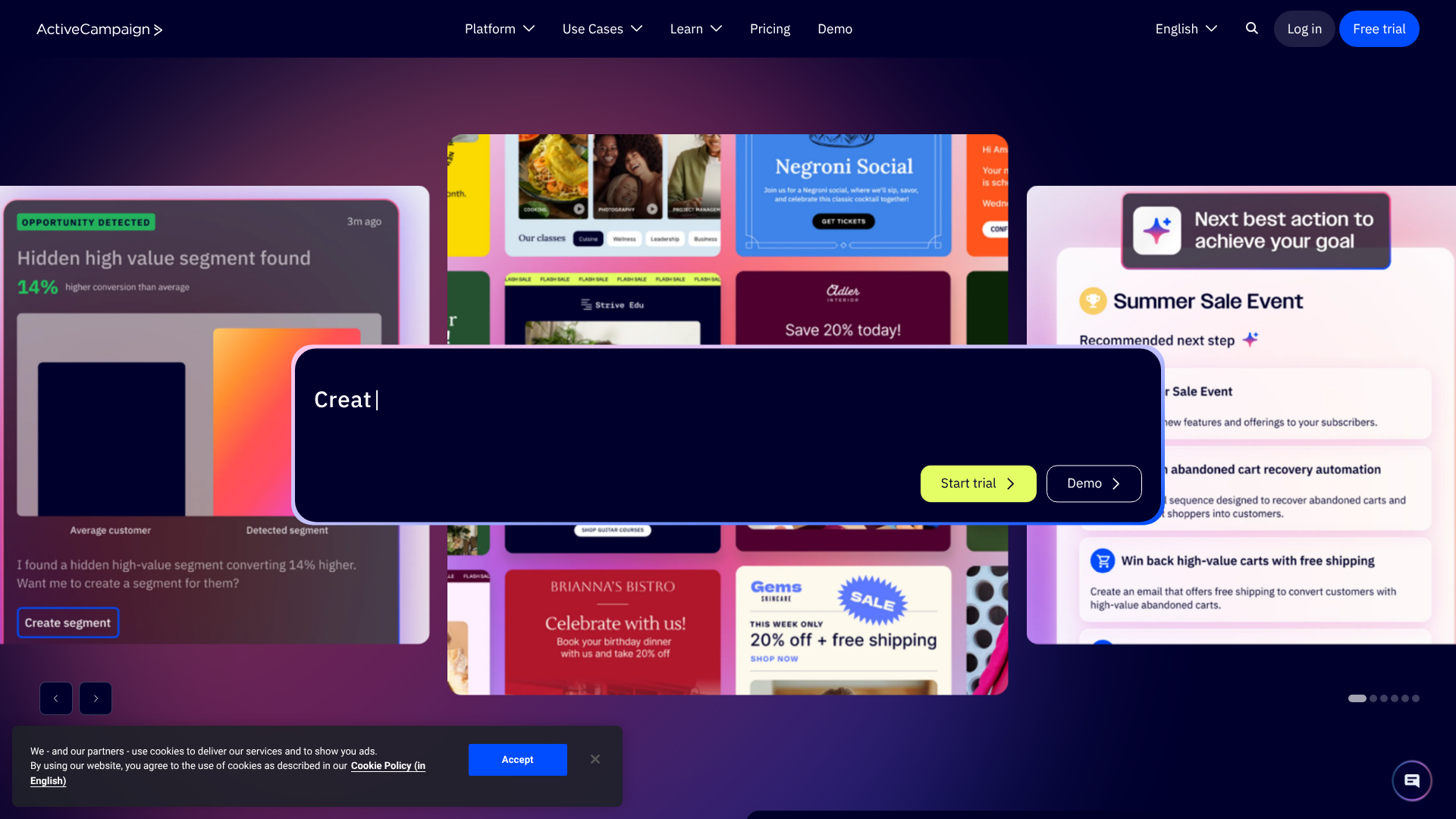
Platforms like ActiveCampaign or GetResponse are excellent for this. They allow you to create sophisticated automation workflows that send the right message to the right person at the right time, based on their behaviour and interests. This keeps your brand top-of-mind without requiring manual effort for every lead.
Content Marketing: Your Engine for Inbound Leads
Content marketing is the strategic creation and distribution of valuable, relevant, and consistent content to attract and retain a clearly defined audience. For an IT service provider, this means creating content that solves your ideal clients' problems. When you provide answers and solutions, you build trust and authority, which is the foundation of effective IT lead acquisition.
Instead of talking about your services, talk about your clients' challenges. A business owner isn't searching for "managed services"; they're searching for "how to prevent ransomware" or "best way to back up company data." By creating content that addresses these real-world problems, you attract highly qualified traffic to your website through search engines and social media.
Creating High-Value Lead Magnets
A lead magnet is an irresistible piece of content that you offer to prospects in exchange for their contact information. It's the primary tool for converting website visitors into leads. For an IT company, effective lead magnets could include:
- Whitepapers or E-books: In-depth guides on topics like "The Ultimate Guide to GDPR Compliance for Small Businesses."
- Case Studies: Detailed stories of how you solved a specific problem for a client, showcasing real results.
- Checklists: Simple, actionable resources like a "10-Point Network Security Checklist."
- Free Assessments or Audits: Offering a free, no-obligation security or network assessment is a powerful way to generate highly qualified leads.
Blogging About Technical Problems and Solutions
A consistent blogging strategy is one of the best ways to improve your SEO and attract organic traffic. Write blog posts that answer the common questions your sales team hears every day. Each post should target a specific keyword phrase and provide a comprehensive, helpful answer.
For example, you could write articles on topics like "Signs You've Outgrown Your Current IT Support" or "How to Choose the Right Cloud Storage for Your Business." These articles attract prospects in the early stages of their buying journey, introducing them to your brand and expertise long before they are ready to make a purchase decision.
Hosting Webinars to Showcase Expertise
Webinars are an excellent format for generating high-quality leads and demonstrating your expertise in a live, interactive setting. You can host a webinar on a pressing IT topic, such as "How to Protect Your Business from the Latest Phishing Scams," and promote it to your email list and social media followers.
Attendees who register for the webinar are highly qualified leads. The event itself allows you to build a direct relationship with dozens of prospects at once, answer their questions in real-time, and present a soft call-to-action for your services at the end. Platforms like EasyWebinar and WebinarGeek provide all the tools you need to host, manage, and promote professional webinars.

The Importance of a CRM in Managing and Nurturing Leads
As you start to generate leads from multiple channels, managing them in a spreadsheet quickly becomes chaotic and inefficient. A Customer Relationship Management (CRM) system is an essential tool for organising, tracking, and nurturing your leads. It acts as a central database for all your prospect and customer interactions.
A CRM ensures that no lead falls through the cracks. It allows you to see the entire history of a prospect's interactions with your company—from the first website visit to the latest email opened. This context is invaluable for your sales team, enabling them to have more relevant and effective conversations.
Centralising Lead Information
A CRM brings all your lead data into one place. Information from your website forms, landing pages, and even manual entries can be automatically fed into the system. Each lead gets their own record, where you can store contact details, company information, and notes from any conversations.
This centralisation prevents duplicate efforts and ensures that everyone on your team has access to the most up-to-date information. It provides a single source of truth for your entire sales pipeline.
Tracking Every Interaction
Modern CRMs can track every touchpoint a lead has with your brand. This includes website pages visited, emails opened and clicked, content downloaded, and forms submitted. This detailed activity log gives you deep insights into a lead's interests and level of engagement.
For example, if you see a lead has repeatedly visited your cybersecurity services page and downloaded a security checklist, you know they are a hot prospect for that service. This allows your sales team to prioritise their follow-ups and tailor their outreach accordingly.
Automating Follow-ups and Nurturing
One of the most powerful features of a CRM is automation. Many CRM platforms, such as ActiveCampaign, combine CRM functionality with marketing automation. This allows you to set up automated workflows to nurture leads over time.
You can create rules that automatically assign leads to salespeople, send follow-up emails after a certain period of inactivity, or move a lead into a long-term nurturing sequence if they are not yet ready to buy. This automation saves countless hours and ensures a consistent follow-up process for every single lead.
How to Measure Your Lead Generation Success
To build an effective lead generation machine, you need to make decisions based on data, not guesswork. Tracking the right metrics and Key Performance Indicators (KPIs) allows you to understand what's working, what's not, and where to allocate your marketing budget for the best results. A data-driven approach is fundamental to scaling your IT services lead generation efforts.
Regularly reviewing your metrics helps you identify bottlenecks in your funnel. For example, if you're getting a lot of traffic to a landing page but very few form submissions, you know you need to optimise the page. Without tracking, you'd be flying blind, wasting time and money on ineffective strategies.
Key Performance Indicators (KPIs) to Track
While there are many metrics you can track, a few are particularly important for IT service providers:
- Cost Per Lead (CPL): This is the total cost of a marketing campaign divided by the number of leads it generated. It tells you how much you're spending to acquire each new prospect.
- Lead-to-Customer Conversion Rate: This is the percentage of leads that become paying customers. This KPI measures the quality of your leads and the effectiveness of your sales process.
- Customer Lifetime Value (CLV): This is the total revenue you expect to generate from a single customer over the course of your business relationship. Understanding your CLV helps you determine how much you can afford to spend to acquire a new customer.
- Marketing ROI: This measures the overall return on your marketing investment. It helps you justify your marketing spend and prove its value to the business.
Using Analytics Tools
To track these KPIs, you'll need the right tools. Google Analytics is essential for monitoring your website traffic, understanding user behaviour, and tracking conversions from your online forms. It can tell you which channels (e.g., organic search, social media, paid ads) are driving the most leads.
Your CRM will be your primary tool for tracking sales-related KPIs like conversion rates and pipeline velocity. Most CRMs have built-in dashboards that make it easy to visualise your data and spot trends. By combining data from your website analytics and your CRM, you can get a complete picture of your lead generation performance from first touch to final sale.
Building a Strong Online Presence to Attract IT Leads
Your online presence is more than just a website; it's the digital representation of your brand. For a potential client researching IT providers, your online presence is often their first interaction with your company. A professional, trustworthy, and helpful presence is critical for making a positive first impression and encouraging prospects to take the next step.
This involves creating a cohesive experience across all your digital assets, from your website and social media profiles to your listings in online directories. Consistency in branding, messaging, and quality builds credibility and makes your company appear more established and reliable.
The Importance of a Professional, User-Friendly Website
Your website is the hub of your online presence and your most important lead generation tool. It needs to be professional, modern, and easy to navigate. It must also be mobile-friendly, as many decision-makers will research providers on their phones.
Your site should clearly communicate who you are, what you do, and who you help. Service pages should be detailed and benefit-focused. Most importantly, it should be easy for a visitor to take action, with clear calls-to-action and simple contact forms on every relevant page.
Showcasing Case Studies and Testimonials
Trust is a major factor in the decision to hire an IT service provider. Social proof, in the form of testimonials and case studies, is one of the most powerful ways to build that trust. Dedicate a section of your website to showcasing success stories from happy clients.
Testimonials provide quick, credible endorsements. Case studies go deeper, telling the story of a client's problem, the solution you implemented, and the measurable results you achieved. This evidence-based content is highly persuasive for prospects who are in the consideration stage of the buying process.
Pro Tip: Use video testimonials for maximum impact. A short video of a client praising your services is far more engaging and believable than text alone. It adds a human element that builds an immediate connection with potential customers.
Best Practices for Converting IT Leads into Paying Customers
Generating a lead is a crucial first step, but it's only half the battle. The process of converting that lead into a long-term, paying customer requires a thoughtful and efficient sales process. How you handle a lead from the moment they enter your pipeline can make all the difference between a closed deal and a missed opportunity.
In the IT industry, where sales cycles can be long and decisions are often made by committee, a structured approach to lead conversion is essential. It's about building on the initial interest you've generated, understanding the prospect's needs deeply, and demonstrating that your company is the best possible partner to help them achieve their goals.
The Speed of Response Matters
When a prospect fills out a form on your website, the clock starts ticking. Studies have shown that the odds of making contact with a lead decrease significantly after the first five minutes. A prompt response demonstrates that you are attentive and professional.
Set up automated email responses to acknowledge the form submission immediately, and create internal processes to ensure a salesperson follows up personally as quickly as possible. This initial speed can set a positive tone for the entire relationship.
The Discovery Call: Understanding Client Needs
The first conversation with a prospect shouldn't be a sales pitch. It should be a discovery call focused entirely on them. Your goal is to listen and understand their current situation, their challenges, their goals, and what prompted them to seek help. Ask open-ended questions to uncover their true pain points.
This consultative approach builds rapport and positions you as a strategic advisor, not just a vendor. The information you gather during this call is critical for qualifying the lead and determining if you are a good fit for each other.
Crafting Compelling Proposals
After the discovery call, you'll create a proposal that outlines your recommended solution. A great proposal doesn't just list services and prices. It recaps the challenges you discussed, presents your solution as the answer to those specific challenges, and clearly outlines the expected outcomes and return on investment (ROI).
Tailor every proposal to the individual client. Use their language, reference their goals, and make it clear that you've listened to and understood their unique needs. A personalised, value-focused proposal is far more likely to be approved than a generic, one-size-fits-all template.
Frequently Asked Questions about IT Lead Generation
How long does it take to see results from IT lead generation?
The timeline for results varies by strategy. Pay-Per-Click (PPC) advertising can generate leads within days of launching a campaign. However, strategies like SEO and content marketing are long-term investments. It typically takes 6-12 months of consistent effort to see significant organic traffic and lead flow from SEO.
What is the most effective lead generation channel for IT services?
For most B2B IT companies, a combination of SEO and targeted LinkedIn marketing is highly effective. SEO builds a sustainable pipeline of inbound leads who are actively searching for solutions, while LinkedIn allows for precise targeting and relationship-building with key decision-makers. The best approach is a multi-channel strategy that doesn't rely on a single source.
Should I buy a list of leads for my IT company?
It's generally not recommended. Purchased lists are often outdated, inaccurate, and the contacts on them have not opted in to hear from you. Sending unsolicited emails to these lists can harm your domain reputation and lead to low engagement. It's far more effective to build your own list of qualified leads through inbound marketing and targeted, personalised outreach.
How much should I budget for lead generation?
There is no single answer, as budgets depend on your company's size, growth goals, and the competitiveness of your market. A common benchmark for B2B companies is to allocate 5-10% of their revenue to marketing. Start with a modest budget, focus on one or two channels, measure your results, and reinvest in what works.
Final Thoughts: Building Your IT Lead Generation Machine
Successful lead generation for IT services isn't about finding a single magic bullet. It's about building a comprehensive, multi-channel system that consistently attracts, engages, and nurtures your ideal clients. It requires a strategic blend of long-term asset building through SEO and content marketing, combined with targeted outreach via channels like LinkedIn and email.
Remember that consistency and patience are your greatest allies. The strategies outlined in this guide—from optimising your website to nurturing leads with a CRM—work together to create a predictable and scalable engine for business growth. Start by implementing one or two of these tactics, measure your results, and gradually build out your machine.
By focusing on providing value at every stage of the buyer's journey, you'll not only generate more leads but also build a stronger brand and a more loyal customer base. To get started on the right foot, consider exploring powerful tools like Semrush for your SEO research, ActiveCampaign for CRM and email automation, and Leadpages for creating high-converting landing pages.