


What Is Sales Engagement Software? A Guide for Modern Sales Teams
Sales engagement software is a category of tools designed to help sales teams connect with prospects more efficiently and effectively. It acts as an action layer on top of a Customer Relationship Management (CRM) system, automating and tracking all the interactions a salesperson has with potential customers across multiple channels, including email, phone calls, and social media. Think of it as a smart assistant for your sales reps, ensuring no lead is forgotten and every communication is timely and relevant.
- What You'll Learn
- What is Sales Engagement Software, Really? (Going Beyond the Definition)
- The Core Engine: How Sales Engagement Platforms Work
- Key Features and Benefits That Drive Revenue
- Multi-Channel Outreach Automation
- Advanced Analytics and A/B Testing
- Seamless CRM Integration
- AI-Powered Insights and Conversation Intelligence
- How to Choose the Right Sales Engagement Solution for Your Team
- 1. Assess Your Current Sales Process and Pain Points
- 2. Evaluate Core Feature Requirements
- 3. Consider Integration Capabilities
- 4. Prioritise User Experience and Adoption
- 5. Look at Scalability and Support
- Top Sales Engagement Tools on the Market in 2026
- Understanding Pricing and Cost Structures
- The Pros and Cons of Adopting Sales Engagement Software
- Frequently Asked Questions (FAQ)
- What is the difference between CRM and sales engagement software?
- What is the 2 2 2 rule in sales?
- What is the difference between a CRM and a CEP (Customer Engagement Platform)?
- Final Thoughts: Is a Sales Engagement Platform Right for You?
At its core, this software streamlines the often chaotic process of sales outreach. Instead of manually tracking follow-ups in spreadsheets or relying on memory, reps use structured, multi-step sequences—often called 'cadences' or 'playbooks'—to guide their engagement. This systematic approach not only boosts productivity but also provides managers with invaluable data on what strategies are actually working, allowing for continuous improvement of the sales process.
What You'll Learn
- Core Function: Sales engagement software automates and tracks communication across multiple channels like email, phone, and social media to streamline the sales process.
- How It Works: It uses structured outreach sequences, or 'cadences', to ensure consistent and timely follow-up with every prospect, preventing leads from falling through the cracks.
- Key Benefits: The main advantages are significant productivity gains for reps, higher lead conversion rates, and access to data-driven insights for sales managers to optimise team performance.
- Relationship with CRM: It complements, not replaces, a CRM. The CRM stores customer data (the 'who'), while the sales engagement platform manages the outreach activities (the 'how' and 'when').
What is Sales Engagement Software, Really? (Going Beyond the Definition)
To truly understand what sales engagement software is, it helps to use an analogy. If your CRM is your team's digital address book—a database holding all your customer and prospect information—then a sales engagement platform is the hyper-efficient personal assistant who uses that address book to execute a perfect outreach plan.
This assistant doesn't just store information; it takes action. It sends the initial email, schedules a follow-up call in three days, suggests a LinkedIn connection request on day five, and automatically logs every single one of these activities back into the CRM. It removes the manual, repetitive tasks that consume up to two-thirds of a salesperson's day, such as data entry, dialling numbers, and scheduling emails.
This frees up your sales team to focus on what they do best: building relationships and having meaningful conversations. The primary goal of these sales engagement tools isn't just automation for the sake of it; it's about enabling salespeople to execute their sales process at scale while maintaining a high degree of personalisation.
Sales Engagement vs. Sales Enablement vs. Marketing Automation
It's easy to confuse sales engagement with other related terms. Here’s a simple breakdown:
- Sales Engagement Platforms (SEPs): Focus on the execution of selling. They help reps manage their day-to-day interactions with prospects efficiently.
- Sales Enablement Platforms: Focus on the preparation for selling. They provide reps with the content (like case studies and presentations), training, and coaching needed to be effective.
- Marketing Automation Platforms: Focus on top-of-funnel, one-to-many communication. They are designed to nurture a large volume of leads, typically before they are handed over to the sales team.
In short, marketing automation gets a lead interested, sales enablement equips the rep to handle that lead, and sales engagement helps the rep execute the outreach to turn that lead into a customer.
The Core Engine: How Sales Engagement Platforms Work

The magic behind sales engagement platforms lies in their ability to orchestrate a series of planned interactions, known as sequences or cadences. A cadence is a pre-defined workflow of communication touchpoints that a salesperson follows for each prospect. It's a strategic playbook that ensures persistence without being annoying and maintains momentum throughout the early stages of the sales cycle.
A typical multi-channel sequence might look something like this:
- Day 1: Send a personalised introductory email.
- Day 3: Connect with the prospect on LinkedIn and view their profile.
- Day 5: Make a phone call. If no answer, leave a pre-recorded voicemail and send a follow-up email referencing the call.
- Day 7: Send another email with a valuable resource, like a relevant case study or blog post.
- Day 10: Make a final follow-up call.
The sales engagement solution automates much of this process. Emails can be scheduled, call reminders pop up as tasks, and pre-written templates can be personalised with dynamic fields. If a prospect replies to an email or books a meeting, the platform can automatically remove them from the sequence to prevent awkward, unnecessary follow-ups. This combination of automation and guided selling is what makes these tools so powerful.

Key Features and Benefits That Drive Revenue
Modern sales engagement solutions are packed with features designed to make sales teams more productive and effective. While the specific offerings vary between platforms, a few core components are central to their value proposition.
Multi-Channel Outreach Automation
Top-tier platforms unify communication across every key channel. This includes email integration with features like open and click tracking, VoIP power diallers that allow reps to call prospects with a single click directly from their dashboard, and integrations with social networks like LinkedIn for connection requests and InMail messages. By managing all outreach from one place, reps can execute a cohesive strategy far more effectively than juggling multiple disparate tools.
Advanced Analytics and A/B Testing
Data is at the heart of sales engagement. These platforms provide detailed analytics on every aspect of the outreach process. You can see which email templates get the highest reply rates, which subject lines get the most opens, and what time of day is best for making calls. This allows for continuous optimisation.
A/B testing features let you test different approaches head-to-head, providing concrete evidence of what works best with your target audience. For managers, dashboards offer a clear view of team activity and performance, making it easy to identify top performers and coach those who are struggling.
Seamless CRM Integration
An SEP without strong CRM integration is like a car without an engine. The ability to automatically sync all activities—emails sent, calls made, meetings booked—to the contact record in your CRM is arguably the single biggest time-saver. This eliminates manual data entry, ensures the CRM is always up-to-date, and provides a complete, 360-degree view of every prospect interaction. This is crucial for platforms like HubSpot CRM or Zoho CRM, where maintaining accurate data is essential for forecasting and reporting.
Pro Tip: When evaluating a platform, test the depth of its CRM integration. Does it just log activities, or can it also sync custom fields, update lead statuses automatically, and create new records? Deeper integration means less manual work for your team.
AI-Powered Insights and Conversation Intelligence
The latest generation of sales engagement tools heavily incorporates artificial intelligence (AI). AI can analyse email content to suggest improvements, recommend the best time to send a message based on a prospect's past behaviour, and even transcribe and analyse sales calls. Conversation intelligence tools can identify keywords, measure talk-to-listen ratios, and provide real-time coaching prompts to reps during a live call, helping them navigate objections and mention key value points.
How to Choose the Right Sales Engagement Solution for Your Team
With dozens of sales engagement platforms on the market, selecting the right one can feel overwhelming. The best choice depends entirely on your team's specific needs, existing tech stack, and budget. Following a structured evaluation process can help you make an informed decision.
1. Assess Your Current Sales Process and Pain Points
Before you look at any software, look at your team. Where are the biggest bottlenecks. Are reps spending too much time on administrative tasks. Are qualified leads falling through the cracks due to inconsistent follow-up.
Do you lack visibility into what your top performers are doing differently. Identifying your primary pain points will give you a clear set of problems you need the software to solve.
2. Evaluate Core Feature Requirements
Based on your pain points, create a checklist of must-have features. If your team does a lot of cold calling, a built-in power dialler and local presence dialling are essential. If your strategy relies heavily on LinkedIn, you'll need a tool with deep integration for automating connection requests and messages. Don't be swayed by a long list of flashy features you'll never use; focus on the functionality that will have the biggest impact on your team's daily workflow.
3. Consider Integration Capabilities
Your sales engagement platform must work harmoniously with your existing technology. The most critical integration is with your CRM. Check for native, bi-directional sync capabilities with your specific CRM. Beyond that, consider other tools in your stack.
Does it integrate with your calendar for easy meeting booking (e.g., Google Calendar, Outlook). Does it connect with data enrichment tools or e-signature software like PandaDoc. A platform that fits well into your ecosystem will see much higher adoption.
4. Prioritise User Experience and Adoption
A powerful tool is useless if your team finds it too complicated to use. The user interface (UI) should be clean, intuitive, and easy for a non-technical salesperson to navigate. During the evaluation process, involve a few of your sales reps. Let them participate in demos and trials.
If they are excited about using the tool, you're far more likely to see a positive return on your investment. A steep learning curve can kill adoption before you even get started.
5. Look at Scalability and Support
Choose a solution that can grow with your business. Consider your company's growth plans for the next few years. Will the platform's pricing and feature tiers accommodate a larger team. Also, investigate the quality of their customer support.
What are their response times. Do they offer dedicated account managers or comprehensive onboarding and training. Good support can be the difference between a smooth rollout and a frustrating failure.
Top Sales Engagement Tools on the Market in 2026
While the market is crowded, a few names consistently stand out for their robust features, reliability, and innovation. Here are three leading sales engagement platforms worth considering.
1. Outreach
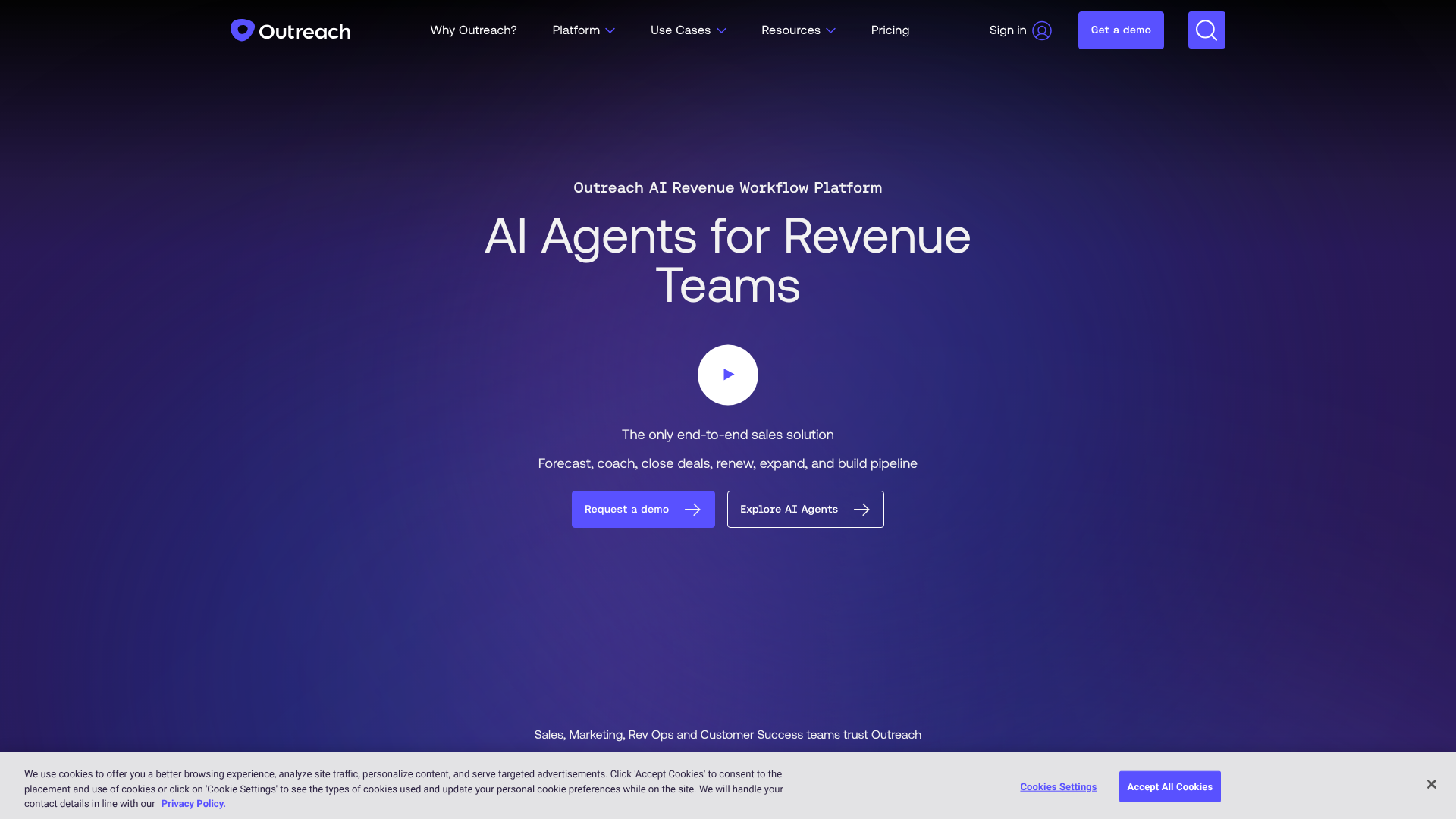
Outreach is widely regarded as the market leader in the sales engagement space, particularly for mid-market and enterprise companies. It offers one of the most comprehensive feature sets available, covering everything from multi-channel sequencing to AI-powered conversation intelligence and revenue forecasting.
Pros
- Deep Functionality: Its feature set is incredibly rich, with advanced capabilities for automation, analytics, and team management.
- Powerful AI: Its AI assistant, Kaia, provides real-time assistance during calls, a feature that is highly valued by large, sophisticated sales teams.
- Enterprise-Ready: Built for scale with strong security, governance, and integration capabilities.
Cons
- High Cost: It is one of the more expensive options, which can put it out of reach for smaller businesses.
- Complexity: The sheer number of features can create a steep learning curve for some teams.
2. Apollo.io
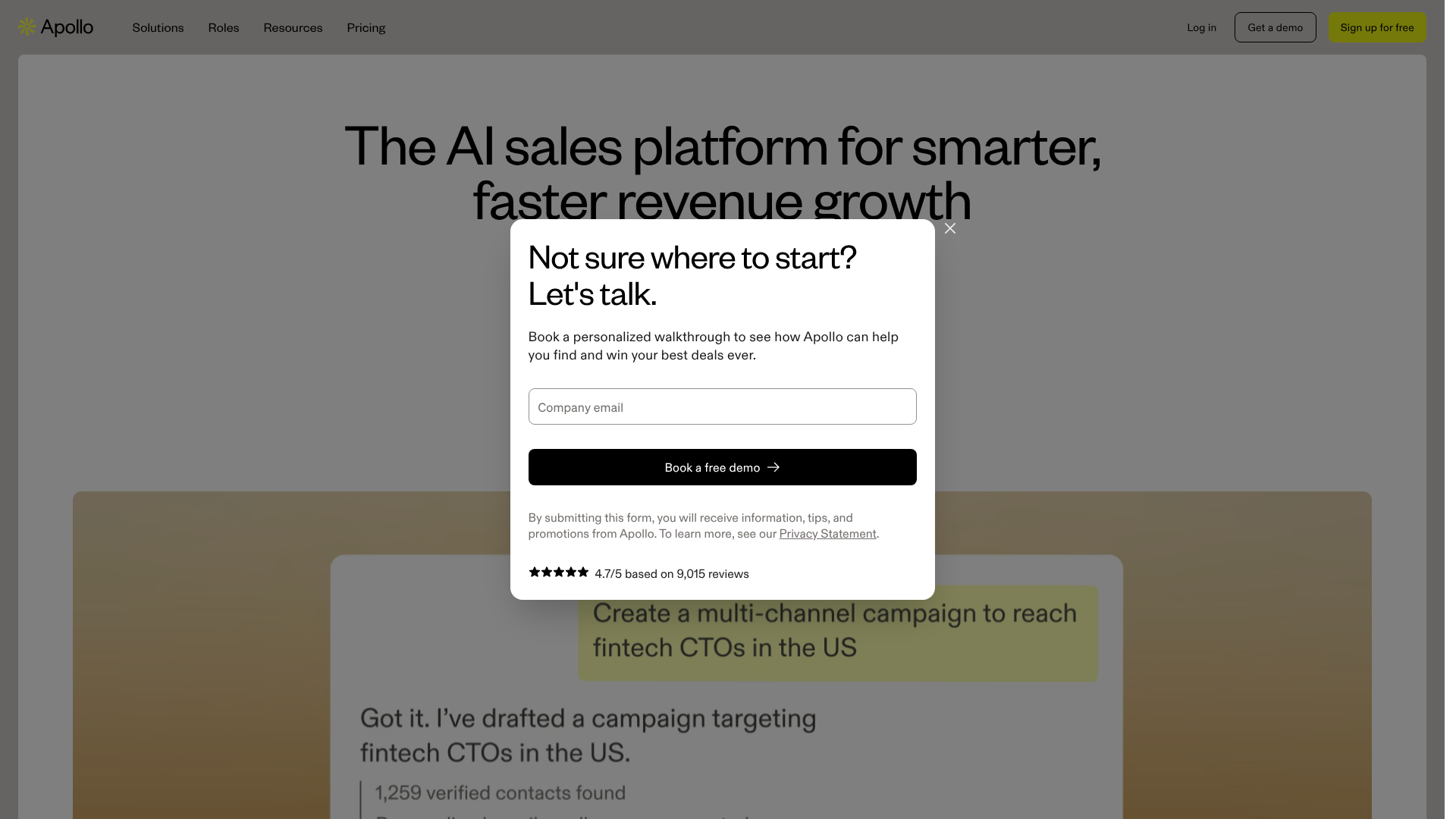
Apollo.io has gained massive popularity by combining a massive B2B contact database with a full-featured sales engagement platform. This all-in-one approach makes it an incredibly attractive option for teams that need both lead generation and outreach tools in a single subscription.
Pros
- Excellent Value: The combination of high-quality lead data and engagement tools at its price point is hard to beat.
- All-in-One Platform: Simplifies the tech stack by providing prospecting, enrichment, and engagement in one place.
- User-Friendly: The interface is generally considered clean and easy to navigate, making it great for startups and SMBs.
Cons
- Data Accuracy Varies: While the database is huge, the accuracy of contact information can sometimes be inconsistent.
- Less Depth than Specialists: Its engagement features may not be as deep or advanced as a dedicated platform like Outreach.
3. Reply.io
Reply.io is a strong contender that excels at multi-channel automation, with a particular focus on AI to help find contact details and personalise outreach at scale. It's a flexible platform used by both sales and marketing teams for various outreach campaigns.
Pros
- AI-Powered Prospecting: Its Chrome extension and built-in tools are effective at finding verified email addresses and phone numbers.
- Multi-Channel Flexibility: Easily build sequences that include emails, calls, LinkedIn tasks, SMS, and even WhatsApp messages.
- Good for Agencies: Offers features tailored for marketing and lead generation agencies running campaigns for multiple clients.
Cons
- UI/UX: Some users find the interface to be less modern or intuitive compared to newer competitors.
- Reporting Could Be Stronger: While it has solid analytics, some users wish for more advanced and customisable reporting options.
Understanding Pricing and Cost Structures
Pricing for sales engagement platforms almost always follows a per-user, per-month subscription model, typically billed annually. The cost can vary dramatically, ranging from around £40 per user per month for entry-level plans to over £150 per user per month for enterprise-grade solutions.
Most providers offer tiered pricing structures. Here’s a general breakdown of what you can expect:
- Basic/Starter Tier: Aimed at individuals or very small teams. Usually includes core email sequencing and tracking features but may have limits on the number of contacts or emails.
- Pro/Business Tier: The most common choice for SMBs and mid-market companies. This tier typically unlocks multi-channel capabilities (like a phone dialler), deeper CRM integration, and more advanced analytics.
- Enterprise Tier: Designed for large organisations. Includes all features plus advanced security, dedicated support, AI-powered conversation intelligence, and custom implementation.
It's also important to ask about potential hidden costs. These can include one-time implementation or onboarding fees, charges for premium support, or additional costs for data enrichment credits. Always get a detailed quote and clarify what is included before signing a contract.
| Platform | Typical User | Pricing Model | Key Differentiator |
|---|---|---|---|
| Outreach | Enterprise / Large Teams | Per User / Annual | Deepest AI & Analytics |
| Apollo.io | SMBs / Startups | Per User / Monthly/Annual | Integrated B2B Database |
| Reply.io | Sales & Marketing Teams | Per User / Monthly/Annual | AI-Powered Prospecting |
Note: Pricing changes frequently. Please visit the official websites for the most current information.
The Pros and Cons of Adopting Sales Engagement Software
Implementing a new tool is a significant decision. While sales engagement platforms offer transformative benefits, it's essential to have a balanced view of both the advantages and the potential challenges.
The Advantages (Pros)
- Massive Productivity Boost: This is the most immediate and tangible benefit. By automating repetitive tasks, a sales engagement platform can save each rep several hours per week, allowing them to spend more time on high-value activities like discovery calls and product demos.
- Improved Consistency and Follow-Up: It ensures that no lead is forgotten. By enforcing a systematic process, you guarantee that every prospect receives the right number of follow-ups at the right intervals, dramatically increasing the chances of making a connection.
- Data-Driven Decision Making: These platforms turn sales into a science. Managers can track every metric, from email open rates to call connection rates, to understand what's working. This data is crucial for coaching reps and refining the overall sales strategy.
- Faster Ramp Time for New Hires: A well-defined set of sales cadences acts as a playbook for new salespeople. It gives them a clear, proven process to follow from day one, significantly shortening the time it takes for them to become productive.
The Potential Downsides (Cons)
- Risk of Impersonal Automation: If used incorrectly, these tools can lead to generic, robotic outreach that alienates prospects. The key is to use automation to enable personalisation at scale, not to replace it. Reps must still take the time to customise templates for each prospect.
- Significant Cost: These platforms are an investment. The subscription fees, especially for larger teams, can be substantial and must be justified by a clear return on investment in the form of increased productivity and revenue.
- Implementation and Training Overhead: You can't simply switch on a sales engagement platform and expect results. It requires careful setup, integration with your CRM, and comprehensive training to ensure the team uses it correctly and consistently.
- Dependence on Data Quality: The effectiveness of any outreach campaign is directly tied to the quality of your data. If your CRM is filled with inaccurate or outdated contact information, your engagement efforts will fail. You must have a solid data hygiene strategy in place.
Frequently Asked Questions (FAQ)
What is the difference between CRM and sales engagement software?
The simplest way to distinguish them is by their primary function: a CRM is a system of record, while a sales engagement platform is a system of action. Your CRM is the central database that stores all information about your customers and prospects—contact details, deal history, and past interactions. It’s the source of truth for your customer data.
A sales engagement platform, on the other hand, is the engine that uses that data to execute the sales process. It manages the day-to-day outreach activities like sending emails, making calls, and connecting on social media. The two systems work together: the SEP pulls contact information from the CRM, executes the outreach, and then logs all activity back into the CRM, keeping the record complete and up-to-date.
What is the 2 2 2 rule in sales?
The "2 2 2 rule" is a classic, simple follow-up guideline for salespeople. It suggests contacting a prospect 2 days after an initial meeting or conversation, then again 2 weeks later, and finally again 2 months later. The idea is to maintain a consistent, long-term presence without being overly aggressive.
Sales engagement platforms take this basic concept and put it on steroids. Instead of a simple three-step rule, you can build sophisticated, multi-channel cadences that span weeks and include a dozen or more touchpoints. These platforms automate the scheduling and reminders for this process, ensuring a far more robust and scalable follow-up strategy than the manual 2 2 2 rule could ever provide.
What is the difference between a CRM and a CEP (Customer Engagement Platform)?
A Customer Engagement Platform (CEP) is a much broader category of software than a CRM. While a CRM is primarily focused on managing customer data for sales, marketing, and service teams, a CEP is designed to manage and analyse the entire spectrum of customer interactions across all departments and channels.
A CEP often includes the functionality of a CRM but adds tools for real-time customer communication, journey orchestration, and analytics across the entire customer lifecycle. A Sales Engagement Platform (SEP) can be considered a specialised type of CEP, one that is hyper-focused on optimising the interactions that occur during the sales process.
Final Thoughts: Is a Sales Engagement Platform Right for You?
Sales engagement software has become an essential part of the modern sales technology stack for a reason. It addresses the fundamental challenges of modern selling: cutting through the noise, managing complex buyer journeys, and enabling reps to be as productive as possible. By bridging the gap between your CRM and the actual execution of sales outreach, these platforms provide the structure, automation, and insight needed to build a scalable and predictable revenue engine.
If your sales team is struggling with inconsistent follow-up, spending too much time on manual administrative tasks, or lacks clear data on which outreach strategies are effective, then a sales engagement platform is almost certainly a worthwhile investment. It empowers your reps to focus on building relationships and closing deals, which is the ultimate goal of any sales organisation.
When you're ready to explore your options, consider starting with a platform that matches your team's size and needs. For teams that need an all-in-one prospecting and outreach solution, Apollo.io offers incredible value. If you're focused on multi-channel automation with powerful AI features, Reply.io is a strong contender. And for larger organisations that require the most advanced features and analytics, Outreach remains the industry benchmark.