

What is a Sales Engagement Platform? A Guide for Sales Teams
Sales teams are often buried in administrative tasks—logging calls, sending follow-up emails, and updating contact records. This manual work eats into valuable selling time. A sales engagement platform (SEP) is a type of software designed to solve this problem by streamlining, automating, and analysing the interactions between salespeople and potential customers across multiple channels.
- Essential Points
- What is Sales Engagement, and Why Does it Matter?
- CRM vs. Sales Engagement Platform: Understanding the Critical Difference
- The Core Features of Modern Sales Engagement Software
- 1. Multi-Channel Outreach Sequences (Cadences)
- 2. Email Automation and Tracking
- 3. Integrated Sales Dialler and Call Analytics
- 4. Task Management and Automation
- Why Your Sales Team Needs an SEP: Key Benefits Explored
- How to Choose the Right Sales Engagement Tool for Your Business
- Top Sales Engagement Platforms to Consider in 2026
- Understanding Pricing Models and Typical Costs
- The Pros and Cons of Adopting a Sales Engagement Platform
- Frequently Asked Questions (FAQ)
- What is the difference between a sales engagement platform and marketing automation?
- Is Salesforce a sales engagement platform?
- What is the 3-3-3 rule in sales and how do SEPs help?
- Can a small business benefit from sales engagement software?
- Final Thoughts
Think of it as a central command centre for a sales representative's daily outreach. Instead of juggling a separate email client, phone system, social media site, and CRM, a rep can use a single interface to execute, track, and optimise their communication. This allows them to focus more on building relationships and closing deals, and less on manual data entry and repetitive tasks.
Essential Points
- Core Function: A sales engagement platform automates and orchestrates multi-channel communication (email, phone, social media) to help sales reps connect with more prospects efficiently.
- Key Difference from CRM: A CRM is a system of record for customer data (a database), while an SEP is a system of action for communication (an engagement layer). They are designed to work together.
- Primary Benefit: The main advantage is a significant boost in sales productivity. By automating repetitive tasks and providing a structured workflow, reps can manage more leads without sacrificing personalisation.
- Top Features: Look for features like automated outreach sequences (cadences), email tracking, a built-in sales dialler, AI-powered conversation insights, and deep integration with your CRM.
- Choosing a Platform: The right choice depends on your team's size, existing tech stack (especially your CRM), and specific sales process. Always prioritise ease of use and strong analytics.
What is Sales Engagement, and Why Does it Matter?
Before diving into the software, it’s important to understand the concept of "sales engagement." At its core, sales engagement refers to all the interactions between a seller and a buyer. It’s the sequence of emails, the phone calls, the LinkedIn messages, and every other touchpoint that moves a prospect through the sales funnel.
Historically, managing these interactions was a messy, manual process. A sales rep might send an email, make a note in a spreadsheet, set a calendar reminder to call next week, and then try to remember to log the call in the CRM. This approach is inefficient, prone to human error, and nearly impossible to scale or analyse effectively. Important follow-ups get missed, and potential deals fall through the cracks.
This is the problem that sales engagement software was built to solve. It provides a structured framework for these interactions, ensuring that every prospect receives timely, relevant, and persistent follow-up. It turns a chaotic, manual process into a systematic, data-driven workflow, allowing sales teams to engage with buyers at scale without losing the personal touch.
CRM vs. Sales Engagement Platform: Understanding the Critical Difference
One of the most common points of confusion is the distinction between a Customer Relationship Management (CRM) system and a Sales Engagement Platform (SEP). Many people assume they do the same thing, but they serve fundamentally different, though complementary, purposes. Failing to understand this difference can lead to choosing the wrong tools for your team.
A CRM, like HubSpot CRM or Zoho CRM, is a system of record. Its primary job is to act as a central database for all your customer and prospect information. It stores contact details, company information, deal history, and notes from past conversations. It’s the filing cabinet where all your valuable customer data lives.
An SEP, on the other hand, is a system of action. Its primary job is to help salespeople use the data in the CRM to actively communicate with prospects. It sits on top of the CRM and provides the tools to execute outreach campaigns, automate follow-ups, and track engagement. If the CRM is the address book, the SEP is the intelligent communication assistant that dials the numbers and sends the messages.
Here’s a simple breakdown of the key differences:
| Aspect | Customer Relationship Management (CRM) | Sales Engagement Platform (SEP) |
|---|---|---|
| Primary Goal | To store and manage customer data. | To execute and automate seller-to-buyer communication. |
| Main User | The entire organisation (Sales, Marketing, Service). | Primarily sales development reps (SDRs) and account executives (AEs). |
| Core Function | Data storage, pipeline management, reporting. | Outreach sequencing, task automation, communication analytics. |
| Data Focus | Stores historical data and contact properties. | Generates real-time engagement data (opens, clicks, replies). |
| Analogy | The library or database of customer information. | The workflow engine and communication toolkit. |
Ultimately, you don't choose one over the other; you use them together. A powerful SEP is almost useless without a well-maintained CRM to pull data from, and a CRM's data is far less valuable if your sales team can't act on it efficiently. The SEP enriches the CRM by automatically logging every email, call, and social touchpoint, ensuring the data in your system of record is always accurate and up-to-date.
The Core Features of Modern Sales Engagement Software

While different platforms offer unique functionalities, a set of core features defines what makes these tools so powerful. When evaluating sales engagement tools, these are the capabilities you should look for to ensure your team gets the productivity boost it needs.
1. Multi-Channel Outreach Sequences (Cadences)
This is the heart of any SEP. A sequence, or cadence, is a pre-defined series of communication touchpoints across multiple channels like email, phone calls, and social media (usually LinkedIn). A rep can enrol a prospect into a sequence, and the platform will automatically guide the rep through the steps.
For example, a sequence might look like this:
- Day 1: Send personalised Email #1.
- Day 3: Automated follow-up email if no reply.
- Day 5: Create a task for the rep to make a phone call.
- Day 7: Create a task to connect with the prospect on LinkedIn.
This ensures persistent follow-up without requiring the rep to manually track every step. It standardises the outreach process, making it scalable and repeatable for the entire team.
2. Email Automation and Tracking
SEPs supercharge email outreach. They allow teams to create and share effective email templates, complete with personalisation tokens that automatically pull data from the CRM (like {{first_name}} or {{company_name}}).
Crucially, they provide deep tracking insights. Reps can see who opened their emails, when they opened them, and whether they clicked on any links. This data helps prioritise follow-up with the most engaged prospects. Many platforms also offer A/B testing, allowing you to experiment with different subject lines or body copy to see what performs best.
3. Integrated Sales Dialler and Call Analytics
Instead of using a separate phone, reps can make calls directly from the platform with a single click. These click-to-call diallers streamline the process of making dozens of calls a day. Calls are automatically logged in the CRM, and many platforms offer call recording and transcription.
This is where AI often comes into play. Modern SEPs use conversation intelligence to analyse call recordings, identifying keywords, tracking competitor mentions, and even measuring sentiment. This gives sales managers powerful coaching opportunities and helps reps refine their pitch.
4. Task Management and Automation
An SEP acts as a daily to-do list for a sales rep. It automatically organises tasks based on the sequences prospects are in. When a rep logs in, they see a clear list of actions for the day: 15 emails to send, 10 calls to make, and 5 LinkedIn profiles to visit.
This removes the guesswork and mental load of figuring out "what should I do next?" The platform prioritises the tasks, ensuring that high-priority leads are never neglected and that every prospect is moved through their designated sales process systematically.
Pro Tip: When setting up sequences, always include manual steps like "research prospect's recent company news" before a call. This prevents over-automation and ensures that reps are still adding a crucial human element of personalisation to their outreach.
Why Your Sales Team Needs an SEP: Key Benefits Explored

Adopting a sales engagement platform isn't just about getting new software; it's about transforming how your sales team operates. The benefits extend beyond simple convenience, impacting everything from individual performance to overall revenue.
1. Drastically Increased Productivity
This is the most immediate and significant benefit. Sales reps spend, on average, less than a third of their time actually selling. The rest is consumed by administrative tasks like data entry, scheduling, and manual emailing.
An SEP automates most of these tasks. By putting outreach on rails and eliminating manual CRM updates, it can give back hours to a rep's week, allowing them to focus on what they do best: talking to customers and closing deals.
2. Enforced Best Practices and Consistency
Your top-performing reps likely have a process that works. An SEP allows you to codify that process into sequences and templates that the entire team can use. This ensures that every prospect receives the same high-quality, persistent follow-up, regardless of which rep is handling the account.
It elevates the performance of the entire team by making your best sales plays repeatable and scalable.
3. Deeper Insights and Actionable Analytics
Which email subject lines get the most opens. Which call scripts lead to more meetings booked. How many touchpoints does it take to connect with a decision-maker.
Before SEPs, these questions were difficult to answer. Now, every interaction is tracked and analysed. Sales leaders get a clear view of what’s working and what isn’t, allowing them to make data-driven decisions to optimise their sales process and coach their teams more effectively.
4. Improved CRM Data Hygiene
An incomplete or out-of-date CRM is a major roadblock for any sales organisation. Because SEPs automatically log every touchpoint—every email sent, call made, and meeting booked—the data in your CRM becomes significantly more accurate and reliable. This creates a single source of truth for all customer interactions, benefiting not just the sales team but also marketing and customer service.
5. Shortened Sales Cycles
By ensuring timely and persistent follow-up, SEPs keep deals moving forward. Prospects are less likely to go cold when they are part of a structured engagement sequence. The platform helps reps identify and focus on the most engaged leads, leading to faster qualification and quicker progression through the sales pipeline.
How to Choose the Right Sales Engagement Tool for Your Business
With a growing number of sales engagement tools on the market, selecting the right one can feel overwhelming. The best platform for a 500-person enterprise sales team will be different from the best one for a 5-person startup. Follow these steps to make an informed decision.
Step 1: Define Your Core Needs and Goals
Before looking at any software, look at your own team. What are your biggest challenges right now. Is it low call volume. Inconsistent email follow-up.
Poor CRM data. Your primary goal will guide your evaluation. For example, if your team is heavy on cold calling, a platform with a superior sales dialler and conversation intelligence is a must. If you rely on email, then advanced A/B testing and template analytics are critical.
Step 2: Prioritise CRM Integration
Your SEP must work flawlessly with your CRM. This is non-negotiable. The integration should be deep and bi-directional, meaning data flows seamlessly between both systems in real-time. Check if the platform has a native, certified integration with your CRM (e.g., Salesforce, HubSpot, Zoho).
A clunky or unreliable integration will create more manual work, defeating the purpose of the tool.
Step 3: Evaluate the User Experience (UX)
Sales reps will live in this software all day, every day. If it’s complicated or slow, they won’t use it, and you won’t see a return on your investment. During demos and free trials, pay close attention to the user interface. Is it intuitive.
Can a rep quickly build a sequence, find their daily tasks, and log a call without extensive training. Involve a few of your future end-users in the evaluation process to get their feedback.
Step 4: Consider Analytics and Reporting Capabilities
A key benefit of an SEP is the data it provides. The platform you choose should offer robust dashboards and customisable reports. You should be able to track individual rep performance, sequence effectiveness, email template success rates, and overall team activity. Good analytics help you understand what's working so you can double down on successful strategies and provide targeted coaching.
Step 5: Assess Scalability and Support
Think about where your team will be in one or two years. Will the platform be able to support your growth. Consider its ability to handle more users, more complex workflows, and advanced permission settings. Also, investigate the quality of their customer support.
When you run into an issue, you’ll want a responsive and knowledgeable support team to help you resolve it quickly.
Top Sales Engagement Platforms to Consider in 2026
Several platforms lead the market, each with its own strengths. Here are a few top recommendations that cater to different business needs.
1. Outreach
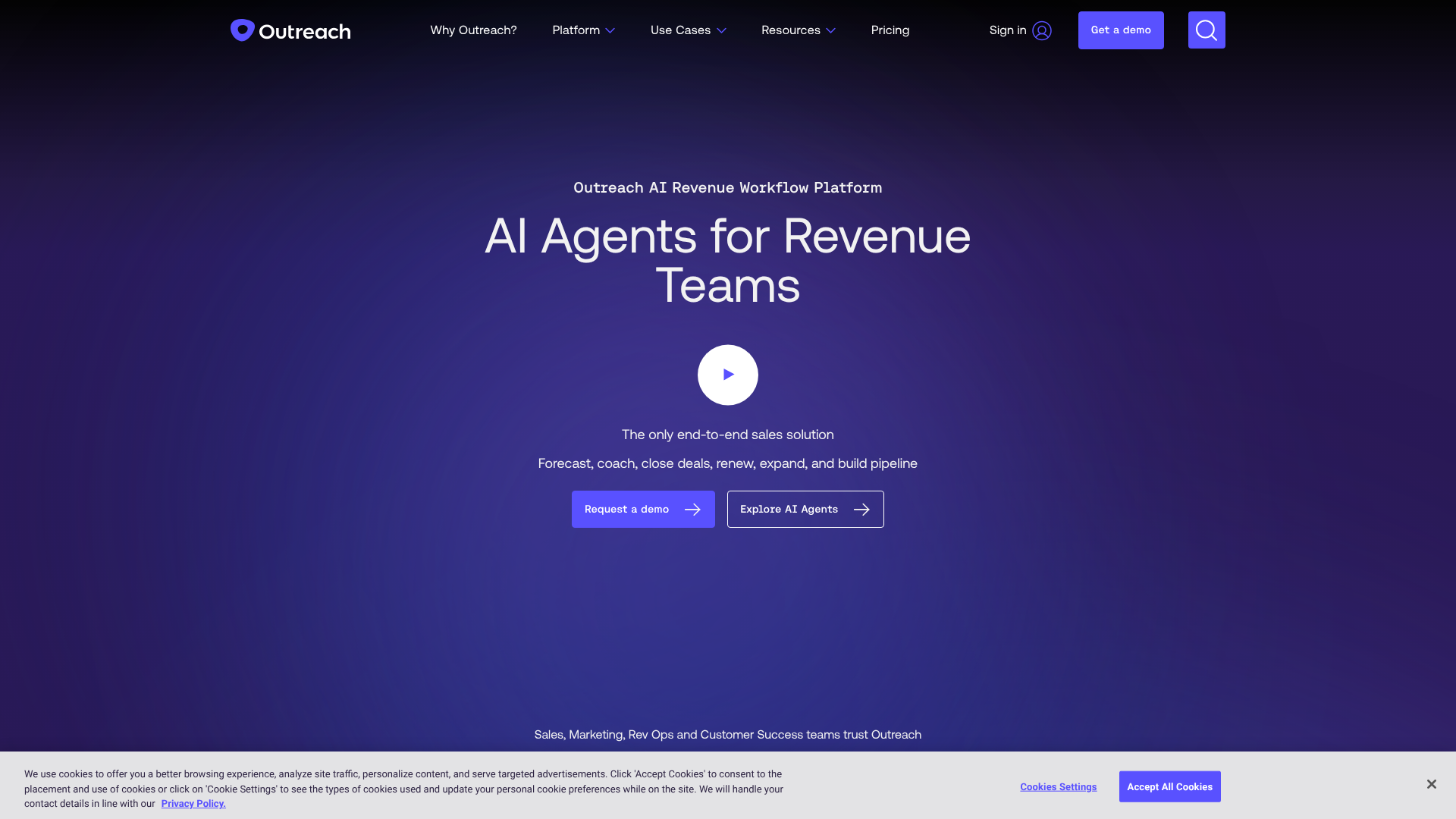
Outreach is widely considered the market leader, particularly for mid-market and enterprise companies. It's a feature-rich platform known for its powerful analytics, AI-driven insights, and robust governance features that are essential for large, complex sales organisations.
It excels at providing managers with deep visibility into team performance and sales processes. Its AI tool, Kaia, provides real-time assistance to reps during live calls, making it a powerful tool for coaching and onboarding.
Pros:
- Unmatched analytics and reporting capabilities.
- Advanced AI features for conversation and deal intelligence.
- Strong security and governance controls suitable for enterprise use.
Cons:
- Can be one of the more expensive options on the market.
- The sheer number of features can create a steeper learning curve for new users.
2. Reply.io

Reply.io is an AI-powered sales engagement platform that excels at multi-channel outreach automation. It's a strong contender for small to mid-sized businesses (SMBs) that need a flexible and powerful tool to connect with prospects across email, LinkedIn, calls, and even WhatsApp.
Its AI assistant can help with writing emails, and its data sourcing features allow you to find business emails and phone numbers directly within the platform. This combination of engagement and data makes it a very efficient all-in-one solution for prospecting.
Pros:
- Excellent multi-channel capabilities, including native WhatsApp and LinkedIn integration.
- Built-in B2B contact data and email finder.
- AI-powered features to assist with writing and scheduling.
Cons:
- Reporting and analytics may not be as deep as enterprise-focused platforms like Outreach.
- Some advanced features are only available on higher-tier plans.
3. Apollo.io

Apollo.io has gained massive popularity by combining a massive B2B contact database with a full-featured sales engagement platform. It's an end-to-end solution that allows you to find your ideal prospects, engage with them through automated sequences, and analyse the results, all in one place.
This integrated approach is incredibly cost-effective, as it can replace separate tools for lead generation and sales outreach. It's an excellent choice for startups and SMBs who need to build their sales pipeline from scratch.
Pros:
- Huge, integrated database of over 275 million contacts.
- All-in-one platform for prospecting, engagement, and analytics.
- Very competitive pricing, including a free tier to get started.
Cons:
- As an all-in-one tool, some individual features may not be as deep as specialised, best-in-class solutions.
- Data accuracy in the database can sometimes be inconsistent, which is a common challenge for all data providers.
Understanding Pricing Models and Typical Costs
The cost of sales engagement software can vary significantly, so it's important to understand the common pricing structures before you start your search. This will help you budget appropriately and avoid unexpected expenses.
Most SEPs use a per-user, per-month subscription model. You pay a set fee for each sales rep who needs a licence. This fee is typically billed annually, though some providers offer monthly plans at a higher rate. Prices can range from around £40 per user/month for more basic plans to over £120 per user/month for enterprise-grade platforms with advanced features.
These subscriptions are often sold in tiered plans, such as Basic, Professional, and Enterprise. Here’s what you can generally expect from each tier:
- Basic/Starter Tiers: These are designed for small teams or those just getting started. They usually include core features like email sequencing and CRM sync but may have limits on the number of active sequences or emails you can send. * Professional/Growth Tiers: This is the most common choice for growing businesses.
These plans typically offer the full suite of features, including a sales dialler, A/B testing, and more advanced analytics, with fewer limitations. * Enterprise Tiers: Aimed at large organisations, these tiers include everything in the professional plan plus advanced features like conversation intelligence, granular user permissions, dedicated support, and enhanced security compliance.
Be sure to ask about potential add-on costs. Some features, like AI-powered conversation intelligence or access to a contact database, might be sold as separate add-ons. Always get a clear, itemised quote to understand the total cost of ownership. For the most accurate and up-to-date information, it's always best to visit the provider's website or speak with a sales representative.
The Pros and Cons of Adopting a Sales Engagement Platform
While the benefits are compelling, it's also important to have a balanced perspective. Implementing any new technology comes with challenges, and an SEP is no exception.
The Pros
- Massive Efficiency Gains: The automation of repetitive tasks frees up significant time for reps to focus on high-value activities like discovery calls and product demos.
- Scalable Sales Processes: It allows you to build a repeatable sales motion that can be easily taught to new hires, helping you scale your team more predictably.
- Data-Driven Decision Making: Managers gain clear visibility into what works, enabling more effective coaching and strategy adjustments.
- Improved Prospect Experience: When used correctly, SEPs ensure that no lead is forgotten and that every prospect receives consistent, timely communication.
The Cons
- Risk of Impersonal Automation: The biggest pitfall is relying too heavily on automation and losing the human touch. If sequences are not properly personalised, they can come across as spammy and damage your brand's reputation.
- Implementation and Onboarding Time: Setting up the platform, integrating it with your CRM, and training the team requires a significant upfront investment of time and resources.
- Cost: SEPs represent an additional software cost per salesperson, which can be a considerable investment, especially for smaller businesses.
- Complexity and Adoption: Feature-rich platforms can be complex. If the tool is not intuitive or if the team is not properly trained, user adoption can be low, limiting the return on investment.
Pro Tip: To combat the risk of impersonal automation, enforce a rule that every sequence must contain at least two manual personalisation steps. This forces reps to research the prospect and add genuine, relevant context before an email is sent or a call is made.
Frequently Asked Questions (FAQ)
Here are answers to some common questions about sales engagement platforms.
What is the difference between a sales engagement platform and marketing automation?
While both systems automate communication, they are built for different users and purposes. Marketing automation platforms (like HubSpot Marketing Hub or Mailchimp) are designed for one-to-many communication. They are used by marketers to nurture a large audience of leads with email campaigns, newsletters, and webinars.
A sales engagement platform is designed for one-to-one communication at scale. It is used by salespeople for personalised, high-touch outreach to a specific list of target accounts and prospects. The goal of an SEP is to start a conversation and book a meeting, whereas the goal of marketing automation is often broader lead nurturing.
Is Salesforce a sales engagement platform?
By itself, the core Salesforce Sales Cloud is a CRM, not an SEP. However, Salesforce has its own sales engagement product called Sales Engagement (formerly High Velocity Sales). It is an add-on to Sales Cloud that provides native sequencing, a sales dialler, and workflow automation features directly within the Salesforce interface. So, while Salesforce is fundamentally a CRM, it can be equipped with SEP functionality.
What is the 3-3-3 rule in sales and how do SEPs help?
The 3×3 rule (or 3-3-3 rule) is a research strategy for personalising outreach. It means spending three minutes to find three relevant pieces of information about a prospect or their company. This information is then used to craft a highly personalised message.
Sales engagement platforms directly support this rule. They can create a manual task at the beginning of a sequence called "3×3 Research." This prompts the rep to do the research before launching the automated outreach. The platform provides the framework to execute this personalised approach consistently across hundreds of prospects.
Can a small business benefit from sales engagement software?
Absolutely. While enterprise companies were early adopters, many modern sales engagement tools are built specifically for small and medium-sized businesses. Platforms like Apollo.io offer affordable, all-in-one solutions that can give a small team a significant competitive advantage. By automating outreach, even a single founder or a small sales team can engage with a much larger number of prospects than they could manually.
Final Thoughts
A sales engagement platform is no longer a luxury for elite sales teams; it's becoming a foundational piece of the modern sales technology stack. By bridging the gap between the data in your CRM and the actions your salespeople take, these platforms solve one of the biggest challenges in sales: inefficiency.
They empower representatives to be more productive, consistent, and effective in their outreach. For sales leaders, they provide the critical data needed to coach teams and build a predictable revenue engine. By automating the mundane, they free up salespeople to focus on the human side of selling—building relationships, understanding customer needs, and providing value.
If your team is still struggling with manual follow-ups and disjointed tools, exploring sales engagement software is a logical next step. When choosing a platform, focus on your specific needs, prioritise CRM integration, and select a tool that your team will genuinely enjoy using. The right platform can transform your sales process and unlock new levels of growth for your business.