


Sales Engagement Platform vs CRM: A 2026 Guide for Sales Teams
Sales technology can feel like a maze of acronyms and overlapping features. Two of the most critical, yet often confused, tools are the Customer Relationship Management (CRM) system and the Sales Engagement Platform (SEP). Understanding the debate of a sales engagement platform vs crm is crucial because choosing the wrong one—or not understanding how they work together—can stall your growth, frustrate your reps, and leave revenue on the table. They aren't interchangeable; one is your library, and the other is the engine that uses the library's information to create conversations.
- In a Nutshell
- The Fundamental Difference: System of Record vs. System of Action
- Core Features Compared: CRM vs Sales Engagement Tools
- Why Your Sales Stack Needs Both: The Power of Integration
- Choosing the Right Tool: When to Prioritise a CRM vs. an SEP
- Top Sales Platforms: CRM and SEP Recommendations for 2026
- A Look at Pricing: Cost Comparison
- Pros and Cons: A Balanced View
- Frequently Asked Questions
- What is the difference between CRM and sales engagement?
- What is the 2-2-2 rule in sales?
- What is the best sales engagement platform?
- What are the 4 types of CRM?
- Final Thoughts: Building a Cohesive Sales Tech Stack
A CRM is designed as a system of record. It’s a database that stores and organises all your customer information, from contact details to deal stages and communication history. A Sales Engagement Platform, on the other hand, is a system of action. It takes the data from your CRM and helps reps execute their outreach more effectively through automation, sequencing, and analytics.
Think of it this way: your CRM tells you who to contact and holds the history of your relationship. Your SEP tells you how and when to contact them, then automates much of that process to ensure it happens consistently and at scale. The real magic happens when they are integrated, creating a seamless flow of data and action that empowers your entire sales team.
In a Nutshell
- Core Difference: A CRM is a passive database for storing and managing customer data (a system of record). A Sales Engagement Platform is an active tool for executing and automating sales outreach (a system of action).
- Primary Use Case: Use a CRM to track your pipeline, manage customer relationships, and forecast revenue. Use an SEP to scale outbound prospecting, automate follow-ups, and analyse rep performance.
- Workflow Focus: CRMs are for managers and operations to see the big picture. SEPs are the daily workspace for sales reps to make calls, send emails, and complete tasks efficiently.
- Better Together: The most effective sales teams don't choose one over the other. They integrate an SEP with their CRM to ensure all engagement activities are automatically logged, providing a complete 360-degree view of every customer interaction.
The Fundamental Difference: System of Record vs. System of Action

To truly grasp the distinction in the sales engagement vs CRM discussion, you need to understand their core philosophies. One is built for storage and organisation, while the other is built for execution and productivity. They solve different, though related, problems for a sales organisation.
What is a CRM? The System of Record
A Customer Relationship Management (CRM) platform is the central hub for all your customer and prospect data. It’s the single source of truth that documents every touchpoint your business has with a contact. This includes their contact information, company details, the deals they are in, past emails, call logs, and support tickets.
The main goal of a CRM is to provide a structured, long-term view of customer relationships. For sales managers, it's essential for pipeline management, sales forecasting, and reporting on team performance. For sales reps, it’s a reference tool to look up a contact’s history before a call or meeting.
There are generally four types of CRMs, each with a slightly different focus:
- Operational CRMs: Streamline and automate sales, marketing, and service processes. They focus on lead management and contact management. 2.
Analytical CRMs: Focus on data analysis to help businesses better understand customer behaviour and market trends. They provide insights through reporting and dashboards. 3. Collaborative CRMs: Facilitate the sharing of customer information across different departments (e.g., sales, marketing, support) to improve the overall customer experience.
- Strategic CRMs: Centre on building and maintaining long-term, profitable relationships with customers, focusing on customer satisfaction and retention.
Platforms like HubSpot CRM and Zoho CRM are excellent examples of powerful systems of record that help businesses organise their customer data effectively.
What is a Sales Engagement Platform? The System of Action
A Sales Engagement Platform (SEP) is a layer of software that sits on top of your CRM and other communication tools (like email and phone). Its purpose is to make sales reps more efficient and effective in their day-to-day outreach. While the CRM holds the 'what', the SEP drives the 'how'.
SEPs achieve this through features like automated email sequences (cadences), one-click calling, task management, and detailed engagement analytics. A rep can enrol a list of prospects from the CRM into a multi-step, multi-channel sequence that includes automated emails, reminders to make a call, and tasks to connect on LinkedIn. The SEP tracks every open, click, and reply, giving the rep real-time insights into which prospects are engaged.
This transforms a rep's workflow from manually logging activities and deciding who to follow up with next to following a guided selling process. It eliminates guesswork and administrative busywork, allowing them to focus on what they do best: having meaningful conversations and closing deals. Tools like Outreach and Reply.io are built specifically to be powerful systems of action.
Core Features Compared: CRM vs Sales Engagement Tools
While some features may seem to overlap, their depth and purpose are vastly different. A CRM might have basic email integration, but an SEP provides sophisticated email automation and tracking designed for high-volume outreach. Here’s a side-by-side look at the key differences.
| Feature | Customer Relationship Management (CRM) | Sales Engagement Platform (SEP) |
|---|---|---|
| Core Function | Data storage, relationship tracking, pipeline management. | Outreach execution, workflow automation, engagement tracking. |
| Data Management | The central database for all contact, company, and deal information. | Pulls data from the CRM to execute actions; pushes activity data back. |
| Sales Pipeline | Visualises and manages deal stages (e.g., Qualified, Proposal, Negotiation). | Helps move prospects into and through the early stages of the pipeline. |
| Email Integration | Logs sent/received emails to a contact's record, often manually or via a basic plugin. | Deep integration with email clients for automated sequences, A/B testing, and tracking opens/clicks/replies at scale. |
| Calling | May offer click-to-call functionality and manual call logging. | Provides power diallers, local presence dialling, call recording, transcription, and AI-powered analysis. |
| Automation | Workflow automation based on deal stages or property changes (e.g., send a notification when a deal closes). | Automates multi-step, multi-channel outreach sequences (cadences) for prospecting and follow-up. |
| Analytics | Reports on pipeline health, revenue forecasts, and deal velocity. | Reports on rep activity, sequence performance, and prospect engagement metrics (e.g., open rates, reply rates). |
| Primary User | Sales Managers, Sales Ops, and individual reps for data lookup. | Sales Development Reps (SDRs) and Account Executives (AEs) for daily outreach. |
Why Your Sales Stack Needs Both: The Power of Integration
The debate over a sales platform vs CRM is misleading because it presents a false choice. The most successful modern sales organisations don't choose one or the other; they leverage both in a tightly integrated stack. The CRM acts as the brain, and the SEP acts as the arms and legs.
When integrated, a powerful synergy emerges. A sales rep can identify a list of target prospects in the CRM, send them to the SEP with a single click, and enrol them in a proven outreach cadence. As the SEP executes the sequence of emails and call tasks, every single activity is automatically logged back to the contact's record in the CRM in real-time.
This creates a perfect loop of information:
Data flows from CRM to SEP: Reps work with clean, centralised data, ensuring they contact the right people with the right information. 2. Action happens in the SEP: Reps live in their SEP, efficiently executing hundreds of touchpoints per day with the help of automation and guided workflows.
Activity data flows from SEP to CRM: Managers get a complete, accurate picture of all sales activities in the CRM without relying on manual data entry. This leads to more accurate reporting and forecasting.
Without this integration, you create data silos. Your reps' activities in the SEP are invisible to the rest of the organisation, and your CRM data quickly becomes stale and incomplete. This makes it impossible to know which outreach strategies are working or to get a true 360-degree view of the customer journey.
Pro Tip: A popular sales follow-up strategy is the "2-2-2 rule," where you follow up with a prospect 2 days, 2 weeks, and 2 months after an initial conversation. Manually tracking this is nearly impossible. A Sales Engagement Platform can automate this entire process, creating tasks and sending reminders to ensure no prospect ever falls through the cracks.
Choosing the Right Tool: When to Prioritise a CRM vs. an SEP

While the ideal scenario is to have both, budget and business stage often require you to prioritise. The decision depends entirely on your immediate challenges and goals. Are you struggling with organisation or with execution?
Scenarios Where a CRM is Your First Priority
You should focus on implementing a CRM first if your primary challenges are related to data chaos and a lack of visibility.
- You're just starting out: If you're currently managing leads in spreadsheets, your first step is to centralise that data. A CRM provides the foundational structure for your entire sales process.
- Your customer data is scattered: If contact information lives in emails, on sticky notes, and in various reps' heads, you have no single source of truth. A CRM solves this by creating a unified database accessible to everyone.
- You can't track your sales pipeline: If you don't have a clear, visual way to see what deals are in progress and at what stage, you can't forecast revenue or identify bottlenecks. A CRM's pipeline management is essential for this.
- You need basic sales and marketing alignment: A good CRM, like HubSpot CRM, can serve both sales and marketing, ensuring a smoother handoff of leads.
Scenarios Where an SEP is Your Next Critical Investment
If you already have a CRM but are struggling with productivity and scaling your outreach, an SEP is the answer.
- Your reps are spending too much time on admin tasks: If reps are bogged down with manual emailing, call logging, and data entry, their selling time is drastically reduced. An SEP automates these tasks.
- Your outreach is inconsistent: Without a structured process, follow-up is often sporadic and depends on individual reps' habits. An SEP enforces a consistent, best-practice outreach process for the whole team.
- You need to scale your prospecting efforts: You can't expect reps to manually send hundreds of personalised emails a day. An SEP allows you to do this at scale without sacrificing quality.
- You lack insight into what's working: If you don't know which email templates get the most replies or the best times to call prospects, you're flying blind. An SEP provides the detailed analytics needed to optimise your strategy.
Top Sales Platforms: CRM and SEP Recommendations for 2026
Navigating the market for CRM vs sales engagement tools can be overwhelming. Here are some of the top recommendations in each category, known for their reliability, features, and strong integration capabilities.
Leading CRM Platforms
These platforms excel as systems of record, providing a solid foundation for your sales operations.
1. HubSpot CRM
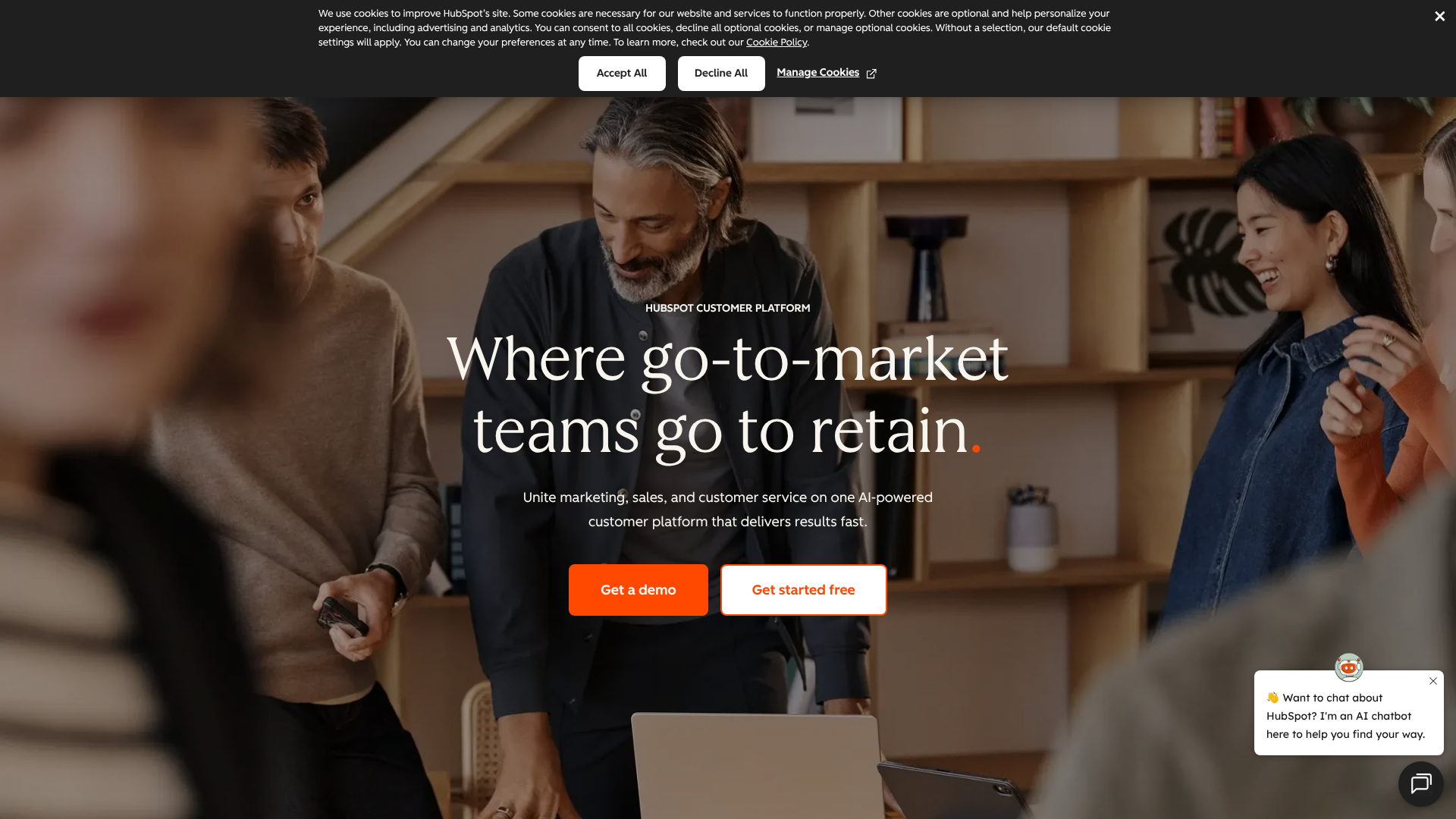
HubSpot CRM is renowned for its user-friendly interface and powerful free-forever plan. It’s an excellent starting point for small and medium-sized businesses that need to get organised quickly. The platform is part of a larger ecosystem that includes marketing, sales, and service hubs, allowing you to build a fully integrated tech stack as you grow.
Its strength lies in its simplicity and its ability to provide a comprehensive view of the customer journey, especially when combined with its marketing tools. The visual pipeline is intuitive, and contact records are rich with automatically logged data.
- Best for: Businesses of all sizes looking for an easy-to-use, all-in-one platform with a strong free offering.
- Key Feature: The unified platform that combines CRM with marketing automation and customer service tools.
2. Zoho CRM
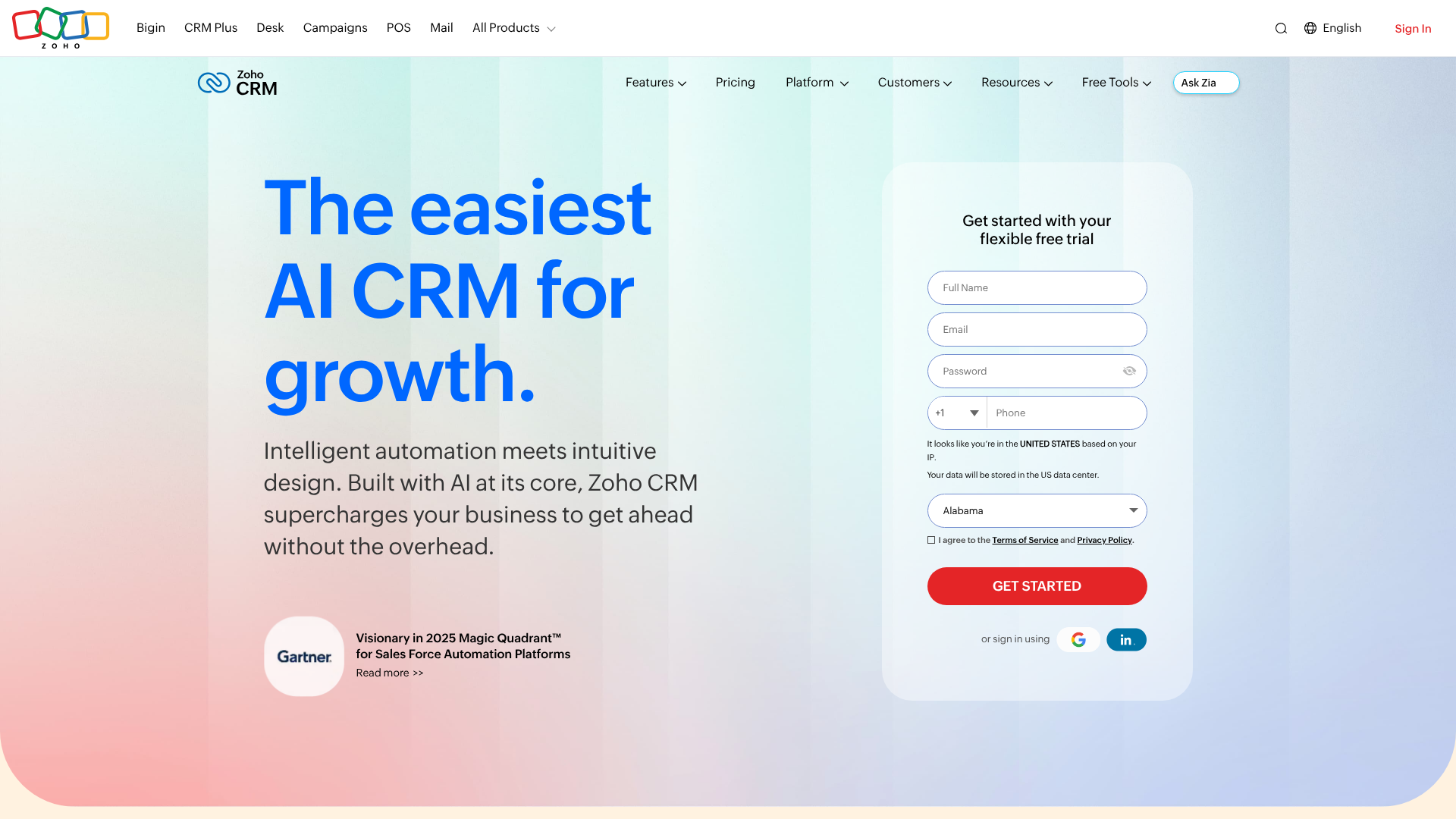
Zoho CRM is a feature-rich platform that offers incredible value, particularly for small to mid-sized businesses. It provides a wide array of customisation options, allowing you to tailor the CRM to your specific sales processes. Zoho also has a massive suite of other business apps that integrate tightly with the CRM.
It offers advanced features like AI-powered sales assistance, detailed analytics, and robust workflow automation. While the sheer number of features can have a steeper learning curve than HubSpot, it provides immense power for teams willing to invest the time.
- Best for: SMBs and mid-market companies that need a highly customisable and affordable CRM with extensive features.
- Key Feature: Its broad suite of integrated business applications (Zoho One) that can run an entire company.
Leading Sales Engagement Platforms
These platforms are best-in-class systems of action, designed to supercharge your sales team's productivity.
1. Outreach
Outreach is one of the market leaders in the sales engagement space, particularly for mid-market and enterprise companies. It offers powerful sequencing capabilities, AI-driven insights, and deep analytics to help sales teams optimise their entire workflow. Its features are designed to manage complex sales cycles and large teams.
Outreach provides managers with unparalleled visibility into team performance and helps enforce best practices across the entire sales floor. Its AI, Kaia, can even provide real-time assistance to reps during live calls.
- Best for: Enterprise and high-growth companies that need a powerful, data-driven platform to manage large sales teams.
- Key Feature: Advanced AI capabilities and in-depth analytics for optimising sales processes at scale.
2. Reply.io
Reply.io is a versatile multi-channel sales engagement platform that helps teams automate outreach across email, phone, LinkedIn, and WhatsApp. It's known for its strong email deliverability features, including an email warm-up tool, and its AI-powered sequence and message generation.
Reply.io also includes a B2B contact database, making it a great all-in-one solution for teams that need both data and engagement tools. Its JSON AI assistant helps write and improve sales copy, saving reps significant time.
- Best for: Sales teams focused on multi-channel outreach that want AI assistance and a built-in data source.
- Key Feature: Multi-channel sequencing that seamlessly combines automated and manual touchpoints across different platforms.
3. Apollo.io
Apollo.io combines a massive B2B contact database with sales engagement features, positioning itself as an all-in-one prospecting solution. You can find prospects, verify their contact information, and enrol them in outreach sequences all within a single platform.
This integration of data and action simplifies the tech stack for many sales teams, especially those in the SMB space. Its powerful search filters and data accuracy make it a go-to tool for building targeted lead lists, while its sequencing features ensure consistent follow-up.
- Best for: Prospecting-heavy teams that want a single platform for lead generation and sales engagement.
- Key Feature: The combination of a high-quality B2B database with robust sequencing and analytics tools.
A Look at Pricing: Cost Comparison
Comparing the cost of a sales engagement platform vs crm reveals different pricing philosophies. CRMs often act as a gateway product, with many providers offering free or very low-cost entry-level plans to get you into their ecosystem.
- CRM Pricing: Typically starts with a free tier (like HubSpot CRM) and scales up based on the number of users, contacts, and feature complexity. Paid plans can range from £15 to over £150 per user per month. The cost grows as you add more advanced features like marketing automation or service tools.
- SEP Pricing: These are specialised tools and rarely have a free plan. Pricing is almost always on a per-user, per-month basis and is generally higher than entry-level CRMs. You can expect to pay anywhere from £60 to £200 per user per month. The investment is justified by the direct impact on sales rep productivity and pipeline generation.
Ultimately, the return on investment (ROI) is the key metric. A CRM's ROI comes from improved organisation, data retention, and better forecasting. An SEP's ROI is more direct and measurable: increased meetings booked, higher rep efficiency, and accelerated sales cycles.
Pros and Cons: A Balanced View
No tool is perfect. Understanding the inherent strengths and weaknesses of each category can help you set the right expectations and build a more effective tech stack.
Advantages and Disadvantages of a CRM
Pros:
- Centralised Data: Creates a single source of truth for all customer information, preventing data loss and silos.
- Improved Visibility: Offers clear insight into pipeline health, team performance, and revenue forecasts.
- Long-Term Relationship Management: Provides the historical context needed to nurture customer relationships over time.
- Scalability: A good CRM provides the foundation to grow your sales, marketing, and service operations.
Cons:
- Requires Manual Data Entry: Without integration, CRMs rely on reps to diligently log activities, which is often inconsistent.
- Can Be Complex: Feature-rich CRMs can have a steep learning curve and require significant setup and training.
- Passive by Nature: A CRM stores information but doesn't actively help reps execute their daily tasks more efficiently.
Advantages and Disadvantages of a Sales Engagement Platform
Pros:
- Massive Productivity Boost: Automates repetitive tasks, allowing reps to focus more time on selling.
- Enforces Best Practices: Ensures a consistent and effective outreach process is followed by the entire team.
- Rich Engagement Data: Provides deep insights into what outreach strategies are actually working.
- Guided Selling: Helps reps prioritise their daily activities for maximum impact.
Cons:
- Not a Database: An SEP is not designed to be the primary storage for customer data; it needs a CRM to function properly.
- Can Be Expensive: The per-user cost is a significant investment, especially for smaller teams.
- Risk of Impersonal Automation: If not used thoughtfully, the automation features can lead to spammy or generic outreach.
Frequently Asked Questions
What is the difference between CRM and sales engagement?
The core difference is purpose. A CRM is a database designed to store and organise customer information, acting as a system of record. It helps you manage relationships and track deals over the long term. A sales engagement platform is an action-oriented tool designed to help salespeople execute their outreach (emails, calls, social touchpoints) more efficiently and effectively through automation and analytics.
In short, a CRM is for managing data, while an SEP is for driving action with that data.
What is the 2-2-2 rule in sales?
The 2-2-2 rule is a simple guideline for long-term follow-up with prospects who may not be ready to buy immediately. It suggests reaching out to them 2 days after your initial contact, then again 2 weeks later, and finally 2 months later. This cadence helps you stay top-of-mind without being overly aggressive. Sales engagement platforms are perfect for automating this rule, as you can build a sequence that automatically schedules these follow-up tasks for you.
What is the best sales engagement platform?
The "best" platform depends on your team's size, budget, and specific needs. Outreach is often considered the leader for enterprise companies due to its powerful analytics and AI features. Reply.io is a strong contender for teams focused on multi-channel outreach and AI-assisted selling. For teams that want an all-in-one solution with a built-in B2B database, Apollo.io is an excellent choice.
It's best to demo a few options to see which workflow fits your team best.
What are the 4 types of CRM?
The four main types of CRM systems are Operational, Analytical, Collaborative, and Strategic. Operational CRMs focus on automating business processes in sales, marketing, and service. Analytical CRMs are centred on analysing customer data to provide business insights. Collaborative CRMs focus on sharing information across different departments to improve the customer experience.
Strategic CRMs are built around a customer-centric approach, aiming to win and retain high-value customers.
Final Thoughts: Building a Cohesive Sales Tech Stack
Ultimately, the conversation shouldn't be sales engagement platform vs crm. It should be about how they work in concert. A CRM without an SEP is a library with no one reading the books. An SEP without a CRM is a powerful engine with no fuel.
You need both to build a modern, high-performing sales machine.
If you're just starting, begin with a solid CRM like HubSpot CRM to get your data organised. It provides the foundation you need for all future growth. Once your data is in order and you need to scale your outreach and improve rep productivity, it's time to invest in a powerful SEP like Outreach or Reply.io.
By integrating these two systems, you empower your sales team with both the information they need and the tools to act on it effectively. This creates a seamless workflow that eliminates administrative drag, provides full visibility into performance, and ultimately drives more revenue.