



Digital Signature vs eSignature: Which to Use for Your Business?
Understanding the difference between a digital signature vs esignature is crucial for any modern business. While people often use the terms interchangeably, they represent different levels of security and verification. Choosing the wrong one can expose your agreements to legal risks and security vulnerabilities, while the right one can streamline your operations and protect your most critical documents.
- In a Nutshell
- The Core Difference: eSignature vs Digital Signature Explained
- Digital Signature Comparison: A Side-by-Side Look
- Key Features and Benefits of Each Type
- How to Choose the Right Option for Your Needs
- Top eSignature and Digital Signature Providers
- 1. PandaDoc: Best for All-in-One Document Workflows
- 2. eSignly: A Focused and Secure Signing Solution
- The Role of CRMs: HubSpot and Zoho
- Understanding Pricing and Cost Structures
- Frequently Asked Questions (FAQ)
- Is eSign the same as digital signature?
- Is DocuSign a digital signature or electronic signature?
- How do I create a digital signature?
- Why is an eSignature not valid?
- Conclusion: Making the Final Decision
An electronic signature, or esignature, is like a digital equivalent of a handwritten signature, signifying intent. A digital signature, however, is a specific, highly secure type of esignature that uses encryption to create a tamper-evident seal. This guide breaks down the key distinctions, helping you decide which is appropriate for your specific business needs, from simple HR forms to multi-million-pound contracts.
In a Nutshell
- eSignature is a Broad Legal Term: An electronic signature is a broad category that includes any electronic process signifying acceptance or agreement. This can be as simple as typing your name, clicking an "I Agree" button, or drawing your signature on a tablet.
- Digital Signature is a Specific Technology: A digital signature is a specific, highly secure type of eSignature. It uses a certificate-based digital ID and public key infrastructure (PKI) to encrypt the document, verify the signer's identity, and ensure the document hasn't been altered.
- It's All About Risk and Regulation: Use standard eSignatures for everyday, low-risk agreements like NDAs, sales quotes, and internal HR documents. You should use digital signatures for high-value transactions, legally mandated filings, and documents in highly regulated industries like finance or pharmaceuticals.
The Core Difference: eSignature vs Digital Signature Explained

At first glance, both options seem to accomplish the same goal: signing a document without a physical pen. However, the underlying mechanisms and the level of assurance they provide are fundamentally different. Think of it like this: an eSignature is a simple agreement, while a digital signature is a notarised, sealed, and verified agreement.
What is an Electronic Signature (eSignature)?
An electronic signature is a legal concept defined as an electronic sound, symbol, or process, attached to or logically associated with a contract or other record and executed or adopted by a person with the intent to sign the record. This broad definition covers a wide range of actions that are now commonplace in business.
Common examples of eSignatures include:
Typing your name at the bottom of an email or an electronic form. * A scanned image of your handwritten signature pasted into a Word document. * Drawing your signature with a mouse or stylus on a device. * Clicking an "Accept" or "I Agree" button on a website's terms of service.
Using a dedicated eSignature platform to send and sign documents.
Their legal validity is well-established in many parts of the world. In the United Kingdom, the Electronic Communications Act 2000 and subsequent case law confirm their legality. Similarly, the eIDAS Regulation governs their use across the European Union, and the ESIGN Act does so in the United States. The primary function of an eSignature is to capture the signer's intent to be bound by the terms of the document.
What is a Digital Signature?
A digital signature is not a legal term but a specific technology used to implement a highly secure type of electronic signature. It relies on a mathematical scheme to demonstrate the authenticity of a digital message or document. It provides a higher level of assurance about the signer's identity and the integrity of the signed document.
The process works using Public Key Infrastructure (PKI). Here’s a simplified breakdown:
- Creating a Hash: When you sign a document with a digital signature, the software creates a unique, fixed-length string of characters called a "hash" or a "message digest". This acts as a digital fingerprint of the document.
- Encryption: The hash is then encrypted using your private key. This private key is a unique, secure digital code that only you have access to. The encrypted hash is the digital signature.
- Attachment: This signature is attached to the document, along with your public key. The public key is mathematically linked to your private key but can be shared with anyone.
- Verification: When the recipient opens the document, their software uses your public key to decrypt the signature, revealing the original hash. The software also independently calculates a new hash of the document. If the two hashes match, it confirms two things: the signature is valid (it was created with your private key), and the document has not been altered since it was signed. If even a single comma is changed, the hashes won't match, and the signature will be shown as invalid.
This process is underpinned by a digital certificate, which is issued by a trusted third-party Certificate Authority (CA). The CA verifies your identity before issuing the certificate, which links your identity to your private/public key pair. This is what makes a digital signature so secure and verifiable.
Digital Signature Comparison: A Side-by-Side Look
To make the esignature vs digital signature distinction clearer, here’s a direct comparison of their key attributes. This table highlights how a digital signature builds upon the foundation of an eSignature with advanced security features.
| Feature | Electronic Signature (eSignature) | Digital Signature |
|---|---|---|
| Primary Purpose | To capture intent to sign and create a legally binding agreement. | To secure a document, verify the signer's identity, and ensure integrity. |
| Underlying Technology | Varies widely; can be as simple as an image or typed name. | Standardised Public Key Infrastructure (PKI) with encryption. |
| Security Level | Varies from low to high, depending on the provider and method used. | Consistently very high, based on cryptographic standards. |
| Identity Authentication | Often based on email verification, IP address, or a simple login. | Verified by a trusted third-party Certificate Authority (CA). |
| Tamper Evidence | Limited or none. It can be difficult to prove if a document was altered. | Built-in. The signature is automatically invalidated if the document is changed. |
| Legal Standing | Legally recognised and binding for most commercial and personal contracts. | Legally binding with the highest level of legal weight and non-repudiation. |
| Common Use Cases | NDAs, HR forms, sales quotes, service agreements, consent forms. | Government filings, legal documents, high-value financial contracts, regulated industries. |
Key Features and Benefits of Each Type
Choosing between an eSignature and a digital signature depends entirely on your specific needs. Each offers a distinct set of benefits tailored to different scenarios, from fast-moving sales cycles to highly regulated compliance environments.
Advantages of Electronic Signatures
For the vast majority of day-to-day business agreements, a standard electronic signature is not only sufficient but also preferable due to its simplicity and speed. The primary benefits revolve around efficiency and user experience.
- Ease of Use and Speed: The biggest advantage of eSignatures is their convenience. Signers can review and sign documents in minutes from any device, without needing special software or technical knowledge. This accelerates business processes like sales cycles, employee onboarding, and client agreements.
- Cost-Effectiveness: Implementing an eSignature solution is generally more affordable than a full digital signature framework. Many platforms offer flexible pricing, including free tiers for occasional users and scalable plans for growing businesses, making the technology accessible to everyone.
- Wide Acceptance: Thanks to laws like the UK's Electronic Communications Act 2000, eSignatures are legally recognised and accepted for a wide array of business contracts. This widespread acceptance means you can confidently use them for most of your document-signing needs without worrying about enforceability.
Advantages of Digital Signatures
When security, authenticity, and non-repudiation are paramount, the advanced features of a digital signature are indispensable. These benefits provide peace of mind for your most critical and high-stakes documents.
- Superior Security: The cryptographic nature of digital signatures makes them incredibly secure. The PKI framework ensures that the document is protected from tampering from the moment it's signed. This is essential for sensitive information and high-value transactions.
- Enhanced Authenticity and Non-Repudiation: Because a digital signature is tied to a verified digital certificate, it provides strong proof of the signer's identity. This creates what is known in legal terms as "non-repudiation"—the signer cannot easily deny having signed the document. This is a much stronger form of authentication than a simple email verification.
- Document Integrity: The tamper-evident seal is perhaps the most powerful feature. Any modification to the document after signing, no matter how small, will break the signature's validity. This guarantees that the version of the document you have is the exact version that was signed, which is critical for legal and compliance audits.
How to Choose the Right Option for Your Needs

Making the right choice in the digital signature vs esignature debate comes down to a simple risk assessment. You need to weigh the convenience and cost of an eSignature against the enhanced security and assurance of a digital signature. Here’s a practical guide to help you decide.
When to Use an eSignature
A standard eSignature is the best choice for high-volume, low-to-moderate risk documents where speed and efficiency are the top priorities. If a dispute is unlikely or the financial/legal consequences of a dispute are low, an eSignature is perfectly adequate.
Consider using an eSignature for:
- Sales and Marketing Documents: Sales quotes, proposals, and basic marketing agreements. Tools like Better Proposals and Proposify integrate eSignatures to help close deals faster.
- Human Resources Paperwork: Employment offer letters, onboarding forms, policy acknowledgements, and annual performance reviews.
- Internal Approvals: Purchase orders, expense reports, and internal project sign-offs.
- Common Client Agreements: Non-disclosure agreements (NDAs), simple service contracts, and project change orders.
- Consumer Agreements: Account opening forms, terms of service agreements, and consent forms.
For these scenarios, the audit trail provided by most eSignature platforms (which tracks IP addresses, timestamps, and email correspondence) is sufficient evidence of a binding agreement.
When You Absolutely Need a Digital Signature
A digital signature is non-negotiable when you are dealing with high-risk, high-value, or highly regulated documents. If you need ironclad proof of who signed, when they signed, and that the document is unchanged, you need the security of a digital signature.
Mandatory use cases for digital signatures include:
- Highly Regulated Industries: In sectors like pharmaceuticals (FDA 21 CFR Part 11), healthcare, and life sciences, digital signatures are often required to ensure data integrity and compliance.
- Government Transactions: Filing documents with government bodies, such as tax returns, corporate filings, or government tenders, frequently requires a digital signature.
- High-Value Financial Documents: Loan agreements, mortgage applications, insurance contracts, and large-scale procurement deals where the financial stakes are high.
- Legal and Real Estate Documents: Court filings, legal settlements, property deeds, and wills often require the heightened security and non-repudiation of a digital signature.
- International Business: When conducting business across borders, particularly within the EU, a Qualified Electronic Signature (QES)—a specific type of digital signature under eIDAS—may be required to have the same legal standing as a handwritten signature.
Pro Tip: If you're unsure, consider the potential cost of a legal challenge. If a contract dispute could cost your business tens of thousands of pounds or more, the small additional cost and effort of using a digital signature is a worthwhile investment in risk management.
Top eSignature and Digital Signature Providers
Once you know which type of signature you need, the next step is choosing a provider. The market is filled with excellent options, from all-in-one document management platforms to focused, high-security specialists.
1. PandaDoc: Best for All-in-One Document Workflows
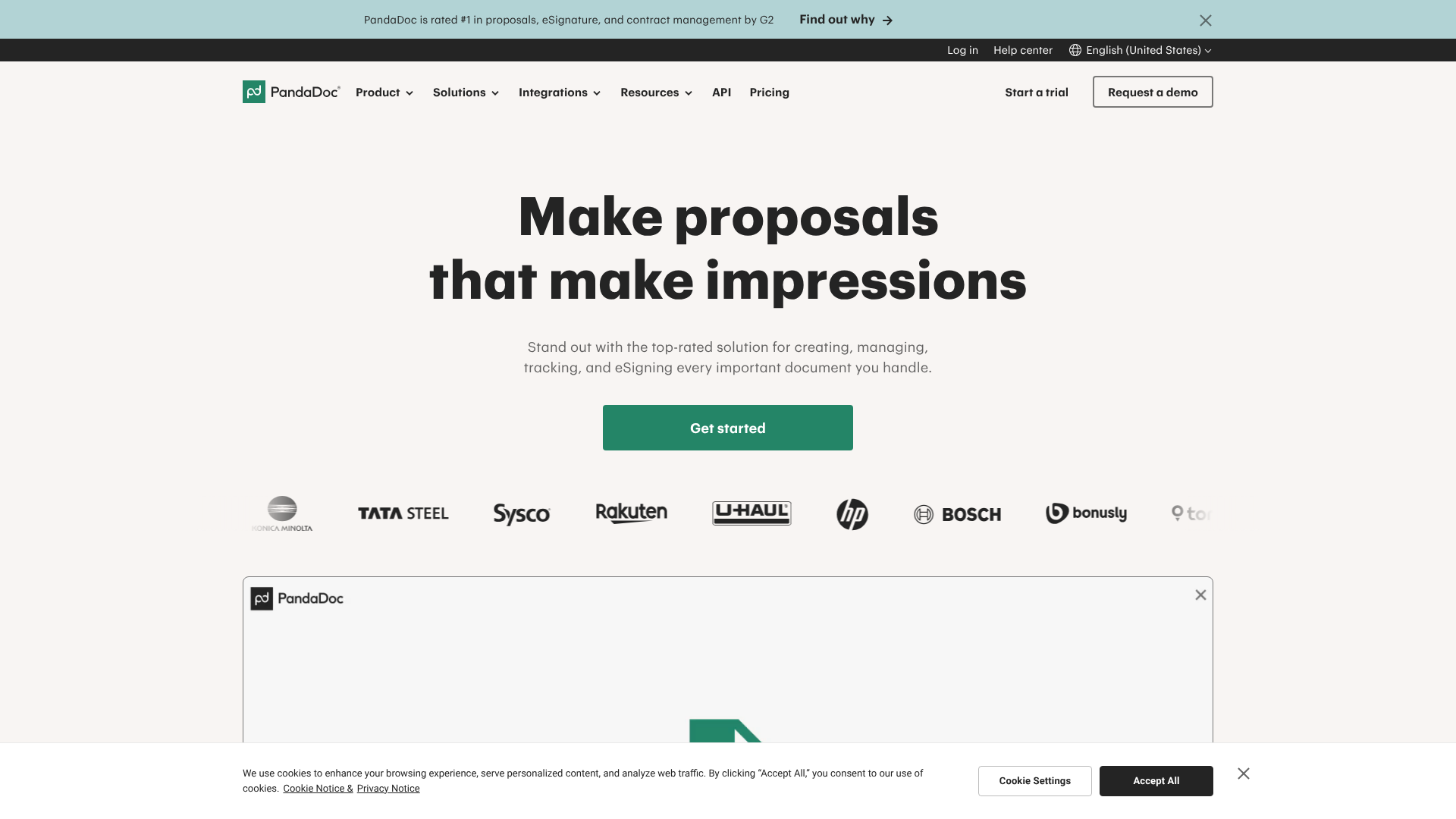
PandaDoc is more than just an eSignature tool; it's a comprehensive platform for creating, sending, tracking, and signing documents. It's particularly popular with sales, marketing, and success teams because it streamlines the entire document lifecycle, from proposal to final signature.
The platform provides legally binding eSignatures complete with a detailed certificate of completion for every document. This certificate acts as an audit trail, capturing signer information, IP addresses, and timestamps. While it focuses on providing robust eSignatures, its security measures are suitable for the vast majority of business use cases.
Pros
- All-in-One Functionality: Create beautiful proposals, contracts, and quotes with a powerful document editor.
- Advanced Analytics: Get insights into when your documents are opened, viewed, and completed.
- Seamless Integrations: Connects with dozens of popular CRM and payment tools, including HubSpot, Zoho, and Salesforce.
Cons
- Can Be Overkill: If you only need a simple signing function, the extra features might be unnecessary.
- Pricing: The more advanced features are reserved for higher-tier plans.
If you need a tool that handles the entire document lifecycle from proposal to signature, PandaDoc is an excellent choice.
2. eSignly: A Focused and Secure Signing Solution
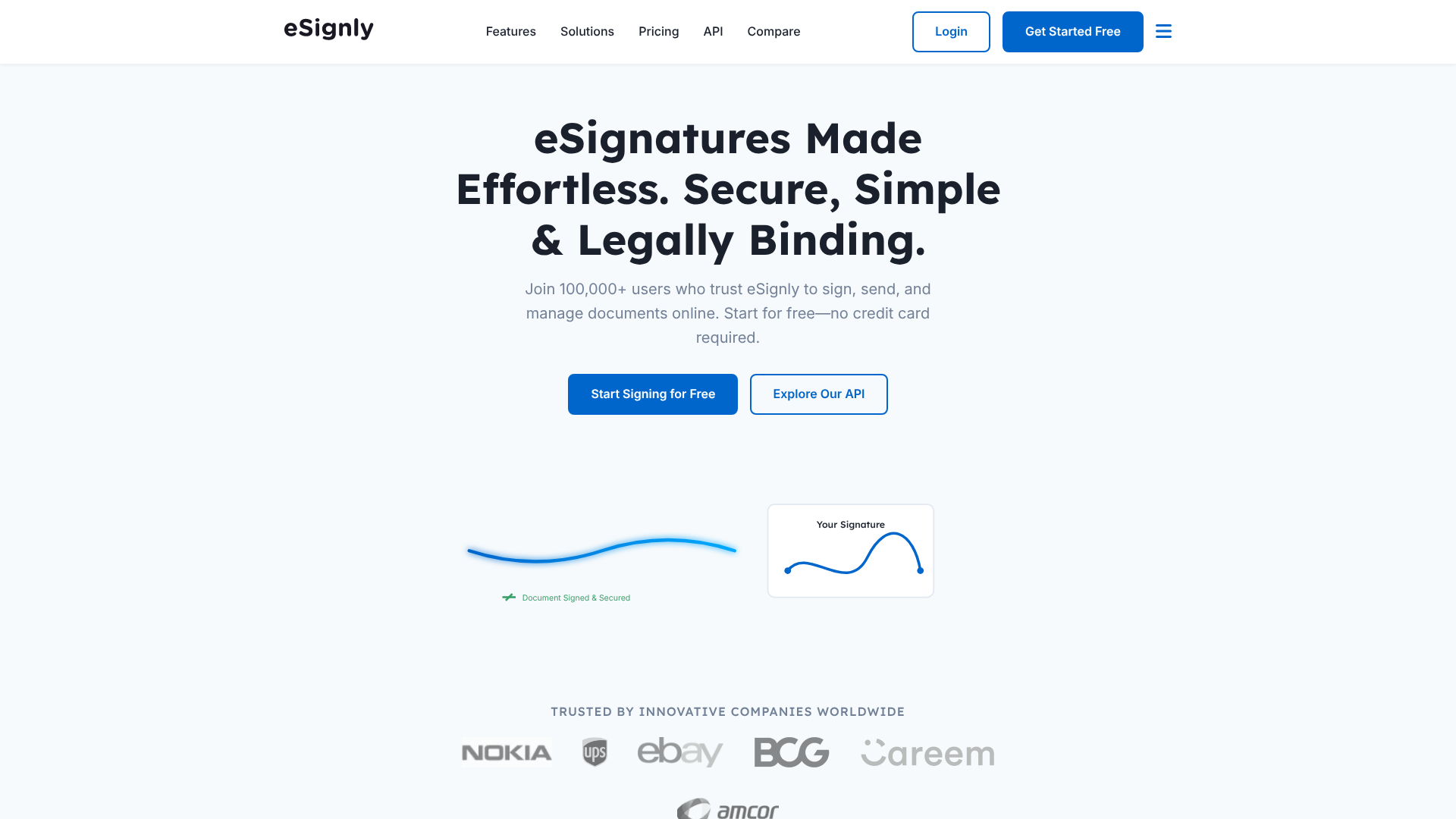
For businesses that need a straightforward, secure, and reliable signing solution without the extra bells and whistles of a full document management system, eSignly is a strong contender. It focuses on the core task of getting documents signed quickly and securely.
eSignly offers a user-friendly interface that makes it easy to upload a document, add signature fields, and send it to recipients. It provides all the necessary security and compliance features, including detailed audit trails and encryption, to ensure your eSignatures are legally binding and defensible.
Pros
- User-Friendly: The platform is intuitive and easy to navigate for both senders and signers.
- Strong Security: Offers robust security features and compliance with major global regulations.
- Affordable: Often provides a competitive pricing structure for businesses focused purely on signing.
Cons
- Limited Features: Lacks the advanced document creation and analytics tools found in platforms like PandaDoc.
- Fewer Integrations: May not connect with as many third-party applications.
For businesses looking for a straightforward and secure signing solution, eSignly offers a reliable platform.
The Role of CRMs: HubSpot and Zoho
It's worth noting that you might already have access to eSignature functionality through your existing software stack. Many modern CRM platforms have either built-in signing features or deep integrations with leading eSignature providers.
For example, HubSpot CRM includes a native eSignature tool in its Sales Hub Professional and Enterprise tiers, allowing users to add signature fields directly to quotes. Similarly, Zoho CRM integrates with Zoho Sign, providing a seamless way to manage contracts within your sales workflow. Before investing in a new standalone tool, check what capabilities your current CRM offers.
Understanding Pricing and Cost Structures
The cost of implementing a signing solution can vary significantly based on the type of signature and the features you need. Generally, standard eSignature platforms are more accessible, while solutions offering true digital signatures come at a premium.
Typical eSignature Pricing
Most eSignature providers use a software-as-a-service (SaaS) model, typically charging a monthly or annual fee per user. Pricing tiers are common and are usually based on:
- Number of Users: How many people in your organisation need to send documents for signature.
- Number of Envelopes: An "envelope" is a container for documents sent to a recipient for signing. Free or basic plans may limit you to a few envelopes per month.
- Advanced Features: Features like custom branding, advanced authentication (e.g., SMS verification), and integrations often require a higher-tier plan.
Many providers, including PandaDoc, offer a free tier for very light usage, with paid plans starting from around £15-£30 per user per month.
Typical Digital Signature Pricing
Digital signature pricing is often more complex and expensive. This is because it involves the cost of purchasing and maintaining a digital certificate from a Certificate Authority (CA). These certificates must be renewed periodically, typically every one to three years.
The cost can be structured in a few ways:
- Per Signature: Some providers may charge for each digital signature applied.
- Bundled in Enterprise Plans: Many leading eSignature platforms offer digital signature capabilities as part of their premium or enterprise-level packages, which can be significantly more expensive.
- Direct from a CA: You can also purchase digital certificates directly from a CA, but you will still need software to apply them to documents.
Cost-Benefit Analysis
While digital signatures are more expensive, their cost is easily justified by the risk they mitigate. The potential financial and reputational damage from a fraudulent or disputed high-value contract far exceeds the cost of a digital signature certificate. For everyday agreements, the affordability and efficiency of a standard eSignature provide a much better return on investment.
Frequently Asked Questions (FAQ)
Navigating the nuances of electronic and digital signatures can bring up some common questions. Here are clear answers to some of the most frequent queries.
Is eSign the same as digital signature?
No, they are not the same. "eSign" or "eSignature" is a broad legal term for any electronic method of showing intent to agree to something. A digital signature is a specific, technology-based method that uses cryptography to provide a high level of security and identity verification. Think of it this way: all digital signatures are a type of eSignature, but not all eSignatures are digital signatures.
Is DocuSign a digital signature or electronic signature?
DocuSign is primarily an electronic signature platform. The vast majority of its users leverage its eSignature capabilities for standard business contracts. However, DocuSign does offer digital signature solutions that comply with standards like eIDAS in the EU and other specific industry regulations. These are typically part of their more advanced or enterprise-level offerings and are used for transactions requiring a higher level of security and identity assurance.
How do I create a digital signature?
Creating a digital signature is a more involved process than creating an eSignature. First, you must obtain a digital certificate from a trusted Certificate Authority (CA) or a Trust Service Provider (TSP). This involves an identity verification process. Once you have your certificate (which contains your private and public keys), you can use software that supports digital signatures (like Adobe Acrobat Pro or a specialised platform) to apply your signature to a document.
The software uses your certificate and private key to create the encrypted signature.
Why is an eSignature not valid?
While legally recognised, an eSignature can be challenged and potentially deemed invalid in court for several reasons. The most common reasons include a lack of clear intent from the signer, insufficient proof of the signer's identity (weak authentication), or evidence that the document was altered after signing. Additionally, if the signing process doesn't comply with specific industry or regional laws (like consumer consent requirements), its validity could be questioned. This is why using a reputable platform that provides a strong audit trail is so important.
Conclusion: Making the Final Decision
Choosing between a digital signature and an esignature doesn't have to be complicated. The decision hinges on the nature of the document you're signing. For the bulk of your business operations—sales agreements, HR documents, and everyday contracts—a secure, user-friendly electronic signature solution is the most efficient and cost-effective choice.
For those rare but critical transactions that involve high financial value, strict regulatory oversight, or significant legal risk, the superior security and non-repudiation of a digital signature are essential. It provides an unparalleled level of trust and integrity that is non-negotiable in high-stakes scenarios.
By understanding this fundamental difference, you can implement a document workflow that is both efficient for your team and secure for your business. For most business needs, a versatile platform like PandaDoc provides the perfect balance of ease-of-use and security. If your priority is a dedicated signing tool, eSignly is another strong contender worth exploring.