

How to Do Semrush Competitive Analysis: A Guide for Marketers
Understanding your competition is fundamental to building a successful digital marketing strategy. Performing a thorough semrush competitive analysis allows you to see exactly what your rivals are doing right, where they are failing, and how you can carve out a bigger piece of the market for yourself. Instead of guessing, you can use hard data to make informed decisions about your SEO, content, and advertising efforts.
- What You'll Learn
- What is Semrush Competitive Analysis?
- The Core Semrush Tools for Competitor Research
- A Step-by-Step Guide to Competitive Analysis with Semrush
- Step 1: Identify Your True Competitors
- Step 2: Benchmark Overall Performance with Domain Overview
- Step 3: Analyse Their Traffic Acquisition Strategy
- Step 4: Uncover Their SEO Secrets with Organic Research
- Step 5: Find Content Opportunities with the Keyword Gap Tool
- Step 6: Reverse-Engineer Their Link Building with Backlink Gap
- Step 7: Spy on Their Paid Advertising Campaigns
- Semrush Pricing and Plans
- The Pros and Cons of Using Semrush for Competitor Research
- Frequently Asked Questions
- Does Semrush do competitor analysis?
- Is Semrush a Russian company?
- What are the 4 P's of competitive analysis?
- What are the 5 steps of a competitive analysis?
- Which tool is best for competitor analysis?
- Final Thoughts
Semrush provides a powerful suite of tools designed specifically for this purpose. It moves beyond simple keyword tracking to offer a panoramic view of your competitor's entire digital footprint. This guide will walk you through the exact steps to use these tools effectively, turning raw data into an actionable strategy that drives growth.
What You'll Learn
- Identify Your True Competitors: Learn how to use Semrush to discover not just your known rivals, but also the emerging players competing for the same audience attention.
- Analyse Traffic and Audience: Uncover where your competitors' traffic comes from and how their audience overlaps with yours, revealing potential partnership or advertising opportunities.
- Find Actionable Keyword Gaps: Discover valuable keywords your competitors rank for that you're currently missing, providing a clear roadmap for your content strategy.
- Reverse-Engineer Backlink Strategies: See which authoritative websites are linking to your competitors but not to you, giving you a targeted list for your own link-building campaigns.
- Deconstruct Paid Ad Campaigns: Get insights into your competitors' advertising strategy, including the keywords they bid on and the ad copy that converts for them.
What is Semrush Competitive Analysis?
A Semrush competitive analysis is the process of using Semrush's integrated toolkit to research, monitor, and analyse the digital marketing strategies of your business rivals. It's not just about looking at one metric; it's about building a complete picture of their online presence. This includes their search engine optimisation (SEO), pay-per-click (PPC) advertising, content marketing, and backlink profiles.
The primary goal is to gain a competitive advantage. By understanding what works for others in your niche, you can replicate their successes, avoid their mistakes, and identify untapped opportunities. For example, you might discover a high-traffic keyword they rank for that you haven't targeted, or a popular blog format that you could adapt for your own audience.
This process provides answers to critical business questions. Who are your main online competitors. What keywords are driving traffic to their site. Which websites link to them.
How much do they spend on advertising. Answering these questions with data from semrush analysis tools transforms your marketing from reactive to proactive.

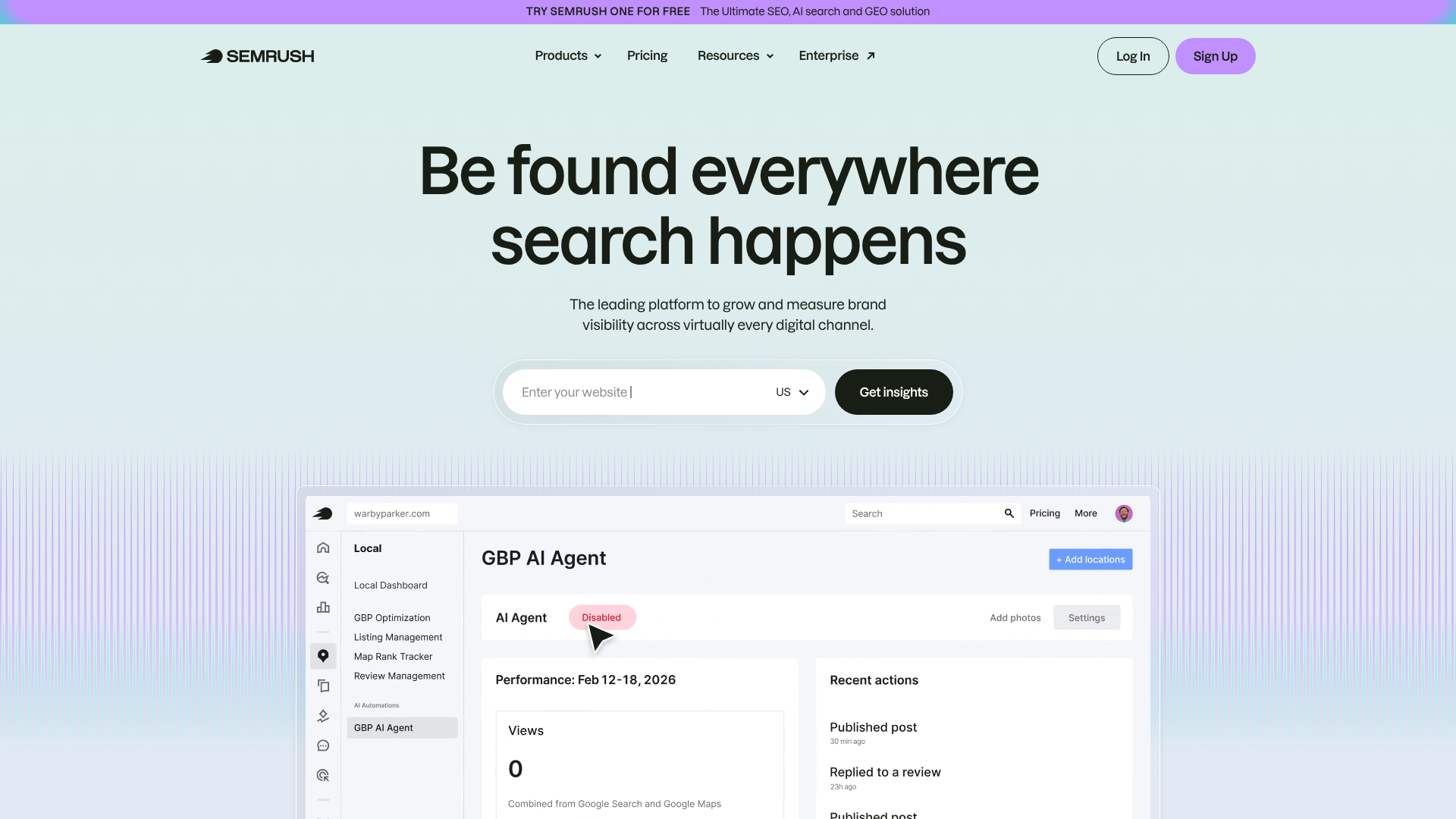
The Core Semrush Tools for Competitor Research
Semrush isn't a single tool but a collection of specialised reports and features. Knowing which ones to use is the first step in an effective semrush competitor research workflow. Here are the essential tools you'll be working with.
Domain Overview
Think of the Domain Overview as your mission control centre. It’s the perfect starting point for analysing any competitor. You simply enter their domain name, and Semrush provides a high-level dashboard summarising their entire online presence.
Key metrics you'll see here include the Authority Score (Semrush's metric for a domain's overall quality and SEO performance), estimated monthly organic and paid traffic, and the total number of backlinks. It also shows you their top organic keywords, main organic competitors, and a preview of their ad copy. This snapshot is invaluable for quickly assessing a competitor's digital strength.
Traffic Analytics
While Domain Overview gives you SEO-based estimates, Traffic Analytics provides a broader view of a website's traffic. This tool estimates total monthly visits and offers a breakdown of traffic sources: Direct, Referral, Search, Social, and Paid. This is crucial for understanding a competitor's complete marketing mix.
For instance, if a competitor gets 60% of their traffic from social media, you know their social strategy is a key strength to analyse. The tool also features an Audience Overlap report, which shows you which other websites your competitor's audience frequently visits. This can help you find new competitors or potential advertising partners.
Organic Research
The Organic Research tool is where you dig deep into a competitor's SEO strategy. It shows you every single keyword they rank for in Google's top 100 results. You can see their ranking positions, the estimated traffic each keyword brings, and the specific URL that ranks.
This is incredibly powerful for content planning. You can filter to see their top-performing pages and analyse what makes them successful. Is it a long-form guide. A free tool.
A comparison page. This tool helps you deconstruct their content strategy piece by piece.
Keyword Gap
The Keyword Gap tool is one of the most actionable features for competitive analysis. It allows you to compare your domain's keyword profile against up to four competitors simultaneously. The tool then categorises the keywords into several groups.
These categories include 'Untapped' (keywords competitors rank for, but you don't), 'Weak' (keywords where your competitors rank higher than you), and 'Unique' (keywords only you rank for). Focusing on the 'Untapped' and 'Weak' categories gives you a prioritised list of keywords to target to close the gap with your rivals.
Backlink Analytics & Backlink Gap
Backlinks remain a critical ranking factor, and these tools let you inspect any competitor's link profile. Backlink Analytics shows you every website linking to your competitor, the anchor text used, and the authority of the linking domain. You can use this to understand their link-building strategy.
The Backlink Gap tool makes this even more practical. Similar to the Keyword Gap, it compares your backlink profile to your competitors' and shows you all the domains that link to them but not to you. This provides a ready-made list of high-value prospects for your own outreach campaigns.
A Step-by-Step Guide to Competitive Analysis with Semrush
Now that you're familiar with the key tools, let's walk through a practical, step-by-step process for conducting a comprehensive competitive analysis with semrush. Following these steps will ensure you gather the right data and translate it into actionable insights.
Step 1: Identify Your True Competitors
You probably know your main business rivals, but your online competitors might be different. They could be blogs, affiliates, or publications competing for the same search terms. Start by entering your own domain into the Organic Research tool and navigating to the 'Competitors' tab.
Semrush will generate a list of domains that rank for many of the same keywords as you. This list is your starting point. For an even deeper look, use the Market Explorer tool. It analyses audience overlap to show you the key players in your industry's online landscape, visualising them in a 'Growth Quadrant' to identify established leaders and emerging players.
Step 2: Benchmark Overall Performance with Domain Overview
Once you have a list of 3-5 key competitors, run each one through the Domain Overview tool. Create a simple spreadsheet to track core metrics for each competitor alongside your own: Authority Score, estimated organic traffic, number of referring domains, and paid traffic volume.
This initial benchmark gives you a clear understanding of where you stand. Are you ahead or behind? Is a competitor particularly strong in paid search but weak in organic? This high-level view helps you decide where to focus your deeper analysis.
Step 3: Analyse Their Traffic Acquisition Strategy
Next, use the Traffic Analytics tool for each competitor. Look at the 'Traffic Journey' chart to see where their visitors come from (search, social, direct, etc.) and where they go next. This reveals their primary marketing channels.
If a competitor has a high percentage of referral traffic, dig into the 'Referring Sites' report to see who is sending them visitors. If they have strong social traffic, check which platforms are most effective. This analysis helps you understand their customer acquisition model and identify channels you might be underutilising.
Pro Tip: Use the 'Audience Overlap' feature within Traffic Analytics to find websites that share a significant audience with your competitors. These sites can be excellent targets for guest posting, partnerships, or display advertising campaigns.
Step 4: Uncover Their SEO Secrets with Organic Research
Dive into the Organic Research tool for each competitor. Use the 'Positions' report and filter for keywords in the top 10 positions. This shows you their most valuable, traffic-driving keywords. Ask yourself: are these informational keywords (like "how to…") or commercial keywords (like "best software for…")?
Then, switch to the 'Pages' tab. This lists their top-performing organic pages. Analyse the content on these pages. What format are they using.
How in-depth is the content. What is the user intent they are satisfying. This reverse-engineering is the key to creating content that can outperform theirs.
Step 5: Find Content Opportunities with the Keyword Gap Tool
This is where you find your content roadmap. Open the Keyword Gap tool, enter your domain and up to four competitors. The tool will generate a list of thousands of keywords, but the magic is in the filters.
Start by selecting the 'Untapped' filter. This shows you keywords your competitors rank for, but you have zero visibility for. Further refine this list by filtering for keywords with a reasonable search volume and a lower Keyword Difficulty (KD%) score. You've now created a prioritised list of content topics with a high chance of success.
Step 6: Reverse-Engineer Their Link Building with Backlink Gap
Content and SEO are powered by authority, which is largely built through backlinks. Use the Backlink Gap tool to compare your domain against the same set of competitors. The tool will automatically generate a list of domains that link to one or more of your rivals but not to you.
Export this list and sort it by Authority Score. This gives you a highly-qualified list of websites to target for your own link-building efforts. Since these sites are already linking to your competitors, they have a proven interest in your niche, which increases your chances of successfully acquiring a link.
Step 7: Spy on Their Paid Advertising Campaigns
If your competitors are running paid ads, the Advertising Research tool is a goldmine. Enter a competitor's domain to see the keywords they are bidding on, their estimated monthly PPC budget, and the exact ad copy they are running.
Pay close attention to their 'Ad History'. This shows you how long they've been running certain ads. Ads that have been active for months are almost certainly profitable. Analyse the headlines, descriptions, and calls-to-action in these ads to get inspiration for your own campaigns.
Semrush Pricing and Plans

Understanding the cost is an important part of choosing the right tools. Semrush offers several pricing tiers, each designed for different types of users, from freelancers to large agencies. The features available for competitive analysis vary between plans, so it's important to choose the one that fits your needs.
It's important to note that pricing for software like this can change. You should always visit the official Semrush website for the most current and detailed pricing information. Generally, the plans are structured as follows:
| Feature | Pro Plan | Guru Plan | Business Plan |
|---|---|---|---|
| Best For | Freelancers & Startups | SMBs & Marketing Agencies | Large Agencies & Enterprises |
| Projects | 5 | 15 | 40 |
| Keywords to Track | 500 | 1,500 | 5,000 |
| Results Per Report | 10,000 | 30,000 | 50,000 |
| Content Marketing Platform | Limited | Full Access | Full Access |
| Historical Data | No | Yes | Yes |
| Traffic Analytics | Add-on | Add-on | Add-on |
For serious semrush competitor research, the Guru plan is often the recommended starting point. Its inclusion of historical data allows you to spot trends over time, and the higher limits on reports and tracked keywords are necessary for in-depth analysis. The Traffic Analytics tool, which provides website traffic estimates beyond organic search, is typically an add-on for all plans but is essential for a complete competitive overview.
The Pros and Cons of Using Semrush for Competitor Research
No tool is perfect, and it's important to have a balanced view. Semrush is an exceptionally powerful platform for competitive analysis, but it's helpful to understand its strengths and weaknesses.
Pros
- All-in-One Toolkit: Semrush combines dozens of tools into one interface. You can analyse SEO, PPC, content, social media, and market trends without needing to switch between multiple subscriptions.
- Massive Data Sets: The platform crawls an enormous amount of data, including billions of keywords and hundreds of millions of domains, providing a comprehensive view of the digital landscape.
- Excellent Gap Analysis: The Keyword Gap and Backlink Gap tools are standout features. They provide immediately actionable lists of opportunities that can directly inform your marketing strategy.
- User-Friendly Interface: For the sheer volume of data it presents, Semrush does an excellent job of making it accessible through clear dashboards, charts, and filters.
Cons
- Cost: Semrush is a professional-grade tool, and its pricing reflects that. It can be a significant investment for solo entrepreneurs or very small businesses.
- Learning Curve: While the basics are easy to grasp, mastering the advanced features and custom reports can take time and practice. There is a definite learning curve to get the maximum value from the platform.
- Data are Estimates: Like all third-party analysis tools, the traffic and keyword data are estimates, not exact figures from Google Analytics. While they are generally reliable for trends and comparisons, they shouldn't be treated as absolute truth.
Pro Tip: When using Semrush data, focus on trends and relative comparisons rather than absolute numbers. For example, it's more important that Competitor A has twice the traffic of Competitor B than knowing their exact visitor counts.
Frequently Asked Questions
Here are answers to some common questions about Semrush and the process of competitive analysis.
Does Semrush do competitor analysis?
Yes, absolutely. Competitor analysis is one of the core functions and primary strengths of the Semrush platform. Its entire suite of tools—from Domain Overview and Organic Research to Keyword Gap and Advertising Research—is designed to give you deep insights into your competitors' digital marketing strategies.
Is Semrush a Russian company?
No, Semrush is not a Russian company. It is a publicly traded American company with its headquarters in Boston, Massachusetts, USA. The company was founded in 2008 by Oleg Shchegolev and Dmitri Melnikov, who are of Russian origin, but the company itself is incorporated and based in the United States.
What are the 4 P's of competitive analysis?
The 4 P's are a classic marketing framework used to analyse a company's strategy. While traditionally used for physical goods, they can be adapted for digital competitive analysis:
- Product: What does the competitor offer. In a digital context, this is their website, content, tools, or services.
You analyse the quality, features, and user experience. 2. Price: What is their pricing model. For SaaS, this is their subscription tiers.
For e-commerce, it's their product prices. For content sites, the 'price' might be what the user gives in return (e.g., an email address). 3. Place: Where do they distribute their product.
Online, this refers to their marketing channels—search engines, social media platforms, email newsletters, etc. Semrush's Traffic Analytics helps you understand this. 4. Promotion: How do they promote their product.
This includes their advertising, content marketing, SEO efforts, and social media campaigns. Semrush's Advertising Research and Organic Research tools directly analyse this.
What are the 5 steps of a competitive analysis?
A typical competitive analysis process can be broken down into five key steps:
Identify Competitors: Determine who your direct and indirect competitors are in the online space. 2. Gather Data: Use tools like Semrush to collect information on their SEO, traffic, content, backlinks, and advertising.
Analyse Strengths and Weaknesses: Compare their performance metrics to your own to identify where they excel and where they fall short. 4. Identify Opportunities and Threats: Look for gaps in the market they aren't serving (opportunities) and areas where their strengths could negatively impact your business (threats).
Formulate Your Strategy: Use the insights you've gathered to create or adjust your own marketing plan to compete more effectively.
Which tool is best for competitor analysis?
While many tools offer features for competitor analysis, Semrush is widely regarded as one of the best all-in-one solutions. Its strength lies in the integration of multiple data sets (SEO, PPC, Traffic, Content) into a single platform. This allows for a more holistic analysis than using separate, specialised tools for each function. Other popular tools include Ahrefs (known for its strong backlink data) and SpyFu (focused on keyword and PPC analysis), but Semrush provides the most comprehensive feature set for a complete overview.
Final Thoughts
Conducting a semrush competitive analysis is no longer an optional task for ambitious marketers; it's a critical component of a data-driven strategy. By systematically working through your competitors' digital footprints, you can stop guessing what works and start building a plan based on proven tactics and identified opportunities.
The true power of using Semrush isn't just in the data it provides, but in the connections it allows you to make. Seeing a competitor's top page, the keywords that get it there, and the backlinks that support it gives you a complete, actionable blueprint for success. It transforms competitor research from a passive reporting exercise into an active strategy-building process.
By following the steps outlined in this guide, you can move beyond surface-level metrics and uncover the insights that will truly move the needle for your business. The digital marketplace is crowded, but with the right intelligence, you can find your space and thrive. Ready to see what your competitors are up to? You can explore the toolkit with a Semrush account.