

11 Best AI Writing Tools for Marketers & Creators (2026)
Trying to find the best AI writing tools can feel overwhelming. With hundreds of options available, each claiming to be the perfect solution, it's difficult to know which one truly fits your needs. Whether you're a marketer trying to scale content production, a blogger fighting writer's block, or a creator aiming for consistency, the right AI assistant can make a huge difference.
- Quick Summary
- What Exactly is AI Writing Software?
- The Core Benefits: Why Use an AI Writing Tool?
- How to Choose the Best Writing AI for Your Needs
- The Top 11 AI Writing Tools Ranked and Reviewed
- 1. Jasper (formerly Jarvis): Best Overall AI Writing Assistant
- 2. Writesonic: Best for SEO Content & Landing Pages
- 3. Grammarly: Best for Editing and Polishing Content
- 4. Surfer SEO: Best for On-Page SEO Optimisation
- 5. Copy.ai: Best for Short-Form Marketing Copy
- 6. QuillBot: Best for Paraphrasing and Rewriting
- 7. Semrush SEO Writing Assistant: Best for Integrating SEO Workflows
- 8. Claude (Anthropic): Best for Natural, Human-Sounding Prose
- 9. Sudowrite: Best for Fiction and Creative Writers
- 10. Rytr: Best for Budget-Conscious Beginners
- 11. HubSpot AI Content Assistant: Best for Integrated Marketing Campaigns
- AI Writing Software: A Pricing and Cost Comparison
- The Pros and Cons of Using AI Writing Software
- Frequently Asked Questions about AI Writing Tools
- Which AI writing tool is the best?
- What AI does the best writing?
- Is ChatGPT the best AI writer?
- Can I legally write and sell a book with AI?
- Final Thoughts: Choosing Your AI Writing Partner
This guide cuts through the noise. We've tested, reviewed, and compared the top AI writing tools on the market to help you find the perfect partner for your projects. We'll break down their strengths, weaknesses, and ideal use cases, so you can make an informed decision without wasting time or money.
Quick Summary
- Best Overall Performer: For most users, Jasper (formerly Jarvis) offers the best balance of power, versatility, and user-friendly features for a wide range of content creation tasks.
- Best for SEO Content: Writesonic and Surfer SEO are top contenders for creating content specifically designed to rank on search engines, offering deep integration with SEO workflows.
- Best for Editing & Polishing: Grammarly remains the industry standard for improving clarity, correctness, and style in your writing, powered by advanced AI.
- Focus on Your Use Case: The 'best' tool is subjective. The ideal choice depends entirely on your primary goal, whether it's writing long-form blog posts, short ad copy, or academic papers.
- Human Oversight is Essential: AI writing software is a powerful assistant, not a replacement for a human writer. Always fact-check, edit, and add your unique perspective to the generated content.
What Exactly is AI Writing Software?
AI writing software refers to applications that use artificial intelligence, specifically large language models (LLMs), to generate, edit, and optimise human-like text. Think of them as incredibly advanced assistants that have been trained on a massive dataset of books, articles, and websites. This training allows them to understand context, grammar, tone, and style.
At their core, these tools process your input—a prompt, a command, or a piece of text—and predict the most logical sequence of words to follow. The underlying technology, such as OpenAI's GPT-4 or Anthropic's Claude, is what powers their ability to create everything from an email to a complete blog post. The best writing AI platforms build a user-friendly interface and specialised features on top of these core models.
It's crucial to understand that these tools are designed to augment human creativity, not replace it. They excel at handling repetitive tasks, generating initial drafts, and breaking through writer's block. However, they lack genuine understanding, consciousness, and life experience, which is why human oversight, editing, and fact-checking remain indispensable for producing high-quality, reliable content.
The Core Benefits: Why Use an AI Writing Tool?

Integrating AI into your writing process offers significant advantages that go far beyond simply producing text faster. The primary benefit is a massive boost in efficiency. An AI tool can generate a first draft of a blog post, a set of social media captions, or multiple ad variations in minutes—tasks that could take a human writer hours.
Another key benefit is overcoming the dreaded writer's block. By providing a starting point, an outline, or a few initial paragraphs, AI writing software can get your creative juices flowing. This makes it easier to build momentum and complete your project. These tools are also excellent for maintaining a consistent brand voice and tone across all your content, a critical factor for businesses.
From a features perspective, most top AI writing tools come equipped with a suite of helpful functions. These often include pre-built templates for specific content types (like blog post intros or YouTube video descriptions), tone adjustment sliders (from professional to witty), and integrated grammar and spelling checkers. Some advanced platforms also offer plagiarism detectors and SEO features that analyse top-ranking content to help you create articles that are more likely to perform well in search results.

How to Choose the Best Writing AI for Your Needs
Selecting the right AI writing software depends entirely on your specific requirements. With so many options, it's helpful to use a clear framework to evaluate them. Don't just look at features; consider how the tool will fit into your daily workflow.
First, define your primary use case. Are you writing long-form SEO blog posts, short and punchy social media updates, technical documentation, or creative fiction? A tool that excels at ad copy, like Copy.ai, may not be the best choice for a novelist, who would be better served by Sudowrite. Be clear about what you need to create most often.
Next, consider the output quality and flexibility. The best writing AI produces text that sounds natural and requires minimal editing. Look for tools that offer control over tone, style, and formality. Many platforms allow you to create a 'brand voice' profile, which helps ensure all generated content aligns with your brand's personality.
Sign up for free trials and test the same prompts across different tools to compare the quality for yourself.
Finally, evaluate the user interface and budget. A powerful tool is useless if it's too complicated to use. Look for a clean, intuitive interface that doesn't have a steep learning curve. Regarding price, models vary from free plans with limited words to expensive enterprise subscriptions.
Determine your monthly budget and find a plan that provides the best value for the features you actually need.
Pro Tip: Many AI writers use the same underlying models (like GPT-4). The real difference often lies in the user experience, pre-built templates, and unique workflow features. Focus on how a tool helps you apply the AI, not just the AI model itself.
The Top 11 AI Writing Tools Ranked and Reviewed
Here is our breakdown of the best AI writing tools available today, each suited for different needs and budgets. We've focused on a mix of all-rounders, specialists, and editors to give you a complete picture of the landscape.
1. Jasper (formerly Jarvis): Best Overall AI Writing Assistant
Jasper has established itself as a leader in the AI writing space for good reason. It's an incredibly versatile and powerful tool designed for marketing teams, content creators, and businesses. Its strength lies in its vast library of over 50 templates, a user-friendly interface, and its 'Brand Voice' feature, which learns your style from existing content to ensure consistency.
Whether you need to draft a 2,000-word blog post, create a high-converting ad campaign, or write an email newsletter, Jasper has a workflow to support you. Its long-form document editor is excellent for piecing together articles, and its 'Surfer SEO' integration allows you to optimise content for search rankings directly within the platform. While it's a premium tool, its comprehensive feature set provides a strong return on investment for serious content producers.
Pros
- Excellent Brand Voice Feature: Scans your website or documents to learn and replicate your unique tone and style.
- Vast Template Library: Over 50 templates for almost any content type, from blog posts to video scripts.
- Strong Integrations: Works well with tools like Surfer SEO and Grammarly for a complete content workflow.
Cons
- Higher Price Point: Can be more expensive than some competitors, especially for teams.
- Requires Some Learning: To get the most out of it, you need to invest time in learning how to write effective prompts.
Pricing
Jasper offers several tiers, typically starting with a Creator plan for individuals. Visit the Jasper (formerly Jarvis) website for the most up-to-date pricing information.
2. Writesonic: Best for SEO Content & Landing Pages
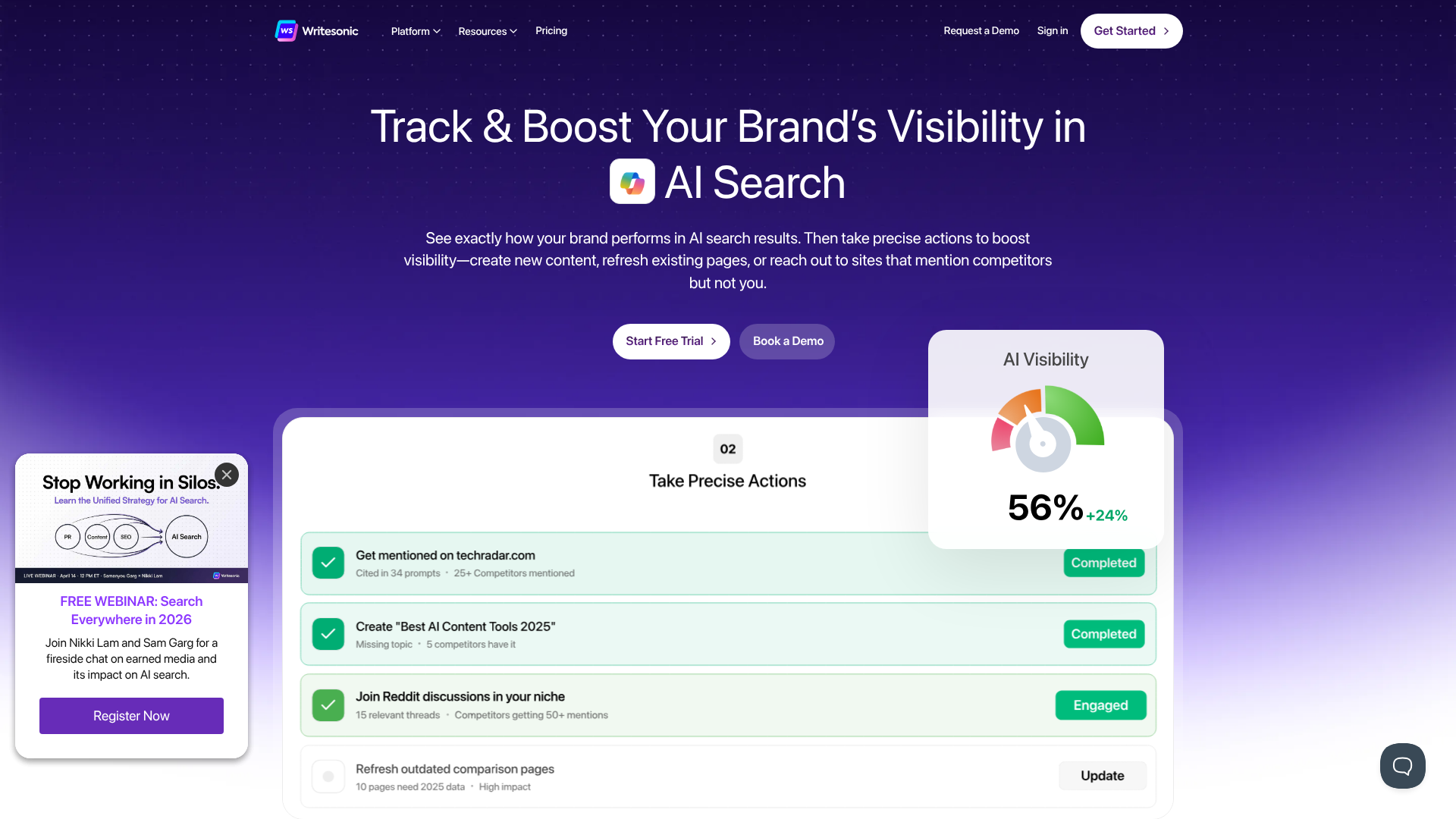
Writesonic is a powerful competitor to Jasper, with a particular strength in creating SEO-optimised articles and high-converting landing page copy. It offers a suite of tools, including an AI Article Writer that can generate a full blog post from a single topic, complete with research and structure. This makes it ideal for users who need to produce long-form content quickly.
One of its standout features is 'Photosonic', an integrated AI art generator that can create custom images for your articles, saving you the hassle of searching for stock photos. Writesonic also provides tools for creating everything from Google Ads to product descriptions, making it a well-rounded choice for marketers. Its user interface is clean and straightforward, guiding you through the content creation process.
Pros
- Strong SEO Features: Excellent for creating articles designed to rank well in search engines.
- Integrated AI Image Generator: Create unique, royalty-free images directly within the app.
- Generous Free Trial: Offers a good amount of words to test the platform thoroughly before committing.
Cons
- Output Can Be Repetitive: Like many AI tools, long-form content may sometimes require editing to improve flow and reduce repetition.
- Credit System Can Be Confusing: Different features consume different amounts of credits, which can be hard to track.
Pricing
Writesonic has a free trial and various paid plans based on word count and features. For current details, check the Writesonic pricing page.
3. Grammarly: Best for Editing and Polishing Content
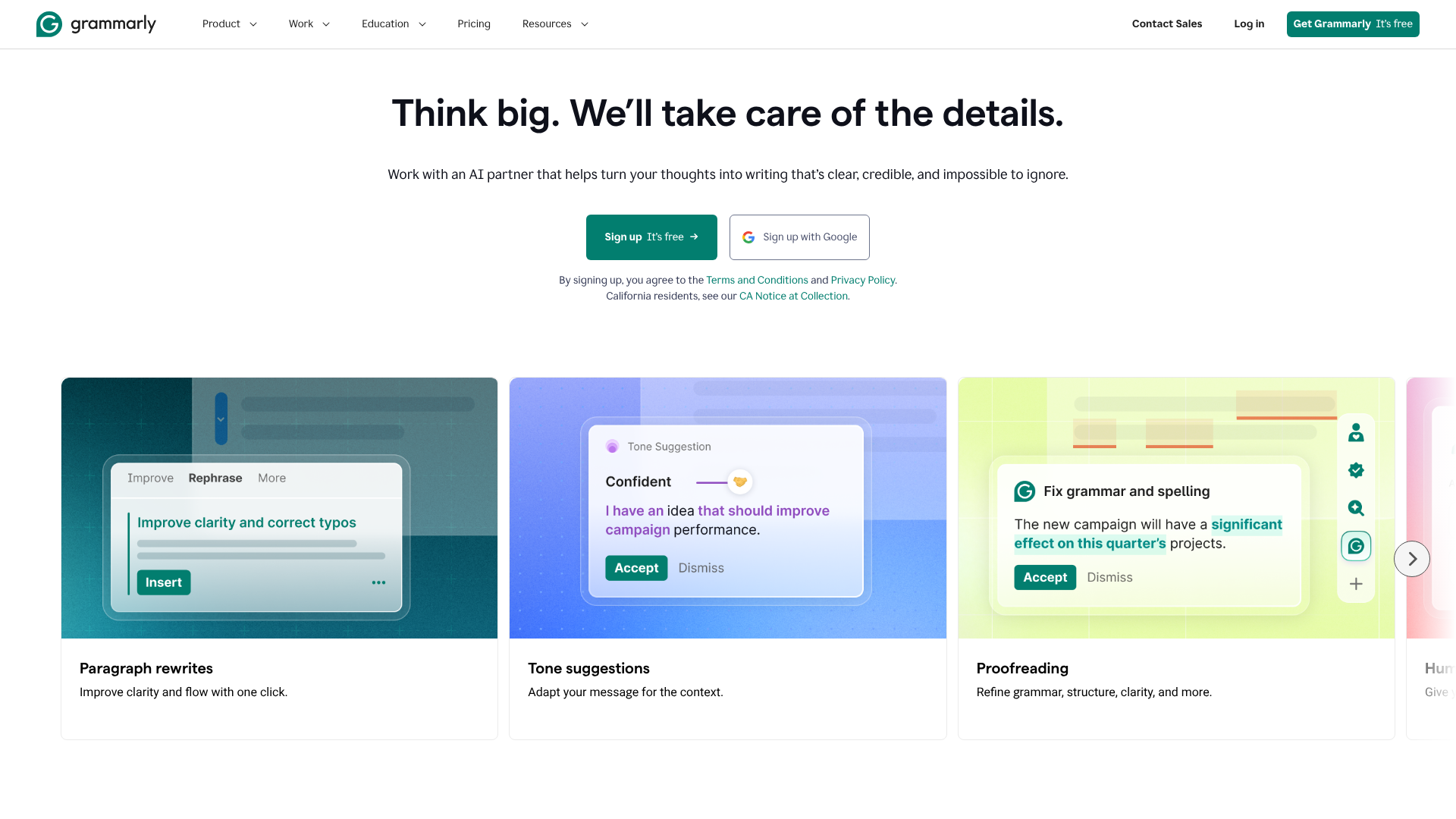
While not a content generator in the same way as Jasper or Writesonic, Grammarly is arguably one of the most essential AI writing tools for anyone who writes. It goes far beyond a simple spell checker, using AI to provide suggestions on grammar, punctuation, clarity, engagement, and delivery. Its tone detector is particularly useful for ensuring your message lands as intended.
Grammarly's AI-powered features can help you rewrite awkward sentences for better clarity, suggest more engaging vocabulary, and ensure your writing is concise and professional. It integrates everywhere you write—from your web browser and email client to Microsoft Word. The free version is excellent for catching basic errors, but the Premium version unlocks the most powerful style and clarity suggestions.
Pros
- Industry-Leading Editing: Unmatched for catching grammatical errors and improving writing style.
- Seamless Integration: Works across multiple platforms and applications with browser extensions and desktop apps.
- Helpful Tone Detector: Analyses your word choice to tell you how your writing might sound to a reader.
Cons
- Not a Content Generator: It improves existing text; it doesn't create it from scratch.
- Suggestions Can Be Overzealous: Occasionally, its suggestions can alter the intended meaning or voice of the original text.
Pricing
The core features are free. Grammarly Premium is available through monthly or annual subscriptions.
4. Surfer SEO: Best for On-Page SEO Optimisation
Surfer SEO is a specialised tool focused on one thing: helping you write content that ranks on Google. It's not a general-purpose AI writer but rather a content intelligence platform that analyses the top-ranking pages for your target keyword. It then provides a data-driven blueprint for you to follow, including recommended word count, keywords to include, and structural elements.
Its Content Editor gives you a real-time score as you write, showing how well your article is optimised. Surfer also has an AI outlining tool and can generate paragraphs based on its analysis of competitors. For SEO professionals and content marketers whose primary goal is organic traffic, Surfer is an indispensable part of the toolkit. Many writers use it in combination with a tool like Jasper for the best results.
Pros
- Data-Driven SEO Guidance: Provides clear, actionable steps to optimise your content based on real-time SERP analysis.
- Excellent Content Editor: The live scoring system makes the optimisation process intuitive and effective.
- Audits Existing Content: Can analyse your published pages and provide recommendations for improvement.
Cons
- Niche Focus: It's built specifically for SEO content, not for other types of writing.
- Can Lead to Keyword Stuffing: Inexperienced users might focus too much on the score and create unnatural-sounding text.
Pricing
Surfer SEO is a premium tool with pricing based on the number of articles and features you need per month.
5. Copy.ai: Best for Short-Form Marketing Copy
Copy.ai excels at generating creative and persuasive short-form copy for marketing and sales. It's particularly strong at producing content for social media posts, digital ads, email subject lines, and product descriptions. The platform is built around a simple, template-driven interface where you select your content type, provide some context, and let the AI generate multiple options.
This approach is perfect for brainstorming and A/B testing different marketing angles. While it does have a long-form editor, its core strength remains in rapid-fire generation of concise, engaging copy. Its 'Infobase' feature allows you to save key information about your products and company, which the AI can then reference to produce more relevant content. It offers a generous free plan, making it very accessible for individuals and small businesses to get started.
Pros
- Excellent for Short-Form Copy: Generates high-quality options for ads, social media, and emails.
- Generous Free Plan: A great starting point for users who don't need high-volume generation.
- Easy to Use: The interface is very intuitive and beginner-friendly.
Cons
- Less Suited for Long-Form Content: Its long-form editor is not as advanced as dedicated tools like Jasper.
- Output Can Be Formulaic: May require more human touch to stand out.
Pricing
Copy.ai has a free plan with a word limit, with paid Pro plans available for higher usage and team features.
6. QuillBot: Best for Paraphrasing and Rewriting
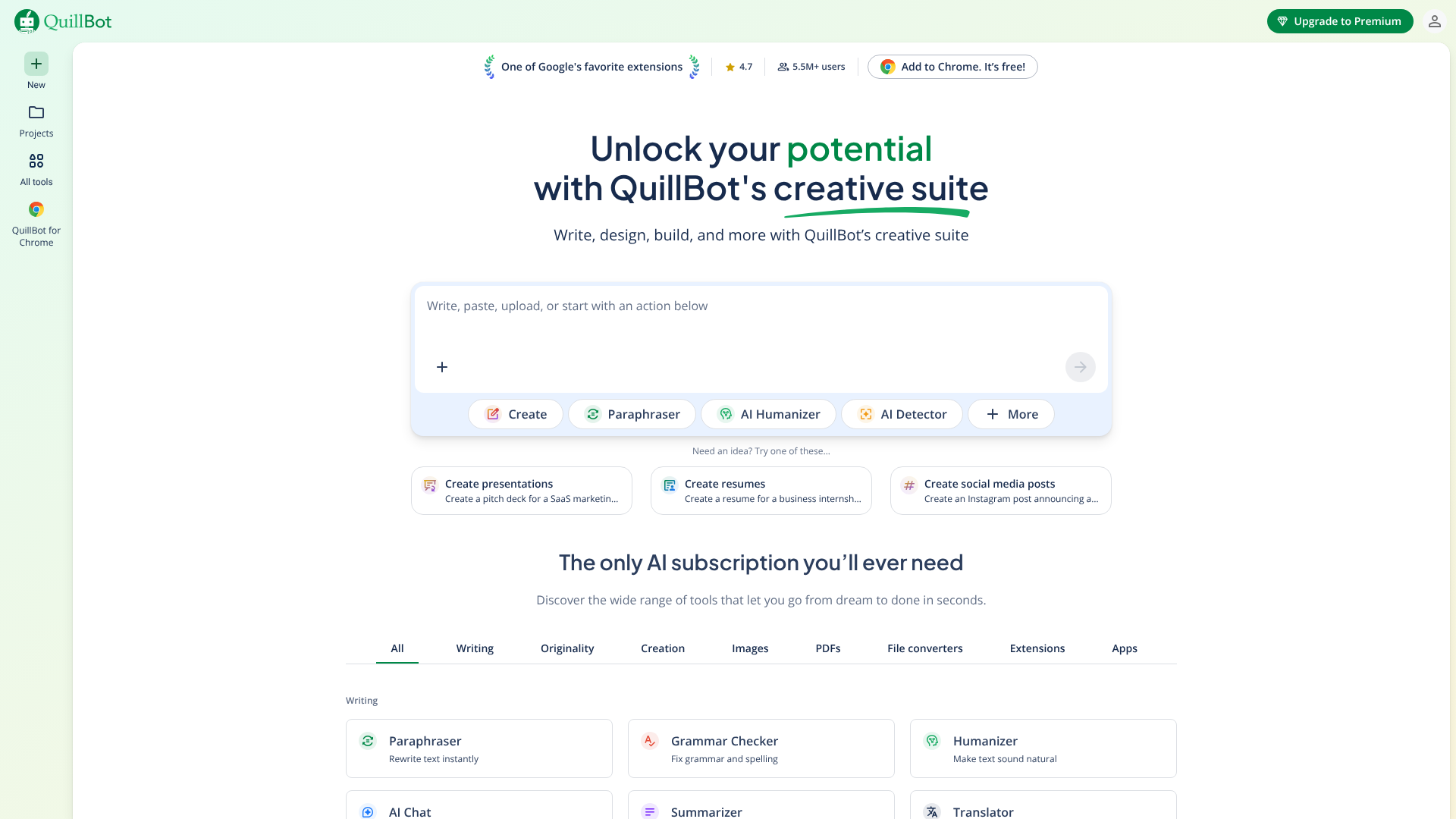
QuillBot is a fantastic AI writing software that specialises in rewriting and paraphrasing text. Its core function is the Paraphraser, which allows you to rephrase sentences, paragraphs, or entire articles in different ways to improve clarity, change the tone, or avoid plagiarism. You can choose from several modes, such as 'Standard', 'Fluency', 'Formal', and 'Creative', to get the exact output you need.
Beyond paraphrasing, QuillBot also offers a grammar checker, a summariser, and a citation generator, making it a valuable tool for students, academics, and professionals. It's an excellent assistant for refining your own writing rather than generating it from scratch. If you often find yourself struggling to express an idea in different words, QuillBot can be a real time-saver.
Pros
- Powerful Paraphrasing Tool: Offers multiple modes to rewrite text effectively.
- Suite of Useful Tools: Includes a summariser, grammar checker, and citation generator.
- Affordable Premium Plan: The paid version is very reasonably priced compared to other AI tools.
Cons
- Limited Generation Capabilities: It's primarily a rewriting tool, not a content creator.
- Paraphrasing Requires Review: You must always check the rewritten text to ensure it retains the original meaning.
Pricing
QuillBot has a free version with limitations and an affordable Premium plan that unlocks all features and modes. Visit QuillBot for details.
7. Semrush SEO Writing Assistant: Best for Integrating SEO Workflows
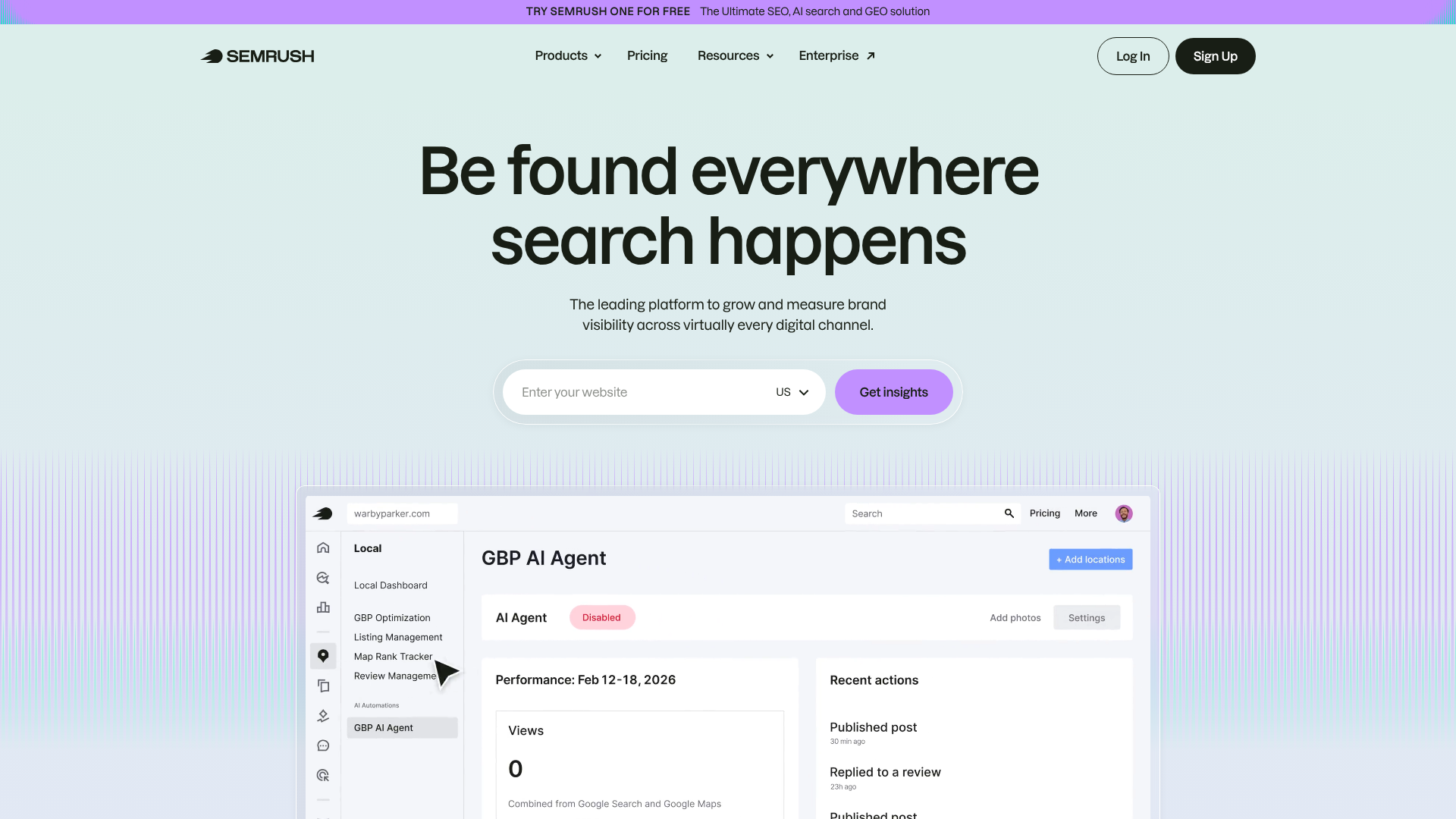
For marketers already using the Semrush ecosystem, the SEO Writing Assistant is a powerful addition. This tool integrates directly with Google Docs, WordPress, and the Semrush interface to provide real-time feedback on your content's SEO potential. It's similar to Surfer SEO in that it analyses top-ranking pages for your target keywords.
The assistant provides a score based on four key areas: SEO, readability, tone of voice, and originality. It gives you target keywords to include, checks for plagiarism, and assesses how easy your text is to read. Because it's part of the broader Semrush platform, it allows you to move seamlessly from keyword research to content creation and optimisation, all within one subscription.
Pros
- Deep Integration with Semrush: Perfect for users already invested in the Semrush toolkit.
- Real-Time Feedback: Provides actionable recommendations as you write.
- Holistic Analysis: Evaluates content based on SEO, readability, originality, and tone.
Cons
- Requires a Semrush Subscription: Not a standalone product, which makes it a pricey option if you only need the writing assistant.
- Less AI Generation: More focused on optimisation and analysis than creating content from scratch.
Pricing
Access to the SEO Writing Assistant is included with Semrush Guru and Business level subscriptions.
8. Claude (Anthropic): Best for Natural, Human-Sounding Prose
Claude is a large language model from Anthropic, a direct competitor to OpenAI's ChatGPT. It has gained a strong reputation for producing text that is often described as more natural, nuanced, and conversational than its rivals. Many writers find that Claude's output requires less editing to sound human, especially for long-form content and creative pieces.
Unlike the other tools on this list, Claude is more of a foundational model accessed through a chat interface (claude.ai) or an API. It doesn't have the specialised templates or marketing workflows of Jasper or Writesonic. However, for pure writing quality and brainstorming, it is exceptional. Its large context window also allows it to process and analyse very long documents, making it great for summarising research or reports.
Pros
- Highly Natural Language: Often produces the most human-sounding and coherent text.
- Large Context Window: Can handle very large amounts of text as input.
- Strong on Safety and Ethics: Developed with a focus on producing helpful and harmless responses.
Cons
- Lacks Specialised Features: It's a chat interface, not a full-featured writing application with templates and workflows.
- Availability Can Be Limited: Not yet available in all countries.
Pricing
Claude offers a free version with usage limits and a Pro subscription for higher volume and priority access.
9. Sudowrite: Best for Fiction and Creative Writers
Sudowrite is a unique AI writing tool built specifically for fiction authors, novelists, and screenwriters. It's designed to be a creative partner rather than a content generator. Its features are tailored to the art of storytelling. The 'Write' button can continue your story in your voice, while the 'Describe' feature helps you add rich, sensory details to a scene.
Other powerful features include 'Brainstorm' for generating plot points or character ideas, and 'Rewrite' for finding alternative ways to phrase a sentence. Sudowrite doesn't write the book for you; it helps you when you're stuck, enhances your descriptions, and explores new creative avenues. For any creative writer looking to use AI as a muse, Sudowrite is the best in its class.
Pros
- Tailor-Made for Fiction: All features are designed to assist with storytelling.
- Enhances Creativity: Acts as a brainstorming partner to help with plot, character, and description.
- Maintains Author's Voice: Aims to write with you, not for you.
Cons
- Highly Niche: Not suitable for marketing, blogging, or other non-fiction writing.
- Can Be Overwhelming: The sheer number of creative tools can take time to master.
Pricing
Sudowrite is a subscription-based service with different tiers based on word count.
10. Rytr: Best for Budget-Conscious Beginners
Rytr is an excellent entry-level AI writing assistant that offers a great balance of features, ease of use, and affordability. It has a very generous free plan, making it a popular choice for individuals and small businesses just starting with AI. The interface is clean and simple: you choose a use case (template), provide some input, and Rytr generates the content.
It supports over 30 languages and offers more than 40 use cases, including blog ideas, emails, and social media ads. While the output may not be as consistently high-quality as premium tools like Jasper, it provides a solid starting point that can be quickly edited. For users who need an occasional writing assistant without a hefty price tag, Rytr is a fantastic option.
Pros
- Very Affordable: Offers a generous free plan and low-cost paid plans.
- Simple and Fast: The user interface is extremely easy to navigate.
- Good Variety of Use Cases: Covers most common content creation needs.
Cons
- Inconsistent Output Quality: The generated text can sometimes be generic and require significant editing.
- Limited Long-Form Capabilities: Not as strong for writing full-length articles compared to competitors.
Pricing
Rytr has a free plan that allows you to generate a certain number of characters per month, with paid plans for unlimited usage.
11. HubSpot AI Content Assistant: Best for Integrated Marketing Campaigns

For businesses already using HubSpot's CRM and marketing platform, the built-in AI Content Assistant is a powerful and convenient tool. It's integrated directly into the tools you already use, like the blog editor, email marketing tool, and social media scheduler. This allows you to generate content without ever leaving the HubSpot ecosystem.
The assistant can help you brainstorm blog titles, generate outlines, write entire paragraphs, and create social media posts to promote your content. Because it's part of a larger platform, it can draw context from your CRM data to create more personalised marketing messages. It's the perfect choice for marketing teams who want to streamline their entire content workflow within a single platform.
Pros
- Seamless HubSpot Integration: Works directly within the blog, email, and social tools.
- Streamlines Marketing Workflows: No need to switch between different applications.
- Free to Use: Included as part of the HubSpot Marketing Hub and CMS Hub.
Cons
- Requires HubSpot: You must be a HubSpot user to access these tools.
- Less Advanced than Standalone Tools: The features are not as deep or varied as a dedicated AI writer like Jasper.
Pricing
The AI Content Assistant features are included within paid tiers of HubSpot's Marketing Hub and CMS Hub. Check the HubSpot website for details.
AI Writing Software: A Pricing and Cost Comparison
Understanding the cost of top AI writing tools is key to making the right choice. Pricing structures can vary significantly, from free plans to expensive enterprise solutions. Most tools use a subscription model, but the way they measure usage differs.
Some platforms charge based on the number of words you generate per month. Others offer unlimited words but limit access to advanced features or the number of user seats. Free plans are common but almost always come with a strict word or character limit, designed to give you a taste of the platform's capabilities.
Here’s a quick comparison of the tools we've discussed:
| Tool | Best For | Starting Price (Approx.) | Free Plan/Trial |
|---|---|---|---|
| Jasper | Overall Versatility | ~$39/month | 7-day free trial |
| Writesonic | SEO Content | ~$13/month | Free trial with word credit |
| Grammarly | Editing & Polishing | ~$12/month (annual) | Yes, free version available |
| Surfer SEO | On-Page SEO | ~$69/month | No, but has a money-back guarantee |
| Copy.ai | Short-Form Copy | ~$36/month (annual) | Yes, free plan with word limit |
| QuillBot | Paraphrasing | ~$8/month (annual) | Yes, free version available |
| Semrush | Integrated SEO | ~$129/month (for Guru) | No, part of Semrush subscription |
| Claude | Natural Prose | ~$20/month (for Pro) | Yes, free version with limits |
| Sudowrite | Fiction Writing | ~$10/month | Free trial with word credit |
| Rytr | Budget Beginners | ~$9/month | Yes, free plan with char limit |
| HubSpot | Integrated Marketing | Part of paid plans | No, part of HubSpot subscription |
Note: Prices are approximate and subject to change. Please visit the official websites for the most current information.
The Pros and Cons of Using AI Writing Software
While AI writing tools offer incredible benefits, it's important to have a balanced perspective. They are not a magic solution for all content needs and come with their own set of limitations. Understanding both sides will help you use them more effectively.
The Pros
- Speed and Efficiency: The most obvious advantage. AI can produce drafts and ideas in seconds, dramatically cutting down on content production time.
- Consistency: AI can be trained on a brand's voice and style, ensuring all content, from blog posts to social media, remains consistent.
- Overcoming Writer's Block: AI provides an excellent starting point, generating outlines, headlines, or initial paragraphs to get you started.
- Cost-Effectiveness: For some tasks, using an AI tool can be more affordable than hiring freelance writers, especially for generating content at scale.
The Cons
- Factual Inaccuracies: AI models can 'hallucinate'—that is, invent facts, statistics, or sources. All information must be rigorously fact-checked by a human.
- Lack of Originality and Depth: AI learns from existing data, so it can struggle to produce truly original ideas or deep, nuanced insights. The output can sometimes feel generic.
- Requires Human Editing: Raw AI output is rarely ready to publish. It needs a human touch to add personality, check for flow, and correct any awkward phrasing.
- Ethical and SEO Concerns: Over-reliance on AI can lead to low-quality, unhelpful content that may be penalised by search engines like Google, which prioritises content created for people.
Frequently Asked Questions about AI Writing Tools
Here are answers to some of the most common questions people have when exploring AI writing software.
Which AI writing tool is the best?
There is no single 'best' tool for everyone. The best choice depends on your specific needs. For all-around versatility and marketing content, Jasper is a top contender. For SEO-focused articles, Writesonic or Surfer SEO are excellent. For polishing your own writing, Grammarly is unbeatable. For fiction, Sudowrite is the clear winner.
What AI does the best writing?
This often refers to the underlying language model. Currently, models like Anthropic's Claude 3 Opus and OpenAI's GPT-4o are considered state-of-the-art for producing high-quality, coherent, and natural-sounding text. However, the best tool is one that wraps these powerful models in a user-friendly interface with features and workflows that help you achieve your specific goals.
Is ChatGPT the best AI writer?
ChatGPT is an incredibly powerful and versatile foundational AI model, but it's not necessarily the 'best AI writer' for every task. It's a general-purpose chatbot. Specialised tools like Jasper, Writesonic, and Sudowrite are built on top of models like ChatGPT but add crucial features like templates, brand voice controls, SEO integrations, and specific workflows that make them more efficient for professional writing tasks.
Can I legally write and sell a book with AI?
Yes, you can, but there are important legal and ethical considerations. The U.S. Copyright Office has stated that work created solely by AI is not eligible for copyright protection because it lacks human authorship. However, if you use AI as a tool to assist your writing process and there is significant human creativity, modification, and arrangement involved, the resulting work can be copyrighted. You must be transparent about the role of AI in your creation process and ensure the final product is substantially your own work.
Final Thoughts: Choosing Your AI Writing Partner
Choosing from the best AI writing tools comes down to identifying your primary needs and finding the platform that aligns with them. The rapid evolution of this technology means that capabilities are constantly improving, but the core principle remains the same: these are tools to assist, not replace, human creativity and expertise.
Don't get caught up in finding one perfect tool that does everything. Many professionals use a combination of tools—for example, Jasper for drafting, Surfer SEO for optimising, and Grammarly for polishing. The most effective approach is to experiment with free trials, see which interface you prefer, and build a workflow that makes you a faster, more effective writer.
If you're looking for a versatile, powerful, and user-friendly platform to handle a wide variety of marketing and content tasks, Jasper is an excellent place to start. For those focused on improving the quality and correctness of their existing writing, integrating Grammarly into your workflow is a must.