


7 Best AI Writing Tools for Marketers in 2026 (Ranked & Tested)
Content creation is a demanding task. From brainstorming ideas to drafting, editing, and optimising for search engines, the process requires significant time and creative energy. Many marketers and business owners struggle to produce high-quality content consistently. This is where the strategic use of AI writing tools can transform your workflow, helping you scale production without sacrificing quality.
- In a Nutshell
- What Exactly Are AI Writing Tools?
- The Core Features and Benefits of Modern Writing Assistants
- How to Choose the Right AI Writing Software for Your Needs
- Define Your Primary Use Case
- Evaluate Content Quality and Originality
- Consider Ease of Use and Integration
- Analyse Pricing vs. Features
- The 7 Best AI Writing Tools of 2026
- 1. Jasper (formerly Jarvis): Best Overall for Marketing Teams
- 2. Writesonic: Best for SEO-Optimised Blog Posts
- 3. QuillBot: Best for Paraphrasing and Academic Writing
- 4. Grammarly: Best for Editing and Polishing Content
- 5. Copy.ai: Best for Sales Copy and Short-Form Content
- 6. Rytr: Best for Budget-Conscious Beginners
- 7. HubSpot AI: Best for Integrated Marketing Campaigns
- AI Writing Tools: Pricing and Cost Comparison
- The Pros and Cons of Using Automated Writing Tools
- The Advantages: Speed, Scale, and Inspiration
- The Disadvantages: Accuracy, Originality, and the Human Touch
- Frequently Asked Questions (FAQ)
- Can AI writing tools replace human writers?
- Can Google detect AI-generated content?
- What is the best free AI writing tool?
- Are AI writing tools good for SEO?
- Final Thoughts: Integrating AI into Your Content Workflow
These platforms are no longer simple grammar checkers; they are sophisticated partners capable of generating entire articles, crafting compelling ad copy, and refining your message for maximum impact.
This guide breaks down the best AI writing tools available today. We've tested and reviewed the top options to help you find the perfect fit for your marketing needs, whether you're drafting long-form blog posts, creating social media updates, or polishing your next email campaign. We'll explore their key features, pricing, and unique strengths so you can make an informed decision.
In a Nutshell
- Boost Efficiency: AI writing tools automate repetitive tasks in the content creation process, from generating first drafts to final edits, saving you hours of valuable work.
- Essential Features: The most effective platforms offer content generation templates, SEO optimisation features, built-in plagiarism checkers, and advanced tone adjustment capabilities.
- Choose Your Tool Wisely: The best AI writing software for you depends on your specific goals. Consider tools like Jasper for long-form content, Writesonic for SEO-focused articles, or QuillBot for academic and paraphrasing needs.
- Human Oversight is Key: Always treat AI-generated content as a starting point. Human editing and fact-checking are essential to ensure accuracy, align with your brand voice, and add genuine originality.
What Exactly Are AI Writing Tools?
AI writing tools are applications designed to assist with or automate the process of creating written content. At their core, they use advanced artificial intelligence, specifically large language models (LLMs) like OpenAI's GPT-4, to understand prompts and generate human-like text. Think of them not as simple spell checkers, but as creative collaborators that can help you at every stage of the writing process.
These platforms can perform a wide range of tasks. They can brainstorm a list of blog post ideas, outline an entire article, write a first draft, rephrase a clunky paragraph for clarity, or even adapt the tone of a piece of writing to be more professional, casual, or persuasive. The technology works by analysing vast amounts of text data from the internet, learning the patterns, structures, and nuances of human language.
When you provide a prompt, the AI writing software uses this learned knowledge to predict the most logical sequence of words to form coherent sentences and paragraphs that match your request. The best tools go even further, incorporating specific templates for different content types like social media ads, product descriptions, or email newsletters. These automated writing tools are designed to augment human creativity, not replace it, by handling the heavy lifting of content generation.
The Core Features and Benefits of Modern Writing Assistants

Today's AI writing assistants offer a suite of powerful features that go far beyond basic text generation. Understanding these capabilities is key to selecting a tool that will genuinely improve your content workflow and deliver a strong return on investment. The benefits extend from saving time to enhancing the overall quality and consistency of your output.
Beyond Simple Text Generation
The most valuable AI tools are multi-functional platforms. Key features to look for include:
- Content Templates: High-quality tools come pre-loaded with dozens, sometimes hundreds, of templates for specific use cases. This includes templates for blog post intros, Google Ads copy, YouTube video descriptions, and AIDA (Attention, Interest, Desire, Action) marketing frameworks. These templates provide structure and ensure the output is optimised for its intended channel.
- Tone and Style Adjustment: The ability to control the tone of voice is critical for brand alignment. You can instruct the AI to write in a formal, witty, empathetic, or professional tone. Some advanced platforms can even analyse your existing content to learn and replicate your unique brand voice.
- SEO Integration: Many writing assistants now integrate with SEO platforms or have built-in optimisation features. This can include suggesting relevant keywords, analysing competitor content, and scoring your draft based on on-page SEO factors. This helps ensure the content you create is discoverable by search engines.
- Plagiarism Checkers: To protect your site's integrity, a built-in plagiarism checker is essential. This feature scans the generated text against existing content on the web to ensure originality, giving you peace of mind before you hit publish.
Key Benefits for Your Workflow
Integrating these features into your process yields significant advantages:
- Massive Time Savings: The most immediate benefit is a dramatic reduction in the time it takes to produce content. An AI can generate a detailed outline or a full first draft in minutes, a task that could take a human writer hours.
- Overcoming Writer's Block: Staring at a blank page is a common challenge for all creators. AI writing tools provide an excellent starting point, generating ideas and initial paragraphs that you can then build upon and refine.
- Maintaining Brand Consistency: By using features like brand voice and custom templates, you can ensure that all content, whether written by in-house staff or freelancers, maintains a consistent tone and style. This is crucial for building a strong brand identity.
- Scaling Content Production: For businesses looking to increase their content output for SEO or marketing purposes, AI is a powerful enabler. It allows a small team, or even a single person, to produce a much larger volume of content without a proportional increase in resources.

How to Choose the Right AI Writing Software for Your Needs
With so many options on the market, selecting the right AI writing software can feel overwhelming. The best tool for a marketing agency will differ from the ideal choice for a student or a novelist. To find the perfect fit, you need to evaluate each platform based on your specific requirements, workflow, and budget.
Define Your Primary Use Case
First, clarify what you need the tool to do most often. Are you primarily writing long-form, SEO-driven blog posts. Or do you need something that excels at short, punchy social media and ad copy. Perhaps your main need is academic writing, requiring strong paraphrasing and citation features.
Make a list of your top 3-5 content needs. This will help you filter out tools that don't align with your core tasks.
Evaluate Content Quality and Originality
Not all AI models are created equal. The quality of the generated text can vary significantly between platforms. Before committing to a subscription, take advantage of free trials or free plans to test the output. Give the tools a few real-world prompts and assess the results for clarity, coherence, and accuracy.
Does the text sound natural, or is it robotic and generic. A good tool should produce content that requires minimal editing to feel human.
Consider Ease of Use and Integration
A powerful tool is useless if it's too complicated to use. Look for a clean, intuitive user interface that makes it easy to find templates and generate content. Additionally, consider how the tool will fit into your existing workflow. Does it offer a browser extension, a Google Docs add-on, or a WordPress plugin.
Seamless integrations can save you a lot of time by eliminating the need to constantly copy and paste between different applications.
Pro Tip: When testing a tool, pay close attention to its ability to follow complex instructions. A superior AI can handle multi-step prompts, adhere to specific formatting requests, and maintain context over a long piece of writing. This is often what separates premium tools from more basic ones.
Analyse Pricing vs. Features
AI writing tools come with various pricing models. Some charge a flat monthly fee for unlimited words, others use a credit-based system, and many offer tiered plans with different feature sets. Compare the cost against the features that are most important to you. A cheaper plan might seem appealing, but if it lacks the SEO integration or brand voice feature you need, it might not be the best value in the long run.
Always check word limits on lower-tier plans to ensure they meet your production needs.
The 7 Best AI Writing Tools of 2026
After extensive testing and comparison, we've compiled our list of the top AI writing tools. Each of these platforms excels in different areas, so we've highlighted their unique strengths to help you find the perfect match.
1. Jasper (formerly Jarvis): Best Overall for Marketing Teams
Jasper has established itself as a leader in the AI writing space, and for good reason. It's a powerful and versatile platform designed for marketing teams and content creators who demand high-quality output and advanced features. Its interface is clean, and it offers a massive library of templates for nearly any marketing task imaginable.
One of Jasper's standout features is its 'Brand Voice' capability. You can provide Jasper with samples of your existing content, and it will learn your style, tone, and terminology to generate new content that is perfectly on-brand. This is incredibly valuable for businesses that need to maintain a consistent voice across all channels. Its long-form document editor is also excellent for creating blog posts and articles, offering different modes for composition and editing.
Pros
- High-Quality Output: Consistently generates coherent, natural-sounding text that often requires minimal editing.
- Brand Voice Feature: A powerful tool for maintaining brand consistency across all generated content.
- Extensive Template Library: Offers over 50 templates for everything from ad copy to video scripts.
- Strong Community and Support: Jasper has a large, active user community and provides excellent tutorials and customer support.
Cons
- Higher Price Point: It's one of the more expensive options on the market, which may be a barrier for solo creators or small businesses.
- Steeper Learning Curve: With so many features, it can take some time to master the platform and get the most out of it.
Pricing
Jasper is a premium tool with pricing plans aimed at professionals and teams. Visit the Jasper website for the latest pricing information and to see which tier best suits your needs.
2. Writesonic: Best for SEO-Optimised Blog Posts
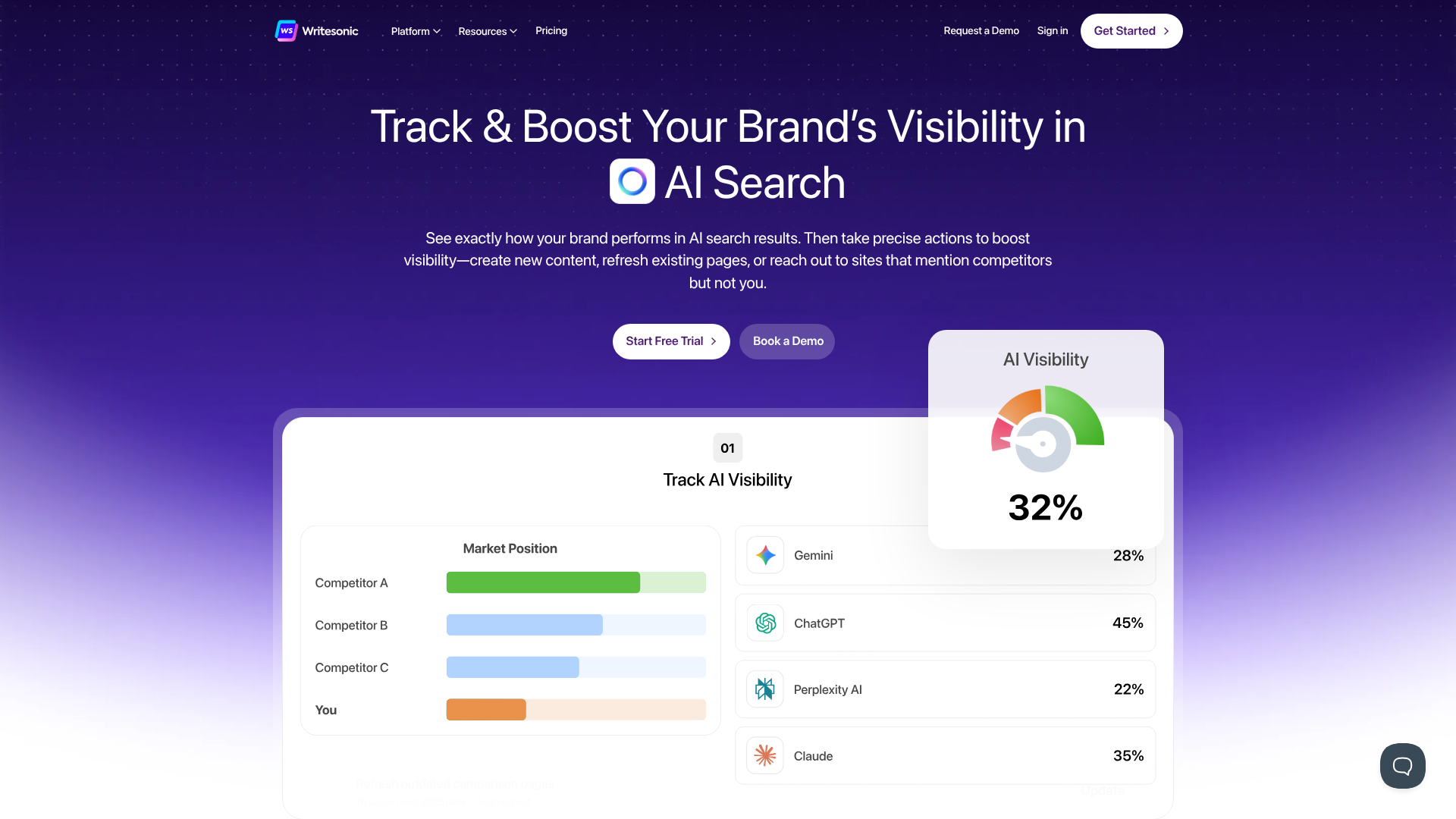
Writesonic is a formidable competitor that shines particularly bright in the realm of SEO and long-form content. Its AI Article Writer 5.0 is designed to create factually accurate, well-researched articles that are optimised for search engines. It can analyse top-ranking competitor articles to inform its structure and content.
What sets Writesonic apart is its integration with Surfer SEO, a leading on-page optimisation tool. This combination allows you to generate an article in Writesonic and then immediately fine-tune it based on real-time SEO recommendations from Surfer, all within a single workflow. It also includes features like Audiosonic for generating audio from text and Photosonic for creating AI images, making it a comprehensive content creation suite.
Pros
- Excellent SEO Features: Direct integration with Surfer SEO makes it a top choice for creating rank-worthy content.
- Factual Accuracy: The platform is designed to pull in real-time data, reducing the risk of AI 'hallucinations'.
- All-in-One Platform: Includes AI writing, image generation, and audio creation tools.
- Generous Free Trial: Offers a good amount of free words to thoroughly test the platform.
Cons
- Credit System Can Be Confusing: The pricing is based on a credit system that varies depending on the quality of the AI model you use, which can be tricky to manage initially.
Pricing
Writesonic offers several subscription tiers, including a free trial. The plans are flexible, allowing you to choose based on your word count needs and desired features. Check out Writesonic's pricing page for current details.
3. QuillBot: Best for Paraphrasing and Academic Writing
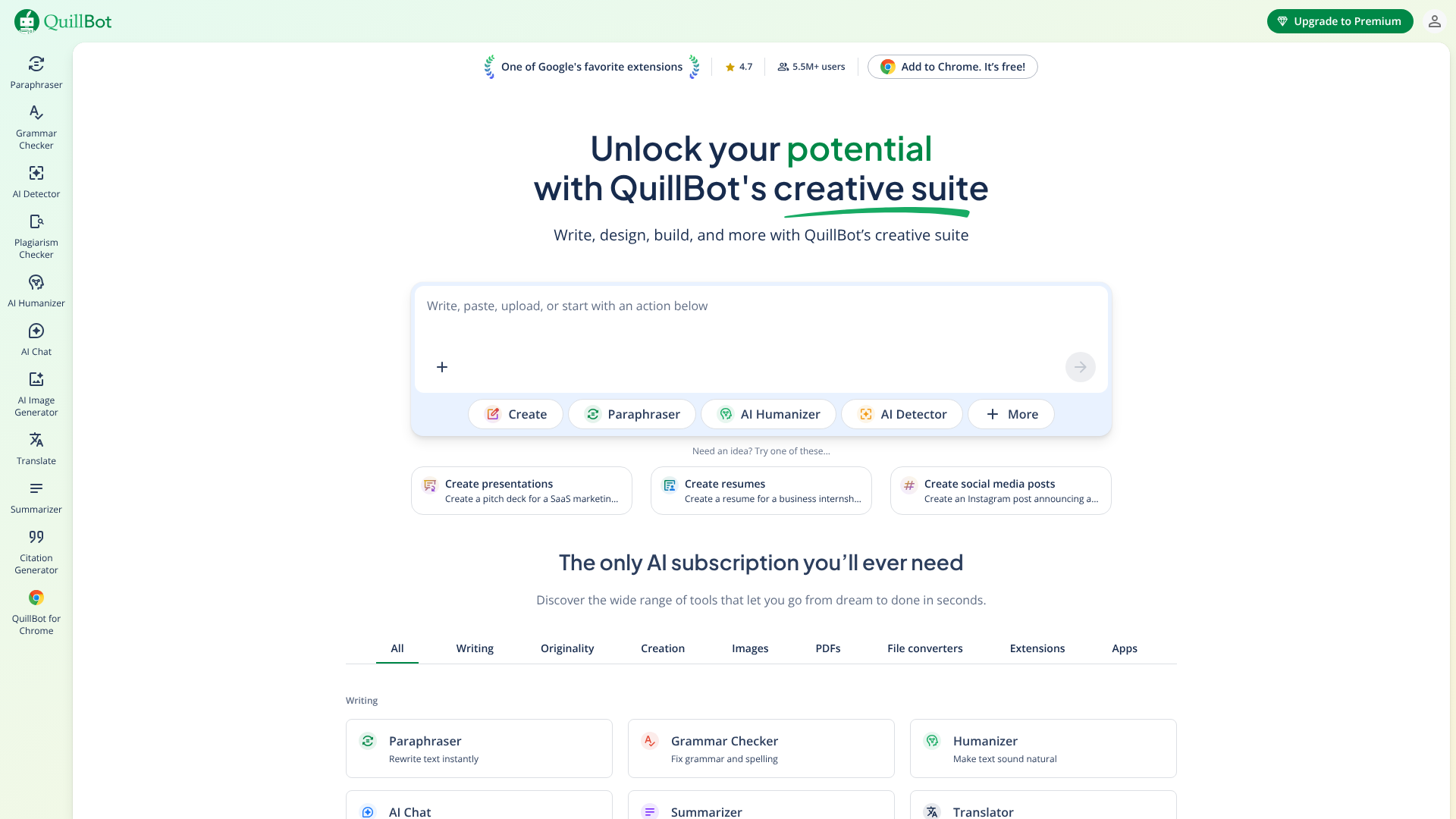
While many tools focus on generating new content from scratch, QuillBot has carved out a niche as the go-to tool for refining and rephrasing existing text. Its paraphrasing tool is second to none, offering multiple modes (like Standard, Fluency, Formal, and Creative) to help you rewrite sentences and paragraphs to improve clarity or change the tone.
This makes QuillBot an invaluable asset for students, academics, and anyone who needs to avoid plagiarism or simply express ideas in a new way. Beyond paraphrasing, it also includes a grammar checker, a summariser, and a citation generator. While it does have a Co-Writer feature for generating content, its core strength lies in its ability to work with and improve text you've already written.
Pros
- Best-in-Class Paraphraser: The paraphrasing tool is incredibly powerful and nuanced.
- Generous Free Version: The free plan is highly functional and sufficient for many users' needs.
- User-Friendly Interface: The platform is simple, clean, and very easy to use.
- Useful for Academic Work: The summariser and citation generator are excellent tools for researchers and students.
Cons
- Less Advanced for Content Generation: Its ability to create long-form content from scratch is not as developed as dedicated tools like Jasper or Writesonic.
Pricing
QuillBot offers a robust free plan. The Premium subscription unlocks higher character limits, more writing modes, and faster processing. Visit QuillBot to compare the plans.
4. Grammarly: Best for Editing and Polishing Content
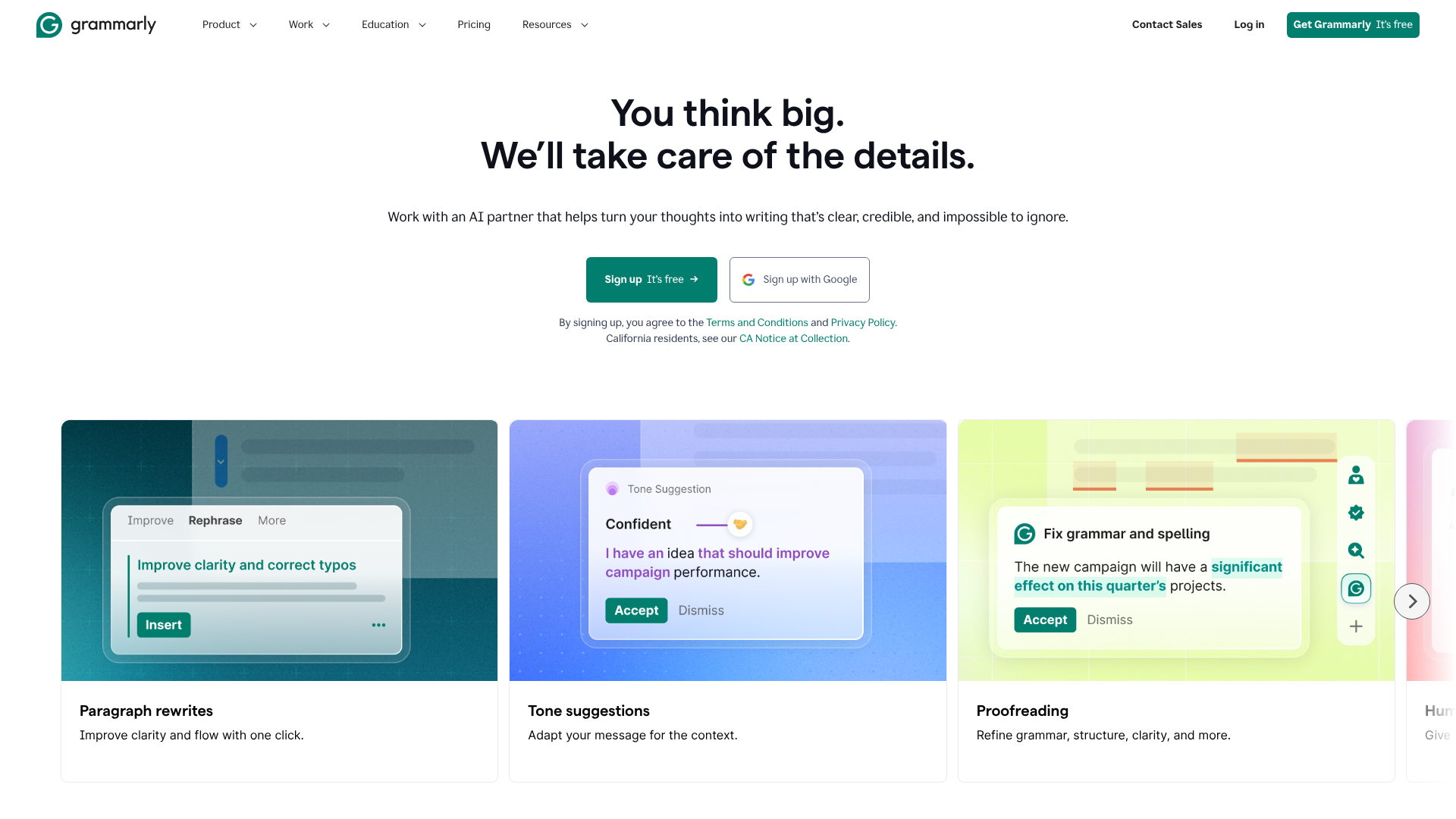
Grammarly is a household name in writing assistance, and its evolution into an AI-powered tool makes it more essential than ever. While it started as a world-class grammar and spell checker, it now includes GrammarlyGO, a suite of generative AI features that help you compose, ideate, and reply within the apps you already use.
Grammarly excels as the final step in the writing process. After you've generated a draft with another tool, Grammarly helps you polish it to perfection. It checks for correctness, clarity, engagement, and delivery, providing suggestions that improve the overall quality of your writing. Its tone detector is also a fantastic feature, helping you ensure your message will land with your audience as intended.
Pros
- Superior Editing Capabilities: The best tool on the market for correcting grammar, punctuation, and style errors.
- Seamless Integration: Works everywhere you write, thanks to its browser extensions, desktop apps, and mobile keyboards.
- Helpful Tone Detector: Provides valuable feedback on how your writing is likely to be perceived.
- Generative AI Features: GrammarlyGO adds useful ideation and drafting capabilities to its core editing functions.
Cons
- Generative AI is Not its Core Strength: While useful, the generative features are less powerful than those of specialised AI writers.
- Premium Features Can Be Pricey: The free version is great, but the most advanced suggestions require a paid subscription.
Pricing
Grammarly has an excellent free version that covers basic grammar and spelling. The Premium and Business plans unlock advanced features like tone adjustments, plagiarism detection, and full-sentence rewrites. Learn more at the Grammarly website.
5. Copy.ai: Best for Sales Copy and Short-Form Content
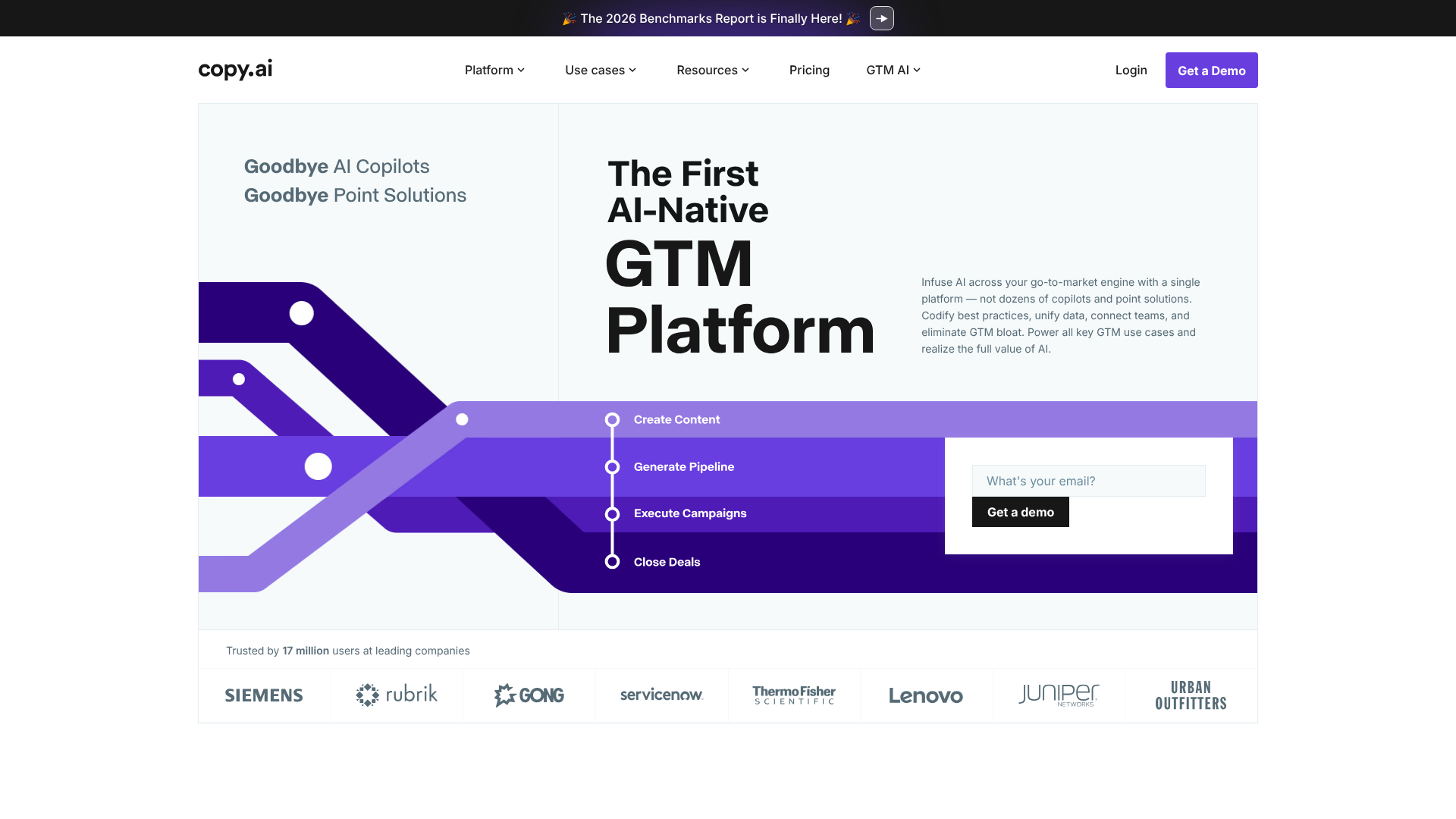
Copy.ai is designed for speed and variety, making it a favourite among marketers who need to produce a high volume of short-form content. It boasts a massive library of over 90 tools and templates, covering everything from social media captions and Google ad headlines to sales emails and product descriptions.
Its interface is built around a simple, user-friendly workflow: you choose a template, provide some basic input, and the tool generates a list of creative options in seconds. This makes it an exceptional tool for brainstorming and overcoming creative blocks. While it can produce long-form content, its real power lies in its ability to quickly generate multiple variations of short, persuasive copy.
Pros
- Vast Template Library: An extensive collection of tools for almost any copywriting task.
- Intuitive and Fast: The user interface is very easy to navigate, delivering results quickly.
- Great for Brainstorming: Excellent for generating a wide range of ideas and angles for a campaign.
- Strong Free Plan: The free tier is generous, allowing users to generate a significant number of words per month.
Cons
- Long-Form Content Can Lack Cohesion: The quality of its blog posts and articles can sometimes be less consistent than tools like Jasper.
Pricing
Copy.ai offers a free plan with a monthly word limit. The Pro plan provides unlimited words and access to all the latest features. Check their website for current pricing.
6. Rytr: Best for Budget-Conscious Beginners
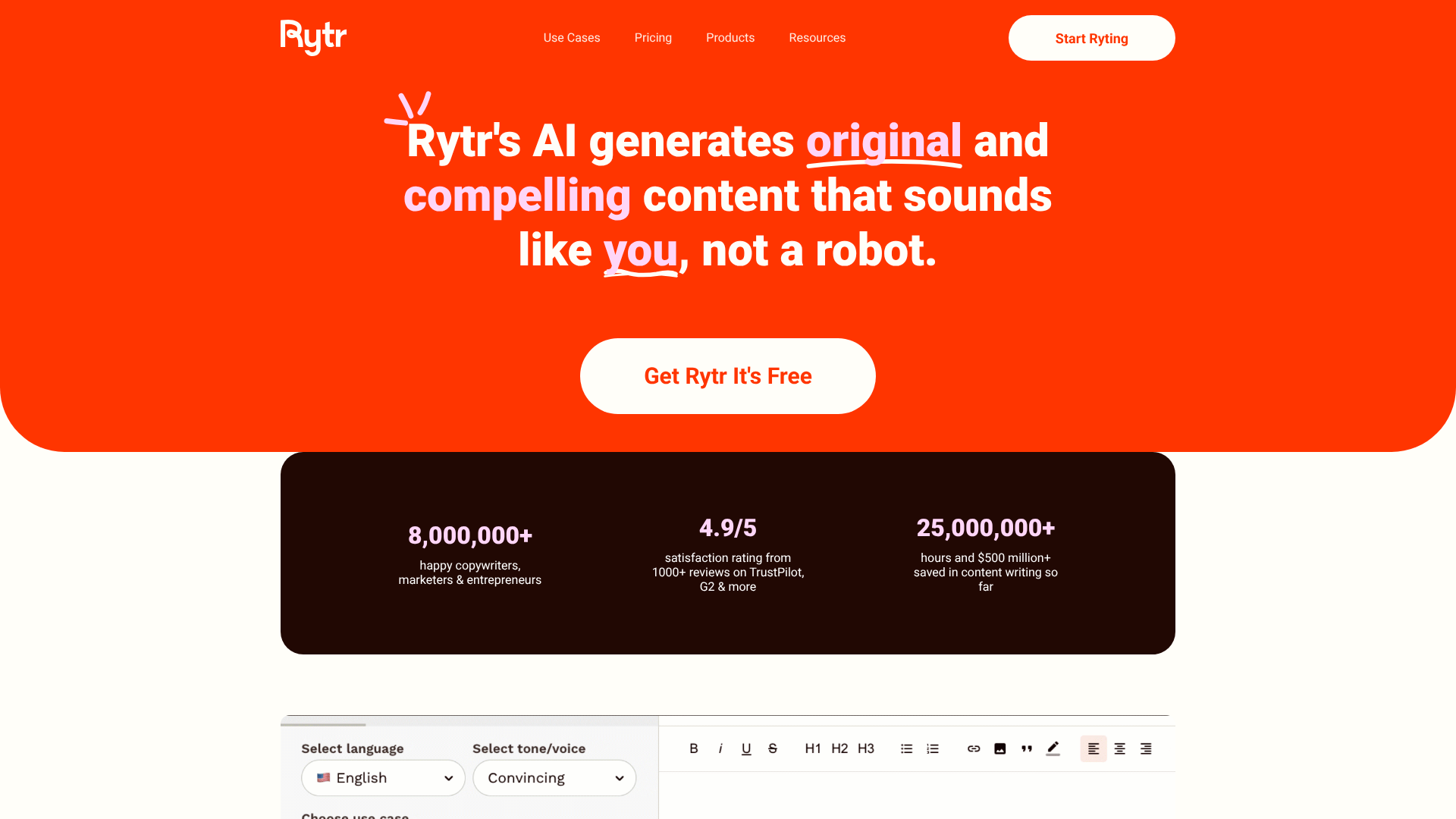
Rytr positions itself as an affordable yet capable AI writing assistant, making it a fantastic choice for freelancers, bloggers, and small businesses on a tight budget. It features a clean, minimalist interface that is incredibly easy to get started with. Despite its simplicity, it offers over 40 use cases and supports more than 30 languages.
Rytr includes a built-in plagiarism checker and tools to improve and rephrase existing content. While its output might occasionally require a bit more editing than premium competitors, it provides outstanding value for its price point. Its generous free plan allows you to generate a decent number of characters each month, making it accessible to everyone.
Pros
- Extremely Affordable: One of the most cost-effective AI writing tools available.
- Simple and Clean UI: The interface is straightforward and perfect for beginners.
- Generous Free Plan: Allows users to test the tool extensively before committing to a paid plan.
- Built-in Plagiarism Checker: A valuable feature not always found in budget-friendly tools.
Cons
- Output Can Be Inconsistent: The quality of the generated text can sometimes be hit-or-miss and may require more human intervention.
Pricing
Rytr has a free plan with a monthly character limit. Its paid plans are very competitively priced, offering unlimited usage for a low monthly fee.
7. HubSpot AI: Best for Integrated Marketing Campaigns

For businesses already invested in the HubSpot ecosystem, the platform's built-in AI tools are a natural choice. HubSpot has integrated AI assistants across its Marketing Hub, Sales Hub, and Service Hub. This includes a Content Assistant that can help you draft blog posts, marketing emails, and landing page copy directly within the platform.
The biggest advantage here is the seamless integration. You can generate content that is automatically informed by your CRM data. For example, you can create personalised sales emails based on a contact's properties or draft a blog post that aligns with a specific marketing campaign you're running in HubSpot. It's less of a standalone writer and more of a powerful feature set that enhances an already comprehensive marketing platform.
Pros
- Deep Integration with HubSpot: Works seamlessly with your CRM, email marketing, and CMS tools.
- Free for HubSpot Users: The AI features are included within existing HubSpot subscriptions.
- Context-Aware: Can use your CRM data to generate more relevant and personalised content.
- Streamlines Marketing Workflows: Eliminates the need to switch between different tools for content creation and campaign management.
Cons
- Not a Standalone Tool: Its primary value is for users already on the HubSpot platform.
- Less Versatile: The range of templates and features is not as extensive as dedicated AI writing tools.
Pricing
HubSpot's AI features are included in its various plans. You can explore them by starting with the free tools available on the HubSpot website.
AI Writing Tools: Pricing and Cost Comparison
Understanding the different pricing structures is crucial for choosing a tool that fits your budget. Here’s a quick comparison of the platforms we've discussed. Note that pricing can change, so it's always best to visit the official websites for the most up-to-date information.
| Tool | Best For | Pricing Model | Free Trial/Plan |
|---|---|---|---|
| Jasper | Marketing Teams & Quality Output | Subscription (Tiered) | Yes, 7-day trial |
| Writesonic | SEO Content & Blog Posts | Subscription (Credit-based) | Yes, free plan with word limit |
| QuillBot | Paraphrasing & Academic Use | Freemium | Yes, robust free plan |
| Grammarly | Editing & Polishing | Freemium | Yes, excellent free version |
| Copy.ai | Short-Form & Sales Copy | Freemium | Yes, free plan with word limit |
| Rytr | Budget-Conscious Users | Freemium | Yes, free plan with character limit |
| HubSpot AI | Integrated Marketing | Included in HubSpot Plans | Yes, via HubSpot's free tools |
The Pros and Cons of Using Automated Writing Tools
While AI writing software offers incredible potential, it's important to approach it with a balanced perspective. These tools are powerful assets, but they also have limitations. Understanding both the advantages and disadvantages will help you integrate them into your workflow effectively and responsibly.
The Advantages: Speed, Scale, and Inspiration
The upsides of using AI for writing are significant. The most obvious is the immense boost in productivity. You can generate drafts, outlines, and ideas in a fraction of the time it would take manually, allowing you to scale your content production dramatically. This speed helps you publish more consistently, which is a key factor in successful content marketing.
Furthermore, these tools are a fantastic cure for writer's block. By providing an initial draft or a set of creative ideas, they give you something to react to and build upon, turning a blank page into a manageable starting point. They also promote consistency in tone and style, which is vital for reinforcing your brand identity across different content pieces and platforms.
The Disadvantages: Accuracy, Originality, and the Human Touch
On the other hand, relying too heavily on automated writing tools comes with risks. The biggest concern is factual accuracy. AI models can 'hallucinate'—that is, they can invent facts, statistics, or sources that sound plausible but are entirely incorrect. Fact-checking every piece of AI-generated content is non-negotiable, especially for topics that require expertise and accuracy.
There's also the risk of producing generic content that lacks a unique perspective or emotional depth. While AI can mimic human writing, it cannot replicate genuine human experience, creativity, or strategic insight. The best content connects with readers on an emotional level, and that requires a human touch. Over-reliance on AI can lead to a portfolio of content that is technically well-written but ultimately forgettable.
Frequently Asked Questions (FAQ)
Can AI writing tools replace human writers?
No, AI writing tools are best viewed as assistants or collaborators, not replacements. While they can handle the heavy lifting of drafting and ideation, they lack the critical thinking, strategic oversight, and genuine creativity of a human writer. The best results come from a partnership where AI generates the initial material and a human writer refines, fact-checks, and adds the unique perspective and emotional nuance that makes content truly great.
Can Google detect AI-generated content?
Google has stated that its focus is on the quality and helpfulness of content, not on whether it was created by a human or an AI. Their systems are designed to reward content that demonstrates expertise, authoritativeness, and trustworthiness (E-E-A-T). As long as your content is accurate, original, and provides genuine value to the reader, it can rank well. Using AI to produce low-quality, spammy content, however, will likely be penalised.
What is the best free AI writing tool?
The 'best' free tool depends entirely on your needs. For paraphrasing and academic work, QuillBot's free version is exceptionally powerful. For generating short-form copy and testing out a variety of templates, the free plans from Copy.ai or Rytr are excellent choices. Most premium tools, like Writesonic, also offer a free trial with a limited number of words, which is perfect for evaluating their capabilities before committing to a subscription.
Are AI writing tools good for SEO?
Yes, they can be incredibly effective for SEO when used correctly. Many tools, like Writesonic, are specifically designed with SEO in mind, offering features that help you incorporate keywords, analyse competitor content, and structure your articles for search engines. They can speed up the creation of SEO-optimised content, but the human element is still crucial for ensuring the content truly satisfies search intent and provides comprehensive, valuable information.
Final Thoughts: Integrating AI into Your Content Workflow
The era of AI-powered content creation is here, and the tools available are more powerful than ever. From drafting entire articles to polishing the final sentence, these platforms can dramatically enhance your productivity and help you scale your marketing efforts. However, the key to success lies in using them as a tool to augment your skills, not as a crutch to replace them.
The best approach is a hybrid one. Use AI to conquer the blank page, generate ideas, and structure your first draft. Then, apply your human expertise to refine the message, verify the facts, and inject your unique brand personality. This combination of machine efficiency and human creativity is what will set your content apart.
If you're looking for an all-around powerhouse for your marketing team, Jasper is an exceptional choice. For those focused squarely on creating high-ranking blog content, Writesonic offers an unbeatable set of SEO-focused features. And for any writer, having Grammarly in your toolkit is essential for ensuring every piece of content is polished and professional.