
Top 7 AI Writing Apps for 2026: From Blogs to Books
Facing a blank page can be daunting, whether you're a marketer on a tight deadline, a blogger trying to stay consistent, or an author wrestling with a new chapter. Modern AI writing apps have emerged as powerful assistants, designed to help you generate ideas, draft content, and refine your words faster than ever. These tools are no longer just simple grammar checkers; they are sophisticated partners that can write everything from ad copy to entire article drafts.
- What to Know
- What Exactly Are AI Writing Apps?
- The Core Benefits: Why Use an AI Writing Tool?
- Overcoming Writer's Block and Generating Ideas
- Boosting Productivity and Speed
- Improving Content Quality and Consistency
- How to Choose the Right AI Writing App for Your Needs
- The 7 Best AI Writing Apps in 2026 (Ranked & Reviewed)
- 1. Jasper (formerly Jarvis): Best for Marketing Teams & Content Scalability
- 2. Writesonic: Best All-in-One Platform for SEO & AI Articles
- 3. Grammarly: Best for Polishing and Real-Time Editing
- 4. QuillBot: Best for Paraphrasing and Academic Writing
- 5. Copy.ai: Best for Short-Form Copy and Creative Brainstorming
- 6. Sudowrite: Best for Fiction and Creative Storytelling
- 7. ChatGPT & Claude: Best Free & Versatile Options
- AI Writing Tools: A Quick Comparison
- Understanding the Pros and Cons of Writing Apps with AI
- Frequently Asked Questions About AI Writing Apps
- What is the best AI for writing?
- Is there a free AI writer?
- Can I legally write and sell a book using AI?
- Can you tell if something is written by AI?
- Final Thoughts: Integrating AI into Your Writing Workflow
This guide breaks down the best AI writing tools available today. We'll explore what they do, how to choose the right one for your specific needs, and review the top options on the market. Whether you need to scale your content production or simply find a way past writer's block, the right application can make a significant difference to your workflow.
What to Know
- Best for Marketing Teams: Jasper (formerly Jarvis) excels at creating brand-consistent copy for campaigns, ads, and social media, making it ideal for teams needing to scale content.
- Best All-in-One Solution: Writesonic offers a complete suite of tools, including an article writer, AI chatbot, and image generator, making it a versatile choice for SEO and content creation.
- Best for Editing & Polishing: Grammarly remains the leader for real-time editing, offering AI-powered suggestions to improve grammar, tone, and clarity across any platform you write on.
- Best for Paraphrasing: QuillBot is a top choice for academics and writers who need to rephrase text accurately while maintaining its original meaning, offering multiple modes for different styles.
- Choose Based on Your Needs: The best tool depends on your primary task. Fiction authors have different needs than SEO specialists. Define your main goal before committing to a platform.
What Exactly Are AI Writing Apps?
At their core, AI writing apps are software programs that use artificial intelligence, specifically large language models (LLMs), to generate human-like text. Think of them as incredibly advanced predictive text systems. You provide an input, known as a prompt—which can be a simple question, a command, or a detailed brief—and the AI analyses it to produce a relevant written response.
These platforms are trained on vast datasets containing billions of text examples from the internet, books, and other sources. This training allows them to understand grammar, context, tone, and style. When you ask an AI text generator to write a blog post introduction about sustainable gardening, it draws on its training to construct sentences and paragraphs that are coherent, relevant, and stylistically appropriate.
This technology is fundamentally different from older tools like basic spell checkers or grammar assistants. While a grammar tool corrects existing text, an AI writing tool creates entirely new content from scratch. It can brainstorm ideas, write first drafts, summarise long documents, rephrase sentences, and even adapt its writing style to match a specific brand voice. This makes them versatile assistants for a wide range of writing tasks.
The Core Benefits: Why Use an AI Writing Tool?

Integrating writing apps with AI into your workflow can offer substantial advantages, moving beyond simple convenience to fundamentally improve how you create content. They act as a digital partner, helping to streamline processes and enhance the final output.
Overcoming Writer's Block and Generating Ideas
One of the most immediate benefits is the ability to break through creative hurdles. Staring at a blank cursor is a common frustration, but AI text generators can provide the initial spark. By giving the tool a simple topic or a few keywords, you can receive outlines, opening paragraphs, or a list of potential angles to explore. This removes the pressure of starting from zero and provides a foundation you can build upon.
Boosting Productivity and Speed
Time is a critical resource for any writer or content creator. AI writing tools can drastically reduce the time spent on research and drafting. For example, creating five different versions of ad copy for a social media campaign could take hours. An AI can produce these variations in minutes, freeing you up to focus on higher-level strategy, editing, and fact-checking.
This acceleration is especially valuable for content teams who need to produce high volumes of material consistently.
Improving Content Quality and Consistency
Beyond speed, these tools can help elevate the quality of your writing. Many platforms include features for adjusting the tone of voice, ensuring your content is perfectly suited for its intended audience—whether that's professional, casual, or witty. For organisations, tools like Jasper (formerly Jarvis) can be trained on a specific brand voice, ensuring that all content, regardless of who writes the initial draft, remains consistent and on-brand.
How to Choose the Right AI Writing App for Your Needs
With a growing number of options available, selecting the best AI writing tool requires careful consideration of your specific goals. Not all platforms are created equal, and the best choice for a novelist is rarely the best for a digital marketer. Here’s how to narrow down your options.
Define Your Primary Use Case
First, identify what you'll be writing most often. Are you a blogger focused on long-form SEO articles. A social media manager crafting short, punchy posts. An academic researcher who needs help paraphrasing complex information.
Your primary function will guide your choice. For instance, a tool with deep SEO integration is vital for a blogger, while a fiction writer would prioritise features for character development and plot generation.
Evaluate Key Features
Look beyond the basic text generation. Modern AI writing apps come with a host of specialised features. Some key things to look for include:
- Templates: Pre-built structures for specific content types like blog posts, emails, product descriptions, or social media ads can save a lot of time.
- Tone and Style Adjustment: The ability to command the AI to write in a specific tone (e.g., formal, friendly, humorous) is essential for creating content that connects with your audience.
- SEO Integration: Tools that connect with platforms like Surfer SEO or offer built-in keyword research can help you create content that ranks well in search engines.
- Plagiarism Checker: A built-in checker provides peace of mind, ensuring the generated content is original.
Consider Ease of Use and Integration
The most powerful tool is useless if it's too complicated to use. Look for a clean, intuitive interface that doesn't require a steep learning curve. Many top platforms offer free trials, which are a great way to test the user experience before committing. Also, consider how the tool integrates with your existing workflow.
Does it have a browser extension that works where you write, like in Google Docs or WordPress. Seamless integration makes the tool a natural part of your process rather than another tab you have to manage.
Pro Tip: Don't get swayed by the tool with the longest feature list. Focus on the 2-3 features that will solve your biggest writing challenges. A simpler tool that excels at your primary task is often more valuable than a complex one with features you'll never use.
The 7 Best AI Writing Apps in 2026 (Ranked & Reviewed)
After extensive research and testing, we've compiled a list of the top AI writing apps for various needs. Each tool has its unique strengths, from marketing copy to creative fiction.
1. Jasper (formerly Jarvis): Best for Marketing Teams & Content Scalability
Jasper has established itself as a leader in the AI writing space, particularly for marketing and business applications. Its strength lies in its ability to understand and replicate a specific brand voice, ensuring all generated content is consistent. This makes it an excellent choice for teams where multiple people are creating content.
Its 'Campaigns' feature is a standout, allowing you to generate a suite of related marketing assets from a single brief. Provide some information about a product launch, and Jasper can draft social media posts, email newsletters, ad copy, and a blog post, all aligned in tone and messaging. It also offers powerful templates and recipes for nearly any marketing task you can imagine.
Pros
- Brand Voice Feature: Trains the AI on your existing content to perfectly match your style.
- High-Quality Output: Consistently produces well-written, coherent, and creative content.
- Strong Community and Support: Offers extensive tutorials and a helpful user community.
Cons
- Pricing: It's one of the more expensive options, making it better suited for businesses than solo users.
- Learning Curve: The sheer number of features can be overwhelming for new users.
2. Writesonic: Best All-in-One Platform for SEO & AI Articles
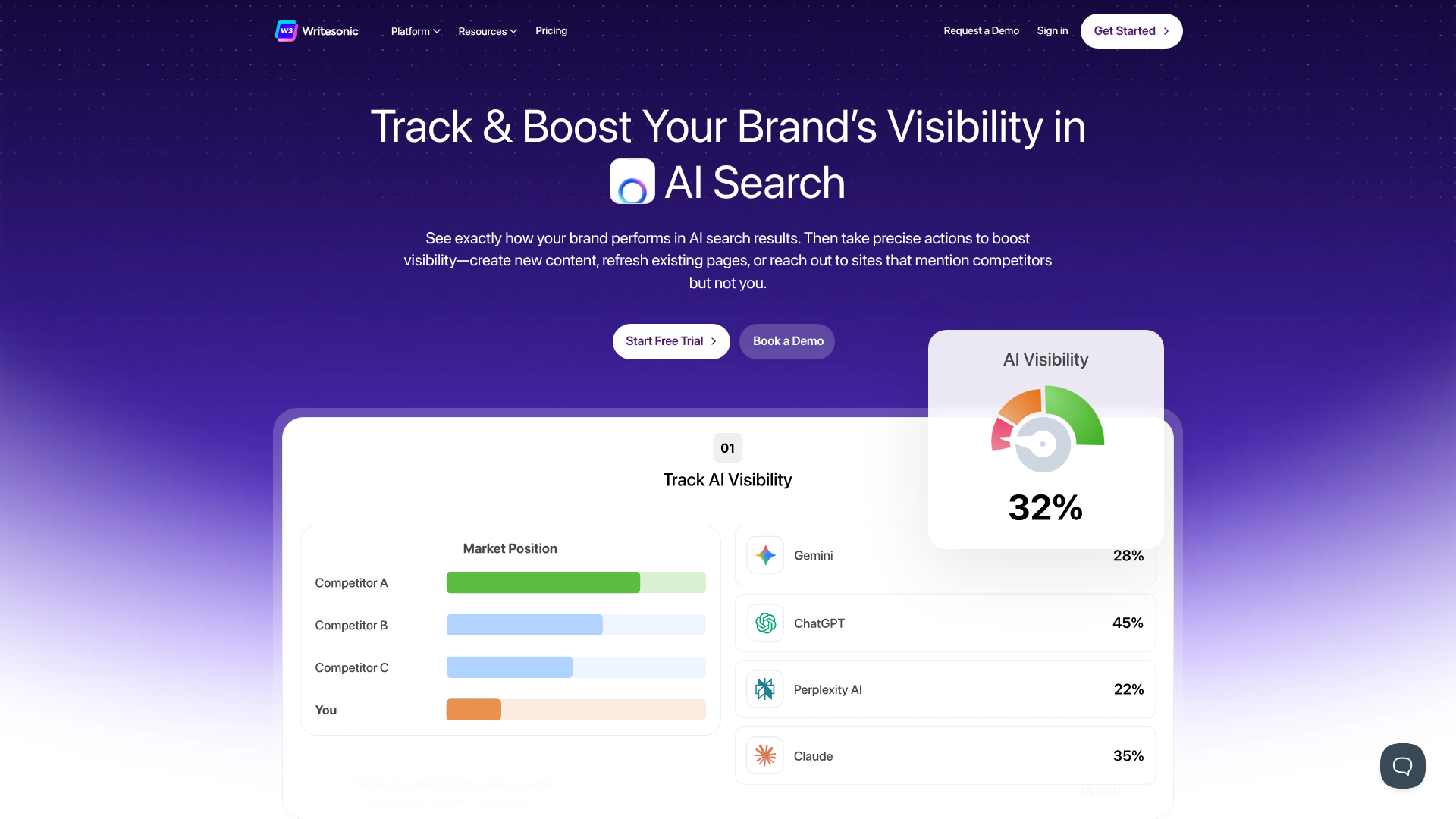
Writesonic positions itself as more than just a writer; it's a comprehensive content creation suite. It's particularly strong for bloggers and SEO professionals. Its AI Article Writer 5.0 can produce a 1,500-word, SEO-optimised article from a single topic, complete with internal linking suggestions and relevant keywords.
Beyond text, Writesonic integrates other AI modalities. Chatsonic is its answer to ChatGPT, providing up-to-date information from Google Search. It also includes Photosonic for AI image generation, which is useful for creating blog post visuals. This all-in-one approach saves you from needing multiple subscriptions for different AI tools.
Pros
- Excellent for SEO: The article writer is designed to create content that ranks.
- All-in-One Platform: Includes a chatbot, image generator, and writing tools in one subscription.
- Factual Accuracy: Chatsonic's connection to Google Search helps ensure information is current.
Cons
- Credit System: The credit system can be a bit confusing to manage compared to unlimited plans.
- Interface: Can feel slightly less polished than some top-tier competitors.
3. Grammarly: Best for Polishing and Real-Time Editing
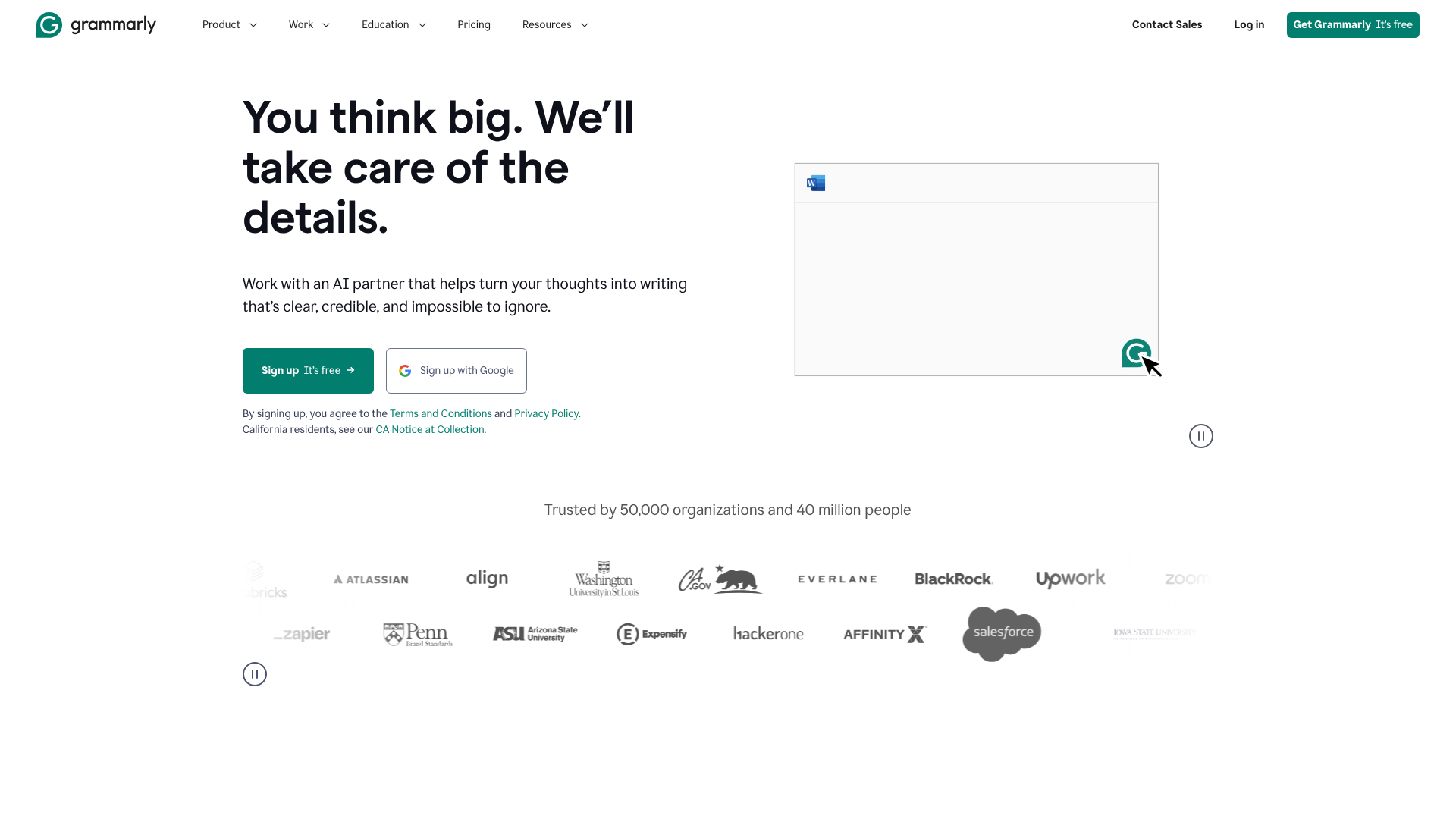
While many know Grammarly as a world-class grammar and spelling checker, its capabilities have expanded significantly with AI. It now functions as a comprehensive writing assistant that works wherever you do, thanks to its browser extensions and desktop apps. It doesn't just correct mistakes; it helps you improve your writing in real time.
Grammarly's AI features include tone suggestions, which analyse your word choice to tell you how your writing might be perceived (e.g., confident, friendly, formal). It can also help with clarity by suggesting ways to rephrase convoluted sentences. Its generative AI features allow you to compose, ideate, and reply to emails with a simple prompt, making it a powerful tool for everyday communication and final-stage editing.
Pros
- Works Everywhere: Seamless integration with browsers, email clients, and desktop apps.
- Excellent for Editing: Unmatched for catching grammatical errors and improving clarity.
- Tone Detector: A unique feature that helps you align your writing with your intended audience.
Cons
- Limited Generation: Its generative capabilities are less focused on long-form content than dedicated writers like Jasper.
- Free Version: The free version is useful for basic grammar but lacks most of the advanced AI features.
4. QuillBot: Best for Paraphrasing and Academic Writing
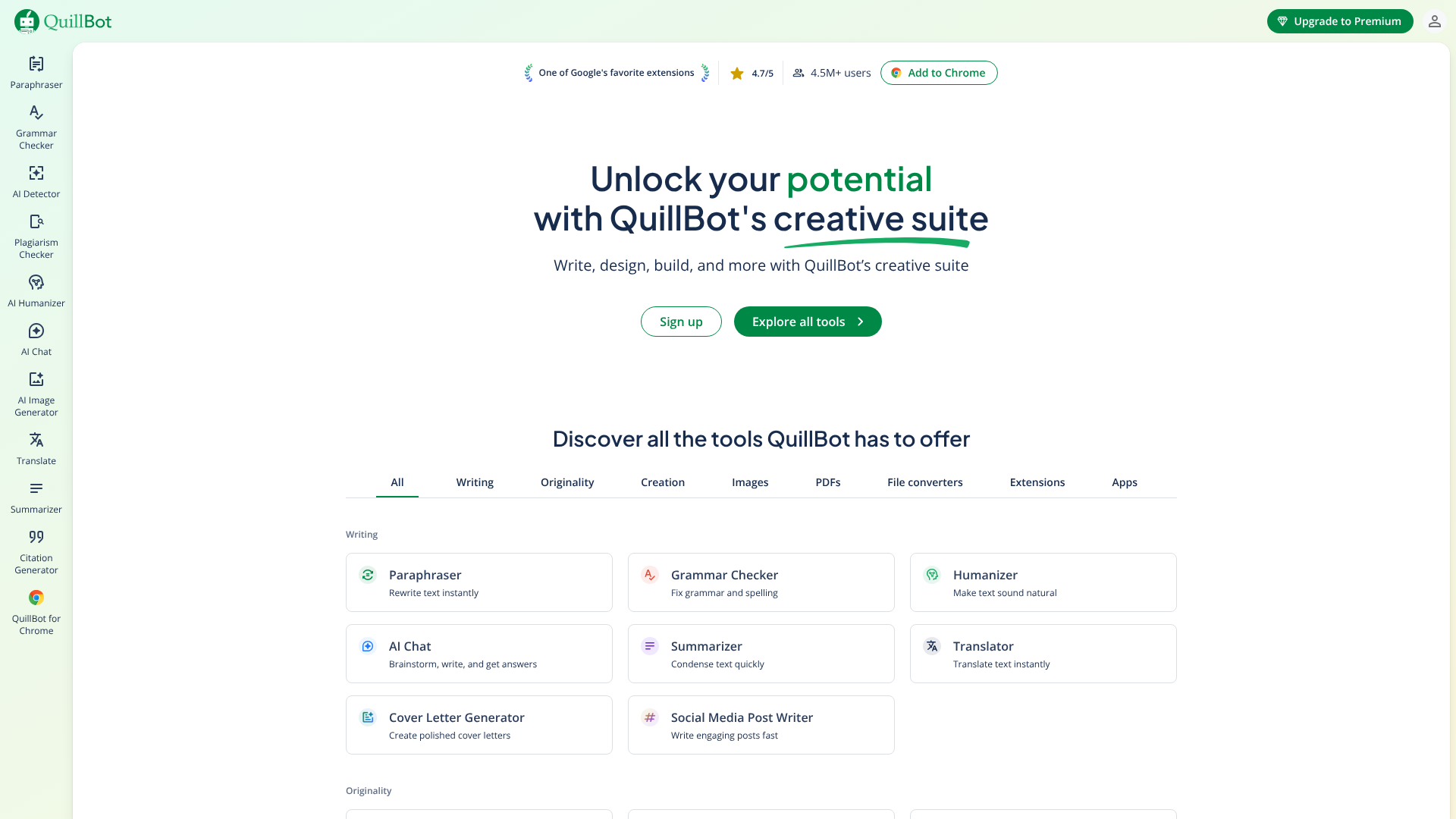
QuillBot has carved out a niche as the go-to tool for rephrasing and summarising text. It's particularly popular among students, academics, and researchers. Its Paraphraser tool is incredibly sophisticated, offering multiple modes (e.g., Standard, Fluency, Formal, Creative) to ensure the rephrased text fits the desired context.
Beyond paraphrasing, QuillBot offers a Co-Writer feature, which is a unified workspace for researching, writing, and citing sources. It also includes a grammar checker, summariser, and citation generator. This suite of tools is designed to support the entire academic writing process, from initial research to final proofreading.
Pros
- Best-in-Class Paraphraser: Offers a high degree of control and produces natural-sounding results.
- Generous Free Plan: The free version is quite capable for basic paraphrasing and grammar checks.
- Academic Focus: The citation generator and Co-Writer are excellent for students and researchers.
Cons
- Limited Original Content Generation: It's more focused on refining existing text than creating new content from scratch.
- Word Limits: The free and even premium plans have character limits for the paraphraser.
5. Copy.ai: Best for Short-Form Copy and Creative Brainstorming
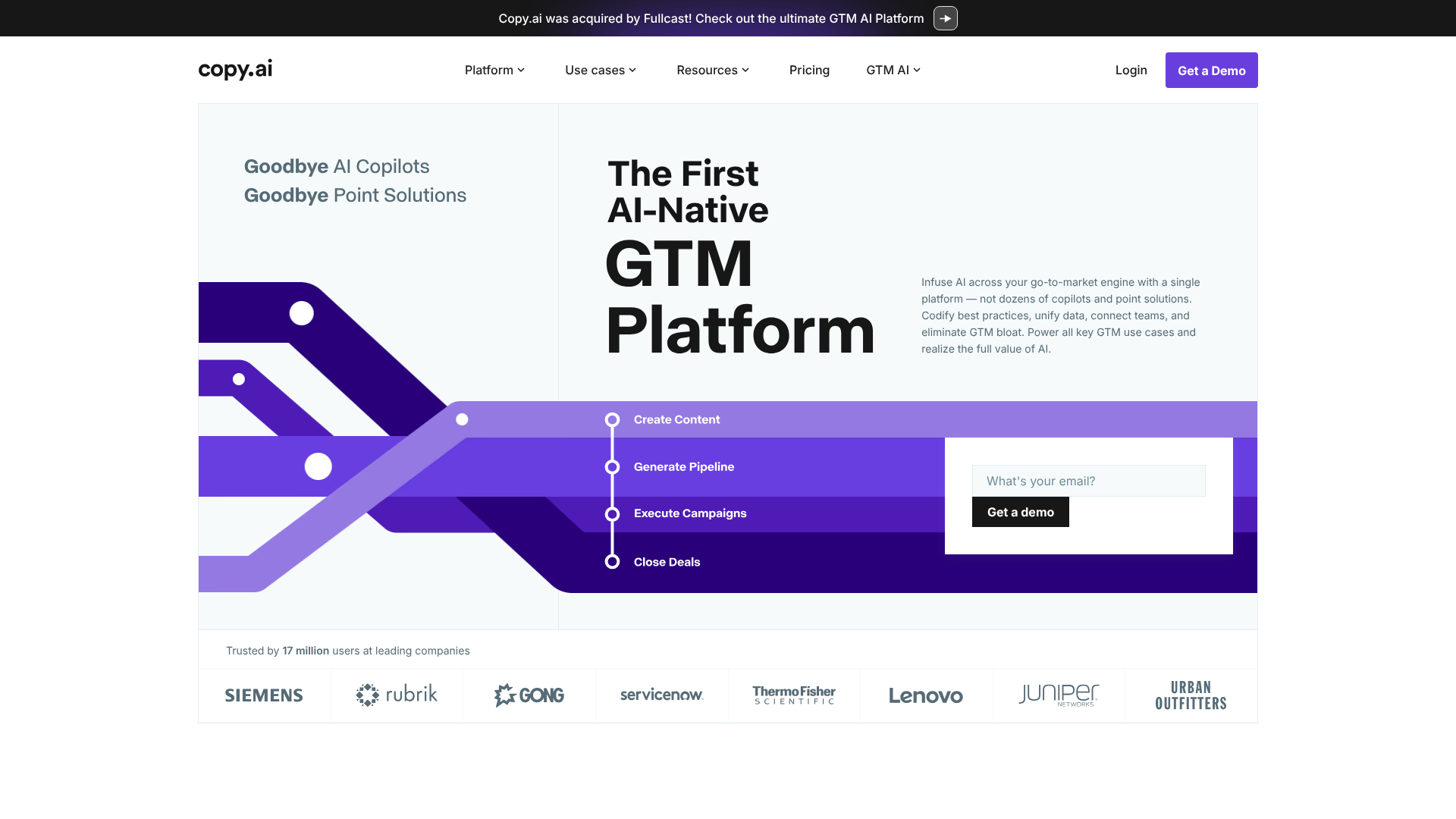
Copy.ai excels at generating short-form copy quickly and efficiently. It's a favourite among social media managers, email marketers, and advertisers. The platform is built around a vast library of templates for specific tasks, such as writing Instagram captions, Google Ads headlines, or brainstorming product names.
The interface is clean and straightforward, making it easy for beginners to get started. You select a tool, provide a brief description, and Copy.ai generates a list of creative options. This approach is perfect for overcoming creative blocks and producing a high volume of ideas to test and refine.
Pros
- User-Friendly: Very easy to learn and use, even for complete beginners.
- Excellent for Short Copy: Generates creative and engaging copy for ads, social media, and emails.
- Good Free Plan: Offers a free plan with a monthly word credit allowance.
Cons
- Long-Form Content: Not as strong for writing long articles or blog posts compared to competitors.
- Output Can Be Repetitive: Sometimes requires more editing to ensure variety in the suggestions.
6. Sudowrite: Best for Fiction and Creative Storytelling
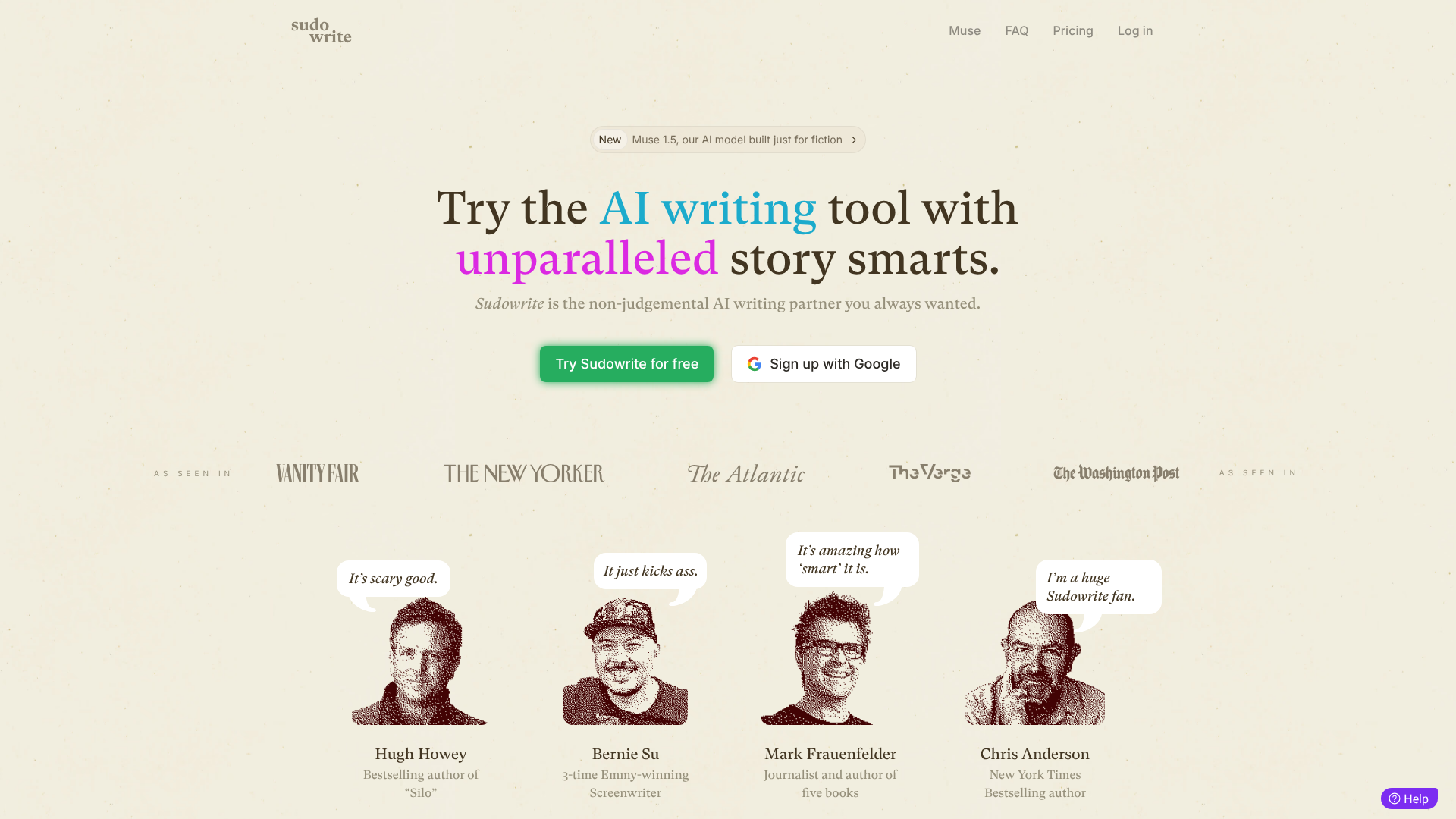
Sudowrite is an AI writing app built specifically for fiction authors. It's designed to be a creative partner, not just a content generator. Its features are tailored to the art of storytelling. The 'Describe' feature can take a simple sense (like 'smell of rain') and expand it into rich, sensory prose.
The 'Brainstorm' tool can generate plot points, character names, or world-building ideas.
One of its most powerful features is 'Story Bible', which allows you to store all your character backstories, world lore, and plot details in one place. The AI can then reference this information to maintain consistency throughout your manuscript. It's a tool designed to augment a writer's creativity, not replace it.
Pros
- Tailored for Fiction: Every feature is designed with novelists and storytellers in mind.
- Enhances Creativity: Excellent for brainstorming, expanding scenes, and adding descriptive detail.
- Story Bible: Helps maintain consistency in complex narratives.
Cons
- Niche Focus: Not suitable for marketing, blogging, or other non-fiction writing.
- Can Feel Overwhelming: The creative possibilities can sometimes lead to choice paralysis.
7. ChatGPT & Claude: Best Free & Versatile Options
No list would be complete without mentioning the general-purpose AI chatbots that started the revolution. Both OpenAI's ChatGPT and Anthropic's Claude offer powerful, versatile, and largely free platforms for a wide range of writing tasks. They are excellent for brainstorming, drafting outlines, writing initial versions of emails or blog posts, and summarising text.
Their conversational interface makes them incredibly intuitive to use. You can have a back-and-forth dialogue to refine your ideas and outputs. While they lack the specialised templates and workflows of dedicated writing apps, their raw power and flexibility make them indispensable tools for almost any writer. For many, they are the perfect starting point before moving to a more specialised tool.
Pros
- Highly Versatile: Can handle almost any writing task you throw at them.
- Powerful Free Tiers: Both offer very capable free versions for everyday use.
- Conversational Interface: Easy and intuitive to interact with and refine results.
Cons
- Lack of Specialisation: No built-in templates or workflows for specific tasks like SEO or marketing campaigns.
- Potential for Factual Inaccuracies: Always require human fact-checking, especially for complex topics.
AI Writing Tools: A Quick Comparison
To help you see the differences at a glance, here is a table comparing our top recommendations.
| Feature | Jasper | Writesonic | Grammarly | QuillBot |
|---|---|---|---|---|
| Best For | Marketing Teams | SEO & All-in-One | Editing & Polishing | Paraphrasing & Academic |
| Free Plan | No (Free Trial) | Yes (Limited) | Yes (Limited) | Yes (Limited) |
| Key Feature | Brand Voice & Campaigns | AI Article Writer 5.0 | Real-Time Tone & Grammar | Multi-Mode Paraphraser |
| Pricing | Premium | Tiered Plans | Free & Premium | Free & Premium |
Understanding the Pros and Cons of Writing Apps with AI

While these tools offer incredible potential, it's important to approach them with a balanced perspective. They are powerful assistants, but they come with their own set of advantages and limitations that every user should understand.
The Advantages
The upsides are clear and compelling. The most significant benefit is a massive boost in speed and efficiency, allowing creators to produce more content in less time. They are also fantastic for generating a wide array of ideas, helping to break through creative blocks and explore new angles. For teams, they ensure a consistent tone and style across all communications, strengthening brand identity.
The Potential Downsides
However, there are crucial considerations. AI models can sometimes produce factually incorrect information, a phenomenon known as 'hallucination'. This makes human oversight and fact-checking absolutely essential. There is also a risk of creating content that feels generic or lacks a unique human perspective if the output isn't carefully edited and personalised.
Furthermore, over-reliance on AI can lead to a decline in one's own writing skills. It's vital to use these tools as a starting point or a partner, not a complete replacement for human creativity and critical thinking. Ethical concerns, such as the potential for plagiarism if not used responsibly, also require careful attention.
Frequently Asked Questions About AI Writing Apps
As these tools become more common, many questions arise about their use, capabilities, and limitations. Here are answers to some of the most common queries.
What is the best AI for writing?
There is no single 'best' AI for writing; it depends entirely on your needs. For marketing teams that need to produce on-brand content at scale, Jasper (formerly Jarvis) is often considered the top choice. For bloggers and SEO specialists, Writesonic offers a powerful all-in-one solution. For fiction writers, Sudowrite is unparalleled.
For general-purpose drafting and brainstorming, free tools like ChatGPT and Claude are excellent starting points.
Is there a free AI writer?
Yes, many AI writing tools offer free plans, though they usually come with limitations. ChatGPT and Claude provide the most powerful and versatile free experiences for general writing tasks. QuillBot has a very useful free version for paraphrasing, and Copy.ai offers a free tier with a monthly word limit. These free plans are great for trying out the technology or for light, occasional use.
Can I legally write and sell a book using AI?
Yes, you can legally write and sell a book that was created with the help of AI. However, copyright and disclosure policies are still evolving. In the United States, for example, purely AI-generated work cannot be copyrighted, but work created with AI assistance by a human author can be. Platforms like Amazon's Kindle Direct Publishing require you to disclose the use of AI in your content.
It's crucial to be transparent and check the specific policies of any platform you plan to publish on.
Can you tell if something is written by AI?
It is becoming increasingly difficult to tell if content is written by AI. While AI detection tools exist, they are not perfectly reliable and can produce false positives. Often, AI-generated text can be identified by a lack of personal anecdotes, a very even and sometimes generic tone, or repetitive sentence structures. However, as the technology improves and as writers become better at editing AI output, distinguishing between human and AI-assisted writing will only become harder.
Final Thoughts: Integrating AI into Your Writing Workflow
AI writing apps are not a fleeting trend; they are a fundamental shift in how we create content. They offer incredible opportunities to boost productivity, enhance creativity, and maintain consistency. From drafting marketing campaigns with Jasper to polishing an important email with Grammarly, these tools can become invaluable partners in your writing process.
The key is to view them as assistants, not replacements. The best results come from a collaboration between human insight and artificial intelligence. Use these platforms to handle the heavy lifting of drafting and idea generation, but always apply your own critical thinking, unique voice, and factual verification to the final product.
If you're a marketing professional looking to scale content, exploring a tool like Jasper (formerly Jarvis) is a logical next step. For an all-in-one solution that covers writing, SEO, and image generation, Writesonic is worth a look. And for anyone who wants to improve the quality of their existing writing, Grammarly remains an essential tool in the modern writer's toolkit.