


By using this site, you agree to the Privacy Policy and Terms of Use.
Accept
Tech Happened logo (512 x 512 px)
Saturday, Nov 14, 2026
  • What's Hot:
  • AI News
  • Games
  • AI
  • News
  • Apps News
  • Web Hosting Reviews
  • Home
  • Automation & Workflow
  • Marketing
  • AI Tools
  • How Tos
  • Events
  • Contact
Reading: Japan’s SORA Takes On Malaria In Africa With AI-Smart Drones.
Newsletter
Font ResizerAa
Tech HappenedTech Happened
  • Home
  • Marketing
  • Startups
  • Events
  • Contact
Search
  • Home
  • Automation & Workflow
  • Marketing
  • AI Tools
  • How Tos
  • Events
  • Contact

Trending →

More Women In Tech Fellowship: 300 African Women to Turn AI Skills Into Real-World Projects

By
Tech Happened
September 21, 2026

Top 10 Email Marketing Tools for 2026

By
Tech Happened
September 13, 2026

Lovable vs v0 vs Replit: Which AI App Builder Is Best in 2026?

By
Tech Happened
September 13, 2026

10 Latest Canva Features That Will Blow Your Mind in 2026

By
Tech Happened
September 13, 2026

How to Use ChatGPT to Plan 30 Days of Content

By
Tech Happened
September 13, 2026
Follow US
© Tech Happened. All Rights Reserved.
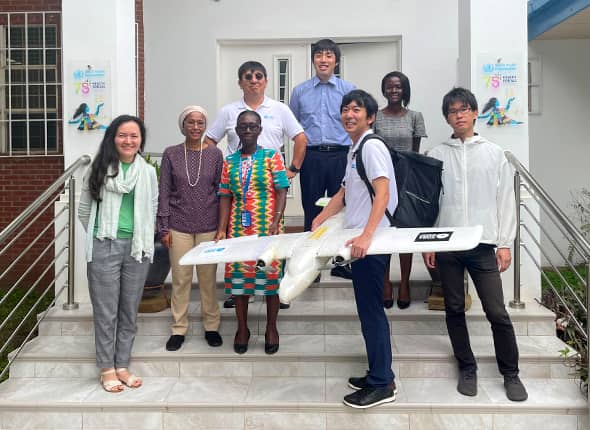
Sora photo showing group of men and women together

Home - AI News - Japan’s SORA Takes On Malaria In Africa With AI-Smart Drones.

AI News

Japan’s SORA Takes On Malaria In Africa With AI-Smart Drones.

Smart Drones Meet Malaria: Precise, Efficient, and Scalable.

Shalom Ihuoma
Last updated: July 28, 2025 11:15 pm
By
Shalom Ihuoma
Share
3 Min Read
SHARE

Japan’s SORA Technology is bringing some serious high-tech energy into Africa’s age-old malaria fight. It is with fresh funding of about $4.8 million, The startup is scaling its AI-powered drone operations across the continent. Malaria still kills hundreds of thousands of people in Africa every year, over 600,000 globally, with most of the deaths being children under five. Beyond the human toll, malaria also drags down economies, costing Africa an estimated $12 to $16 billion in lost productivity annually.

SORA’s solution? Smarter drones with brains. These drones fly over high-risk areas, like swamps, farms, or stagnant waters, scanning for potential mosquito breeding spots using onboard cameras and AI. Once a hot spot is spotted, the drones go in and spray larvicide with surgical accuracy, no more wasteful, blanket spraying that kills everything in sight.

This new model is already proving effective. Early results show up to 70% less chemical usage, 40% lower costs, and 50% less manpower needed, according to IAfrica. That’s a win for health systems, the environment, and everyone’s wallets. The drones are already flying in Ghana, Sierra Leone, Kenya, Benin, Senegal, and the DRC, with plans to expand into at least 15 more countries, including Nigeria, Uganda, Ethiopia, and Tanzania. Rollouts in some of these countries are set to begin by late August 2025, according to LaunchBase Africa.

Related: LegalOn Just Got $50 Million to Help Legal Teams Work Faster With AI.

And here is where it gets cooler, it is not just about spraying. The AI model is built to predict where outbreaks could start before they happen. It uses factors like temperature, vegetation type, water depth, and flow to map out high-risk zones, letting teams act before mosquitoes start spreading disease. Unlike Zipline, which uses drones to deliver medicine, SORA is more prevention-focused. They’re all about stopping disease before it starts. And they’re planning big: setting up an African drone assembly hub, training locals, and partnering with governments and NGOs to scale up across the continent.

Their innovation is getting noticed, too. SORA received the if Social Impact Prize in 2024 and an Encouragement Award from Malaria No More Japan earlier this year. Plus, they’re part of the Triple I for Global Health initiative, a G7-backed platform tackling global health crises.

This move isn’t just about tech, it is about changing the game. Smarter targeting means fewer chemicals in the environment. AI-driven forecasting means fewer outbreaks. Local engagement means sustainability. And $4.8 million is just the beginning. In a world where climate change is making mosquito breeding easier and longer, Africa needs more than old-school mosquito nets and insecticides. SORA’s high-flying solution offers a new kind of frontline defense: precise, proactive, and planet-friendly.


TAGGED:AIHealthtechMalariaStartupsTechnology
Share This Article
Facebook Copy Link
What do you think?
Love0
Sad0
Happy0
Sleepy0
Angry0
Dead0
Wink0

Recent Posts

  • More Women In Tech Fellowship: 300 African Women to Turn AI Skills Into Real-World Projects
  • Top 10 Email Marketing Tools for 2026
  • Lovable vs v0 vs Replit: Which AI App Builder Is Best in 2026?
  • 10 Latest Canva Features That Will Blow Your Mind in 2026
  • How to Use ChatGPT to Plan 30 Days of Content

Recent Comments

No comments to show.

You Might Also Like ↷

Apple company

Apple May Power Siri Upgrade with Google’s Gemini AI

September 5, 2025
Battery start-up

LeydenJar Raises €13M to Scale Silicon Anode Tech for U.S. Electronics Partner

September 17, 2025
Pinterest logo

Pinterest Adds AI-Powered Boards for Personalized Style Inspiration

October 27, 2025
Researchers

Researchers Warn Against Rise of AI-Generated ‘Workslop’ in Workplaces

September 29, 2025
  • Advertise with us
  • Subscribe to our newsletter
  • Join us on Whatsapp

Stay tuned for a blend of captivating content that not only informs but also inspires you to navigate the ever-evolving landscape of technology and marketing.

Tech Happened logo (512 x 512 px)
  • About Us
  • Privacy Policy
  • Terms of Service
  • Contact
FacebookLike
XFollow
PinterestPin
InstagramFollow
YoutubeSubscribe
TiktokFollow
WhatsAppFollow
LinkedInFollow
ThreadsFollow
BlueskyFollow

Tech Happened is a property of Hiig Holdings.

© 2026. Tech Happened. All rights reserved.
Tech Happened Newsletter Canvas Image
Our Newsletter
Subscribe now for a front-row seat to the latest in technology and marketing.
Zero spam, Unsubscribe at any time.