




Automated Content Generation: A Beginner's Guide to Scaling Your Output
Creating high-quality content consistently is one of the biggest challenges for any business. It demands time, creativity, and significant resources. Using automated content generation, marketers and business owners can now produce articles, social media updates, and even videos at a scale that was previously unimaginable, freeing up teams to focus on strategy and creativity.
- What You'll Learn
- What is Automated Content Generation? (And How Does It Work?)
- The Core Benefits of Content Automation for Businesses
- Unprecedented Speed and Scale
- Enhanced Consistency Across Channels
- Reduced Costs and Resource Allocation
- Overcoming Writer's Block and Sparking Creativity
- Navigating the Landscape: How to Choose the Right Content Generation Tools
- Define Your Content Needs
- Evaluate Ease of Use and Learning Curve
- Check for Quality and Originality Features
- Consider Integration Capabilities
- Top Automated Content Generation Tools for 2026
- 1. Jasper (formerly Jarvis): Best for Versatile AI Writing
- 2. Writesonic: Best for SEO-Focused Blog Posts
- 3. Synthesia: Best for AI Video Generation
- 4. Pictory: Best for Turning Text into Video
- Understanding Pricing and Costs
- The Pros and Cons of Automated Content: A Balanced View
- Frequently Asked Questions (FAQ)
- How do you automate content generation?
- What are the top 5 automation tools?
- Can ChatGPT automate tasks?
- What is the 70-20-10 rule in content?
- Final Thoughts: Integrating Automation into Your Content Strategy
This technology uses artificial intelligence to help draft, create, and distribute content. It's not about replacing human writers but empowering them with a powerful assistant that can handle the heavy lifting of first drafts and idea generation. When used correctly, it can transform your entire content workflow.
What You'll Learn
- What It Is: Automated content generation uses AI to create various types of content, from blog posts to video scripts, based on user inputs and data.
- The Core Benefit: The primary advantage is a massive increase in efficiency and scale, allowing you to produce more content in less time and at a lower cost.
- Key Tool Types: The landscape includes AI writers for text, AI video generators for visual content, and workflow platforms that connect different tools together.
- The Human Element is Crucial: The best results come from a 'human-in-the-loop' approach, where AI generates the first draft and a human editor refines it for quality, accuracy, and brand voice.
What is Automated Content Generation? (And How Does It Work?)
Automated content generation is the process of using software and artificial intelligence (AI) to create written or visual material without direct human input for every word or frame. Think of it as having a junior creative assistant who can take your instructions—a topic, a keyword, a set of data points—and instantly produce a coherent draft for you to review.
The technology behind this is primarily powered by large language models (LLMs), like the GPT series. These models have been trained on vast amounts of text and data from the internet. This training allows them to understand context, grammar, style, and the relationships between different concepts, enabling them to generate new, original text that reads naturally.
The process is straightforward:
- Input: You provide the AI tool with a prompt. This could be a simple blog post title, a detailed outline, a list of keywords, or even a link to an existing article you want to summarise.
- Processing: The AI analyses your input and scours its knowledge base to understand the request. It identifies key entities, concepts, and the desired format for the output.
- Output: The tool generates the content. This could be a full blog post, a series of social media captions, a video script, or product descriptions. This output serves as a solid first draft, often around 80-90% complete.
This isn't limited to just text. Modern content automation extends to creating images from text descriptions, generating voiceovers with realistic AI voices, and even producing full videos featuring AI-powered avatars. It’s a comprehensive solution for scaling multimedia content production.
How AI Can Automate Your Workflow
To see how this works in practice, this video provides a great step-by-step walkthrough of building an automated content creation workflow.
The Core Benefits of Content Automation for Businesses
Integrating content automation into your marketing strategy offers more than just saving time; it provides a strategic advantage that can impact your entire business. By handling repetitive and time-consuming tasks, these tools allow your team to focus on higher-value activities like strategy, customer research, and creative direction.
Unprecedented Speed and Scale
The most immediate benefit is the dramatic increase in output. A human writer might take several hours to research and write a 1,500-word blog post. An AI tool can generate a detailed draft in minutes. This speed allows you to scale your content production exponentially.
Imagine you need to create unique product descriptions for an e-commerce site with 500 products. Doing this manually would take weeks. With an automated tool, you could generate all 500 descriptions in a single afternoon, each tailored to the product's specific features.
Enhanced Consistency Across Channels
Maintaining a consistent brand voice, tone, and style across all your marketing channels is essential for building a strong brand identity. Content automation tools can be configured with specific style guides and brand voice parameters.
This ensures that every piece of automated content, whether it's a tweet, a blog post, or an email newsletter, adheres to your brand guidelines. This level of consistency is difficult to achieve with a large team of human writers, each with their own unique writing style.

Reduced Costs and Resource Allocation
Content creation can be expensive. Hiring freelance writers, in-house staff, or agencies involves significant financial investment. While content automation tools come with subscription fees, they are often far more cost-effective than manual creation, especially at scale.
By automating first drafts, you reduce the hours needed from expensive human talent. Your writers can transition from creators to editors and strategists, a more efficient use of their expertise and your budget. This allows you to reallocate resources to other critical marketing areas like analytics, promotion, and community management.
Overcoming Writer's Block and Sparking Creativity
Even the most experienced writers face the dreaded blank page. Content generation tools are excellent for breaking through creative blocks. By providing a few keywords or a basic idea, you can get a structured outline or a few opening paragraphs to kickstart the writing process.
These tools can also act as brainstorming partners. You can ask them to generate blog post ideas, headline variations, or different angles on a topic. This AI-powered assistance can spark new creative directions that your team might not have considered otherwise.
Navigating the Landscape: How to Choose the Right Content Generation Tools

With a growing number of content generation tools on the market, selecting the right one for your needs can feel overwhelming. The best tool for a solo blogger might not be the right fit for a large enterprise marketing team. To make an informed decision, evaluate potential options based on these key factors.
Define Your Content Needs
First, clarify what type of content you need to produce. Are you primarily focused on long-form blog posts and articles? Or do you need a tool that excels at short, punchy social media copy? Perhaps your main goal is to create marketing videos or email campaigns.
Different tools specialise in different areas. Some, like Jasper, are all-rounders with templates for almost any text-based format. Others, like Synthesia, are built specifically for video creation. Make a list of your primary content formats to narrow down your search.
Evaluate Ease of Use and Learning Curve
The most powerful tool is useless if your team finds it too complicated to use. Look for a platform with an intuitive user interface and a gentle learning curve. Many tools offer free trials or demos, which are excellent opportunities to test the software's usability.
Check for helpful resources like tutorials, knowledge bases, and customer support. A tool that is easy to adopt will deliver a faster return on investment because your team can start benefiting from it immediately without extensive training.
Check for Quality and Originality Features
The quality of the AI-generated output is paramount. The content should be coherent, grammatically correct, and relevant to your prompts. It's also critical to ensure the content is original to avoid plagiarism issues.
Look for tools that have built-in plagiarism checkers or are known for producing unique content. Some advanced platforms also allow you to fine-tune the creativity level of the output, giving you more control over the final result.
Pro Tip: Always run AI-generated content through a separate plagiarism and grammar checker like Grammarly before publishing. While most AI tools produce original text, this extra step provides peace of mind and helps catch any subtle errors the AI might have missed.
Consider Integration Capabilities
To maximise efficiency, your content automation tool should fit into your existing workflow. Check if it integrates with the other software you use daily. For example, a direct integration with WordPress could allow you to generate and publish a blog post without ever leaving the platform.
Other valuable integrations might include connections to SEO tools like Semrush, social media schedulers, or marketing automation platforms like HubSpot. Seamless integrations create a more efficient end-to-end content process.
Top Automated Content Generation Tools for 2026
Choosing the right tool depends on your specific goals, from writing SEO articles to producing marketing videos. Here are some of the top platforms that excel in different areas of content automation.
1. Jasper (formerly Jarvis): Best for Versatile AI Writing
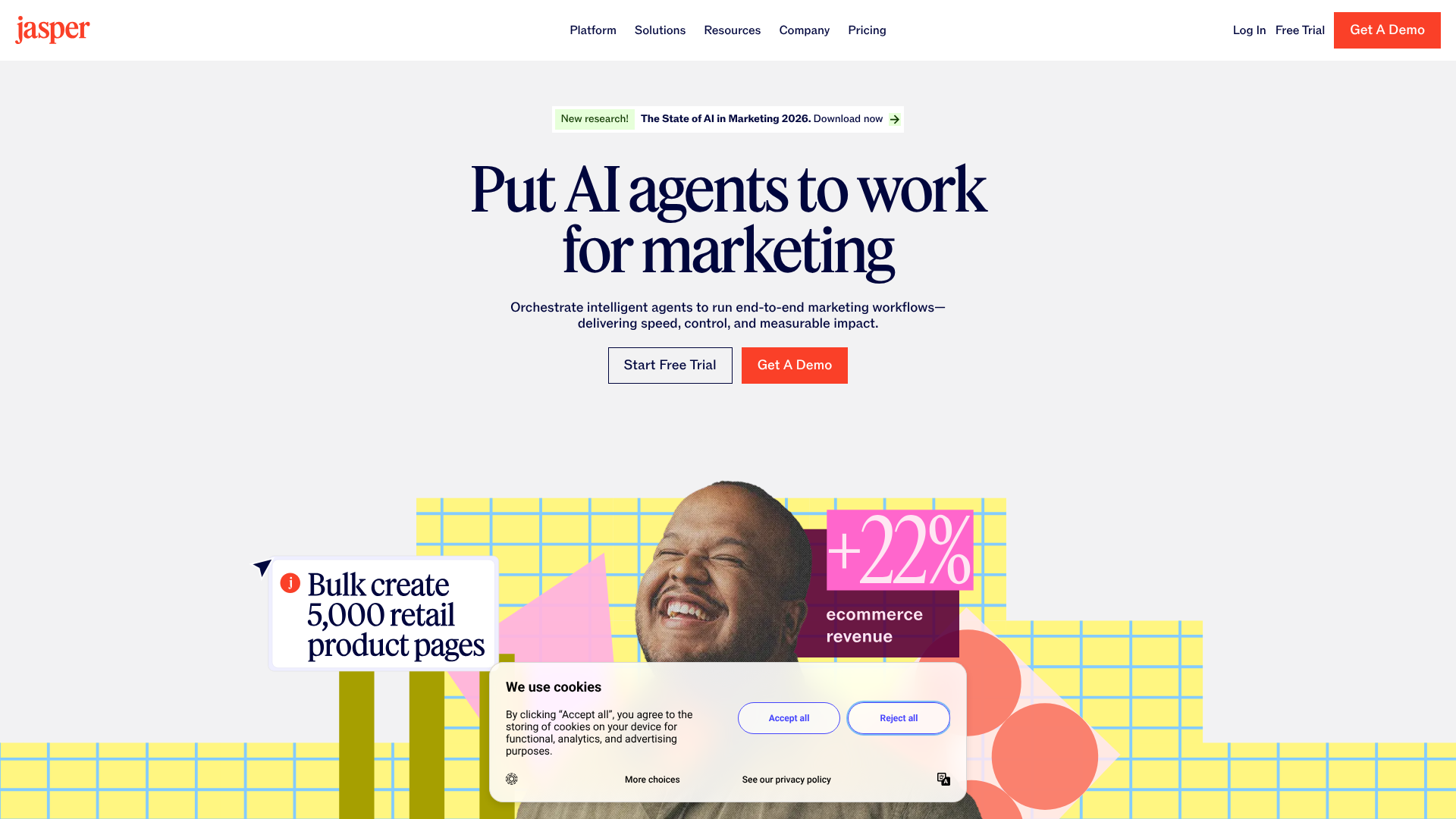
Jasper is one of the most well-known and versatile AI writing assistants available. It offers over 50 templates for various content types, including blog posts, social media ads, email subject lines, and even video scripts. Its strength lies in its flexibility and the high quality of its output.
The platform's 'Boss Mode' feature allows you to write long-form content by giving Jasper direct commands, making it feel like you're collaborating with an AI partner. It also integrates with Surfer SEO to help you create content that is optimised for search engines from the start.
Pros
- Extremely versatile with a wide range of templates.
- High-quality, natural-sounding output.
- Strong long-form content editor and command-based writing.
Cons
- Can be more expensive than some competitors.
- The credit system on lower-tier plans can be limiting for heavy users.
2. Writesonic: Best for SEO-Focused Blog Posts
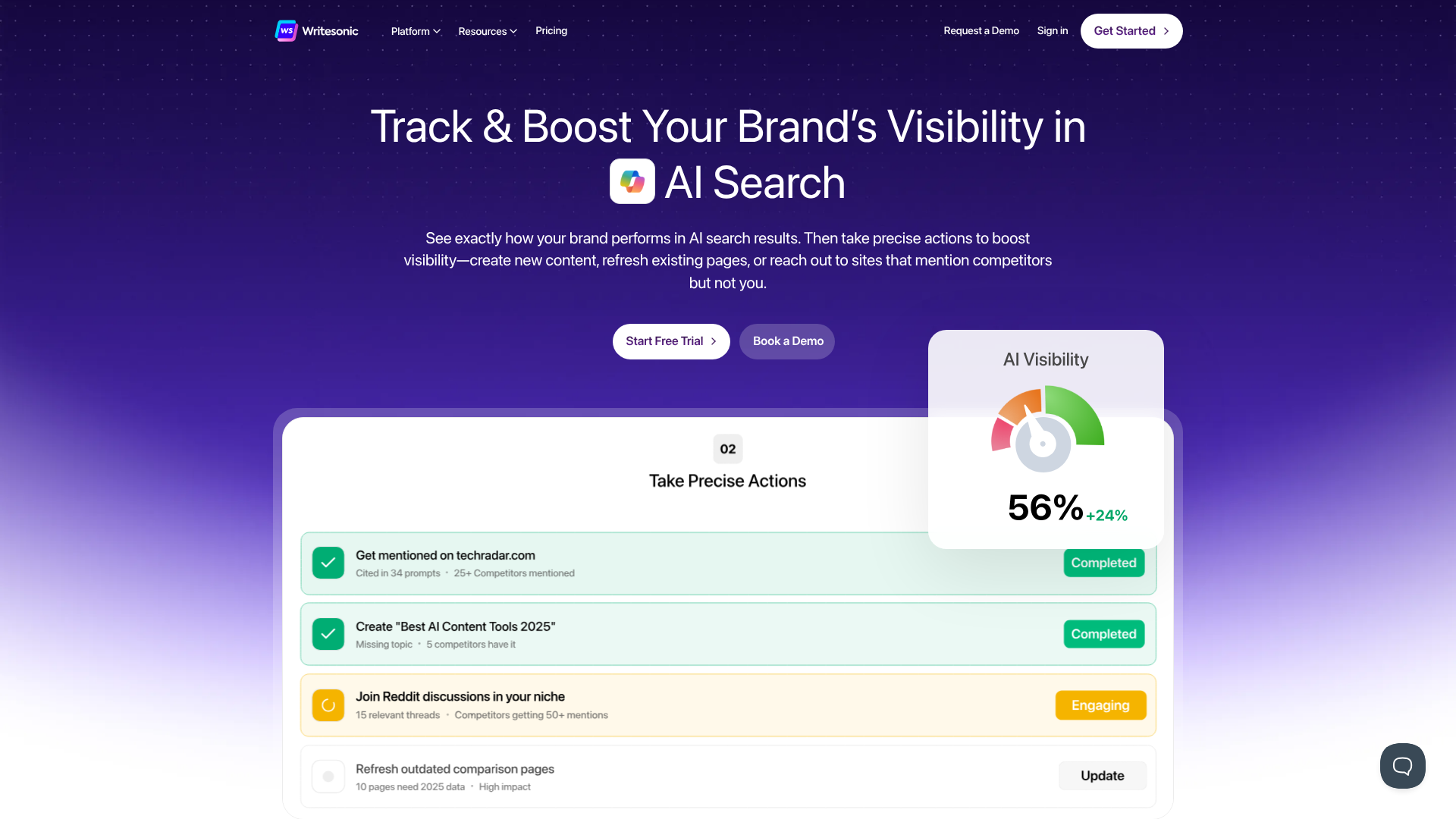
Writesonic is another powerful AI writer that excels at creating long-form, SEO-friendly content. Its AI Article Writer guides you through a step-by-step process, from generating ideas and outlines to writing a full article. The output is generally well-structured and optimised for your target keywords.
Beyond articles, Writesonic also offers tools for creating landing pages, Google Ads copy, and product descriptions. It includes Photosonic for AI image generation and Audiosonic for creating voiceovers, making it a more comprehensive content creation suite.
Pros
- Excellent for creating structured, SEO-optimised articles.
- Includes AI image and audio generation features.
- Often more affordable than other premium AI writers.
Cons
- The user interface can feel a bit cluttered with so many features.
- Long-form content may sometimes require more editing for flow.
3. Synthesia: Best for AI Video Generation
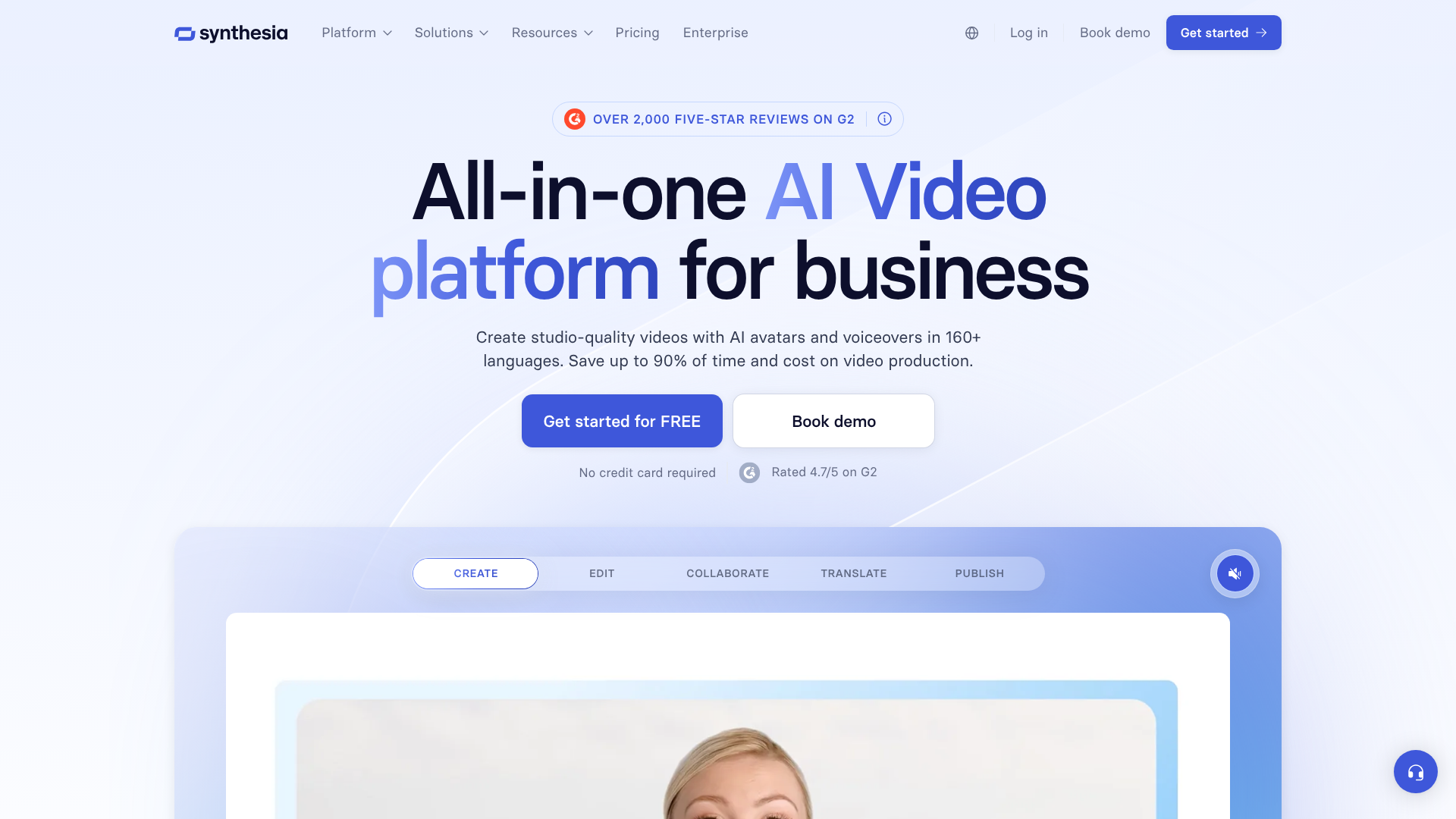
Synthesia is a leader in the AI video generation space. It allows you to create professional-looking videos featuring realistic AI avatars simply by typing in a script. You can choose from over 140 diverse avatars and have them speak your script in more than 120 languages and accents.
This tool is ideal for creating training videos, product demonstrations, and corporate communications without the need for cameras, microphones, or actors. It dramatically reduces the time and cost associated with traditional video production.
Pros
- Creates high-quality videos with realistic AI avatars.
- Extensive library of avatars, languages, and templates.
- No video production experience required.
Cons
- The monthly video duration limits on plans can be restrictive.
- Lacks the emotional nuance of a real human presenter.
4. Pictory: Best for Turning Text into Video

Pictory offers a unique approach to content automation by transforming long-form text content, like blog posts or scripts, into engaging videos. The AI automatically selects relevant stock video clips and images to match your text and adds captions and music.
This is an incredibly powerful tool for repurposing content. You can take a successful blog post and quickly turn it into a video for YouTube or social media, extending its reach and engaging a different segment of your audience. It also includes features for transcribing videos and creating short video highlight reels.
Pros
- Excellent for repurposing blog posts and scripts into videos.
- AI-powered video creation is fast and intuitive.
- Large library of royalty-free video clips, images, and music.
Cons
- The AI's video clip selection sometimes needs manual adjustment.
- The AI-generated voiceovers sound less natural than dedicated voice tools.
Understanding Pricing and Costs
Investing in automated content tools requires understanding their pricing structures and evaluating whether the cost aligns with the value they provide. Pricing can vary significantly between platforms, so it's important to know what to look for.
Common Pricing Models
Most content generation tools operate on a subscription basis, typically with a few common models:
- Tiered Subscriptions: This is the most common model. Plans are offered at different price points (e.g., Basic, Pro, Business) with increasing features and usage limits at each level.
- Usage-Based (Credits): Many AI writers use a credit or word-count system. You pay a monthly fee for a certain number of words or credits, and each piece of content you generate consumes them. Overages may require purchasing more credits.
- Pay-Per-Use: Less common for content generation, this model involves paying for each individual output, such as a single article or video. It can be good for infrequent users but expensive for those with high volume needs.
What Influences the Cost?
Several factors determine the price of a subscription:
- Usage Limits: The number of words, video minutes, or images you can generate per month is often the biggest cost driver.
- Feature Access: Advanced features like long-form editors, plagiarism checkers, team collaboration, and API access are usually reserved for higher-priced tiers.
- Number of Users: Plans for teams or agencies that require multiple user seats will naturally cost more than individual plans.
- AI Model Quality: Tools that use more advanced or proprietary AI models may charge a premium for higher-quality output.
| Tool | Primary Focus | Typical Pricing Model | Good for… |
|---|---|---|---|
| Jasper | Versatile AI Writing | Tiered Subscription (Word-based) | Teams needing high-quality copy for many formats. |
| Writesonic | SEO Blog Posts | Tiered Subscription (Word-based) | Bloggers and marketers focused on SEO content. |
| Synthesia | AI Video Creation | Tiered Subscription (Minute-based) | Businesses creating training or marketing videos. |
| Pictory | Text-to-Video | Tiered Subscription (Video-based) | Marketers looking to repurpose written content. |
Is It Worth the Investment?
To determine the return on investment (ROI), compare the tool's subscription cost to the cost of creating content manually. For example, if a £100/month subscription saves your writer 20 hours of work, and their hourly rate is £25, you've saved £500 in labour costs for a net gain of £400. This doesn't even account for the value of the increased content output.
The Pros and Cons of Automated Content: A Balanced View
While automated content generation offers powerful advantages, it's not a magic bullet. Understanding both its strengths and its limitations is key to using it effectively and responsibly. It's a tool that enhances human capability, not a complete replacement for it.
The Advantages (Pros)
- Massive Efficiency: The ability to generate drafts in minutes instead of hours is the single biggest advantage, allowing for a huge increase in content velocity.
- Scalability: It enables the creation of content at a scale that is simply not feasible with human writers alone, such as generating thousands of unique product descriptions.
- Cost-Effectiveness: For high-volume needs, the subscription cost of an AI tool is often significantly lower than hiring additional writers or agencies.
- Consistency: AI can maintain a consistent tone, style, and voice across vast amounts of content, strengthening brand identity.
- Idea Generation: It serves as an excellent brainstorming partner, helping to overcome writer's block and explore new content angles.
The Potential Downsides (Cons)
- Lack of True Understanding: AI models don't 'understand' content in the human sense. They predict the next most likely word, which can sometimes lead to factual inaccuracies or nonsensical statements.
- No Personal Experience or Emotion: AI cannot replicate genuine human experiences, emotions, or nuanced opinions. Content that requires deep empathy or personal stories still needs a human touch.
- Risk of Generic Content: If prompts are not specific enough, the output can be generic and lack a unique perspective. It often reflects a consensus view based on its training data.
- Requires Human Oversight: All AI-generated content needs to be fact-checked, edited, and refined by a human. Relying on it blindly can damage your brand's credibility.
Pro Tip: Adopt a 'human-in-the-loop' workflow. Use AI to generate the first 80% of the content (the draft), and have your human experts spend their time on the final 20%—adding insights, checking facts, and infusing it with your brand's unique voice.
Frequently Asked Questions (FAQ)
How do you automate content generation?
Automating content generation involves a few key steps. First, define your goal and the type of content you need (e.g., blog posts, social media updates). Next, choose the right AI content tool for the job, such as an AI writer like Jasper or a video generator like Synthesia. You then create detailed prompts or templates for the AI to follow.
The AI generates a draft, which a human editor must then review, fact-check, and refine to ensure it meets quality standards before publishing.
What are the top 5 automation tools?
The 'best' tools depend on your needs, but five of the top platforms in the content automation space are:
Jasper: For versatile, high-quality AI writing across many formats. 2. Writesonic: Excellent for creating SEO-optimised blog posts and articles.
Synthesia: A leader in creating professional videos with AI avatars. 4. Pictory: The best tool for repurposing long-form text into short, engaging videos.
Copy.ai: Known for its user-friendly interface and strong performance in generating marketing and sales copy.
Can ChatGPT automate tasks?
Yes, ChatGPT can automate many content-related tasks, such as drafting emails, writing code, summarising articles, and generating content outlines. However, it's a general-purpose tool. Specialised content automation platforms often provide a more streamlined workflow, better templates, and features specifically designed for marketing tasks, like SEO optimisation and brand voice controls, which can make them more efficient for specific business use cases.
What is the 70-20-10 rule in content?
The 70-20-10 rule is a content strategy framework that helps balance your content creation efforts. It suggests that 70% of your content should be low-risk, proven content that you know resonates with your audience (e.g., how-to guides, listicles). 20% should be more innovative content that is based on your successful 70% but explores new formats or deeper topics. The final 10% should be high-risk, experimental content that could lead to a major breakthrough or fail completely.
AI tools can be particularly helpful in scaling the production of the 70% content.
Final Thoughts: Integrating Automation into Your Content Strategy
Automated content generation is no longer a futuristic concept; it's a practical tool that is reshaping how businesses create and scale their marketing efforts. By handling the time-consuming process of drafting, these tools empower content creators to become strategists, editors, and creative directors.
The key to success is not to view content automation as a replacement for human creativity but as a powerful collaborator. The best results are achieved when the speed and scale of AI are combined with the nuance, experience, and critical thinking of a human professional. This partnership allows you to produce more content, maintain consistency, and free up your team to focus on what truly matters: connecting with your audience.
If you're ready to explore how AI can streamline your workflow, consider starting with a tool that addresses your biggest content bottleneck. For versatile writing needs, platforms like Jasper and Writesonic offer excellent starting points. If video is your priority, a tool like Synthesia can revolutionise your production process.