


Sales Pipeline vs Sales Funnel: A Practical Guide for Sales Managers
In the world of sales, the terms 'sales pipeline' and 'sales funnel' are often used interchangeably, leading to confusion that can obscure valuable insights into your sales process. While both are fundamental models for visualising how a potential customer becomes a paying one, they represent two distinct perspectives. Understanding the comparison between a sales pipeline vs sales funnel is not just a matter of semantics; it's crucial for accurately forecasting revenue, managing your team's activities, and identifying exactly where your sales strategy is succeeding or failing.
- Quick Summary
- The Core Difference: A Quick Comparison
- What is a Sales Pipeline? The Sales Rep's View
- The 5 Common Stages of a Sales Pipeline
- Key Metrics for Pipeline Management
- Benefits of a Well-Managed Pipeline
- What is a Sales Funnel? The Customer's Journey
- The Classic AIDA Model in Sales Funnels
- Key Metrics for Funnel Analysis
- Benefits of Analysing Your Sales Funnel
- Pipeline vs Funnel: A Side-by-Side Breakdown
- Perspective: Internal Actions vs. External Journey
- Purpose: Deal Management vs. Conversion Analysis
- Structure: Linear Process vs. Volume Reduction
- Focus: Forecasting Revenue vs. Identifying Leaks
- How They Work Together for a Winning Sales Strategy
- Choosing the Right Tools to Manage Both
- Pros and Cons: A Balanced View
- Frequently Asked Questions
- Final Thoughts
A sales pipeline focuses on the specific actions your sales team takes to move a deal from one stage to the next. It's an internal, process-driven view. In contrast, a sales funnel represents the customer's journey from awareness to purchase, measuring the volume of prospects and their conversion rates at each step. It’s an external, customer-centric view.
Grasping this core difference is the first step towards building a more efficient and predictable sales engine.
This guide will break down everything you need to know about the pipeline vs funnel debate. We'll explore their unique features, the metrics that matter for each, how they work together, and the tools you need to manage them effectively. By the end, you'll have a clear framework for using both models to drive growth.
Quick Summary
- Different Perspectives: A sales pipeline is from the seller's point of view, tracking the actions a salesperson takes to close a deal. A sales funnel is from the buyer's point of view, tracking the journey a lead takes to become a customer.
- Different Purposes: Pipelines are for managing active deals and forecasting revenue. Funnels are for analysing conversion rates and identifying leaks in the customer acquisition process.
- Different Structures: A pipeline is typically visualised as a linear bar or set of columns representing stages. A funnel is shaped like an inverted pyramid, showing the decreasing number of prospects as they move towards a purchase.
- Different Metrics: Key pipeline metrics include deal velocity, number of deals, and average deal size. Key funnel metrics are conversion rates between stages (e.g., MQL to SQL conversion rate).
- They Work Together: You need both. Funnel analysis tells you why you're losing deals, while pipeline management tells you what your team is doing to win them. Insights from one directly inform and improve the other.
The Core Difference: A Quick Comparison
Before we dive deep, let's establish a clear, high-level understanding. Think of it this way: the pipeline is about the actions your sales team performs, while the funnel is about the numbers and conversion of your leads. One is a map of your process; the other is a measure of its effectiveness.
Here’s a simple table to illustrate the main points of the sales funnel comparison:
| Feature | Sales Pipeline | Sales Funnel |
|---|---|---|
| Perspective | Seller-centric (Your team's actions) | Buyer-centric (The customer's journey) |
| Purpose | Manage deals and forecast revenue | Analyse lead volume and conversion rates |
| Focus | The process of closing a deal | The customer's path to purchase |
| Key Question | "What are the next steps to close this deal?" | "How many leads are converting at this stage?" |
| Primary Metrics | Deal velocity, pipeline value, win rate | Conversion rate, lead volume, cost per lead |
| Visualisation | Linear stages (e.g., Kanban board) | Inverted pyramid or cone |
Understanding this distinction is the foundation. Your pipeline helps you manage the day-to-day, while your funnel helps you refine your long-term strategy.
What is a Sales Pipeline? The Sales Rep's View
A sales pipeline is a visual representation of where prospects are in your sales process. It’s a tool for sales representatives and their managers to track the specific stages a deal goes through, from initial contact to the final signature. Each deal in the pipeline is assigned to a stage, giving a clear overview of the team's workload and potential future revenue.
The primary function of a pipeline is to provide clarity and predictability. By looking at the number of deals in each stage and their estimated value, a sales manager can make a reasonably accurate sales forecast. It also helps individual reps prioritise their efforts, ensuring they know which deals need a follow-up call, which require a proposal, and which are ready for closing.
Essentially, the pipeline is a workflow management tool. It answers the question, "What actions do we need to take to move our active opportunities forward?" This process-oriented view makes it indispensable for managing sales activities and performance.
The 5 Common Stages of a Sales Pipeline
While the exact stages can be customised to fit a company's specific sales cycle, most B2B sales pipelines follow a similar structure. Understanding these stages is key to organising your sales efforts effectively.
- Prospecting/Contact: This is the initial stage where potential leads are identified. Sales reps might be doing cold outreach, following up on marketing-generated leads, or networking. The goal is simply to make initial contact and determine if there's a potential fit.
- Qualification: Once contact is made, the next step is to qualify the lead. The rep determines if the prospect has the need, budget, authority, and timeline (BANT) to make a purchase. This is a critical filtering stage to ensure the team spends time on viable opportunities.
- Meeting/Demo: Qualified leads move to this stage. Here, the sales rep conducts a discovery call, presents a product demonstration, or holds a meeting to understand the prospect's challenges in depth and showcase how their solution can help. The focus is on building value and aligning the solution with the prospect's pain points.
- Proposal/Quote: After a successful demo, the prospect has shown significant interest. The sales rep now prepares and sends a formal proposal, quote, or contract outlining the scope of work, pricing, and terms. This stage often involves negotiation and handling objections.
- Closing: This is the final stage. The deal is either "Won" or "Lost." If won, the contracts are signed, and the prospect becomes a customer. If lost, it's important to understand why, so the process can be improved for future deals.
Key Metrics for Pipeline Management
To keep your sales engine healthy, you need to track the right pipeline metrics. These numbers tell you how efficiently your team is moving deals through the stages.
- Number of Deals in Pipeline: A simple count of all open opportunities. This gives you a sense of overall activity.
- Average Deal Size: The average value of the deals in your pipeline. This helps in revenue forecasting.
- Pipeline Velocity: This measures how quickly deals move through your pipeline, from start to finish. A faster velocity means a shorter sales cycle and quicker revenue generation.
- Win Rate: The percentage of deals that end up as "Closed-Won." This is a crucial indicator of your team's effectiveness.
Tracking these metrics, often within a CRM system, allows you to spot bottlenecks. For example, if deals are stalling in the "Proposal" stage, it might indicate your pricing is too complex or your proposals aren't compelling enough.


Benefits of a Well-Managed Pipeline
Maintaining a clean and organised sales pipeline isn't just administrative work; it delivers tangible business benefits that directly impact your bottom line. A structured pipeline moves your sales efforts from reactive to proactive, creating a system for consistent growth.
First, it dramatically improves revenue forecasting. When you know the number of deals in each stage, their average value, and your historical win rate, you can predict future income with a much higher degree of accuracy. This allows for better financial planning, resource allocation, and strategic decision-making across the business.
Second, a clear pipeline enhances sales team performance and accountability. Each sales rep can see their open opportunities at a glance, making it easier to prioritise tasks and focus on the deals most likely to close. Managers can use pipeline reports to identify which reps are excelling and which may need additional coaching, creating a culture of continuous improvement.
Finally, it helps in identifying process bottlenecks. If you notice deals consistently getting stuck at a particular stage—for instance, the demo-to-proposal stage—it signals a problem. Perhaps your demos aren't effectively communicating value, or there's a delay in generating quotes. Without a pipeline view, these critical issues would remain hidden.
What is a Sales Funnel? The Customer's Journey
While the pipeline tracks your actions, the sales funnel tracks your audience. It’s a marketing and sales model that illustrates the theoretical journey a potential customer takes from their first point of awareness about your brand to the moment they make a purchase. The 'funnel' shape is significant because it represents the idea that you'll start with a large number of potential leads at the top, but only a fraction will make it all the way to the bottom.
At each stage of the funnel, some people will drop out. They might decide your solution isn't the right fit, choose a competitor, or simply lose interest. The purpose of analysing the sales funnel is to measure these drop-off rates and understand why they are happening. It's a diagnostic tool for your entire customer acquisition strategy, from marketing campaigns to sales conversations.
The sales funnel answers the question, "How effectively are we converting awareness into action?" It focuses on volume and conversion rates, giving you a high-level view of your marketing and sales health.
The Classic AIDA Model in Sales Funnels
The most well-known framework for a sales funnel is AIDA, which stands for Awareness, Interest, Desire, and Action. This model describes the cognitive stages a person goes through during the buying process.
- Awareness (Top of the Funnel – TOFU): This is where the prospect first becomes aware of a problem they have and discovers your company as a potential solution. Marketing activities here include blog posts, social media, SEO, and advertising.
- Interest (Middle of the Funnel – MOFU): The prospect is now actively researching solutions. They are interested in learning more about your product or service. Content like webinars, case studies, and detailed guides works well here to nurture their interest.
- Desire (Middle of the Funnel – MOFU): The prospect has moved from general interest to a specific desire for your product. They are evaluating your offer against competitors and are convinced of its value. Free trials, demos, and customer testimonials are powerful at this stage.
- Action (Bottom of the Funnel – BOFU): This is the final step where the prospect takes the desired action: making a purchase, signing a contract, or booking a consultation. Clear calls-to-action, easy checkout processes, and compelling offers are key to driving this final conversion.
Key Metrics for Funnel Analysis
Analysing your funnel is all about the numbers. These metrics help you understand how many people are moving from one stage to the next and how much it costs to acquire them.
- Lead Volume by Stage: The total number of leads currently in each stage of the funnel. This shows you the overall size of your audience.
- Conversion Rate: The percentage of people who move from one stage to the next. For example, the conversion rate from 'Interest' to 'Desire'. Low conversion rates signal a problem area.
- Cost Per Lead (CPL): The amount of money you spend on marketing to generate a single lead.
- Customer Acquisition Cost (CAC): The total cost of sales and marketing to acquire one new customer. A healthy business model requires a CAC that is significantly lower than the customer's lifetime value (LTV).
Benefits of Analysing Your Sales Funnel
Regularly analysing your sales funnel provides critical strategic insights that a pipeline alone cannot offer. It shifts the focus from individual deals to the overall health of your customer acquisition engine, enabling smarter, data-driven decisions.
The most significant benefit is the ability to optimise marketing spend and effort. By understanding the conversion rates at each stage, you can identify which marketing channels (e.g., Google Ads, content marketing, social media) are bringing in the most valuable leads—those that actually convert to customers. If a channel generates thousands of top-of-funnel leads but has a near-zero conversion rate, you know to reallocate that budget to more effective channels.
Another key advantage is improving the customer journey. A funnel analysis reveals where prospects are getting stuck or dropping off. For instance, a high drop-off rate after a free trial sign-up might indicate a poor onboarding experience. Armed with this data, you can make targeted improvements to your website, content, or product to create a smoother path to purchase, increasing overall conversion rates.
Finally, it provides a holistic view that aligns sales and marketing teams. The funnel is a shared space where marketing's lead generation efforts meet sales' conversion efforts. When both teams look at the same funnel data, they can collaborate more effectively. Marketing can focus on improving lead quality, and sales can provide feedback on which leads are most prepared to buy, creating a powerful feedback loop that drives growth.
Pipeline vs Funnel: A Side-by-Side Breakdown
Now that we've defined both concepts, let's put them head-to-head to solidify the differences. The distinction between a sales pipeline vs funnel isn't just academic; it impacts how you manage your team, what data you prioritise, and where you invest your resources.
Perspective: Internal Actions vs. External Journey
The most fundamental difference lies in perspective. The sales pipeline is an internal-facing model. It's built around the actions and processes controlled by your sales team. Each stage—'Qualification', 'Demo', 'Proposal'—is a task or milestone that a salesperson must complete.
It’s about what you do.
The sales funnel, conversely, is an external-facing model. It maps the journey from the customer's perspective. The stages—'Awareness', 'Interest', 'Desire'—reflect the potential buyer's mindset and level of engagement. It’s about what they think and feel.
This difference in perspective is crucial. A healthy pipeline shows your team is active and following the process. A healthy funnel shows your process is actually resonating with customers and persuading them to move forward.
Purpose: Deal Management vs. Conversion Analysis
Their purposes are also distinct. The primary purpose of a sales pipeline is deal management and forecasting. It’s a tactical tool used daily by sales reps and managers to track open opportunities, plan next steps, and predict monthly or quarterly revenue. It helps answer, "Are we on track to hit our quota?"
The purpose of a sales funnel is conversion analysis and strategy optimisation. It’s a strategic tool used by marketing and sales leaders to measure the effectiveness of the entire customer acquisition process. It helps answer, "Where are we losing potential customers, and why?" By analysing conversion rates, you can identify weaknesses in your messaging, targeting, or sales process.
Pro Tip: Don't treat your pipeline stages as a simple checklist. For each stage, define clear exit criteria. For a deal to move from 'Qualified' to 'Demo', for example, the exit criteria might be "The prospect has confirmed budget and identified key decision-makers." This keeps your pipeline clean and your forecasts accurate.
Structure: Linear Process vs. Volume Reduction
Visually and structurally, they are opposites. A pipeline is often represented as a linear, horizontal bar or a series of columns (like a Kanban board). Deals move from left to right, and the value of a deal remains the same as it progresses through the stages. The focus is on forward movement.
A funnel is always represented as an inverted pyramid or cone. It's wide at the top and narrow at the bottom. This shape is integral to its meaning, as it visually represents the reduction in volume as leads are filtered and qualified. You might start with 1,000 leads at the top, but only 10 become customers at the bottom.
Focus: Forecasting Revenue vs. Identifying Leaks
Finally, they have different strategic focuses. A sales pipeline's main focus is on forecasting future revenue. By multiplying the value of deals in each stage by the historical probability of closing from that stage, you can create a weighted forecast. This makes it an essential tool for financial planning.
A sales funnel's main focus is on identifying leaks. A 'leak' is a point in the customer journey where you lose an unusually high percentage of prospects. For example, if 90% of leads who request a demo never actually book one, you have a major leak. The funnel helps you pinpoint these problem areas so you can fix them and improve your overall efficiency.
How They Work Together for a Winning Sales Strategy
The real power comes not from choosing one over the other, but from using them together. A sales pipeline and sales funnel are two sides of the same coin. They provide a complete picture of your sales health, combining your internal process with external customer behaviour. When integrated, they create a powerful feedback loop for continuous improvement.
Think of it like a car's engine. The pipeline is the mechanics of the engine—the pistons firing, the gears turning. The funnel is the dashboard diagnostics—the fuel gauge, the temperature, the warning lights. You need both to get where you're going efficiently and without breaking down.
Using Funnel Data to Fix a Leaky Pipeline
Your funnel data provides the 'why' behind your pipeline's performance. Let's say your pipeline report shows that your team's win rate has dropped by 15% this quarter. The pipeline itself doesn't tell you why. But your funnel report might reveal that the conversion rate from Marketing Qualified Lead (MQL) to Sales Qualified Lead (SQL) has plummeted.
This insight tells you the problem isn't your sales team's closing ability; it's the quality of the leads they're receiving. Armed with this data, your sales and marketing leaders can collaborate. Marketing can refine its targeting or messaging to attract better-fit prospects, which in turn feeds the pipeline with higher-quality deals, ultimately improving the win rate.
Using Pipeline Stages to Validate Funnel Health
Conversely, your pipeline can validate or challenge the assumptions in your funnel. Suppose your funnel shows a high conversion rate at the 'Desire' stage, where customers are requesting demos. This looks great on a marketing report. However, if the sales pipeline shows that 80% of those demoed deals are being marked as 'Closed-Lost' due to a lack of budget, it reveals a major disconnect.
The funnel metric looks healthy, but the pipeline reality is grim. This indicates that your marketing is creating desire but failing to attract prospects with the actual ability to buy. The sales team's feedback from the pipeline (the reason for the loss) provides the crucial context that allows marketing to adjust its strategy, perhaps by being more transparent about pricing earlier in the funnel.
Choosing the Right Tools to Manage Both
Manually tracking pipelines in spreadsheets and funnels in analytics reports is inefficient and prone to error. To effectively manage both, you need a centralised system that connects your sales activities with your customer data. This is where Customer Relationship Management (CRM) software becomes essential.
Why a CRM is Essential
A modern CRM platform is designed to be the single source of truth for all customer interactions. It's the perfect tool for managing both a sales pipeline and a sales funnel because it naturally combines sales actions with customer data.
- For the Pipeline: CRMs provide visual deal stages (often a drag-and-drop Kanban board) where reps can manage their opportunities. All communication—emails, calls, notes—is logged against the deal, providing a complete history. Automation can handle follow-up reminders and data entry, freeing up reps to sell.
- For the Funnel: CRMs track leads from their very first touchpoint (e.g., a website visit or form submission). They can automatically score leads based on their behaviour and demographic data. Reporting dashboards make it easy to build funnel reports and visualise conversion rates between stages.
By having both sets of data in one place, you can easily see how marketing efforts are translating into pipeline activity and, ultimately, revenue.
Top Recommendations for Sales Teams
Two of the most powerful and popular CRM platforms for managing both pipelines and funnels are HubSpot and Zoho CRM.
1. HubSpot CRM
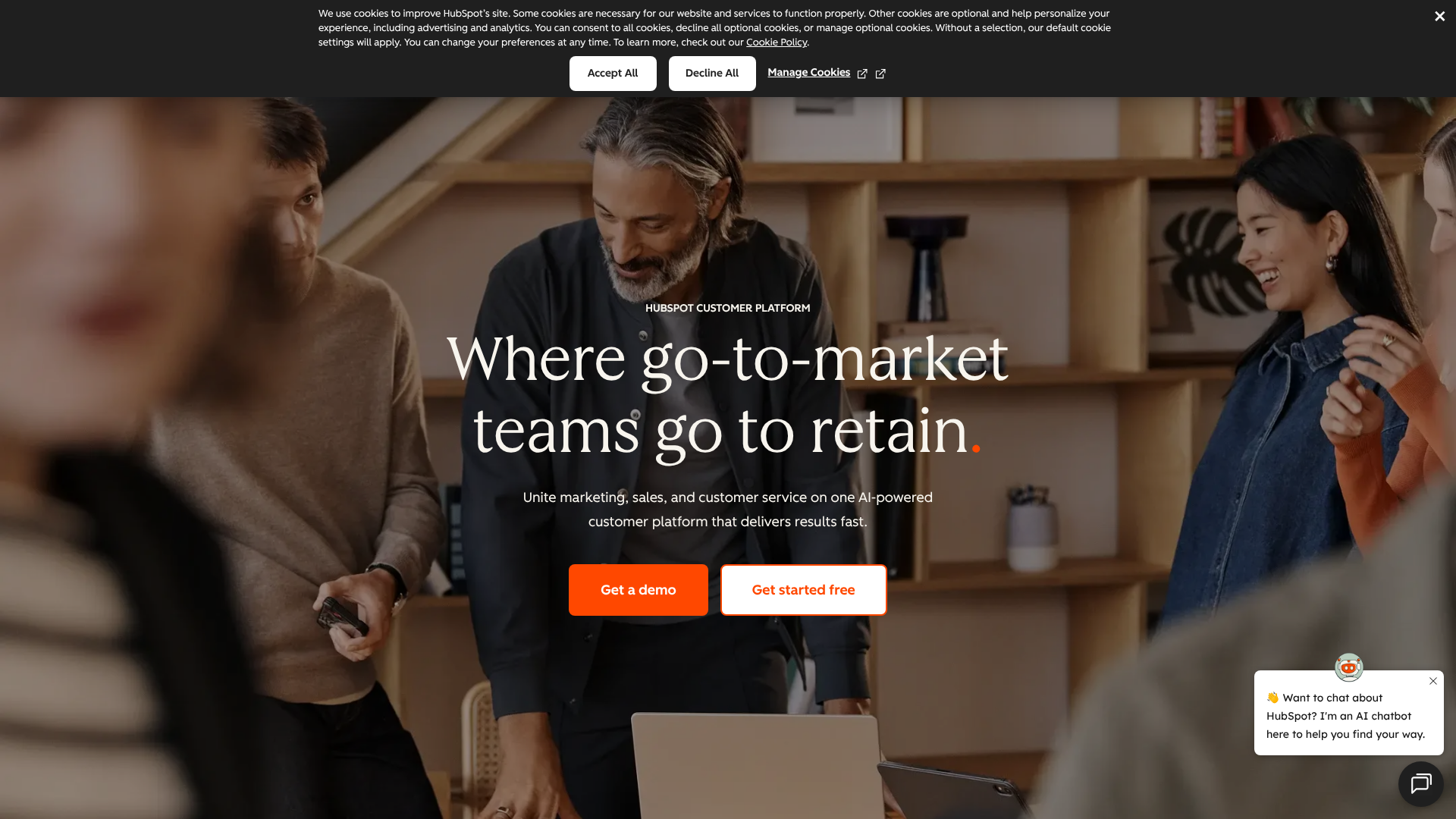
HubSpot CRM is renowned for its user-friendly interface and its tight integration between marketing, sales, and service tools. This makes it exceptionally good at providing a seamless view of the entire customer journey, from the first marketing touchpoint to the final sale and beyond.
Its sales pipeline management is visual and intuitive, allowing for easy customisation of deal stages. Where it truly shines is in its ability to connect marketing analytics (the funnel) directly to sales outcomes (the pipeline). You can easily build reports that show which blog posts, ad campaigns, or email sequences are generating the most valuable deals.
- Pros: Extremely easy to use, powerful free version available, excellent integration between marketing and sales tools, strong automation capabilities.
- Cons: Paid plans can become expensive as you add more contacts and features, advanced customisation can be limited compared to more complex systems.
2. Zoho CRM
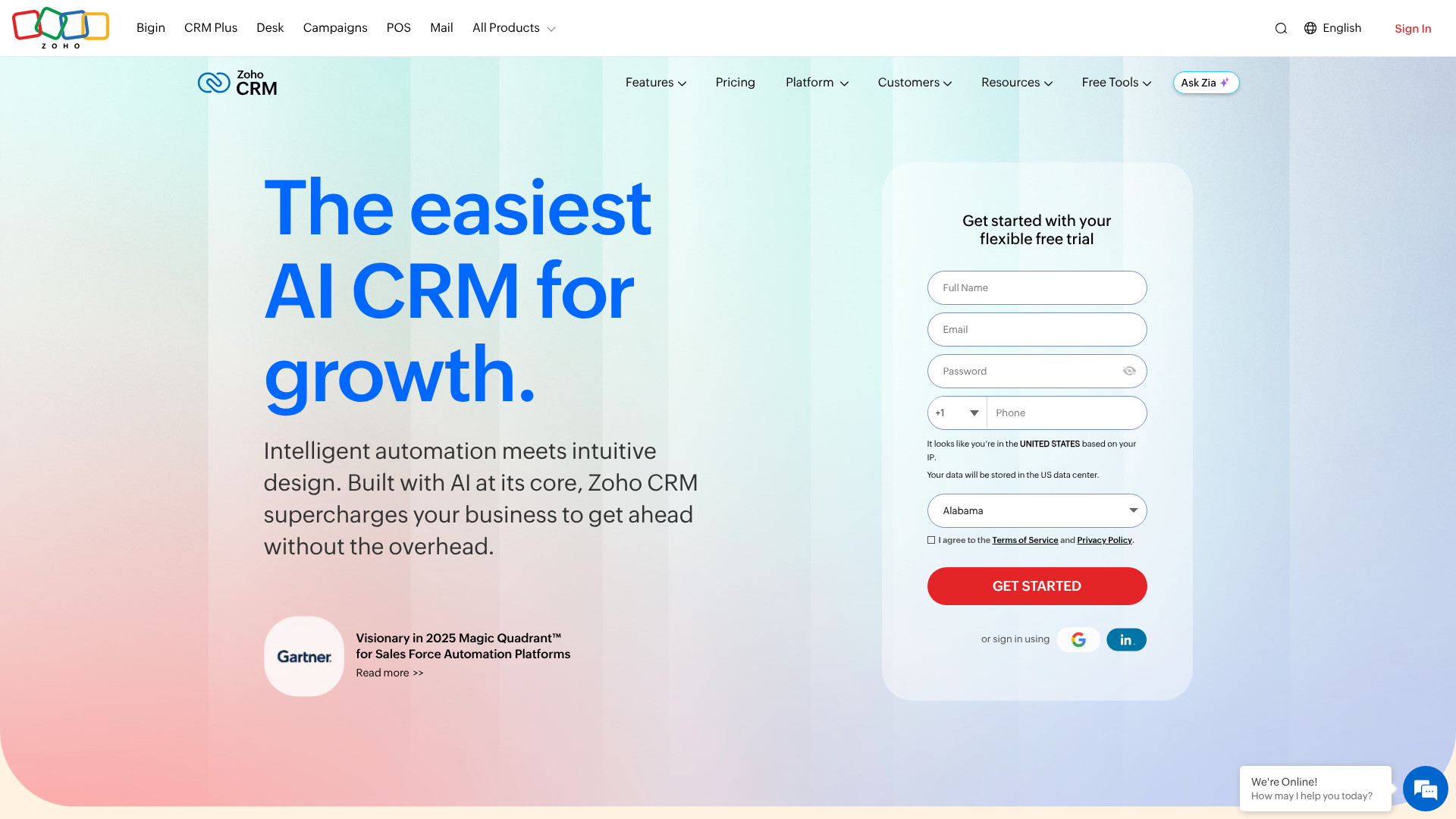
Zoho CRM is a powerhouse of a platform known for its deep customisation options and extensive feature set, often at a very competitive price point. It's an excellent choice for businesses with unique sales processes that need a CRM that can be tailored to their specific needs.
Zoho offers robust pipeline management with advanced analytics, including AI-powered predictions and anomaly detection. Its integration with the wider Zoho suite of business apps (including marketing automation and analytics) allows you to build a comprehensive view of your funnel and pipeline. It's ideal for teams that want granular control over their data and reporting.
- Pros: Highly customisable, excellent value for money, extensive feature set including AI tools, part of a broad ecosystem of business apps.
- Cons: The sheer number of features can be overwhelming for new users, the interface is less modern than some competitors.
Tools for Specific Pipeline Stages
Beyond a core CRM, you can use specialised tools to optimise specific stages of your sales pipeline.
- Prospecting & Outreach: Tools like Apollo.io and Hunter Campaigns (Hunter.io) help you find contact information and automate cold email sequences to fill the top of your pipeline.
- Sales Engagement: Platforms like Outreach and Reply.io help reps manage multi-channel communication (email, phone, social) with prospects to ensure consistent follow-up.
- Proposals & Closing: When you reach the proposal stage, tools like PandaDoc and Better Proposals streamline the creation, sending, and tracking of sales documents. They often include eSignature capabilities, like those found in eSignly, to speed up the closing process.
Pros and Cons: A Balanced View
Like any model, both the sales pipeline and sales funnel have their strengths and weaknesses. Understanding these helps you use them more effectively and avoid common pitfalls.
Sales Pipeline: Pros and Cons
Pros:
- Action-Oriented: It gives sales reps a clear, actionable roadmap for every deal they are working on.
- Accurate Forecasting: It provides a structured framework for predicting future revenue, which is vital for business planning.
- Improved Accountability: It makes it easy to see which reps are performing well and where the team's efforts are concentrated.
Cons:
- Lacks Customer Context: A pipeline can become too internally focused, ignoring the buyer's actual experience and needs.
- Can Create a False Sense of Progress: Moving a deal from one stage to another can feel like progress, even if the customer isn't any closer to buying.
- Doesn't Explain 'Why': It shows you what is happening with your deals but doesn't explain why you are winning or losing them.
Sales Funnel: Pros and Cons
Pros:
- Customer-Centric: It forces you to think about the buying process from the customer's perspective.
- Identifies Weaknesses: It's an excellent diagnostic tool for finding and fixing leaks in your marketing and sales process.
- Optimises Resources: It helps you allocate marketing and sales resources to the most effective channels and activities.
Cons:
- Can Be Too Theoretical: The customer journey is rarely as linear and neat as a funnel diagram suggests.
- Focuses on Volume over Quality: An obsession with top-of-funnel numbers can lead to generating a high volume of low-quality leads.
- Lacks Actionable Detail: It shows you that you have a problem (e.g., low conversion rate) but doesn't provide the specific deal-level context to fix it.
Frequently Asked Questions
Here are answers to some common questions that arise when discussing the sales pipeline vs funnel comparison.
What is the difference between sales funnel and pipeline?
The simplest way to remember the difference is by perspective. A sales pipeline represents the internal process from the salesperson's point of view, tracking the specific actions they take to close a deal (e.g., Qualification, Demo, Proposal). A sales funnel represents the external journey from the customer's point of view, tracking their progression from initial awareness to making a purchase and measuring the conversion rates at each step.
What are the 5 stages of the sales pipeline?
While they can be customised, the five most common stages of a sales pipeline are: 1) Prospecting, where potential leads are identified and initial contact is made; 2) Qualification, where leads are vetted for need, budget, and authority; 3) Meeting/Demo, where the solution is presented to the qualified lead; 4) Proposal, where a formal quote or contract is sent; and 5) Closing, where the deal is either won or lost.
Can you have a pipeline without a funnel?
Technically, yes, but it's not effective. A business could have a defined set of sales stages (a pipeline) that they push all leads through without ever analysing where those leads came from or why some convert and others don't (the funnel). This approach leads to inefficiency, as you have no way of knowing if your lead generation efforts are working or where to make improvements. A pipeline without funnel analysis is like driving without a map or a fuel gauge.
Which is more important, the pipeline or the funnel?
Neither is more important; they are both essential and serve different, complementary purposes. You need the pipeline for tactical, day-to-day deal management and revenue forecasting. You need the funnel for strategic, long-term analysis and process optimisation. A successful sales organisation relies on the insights from both models working in tandem to drive predictable growth.
Final Thoughts
Ultimately, the debate over sales pipeline vs sales funnel is not about choosing one over the other. It's about understanding that they are two essential lenses through which to view your sales process. The pipeline gives you control over your actions and forecasts, while the funnel gives you insight into your customers' behaviour and the health of your strategy.
By embracing both, you create a powerful system for growth. Your funnel analysis will highlight strategic weaknesses, and your pipeline management will allow you to execute the tactical changes needed to fix them. This continuous loop of analysis and action is the hallmark of a modern, data-driven sales organisation.
If you're looking to implement a system that gives you a clear view of both your pipeline and your funnel, investing in a robust CRM is the most critical next step. Platforms like HubSpot CRM are excellent for teams wanting an all-in-one, user-friendly solution, while Zoho CRM offers deep customisation for businesses with more complex needs. Adopting the right tool will empower you to move beyond the confusion and start using both models to their full potential.