



Automatic Content Generation: A 2026 Guide for Marketers to Scale Output
Automatic content generation uses artificial intelligence to create written, visual, or audio content with minimal human input, helping teams scale their output dramatically. For marketers and businesses, this technology is no longer a futuristic concept but a practical tool for increasing efficiency, maintaining brand consistency, and overcoming the constant demand for fresh material. By understanding how these systems work, you can integrate them into your workflow to produce everything from blog posts to social media videos faster than ever before.
- What You'll Learn
- What Exactly is Automatic Content Generation?
- Beyond Just Text: The Different Forms of Automated Content
- How Does Content Automation Work? The Tech Explained
- The Core Benefits: Why Marketers Are Embracing Content Automation
- Unprecedented Speed and Scale
- Maintaining Brand Consistency
- Cost-Effectiveness and Resource Allocation
- Choosing the Right Automatic Content Generation Tool
- Define Your Content Needs (Blog vs. Social vs. Video)
- Key Features to Look For
- Integration Capabilities
- Top Automatic Content Generation Tools for 2026
- 1. Jasper (formerly Jarvis) – Best for Versatile AI Writing
- 2. Writesonic – Best for SEO-Optimised Blog Posts
- 3. Pictory – Best for Turning Text into Video
- 4. Synthesia – Best for AI Avatar Video Creation
- 5. Murf AI – Best for Realistic AI Voiceovers
- Understanding the Pricing of Automated Content Tools
- The Pros and Cons: A Balanced Look at Auto Content Creation
- Frequently Asked Questions About Automatic Content Generation
- Is automatically generated content good for SEO?
- Can Google detect AI-generated content?
- What is the difference between content automation and content curation?
- How can I ensure the quality of automated content?
- Final Thoughts: The Future of Content Creation
This guide explains the fundamentals of content automation, from the underlying technology to the best tools available today. We'll explore the tangible benefits, potential drawbacks, and provide a clear framework for choosing the right solution for your specific needs. Whether you're looking to speed up your blog writing or automate video production, you'll find the insights needed to make an informed decision.
What You'll Learn
- What It Is: Automatic content generation is the use of AI and algorithms to produce various forms of content, including text, images, video, and audio, without direct human writing or creation for each piece.
- Key Benefits: The primary advantages include massive scalability, significant time and cost savings, enhanced brand consistency across all channels, and a powerful way to overcome creative blocks.
- How to Choose a Tool: Selecting the right platform depends on your specific content needs (e.g., blog posts vs. video), the quality of the AI output, and its ability to integrate with your existing marketing stack.
- Top Tools to Consider: Leading platforms specialise in different areas. For writing, tools like Jasper (formerly Jarvis) and Writesonic excel, while Pictory and Synthesia are strong choices for video creation.
- The Human Element is Crucial: Despite its power, automated content writing is most effective when supervised by a human editor. It should be seen as a powerful assistant, not a complete replacement for human creativity and strategic oversight.
What Exactly is Automatic Content Generation?
Automatic content generation, often used interchangeably with content automation, refers to the process of using software, artificial intelligence (AI), and machine learning (ML) algorithms to create content. This isn't about simple templates or spinning existing articles. Modern systems use sophisticated models, like Generative Pre-trained Transformers (GPT), to produce original text, design images, generate video, and even synthesise human-like speech from scratch.
The core idea is to automate the repetitive and time-consuming aspects of content creation. Instead of a writer spending hours researching and drafting a blog post, they can provide an AI tool with a topic, keywords, and an outline. The tool then generates a full draft in minutes, which the writer can then edit, fact-check, and refine. This transforms the writer's role from a pure creator to that of a strategist and editor, enabling them to produce more content in less time.
This technology has evolved significantly. Early versions were often clunky and produced robotic, easily detectable text. Today's advanced platforms can generate nuanced, contextually aware, and stylistically varied content that is often indistinguishable from human-written material. The process empowers teams to meet the ever-growing demand for high-quality content across websites, social media, email marketing, and advertising without a proportional increase in headcount or budget.
Beyond Just Text: The Different Forms of Automated Content
While automated content writing was the first frontier, the technology now spans a wide array of media types. This expansion allows for a more holistic approach to content strategy, where automation can support nearly every channel. Understanding these different forms helps you identify the best opportunities for automation in your own workflow.
Here are the primary categories of automatically generated content:
- Written Content: This is the most common form. AI can produce blog posts, articles, social media captions, email newsletters, product descriptions, ad copy, and even long-form reports. Tools like Jasper (formerly Jarvis) are designed to handle these diverse writing tasks.
- Visual Content: AI image generators can create unique graphics, illustrations, and photorealistic images from simple text prompts. This is invaluable for blog headers, social media posts, and ad creatives, eliminating the need for stock photos or a graphic designer for every small task.
- Video Content: This is a rapidly growing area. Platforms like Pictory can automatically create videos from a blog post or script, adding stock footage, music, and captions. More advanced tools like Synthesia can generate videos featuring AI-powered avatars, perfect for training materials and corporate communications.
- Audio Content: Text-to-speech (TTS) technology has become incredibly realistic. Tools such as Murf AI can convert a script into a professional-sounding voiceover for videos, podcasts, or accessibility features on a website.
How Does Content Automation Work? The Tech Explained
At its heart, auto content creation relies on large language models (LLMs) and other generative AI technologies. These models are trained on vast datasets containing billions of data points, including books, articles, websites, and images from across the internet. This training process allows the AI to learn patterns, context, grammar, styles, and factual information.
When you give a tool a prompt—like "write a blog intro about the benefits of remote work for small businesses"—the AI doesn't just search for an existing answer. Instead, it uses its learned patterns to predict the most logical sequence of words to form coherent sentences and paragraphs that fulfil your request. It's a process of sophisticated pattern recognition and probabilistic prediction, not simple copying.
For image and video generation, the process is similar but involves different models trained on visual data. A text prompt like "a blue robot sitting at a desk in a futuristic office" is translated by the AI into a visual representation based on its understanding of what each of those elements looks like and how they relate to one another. This allows for the creation of completely novel visual assets on demand.
The Core Benefits: Why Marketers Are Embracing Content Automation
Adopting automatic content generation tools isn't just about following a trend; it's a strategic move to address some of the biggest challenges in modern marketing. The pressure to consistently publish high-quality content across multiple platforms is immense, and automation provides a scalable solution. The benefits extend beyond just speed, impacting everything from budget allocation to brand messaging.
One of the most compelling arguments for content automation is its ability to free up creative professionals to focus on higher-value tasks. When AI handles the initial draft or the repetitive aspects of content production, human marketers can dedicate their time to strategy, editing, and promotion—activities that require critical thinking and a deep understanding of the audience. This shift leads to a more efficient and impactful content marketing engine.
Unprecedented Speed and Scale
The most immediate benefit is the dramatic reduction in content creation time. A task that would take a human writer several hours, such as drafting a 1,500-word blog post, can be completed by an AI in under five minutes. This allows a single content creator to produce the output of a small team, enabling businesses to scale their content production exponentially without a corresponding increase in costs.
This scale is critical for strategies that rely on a high volume of content, such as programmatic SEO, where hundreds of landing pages are needed to target long-tail keywords. It's also essential for social media, where platforms demand a constant stream of fresh posts to maintain audience engagement. Automation makes it feasible to maintain an active presence on multiple channels simultaneously.
Maintaining Brand Consistency
Ensuring a consistent brand voice and tone across all content can be challenging, especially with a large team or when using freelance writers. Automated content writing tools can be trained on your brand's style guide, existing content, and specific messaging points. This ensures that every piece of generated content, from an email to a social media update, adheres to your established brand identity.
This consistency builds brand recognition and trust with your audience. When customers see predictable and familiar messaging, it reinforces their perception of your brand as professional and reliable. Custom AI models, like those offered by platforms such as CustomGPT.ai, allow you to build a chatbot or content generator based entirely on your own company's data, ensuring perfect brand alignment.
Cost-Effectiveness and Resource Allocation
Content creation can be expensive. Hiring experienced writers, videographers, and designers requires a significant budget. While AI tools come with subscription fees, they are often a fraction of the cost of hiring additional full-time staff or freelancers. A single subscription to a multi-purpose AI platform can replace the need for several specialised roles, particularly for small to medium-sized businesses.
This cost-saving allows for better resource allocation. The money saved on content production can be reinvested into other critical marketing areas, such as paid advertising, SEO analytics with tools like Semrush, or community management. It enables a leaner, more agile marketing operation that can still compete with larger, better-funded organisations.
Pro Tip: Use AI tools to generate multiple variations of ad copy or social media posts for A/B testing. This allows you to quickly identify the most effective messaging without spending hours manually writing each version, accelerating your campaign optimisation process.
Choosing the Right Automatic Content Generation Tool

With a rapidly growing market of AI content tools, selecting the right one can feel overwhelming. The best choice depends entirely on your specific goals, the types of content you produce, and your budget. A tool that's perfect for a solo blogger might not be suitable for a large enterprise marketing team. A systematic approach to evaluation is key to finding a platform that will deliver a real return on investment.
Start by clearly defining what you want to achieve. Are you trying to speed up blog production. Do you need to create more video content for social media. Or are you looking for an all-in-one solution that can handle text, images, and more.
Answering these questions will help you narrow down the field and focus on the tools that are purpose-built for your use case.
Define Your Content Needs (Blog vs. Social vs. Video)
First, map out your content workflow and identify the biggest bottlenecks. Different tools specialise in different media. Don't pay for a comprehensive suite of features if you only need one.
- For Bloggers and SEO Specialists: Look for tools with strong long-form editors, SEO optimisation features, and the ability to generate content based on SERP analysis. Writesonic is a great example, as it's designed specifically for creating SEO-friendly articles.
- For Social Media Managers: Your priority should be tools that can generate short, engaging copy, create eye-catching images, and perhaps even schedule posts. Many platforms offer specific templates for different social networks.
- For Video Marketers: If your focus is video, you'll need a specialised tool. Pictory is excellent for converting existing text content into videos, while Synthesia is the leader for creating professional videos with AI avatars.
Key Features to Look For
Once you know your primary use case, evaluate potential tools based on these key features:
- Quality of Output: This is non-negotiable. Use free trials to test the tool's ability to generate coherent, accurate, and stylistically appropriate content. Does it sound natural or robotic?
- Ease of Use: The interface should be intuitive. A complex tool with a steep learning curve will slow your team down, defeating the purpose of automation.
- Customisation and Control: Can you set the tone of voice? Can you provide detailed instructions and outlines? The more control you have, the better the final output will be.
- Plagiarism Checker: A built-in plagiarism checker is essential to ensure the generated content is original and won't harm your SEO rankings.
- Language Support: If you operate in multiple markets, ensure the tool supports all the languages you need.
Integration Capabilities
For content automation to be truly efficient, it must fit into your existing workflow. Look for tools that integrate with the platforms you already use. For example, a content writing tool that integrates with WordPress or HubSpot allows you to generate and publish content without manually copying and pasting. Integrations with grammar checkers like Grammarly or paraphrasing tools like QuillBot can also streamline the editing process.
Top Automatic Content Generation Tools for 2026
Navigating the landscape of AI tools requires understanding which platforms excel in specific areas. Here are five top-tier recommendations for 2026, each catering to a different primary need within the content creation process.
1. Jasper (formerly Jarvis) – Best for Versatile AI Writing
Jasper is one of the most well-known and powerful AI writing assistants on the market. It's designed to be a versatile tool that can handle virtually any writing task, from long-form blog posts and marketing emails to creative stories and social media captions. Its strength lies in its high-quality output and its extensive library of templates tailored for specific marketing needs.
The platform's 'Boss Mode' feature allows users to write commands in natural language, giving them fine-grained control over the content generation process. You can ask Jasper to write a paragraph, rephrase a sentence, or even adopt a specific tone of voice. This makes it feel less like a rigid tool and more like a collaborative partner.
Pros
- Extremely high-quality and natural-sounding text output.
- Over 50 templates for specific tasks like ad copy, video scripts, and blog post outlines.
- Excellent long-form content editor with powerful commands and workflow features.
- Strong brand voice and knowledge features to ensure content consistency.
Cons
- Can be more expensive than some competitors, especially for teams.
- The sheer number of features can have a slight learning curve for new users.
If Jasper sounds like a good fit for your versatile writing needs, you can explore its features here.
2. Writesonic – Best for SEO-Optimised Blog Posts
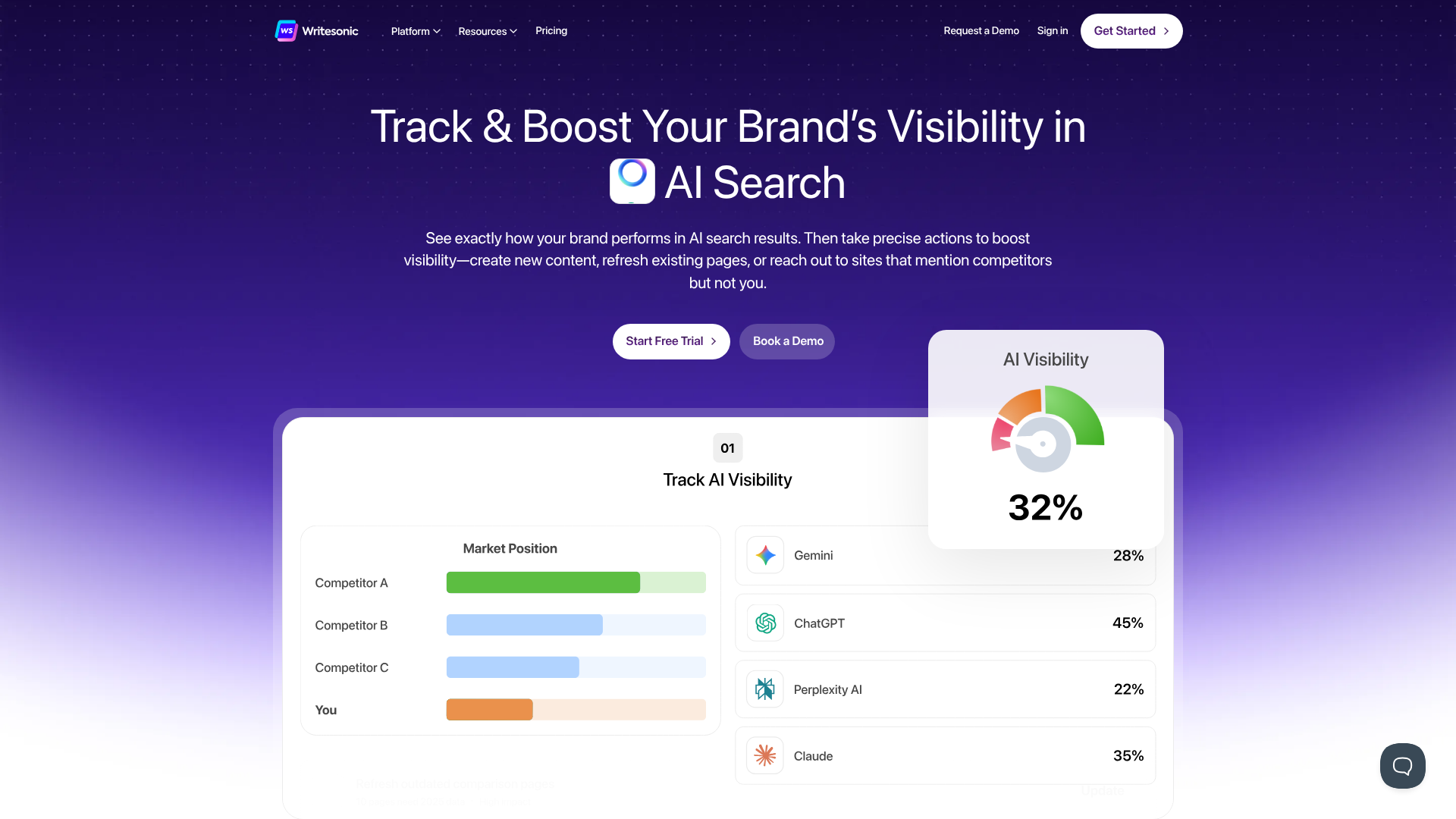
Writesonic is built from the ground up for content marketers and SEO professionals. While it offers a range of writing tools, its standout feature is the AI Article Writer, which guides you through the process of creating a fully optimised blog post. It helps with everything from generating topic ideas and outlines to writing the full article and optimising it for search engines.
It integrates SERP data to help you create content that is more comprehensive than what's currently ranking. The platform also includes features like Photosonic for AI image generation, making it an excellent all-in-one solution for bloggers who need both text and visuals. Its focus on factual accuracy and SEO makes it a reliable choice for creating authoritative content.
Pros
- Excellent workflow for creating long-form, SEO-friendly articles.
- Integrates with Surfer SEO for deep content optimisation.
- Includes an AI image generator and other useful marketing tools.
- Often more affordable than other premium AI writers.
Cons
- The user interface can sometimes feel a bit cluttered.
- Output quality for highly technical or niche topics may require more editing.
For those focused on creating high-ranking blog content, Writesonic is worth checking out.
3. Pictory – Best for Turning Text into Video

Video content is essential for engagement, but production can be slow and costly. Pictory solves this problem by using AI to automatically create professional-quality videos from text. You can upload a blog post, script, or even just a link to an article, and Pictory's AI will analyse the text, select relevant stock video clips and images from its vast library, and assemble them into a cohesive video.
The platform also automatically adds captions—a crucial feature for social media—and allows you to add a human or AI-generated voiceover. It's an incredibly efficient way to repurpose your existing written content into a new format, extending its reach and impact. This makes it perfect for marketers who want to build a YouTube or social video presence without learning complex video editing software.
Pros
- Incredibly fast and easy way to create videos from text.
- Massive library of royalty-free video clips, images, and music tracks.
- Automatic and accurate captioning.
- Multiple AI voiceover options or the ability to upload your own.
Cons
- The AI's video clip selection sometimes needs manual adjustment for better context.
- Limited advanced editing features compared to traditional video editors.
4. Synthesia – Best for AI Avatar Video Creation
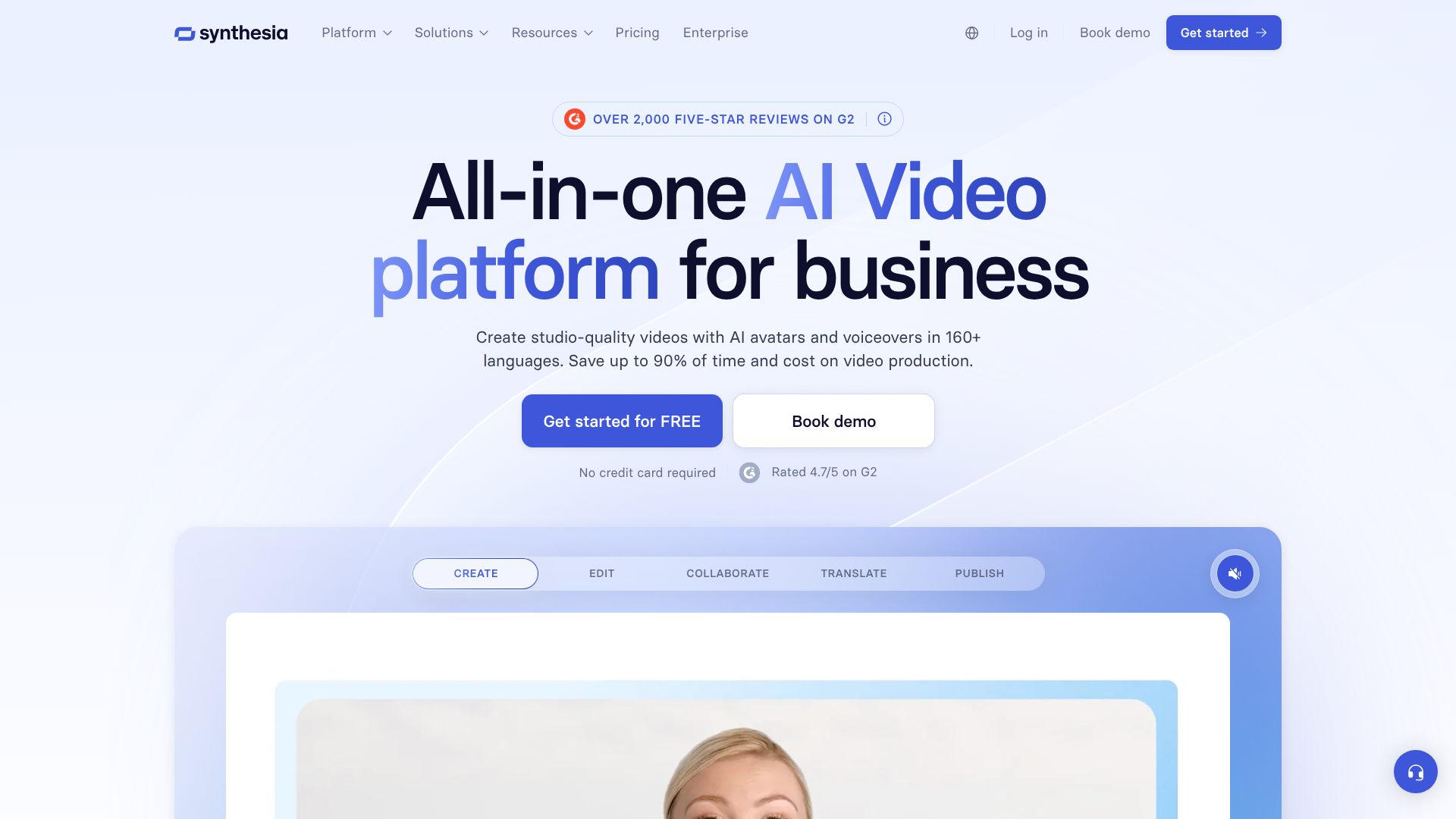
Synthesia takes AI video generation to the next level by allowing you to create videos featuring hyper-realistic AI avatars. You simply type your script, choose an avatar from over 150 diverse options, and the platform generates a video of that avatar speaking your text. This is ideal for creating training videos, corporate communications, and product explainers without the need for cameras, actors, or studios.
The technology is impressively realistic, and the platform supports over 120 languages, making it easy to localise content for a global audience. You can even create a custom avatar of yourself or a team member. Synthesia is a powerful tool for businesses that need to produce polished, presenter-led video content at scale.
Pros
- Industry-leading quality in realistic AI avatars and voices.
- Extensive library of diverse avatars and languages.
- Intuitive, script-based video creation process.
- Excellent for scalable training and corporate video production.
Cons
- Higher price point, making it more suited for business use than individual creators.
- Avatar-led videos may not be suitable for all types of marketing content.
5. Murf AI – Best for Realistic AI Voiceovers

High-quality audio can make or break a video or podcast. Murf AI provides a suite of studio-quality AI voices that can turn any script into a professional voiceover. Unlike robotic text-to-speech engines of the past, Murf's voices are rich with emotion and intonation, making them suitable for everything from advertisements to audiobooks.
The platform includes a full audio editor, allowing you to sync voiceovers with video, add background music, and adjust pacing and emphasis. It offers over 120 voices across 20+ languages, giving you a huge range of options to find the perfect voice for your brand. It's an essential tool for video creators, podcasters, and educators.
Pros
- Extremely realistic and emotionally expressive AI voices.
- Powerful editor for timing, emphasis, and pronunciation.
- Large library of voices and languages.
- Can be used for a wide range of audio productions.
Cons
- The free plan is quite limited.
- Rendering long audio files can sometimes be slow.
Understanding the Pricing of Automated Content Tools
Navigating the cost of automatic content generation tools requires understanding their different pricing structures. Most platforms have moved away from one-time purchases and operate on a subscription basis, but the way they meter usage can vary significantly. Choosing the right plan is crucial for managing your budget effectively and ensuring you have the resources you need as your content production scales.
Your final cost will depend on several factors, including the number of users on your team, the volume of content you need to generate, and the advanced features you require. It's wise to start with a free trial or a lower-tier plan to accurately gauge your monthly usage before committing to a more expensive annual subscription.
Common Pricing Models: Subscription vs. Credits
There are two primary models you'll encounter:
- Tiered Subscriptions: This is the most common model. Platforms offer several tiers (e.g., Starter, Pro, Business) at different monthly or annual price points. Each tier typically comes with a set limit on the number of words, videos, or images you can generate per month. Higher tiers also unlock advanced features like team collaboration, brand voice customisation, and API access.
- Credit-Based Systems: Some tools, particularly for image or video generation, use a credit system. You purchase a pack of credits or receive a certain number with a monthly subscription. Each action—like generating an image or rendering a minute of video—consumes a set number of credits. This model can be flexible, as you only pay for what you use, but it can also be harder to predict monthly costs.
A General Cost Comparison
To give you a clearer picture, here’s a breakdown of typical pricing structures for different types of content automation tools. Note that these are general estimates, and you should always check the provider's website for the most current pricing.
| Tool Category | Typical Pricing Model | Entry-Level Price (per month) | Key Cost Driver | Best For |
|---|---|---|---|---|
| AI Writing Assistants | Tiered Subscription | £20 – £50 | Word count, user seats | Bloggers, Marketers |
| Text-to-Video Tools | Tiered Subscription | £15 – £40 | Number of videos, video length | Social Media Managers |
| AI Avatar Video Tools | Tiered Subscription | £25 – £100+ | Minutes of video, features | Corporate Training, L&D |
| AI Voice Generators | Tiered Subscription | £15 – £60 | Hours of voice generation | Podcasters, Video Creators |
| AI Image Generators | Credit-Based or Subscription | £10 – £30 | Number of images (credits) | Designers, Content Creators |
The Pros and Cons: A Balanced Look at Auto Content Creation
While the benefits of auto content creation are compelling, it's essential to approach the technology with a balanced perspective. Like any tool, it has limitations and potential risks that users must manage. Understanding both the advantages and disadvantages will help you implement content automation in a way that maximises its strengths while mitigating its weaknesses. The most successful strategies don't see AI as a replacement for humans, but as a powerful collaborator.
The Advantages (The "Pros")
We've touched on many of these, but it's worth summarising the key advantages that make content automation so attractive:
- Efficiency and Speed: Drastically reduces the time it takes to produce content, from first draft to final publication.
- Scalability: Allows for a massive increase in content volume without a linear increase in resources or team size.
- Cost Reduction: Lowers the overall cost of content creation compared to hiring more staff or freelancers.
- Consistency: Ensures a uniform brand voice, tone, and style across all published materials.
- Overcoming Writer's Block: Provides a starting point and fresh ideas when creativity is running low.
- Data-Driven Insights: Some tools can analyse SERPs and suggest topics or keywords, leading to more effective content.
The Disadvantages and Risks (The "Cons")
It's equally important to be aware of the potential downsides:
- Factual Inaccuracies: AI models can "hallucinate" or generate information that sounds plausible but is incorrect. All generated content must be rigorously fact-checked by a human expert.
- Lack of Original Thought: AI synthesises information from its training data; it cannot produce truly novel ideas, deep personal insights, or expert opinions. This is where human expertise remains irreplaceable.
- Potential for Generic Content: Without careful prompting and editing, AI-generated content can feel generic and lack a distinct personality.
- SEO Risks if Misused: Over-reliance on unedited, low-quality AI content can be flagged by search engines and harm your rankings. Google's guidelines state that high-quality AI content is acceptable, but low-quality, spammy content is not.
- Ethical Concerns: Issues around copyright of training data and the potential for misuse (e.g., creating misinformation) are ongoing discussions in the industry.
The Human-in-the-Loop Imperative
The most critical takeaway is the need for a "human-in-the-loop" approach. Automatic content generation tools are most effective when they augment human capabilities, not replace them. The ideal workflow involves using AI to handle the heavy lifting of research and drafting, followed by a human expert who edits, fact-checks, adds unique insights, and ensures the content aligns with strategic goals. This hybrid model combines the speed of AI with the creativity, critical thinking, and ethical judgment of a human professional.
Pro Tip: Develop a clear AI content policy for your team. This should outline when and how to use AI tools, establish a mandatory fact-checking and editing process, and clarify that the final responsibility for content quality always rests with a human team member.
Frequently Asked Questions About Automatic Content Generation
As this technology becomes more mainstream, many questions arise about its practical application, effectiveness, and impact on digital marketing. Here are answers to some of the most common queries.
Is automatically generated content good for SEO?
Yes, automatically generated content can be excellent for SEO, provided it is high-quality, original, and helpful to the user. Google's official stance is that it rewards high-quality content, regardless of how it is produced. The key is to use AI as a tool to create well-researched, comprehensive, and user-focused articles. Low-quality, unedited AI content that is created solely to manipulate search rankings will likely be penalised.
The focus should always be on creating value for the reader, and AI can be a powerful assistant in that process.
Can Google detect AI-generated content?
While there are tools that claim to detect AI-generated content, their accuracy is highly variable. Google has stated that its focus is not on detecting AI content itself, but on identifying low-quality content. As AI models become more sophisticated, the distinction between human-written and AI-written text is becoming increasingly blurred. Instead of worrying about detection, focus on ensuring your content—whether created by a human, an AI, or a combination of both—meets the standards of E-E-A-T (Experience, Expertise, Authoritativeness, and Trustworthiness).
What is the difference between content automation and content curation?
Content automation involves creating new, original content using AI. The output is a unique piece of text, image, or video that did not exist before. Content curation, on the other hand, is the process of finding, organising, and sharing existing content from other sources that is relevant to your audience. For example, sharing an interesting industry article on your social media with your own commentary is content curation.
Both are valid content strategies, but automation focuses on generation while curation focuses on aggregation.
How can I ensure the quality of automated content?
Ensuring quality requires a robust human-led process. First, start with detailed and specific prompts; the more context you give the AI, the better the output will be. Second, always have a human subject matter expert review, edit, and fact-check the generated draft. This editor should add unique insights, personal anecdotes, and brand-specific examples to elevate the content beyond a generic summary.
Finally, use tools like Grammarly and plagiarism checkers to polish the final piece before publication.
Final Thoughts: The Future of Content Creation
Automatic content generation is not a passing fad; it represents a fundamental shift in how we create and scale digital content. The technology has matured from a novelty into a powerful suite of tools that can significantly enhance the productivity and capabilities of marketing teams. By automating the more repetitive aspects of content creation, businesses can focus their human talent on strategy, creativity, and building genuine connections with their audience.
The key to success lies in adopting a collaborative mindset. The best results come from a partnership between human intelligence and artificial intelligence, where AI provides the speed and scale, and humans provide the strategic direction, ethical oversight, and unique insights that resonate with people. As these tools continue to evolve, they will become even more integrated into our daily workflows, making content creation more accessible, efficient, and data-driven than ever before.
If you're ready to explore how these tools can transform your workflow, consider starting with a versatile writer like Jasper (formerly Jarvis) for general marketing copy or a specialised tool like Pictory to begin repurposing your blog posts into engaging videos. The right tool can unlock new levels of productivity and allow you to achieve your content marketing goals faster.