

How to Build Real Estate Lead Capture Landing Pages for More Clients
In the competitive property market, a steady stream of qualified leads is the lifeblood of any successful estate agency. While a main website is essential for your brand, driving traffic directly to it for lead generation can be inefficient. This is where dedicated real estate lead capture landing pages become your most powerful tool, designed with a single focus: to convert visitors into valuable contacts.
- Quick Summary
- What Exactly Are Real Estate Lead Capture Landing Pages?
- Why Every Agent Needs High-Converting Real Estate Landing Pages
- The Anatomy of a Perfect Property Lead Generation Form and Page
- 1. A Compelling, Benefit-Driven Headline
- 2. High-Quality, Relevant Visuals
- 3. Concise and Persuasive Copy
- 4. A Simple and Clear Call-to-Action (CTA)
- 5. The Property Lead Generation Form
- How to Build Your First Lead Capture Page: A Step-by-Step Guide
- Step 1: Define Your Campaign Goal and Target Audience
- Step 2: Create an Irresistible Offer (Your Lead Magnet)
- Step 3: Choose the Right Landing Page Builder
- Step 4: Design Your Page and Write the Copy
- Step 5: Integrate with Your CRM and Email Marketing Software
- Step 6: Publish, Promote, and Test
- Top Tools for Creating Lead Capture Pages for Real Estate
- Understanding the Costs: Pricing for Landing Page Builders
- The Pros and Cons of Using Dedicated Landing Pages
- Frequently Asked Questions (FAQ)
- What makes a good real estate landing page?
- How many form fields should I use on a property lead generation form?
- Can I build a real estate landing page for free?
- Where should I promote my landing page?
- Final Thoughts
These specialised pages cut through the noise of a full website, presenting a clear, compelling offer that encourages potential buyers and sellers to provide their contact information. Whether you're promoting a specific listing, offering a free home valuation, or providing a neighbourhood guide, a well-crafted landing page can dramatically increase your conversion rates and fill your sales pipeline. This guide will walk you through everything you need to know to build pages that work.
Quick Summary
- Single-Purpose Design: A real estate landing page is a standalone web page with one specific goal, such as capturing contact details for a home valuation or a property viewing, which leads to higher conversion rates than a standard website page.
- Essential Elements: Effective pages include a compelling headline, high-quality property images or videos, concise copy highlighting benefits, a clear call-to-action (CTA), and a simple, user-friendly lead capture form.
- The Offer is Key: To persuade visitors to share their details, you must offer something of value in return. Common real estate lead magnets include free home valuation reports, exclusive access to listings, or detailed neighbourhood guides.
- Tools Make it Easy: You don't need to be a web developer to create professional landing pages. Platforms like Leadpages, Unbounce, and ClickFunnels provide templates and drag-and-drop editors specifically for this purpose.
What Exactly Are Real Estate Lead Capture Landing Pages?
A real estate lead capture landing page is a standalone web page created specifically for a marketing or advertising campaign. Unlike your website's homepage, which has multiple navigation links and serves many purposes, a landing page is designed with a single objective in mind: capturing a visitor's contact information. This makes it a highly focused and effective tool for lead generation.
Think of it as a digital flyer with a direct response mechanism. When a potential client clicks on one of your ads—whether on Google, Facebook, or another platform—they are directed to this page. The page presents a specific offer, such as a free guide to selling a home, an instant property valuation, or details on an exclusive new listing. In exchange for this valuable resource, the visitor provides their name, email address, and phone number via a form.
The beauty of this approach lies in its simplicity. By removing distractions like navigation menus, links to other pages, and general company information, you guide the visitor towards the one action you want them to take. This laser-focus is why lead capture pages for real estate consistently achieve higher conversion rates than directing ad traffic to a generic website page. They meet the user's specific intent, which was established when they clicked your ad, and provide a clear path to getting what they want.
Why Every Agent Needs High-Converting Real Estate Landing Pages

Integrating dedicated landing pages into your marketing strategy isn't just a modern trend; it's a fundamental shift towards more efficient and measurable lead generation. The benefits directly impact your bottom line by improving the return on your advertising spend and building a healthier sales pipeline. For any agent looking to grow their business, these pages are non-negotiable.
One of the primary advantages is a significant boost in conversion rates. A study by HubSpot found that companies with 10-15 landing pages increase their leads by 55%. This is because each page can be tailored to a specific audience segment and offer. A page for first-time buyers will use different language and visuals than one targeting homeowners looking to sell.
This level of personalisation resonates much more strongly with visitors, making them more likely to convert.
Furthermore, real estate landing pages provide invaluable data and insights. By tracking the performance of each page, you can see which offers, headlines, and designs are most effective. This allows you to refine your marketing campaigns over time, allocating your budget to the strategies that deliver the best results. You're no longer guessing what works; you're making data-driven decisions to attract more clients in a cost-effective manner.
The Anatomy of a Perfect Property Lead Generation Form and Page

Creating a landing page that converts is both an art and a science. It requires a strategic combination of persuasive elements that work together to guide the visitor towards the form. Understanding these core components is the first step to building pages that consistently generate leads for your business.
1. A Compelling, Benefit-Driven Headline
The headline is the first thing a visitor reads and is your one chance to grab their attention. It must be clear, concise, and communicate the primary benefit of your offer. Instead of a generic title like "Contact Us," use something specific like, "Find Out Your Home's True Value in 60 Seconds" or "Get Exclusive Access to Off-Market Properties in Manchester."
2. High-Quality, Relevant Visuals
Real estate is a visual industry. Your landing page must feature professional, high-resolution images or a video of the property or local area. If you're offering a home valuation, an image of a beautiful local home is more effective than stock photography. Video tours, in particular, can increase engagement and build trust with potential clients before you've even spoken to them.
3. Concise and Persuasive Copy
Your page copy should be easy to scan and focused on the visitor. Use bullet points to list the key benefits of your offer. For example, if you're promoting a seller's guide, your bullet points might include: "Learn the 5 Costly Mistakes to Avoid," "Discover How to Stage Your Home for a Quick Sale," and "Get a Checklist of Essential Paperwork." Keep sentences short and use simple language.
4. A Simple and Clear Call-to-Action (CTA)
The CTA is the button that visitors click to submit their information. It should be visually prominent, using a contrasting colour that makes it stand out. The text on the button should be action-oriented and specific. Instead of "Submit," use phrases like "Get My Free Valuation Now," "Download the Guide," or "Book My Viewing."
5. The Property Lead Generation Form
The form itself is a critical component. Only ask for the information you absolutely need. For an initial inquiry, a name and email address might be enough. The more fields you add, the lower your conversion rate will be. Keep it short and simple to reduce friction and make it easy for visitors to sign up.
How to Build Your First Lead Capture Page: A Step-by-Step Guide
Building your first real estate lead capture landing page can feel daunting, but with modern tools, the process is straightforward. Following a structured approach ensures you cover all the essential bases and create a page optimised for success from day one.
Step 1: Define Your Campaign Goal and Target Audience
Before you build anything, decide what you want to achieve. Are you trying to attract seller leads, find buyers for a specific property, or grow your email newsletter list? Your goal will determine the offer and the entire focus of the page. Simultaneously, define who you're targeting. Is it first-time buyers, luxury property investors, or families looking to upsize? Knowing your audience helps you tailor the message.
Step 2: Create an Irresistible Offer (Your Lead Magnet)
Your offer is the ethical bribe you give visitors in exchange for their contact details. It must be valuable enough to justify them sharing personal information. Great lead magnets for real estate include:
- Free Home Valuation Report: The most popular offer for attracting seller leads.
- Neighbourhood Guides: Detailed reports on local schools, amenities, and market trends.
- Exclusive Listings: Early access to properties before they hit the major portals.
- Checklists and Guides: E-books like "The Ultimate Guide to Selling Your Home" or "First-Time Home Buyer's Checklist."
Step 3: Choose the Right Landing Page Builder
Specialised software makes creating landing pages simple, with no coding required. These platforms offer pre-designed templates that you can easily customise. We'll discuss specific tools in the next section, but options like Leadpages are popular for their real estate-specific templates and ease of use.
Step 4: Design Your Page and Write the Copy
Select a template that matches your brand and offer. Customise it with your logo, colours, and high-quality images. Write your headline, body copy, and CTA following the best practices outlined earlier. Ensure the page is fully responsive, meaning it looks great and functions perfectly on mobile phones, as a significant portion of your traffic will come from mobile devices.
Step 5: Integrate with Your CRM and Email Marketing Software
This is a crucial step for automation. Connect your landing page form to your Customer Relationship Management (CRM) system and your email marketing platform, such as ActiveCampaign or GetResponse. When a new lead signs up, their details should automatically be added to your database, and they should receive an automated email delivering the promised lead magnet. This ensures a prompt follow-up and a professional experience.
Step 6: Publish, Promote, and Test
Once your page is ready, publish it. Now, you need to drive traffic to it. Promote the page through your chosen channels, such as Facebook Ads, Google Ads, email marketing, or social media posts. Don't just set it and forget it. Monitor its performance and conduct A/B tests on elements like the headline or CTA button colour to continuously improve your conversion rate.
Pro Tip: Use a custom domain or subdomain for your landing pages (e.g., info.youragency.co.uk) to build brand trust. Most landing page builders offer a simple way to connect your own domain, which looks far more professional than a generic URL provided by the platform.
Top Tools for Creating Lead Capture Pages for Real Estate
Choosing the right software is essential for efficiently creating and managing your landing pages. These platforms are designed to be user-friendly, offering drag-and-drop functionality and templates that remove the technical barriers. Here are some of the best options for estate agents.
1. Leadpages
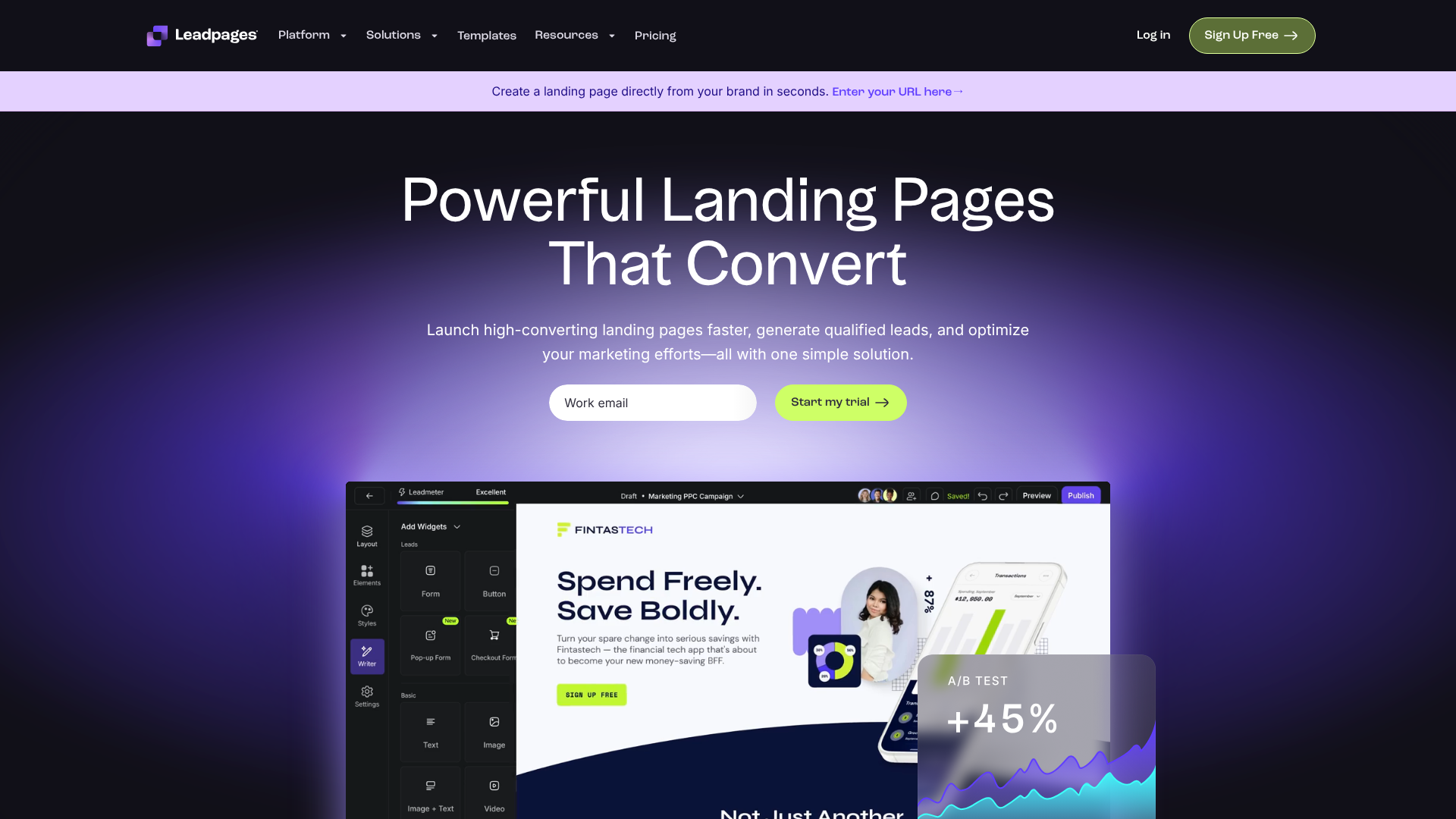
Leadpages is a popular choice, particularly for those new to landing pages. It's known for its extensive library of high-converting templates, including many designed specifically for the real estate industry. Its drag-and-drop editor is intuitive, making it easy to customise pages quickly.
Pros
- Real Estate Templates: A strong selection of templates for property listings, home valuations, and agent bios.
- Ease of Use: The platform is very beginner-friendly and requires no technical skills.
- Affordability: It's one of the more cost-effective solutions on the market.
Cons
- Limited A/B Testing on Standard Plan: Advanced testing features are reserved for higher-tier plans.
- Less Customisation Freedom: While easy to use, the editor can be more restrictive than competitors like Unbounce.
2. Unbounce
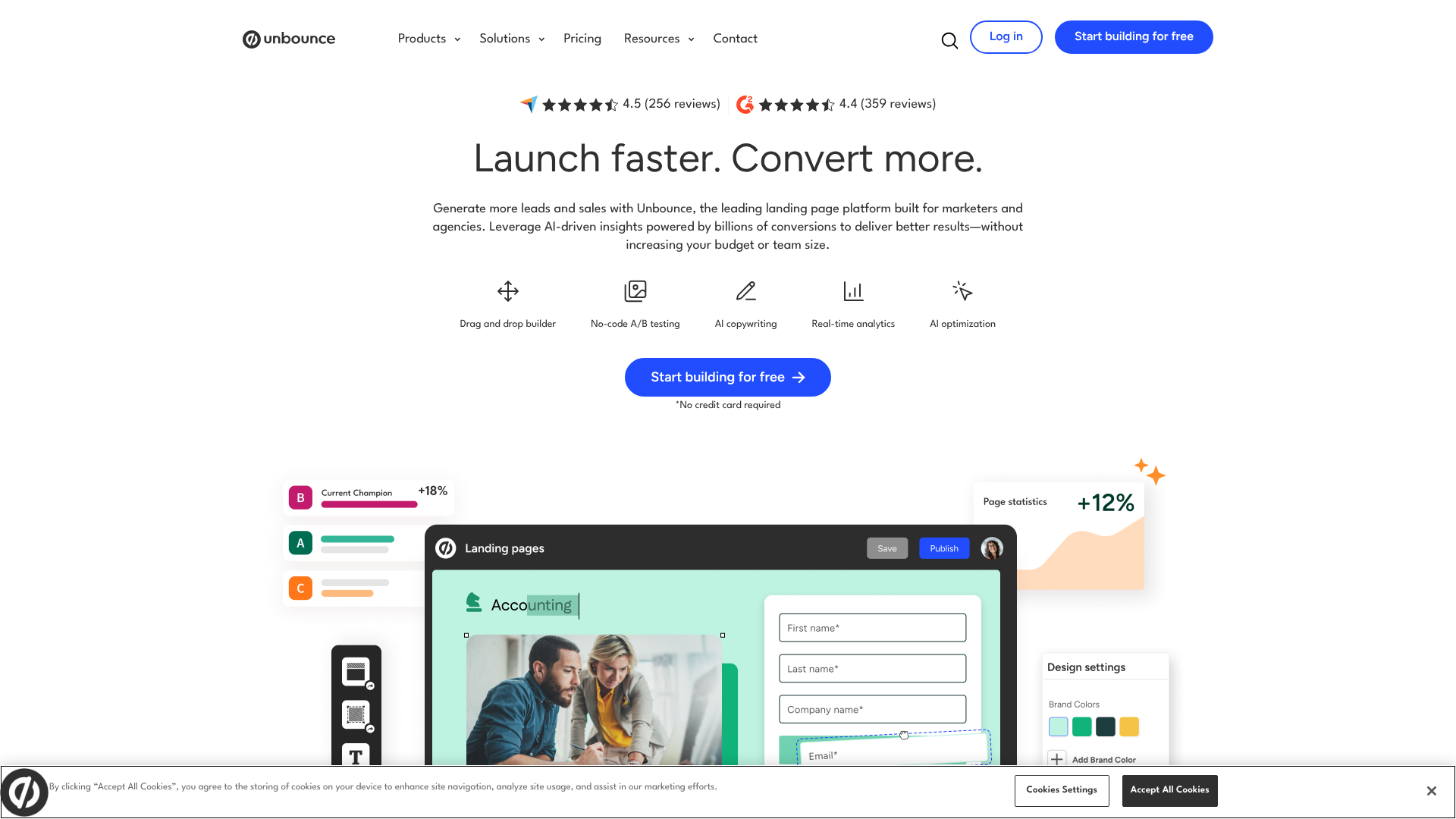
Unbounce is a more powerful and flexible platform aimed at marketers who want full control over their page design and optimisation. Its true drag-and-drop editor allows you to place elements anywhere on the page. It also offers advanced features like Dynamic Text Replacement, which matches your ad copy to the landing page headline for better relevance.
Pros
- Powerful A/B Testing: Unbounce's testing capabilities are excellent, making it ideal for optimising campaigns.
- Total Design Freedom: The flexible editor lets you build pixel-perfect pages.
- AI-Powered Features: Smart Traffic automatically sends visitors to the page variant most likely to convert for them.
Cons
- Steeper Learning Curve: Its power comes with more complexity compared to Leadpages.
- Higher Price Point: It is generally more expensive, making it better suited for agents with a larger marketing budget.
3. ClickFunnels
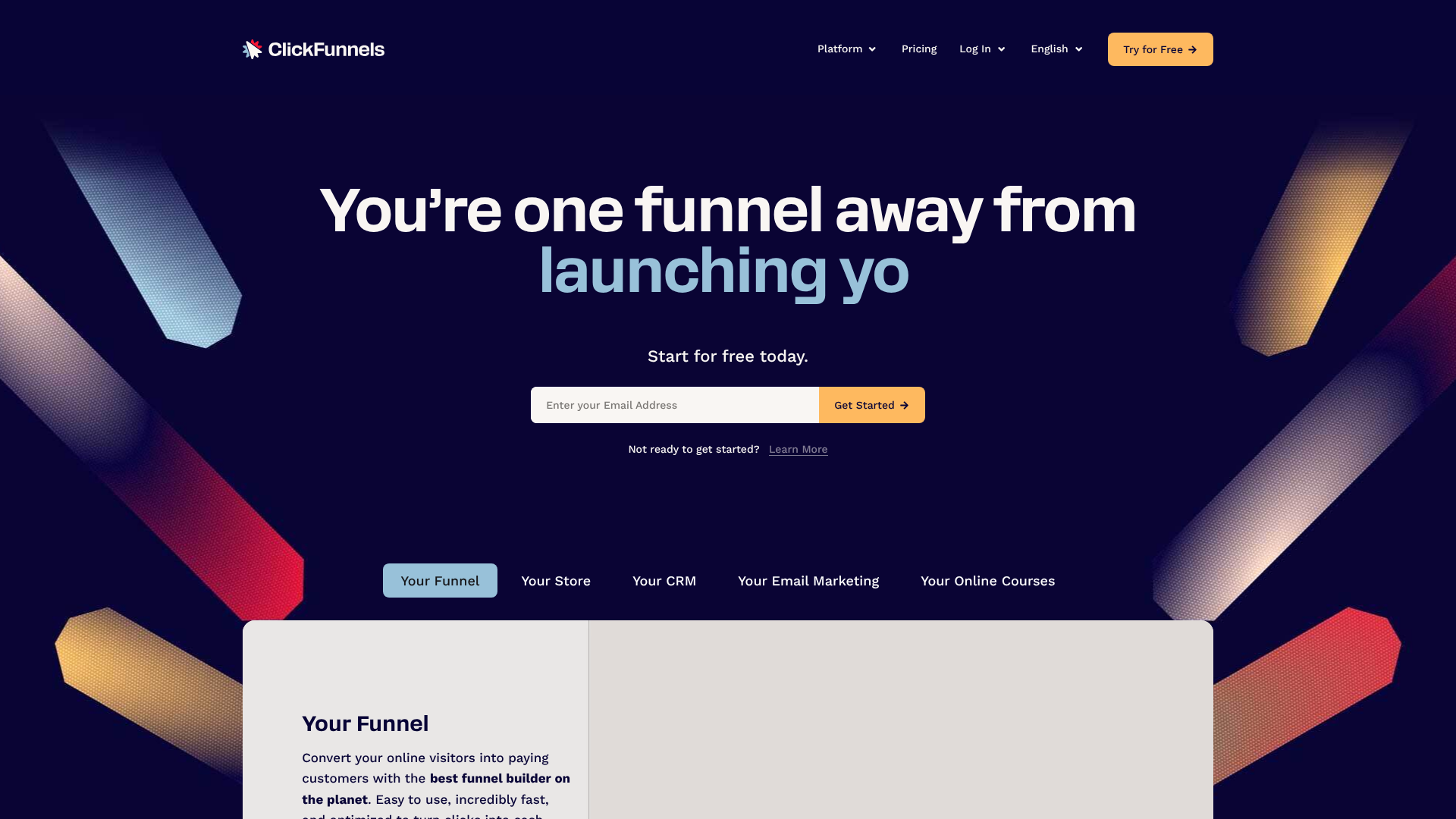
ClickFunnels is more than just a landing page builder; it's a tool for creating entire sales funnels. If your strategy involves multiple steps—such as a landing page, a thank you page with an upsell (like booking a consultation), and follow-up email sequences—ClickFunnels streamlines the entire process. It's great for agents who want to guide leads through a structured journey.
Pros
- All-in-One Funnel Building: Manages every step of the customer journey, from lead capture to conversion.
- Strong Focus on Sales: The platform is built from the ground up to drive sales and actions.
- Large Community and Training Resources: Extensive support and training materials are available.
Cons
- Can Be Overkill: If you only need simple landing pages, its feature set might be too complex.
- More Expensive: It is a premium tool with a corresponding price tag.
Comparison of Top Real Estate Landing Page Builders
| Feature | Leadpages | Unbounce | ClickFunnels |
|---|---|---|---|
| Best For | Beginners & Quick Setup | Optimisation & Customisation | Complete Sales Funnels |
| Ease of Use | Very Easy | Moderate | Moderate |
| A/B Testing | Basic (Advanced on Pro) | Excellent | Good |
| Templates | Excellent (Real Estate Focus) | Good (Highly Customisable) | Good (Funnel-Focused) |
| Pricing | $$ | $$$ | $$$$ |
Understanding the Costs: Pricing for Landing Page Builders
Investing in a landing page builder is an operational cost, so it's important to understand the typical pricing structures and what you get for your money. Most platforms operate on a Software-as-a-Service (SaaS) model, which means you'll pay a recurring monthly or annual subscription fee. Prices can vary widely based on features, traffic limits, and the number of pages you can publish.
Typically, you'll find a tiered pricing structure. Entry-level plans are the most affordable and are often sufficient for a solo agent or small agency just starting out. These plans usually include access to the core landing page builder, templates, and hosting. However, they may have limitations on the amount of monthly visitor traffic or the number of published pages.
Mid-tier and premium plans unlock more advanced features. These often include robust A/B testing capabilities, AI-powered optimisation tools, integrations with more third-party apps, and higher traffic allowances. For agencies running multiple campaigns or agents who are serious about data-driven optimisation, investing in a higher-tier plan is often worthwhile. When comparing costs, look beyond the price and consider the value each platform provides in terms of features that will help you generate more leads.
Always check the official websites for the most current pricing information, as it can change.
The Pros and Cons of Using Dedicated Landing Pages
While lead capture pages for real estate are incredibly effective, it's important to have a balanced view. Understanding both their strengths and limitations helps you integrate them into your marketing strategy in the most effective way.
Pros of Real Estate Landing Pages
- Increased Conversion Rates: The single focus of a landing page eliminates distractions and guides visitors towards one action, leading to significantly more leads compared to a standard website.
- Targeted Messaging: You can create unique pages for different ad campaigns, properties, or audience segments (e.g., buyers vs. sellers), making your marketing message highly relevant and effective.
- Improved Ad Campaign Performance: Platforms like Google Ads reward relevance. Sending traffic to a highly relevant landing page can improve your Quality Score, potentially lowering your cost-per-click.
- Clear Measurement and ROI: It's easy to track the performance of each landing page. You can calculate the exact cost per lead and the return on investment (ROI) for each campaign, allowing for data-driven decisions.
Cons of Real Estate Landing Pages
- Requires Targeted Traffic: A landing page won't generate leads on its own; you need to actively drive traffic to it through paid ads, social media, or email marketing. This requires an additional budget and effort.
- Ongoing Cost: The subscription fees for landing page builders are a recurring expense.
- Time and Effort: While tools make it easier, creating, testing, and optimising effective landing pages still takes time and strategic thought.
- Can Feel Disconnected: If not designed carefully, a landing page can feel separate from your main brand website. It's important to maintain consistent branding (logos, colours, fonts) to provide a cohesive user experience.
Frequently Asked Questions (FAQ)
What makes a good real estate landing page?
A good real estate landing page has a single, clear objective. It features a compelling headline, professional property photos or video, benefit-focused copy, a prominent call-to-action, and a simple form. It should also be mobile-friendly and load quickly to provide a great user experience.
How many form fields should I use on a property lead generation form?
As few as possible. Every additional field you ask a visitor to fill out creates friction and can lower your conversion rate. For an initial inquiry, start with the essentials: name and email address. You can gather more information later in the follow-up process. If a phone number is critical, consider making it an optional field.
Can I build a real estate landing page for free?
While some email marketing platforms offer very basic free landing page builders, they are often quite limited in features and design. For professional results and features like A/B testing and advanced integrations, a paid tool is almost always a worthwhile investment. Many platforms, like Leadpages, offer a free trial, allowing you to test the software before committing.
Where should I promote my landing page?
Promote your landing page wherever your target audience spends their time online. This includes running targeted ads on social media platforms like Facebook and Instagram, creating Google Ads campaigns for relevant search terms (e.g., "homes for sale in [your city]"), and sharing the link in your email newsletters and on your business's social media profiles.
Final Thoughts
In today's digital-first property market, simply having a website is not enough to guarantee a consistent flow of new clients. Real estate lead capture landing pages are the essential bridge between your marketing efforts and your sales pipeline. They provide a focused, high-converting environment designed to turn curious prospects into actionable leads.
By understanding the key components, following a structured creation process, and using the right tools, any estate agent can build powerful landing pages that attract sellers and buyers. Start by defining a clear goal for a single campaign, choose a valuable offer, and build your first page. Test, learn, and refine your approach, and you'll soon have a reliable engine for business growth.
If you're ready to start building pages that convert, exploring a user-friendly platform is the best next step. Tools like Leadpages offer specific templates for real estate, while Unbounce provides powerful optimisation features for those ready to scale their efforts. Choose the one that best fits your needs and begin turning more of your website traffic into tangible business opportunities.