

7 Best Deal Management Software for Sales Teams in 2026
Managing a sales pipeline without the right system is like trying to navigate a maze blindfolded. Spreadsheets get messy, vital details fall through the cracks, and promising leads go cold. Finding the best deal management software is crucial for organising your sales process, providing clarity for your team, and ultimately, closing more deals faster and more reliably.
- Quick Summary
- What Exactly is Deal Management Software?
- The Core Features to Look For in Top Deal Management Tools
- Visual Pipeline Management
- Automation and Workflow Rules
- Communication Tracking and Centralisation
- Reporting and Analytics
- Document Management and eSignatures
- How to Choose the Best Software for Your Deal Management Needs
- Assess Your Team's Size and Complexity
- Define Your Sales Process
- Consider Ease of Use and Adoption
- Evaluate Integration with Your Existing Tech Stack
- Compare Pricing Models and Scalability
- The 7 Best Deal Management Software Options for 2026
- 1. HubSpot Sales Hub
- 2. Zoho CRM
- 3. Outreach
- 4. Pipedrive
- 5. Salesforce Sales Cloud
- 6. PandaDoc
- 7. Proposify
- Deal Management Software Pricing: A Quick Comparison
- Frequently Asked Questions (FAQ)
- Is there a 100% free CRM?
- What are the 4 types of CRM?
- What is the best contract management software?
- What is the difference between deal management and pipeline management?
- Final Thoughts: Choosing Your Deal Management Solution
These platforms do more than just store contact information; they provide a dynamic, visual overview of your entire sales pipeline. They help you track every interaction, automate follow-ups, and forecast revenue with greater accuracy. By centralising all deal-related data, you empower your sales team to focus on what they do best: building relationships and selling.
This guide breaks down the top deal management solutions available today. We'll explore their key features, pricing, and who they're best suited for, helping you make an informed decision that aligns with your business goals and sales process.
Quick Summary
- What it is: Deal management software is a tool, often part of a CRM, that helps sales teams track, manage, and analyse their sales opportunities from lead to close.
- Key Features: Look for visual pipeline management (Kanban boards), workflow automation, communication tracking, in-depth reporting, and integration capabilities.
- Top All-Rounder: HubSpot CRM offers a powerful, user-friendly platform with a generous free plan, making it ideal for growing teams.
- Best for Customisation: Zoho CRM provides extensive customisation options at a competitive price, perfect for businesses with unique sales processes.
- Choosing the Right Tool: Your choice should depend on your team's size, the complexity of your sales cycle, your budget, and the other tools in your tech stack.
What Exactly is Deal Management Software?
Deal management software is a centralised system designed to help sales professionals and teams organise, track, and advance sales opportunities through the pipeline. At its core, it provides a structured framework for every stage of the sales process, from initial contact and qualification to negotiation and closing. Think of it as the command centre for your sales operations.
Unlike a simple address book or a chaotic spreadsheet, these dedicated tools offer a visual representation of where every deal stands. This is often displayed as a Kanban-style board, where deals are represented as cards that move from one stage to the next (e.g., 'New Lead', 'Contact Made', 'Proposal Sent', 'Closed Won'). This visual approach gives sales reps and managers an immediate, at-a-glance understanding of the pipeline's health.
Modern deal management solutions are typically a core component of a larger Customer Relationship Management (CRM) platform. They go beyond simple tracking by logging every interaction—emails, phone calls, meetings—and attaching them to the relevant deal record. This creates a complete, chronological history for each opportunity, ensuring no context is lost, even if a sales rep leaves the company. This single source of truth is vital for team collaboration and effective sales management.
The Core Features to Look For in Top Deal Management Tools

When evaluating different platforms, certain features are non-negotiable for effective deal management. These capabilities are what separate a basic contact database from a powerful sales engine that actively helps you close deals. Focusing on these core functions will ensure you choose a tool that provides real value.
Visual Pipeline Management
This is arguably the most critical feature. The ability to see your entire sales pipeline visually on a single screen is transformative. Look for platforms that offer customisable, drag-and-drop Kanban boards. You should be able to define your own sales stages to match your unique process and easily move deals between them. This visual clarity helps reps prioritise their efforts and allows managers to spot bottlenecks instantly.
Automation and Workflow Rules
Manual data entry and repetitive tasks are major productivity killers for sales teams. The best software for deal management automates these processes. This can include automatically creating follow-up tasks when a deal moves to a new stage, sending templated emails after a product demo, or notifying a manager when a deal exceeds a certain value. Effective automation frees up your team to spend more time selling.
Communication Tracking and Centralisation
Your deal management tool should integrate seamlessly with your email and calendar. It needs to automatically log sent and received emails, record calls, and sync meetings to the correct contact and deal record. This creates a unified timeline of every interaction, providing complete context for anyone who views the deal. It eliminates the need to dig through inboxes to understand a deal's history.
Reporting and Analytics
Data-driven decisions are key to improving sales performance. Your chosen solution must have strong reporting capabilities. This includes standard reports on deal win rates, sales cycle length, and pipeline value, as well as customisable dashboards. Advanced features like sales forecasting use historical data to predict future revenue, helping with resource planning and goal setting.

Document Management and eSignatures
The final stages of a deal often involve proposals, quotes, and contracts. A platform that integrates document management can streamline this process significantly. Look for features that allow you to generate documents from templates, track when a prospect opens them, and capture legally binding electronic signatures. Tools like PandaDoc and Proposify are excellent examples that often integrate directly with CRMs.
Pro Tip: When assessing automation, think beyond simple reminders. Ask if the tool can trigger workflows based on prospect behaviour, such as opening an email or visiting your pricing page. This level of smart automation can help you engage leads at the perfect moment.
How to Choose the Best Software for Your Deal Management Needs
Selecting the right platform is more than just picking the one with the most features. It's about finding the tool that best fits your team's workflow, budget, and long-term goals. A thoughtful evaluation process will prevent you from investing in a system that gathers dust. Here are the key factors to consider.
Assess Your Team's Size and Complexity
A small business with three sales reps has vastly different needs than an enterprise with a 300-person sales force. Smaller teams often prioritise ease of use and affordability, while larger organisations may require advanced security, granular user permissions, and deep customisation capabilities. Be realistic about your current needs and your projected growth over the next few years.
Define Your Sales Process
Before you even look at software, map out your sales process. What are the distinct stages a deal goes through from lead to close? A clear understanding of your pipeline will help you determine if a potential tool is flexible enough to accommodate your workflow. The best deal management software allows you to customise deal stages, fields, and properties to match your business terminology and process.
Consider Ease of Use and Adoption
A powerful platform is worthless if your team finds it too complicated to use. Low user adoption is the number one reason CRM and deal management projects fail. Look for a clean, intuitive interface. Take advantage of free trials and get your sales reps to test the software. If they can't figure out the basics without extensive training, it's probably not the right fit.
Evaluate Integration with Your Existing Tech Stack
Your deal management tool won't exist in a vacuum. It needs to connect with the other tools you rely on, such as your email marketing platform, accounting software, and customer support desk. Check for native integrations or compatibility with automation platforms like Zapier. A well-integrated system prevents data silos and creates a more efficient workflow across your entire organisation.
Compare Pricing Models and Scalability
Understand the total cost of ownership. Most software is priced on a per-user, per-month basis, but tiers can vary wildly in features. Look out for hidden costs like implementation fees, mandatory training, or charges for exceeding contact limits. Choose a plan that meets your current needs but also offers a clear upgrade path as your team grows.
The 7 Best Deal Management Software Options for 2026
After extensive research and analysis of the market, we've compiled a list of the top deal management tools. Each platform excels in different areas, so the best choice for you will depend on your specific requirements.
1. HubSpot Sales Hub
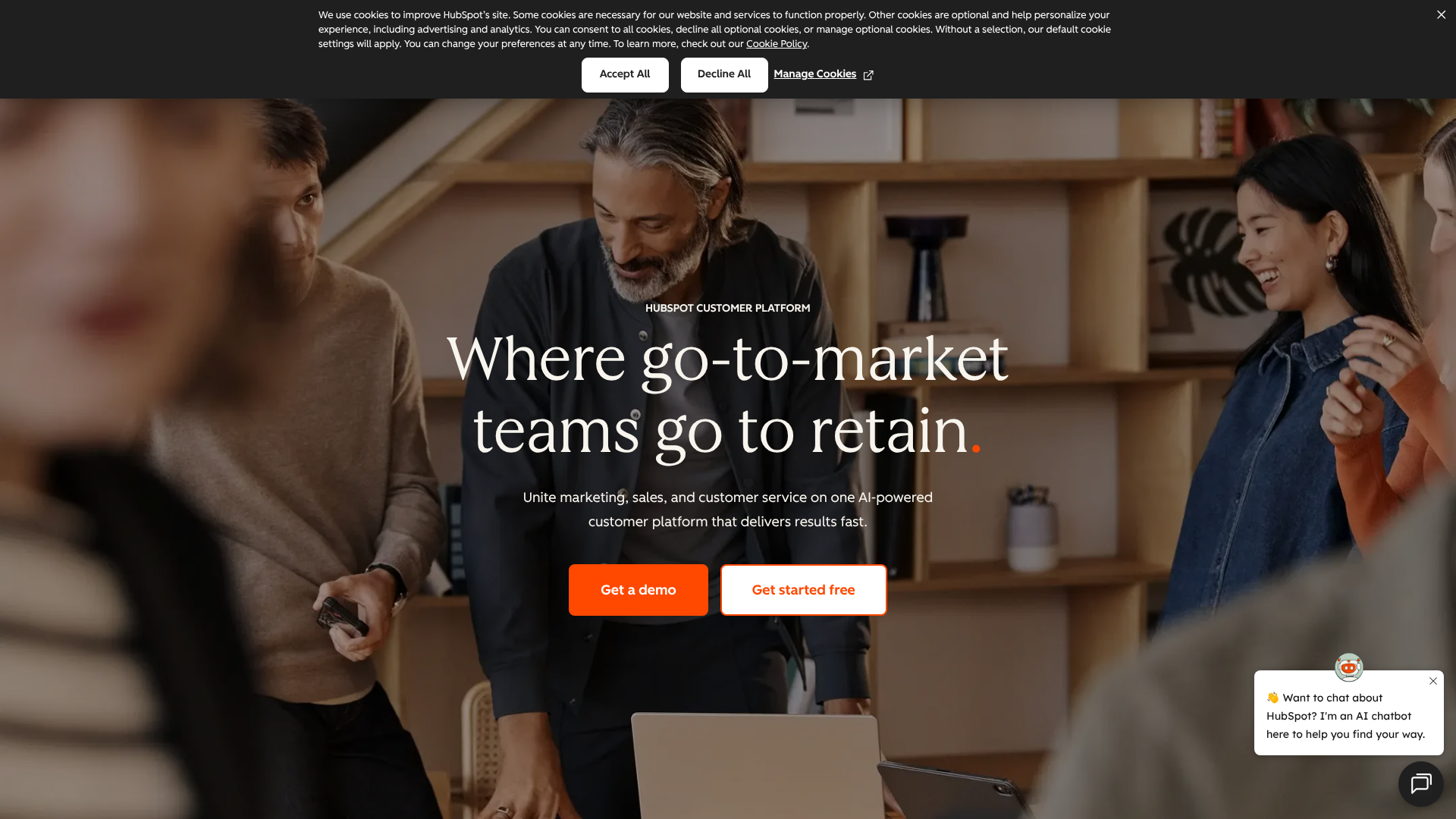
HubSpot Sales Hub is renowned for its user-friendly interface and powerful features, making it an excellent choice for small to medium-sized businesses, especially those focused on inbound marketing and sales. It's built on top of the free HubSpot CRM, which provides a solid foundation for contact and deal management.
The platform's deal pipeline is clean, visual, and easy to customise. You can create multiple pipelines for different products or services and automate tasks at each stage. HubSpot excels at communication tracking, with features like email open/click notifications, email templates, and call logging directly within the CRM. Its reporting tools are robust, offering customisable dashboards to monitor sales performance.
Where HubSpot truly shines is its integration with the broader HubSpot ecosystem, including Marketing Hub and Service Hub. This creates a unified view of the entire customer journey, from the first website visit to post-sale support.
Pros
- Extremely intuitive and easy to use, leading to high user adoption.
- Powerful free CRM provides a great starting point for small businesses.
- Excellent email integration and sales automation features.
- Seamlessly connects with marketing and service tools for a complete customer view.
Cons
- Paid plans can become expensive as your team and contact list grow.
- Advanced customisation is less extensive than some enterprise-focused competitors.
Pricing
HubSpot offers a comprehensive free plan. Paid Sales Hub plans start at around £15/user/month for the Starter tier, with Professional and Enterprise tiers offering more advanced features. Visit the HubSpot website for the latest pricing.
2. Zoho CRM
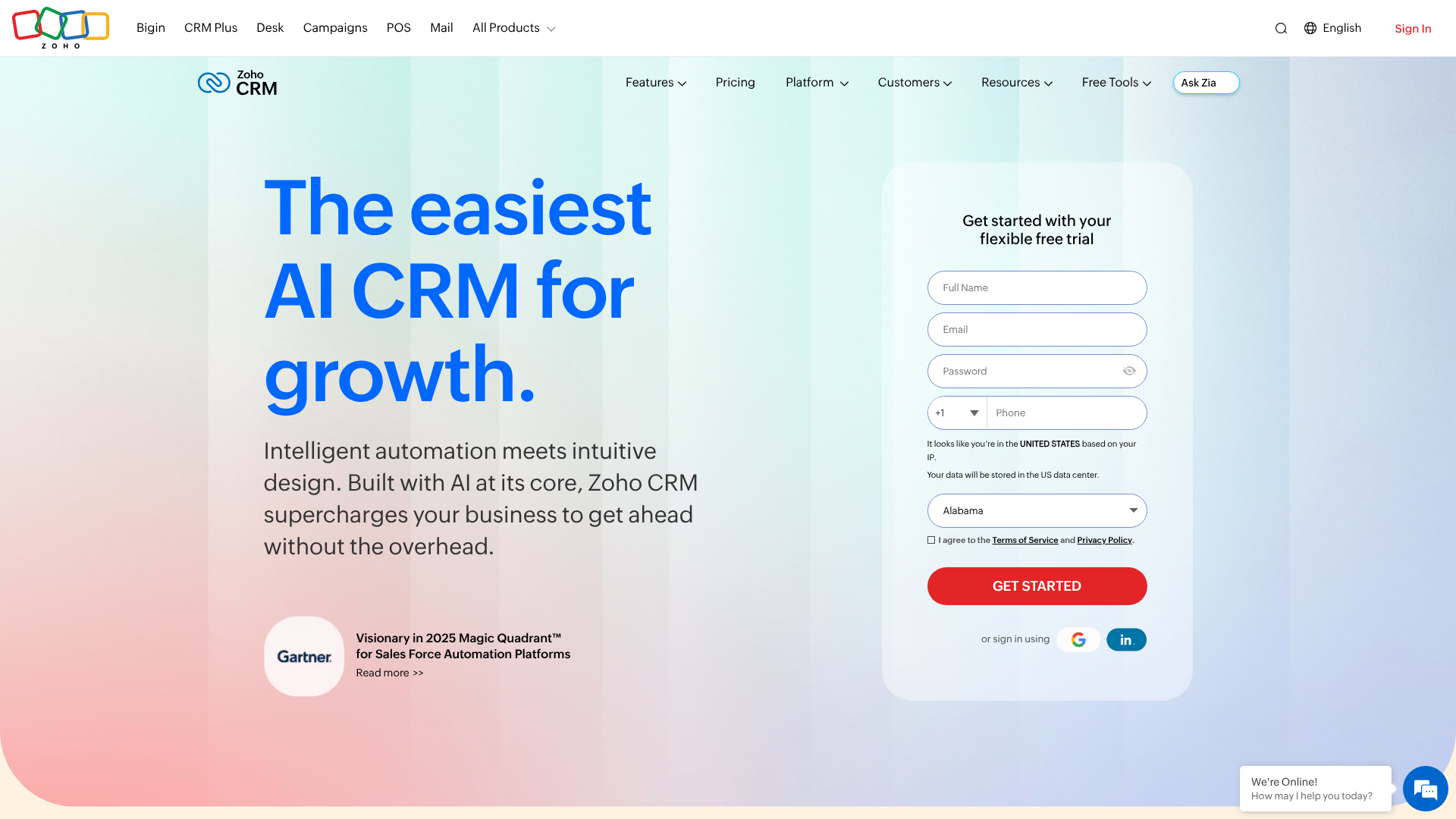
Zoho CRM is a powerhouse of a platform that offers incredible depth and customisation at a very competitive price point. It's a fantastic option for businesses of all sizes that need a flexible solution they can tailor to a highly specific sales process. Zoho's deal management capabilities are extensive, allowing for detailed tracking and powerful automation.
The platform lets you manage complex sales cycles with features like custom modules, fields, and layouts. Its workflow automation engine, Blueprint, allows you to enforce your sales process, ensuring reps follow the right steps at every stage. Zoho also includes an AI-powered sales assistant named Zia, which can provide deal predictions, suggest the best time to contact a lead, and detect anomalies in your sales trends.
Like HubSpot, Zoho benefits from being part of a massive suite of business applications, including Zoho Books, Zoho Campaigns, and Zoho Desk. If you're already using or considering other Zoho products, the CRM integrates perfectly to create a unified business operating system.
Pros
- Highly customisable to fit almost any business process.
- Excellent value for money, with feature-rich plans at affordable prices.
- Powerful AI and automation capabilities to guide sales reps.
- Integrates tightly with the extensive Zoho ecosystem of business apps.
Cons
- The sheer number of features can be overwhelming for new users.
- The user interface isn't as modern or intuitive as some competitors.
Pricing
Zoho CRM offers a free edition for up to 3 users. Paid plans are very affordable, starting from around £12/user/month. Check the official Zoho CRM site for current details.
3. Outreach
Outreach is a sales engagement platform that places a strong emphasis on deal management through AI-driven insights and forecasting. It's designed for sales teams that want to improve efficiency, predictability, and overall pipeline health. While it functions as a standalone platform, it often works in tandem with a primary CRM like Salesforce.
Outreach's key differentiator is its focus on 'Deal Health'. It analyses hundreds of signals from emails, meetings, and prospect engagement to provide an objective score for each opportunity, highlighting deals that are at risk of stalling. This allows managers to intervene proactively. The platform also offers advanced pipeline management and inspection tools, making forecast calls more accurate and data-driven.
It's an ideal tool for account executives and sales managers who need to manage a large number of deals and want intelligent guidance on where to focus their attention. Its sales automation sequences are also top-notch, helping reps execute their outreach strategies effectively.
Pros
- Industry-leading AI for deal health scoring and risk identification.
- Powerful forecasting and pipeline inspection tools for managers.
- Excellent sales engagement and automation features.
- Helps create a more predictable and data-driven sales process.
Cons
- It's a premium product with a higher price point than many CRMs.
- Can be complex to set up and is often used alongside another CRM, adding to the cost.
Pricing
Pricing for Outreach is typically provided upon request through a custom quote. It's geared towards mid-market and enterprise teams.
4. Pipedrive
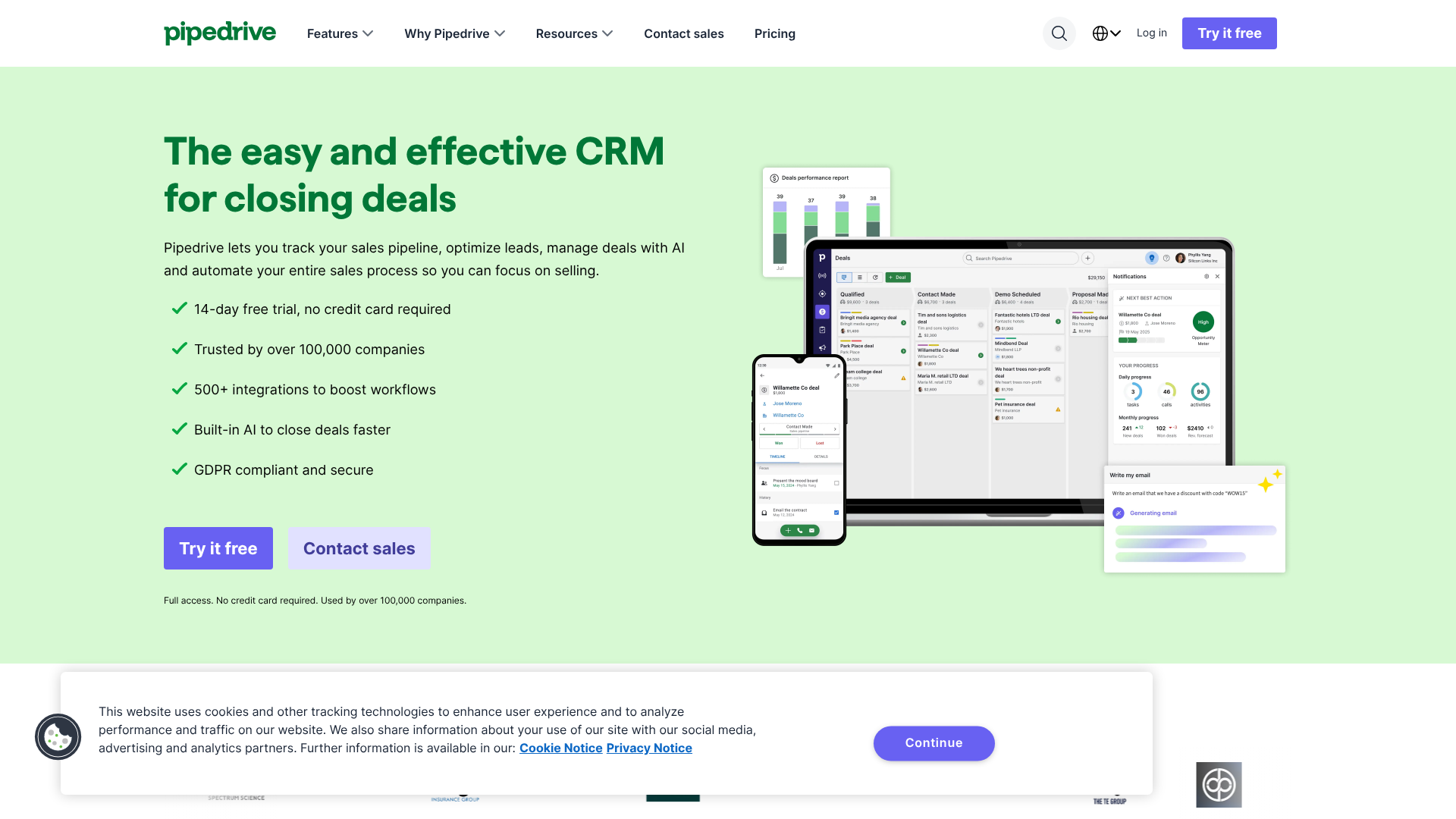
Pipedrive was one of the first platforms to popularise the visual, Kanban-style sales pipeline, and it remains one of the best for this purpose. Its entire philosophy is built around 'activity-based selling'—prompting reps to focus on the actions that move deals forward. It's incredibly intuitive, making it a favourite among small and medium-sized businesses.
The user interface is clean and uncluttered, centring entirely on the deal pipeline. Customising stages and fields is simple, and the visual cues make it easy to see which deals need attention. Pipedrive's strength lies in its simplicity and focus. It doesn't try to be an all-in-one business suite; it aims to be the best sales CRM and pipeline management tool, and it largely succeeds.
While it may lack the extensive marketing or service features of HubSpot or Zoho, it offers a robust marketplace of integrations to connect with the other tools you use.
Pros
- Exceptionally easy to use with a minimal learning curve.
- Excellent visual pipeline management that promotes action.
- Focuses purely on sales activities, avoiding unnecessary complexity.
- Good mobile app for managing deals on the go.
Cons
- Reporting and analytics are less advanced than some competitors.
- Lacks the native all-in-one functionality of larger platforms like HubSpot or Zoho.
Pricing
Pipedrive offers a 14-day free trial. Paid plans start at around £14/user/month, with higher tiers adding more automation and reporting features.
5. Salesforce Sales Cloud
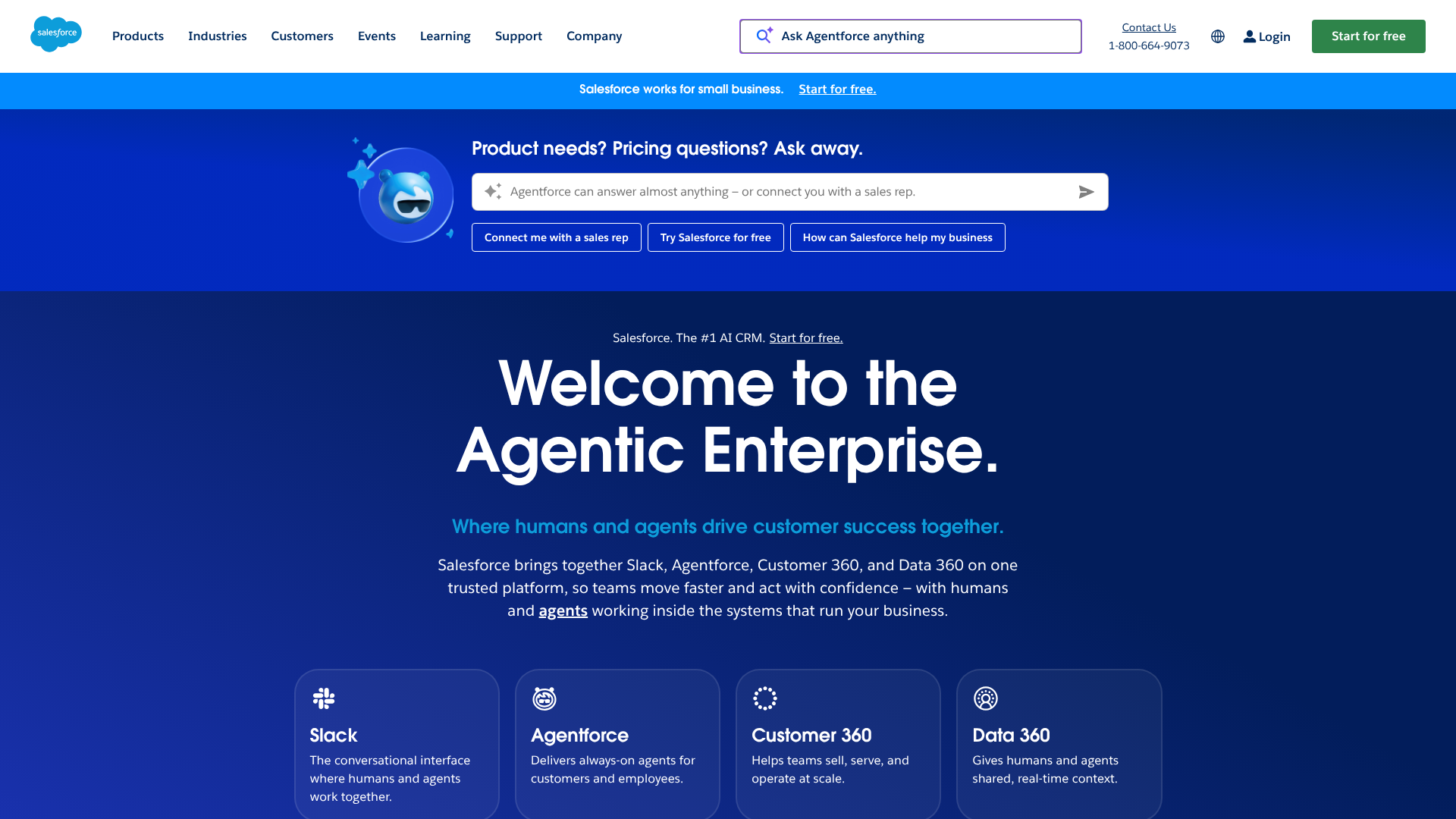
Salesforce is the undisputed leader in the CRM market, particularly for enterprise-level companies. Sales Cloud is its flagship product, offering unparalleled depth, power, and customisability for managing complex sales operations. For large organisations with dedicated administrative resources, Salesforce can be configured to handle virtually any sales process imaginable.
Its deal management capabilities are incredibly robust, with detailed opportunity tracking, quote generation, and advanced forecasting. The platform's real strength lies in its ecosystem, the AppExchange, which offers thousands of third-party apps to extend its functionality. Salesforce's reporting and analytics are also best-in-class, providing deep insights into every aspect of sales performance.
However, this power comes at a cost—both in terms of price and complexity. Salesforce typically requires a dedicated administrator to manage and customise, and the learning curve for sales reps can be steep.
Pros
- Infinitely customisable to support the most complex business processes.
- The most extensive feature set on the market.
- Massive ecosystem of third-party integrations via the AppExchange.
- Powerful reporting and AI (Einstein) capabilities.
Cons
- Can be very expensive, especially with add-ons and higher tiers.
- Complex to set up and maintain, often requiring specialised expertise.
- The user interface can feel dated and overwhelming for new users.
Pricing
Salesforce pricing starts at £20/user/month for its basic plan, but most businesses will need the Professional tier or higher, which significantly increases the cost.
6. PandaDoc
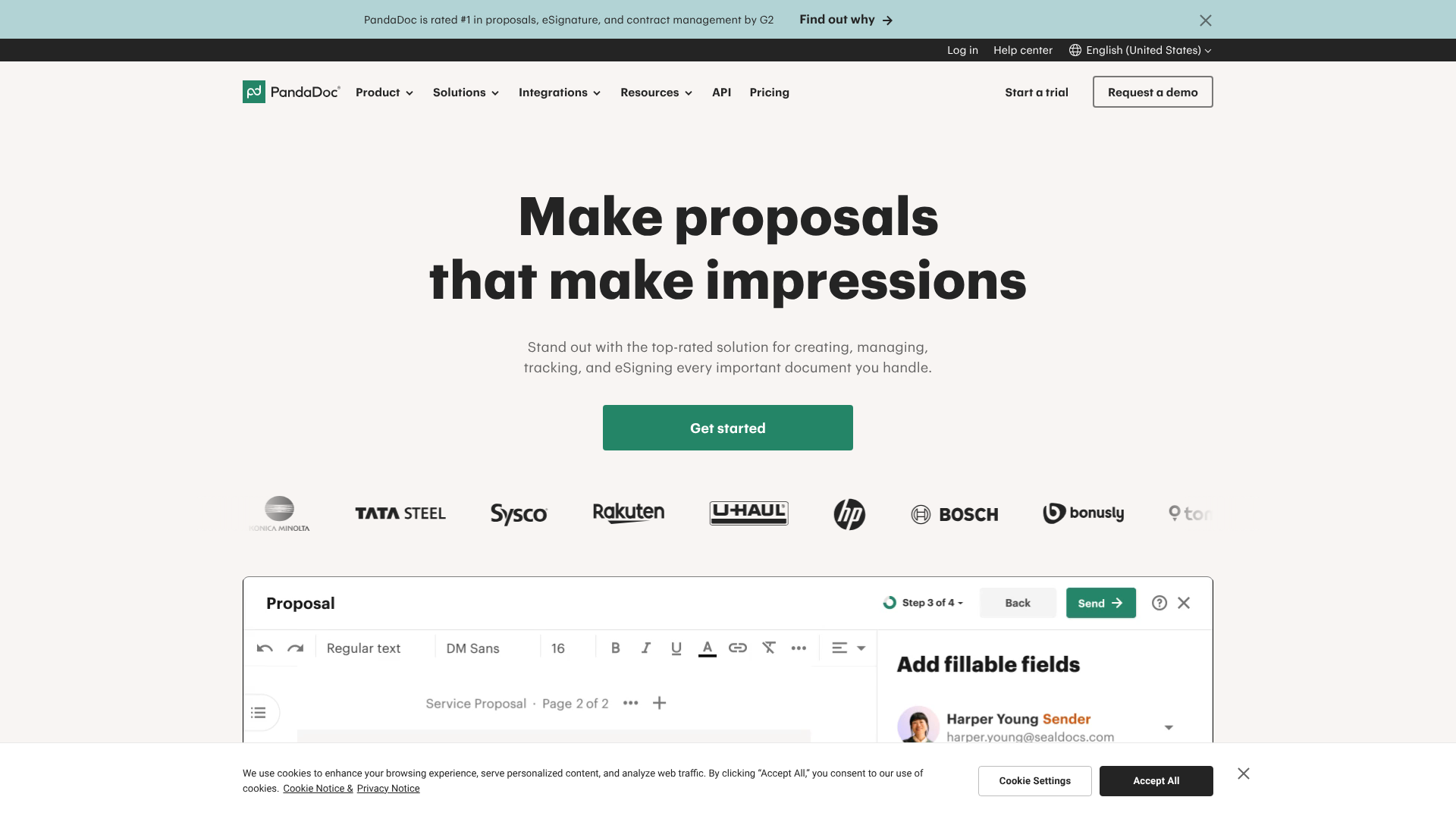
PandaDoc isn't a traditional CRM, but it's one of the best deal management solutions for the final, critical stages of the sales cycle: proposals, quotes, and contracts. It specialises in streamlining document workflows and integrates deeply with most major CRMs, including HubSpot, Salesforce, and Zoho.
The platform allows you to create beautiful, interactive proposals and quotes using a drag-and-drop editor. You can pull deal information directly from your CRM to populate documents automatically, saving time and reducing errors. PandaDoc's key feature is its document analytics; you get notified the moment a prospect opens your proposal and can see which sections they spent the most time on. This provides invaluable insight for your follow-up.
It also includes legally binding eSignatures, making it an all-in-one tool for closing deals faster. By integrating PandaDoc with your CRM, you create a seamless process from opportunity to signed contract.
Pros
- Streamlines the creation and sending of proposals, quotes, and contracts.
- Powerful document analytics provide insights into prospect engagement.
- Built-in eSignature functionality accelerates closing.
- Integrates with all major CRM platforms.
Cons
- It's a specialised tool, not a full CRM, so it's an additional cost.
- The free plan is quite limited in its features.
Pricing
PandaDoc offers a free eSign plan. Paid plans with more advanced features like templates and analytics start at around $19/user/month.
7. Proposify
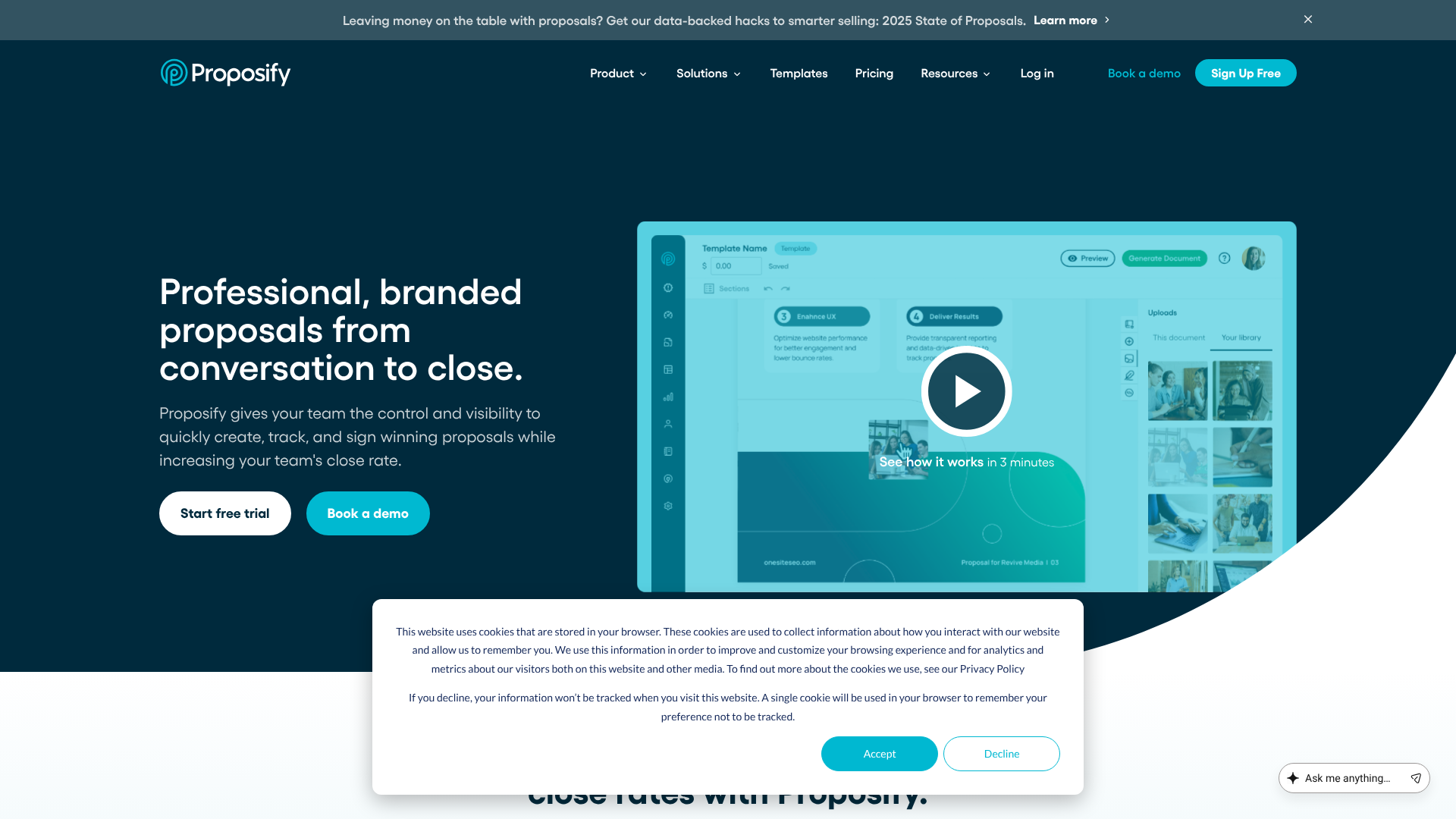
Similar to PandaDoc, Proposify is a specialised tool focused on creating winning proposals and giving sales teams control and visibility into the most important stage of their sales process. It's designed to help teams create consistent, professional-looking sales documents that close deals.
Proposify offers a rich library of templates and a content library, allowing you to store pre-approved sections, case studies, and testimonials that reps can easily drop into new proposals. This ensures brand consistency and saves a significant amount of time. Like PandaDoc, it provides detailed analytics on document views and includes eSignature capabilities.
Its interactive quoting tools are a standout feature, allowing clients to select different options and watch the total price update in real-time. This flexibility can be a powerful tool during negotiations. Proposify is a strong choice for design-conscious teams who want to make a great impression with their sales documents.
Pros
- Excellent for maintaining brand consistency across all proposals.
- Interactive quoting features give clients flexibility.
- Strong analytics and eSignature features.
- Good for collaborative teams working on complex proposals.
Cons
- As with PandaDoc, it's an add-on to your CRM, not a replacement.
- The editor can sometimes be less intuitive than competitors.
Pricing
Proposify offers a free trial. Paid plans are tiered, with the Team plan starting at $49/user/month.
Deal Management Software Pricing: A Quick Comparison
Navigating pricing structures can be one of the most challenging parts of choosing a new tool. Below is a table to give you a quick overview of the platforms we've discussed. Note that prices are approximate and can change, so always check the official website for the most current information.
| Tool | Best For | Starting Price (approx.) | Free Plan/Trial |
|---|---|---|---|
| HubSpot Sales Hub | All-in-one for SMBs | £15/user/month | Yes, powerful free CRM |
| Zoho CRM | Customisation & Value | £12/user/month | Yes, for up to 3 users |
| Outreach | AI-driven Deal Health | Custom Quote | Demo Only |
| Pipedrive | Visual Pipeline Focus | £14/user/month | 14-day free trial |
| Salesforce | Large Enterprises | £20/user/month | 30-day free trial |
| PandaDoc | Document Workflows | $19/user/month | Yes, free eSign plan |
| Proposify | Proposal Design | $49/user/month | 14-day free trial |
Frequently Asked Questions (FAQ)
Here are answers to some common questions people have when searching for deal management solutions.
Is there a 100% free CRM?
Yes, several companies offer genuinely free CRM plans, not just limited-time trials. HubSpot CRM is perhaps the most well-known, offering a robust set of free tools for contact, company, and deal management that is sufficient for many small businesses. Zoho CRM also offers a free edition for up to three users.
These free plans are excellent for getting started, but they do have limitations. You'll typically find caps on the number of contacts, users, or automated emails you can send. Advanced features like in-depth reporting, workflow automation, and AI-powered insights are almost always reserved for paid tiers.
What are the 4 types of CRM?
CRMs can generally be categorised into four main types based on their primary function:
- Operational CRM: This is the most common type. It focuses on streamlining and automating business processes related to sales, marketing, and service. Deal management falls squarely under this category.
- Analytical CRM: This type focuses on data analysis. It helps businesses understand customer behaviour, identify trends, and make better decisions by analysing data from various touchpoints.
- Collaborative CRM: This type focuses on improving communication and information sharing between different departments (e.g., sales, marketing, technical support) to enhance the overall customer experience.
- Strategic CRM: This is more of a business philosophy than a software type. It's about putting the customer at the centre of all business processes and decisions, using CRM data to build long-term, profitable relationships.
What is the best contract management software?
For businesses whose deals culminate in a formal contract, dedicated contract management software is essential. While many CRMs have basic document features, specialised tools offer more power. PandaDoc is a top choice because it combines document creation, analytics, and eSignatures into one platform that integrates with your CRM.
Another excellent option is eSignly, which focuses specifically on providing secure and legally binding electronic signatures. The best choice often depends on whether you need a full document workflow solution (PandaDoc) or a more straightforward eSignature tool (eSignly).
What is the difference between deal management and pipeline management?
These terms are often used interchangeably, but there is a subtle difference. Pipeline management refers to the high-level process of overseeing and directing all deals as they move through the sales stages. It's about ensuring the overall health and flow of the entire pipeline.
Deal management, on the other hand, can be more granular. It refers to the specific activities, strategies, and data management involved in advancing a single opportunity. It's about managing the details of individual deals within the broader pipeline. A good software platform provides tools for both.
Final Thoughts: Choosing Your Deal Management Solution
Choosing the best deal management software for your team is a strategic decision that can have a significant impact on your revenue and efficiency. The right tool provides clarity, enforces your sales process, and empowers your reps to focus on selling rather than on administrative tasks.
Your decision should come down to a clear assessment of your needs. If you're a growing business that values ease of use and an all-in-one platform, HubSpot Sales Hub is an outstanding choice with a free plan that lets you start immediately. If your business has a unique sales process that requires deep customisation, Zoho CRM offers unparalleled flexibility and value.
Ultimately, the best platform is the one your team will actually use. Take advantage of free trials, involve your sales reps in the decision-making process, and choose a solution that not only meets your needs today but can also scale with you as you grow.