

10 Best B2B Sales Prospecting Tools to Boost Your Pipeline in 2026
Manually searching for leads, finding contact details, and sending individual emails is no longer a viable strategy for growth. To stay competitive, modern sales teams need powerful B2B sales prospecting tools that automate the grunt work, provide accurate data, and help reps focus on what they do best: building relationships and closing deals. These platforms are designed to streamline every step of the prospecting process, from identifying ideal customers to engaging them with personalised, multi-channel outreach.
- What You'll Learn
- What Exactly Are B2B Sales Prospecting Tools?
- The Core Features That Make a Difference
- Accurate and Comprehensive Contact Databases
- Advanced Filtering and Lead Scoring
- Email and Outreach Automation
- CRM Integration and Workflow Syncing
- Sales Intelligence and Buying Signals
- How to Choose the Right B2B Sales Tools for Your Team
- Assess Your Current Sales Process and Bottlenecks
- Consider Your Budget and Scalability Needs
- Evaluate Data Quality and Compliance
- Check for Seamless Integrations with Your CRM
- The 10 Best B2B Sales Prospecting Tools for 2026
- 1. Apollo.io
- 2. HubSpot Sales Hub
- 3. LinkedIn Sales Navigator
- 4. ZoomInfo
- 5. Reply.io
- 6. Hunter.io
- 7. Outreach
- 8. Instantly.ai
- 9. Zoho CRM
- 10. Lusha
- Understanding Pricing Models: What to Expect
- Per-User, Per-Month Subscriptions
- Credit-Based Systems
- Tiered Plans with Feature Gates
- Hidden Costs: Onboarding and Implementation Fees
- Frequently Asked Questions (FAQ)
- What are sales prospecting tools?
- How do you do B2B prospecting effectively?
- What are the 5 P's of prospecting?
- What are the key KPIs for B2B sales?
- Final Thoughts: Choosing Your Prospecting Powerhouse
This guide breaks down the top sales prospecting software available in 2026. We'll explore the essential features to look for, how to choose the right solution for your team, and provide a detailed review of the ten best options on the market. Whether you're a small business just starting out or a large enterprise looking to optimise your sales engine, the right tool can make all the difference in hitting your targets.
What You'll Learn
- What Prospecting Tools Do: These tools are platforms that help sales teams find, contact, and manage potential customers by providing contact databases, outreach automation, and sales intelligence features.
- Essential Features: Key functions to look for include accurate contact data, advanced search filters, CRM integration, email sequencing, and analytics to track performance.
- How to Choose: The best tool for you depends on your team's size, budget, existing tech stack (especially your CRM), and specific sales process.
- Top-Tier Solutions: Leading platforms like Apollo.io offer an all-in-one solution, while specialists like Hunter.io focus on email finding, and LinkedIn Sales Navigator excels at social selling.
What Exactly Are B2B Sales Prospecting Tools?
B2B sales prospecting tools are software applications designed to help salespeople identify, connect with, and qualify potential business customers. They replace manual, time-consuming tasks like searching for company information, finding email addresses, and sending follow-up messages with automated, data-driven workflows. The core purpose of this software is to fill the sales pipeline with high-quality leads more efficiently.
These tools solve several critical problems that plague sales teams. They combat inaccurate or outdated contact information, which leads to bounced emails and wasted time. They also eliminate the inefficiency of juggling multiple spreadsheets and platforms by centralising lead data and outreach activities. By providing insights into a prospect's company, role, and even recent activities, they empower reps to conduct more relevant and personalised outreach.
We can generally categorise B2B prospecting tools into a few main types:
- Data Enrichment & Intelligence Platforms: These tools (like ZoomInfo or Apollo.io) provide vast databases of company and contact information, including direct dials, email addresses, and firmographics.
- Sales Engagement Platforms (SEPs): These platforms (like Outreach or Reply.io) focus on automating multi-channel outreach sequences through email, phone calls, and social media.
- CRM Software with Prospecting Features: Many CRMs, such as HubSpot CRM and Zoho CRM, now include built-in prospecting tools to manage the entire customer lifecycle in one place.
- Specialist Tools: This category includes tools that excel at one specific function, like Hunter.io for finding email addresses or LinkedIn Sales Navigator for social network prospecting.
The Core Features That Make a Difference

When evaluating different sales prospecting software, certain features stand out as essential for driving results. Understanding these core functions will help you distinguish between a basic tool and a platform that can truly transform your sales process.
Accurate and Comprehensive Contact Databases
The foundation of any good prospecting tool is its data. A top-tier platform should offer access to a massive, regularly updated database of B2B contacts and companies. This includes verified email addresses, direct-dial phone numbers, job titles, and company details like industry, size, and revenue. Data accuracy is paramount; without it, your outreach efforts will fall flat.
Advanced Filtering and Lead Scoring
Having a large database is useless without the ability to find the right people within it. Look for tools with advanced filtering capabilities that let you build precise lead lists based on your ideal customer profile (ICP). Filters should include technographics (what software a company uses), firmographics (company size, location, industry), and buying intent signals (companies actively researching solutions like yours).
Email and Outreach Automation
Automation is what gives your team leverage. The best B2B sales tools allow you to create multi-step, multi-channel outreach sequences. This means you can schedule a series of personalised emails, phone call reminders, and LinkedIn connection requests that run automatically. This ensures consistent follow-up without manual effort, which is critical for converting cold leads.
CRM Integration and Workflow Syncing
Your prospecting tool must work in harmony with your Customer Relationship Management (CRM) system. Seamless, bi-directional integration is non-negotiable. This ensures that new contacts, activities, and communication history are automatically logged in your CRM, providing a single source of truth for all customer interactions and preventing data silos.
Sales Intelligence and Buying Signals
Modern tools go beyond static contact data. They provide sales intelligence, such as news alerts about a target company, personnel changes, or funding announcements. Some platforms also track buying signals, identifying companies that are actively searching for products or services like yours, allowing you to reach out at the perfect moment.

How to Choose the Right B2B Sales Tools for Your Team
Selecting the right software from a crowded market can be daunting. The perfect tool for one company might be a poor fit for another. To make the best decision, follow a structured evaluation process based on your unique needs and goals.
Assess Your Current Sales Process and Bottlenecks
Start by mapping out your existing prospecting workflow. Where are the biggest time sinks. Are your reps struggling to find accurate data, or are they spending too much time on manual follow-ups. Identifying your primary pain points will help you prioritise features.
If data is the problem, a tool like ZoomInfo or Apollo.io might be best. If outreach efficiency is the issue, a sales engagement platform like Outreach or Reply.io could be the answer.
Consider Your Budget and Scalability Needs
B2B prospecting tools vary widely in price, from affordable per-user plans to expensive enterprise contracts. Establish a realistic budget but also consider the total cost of ownership, including any onboarding or implementation fees. Think about the future, too. Choose a tool that can scale with your team as it grows, offering more advanced features or additional user seats when you need them.
Evaluate Data Quality and Compliance
Data is the lifeblood of prospecting, so its quality is crucial. Ask vendors about their data verification processes and refresh rates. If you operate in Europe or sell to European customers, ensure the tool is GDPR-compliant. Similarly, check for CCPA compliance if you do business in California.
Using a non-compliant tool can expose your business to significant legal and financial risks.
Check for Seamless Integrations with Your CRM
As mentioned earlier, integration is key. Your chosen tool must integrate deeply with your existing CRM (e.g., Salesforce, HubSpot, Zoho). A shallow integration that only syncs basic contact details is not enough. Look for a solution that syncs all activities, email correspondence, and engagement data automatically, giving your team a complete view of every prospect interaction without leaving their primary workspace.
Pro Tip: Run a pilot program with a small group of your top sales reps before committing to a company-wide rollout. Their hands-on feedback is invaluable for determining if a tool is a good fit for your team's daily workflow and culture.
The 10 Best B2B Sales Prospecting Tools for 2026
After extensive research and analysis, here are our top picks for the best B2B sales prospecting tools. This list includes a mix of all-in-one platforms, data specialists, and engagement-focused solutions to fit various needs and budgets.
1. Apollo.io
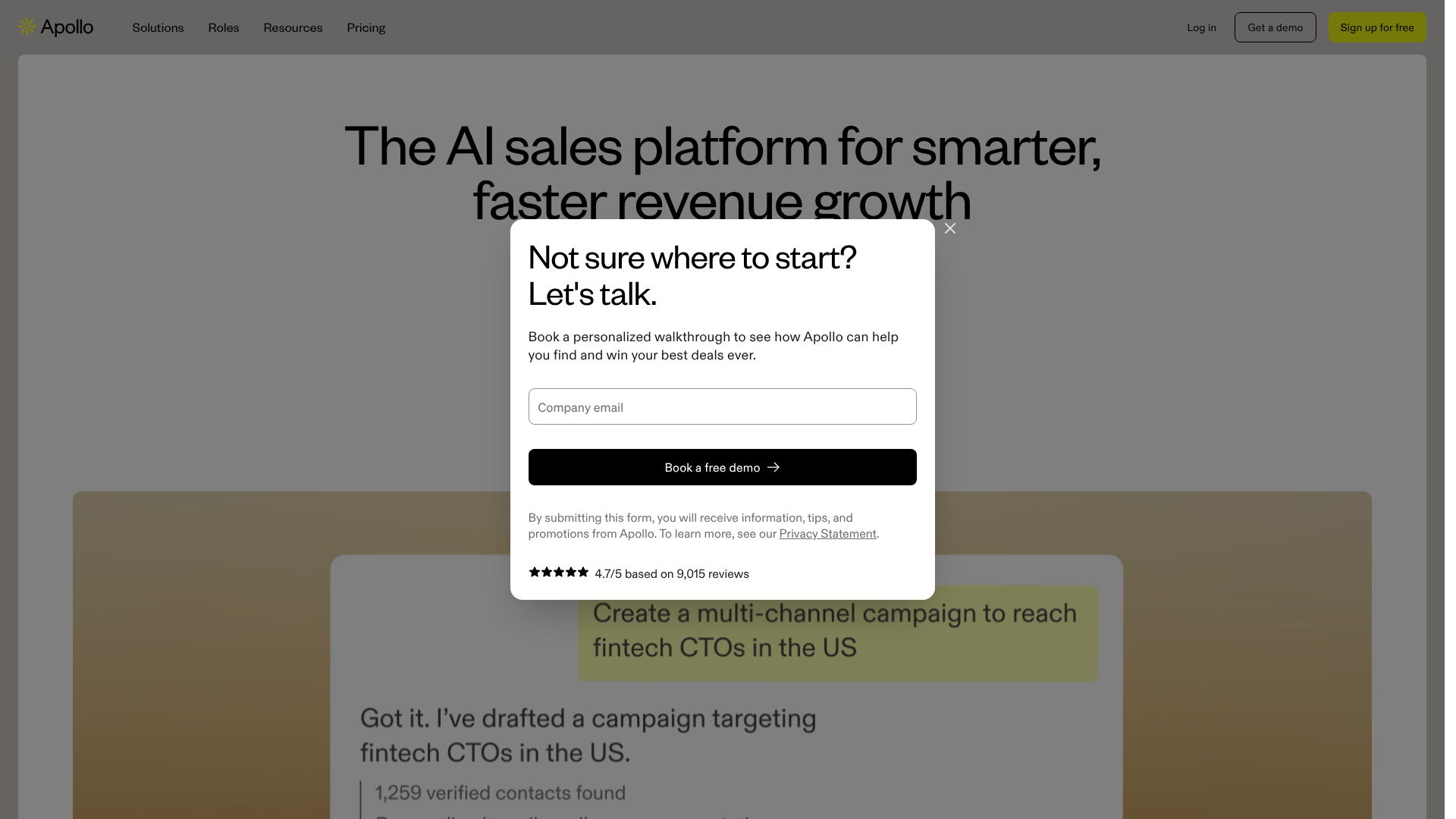
Apollo.io has become a dominant force in the sales tech space by combining a massive B2B database with powerful sales engagement and intelligence features in a single, affordable platform. It's a true all-in-one solution that allows teams to find prospects, engage them with automated sequences, and analyse the results without juggling multiple tools.
Its database contains over 275 million contacts, and its Chrome extension makes it easy to find contact information directly from LinkedIn. The platform’s sequencing tool allows for multi-channel outreach, and its AI-powered features help with writing personalised emails and scoring leads. It's an incredibly versatile tool that serves startups, mid-market companies, and even some enterprise teams.
Pros
- All-in-one platform combining data, engagement, and intelligence.
- Very competitive pricing, including a generous free plan.
- Extensive filtering options, including technographics and buying intent.
Cons
- Data accuracy can sometimes be inconsistent for niche industries.
- The user interface can feel overwhelming for new users due to the sheer number of features.
2. HubSpot Sales Hub
For businesses already invested in the HubSpot ecosystem, the HubSpot Sales Hub is a natural choice. It's not just a prospecting tool but a complete sales platform that includes CRM functionality, sales engagement tools, quoting software, and reporting. Its strength lies in its tight integration with HubSpot's Marketing and Service Hubs, providing a unified view of the entire customer journey.
Prospecting features include email tracking, templates, sequencing, and a meeting scheduler. While it doesn't have its own native B2B database like Apollo.io, it integrates with data providers and excels at managing and engaging leads generated through inbound marketing efforts. It's designed to align sales and marketing teams around a single source of truth.
Pros
- Unbeatable integration with the HubSpot CRM and Marketing Hub.
- Excellent for aligning inbound marketing leads with sales outreach.
- User-friendly interface that is easy for teams to adopt.
Cons
- Lacks a built-in B2B contact database for cold prospecting.
- Can become expensive as you add more users and move up the tiers.
3. LinkedIn Sales Navigator
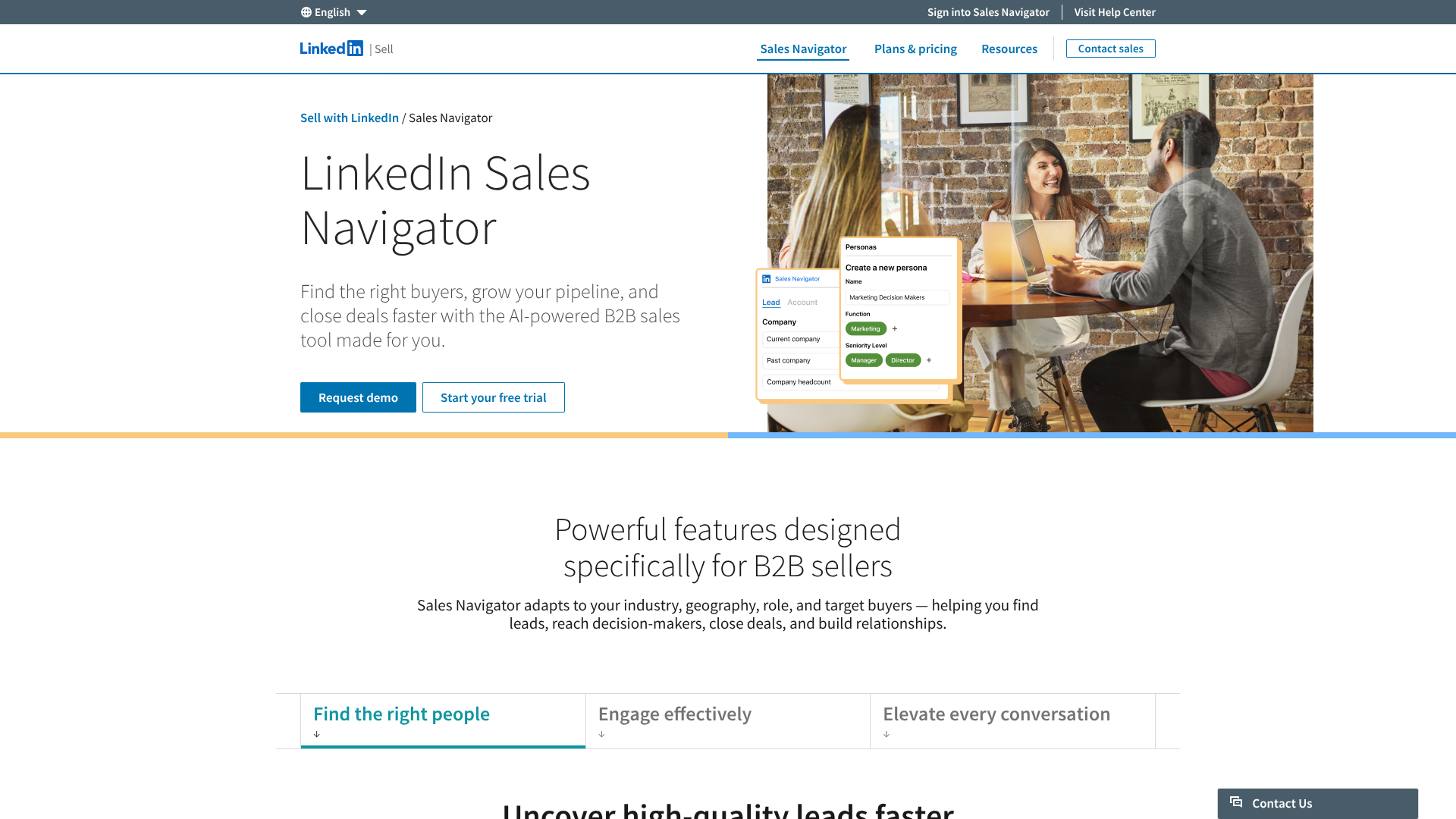
LinkedIn Sales Navigator is the essential tool for any sales professional who relies on social selling. It unlocks the full power of LinkedIn's network, offering advanced search filters that are not available on the free platform. You can search for leads and accounts with incredible specificity, using criteria like company size, seniority level, function, and recent job changes.
It allows you to save leads and accounts, receive alerts on their activity, and send InMail messages to connect with prospects outside your network. While it doesn't provide email addresses or phone numbers, it's the undisputed best platform for identifying key decision-makers and understanding their professional background and connections. It's best used in conjunction with a data enrichment tool to find contact details.
Pros
- Unparalleled access to LinkedIn's professional network and data.
- Advanced lead and account search filters for precise targeting.
- Real-time alerts on prospect job changes and company updates.
Cons
- Does not provide direct contact information like emails or phone numbers.
- Requires a separate tool for outreach and data enrichment.
4. ZoomInfo
ZoomInfo is an enterprise-grade B2B intelligence platform known for the quality and depth of its data. It offers one of the most accurate and comprehensive databases on the market, complete with direct-dial phone numbers, verified emails, organisational charts, and buying intent signals. It's the go-to choice for large sales organisations that prioritise data accuracy above all else.
The platform goes beyond contact data, offering insights into company tech stacks, upcoming projects, and internal leadership changes. Its suite of tools helps teams build highly targeted account lists and reach the right decision-makers. However, this premium quality comes at a premium price, making it less accessible for smaller businesses.
Pros
- Industry-leading data accuracy, especially for direct-dial phone numbers.
- Rich company and contact profiles with deep intelligence.
- Powerful intent data to identify companies in-market for your solution.
Cons
- One of the most expensive solutions on the market.
- Can be overly complex for small teams with basic needs.
5. Reply.io
Reply.io is an AI-powered sales engagement platform that excels at automating and optimising multi-channel outreach. It allows you to create personalised sequences that include emails, calls, LinkedIn actions, and even WhatsApp messages. Its AI assistant can help generate email copy, and its meeting booking feature simplifies scheduling with prospects.
Reply.io also includes a B2B contact database and a Chrome extension for finding emails, making it a strong all-in-one contender. The platform is particularly strong in its ability to A/B test different message variations and provide detailed analytics on what's working. It's a great choice for sales teams focused on scaling their outbound communication.
Pros
- Powerful multi-channel sequencing and automation.
- AI features for email writing and appointment setting.
- Includes a free B2B database and email finder.
Cons
- The contact database is not as extensive as dedicated data providers.
- Can have a steeper learning curve compared to simpler tools.
6. Hunter.io
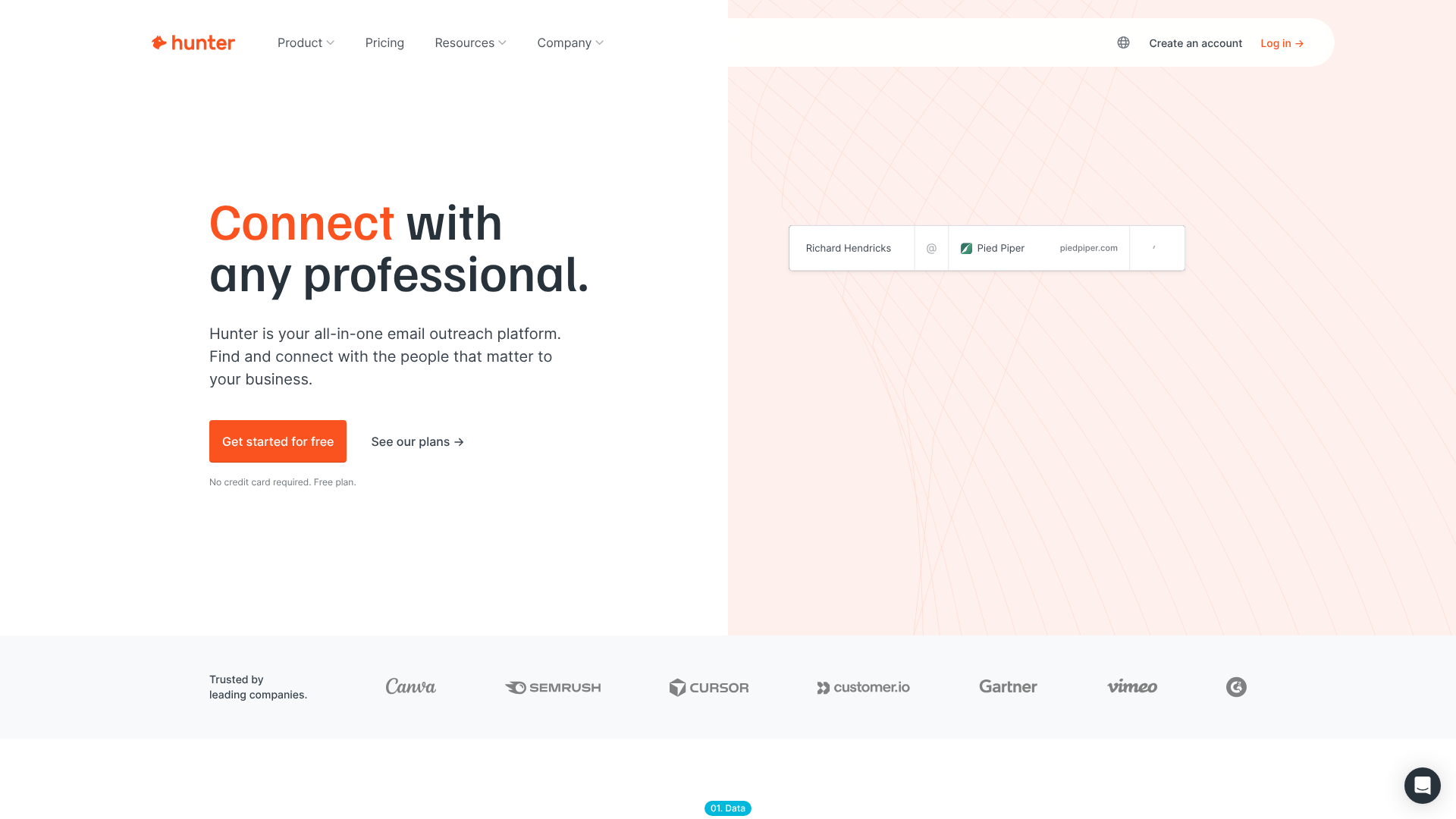
Hunter, also known as Hunter.io, is a simple yet powerful tool focused on one primary task: finding and verifying professional email addresses. It's incredibly easy to use. You can find the email addresses associated with a specific domain, find the email of a specific professional, or verify the deliverability of an email address in bulk.
Its simplicity is its greatest strength. While it doesn't offer complex sequencing or a full CRM, it does what it promises with high accuracy. Hunter also offers a simple cold email campaign feature, Hunter Campaigns. It's an excellent, budget-friendly choice for freelancers, marketers, and sales teams who need a reliable way to find contact information without the complexity of a larger platform.
Pros
- Highly accurate email finding and verification.
- Very simple and intuitive user interface.
- Affordable pricing with a useful free plan.
Cons
- Limited functionality beyond email finding and verification.
- Does not provide phone numbers or other deep contact data.
7. Outreach
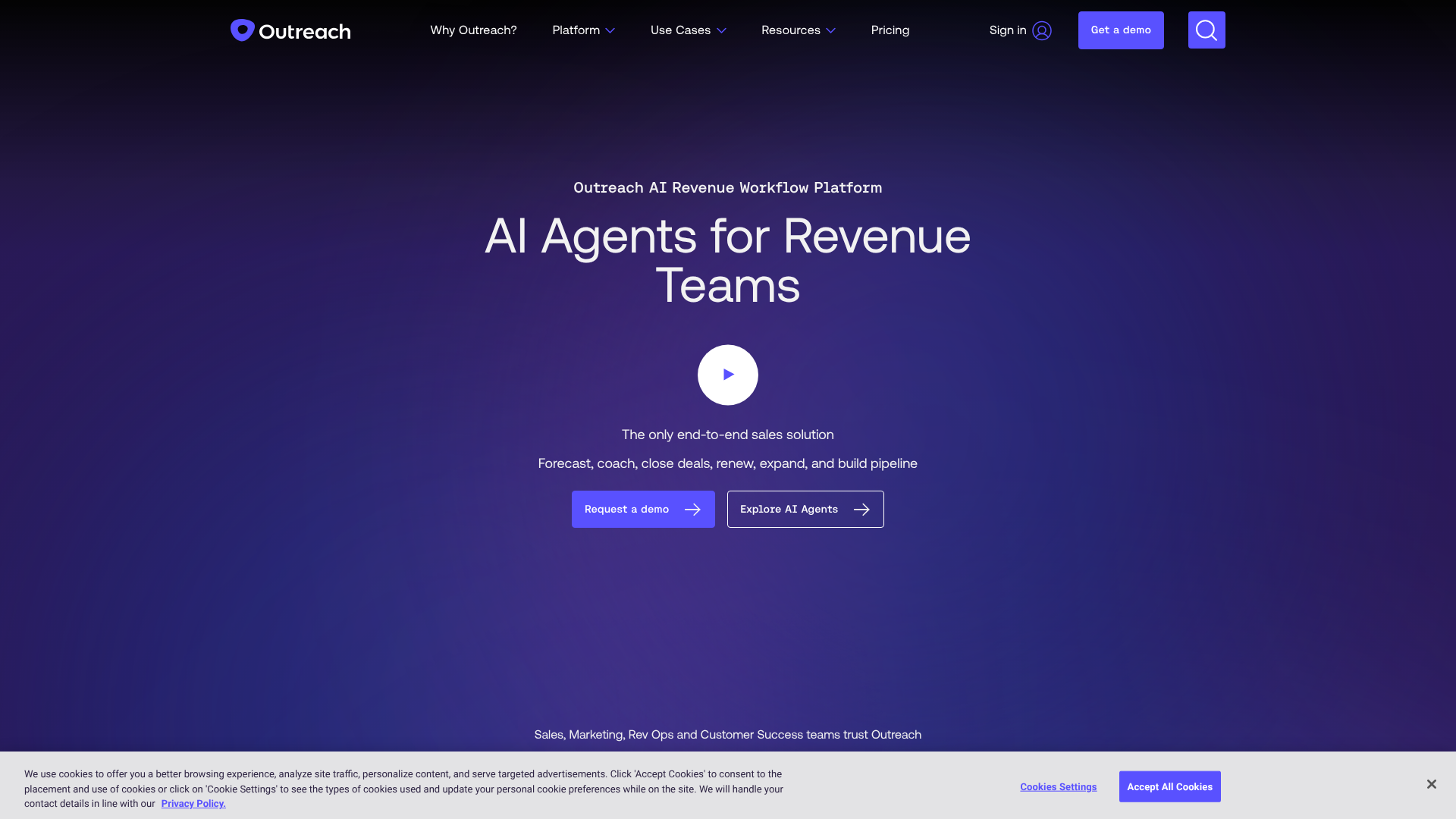
Outreach is a market-leading sales engagement platform built for enterprise and high-growth sales teams. It provides a robust system for executing, managing, and analysing all salesperson-to-prospect interactions across multiple channels. Its core strength is in creating and managing complex outreach sequences (called "Sequences") that guide reps on their next best action.
The platform offers deep analytics and AI-driven insights to help sales leaders understand what's working and coach their teams effectively. It integrates deeply with Salesforce and other CRMs to ensure all data is synced. Outreach is a powerful tool for organisations looking to standardise their sales process and operate at a high level of efficiency.
Pros
- Best-in-class sales engagement and workflow automation.
- Powerful analytics and reporting for sales managers.
- Deep integration with Salesforce and other enterprise systems.
Cons
- Expensive, primarily targeting mid-market and enterprise customers.
- Can be complex to set up and manage without dedicated admin resources.
8. Instantly.ai
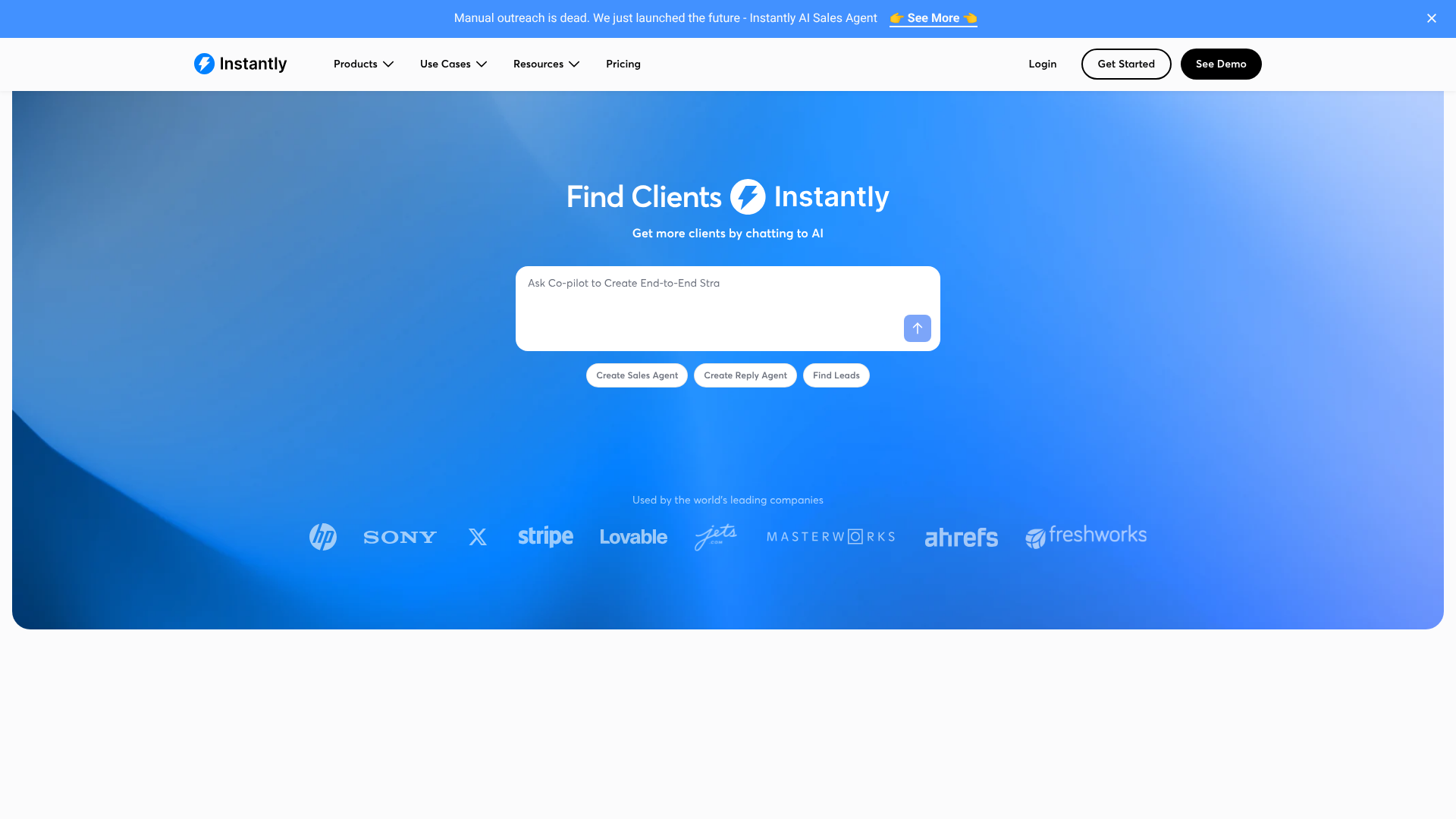
Instantly.ai has quickly gained popularity for its focus on cold email outreach at scale. Its standout feature is the unlimited email account warm-up and sending capabilities, which helps improve email deliverability and avoid spam folders. This is critical for any team running high-volume outbound campaigns.
The platform allows you to connect an unlimited number of email inboxes and automatically ramps up sending volume to build a positive sender reputation. It also includes campaign management features, A/B testing, and basic analytics. It's less of an all-in-one platform and more of a specialised tool for serious cold emailers.
Pros
- Unlimited email warm-up to improve deliverability.
- Send campaigns from an unlimited number of email accounts.
- Very cost-effective for high-volume sending.
Cons
- Lacks multi-channel outreach options (e.g., calls, LinkedIn).
- The user interface is functional but less polished than competitors.
9. Zoho CRM
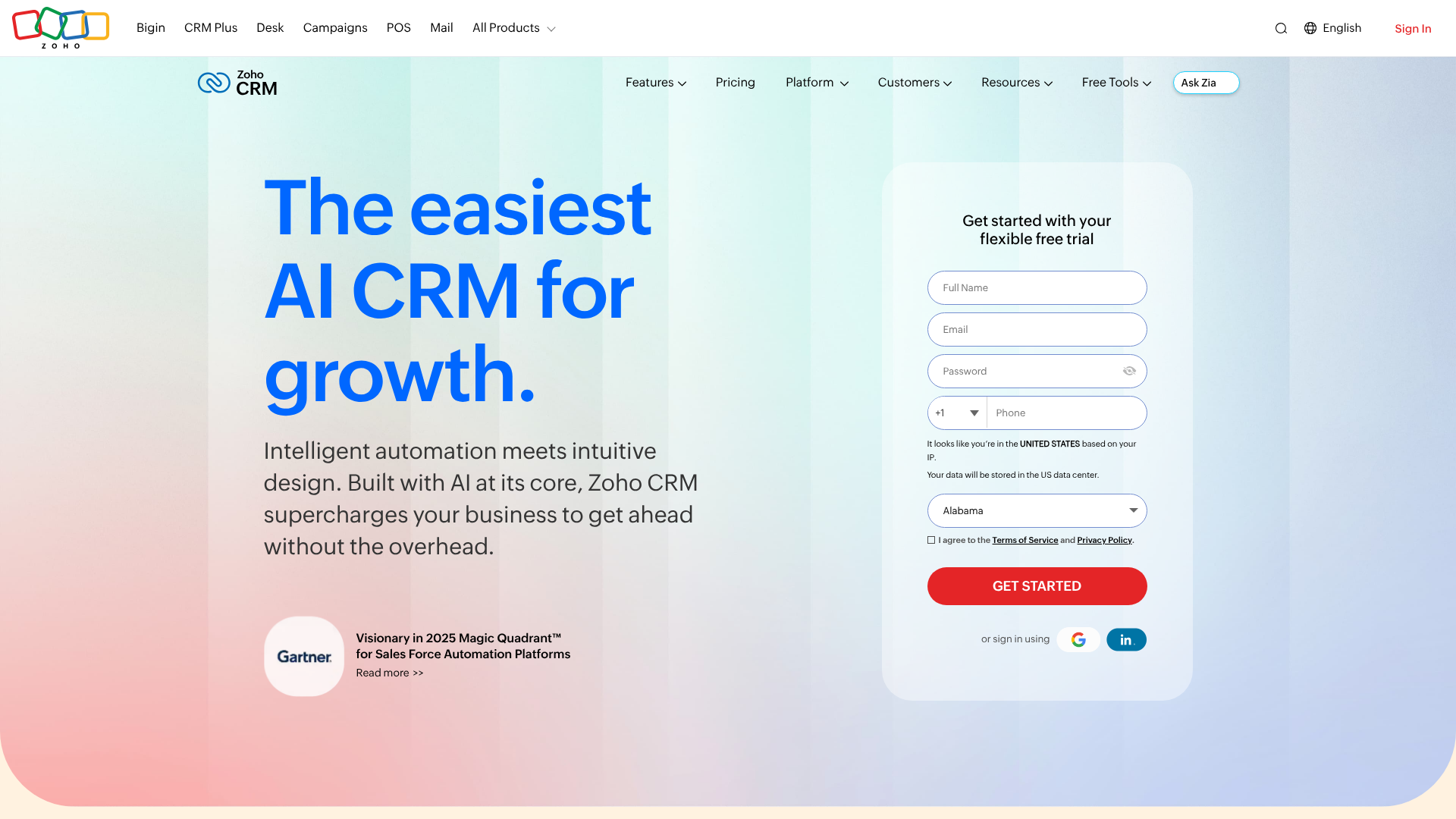
Zoho CRM is part of the broader Zoho suite of business applications, and it offers a powerful, affordable solution for managing the entire sales cycle. For prospecting, it includes tools for lead scoring, workflow automation, and sales signal intelligence (through integrations). It can track website visitors and notify reps when a key prospect is engaging with their content.
Its main advantage is its value. Zoho CRM provides a feature-rich platform at a fraction of the cost of many competitors. For small and medium-sized businesses that need a central hub for all their sales and marketing activities, Zoho offers a compelling package that can be expanded with other Zoho apps as the business grows.
Pros
- Highly affordable and offers great value for money.
- Part of a comprehensive suite of integrated business apps.
- Strong automation and customisation capabilities.
Cons
- The user interface can feel dated and less intuitive than modern rivals.
- Can require significant customisation to fit specific workflows.
10. Lusha
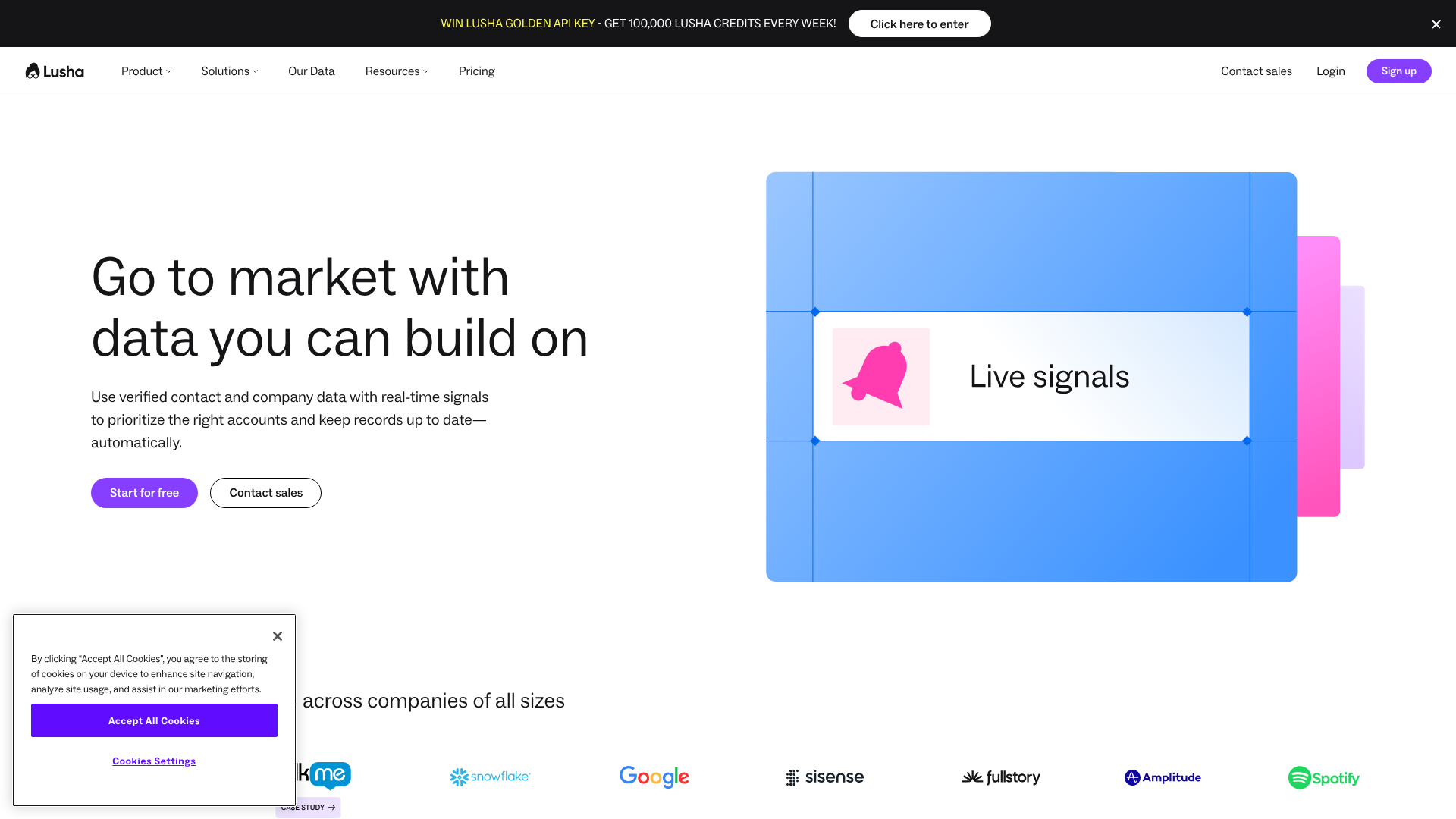
Lusha is a popular prospecting tool best known for its simple browser extension that allows users to quickly find B2B contact information from LinkedIn profiles, company websites, and even Gmail. With a single click, it provides verified email addresses and direct-dial phone numbers, making it incredibly efficient for reps who are actively browsing and researching prospects online.
While it has expanded to offer a fuller platform with list building and data enrichment features, its core strength remains its ease of use and speed. It's an excellent tool for sales teams that need to quickly supplement their research with actionable contact data on the fly. Lusha operates on a credit-based system, which can be flexible for teams with fluctuating needs.
Pros
- Extremely easy-to-use browser extension for fast lookups.
- High accuracy for both email addresses and mobile numbers.
- Flexible credit-based pricing model.
Cons
- The free plan is quite limited.
- The broader platform features are less developed than all-in-one competitors.
Understanding Pricing Models: What to Expect
Navigating the pricing of B2B sales tools can be confusing, as vendors use several different models. Understanding these structures is key to finding a solution that fits your budget and avoids unexpected costs down the line.
Per-User, Per-Month Subscriptions
This is the most common model. You pay a flat fee for each user on your team every month or year. Plans are often tiered, with more expensive tiers unlocking more advanced features or higher usage limits. This model is predictable and easy to budget for.
Examples include HubSpot Sales Hub and LinkedIn Sales Navigator.
Credit-Based Systems
Many data-focused tools, like Lusha and Hunter.io, use a credit-based system. You purchase a certain number of credits, and each action—like revealing an email address or exporting a contact—consumes one or more credits. This can be cost-effective for teams with variable usage but requires careful management to avoid running out of credits at a critical time.
Tiered Plans with Feature Gates
Most SaaS companies use a tiered approach. A basic plan might offer core features for a small team, while an enterprise plan provides advanced analytics, security features, and dedicated support for a much higher price. Be sure to carefully examine which features are included in each tier to ensure the plan you choose meets your specific requirements.
Hidden Costs: Onboarding and Implementation Fees
For more complex, enterprise-level platforms like Outreach or ZoomInfo, the subscription fee may not be the only cost. Many charge one-time fees for mandatory onboarding, implementation, and training. Always ask for a full quote that includes all potential costs before signing a contract.
| Pricing Model | Best For | Example Tools |
|---|---|---|
| Per-User Subscription | Predictable budgeting, stable teams | HubSpot, Outreach |
| Credit-Based System | Variable usage needs, individuals | Lusha, Hunter.io |
| Freemium/Free Plan | Startups, testing the platform | Apollo.io, Instantly.ai |
| Enterprise Contract | Large teams needing premium features | ZoomInfo, LinkedIn Sales Navigator |
Frequently Asked Questions (FAQ)
What are sales prospecting tools?
Sales prospecting tools are software solutions that help sales representatives find potential customers, gather their contact information, and initiate outreach. They automate many of the manual tasks involved in the early stages of the sales process, such as lead generation, data enrichment, and communication. The primary goal is to make prospecting more efficient and effective, allowing reps to connect with more qualified leads in less time.
How do you do B2B prospecting effectively?
Effective B2B prospecting involves a strategic, multi-step process. First, clearly define your Ideal Customer Profile (ICP) to know exactly who you're targeting. Second, use B2B sales tools to build a targeted list of accounts and contacts that fit this profile. Third, research each prospect to personalise your outreach.
Finally, execute a multi-channel outreach sequence that combines email, phone calls, and social media touches to build familiarity and secure a meeting. The key is persistence and providing value in every interaction.
What are the 5 P's of prospecting?
The 5 P's are a classic framework for organising your prospecting efforts. They stand for Preparation (researching your ICP and prospects), Prioritisation (focusing on the highest-potential leads first), Personalisation (tailoring your outreach to each prospect's specific needs and context), Persistence (following up consistently over time), and Performance (tracking your metrics and optimising your approach).
What are the key KPIs for B2B sales?
Key Performance Indicators (KPIs) for B2B sales help measure the effectiveness of your prospecting efforts. The most important ones include the number of outreach activities (emails sent, calls made), response rate, meetings booked or appointments set, lead-to-opportunity conversion rate, and ultimately, the sales pipeline value generated from these activities. Tracking these KPIs helps you understand what's working and where improvements are needed.
Final Thoughts: Choosing Your Prospecting Powerhouse
Investing in the right B2B sales prospecting tools is no longer a luxury; it's a necessity for any team serious about growth. By automating manual tasks, providing accurate data, and enabling personalised outreach at scale, these platforms empower your sales reps to focus on building meaningful connections and driving revenue.
The best tool for your organisation will depend on your unique circumstances. For an all-in-one solution that offers incredible value, Apollo.io is an outstanding choice. If your team lives and breathes inside the HubSpot ecosystem, the HubSpot Sales Hub provides a seamlessly integrated experience. For teams that need to master social selling, LinkedIn Sales Navigator remains an indispensable asset.
Evaluate your current process, identify your biggest challenges, and use this guide to select a tool that aligns with your goals. By making a strategic choice, you can equip your team with the technology they need to not just meet, but exceed their sales targets in 2026 and beyond.