


Semrush for SEO: A Beginner's Guide to Mastering Search Optimisation
Search Engine Optimisation (SEO) can feel like a complex puzzle with constantly changing pieces. To solve it, you need the right tools. Using Semrush for SEO gives you a powerful, all-in-one platform designed to demystify the process, from finding the right keywords to analysing your competition. It provides the data and insights necessary to make informed decisions that can significantly boost your website's visibility on search engines like Google.
- What You'll Learn
- What is Semrush and Why is it Essential for SEO?
- A Deep Dive into Semrush's Key SEO Features
- Keyword Research Toolkit
- On-Page and Technical SEO Toolkit
- Link Building Toolkit
- Competitor Analysis Toolkit
- Rank Tracking (Position Tracking)
- Getting Started: Your First Steps with Semrush for Search Optimisation
- 1. Set Up Your First Project
- 2. Run Your First Site Audit
- 3. Find Your First Keyword Opportunities
- 4. Analyse Your Top Competitors
- Choosing the Right Semrush Plan: A Breakdown of Options
- Understanding Semrush Pricing and Value for Money
- The Pros and Cons of Using Semrush for SEO
- Frequently Asked Questions (FAQ)
- Is Semrush free for SEO?
- Is Semrush a Russian company?
- Can Semrush be trusted?
- Who competes with Semrush?
- Is SEO dying due to AI?
- Final Thoughts: Is Semrush the Right SEO Tool for You?
For beginners, diving into a comprehensive tool can be intimidating. This guide is designed to break it down. We'll walk through what Semrush is, its core features for search optimisation, how to get started, and whether it's the right investment for your goals. By the end, you'll have a clear understanding of how this platform can become your most valuable SEO asset.
What You'll Learn
- What Semrush Is: Understand Semrush's role as a complete digital marketing toolkit, with a special focus on its powerful SEO capabilities.
- Core SEO Features: Discover the key tools for keyword research, on-page SEO, link building, and competitor analysis that drive results.
- Getting Started Simply: Learn the first practical steps to set up a project, run a site audit, and find initial keyword opportunities.
- Pricing and Value: Get a clear breakdown of the different plans and understand the return on investment Semrush can offer for your business.
- Pros and Cons: Receive a balanced view of Semrush's strengths and potential limitations to help you make an informed decision.
What is Semrush and Why is it Essential for SEO?
Semrush is not just a single tool; it's a comprehensive suite of over 50 tools designed for digital marketing professionals. While it covers areas like PPC, content marketing, and social media, its heart lies in its capabilities for SEO. At its core, the Semrush platform is a competitive intelligence and website analysis tool that helps you understand your own site's performance and that of your rivals.
So, does Semrush actually help with SEO. Absolutely. It provides the data-driven insights that are fundamental to any successful SEO strategy. Without a tool like Semrush, you're essentially flying blind.
You wouldn't know which keywords your audience is searching for, how your website's technical health is affecting your rankings, or what strategies your competitors are using to get ahead.
The platform works by crawling vast portions of the web and organising the data into actionable reports. This allows you to perform critical SEO tasks like identifying valuable keywords, auditing your site for technical errors, analysing your backlink profile, and tracking your ranking progress over time. In essence, the Semrush SEO tool transforms raw data into a clear roadmap for improving your search engine performance.
A Deep Dive into Semrush's Key SEO Features
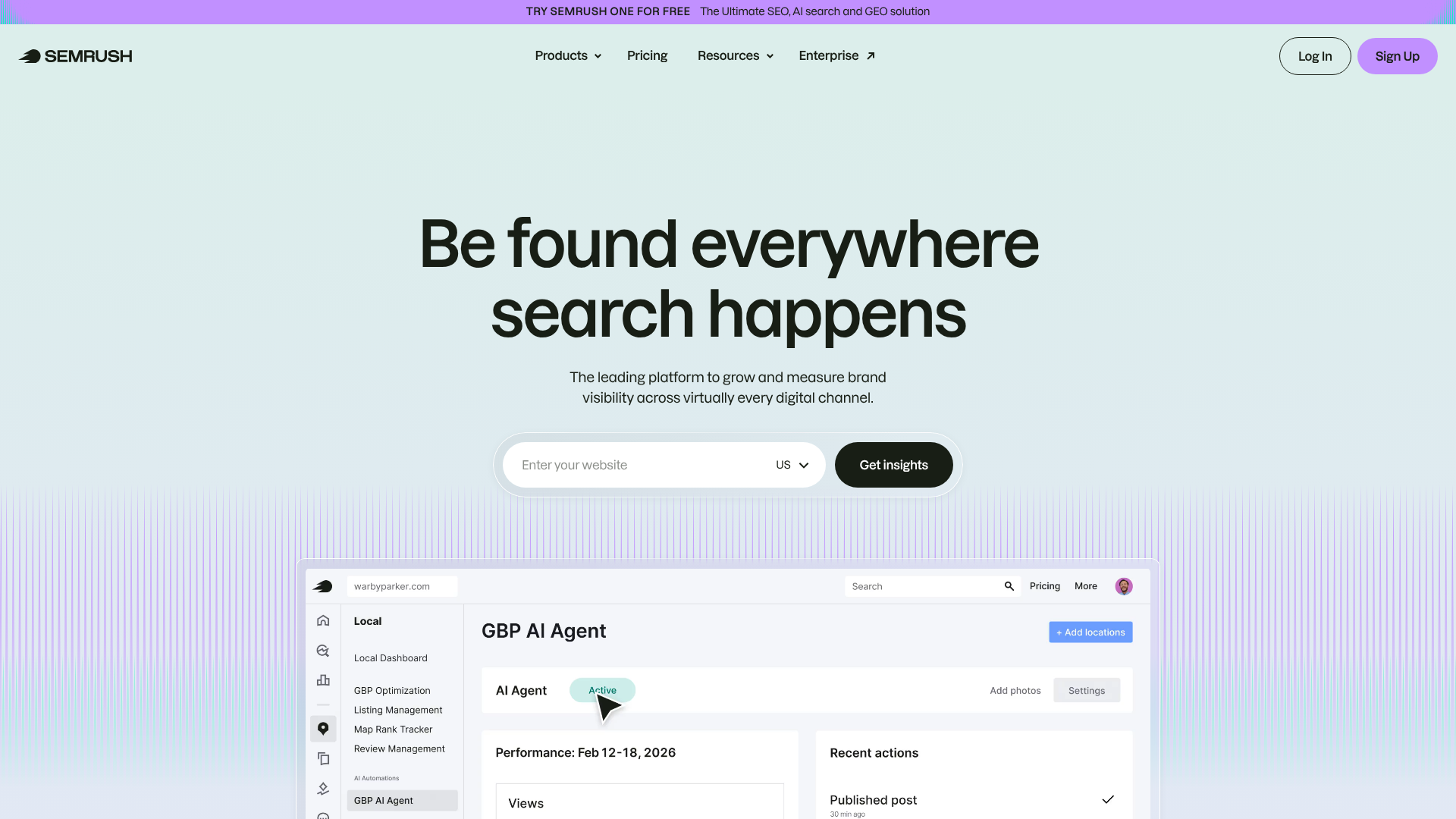

Semrush organises its powerful features into several distinct 'toolkits'. For anyone focused on search optimisation, understanding these core toolkits is the first step towards mastering the platform. Each one addresses a critical pillar of a modern SEO strategy.
Keyword Research Toolkit
Keyword research is the foundation of SEO. If you don't know what people are searching for, you can't create content that meets their needs. Semrush offers a suite of tools to uncover these opportunities.
- Keyword Magic Tool: This is your starting point. You enter a broad 'seed' keyword, and it generates thousands of related terms, questions, and phrases. It provides crucial metrics like monthly search volume, keyword difficulty (how hard it is to rank for), and cost-per-click (CPC) data, which helps you prioritise the most valuable and attainable keywords.
- Keyword Gap: This tool lets you compare your keyword profile against up to four competitors. You can instantly see which keywords your competitors rank for that you don't. This is one of the fastest ways to find proven, high-value keywords to target in your own content strategy.
On-Page and Technical SEO Toolkit
On-page and technical SEO ensure that search engines can find, crawl, and understand your website's content. A technically sound website is crucial for ranking well.
- Site Audit: This is one of the most critical features. The Site Audit tool crawls your entire website, just like a search engine would, and identifies over 140 different technical and on-page SEO issues. It checks for things like broken links, slow-loading pages, missing meta descriptions, and duplicate content, then provides a prioritised list of fixes with clear instructions on how to solve them.
- On-Page SEO Checker: This tool gives you specific, actionable ideas to improve the rankings of individual pages on your site. It analyses your page against top-ranking competitors for your target keywords and suggests improvements related to content, semantics, backlink strategy, and technical issues.
Link Building Toolkit
Backlinks—links from other websites to yours—are a powerful signal to search engines that your content is credible and authoritative. Building a healthy backlink profile is essential for competitive niches.
- Backlink Analytics: Use this to analyse your own backlink profile or spy on your competitors'. You can see exactly which websites are linking to them, which pages are attracting the most links, and the authority of those linking domains. This information is invaluable for creating a targeted link-building campaign.
- Backlink Audit Tool: Not all links are good. Some can be spammy and may even harm your rankings. This tool connects with Google Search Console to analyse your backlink profile, identify potentially toxic links, and help you create a 'disavow' file to ask Google to ignore them.
Competitor Analysis Toolkit
Understanding what your competitors are doing well is a shortcut to success. Semrush excels at providing deep insights into your rivals' strategies.
- Organic Research: Enter any competitor's domain, and you'll see all the keywords they rank for, their estimated monthly traffic from search, and their top-performing pages. You can track their ranking changes over time and identify shifts in their strategy.
- Traffic Analytics: This tool provides an estimate of any website's traffic, not just from search but also from direct, referral, social, and paid sources. It helps you understand their overall digital marketing footprint, including user engagement metrics like bounce rate and average session duration.
Rank Tracking (Position Tracking)
SEO is not a 'set it and forget it' activity. You need to monitor your performance to see what's working. The Position Tracking tool allows you to track your website's daily rankings for a custom set of target keywords. You can track rankings across different locations (country, region, or city) and device types (desktop or mobile), giving you a precise view of your visibility in the search results.
Getting Started: Your First Steps with Semrush for Search Optimisation
Jumping into a tool as comprehensive as Semrush can feel overwhelming. The key is to start with a few fundamental tasks that will provide immediate value. Following a simple, step-by-step process will help you get comfortable with the interface and start gathering actionable insights quickly.
Below is a great tutorial for beginners that walks through the entire process, from setting up a project to finding your first keywords.
1. Set Up Your First Project
A 'Project' in Semrush is a dedicated dashboard for a single website. It's where all the automated tracking and analysis tools are configured. When you create a project for your domain, you can set up several tools to run automatically.
Start by entering your domain name. Semrush will then guide you through setting up core tools like Site Audit and Position Tracking. This is the most important first step, as it allows the platform to begin collecting data on your site's health and performance immediately.
2. Run Your First Site Audit
Once your project is created, the Site Audit tool should be your first port of call. This tool will crawl your website to identify technical SEO issues that could be holding back your performance. The initial crawl might take a few minutes to a few hours, depending on the size of your site.
When the audit is complete, you'll receive a 'Site Health' score and a categorised list of issues (Errors, Warnings, and Notices). Focus on the 'Errors' first, as these are the most critical problems. Semrush provides a 'Why and how to fix it' explanation for every issue, making it accessible even for non-technical users.
3. Find Your First Keyword Opportunities
Next, it's time to find some keywords to target. Navigate to the 'Keyword Magic Tool'. Start by entering a broad topic related to your business or industry. For example, if you sell handmade coffee mugs, you might start with "coffee mugs".
The tool will generate a massive list of related keywords. Use the filters on the left to narrow down the results. A good strategy for beginners is to filter for 'Questions' to find long-tail keywords that are often less competitive. You can also set a maximum Keyword Difficulty (KD %) to find terms that are easier to rank for, such as anything under 40%.
4. Analyse Your Top Competitors
Finally, identify one or two of your main competitors. Go to the 'Organic Research' tool and enter their domain name. You'll instantly see a list of the keywords they are ranking for, along with their position in Google and the estimated traffic each keyword brings them.
Look at their 'Top Pages' report to see which of their articles or landing pages attract the most organic traffic. This gives you direct insight into what types of content are resonating with your shared audience. You can use this information to inspire your own content strategy.
Pro Tip: When analysing competitors with the Keyword Gap tool, look for keywords where they rank on the first page but have a 'weak' ranking (e.g., positions 5-10). These can be prime opportunities for you to create superior content and potentially outrank them more easily.
Choosing the Right Semrush Plan: A Breakdown of Options
Semrush offers several subscription tiers, and choosing the right one depends on your specific needs, team size, and the scale of your SEO efforts. The main difference between the plans lies in the volume of data you can access, the number of projects you can manage, and access to more advanced features.
Pro Plan
This is the entry-level plan and is best suited for freelancers, startups, and small businesses with a limited marketing budget. It provides access to all the core toolkits needed for a solid SEO, PPC, and social media campaign. You can manage up to 5 projects, track 500 keywords, and run 100,000 page crawls per month with the Site Audit tool. It's the perfect starting point for those new to using a professional Semrush SEO tool.
Guru Plan
This is the most popular plan and is designed for small to medium-sized businesses and growing marketing agencies. The Guru plan includes everything in Pro but with significantly higher limits. You can manage 15 projects and track 1,500 keywords. Crucially, it also unlocks features like the Content Marketing Platform, historical data, and multi-location and device tracking, which are essential for more sophisticated SEO strategies.
Business Plan
This plan is built for large agencies, e-commerce stores, and enterprises with extensive web presences. It offers the highest limits, allowing for 40 projects and tracking of 5,000 keywords. The Business plan also includes advanced features like API access, Share of Voice metrics, and PLA (Product Listing Ad) analytics, which are necessary for large-scale operations and deep data integration.
Choosing the right plan involves assessing your current needs. If you're just starting out and managing a single website, the Pro plan is more than sufficient. As your needs grow and you require more detailed content analysis or historical data, upgrading to the Guru plan is a logical next step.
Understanding Semrush Pricing and Value for Money

One of the most common questions from new users is, "Why is Semrush so expensive?" It's true that professional SEO tools represent a significant investment, but it's important to frame the cost in terms of value and potential return on investment (ROI).
As of 2026, Semrush's pricing reflects its position as an all-in-one marketing suite. You aren't just paying for a keyword research tool; you're paying for a comprehensive platform that can replace several other subscriptions. When you consider the cost of separate tools for rank tracking, site audits, backlink analysis, and competitor research, Semrush often proves to be more cost-effective.
For the most current pricing, you should always visit the official Semrush website, as plans and prices can change. Generally, the plans are structured as follows:
- Pro Plan: Typically starts around £100-£130 per month.
- Guru Plan: Often priced in the £200-£250 per month range.
- Business Plan: Usually starts at £400-£450 per month.
While these numbers may seem high, the value comes from the data-driven decisions the tool enables. A single successful content piece, ranking for a high-value commercial keyword found using Semrush, could generate revenue that far exceeds the monthly subscription cost. The tool helps you avoid costly mistakes, prioritise high-impact tasks, and accelerate your SEO results, which all contribute to a positive ROI.
For those hesitant to commit, Semrush offers a free account with limited functionality. This allows you to perform a certain number of searches and analyses per day, giving you a feel for the platform's power before you invest.
The Pros and Cons of Using Semrush for SEO
No tool is perfect, and a balanced perspective is crucial when deciding if Semrush is the right fit for you. It has many powerful advantages but also a few limitations to consider.
The Advantages (Pros)
- All-in-One Platform: Semrush's biggest strength is its comprehensive nature. It combines dozens of tools into one interface, covering nearly every aspect of SEO. This eliminates the need for multiple subscriptions and allows for a more integrated workflow.
- Exceptional Competitor Analysis: Semrush is widely regarded as one of the best tools on the market for competitive intelligence. Its ability to quickly reveal a competitor's top keywords, best-performing content, and backlink strategy is second to none.
- Vast Keyword Database: The platform boasts a massive database of over 25 billion keywords across more than 140 countries. This ensures you have access to a deep pool of data for finding untapped opportunities.
- User-Friendly Interface: Despite its complexity, Semrush has a relatively intuitive and well-organised dashboard. Most reports are easy to understand, and the platform provides helpful tips and explanations for beginners.
The Disadvantages (Cons)
- Cost: The primary barrier for many is the price. For solo bloggers, freelancers, or very small businesses, the monthly subscription can be a significant expense.
- Steep Learning Curve for Advanced Features: While the basics are easy to grasp, mastering the more advanced tools and reports can take time and dedication. New users might feel overwhelmed by the sheer volume of data available.
- Traffic Estimates Can Be Inaccurate: Like all third-party SEO tools, Semrush's traffic analytics are estimates, not exact figures from Google Analytics. They are excellent for trend analysis and competitor comparison but shouldn't be treated as absolute truth.
- Backlink Data: While very good, some industry experts, like those in a popular Reddit discussion, suggest that competitors like Ahrefs may have a slightly larger or more frequently updated backlink index. However, for most users, Semrush's backlink data is more than sufficient.
Frequently Asked Questions (FAQ)
Here are answers to some of the most common questions people have about using Semrush for search optimisation.
Is Semrush free for SEO?
Semrush offers a free account, but it is quite limited. With a free account, you can perform up to 10 analyses per day in tools like Domain and Keyword Analytics, create one Project, and track up to 10 keywords. While it's a great way to test the platform, the limitations make it unsuitable for managing an ongoing, serious SEO campaign. For full functionality, a paid subscription is necessary.
Is Semrush a Russian company?
This is a common misconception due to the founders' origins. Semrush was founded in 2008 by Oleg Shchegolev and Dmitry Melnikov. While they were born in Russia, the company is now headquartered in Boston, Massachusetts, USA, and is a publicly traded company on the New York Stock Exchange (NYSE: SEMR). It operates globally with offices in several countries.
Can Semrush be trusted?
Yes, Semrush is a highly trusted and reputable company in the digital marketing industry. It is used by millions of professionals worldwide, including marketing teams at major corporations like Tesla, Apple, and Amazon. The data it provides is based on its own extensive crawling and third-party data sources, and while estimates are involved, they are widely considered to be among the most reliable in the industry.
Who competes with Semrush?
Semrush's main competitors in the all-in-one SEO platform space are Ahrefs, Moz, and SE Ranking. Ahrefs is particularly well-known for its powerful backlink analysis tools. Moz is praised for its educational resources and metrics like Domain Authority. Each platform has its unique strengths, but Semrush is often favoured for its breadth of features, especially its competitor analysis capabilities.
Is SEO dying due to AI?
SEO is not dying, but it is evolving rapidly due to AI. AI-driven search experiences like Google's AI Overviews are changing how users find information. However, the fundamental principles of SEO—creating high-quality, relevant content that meets user intent and ensuring your site is technically sound—remain as important as ever. Tools like Semrush are adapting by incorporating AI features to help users navigate this new landscape.
Final Thoughts: Is Semrush the Right SEO Tool for You?
Navigating the world of SEO requires a powerful ally, and for many, Semrush is that indispensable partner. It provides a comprehensive, data-rich environment that empowers you to move beyond guesswork and make strategic decisions that drive real growth. From uncovering hidden keyword gems to dissecting competitor strategies, it equips you with the intelligence needed to compete and win in the search results.
For beginners, the platform offers a clear path to understanding the core pillars of SEO. For seasoned professionals, it provides the depth and granularity required for advanced campaigns. While the investment is significant, the potential return in terms of increased traffic, leads, and sales often makes it a worthwhile expenditure.
If you're serious about improving your website's performance and are ready to take a data-driven approach to your digital marketing, Semrush is an exceptional choice. The best way to know for sure is to try it for yourself. You can start with a free account to explore the interface and core features. If it feels like the right fit, you can upgrade to a plan that matches your ambition.
To get started and see what insights you can uncover, you can explore the platform on the Semrush website.