




How to Build High-Converting Real Estate Lead Capture Landing Pages for Agents
In the competitive world of real estate, generating a steady stream of qualified leads is the lifeblood of your business. While your main website serves as a digital brochure, it often has too many distractions to be an effective lead generation tool. This is where creating specialised real estate lead capture landing pages becomes not just an advantage, but a necessity for converting online traffic into tangible client opportunities.
- What You'll Learn
- What Exactly Are Real Estate Lead Capture Landing Pages?
- The Unmissable Benefits of Using Dedicated Landing Pages
- Dramatically Higher Conversion Rates
- Targeted Messaging for Different Audiences
- Improved Advertising Campaign ROI
- Essential Elements of a High-Converting Real Estate Landing Page
- 1. A Compelling, Benefit-Driven Headline
- 2. High-Quality, Relevant Visuals
- 3. Concise and Persuasive Copy
- 4. A Simple and Clear Lead Capture Form
- 5. A Strong, Unmistakable Call-to-Action (CTA)
- 6. Social Proof and Trust Signals
- How to Choose the Right Landing Page Builder for Your Agency
- Ease of Use and Drag-and-Drop Functionality
- Real Estate Specific Templates
- Integration Capabilities
- A/B Testing Features
- Top Tools for Creating Lead Capture Pages for Real Estate
- 1. Leadpages: Best for Template Variety and Ease of Use
- 2. Unbounce: Best for A/B Testing and Optimisation
- 3. ClickFunnels: Best for Building Complete Sales Funnels
- Understanding Pricing: What to Expect from Landing Page Builders
- Step-by-Step Guide: Building Your First Property Lead Generation Page
- Step 1: Define Your Goal and Audience
- Step 2: Choose Your Lead Magnet
- Step 3: Select a Template and Customise the Design
- Step 4: Write Compelling Copy
- Step 5: Configure Your Lead Capture Form
- Step 6: Integrate with Your CRM and Email Autoresponder
- Step 7: Publish and Promote Your Page
- Step 8: Test, Measure, and Optimise
- Common Mistakes to Avoid with Real Estate Landing Pages
- Having Too Many Calls-to-Action (CTAs)
- Asking for Too Much Information
- Slow Page Load Speed
- Ignoring Mobile Users
- Mismatch Between Ad and Landing Page
- Frequently Asked Questions
- What is the difference between a landing page and a homepage?
- How many form fields should I use on a real estate lead capture page?
- What makes a good lead magnet for real estate?
- Can I build a landing page without a website?
- Final Thoughts
A well-crafted landing page acts as your digital salesperson, working 24/7 to capture the interest of potential buyers and sellers. It focuses a visitor's attention on a single, specific offer—like a free home valuation or an exclusive property guide—and guides them towards one action: providing their contact information. This targeted approach dramatically increases conversion rates compared to sending traffic to a generic homepage.
This guide will walk you through everything you need to know, from the fundamental building blocks of a successful page to the best tools and strategies to implement. You'll learn how to build property lead generation pages that not only look professional but also consistently fill your pipeline with high-quality leads.
What You'll Learn
- The Core Purpose: Understand what a real estate landing page is and why it's fundamentally different from a standard website page for lead generation.
- Essential Components: Discover the key elements every high-converting landing page must have, including compelling headlines, strong visuals, and clear calls-to-action.
- Top Tool Recommendations: Get an overview of the best landing page builders designed to help agents create professional pages without needing to code, such as Leadpages and ClickFunnels.
- Step-by-Step Creation Process: Follow a practical guide to building your first lead capture page, from defining your offer to launching and optimising for performance.
- Common Pitfalls to Avoid: Learn about the frequent mistakes that can harm your conversion rates and how to steer clear of them to maximise your results.
What Exactly Are Real Estate Lead Capture Landing Pages?
A real estate lead capture landing page is a standalone web page created specifically for a marketing or advertising campaign. Its sole purpose is to capture a visitor's contact information in exchange for something of value, known as a lead magnet. Unlike your main website's homepage, which has multiple navigation links, blog posts, and agent bios, a landing page is designed with a single goal and zero distractions.
Think of it this way: if a potential client clicks on your Facebook ad promoting a "Free Home Valuation Report," they shouldn't land on your homepage where they have to search for the offer. They should arrive at a dedicated page that talks only about the home valuation report and has a simple form to request it. This focused experience is what makes lead capture pages for real estate so effective.
These pages are the centrepiece of any successful digital marketing funnel. Whether you're running Google Ads, promoting a new listing on social media, or sending out an email newsletter, you direct all that traffic to a specific landing page tailored to that audience and offer. This ensures the message is consistent from the ad to the page, which builds trust and encourages visitors to convert into leads.
The Unmissable Benefits of Using Dedicated Landing Pages
Integrating dedicated landing pages into your marketing strategy offers significant advantages that directly impact your bottom line. They are more than just a marketing trend; they are a fundamental tool for efficient and effective online lead generation. By moving beyond a one-size-fits-all website approach, you can create targeted experiences that resonate with specific segments of your audience.
Dramatically Higher Conversion Rates
The primary benefit is a significant boost in conversions. Because a landing page is hyper-focused on a single offer and a single call-to-action (CTA), it eliminates the decision fatigue visitors experience on a busy website. There are no navigation menus or links to other pages to distract them. This clarity guides the user directly towards the desired action, whether it's downloading a guide or requesting a consultation.
Industry data consistently shows that businesses using a higher number of landing pages generate substantially more leads.
Targeted Messaging for Different Audiences
Real estate serves a diverse clientele: first-time homebuyers, luxury property sellers, property investors, and people looking to downsize. Each group has unique needs and pain points. With landing pages, you can create tailored messages for each segment. For example, you can have a page specifically for sellers offering a "Guide to Maximising Your Home's Sale Price" and another for buyers with a "List of Off-Market Properties." This level of personalisation makes your marketing far more relevant and effective.
Improved Advertising Campaign ROI
When you run paid advertising campaigns on platforms like Google or Facebook, you pay for every click. Sending that expensive traffic to a generic homepage is like throwing money away, as the conversion rates are typically low. By directing clicks to a highly relevant and optimised landing page, you increase the likelihood of converting that visitor into a lead. This lowers your cost-per-lead and makes your entire advertising budget work harder, delivering a much better return on investment (ROI).
Essential Elements of a High-Converting Real Estate Landing Page

Creating a landing page that consistently converts visitors into leads isn't about guesswork. It's about strategically combining several key components that work together to persuade and guide the user. Each element has a specific job to do, from grabbing attention to building trust and encouraging action. Getting these details right is the difference between a page that generates a trickle of leads and one that becomes a powerful lead magnet for your business.
1. A Compelling, Benefit-Driven Headline
The headline is the first thing a visitor reads and is arguably the most important element on the page. It must immediately grab their attention and clearly communicate the value of your offer. A great headline focuses on the benefit to the user, not the feature itself. For example, instead of "Home Valuation Tool," use something like "Find Out Your Home's True Market Value in 60 Seconds."
2. High-Quality, Relevant Visuals
Real estate is a visual industry. Your landing page must feature high-resolution images or videos that are directly related to your offer. If you're promoting a specific listing, use professional photos or a virtual tour of that property. If the offer is a neighbourhood guide, use beautiful shots of that area's landmarks or lifestyle.
Visuals should support the message and make the offer feel more tangible and desirable.
3. Concise and Persuasive Copy
The text on your landing page should be clear, concise, and focused on the user. Use bullet points to break down the benefits of your offer, making them easy to scan and digest. Avoid industry jargon and write in a natural, conversational tone. The copy should address the visitor's potential problems and present your offer as the perfect solution.
4. A Simple and Clear Lead Capture Form
The form is where the conversion happens. To maximise submissions, keep it as simple as possible. Only ask for the information you absolutely need. For most initial real estate leads, a name, email address, and phone number are sufficient.
According to Brennan Haelig, Founder & CEO of Jumpstart ROI, as mentioned on the Smart Agents Podcast, keeping the form simple is key. He advises that your job is to get the lead on the phone fast, not to over-qualify them with a long form.
5. A Strong, Unmistakable Call-to-Action (CTA)
The CTA is the button that a visitor clicks to submit their information. It needs to stand out visually with a contrasting colour and use clear, action-oriented text. Instead of a generic word like "Submit," use specific text that relates to the offer, such as "Get My Free Valuation Now" or "Download the Guide." This reinforces what the user will receive in return for their details.
6. Social Proof and Trust Signals
People are more likely to trust you if they see that others have had a positive experience. Include elements of social proof like client testimonials, star ratings, or logos of local media outlets you've been featured in. A simple, genuine quote from a happy client can significantly increase a visitor's confidence and their willingness to convert.
How to Choose the Right Landing Page Builder for Your Agency
With a clear understanding of what makes a landing page effective, the next step is choosing the right tool to build it. Fortunately, you no longer need to be a web developer to create stunning, high-performing pages. Modern landing page builders offer intuitive drag-and-drop interfaces that empower real estate agents to launch professional campaigns quickly. However, not all builders are created equal.
When evaluating your options, consider these critical factors to ensure the platform you choose aligns with your business needs and technical comfort level.
Ease of Use and Drag-and-Drop Functionality
As a busy real estate professional, your time is best spent with clients, not wrestling with complicated software. The ideal landing page builder should have an intuitive, user-friendly interface. Look for a true drag-and-drop editor that allows you to move elements around the page freely and see your changes in real-time. This makes the design process faster and more enjoyable, allowing you to create and modify pages without a steep learning curve.
Real Estate Specific Templates
Starting from a blank canvas can be daunting. A good landing page builder will offer a wide variety of professionally designed templates, including some specifically created for the real estate industry. These templates should cover common use cases like single property listings, home valuation requests, open house registrations, and free guide downloads. Using a pre-built template saves you hours of design work and ensures your page is built on a foundation that is already optimised for conversions.
Integration Capabilities
A landing page is just one part of your marketing funnel. The leads you capture need to go somewhere. Your chosen platform must integrate smoothly with the other tools you use, especially your Customer Relationship Management (CRM) system and email marketing software. Look for native integrations with popular platforms like ActiveCampaign, Mailchimp, or your real estate CRM.
This automation ensures that new leads are instantly added to your database and enrolled in follow-up sequences without any manual data entry.
Pro Tip: Before committing to a platform, make a list of your essential tools (CRM, email provider, calendar scheduler) and check the builder's integration library to confirm compatibility. Seamless integration saves countless hours and prevents leads from falling through the cracks.
A/B Testing Features
What works for one audience might not work for another. A/B testing (or split testing) is a crucial feature that allows you to test different versions of your landing page to see which one performs better. You can test variations of your headline, CTA button colour, images, or form length. The platform should make it easy to set up these tests and provide clear analytics on which version is generating more leads.
Continuous testing is the key to systematically improving your conversion rates over time.
Top Tools for Creating Lead Capture Pages for Real Estate
Selecting the right software is a critical step in streamlining your lead generation efforts. The market is filled with excellent options, but a few stand out for their features, ease of use, and suitability for real estate professionals. Here’s a breakdown of our top recommendations to help you build effective property lead generation pages.
1. Leadpages: Best for Template Variety and Ease of Use
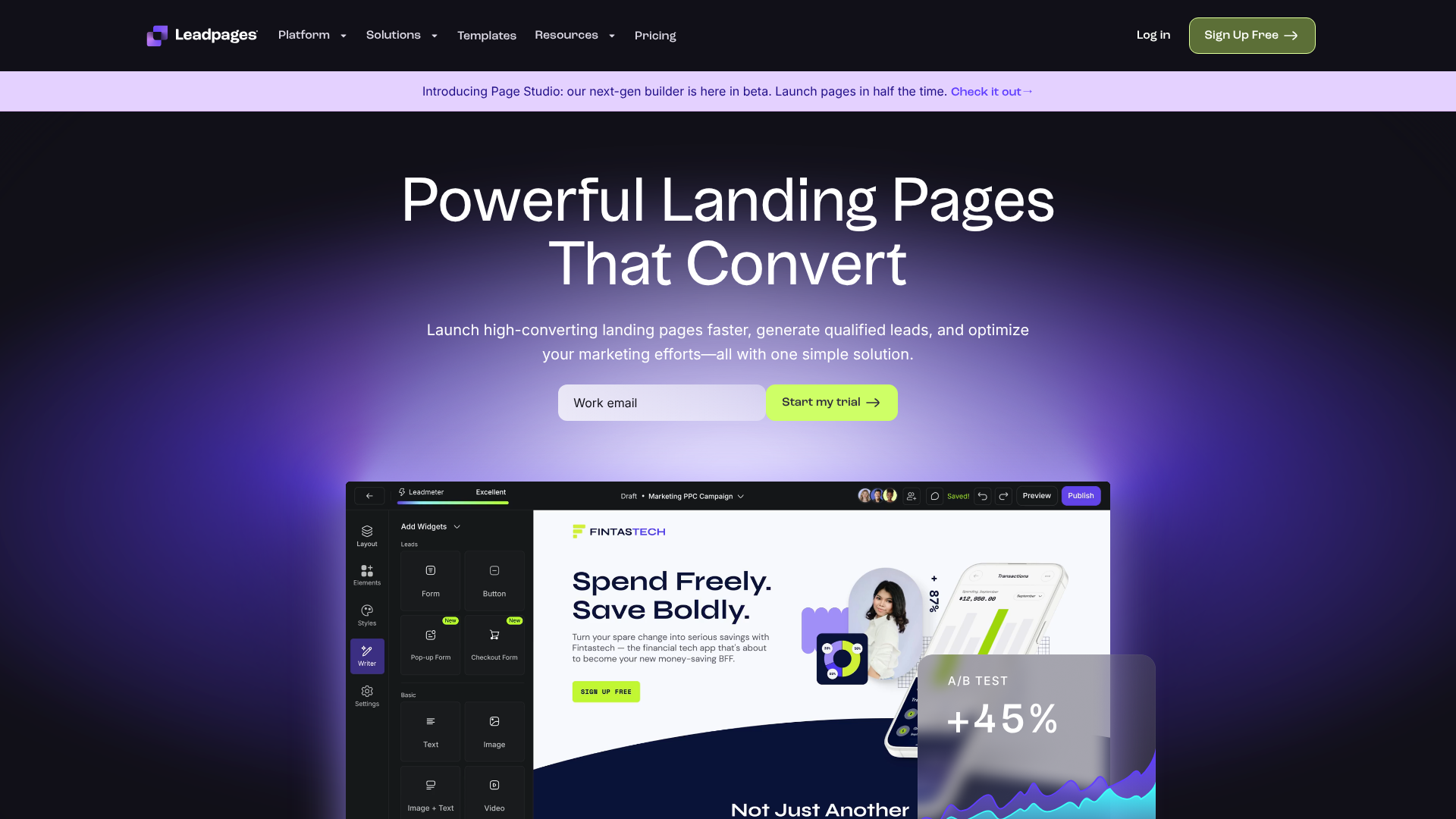
Leadpages is a popular choice, especially for those who are new to building landing pages. Its primary strength lies in its simplicity and extensive library of mobile-responsive templates. You can find dozens of templates designed specifically for real estate, which can be customised in minutes using their user-friendly drag-and-drop editor.
It also includes features like pop-up forms and alert bars that you can add to your existing website to capture even more leads. Leadpages offers straightforward analytics and integrates with most major email marketing services and CRMs, making it a solid all-in-one solution for agents who value speed and simplicity.
Pros
- Extremely user-friendly with a gentle learning curve.
- Large library of high-quality, industry-specific templates.
- Affordable pricing plans suitable for solo agents and small teams.
- Built-in conversion tools like pop-ups and alert bars.
Cons
- The drag-and-drop editor is slightly less flexible than some competitors.
- A/B testing features are not available on the most basic plan.
2. Unbounce: Best for A/B Testing and Optimisation
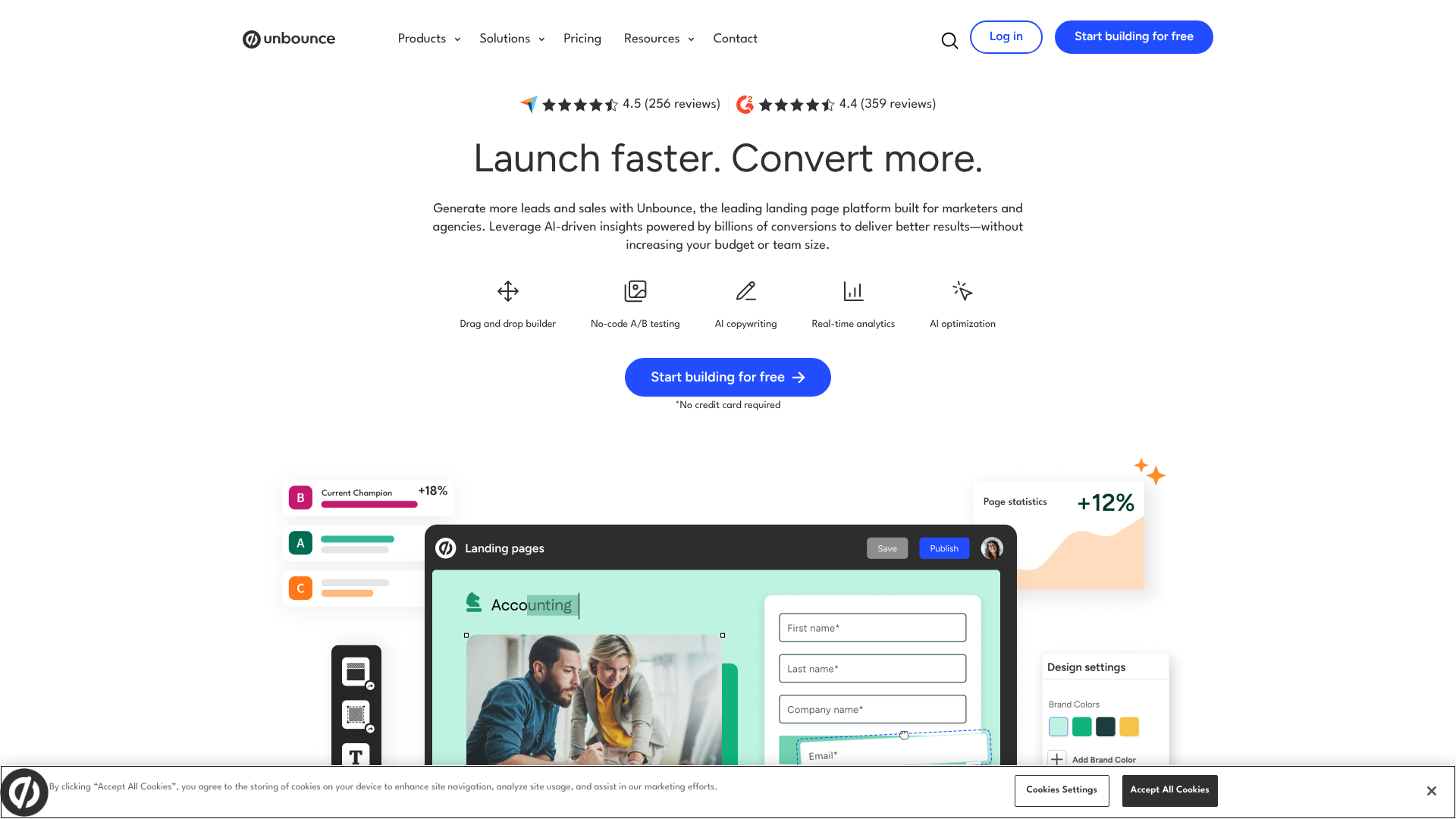
Unbounce is a more powerful and flexible platform geared towards marketers who want to maximise their conversion rates through rigorous testing and optimisation. Its drag-and-drop builder offers pixel-perfect precision, giving you complete control over the design and layout of your page. Unbounce's standout feature is its Conversion Intelligence Platform, which uses AI to help you write better copy and automatically direct traffic to the best-performing page variant.
While it has a steeper learning curve and a higher price point than Leadpages, it's an excellent choice for agents or teams who are serious about data-driven marketing and want the most advanced optimisation tools available.
Pros
- Highly flexible and powerful drag-and-drop editor.
- Advanced A/B testing and AI-powered optimisation features.
- Dynamic Text Replacement personalises pages based on ad keywords.
- Strong integration capabilities with a wide range of marketing tools.
Cons
- More expensive than many other landing page builders.
- Can be complex for beginners who don't need advanced features.
3. ClickFunnels: Best for Building Complete Sales Funnels
ClickFunnels is more than just a landing page builder; it's a platform designed to create entire marketing and sales funnels. If your goal is not just to capture a lead but to guide them through a multi-step process (e.g., landing page -> thank you page -> webinar registration -> follow-up sequence), ClickFunnels excels. It provides pre-built funnel templates for various goals, including lead generation.
It's an all-in-one solution that can handle email automation, affiliate management, and even payment processing. This makes it a great fit for agents who are building a more complex online business, such as selling courses or managing a large team, but it might be overkill for those who just need simple lead capture pages.
Pros
- Excellent for building multi-step marketing funnels.
- All-in-one platform includes email marketing and affiliate tools.
- Strong focus on guiding users through a conversion process.
- Large community and extensive training resources.
Cons
- Can be overly complex for simple lead capture needs.
- One of the more expensive options on the market.
- The page editor is not as flexible as Unbounce.
Understanding Pricing: What to Expect from Landing Page Builders
Budget is a key consideration for any business tool, and landing page builders are no exception. Pricing structures can vary significantly, so it's important to understand what you're getting for your money. Most platforms operate on a subscription model, typically with monthly or annual billing options, where paying annually often results in a discount.
Plans are usually tiered based on the features available and usage limits, such as the number of landing pages you can publish, the amount of traffic you can receive, or the number of leads you can collect. A basic plan might be perfect for a solo agent just starting out, while a growing team running multiple campaigns will likely need a higher-tier plan with features like A/B testing and more advanced integrations.
Here is a general comparison of what to expect from our recommended tools. Please note that pricing changes, so it's always best to visit the official websites for the most current information.
| Feature | Leadpages | Unbounce | ClickFunnels |
|---|---|---|---|
| Target Audience | Solo Agents, Small Teams | Marketers, Agencies | Funnel Builders, Coaches |
| Starting Price | Generally the most affordable | Mid-to-high range | High-end |
| Key Strength | Templates & Ease of Use | A/B Testing & Optimisation | All-in-one Funnel Building |
| A/B Testing | Available on higher plans | Core feature on all plans | Available on all plans |
| Free Trial | Yes (usually 14 days) | Yes (usually 14 days) | Yes (usually 14 days) |
When comparing costs, look beyond the monthly fee. Consider the value of the features included. A more expensive plan with robust A/B testing could ultimately provide a better ROI by helping you double your conversion rate, making the higher cost worthwhile. Always start with a free trial to ensure the platform is a good fit for your workflow before committing to a paid plan.
Step-by-Step Guide: Building Your First Property Lead Generation Page
Now it's time to put theory into practice. Building your first real estate lead capture landing page is a straightforward process when you break it down into manageable steps. This guide will walk you through creating a page for a common real estate offer: a free home valuation.
Step 1: Define Your Goal and Audience
Your goal is to capture leads from potential home sellers. Your target audience is homeowners in a specific neighbourhood or city who are curious about their property's current market value. Every decision you make from here on—the copy, the images, the form—should be tailored to this specific audience and goal.
Step 2: Choose Your Lead Magnet
Your lead magnet is the free home valuation report. This is the valuable item you are offering in exchange for their contact information. Make sure the value of this offer is clearly communicated on the page. Emphasise that it's a custom, accurate report, not just an automated estimate.
Step 3: Select a Template and Customise the Design
Log in to your chosen landing page builder (like Leadpages) and browse the template library. Look for a template designed for home valuations or general lead generation. Choose one with a clean layout, a prominent headline area, and a clear spot for your form. Customise it with your branding: add your logo, change the colours to match your brand, and select a high-quality background image of a beautiful local home or neighbourhood.
Step 4: Write Compelling Copy
- Headline: Write a benefit-focused headline like, "How Much Is Your [City Name] Home Really Worth? Get a Free, Customised Valuation Today."
- Body Copy: Use a few short paragraphs or bullet points to explain what they'll get. For example: "Our free report includes recent comparable sales," "An expert analysis of current market trends," and "A personalised estimate from a local property specialist."
- CTA Button: Use clear, action-oriented text like "Get My Free Home Valuation."
Step 5: Configure Your Lead Capture Form
Keep the form simple. Ask for the essentials: Full Name, Email Address, Phone Number, and Property Address. Don't add extra fields like "When are you planning to sell?" at this stage. You can gather that information during your follow-up call.
The fewer fields you have, the higher your conversion rate will be.
Step 6: Integrate with Your CRM and Email Autoresponder
Connect your landing page form to your CRM and email marketing software. Set up an automation rule so that anyone who fills out the form is automatically added to your "Seller Leads" list. Configure an autoresponder email that immediately thanks them for their request and lets them know you'll be in touch within 24 hours with their custom report. This instant communication builds trust and manages expectations.
Step 7: Publish and Promote Your Page
Once you've reviewed everything, hit publish. Your landing page is now live. The next step is to drive traffic to it. Share the link in your social media profiles, run targeted Facebook ads to homeowners in your area, and add it to your email signature.
The page won't generate leads on its own; you need to actively promote it.
Pro Tip: Create a custom, easy-to-remember URL for your landing page. Instead of a long, auto-generated link, use a service to create a link like www.yourname.com/valuation. It looks more professional and is easier to share.
Step 8: Test, Measure, and Optimise
After a week or two, check your analytics. What is your conversion rate. If it's low (e.g., under 5%), it's time to optimise. Use your platform's A/B testing feature to create a variation.
Change one element at a time—start with the headline. Run the test for another week and see which version performs better. Continuous optimisation is the key to long-term success.
Common Mistakes to Avoid with Real Estate Landing Pages
Even with the best tools and intentions, it's easy to make small mistakes that can significantly hurt your conversion rates. Being aware of these common pitfalls can help you avoid them from the start and ensure your pages perform at their best. A successful landing page is often as much about what you leave out as what you include.
Having Too Many Calls-to-Action (CTAs)
The golden rule of landing pages is one page, one goal. Your page should have a single, clear call-to-action. Avoid adding links to your homepage, your blog, or your social media profiles. Every extra link is a potential exit point that distracts the visitor from the primary goal of filling out your form.
Keep it focused.
Asking for Too Much Information
A long form is a major conversion killer. Each additional field you ask for creates friction and reduces the likelihood that a visitor will complete it. Stick to the absolute essentials needed for your initial follow-up. You can always gather more information later in the conversation.
A simple form with 3-4 fields will almost always outperform one with 7-8 fields.
Slow Page Load Speed
In today's fast-paced digital world, patience is thin. If your landing page takes more than a few seconds to load, visitors will leave before they even see your offer. According to Google research, the probability of a bounce increases dramatically with every second of load time. Optimise your images to reduce their file size and choose a landing page builder known for its fast hosting to ensure a snappy user experience.
Ignoring Mobile Users
A significant portion of your traffic, especially from social media ads, will come from mobile devices. If your landing page is not fully responsive and easy to use on a small screen, you're losing a huge number of potential leads. Text should be easy to read, buttons should be easy to tap, and forms should be simple to fill out on a mobile phone. Always preview and test your page on a mobile device before launching your campaign.
Mismatch Between Ad and Landing Page
This is a critical error known as poor "message match." The headline, offer, and imagery on your landing page must closely match the ad that brought the visitor there. If your Facebook ad promises a "Free Guide to Selling Your Home," your landing page headline must reflect that offer. A disconnect between the ad and the page creates confusion and distrust, causing visitors to immediately click away.
Frequently Asked Questions
What is the difference between a landing page and a homepage?
A homepage is the main entry point of your website and is designed for general exploration. It has multiple navigation links, showcases various aspects of your business, and serves many different purposes. A landing page, on the other hand, is a standalone page designed with a single, focused objective: to capture a lead. It has no site navigation and is built around one specific offer and call-to-action to maximise conversions.
How many form fields should I use on a real estate lead capture page?
Less is almost always more. For an initial lead capture, you should only ask for the information you absolutely need to make contact and qualify the lead. This typically includes Name, Email, and Phone Number. If the offer requires it (like a home valuation), you'll also need the Property Address.
Aim for 3-4 fields. You can collect more detailed information during your follow-up conversation.
What makes a good lead magnet for real estate?
A good lead magnet provides genuine value to your target audience and solves a specific problem for them. For sellers, popular lead magnets include free home valuation reports, guides to staging a home for sale, or checklists for preparing a property for listing. For buyers, effective lead magnets are lists of new properties, neighbourhood guides, or a calculator for determining home affordability. The key is to offer something so useful that they are happy to exchange their contact information for it.
Can I build a landing page without a website?
Yes, absolutely. Most landing page builders, including Leadpages and Unbounce, host the pages for you on their servers. You can publish your landing page on a custom domain you own (e.g., www.yourcityhomes.com) or use a subdomain provided by the builder (e.g., yourname.lpages.co). This means you can start running targeted marketing campaigns and generating leads even if you don't have a full, multi-page website built yet.
Final Thoughts
Mastering the art and science of real estate lead capture landing pages is a powerful way to take control of your lead generation and build a more predictable, scalable business. By moving away from a passive, 'wait-and-see' approach and actively driving traffic to targeted, high-converting pages, you put yourself in the driver's seat of your marketing efforts.
Remember, the key to success is focus. Each page should be dedicated to a single audience and a single offer, with every element working together to guide the visitor towards one action. Start simple, choose a user-friendly tool, and commit to a process of continuous testing and improvement. Over time, these dedicated pages will become your most valuable digital assets, consistently delivering qualified leads into your pipeline.
If you're ready to start building pages that convert, consider exploring a platform designed for this purpose. Tools like Leadpages offer the simplicity and templates to get started quickly, while a solution like ClickFunnels can help you build out more complex marketing funnels. The right tool will empower you to turn online traffic into real-world clients.