


11 Best AI Writing Tools for Marketers & Bloggers (2026 Review)
Creating high-quality content consistently is one of the biggest challenges for any digital marketer, blogger, or business owner. From writer's block to tight deadlines, the pressure to produce can be immense. This is where using the right ai writing tools can transform your workflow, helping you generate ideas, draft articles, and refine copy faster than ever before.
- What You'll Learn
- What Are AI Writing Tools and How Do They Work?
- The Core Benefits of Using AI Writing Software
- 1. Overcome Writer's Block and Generate Ideas
- 2. Dramatically Increase Content Production Speed
- 3. Enhance Content Quality and Consistency
- 4. Improve SEO and Reach a Wider Audience
- Key Features to Look For When Choosing Your Tool
- The 11 Best AI Writing Tools for 2026
- 1. Jasper (formerly Jarvis)
- 2. Writesonic
- 3. Grammarly
- 4. QuillBot
- 5. ChatGPT & Claude
- 6. SurferSEO
- 7. Copy.ai
- 8. Rytr
- 9. Sudowrite
- 10. Frase.io
- 11. Scalenut
- Comparison of Top AI Writing Tools
- The Pros and Cons of Automated Writing Tools
- Frequently Asked Questions (FAQ)
- What are the best AI tools for writing?
- Is it illegal to publish a book written by AI?
- Can I use ChatGPT as a writer?
- Can your own writing be detected as AI?
- Do I still need to edit AI-generated content?
- Final Thoughts
These sophisticated platforms are more than just spell checkers; they are creative partners powered by advanced artificial intelligence. They can help you craft compelling blog posts, engaging social media updates, and persuasive marketing copy in a fraction of the time it would take manually. By handling the heavy lifting of drafting and research, they free you up to focus on strategy, creativity, and connecting with your audience.
What You'll Learn
- What AI Writing Tools Are: Understand the technology behind these platforms and how they generate human-like text to assist with content creation.
- How to Choose the Right Tool: Learn the key features to evaluate, such as template variety, SEO integration, and brand voice capabilities, to find the perfect fit for your needs.
- Top Recommendations for 2026: Get a detailed breakdown of the best AI writing software available, including options for marketing, SEO, academic writing, and creative projects.
- The Role of Human Oversight: Realise why these tools are powerful assistants, not replacements, and how human editing is crucial for ensuring accuracy, originality, and brand alignment.
What Are AI Writing Tools and How Do They Work?
AI writing tools are software applications that use artificial intelligence, specifically large language models (LLMs), to generate, edit, and optimise human-like text. Think of them as incredibly advanced assistants that have been trained on billions of data points, including books, articles, and websites. This extensive training allows them to understand context, grammar, tone, and style with remarkable accuracy.
At their core, these tools work by predicting the next most likely word in a sequence. When you provide a prompt, such as "write a blog post introduction about the benefits of remote work," the AI analyses the request and begins generating text word by word. It constantly evaluates the context to ensure the output is coherent, relevant, and aligns with the instructions you provided. The underlying models, like OpenAI's GPT series or Google's LaMDA, are the engines that power this predictive capability.
Modern AI writing software goes far beyond simple text generation. Many platforms offer specialised templates for specific tasks, like writing email newsletters, creating social media captions, or drafting product descriptions. They can also perform other functions, such as paraphrasing existing content, checking for plagiarism, and optimising text for search engines by suggesting relevant keywords. These features make them versatile assets for anyone involved in content creation.
The Core Benefits of Using AI Writing Software

Integrating AI into your writing process offers a host of advantages that can significantly improve both efficiency and quality. These platforms are not about replacing human creativity but augmenting it, allowing you to produce better content, faster. Here are some of the primary benefits.
1. Overcome Writer's Block and Generate Ideas
One of the most immediate benefits is the ability to break through creative hurdles. Instead of staring at a blank page, you can provide a simple prompt and receive multiple ideas, outlines, or even a full first draft within seconds. This initial momentum is often all that's needed to get the creative process flowing. You can use these tools to brainstorm blog post titles, explore different angles for an article, or develop core talking points for a marketing campaign.
2. Dramatically Increase Content Production Speed
Time is a finite resource, and automated writing tools are exceptionally good at saving it. Repetitive writing tasks that once took hours, such as creating multiple social media variations or writing unique product descriptions for an e-commerce site, can be completed in minutes. This acceleration allows content teams to scale their output without sacrificing quality or hiring more staff, enabling them to meet the demands of a fast-paced digital environment.
3. Enhance Content Quality and Consistency
Maintaining a consistent tone of voice across all marketing channels is essential for building a strong brand identity. Many advanced AI tools allow you to define a brand voice, ensuring that all generated content—from formal reports to casual tweets—aligns with your company's style. Furthermore, integrated grammar and style checkers, like those found in Grammarly, help polish your writing, correcting errors and improving clarity to produce a more professional final product.
4. Improve SEO and Reach a Wider Audience
Many writing tools AI platforms now come equipped with powerful SEO features. They can help you identify relevant keywords, structure your content for search engine crawlers, and analyse top-ranking articles to see what's working for your competitors. By building SEO best practices directly into the content creation workflow, these tools help you create articles that are not only well-written but also optimised to rank higher in search results, driving more organic traffic to your website.

Key Features to Look For When Choosing Your Tool
With a growing number of AI writing tools on the market, selecting the right one can feel overwhelming. The best choice depends entirely on your specific needs, workflow, and budget. To make an informed decision, focus on evaluating the following key features.
Template and Use Case Variety
Top-tier platforms offer a wide library of pre-built templates designed for specific content types. Look for a tool that covers your most frequent tasks, whether it's long-form blog posts, Google Ads copy, video scripts, or email subject lines. A robust template library saves you time on prompt engineering and ensures the generated output is structured correctly for its intended purpose.
Quality and Coherence of Output
The primary measure of any AI writer is the quality of the text it produces. Does it sound natural and human-like, or is it robotic and repetitive? A good tool should generate content that is coherent, contextually accurate, and requires minimal editing. Most platforms offer free trials, which you should use to test the output quality with your own prompts before committing to a subscription.
SEO and Content Optimisation Features
For marketers and bloggers, SEO capabilities are non-negotiable. Look for tools that integrate with platforms like SurferSEO or offer their own built-in optimisation features. This includes keyword research, content brief generation, real-time content scoring, and SERP analysis. These features help ensure your content is engineered to perform well in search engines from the very beginning.
Brand Voice and Customisation
The ability to maintain a consistent brand voice is crucial. Advanced tools like Jasper allow you to upload style guides or provide examples of your writing to train the AI on your specific tone, terminology, and style. This customisation ensures that the generated content feels authentic to your brand and doesn't sound generic.
Integrations and Workflow Compatibility
Consider how a tool will fit into your existing workflow. Does it offer a browser extension, a Google Docs add-on, or a WordPress plugin? Seamless integrations prevent you from having to constantly switch between different applications, creating a more efficient and streamlined process. Check for integrations with your project management software, CMS, and other marketing tools.
Pro Tip: Don't just focus on the number of features. Prioritise the tool that excels at the 2-3 core tasks you perform most often. A specialised tool that's excellent for blog writing might be more valuable to you than a jack-of-all-trades platform that's mediocre at everything.
The 11 Best AI Writing Tools for 2026
After extensive testing and review, here are the top AI writing tools that stand out for their performance, features, and value. We've categorised them based on their primary strengths to help you find the perfect match.
1. Jasper (formerly Jarvis)
Best for: Marketing Teams and Consistent Brand Voice.
Jasper is a market leader known for its high-quality output and extensive feature set tailored for marketing professionals. Its standout feature is Brand Voice, which allows you to upload documents, scan your website, or provide style guides to train the AI on your specific tone and style. This ensures all generated content, from ad copy to blog posts, remains perfectly on-brand.
Jasper offers over 50 templates for various marketing needs, a powerful long-form content editor, and robust collaboration features for teams. It also includes an AI art generator and integrates with tools like SurferSEO for advanced content optimisation. While it's one of the more premium options, its ability to produce polished, brand-aligned content makes it a top choice for businesses serious about scaling their content marketing.
Pros
- Excellent Brand Voice: Unmatched ability to learn and replicate your specific brand tone.
- High-Quality Output: Consistently generates coherent, natural-sounding content that requires less editing.
- Strong Team Features: Supports multiple users, project folders, and collaborative workflows.
Cons
- Higher Price Point: Can be expensive for solo creators or small businesses.
- Learning Curve: The extensive feature set may take some time to master fully.
Pricing
Jasper offers several tiers for different needs. Visit the Jasper website for the latest pricing information.
2. Writesonic
Best for: An All-in-One Content Creation Platform.
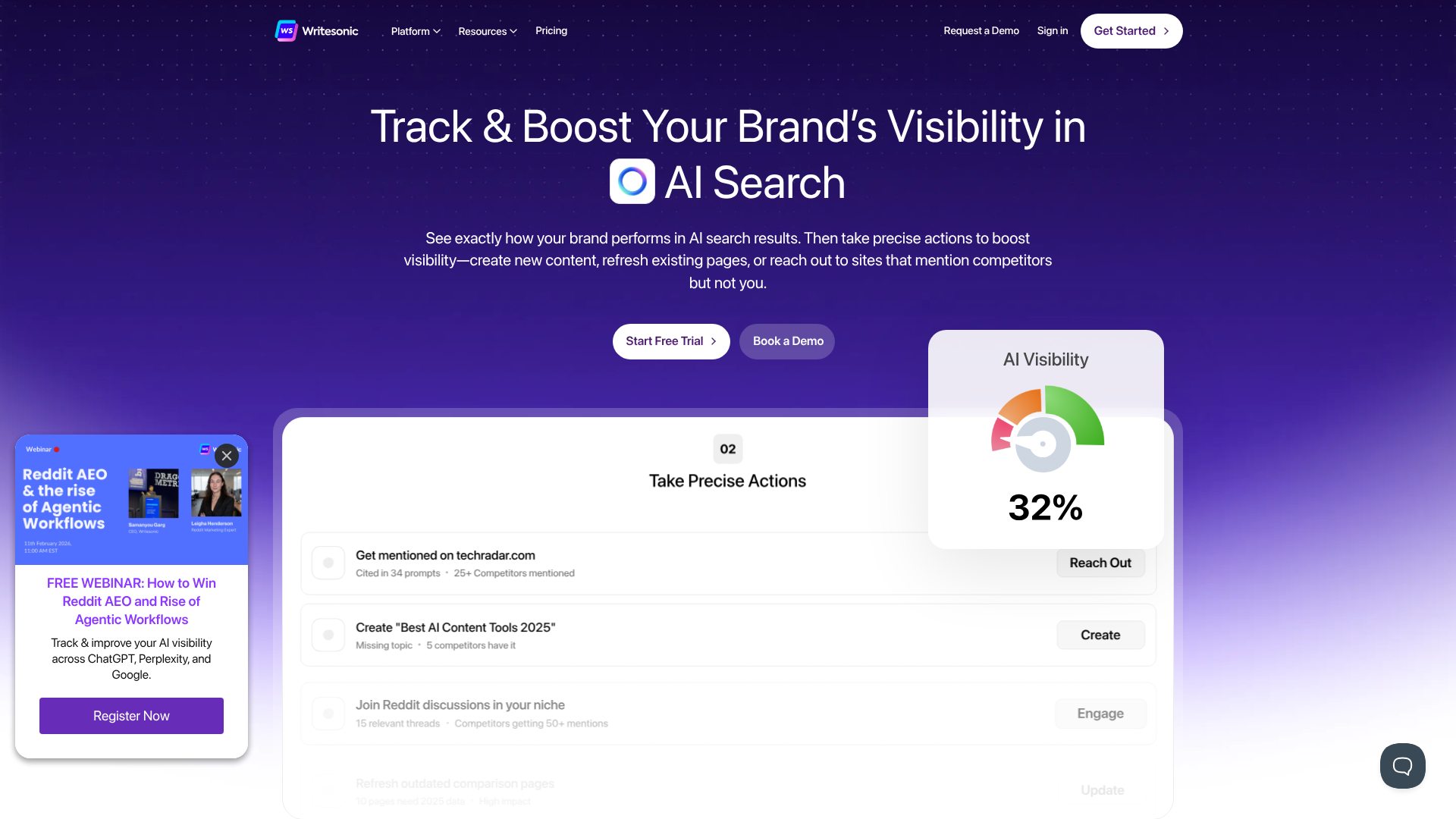
Writesonic positions itself as a comprehensive solution for all content needs. It combines an AI writer with an AI chatbot (Chatsonic), an AI art generator (Photosonic), and SEO optimisation tools. This makes it an incredibly versatile platform for creators who need to produce a variety of content types, from articles to images, without subscribing to multiple services.
Its Article Writer 5.0 is particularly impressive, allowing you to generate a 1,500-word, SEO-optimised blog post from a single prompt, complete with competitor analysis and keyword integration. Writesonic also offers a factual, up-to-date AI model that connects to Google Search, reducing the risk of generating inaccurate information. With a generous free trial and competitive pricing, it offers outstanding value.
Pros
- All-in-One Solution: Combines writing, chat, art generation, and SEO in one platform.
- Factual Accuracy: Connects to Google Search for up-to-date and factually correct information.
- Excellent Value: Competitive pricing and a feature-rich free plan make it accessible.
Cons
- Interface Can Be Busy: With so many features, the user interface can feel slightly cluttered at times.
- Credit System: Some users may find the word/credit-based system less straightforward than unlimited plans.
Pricing
Writesonic has a free trial and various paid plans. Check the Writesonic website for current details.
3. Grammarly
Best for: Editing, Polishing, and Improving Your Own Writing.
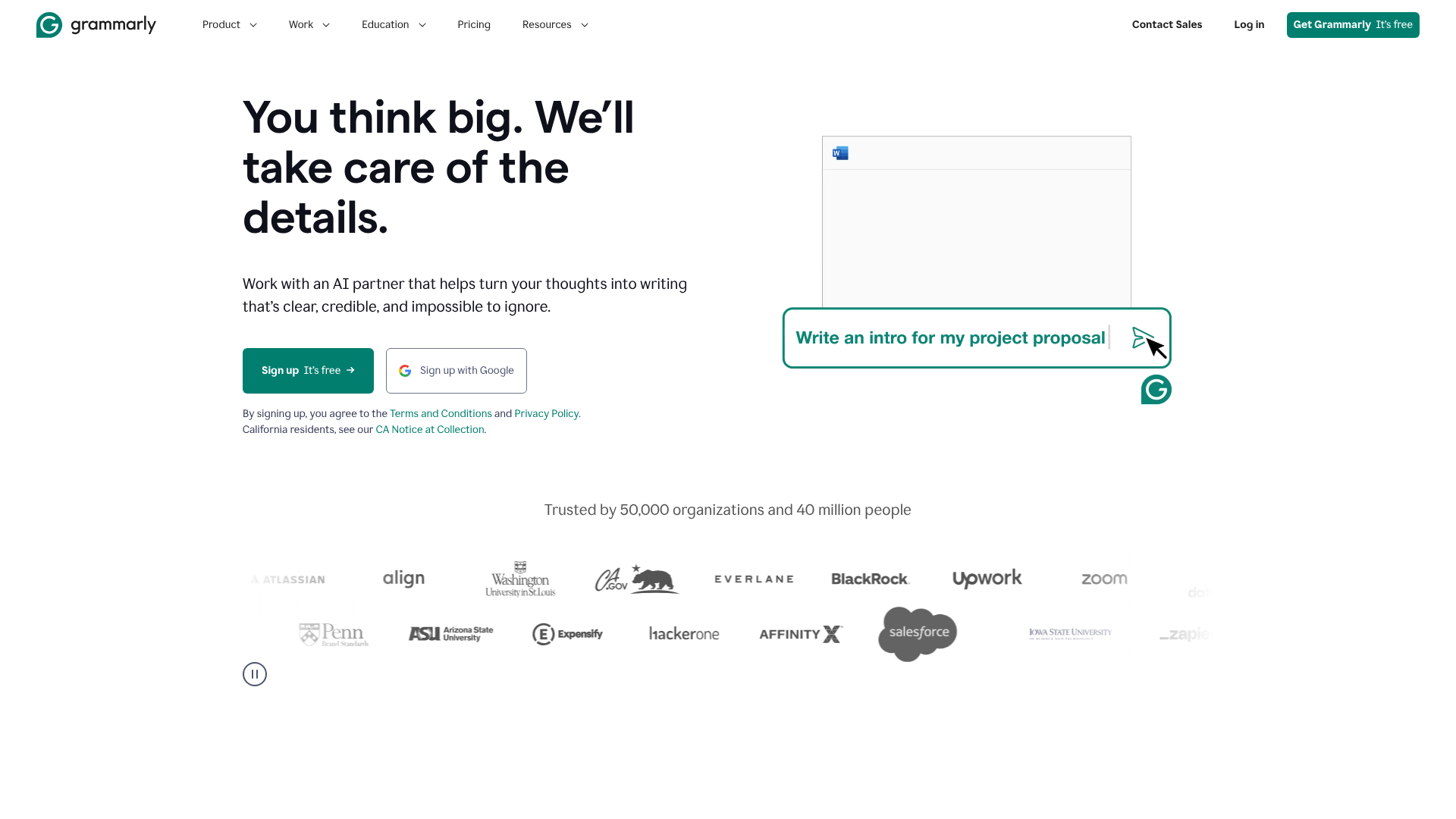
While many know Grammarly as a world-class grammar and spelling checker, its AI features have evolved it into a powerful writing assistant. GrammarlyGO, its generative AI tool, can help you compose, ideate, and reply to emails and documents directly within the apps you already use, thanks to its excellent browser and desktop integrations.
Grammarly excels at refining existing text. It provides suggestions to improve clarity, tone, and conciseness, helping you communicate more effectively. It can rewrite sentences to be more confident, rephrase paragraphs for a different audience, or generate a quick outline for a new document. It's less of a pure content generator and more of a co-editor that elevates your own writing.
Pros
- Superb Editing Capabilities: Industry-leading grammar, style, and tone suggestions.
- Seamless Integration: Works across browsers, email clients, and desktop applications.
- Focus on Improvement: Helps you become a better writer by explaining its suggestions.
Cons
- Limited Long-Form Generation: Not designed to write full blog posts from scratch like Jasper or Writesonic.
- Free Version is Limited: The most powerful features are reserved for the Premium plan.
Pricing
Grammarly offers a robust free version and a Premium plan with advanced features. Visit their website for pricing.
4. QuillBot
Best for: Paraphrasing, Summarising, and Academic Writing.
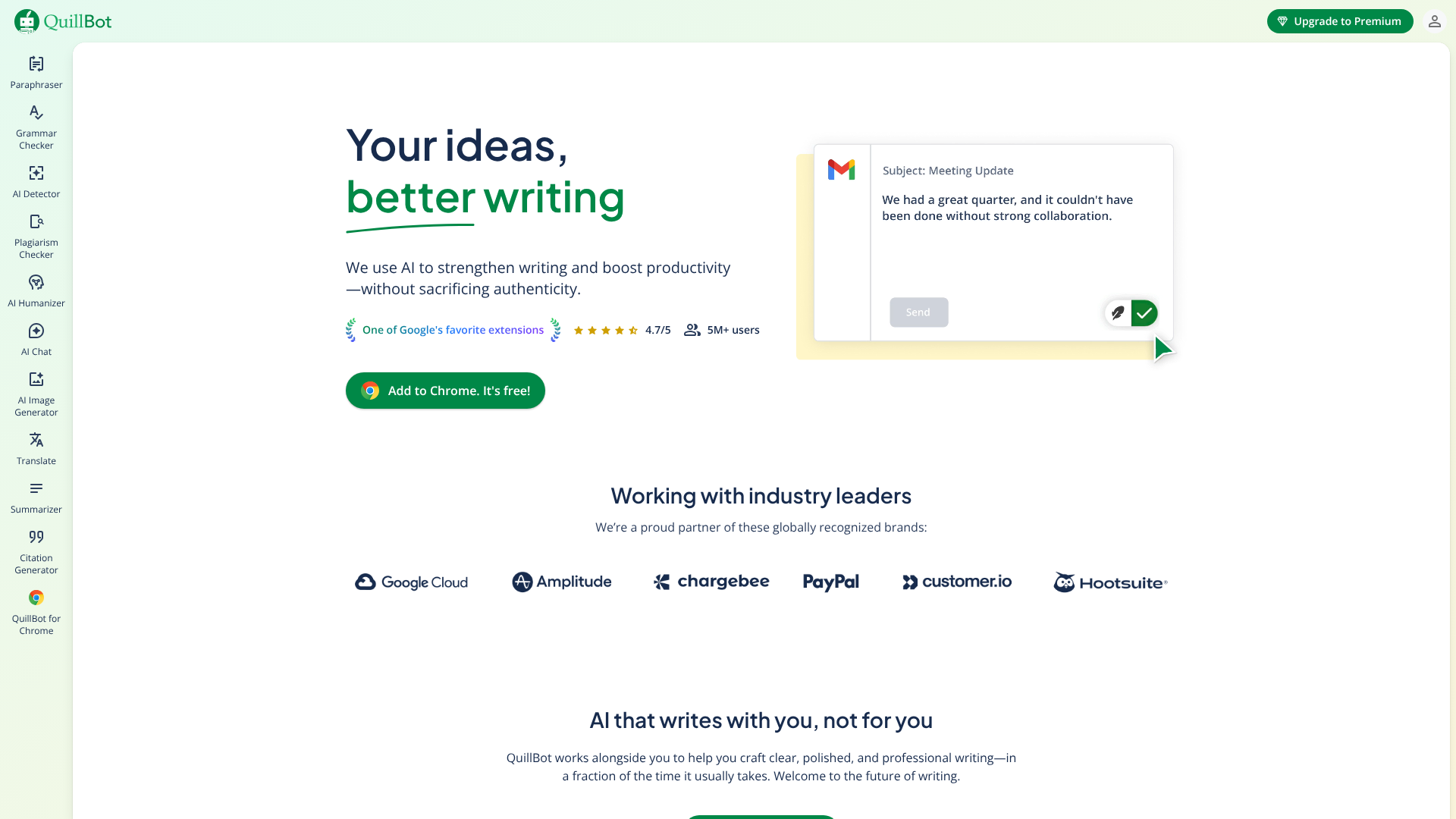
QuillBot started as a paraphrasing tool and has become the go-to platform for students, academics, and researchers. Its paraphraser is exceptionally good at rephrasing text to improve clarity or avoid plagiarism while preserving the original meaning. It offers multiple modes, such as Formal, Simple, and Creative, to adjust the output to your needs.
Beyond paraphrasing, QuillBot has expanded to include a grammar checker, summariser, citation generator, and a co-writer tool for drafting essays and papers. Its focus on academic integrity and clarity makes it an indispensable tool for anyone working on scholarly articles, reports, or complex documents. The free version is quite generous, making it highly accessible.
Pros
- Best-in-Class Paraphraser: Excellent at rewriting text in various styles without losing meaning.
- Strong Academic Focus: Features like the citation generator and summariser are perfect for students.
- Generous Free Plan: The free version offers significant functionality for casual users.
Cons
- Less Suited for Marketing Copy: Its strengths lie in formal and academic writing, not creative marketing content.
- Character Limits on Free Plan: Heavy users will need to upgrade to the Premium plan to avoid limits.
Pricing
QuillBot has a comprehensive free plan and an affordable Premium subscription. See the QuillBot website for details.
5. ChatGPT & Claude
Best for: General-Purpose Writing and Brainstorming (Free).
ChatGPT (from OpenAI) and Claude (from Anthropic) are the foundational large language models that power many other tools. As standalone chatbots, they are incredibly versatile and powerful for a wide range of writing tasks. You can use them for brainstorming ideas, creating detailed outlines, drafting entire articles, writing code, or simply asking questions.
Claude is often praised for its more natural, human-sounding prose, especially for long-form content. ChatGPT, particularly the paid GPT-4 version, is known for its powerful reasoning and problem-solving abilities. Both offer highly capable free versions, making them the most accessible and flexible writing tools AI for anyone looking to experiment with generative AI without a financial commitment.
Pros
- Extremely Versatile: Can handle almost any writing task you can think of.
- Powerful Free Versions: The free tiers of both platforms are sufficient for many users.
- Direct Access to the Model: No templates or limitations, just a direct conversation with the AI.
Cons
- Requires Prompting Skill: The quality of the output is highly dependent on the quality of your prompts.
- Lacks Specialised Features: No built-in SEO tools, brand voice, or collaboration features.
Pricing
Both offer free versions. Paid plans (ChatGPT Plus and Claude Pro) provide access to more advanced models and features.
6. SurferSEO
Best for: Data-Driven SEO Content Optimisation.
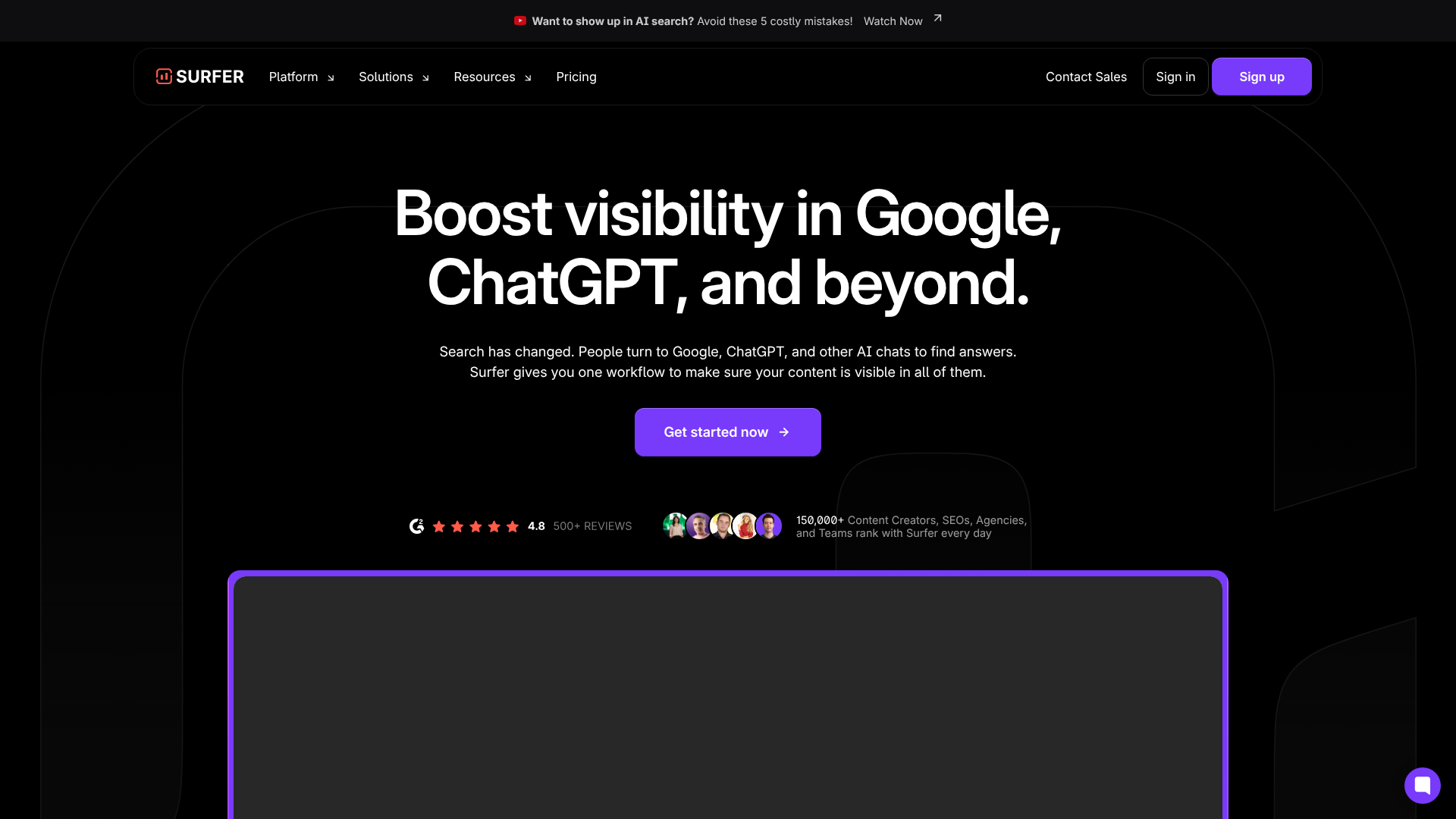
SurferSEO is not a general-purpose AI writer; it's a specialised tool designed to help you create content that ranks on Google. It analyses the top-ranking pages for your target keyword and generates a detailed content brief with recommendations on word count, structure, keywords to include, and topics to cover.
Its content editor provides a real-time score as you write, guiding you to create the most comprehensive and optimised article possible. While it has AI writing capabilities to help fill in sections, its primary strength is its data-driven approach to on-page SEO. It's the tool of choice for SEO professionals and content marketers who are focused on organic search performance.
Pros
- Excellent SEO Guidance: Provides actionable, data-backed recommendations for ranking.
- In-Depth Competitor Analysis: Breaks down what makes the top pages successful.
- Integrates with Other Tools: Works with Jasper, Google Docs, and WordPress.
Cons
- Niche Focus: Primarily for SEO content, not general writing tasks.
- Subscription Cost: It's a professional tool with a price tag to match.
Pricing
SurferSEO offers several subscription tiers based on usage. Visit their website for current plans.
7. Copy.ai
Best for: Sales and Marketing Copywriting.
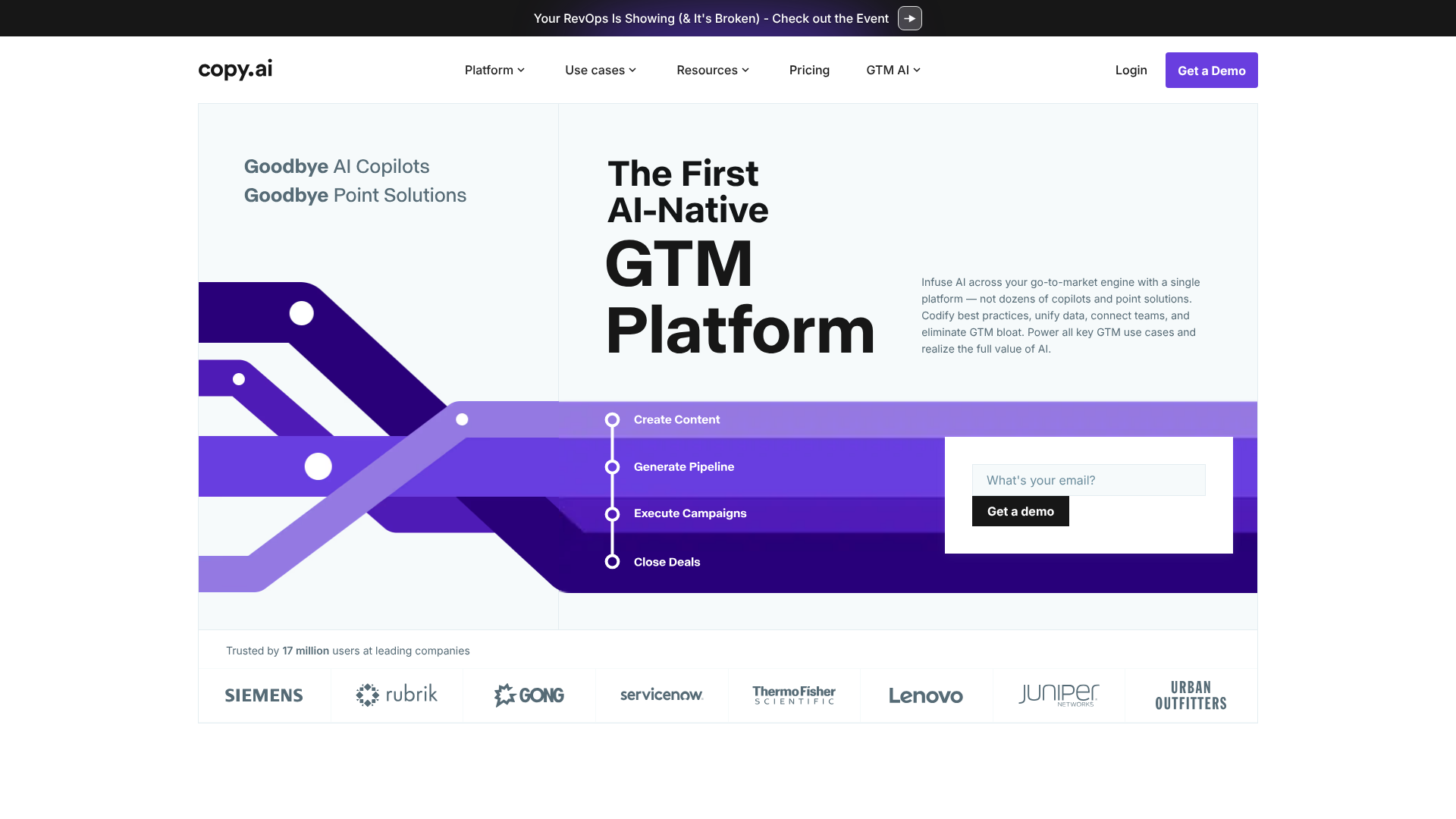
Copy.ai is a strong competitor to Jasper, with a particular focus on generating high-converting sales and marketing copy. It offers over 90 templates for everything from social media ads to sales emails and website headlines. Its intuitive interface makes it easy for beginners to get started quickly.
One of its unique features is the ability to iterate on content based on user feedback, allowing you to refine the AI's output to better match your goals. Copy.ai also has strong workflow and automation features, making it suitable for teams looking to streamline their content production processes. It offers a free plan, which is great for testing its capabilities.
Pros
- Great for Short-Form Copy: Excels at creating punchy, persuasive ad and social media content.
- User-Friendly Interface: Easy to navigate, even for those new to AI tools.
- Good Free Plan: Allows you to generate up to 2,000 words per month for free.
Cons
- Long-Form Content Can Be Weaker: Some users find its long-form article generation less robust than competitors.
- Brand Voice is Less Advanced: Lacks the deep brand voice customisation found in Jasper.
Pricing
Offers a free plan and paid Pro plans for individuals and teams.
8. Rytr
Best for: Affordability and Occasional Use.
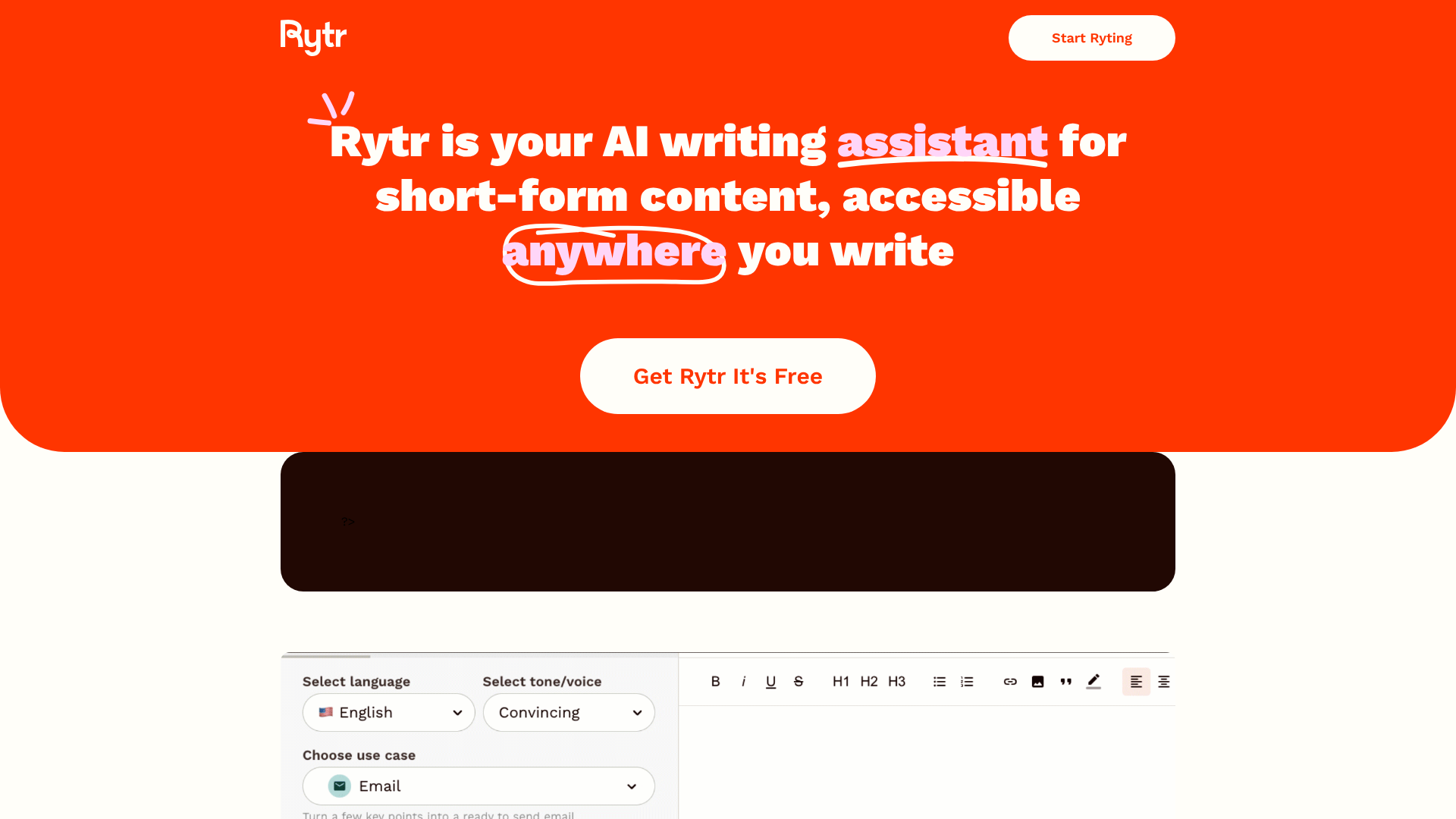
Rytr is a fantastic option for freelancers, bloggers, and small business owners on a tight budget. It provides a simple, clean interface and over 40 use cases, covering common writing needs like blog outlines, emails, and social media posts. It supports over 30 languages and offers 20+ tones of voice to customise the output.
What makes Rytr stand out is its exceptional value. Its free plan allows you to generate 10,000 characters per month, and its paid plans are among the most affordable on the market. While it may not have the advanced features of premium tools, it's a reliable and cost-effective solution for everyday writing tasks.
Pros
- Highly Affordable: One of the best-value AI writers available.
- Generous Free Plan: The free character limit is enough for many casual users.
- Simple and Fast: The clean interface makes it easy to generate content quickly.
Cons
- Lacks Advanced Features: No deep SEO integration or team collaboration tools.
- Output Can Be Generic: May require more editing to add personality and nuance.
Pricing
Includes a free plan, a Saver plan, and an Unlimited plan.
9. Sudowrite
Best for: Creative Writers and Fiction Authors.
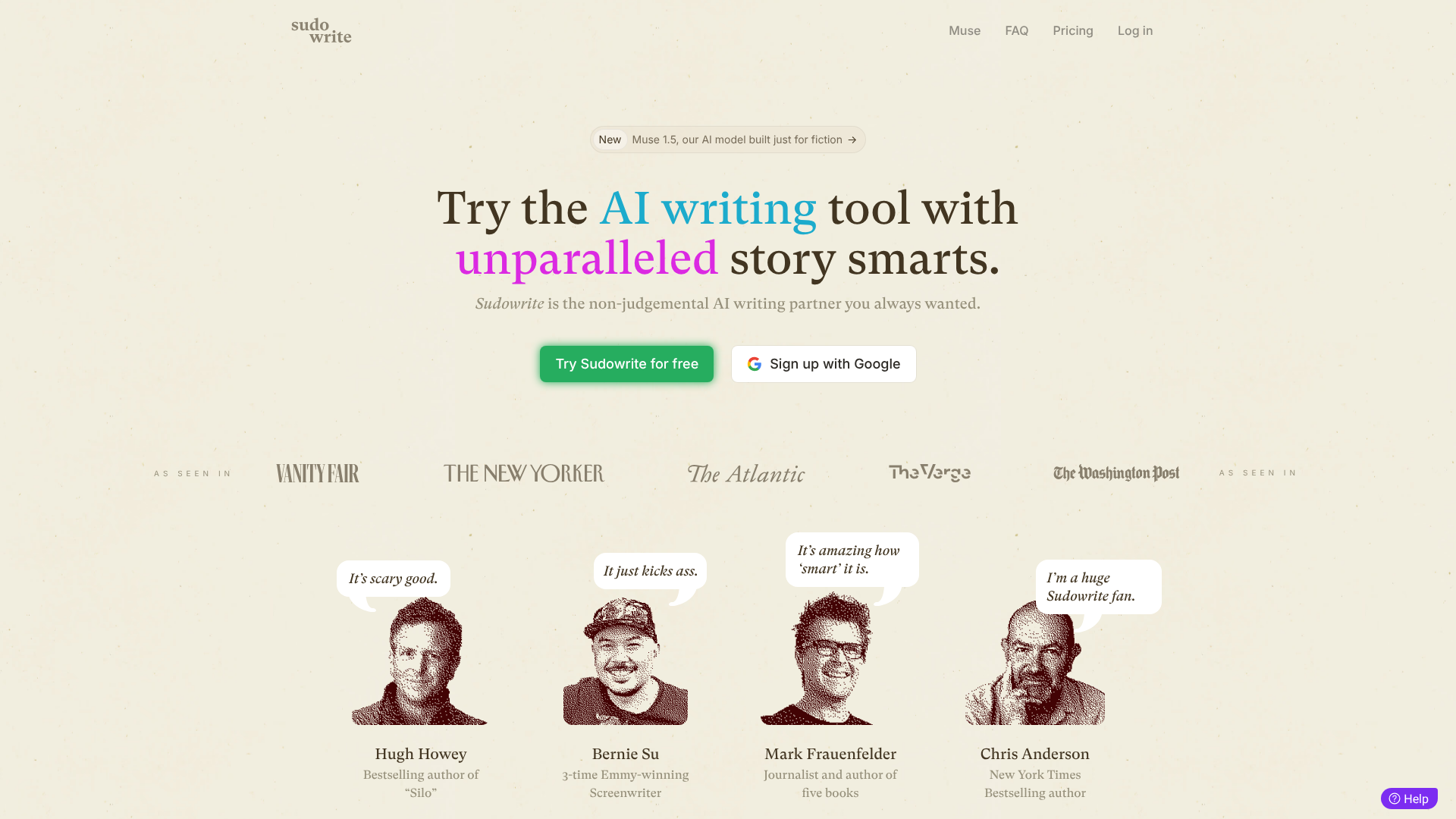
Sudowrite is a unique AI writing tool designed specifically for fiction writers. It's not meant for marketing copy or blog posts but for helping authors craft compelling stories. It offers features that are tailored to the art of storytelling, such as 'Write', which continues your story in your voice, and 'Describe', which generates vivid sensory details for a scene.
Other features include 'Brainstorm' for generating plot points and character ideas, and 'Rewrite' for revising sentences in different styles. Sudowrite acts as a creative partner, helping authors overcome plot holes, enrich their prose, and explore new narrative possibilities. It's a specialised tool that has become beloved in the creative writing community.
Pros
- Tailored for Fiction: All features are designed with novelists and storytellers in mind.
- Enhances Creativity: Helps generate ideas and descriptions without taking over the creative process.
- Unique Features: Tools like 'Describe' and 'Pacing' are not found in other AI writers.
Cons
- Not for Non-Fiction: Unsuitable for marketing, business, or academic writing.
- Can Be a Crutch: Writers must be careful not to rely on it too heavily and lose their own voice.
Pricing
Sudowrite offers subscription plans based on word count.
10. Frase.io
Best for: Creating In-Depth Content Briefs and Research.
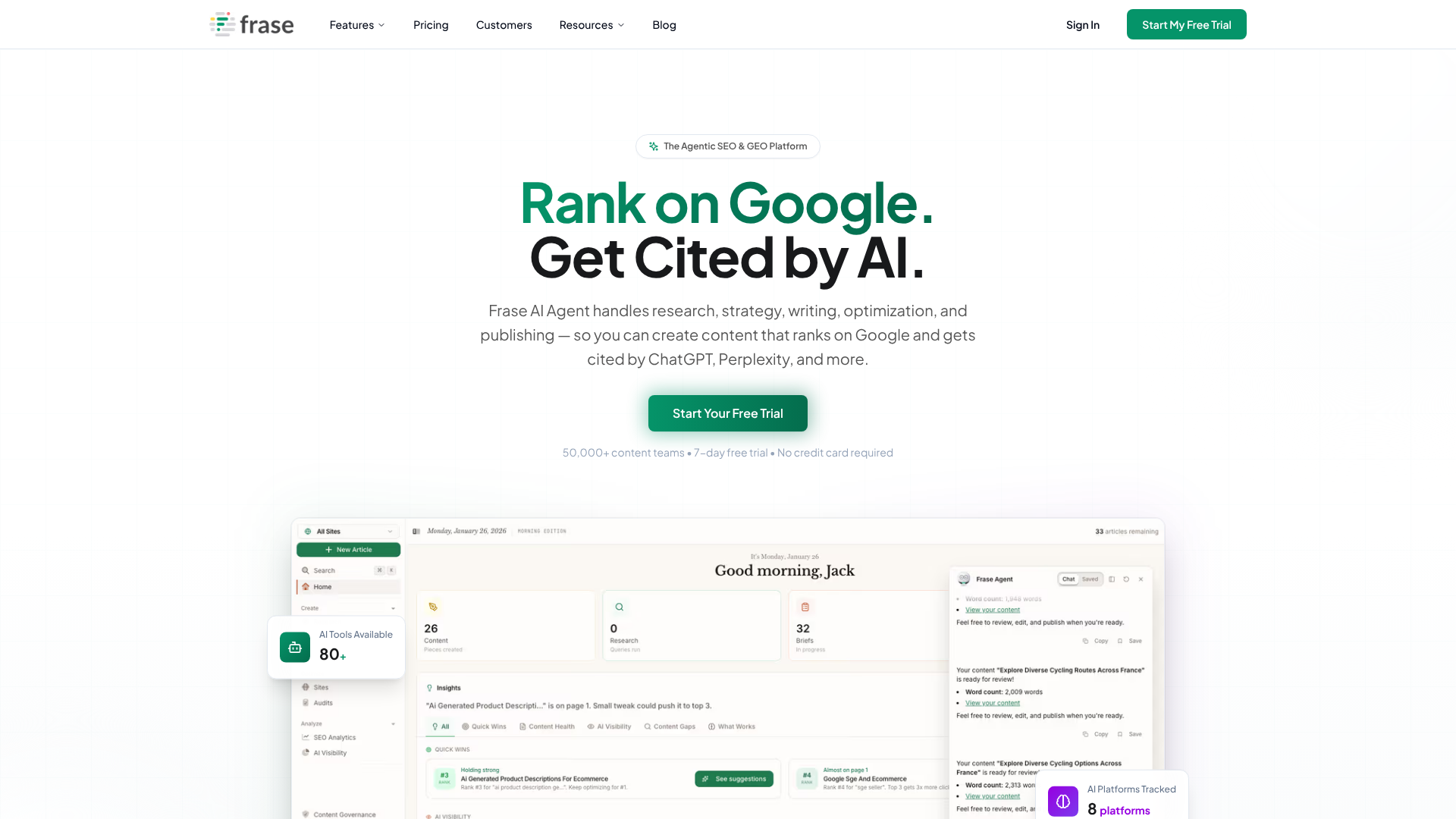
Similar to SurferSEO, Frase.io is an AI-powered tool focused on creating content that ranks. Its core strength lies in its ability to automate content research. When you enter a target keyword, Frase analyses the top 20 search results and generates a comprehensive content brief in minutes. This brief includes topic clusters, common questions, and header suggestions.
Frase's AI writer can then help you expand on these points to build out a full article. It's an excellent tool for content strategists and writers who want to streamline the research and outlining phase of content creation, ensuring every article is thorough and covers the topic from all angles.
Pros
- Automates Content Research: Saves hours of manual research and brief creation.
- Excellent for Outlining: Creates detailed, SEO-friendly outlines quickly.
- Identifies Content Gaps: Helps you find topics your competitors have missed.
Cons
- AI Writer is Secondary: The generative AI is good but not as powerful as dedicated writers like Jasper.
- Can Be Complex: The interface is data-rich and may be intimidating for beginners.
Pricing
Frase offers several subscription plans for individuals and teams.
11. Scalenut

Best for: A Full Content Marketing Lifecycle Platform.
Scalenut aims to cover the entire content marketing lifecycle within a single platform. It combines keyword planning, content research, AI writing, and content optimisation. Its 'Cruise Mode' can generate a full blog post from a single keyword, handling the research, outlining, and drafting process automatically.
It features a content optimiser similar to Surfer and Frase, providing real-time feedback on NLP terms, heading structure, and readability. With its keyword clustering and content planning tools, Scalenut is a strong option for marketing teams looking for an end-to-end solution to manage their content strategy and production.
Pros
- End-to-End Platform: Manages everything from planning to writing and optimisation.
- Strong SEO Features: Includes keyword clustering and a powerful content editor.
- 'Cruise Mode' for Fast Drafting: Quickly generates full articles from a keyword.
Cons
- Output Quality Varies: The fully automated articles often require significant editing.
- Interface Can Be Slow: Some users report that the platform can be laggy at times.
Pricing
Scalenut offers several pricing tiers based on features and content volume.
Comparison of Top AI Writing Tools
To help you decide, here's a quick comparison of our top picks based on their primary strengths and features.
| Feature | Jasper | Writesonic | Grammarly | QuillBot | SurferSEO |
|---|---|---|---|---|---|
| Best Use Case | Marketing Teams | All-in-One Content | Editing & Polishing | Academic Writing | SEO Optimisation |
| SEO Tools | Integration | Built-in | No | No | Advanced |
| Brand Voice | Advanced | Basic | Tone Detection | No | No |
| Free Plan | No (Trial only) | Yes | Yes | Yes | No |
| Starting Price | Premium | Affordable | Freemium | Affordable | Premium |
The Pros and Cons of Automated Writing Tools
While AI writing assistants offer incredible potential, it's important to approach them with a balanced perspective. They are powerful tools, but they also have limitations that require human oversight.
General Pros
- Efficiency and Speed: The most significant advantage is the ability to produce content at a scale and speed that is impossible for humans alone. This allows teams to be more productive and focus on higher-level strategy.
- Cost-Effectiveness: For many businesses, subscribing to an AI writing tool is far more affordable than hiring additional writers or freelancers, especially for generating content at scale.
- Consistency: AI can maintain a consistent tone, style, and quality across vast amounts of content, which is difficult to achieve with a team of human writers.
- Idea Generation: They serve as excellent brainstorming partners, helping to spark creativity and provide new angles on familiar topics.
General Cons
- Lack of True Creativity and Nuance: AI models generate text based on patterns in their training data. They cannot create truly original ideas or understand deep emotional and cultural nuances in the way a human can.
- Potential for Inaccuracies: AI tools can sometimes produce factually incorrect information, known as "hallucinations." All generated content, especially data and statistics, must be fact-checked by a human expert.
- Generic or Repetitive Output: Without careful prompting and editing, AI-generated content can sound generic and lack the unique personality that engages readers. Over-reliance can lead to a bland brand voice.
- Ethical and SEO Concerns: Over-producing low-quality, unedited AI content can be penalised by search engines like Google, which prioritises helpful, human-first content. Transparency and ethical use are key.
Frequently Asked Questions (FAQ)
Here are answers to some common questions about using AI writing tools.
What are the best AI tools for writing?
The "best" tool depends on your needs. For professional marketers needing high-quality, on-brand content, Jasper is a top choice. For an all-in-one solution with great value, Writesonic is excellent. For editing and improving your own writing, Grammarly is unbeatable, and for academic purposes, QuillBot is the leader.
For general-purpose free writing, ChatGPT and Claude are fantastic options.
Is it illegal to publish a book written by AI?
It is not illegal to publish a book written with the assistance of AI. However, copyright law is still evolving in this area. In many jurisdictions, including the US, works created solely by AI without sufficient human authorship may not be eligible for copyright protection. Most authors use AI as a tool for brainstorming, drafting, and editing, with the final creative work being substantially human-authored.
It's also considered good practice to disclose the use of AI to readers.
Can I use ChatGPT as a writer?
Yes, you can use ChatGPT as a powerful writing assistant. It's excellent for generating ideas, creating outlines, drafting sections of text, and rewriting sentences. However, it should be used as a collaborator, not a complete replacement for a human writer. The best results come from a partnership where you guide the AI with clear prompts and then edit, refine, and add your own expertise to the generated text to ensure quality and accuracy.
Can your own writing be detected as AI?
It's possible but often unreliable. AI detection tools work by identifying patterns typical of machine-generated text, such as low perplexity (predictable word choices). However, these tools are prone to false positives and can sometimes flag human-written text as AI-generated, especially if the writing is simple or follows a formulaic structure. As AI models become more sophisticated, distinguishing between human and AI writing will become even more difficult.
Do I still need to edit AI-generated content?
Absolutely. This is a critical step that should never be skipped. Human editing is essential to fact-check information, correct any awkward phrasing, inject brand personality and nuance, and ensure the content meets your strategic goals. Think of the AI's output as a high-quality first draft, not a finished product.
Your expertise and creative touch are what will elevate it from good to great.
Final Thoughts
AI writing tools have firmly established themselves as indispensable assets for anyone involved in content creation. They can help you save time, scale production, and break through creative barriers. From specialised platforms like Jasper for marketing teams to versatile assistants like Writesonic, there is a tool available to fit nearly any workflow and budget.
The key to success is to view these platforms as powerful collaborators rather than replacements for human writers. The best content will always come from a partnership between human creativity and artificial intelligence. By using these tools to handle the heavy lifting of drafting and research, you can focus on what truly matters: strategy, originality, and creating content that resonates with your audience.
If you're a marketer looking to maintain a consistent brand voice and produce high-quality copy at scale, Jasper is an excellent investment. For those seeking a versatile, all-in-one platform that offers incredible value, Writesonic is a fantastic place to start.