




Real Estate Lead Capture Landing Pages: A Step-by-Step Guide for Agents
In a competitive property market, simply having a website isn't enough to attract a steady stream of clients. Successful estate agents know that generating high-quality leads requires a focused strategy. This is where effective real estate lead capture landing pages become your most powerful digital tool, designed with the sole purpose of turning online visitors into potential buyers and sellers.
- In a Nutshell
- What Exactly Are Real Estate Lead Capture Landing Pages?
- The Core Components of a High-Converting Real Estate Landing Page
- 1. A Compelling, Benefit-Oriented Headline
- 2. High-Quality, Relevant Visuals
- 3. Clear and Concise Copy
- 4. A Simple Property Lead Capture Form
- 5. A Strong, Singular Call-to-Action (CTA)
- 6. Social Proof and Trust Signals
- 7. Mobile-First Design
- Step-by-Step: How to Build Your First Lead Capture Page
- Step 1: Define Your Objective and Target Audience
- Step 2: Craft an Irresistible Lead Magnet
- Step 3: Choose Your Landing Page Builder
- Step 4: Design Your Page with a Template
- Step 5: Write Your Copy and Configure the Form
- Step 6: Publish, Promote, and Drive Traffic
- Step 7: Test, Measure, and Optimise
- Top Tools for Creating Lead Capture Pages for Real Estate
- Choosing the Right Platform: Key Factors to Consider
- Your Technical Skill Level
- Quality and Variety of Templates
- Integration Capabilities
- A/B Testing and Optimisation Features
- Budget and Scalability
- Pricing and Cost: What to Expect
- The Pros and Cons of Using Dedicated Landing Page Builders
- Frequently Asked Questions
- What's the difference between a real estate landing page and a homepage?
- How many form fields should I use on a property lead capture form?
- What makes a good lead magnet for real estate agents?
- Can I build a landing page on my existing WordPress website?
- Final Thoughts
Unlike a general website homepage that offers dozens of distractions, a dedicated landing page presents a single, compelling offer. This focused approach dramatically increases the likelihood of a visitor providing their contact details, whether they're requesting a home valuation, downloading a neighbourhood guide, or signing up for property alerts. This guide will walk you through everything you need to know to build pages that consistently fill your pipeline.
In a Nutshell
- Single-Purpose Design: A real estate lead capture page has one job: to convert a visitor into a lead. It eliminates navigation menus and other distractions to focus attention on a single call-to-action.
- The Offer is Everything: The success of your page hinges on the value you provide in exchange for contact information. A free home valuation, an exclusive property list, or a detailed local market report are powerful incentives.
- Simplicity Wins: As Brennan Haelig, CEO of Jumpstart ROI, mentioned in The Smart Agents Podcast, simple is effective. A clear offer and a short form with just name, email, and phone number often outperform complex designs.
- Tools Make it Easy: You don't need to be a web developer. Modern landing page builders like Leadpages and Unbounce offer professional, mobile-friendly templates designed specifically for the property sector.
- Test and Measure: The best agents don't guess; they test. A/B testing different headlines, images, and form lengths is crucial for optimising your conversion rates over time.
What Exactly Are Real Estate Lead Capture Landing Pages?
A real estate lead capture landing page is a standalone web page created specifically for a marketing or advertising campaign. Its primary goal is to capture a visitor's contact information, such as their name, email address, and phone number, effectively converting them from an anonymous browser into a qualified lead.
Think of it as a digital version of an open house sign-in sheet, but far more effective. When a potential client clicks on one of your ads—whether on Google, Facebook, or another platform—they are directed to this page. Instead of landing on your busy homepage with links to your 'About Us' section, agent bios, and blog, they arrive at a page with a laser-focused message that matches the ad they just clicked.
For example, if your ad promises a "Free Instant Home Valuation," the landing page will be entirely dedicated to that offer. It will feature a compelling headline, benefits of getting the valuation, and a simple property lead capture form to get started. This alignment between the ad and the page creates a smooth user experience, which is essential for building trust and encouraging conversions. These lead capture pages for real estate are the engine of modern digital prospecting.
The Core Components of a High-Converting Real Estate Landing Page

Effective real estate landing pages are not built by accident. They are a careful combination of several key elements, each designed to guide the visitor towards a single action. Mastering these components is the first step towards building a lead generation machine.
1. A Compelling, Benefit-Oriented Headline
Your headline is the first thing a visitor reads and it has about three seconds to grab their attention. It must clearly communicate the value of your offer. Instead of a generic headline like "Contact Us," use something specific and benefit-driven, such as "Find Out What Your Manchester Home is Worth in 60 Seconds" or "Get Exclusive Access to Off-Market Properties in Bristol."
2. High-Quality, Relevant Visuals
Real estate is a visual industry. Use high-resolution photos or a short video of a stunning property, a happy family, or the local area. The visuals should support the offer and help the visitor imagine the positive outcome. For a home valuation page, an image of a beautiful local home is more effective than a stock photo of a calculator.
3. Clear and Concise Copy
Your page's text should be easy to scan and understand. Use bullet points to highlight the key benefits of your offer. Focus on what the visitor will get, not just what you do. For a first-time buyer's guide, you might list benefits like: "Learn how to save thousands on your purchase," "Avoid common first-time buyer mistakes," and "Navigate the mortgage process with confidence."
4. A Simple Property Lead Capture Form
This is where the magic happens. However, a long and complicated form is a major conversion killer. As a general rule, only ask for the information you absolutely need. For most initial lead captures, a name, email address, and phone number are sufficient. You can gather more details later during your follow-up process.
5. A Strong, Singular Call-to-Action (CTA)
Every landing page should have one clear, unmissable CTA. This is usually a button with action-oriented text. Avoid vague phrases like "Submit." Instead, use specific text that reinforces the value, such as "Get My Free Valuation Now," "Download the Guide," or "See the Properties." The button colour should contrast with the rest of the page to make it stand out.
6. Social Proof and Trust Signals
People trust other people. Including a short testimonial from a happy client, logos of local media you've been featured in, or industry awards can significantly increase your credibility. A simple quote like, "Sarah helped us find our dream home in just two weeks!" can be incredibly persuasive.
7. Mobile-First Design
A significant portion of your traffic will come from mobile phones. Your landing page must look great and be easy to use on a small screen. This means large text, easily tappable buttons, and a form that is simple to fill out without excessive pinching and zooming. All modern landing page builders prioritise mobile responsiveness.

Step-by-Step: How to Build Your First Lead Capture Page
Creating your first landing page can feel daunting, but by breaking it down into manageable steps, you can launch a professional and effective page in just a few hours. This process focuses on strategy first and design second, ensuring your page is built to achieve a specific business goal.
Step 1: Define Your Objective and Target Audience
Before you write a single word, decide what you want to achieve. Are you trying to attract seller leads, first-time buyers, or property investors? Your goal will determine your offer. For example, a campaign targeting sellers would centre on a home valuation tool, while one for buyers might offer a guide to the best local schools.
Step 2: Craft an Irresistible Lead Magnet
A lead magnet is the valuable resource you offer in exchange for contact details. It needs to be so compelling that your target audience is happy to trade their information for it. Popular real estate lead magnets include:
- Free Home Valuation Reports: The classic offer for attracting seller leads.
- Local Market Updates: A monthly report on property price trends in a specific postcode.
- Neighbourhood Guides: Detailed information on schools, amenities, and lifestyle in a particular area.
- Checklists: "The Ultimate Home Staging Checklist" or "First-Time Home Buyer's Checklist."
- Exclusive Property Lists: Access to off-market, coming soon, or recently reduced properties.
Step 3: Choose Your Landing Page Builder
While you can have a developer build a page from scratch, using a dedicated landing page builder is faster, cheaper, and gives you more control. Platforms like Leadpages, Unbounce, and ClickFunnels are designed for this purpose. They offer drag-and-drop editors and a library of proven templates, many of which are specifically for real estate.
Step 4: Design Your Page with a Template
Start with a template that matches your campaign's goal. This saves you from having to worry about layout and structure. Customise the template with your own branding (logo and colours), high-quality images, and compelling copy. Remember the advice from Wishpond shared on LinkedIn: "High-performing pages are built with intent: clear messaging, strong CTAs, and frictionless lead capture."
Step 5: Write Your Copy and Configure the Form
Write your headline and body copy, focusing on the benefits for the visitor. Set up your property lead capture form, keeping it as short as possible. Connect the form to your email marketing service or CRM, such as ActiveCampaign or GetResponse, so that new leads are automatically added to your database.
Pro Tip: Set up an automated email autoresponder. As soon as someone fills out your form, they should immediately receive an email delivering the promised lead magnet. This provides instant gratification and begins the nurturing process right away.
Step 6: Publish, Promote, and Drive Traffic
Once your page is ready, publish it. Now, you need to get people to see it. Drive traffic to your new landing page using channels like:
- Google Ads: Target people searching for keywords like "homes for sale in [your city]" or "how much is my house worth."
- Facebook & Instagram Ads: Target users based on location, demographics, and interests like property websites.
- Email Signature: Add a link to your landing page in your everyday email signature.
- Social Media Posts: Share the link on your business's social media profiles.
Step 7: Test, Measure, and Optimise
Your work isn't done once the page is live. Use the analytics in your landing page builder to track your conversion rate (the percentage of visitors who fill out the form). If it's low, start A/B testing. Create a duplicate of your page and change one element—like the headline, the CTA button colour, or the main image. Drive traffic to both versions and see which one performs better. Continuous optimisation is the key to long-term success.
Top Tools for Creating Lead Capture Pages for Real Estate
Choosing the right software can make a world of difference in how quickly and effectively you can create high-performing real estate landing pages. Here are some of the top platforms favoured by agents and marketers, each with its own strengths.
1. Leadpages
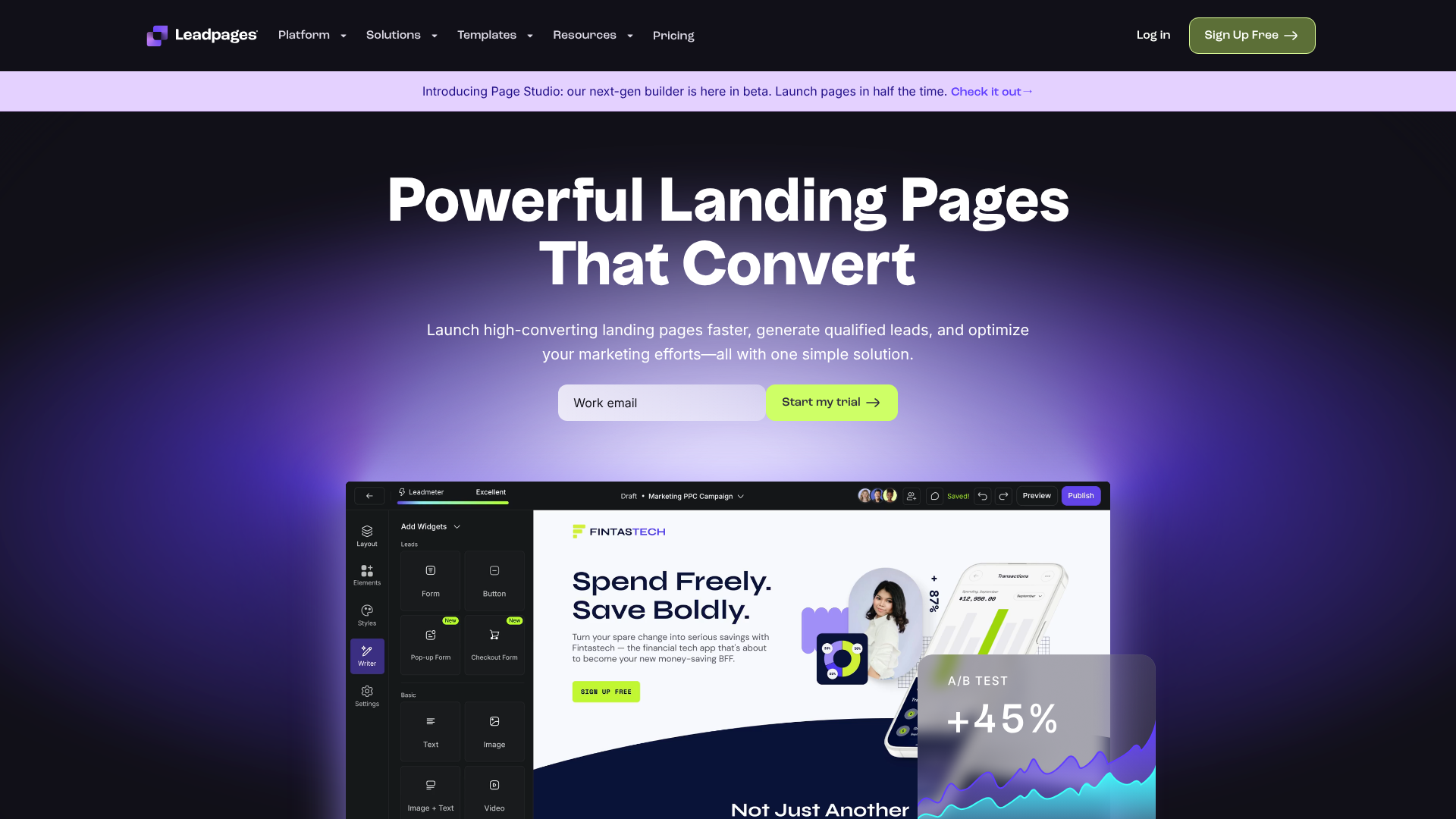
Leadpages is renowned for its ease of use and extensive library of high-converting templates. It's an excellent choice for agents who want to get professional-looking pages live quickly without a steep learning curve. Many of its templates are designed specifically for real estate, covering everything from single property listings to home valuation requests.
Pros
- Extremely user-friendly drag-and-drop builder.
- Large selection of mobile-responsive templates, including many for real estate.
- Built-in conversion guidance provides optimisation tips as you build.
- Generally more affordable than some of its direct competitors.
Cons
- The A/B testing functionality is not as advanced as platforms like Unbounce.
- Customisation can be slightly more limited compared to more powerful editors.
2. Unbounce
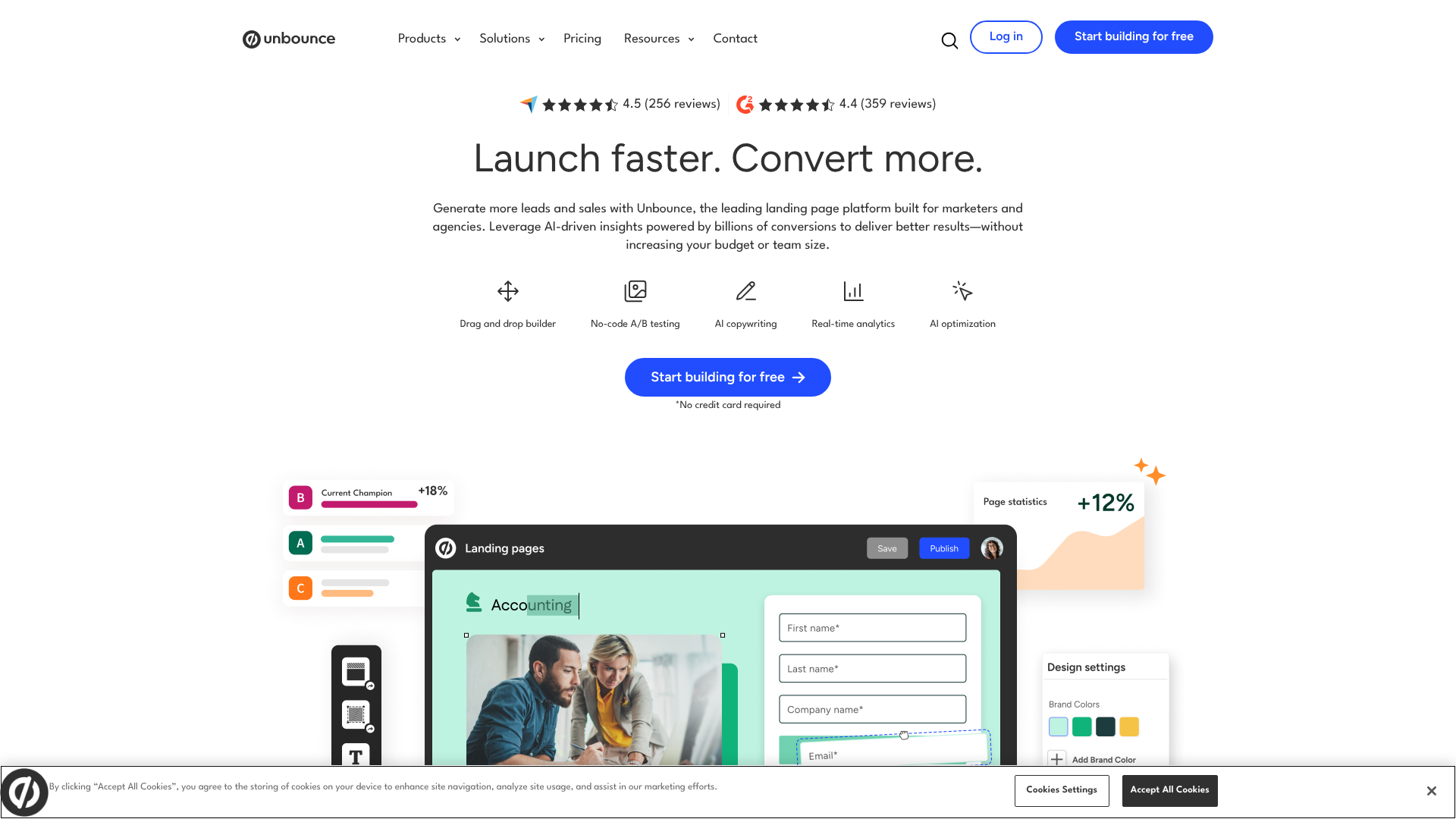
Unbounce is a powerful and highly customisable landing page builder designed for serious marketers who want maximum control over their page design and testing. Its Smart Traffic feature automatically directs visitors to the landing page variant most likely to convert for them. It's ideal for agents or teams running significant paid ad campaigns.
Pros
- Advanced A/B testing and AI-powered traffic optimisation tools.
- Highly flexible drag-and-drop editor allows for pixel-perfect design control.
- Integrates with a vast number of other marketing tools.
- Excellent for high-volume traffic and performance-focused campaigns.
Cons
- Has a steeper learning curve than Leadpages.
- Higher price point, making it more suitable for established agents or teams.
3. ClickFunnels
ClickFunnels is more than just a landing page builder; it's a tool for creating entire sales funnels. This is useful for agents who want to guide a lead through a multi-step process, such as capturing the lead, sending them to a thank you page with a video, and then offering a strategy call booking. It's an all-in-one solution for more complex marketing sequences.
Pros
- Specialises in building complete, multi-page funnels.
- Includes features for email automation and affiliate management.
- Strong focus on direct-response marketing principles.
Cons
- Can be overly complex if you only need a simple landing page.
- The page editor is considered less intuitive by some users compared to Leadpages or Unbounce.
Comparison of Top Landing Page Builders
| Feature | Leadpages | Unbounce | ClickFunnels |
|---|---|---|---|
| Best For | Beginners & Quick Setup | A/B Testing & Optimisation | Complete Sales Funnels |
| Ease of Use | Very High | Medium | Medium |
| Template Quality | Excellent | Excellent | Good |
| A/B Testing | Basic | Advanced (AI-powered) | Yes |
| Pricing | $$ | $$$ | $$$$ |
Choosing the Right Platform: Key Factors to Consider
With several excellent options available, selecting the best landing page builder for your real estate business depends on your specific needs, technical comfort level, and budget. Rushing this decision can lead to frustration or paying for features you'll never use. Here are the key factors to weigh before you commit.
Your Technical Skill Level
Be honest about your comfort with technology. If you're new to digital marketing and want a tool that is intuitive and straightforward, a platform like Leadpages is an ideal starting point. Its guided setup and template-heavy approach minimise the learning curve. If you have some marketing experience and want granular control over every element, the power of Unbounce might be a better fit.
Quality and Variety of Templates
For real estate agents, having access to industry-specific templates is a massive time-saver. Before choosing, browse the template library of each platform. Look for designs tailored to property listings, home valuations, open house registrations, and guide downloads. A good template provides a proven layout that you can simply customise with your own content.
Integration Capabilities
Your landing page is just one piece of your marketing puzzle. It needs to communicate seamlessly with your other tools. Ensure the builder you choose integrates easily with your Customer Relationship Management (CRM) system and your email marketing platform (e.g., ActiveCampaign, Mailchimp, GetResponse). This allows new leads to be automatically added to your database and enrolled in follow-up sequences without any manual data entry.
A/B Testing and Optimisation Features
If you plan to invest heavily in paid advertising (like Google or Facebook Ads), robust A/B testing is not a luxury—it's a necessity. The ability to easily test different headlines, images, and calls-to-action can double or even triple your conversion rates, dramatically improving your return on investment. Unbounce is the leader in this category, but other platforms also offer solid testing features.
Budget and Scalability
Consider both your current budget and future needs. Most platforms operate on a tiered subscription model. A basic plan might be perfect to start, but check what features are included in higher tiers. As your business grows, you may need more landing pages, more traffic, or advanced features like A/B testing. Choose a platform that can grow with you.
Pricing and Cost: What to Expect
The investment in a dedicated landing page builder is often a point of consideration for agents, especially those new to digital marketing. The costs can vary significantly, but understanding the typical pricing structures will help you budget effectively and see it as an investment rather than an expense.
Most landing page software is sold as a Software-as-a-Service (SaaS) product, which means you'll pay a recurring monthly or annual subscription fee. Annual plans usually offer a discount of 15-25% compared to paying month-to-month.
Generally, you can expect pricing to fall into these tiers:
- Entry-Level Plans (Approx. £30 – £50 per month): These plans are perfect for solo agents or those just starting out. They typically include access to the core landing page builder, a good selection of templates, and hosting for your pages. However, they may have limitations on the amount of traffic you can receive or may not include A/B testing.
- Mid-Tier Plans (Approx. £60 – £100 per month): This is the most popular category. These plans usually unlock key features like A/B testing, more integrations, and higher traffic limits. They offer the best balance of features and affordability for most growing real estate businesses.
- Premium/Agency Plans (Approx. £150+ per month): Geared towards large teams, brokerages, or marketing agencies, these plans offer advanced features like AI-powered optimisation (like Unbounce's Smart Traffic), sub-accounts for multiple users, and the highest traffic allowances.
When comparing costs, don't just look at the price tag. Consider the potential return on investment. If a £70/month plan helps you generate just one extra high-quality seller lead that turns into a commission, it has paid for itself many times over. Always check the provider's official website for the most current pricing information, as plans and features can change.
The Pros and Cons of Using Dedicated Landing Page Builders
While dedicated tools offer immense advantages for creating lead capture pages for real estate, it's important to have a balanced perspective. Understanding both the benefits and potential drawbacks will help you decide if this approach is right for your business.
Pros
- Higher Conversion Rates: This is the single biggest advantage. By focusing on one goal and removing distractions, dedicated landing pages consistently convert a higher percentage of visitors into leads compared to sending traffic to a standard website page.
- Speed and Efficiency: You can launch a professional, mobile-responsive landing page in under an hour using a template. This allows you to be agile and quickly create pages for new listings, promotions, or marketing campaigns without needing a developer.
- Ease of Testing and Optimisation: Built-in A/B testing tools make it simple to test variations of your page. This data-driven approach allows you to systematically improve your results and lower your cost per lead over time.
- Targeted Messaging: You can create a unique landing page for each specific ad campaign. This ensures the message a visitor sees on the page perfectly matches the ad they clicked, creating a cohesive and persuasive user experience.
Cons
- Additional Monthly Cost: The subscription fee is an ongoing business expense. For agents on a very tight budget, this can be a consideration, though the return on investment is typically very high.
- Learning Curve: While modern builders are user-friendly, there is still a small learning curve involved in understanding the editor, setting up integrations, and launching your first page.
- Requires a Traffic Strategy: A landing page is not a magic bullet; it cannot generate leads on its own. You must have a plan to drive targeted traffic to the page, whether through paid ads, social media, SEO, or email marketing.
Pro Tip: Start small. You don't need to build ten different landing pages at once. Create one page for your most important lead generation goal—like a home valuation page—and focus on driving traffic to it and optimising its performance. Once you have a winning formula, you can replicate it for other campaigns.
Frequently Asked Questions
What's the difference between a real estate landing page and a homepage?
A homepage is like the front lobby of your business; it's designed for general exploration. It has a navigation menu, links to multiple sections (about, listings, blog, contact), and serves many different purposes. A landing page, on the other hand, is like a private meeting room with a single purpose: to get a visitor to take one specific action, such as filling out a form. It has no navigation menu and is designed to minimise distractions and maximise conversions.
How many form fields should I use on a property lead capture form?
Fewer is almost always better. Each additional field you ask a visitor to fill out creates friction and can decrease your conversion rate. For an initial lead capture, stick to the essentials: name, email, and phone number. You can always gather more information like their timeline or property address during your follow-up conversation once you've established a connection.
What makes a good lead magnet for real estate agents?
A great lead magnet solves a specific problem or answers an urgent question for your target audience. It must provide immediate value. For sellers, a free, instant home valuation is highly effective. For buyers, valuable lead magnets include curated lists of properties (e.g., "Homes with Pools Under £500k"), guides to local neighbourhoods, or checklists for the home-buying process.
The key is to offer something they can't easily find with a simple Google search.
Can I build a landing page on my existing WordPress website?
Yes, you can. There are many WordPress plugins, like Elementor or Thrive Architect, that allow you to build custom landing pages. Additionally, most dedicated landing page builders like Leadpages and Unbounce offer WordPress plugins that make it easy to publish the pages you create on their platform directly to your own domain. This gives you the power of a dedicated builder with the benefit of using your existing website URL.
Final Thoughts
In today's digital-first real estate market, generating a predictable flow of leads is the foundation of a thriving business. While a professional website is essential, relying on it alone for lead generation is like fishing with a net full of holes. Real estate lead capture landing pages are the tools that patch those holes, providing a focused, efficient, and highly effective way to turn online interest into tangible opportunities.
By understanding the core components, following a structured creation process, and using the right tools, any agent can build pages that work around the clock to attract buyers and sellers. The key is to start with a clear goal, create a valuable offer, and commit to testing and improving over time. Your first successful landing page won't just bring you a new lead; it will provide you with a scalable blueprint for growing your business for years to come.
If you're ready to move beyond passive lead generation and take active control of your pipeline, building your first landing page is the most impactful next step you can take. For a user-friendly platform with excellent real estate templates, Leadpages is a fantastic place to start. For those looking to build more complex marketing sequences, ClickFunnels offers a powerful suite of tools.