
Synthesia AI Video Explained: A Guide for Marketers to Save Time & Costs
Creating professional video content has traditionally been a major hurdle for businesses, demanding significant budgets, specialised equipment, and weeks of coordination. A single marketing video could involve hiring actors, securing locations, and lengthy post-production cycles. Using a synthesia ai video platform changes this entire process, allowing anyone to generate high-quality, presenter-led videos directly from a text script in minutes, not months.
- What You'll Learn
- What is Synthesia AI and How Does it Work?
- The Core Features of Synthesia Video Creation
- A Diverse Library of AI Avatars
- Multi-Language Support
- Custom Avatars and Voice Cloning
- Full-Body Avatars and Gestures
- Templates, Media Library, and Branding
- Real-World Applications: How Businesses Use Synthesia
- Revolutionising Corporate Training and Onboarding
- Scaling Personalised Marketing and Sales Videos
- Enhancing Internal Communications
- Case Study Spotlight: How a Global Tech Firm Scaled Training
- Synthesia AI Video vs. Traditional Video Production: A Head-to-Head Comparison
- Getting Started: A Look at Synthesia's User Experience
- Cost Analysis: Is Synthesia Cheaper Than Hiring a Videographer?
- The Ethics of AI-Generated Video: Navigating the Grey Areas
- The Future of AI Video Creation: What's Next?
- Best Practices for Creating High-Impact Synthesia Videos
- Write for the Spoken Word
- Keep Scripts Concise and Focused
- Use Visuals to Support the Narrative
- Choose the Right Avatar and Voice for Your Brand
- Frequently Asked Questions about Synthesia AI
- Can I use Synthesia AI video for free?
- How much does Synthesia AI video cost?
- Can Synthesia AI create realistic videos?
- Is making AI videos legal?
- What are the limitations of Synthesia AI?
- Is there anything better than Synthesia?
- Final Thoughts: Is Synthesia Right for Your Business?
Synthesia is a leading platform in the field of AI video creation. It uses sophisticated artificial intelligence to produce realistic videos featuring AI avatars that speak your text in over 130 languages. This technology effectively replaces the need for cameras, microphones, and actors for a wide range of video content, making it an accessible tool for corporate training, marketing, and internal communications.
This guide explains everything you need to know about Synthesia. We'll cover its core technology, key features, cost-effectiveness compared to traditional methods, and best practices for getting the most out of the platform. Whether you're a marketer looking to scale video campaigns or a training manager developing learning modules, you'll understand how this tool can fit into your workflow.
What You'll Learn
- Core Technology: Synthesia uses AI to transform text scripts into videos featuring realistic digital avatars, eliminating the need for cameras or actors.
- Key Features: The platform includes over 160 diverse AI avatars, voice generation in more than 130 languages, custom branding options, and an intuitive video editor.
- Cost & Time Savings: AI video creation with Synthesia dramatically reduces production costs and timelines compared to traditional video shoots, making it highly scalable.
- Primary Applications: Businesses primarily use Synthesia for corporate training, personalised marketing videos, sales outreach, and internal company communications.
- Ethical Use: The platform has strict content moderation policies, and ethical use requires transparency to ensure viewers know they are watching AI-generated content.
What is Synthesia AI and How Does it Work?
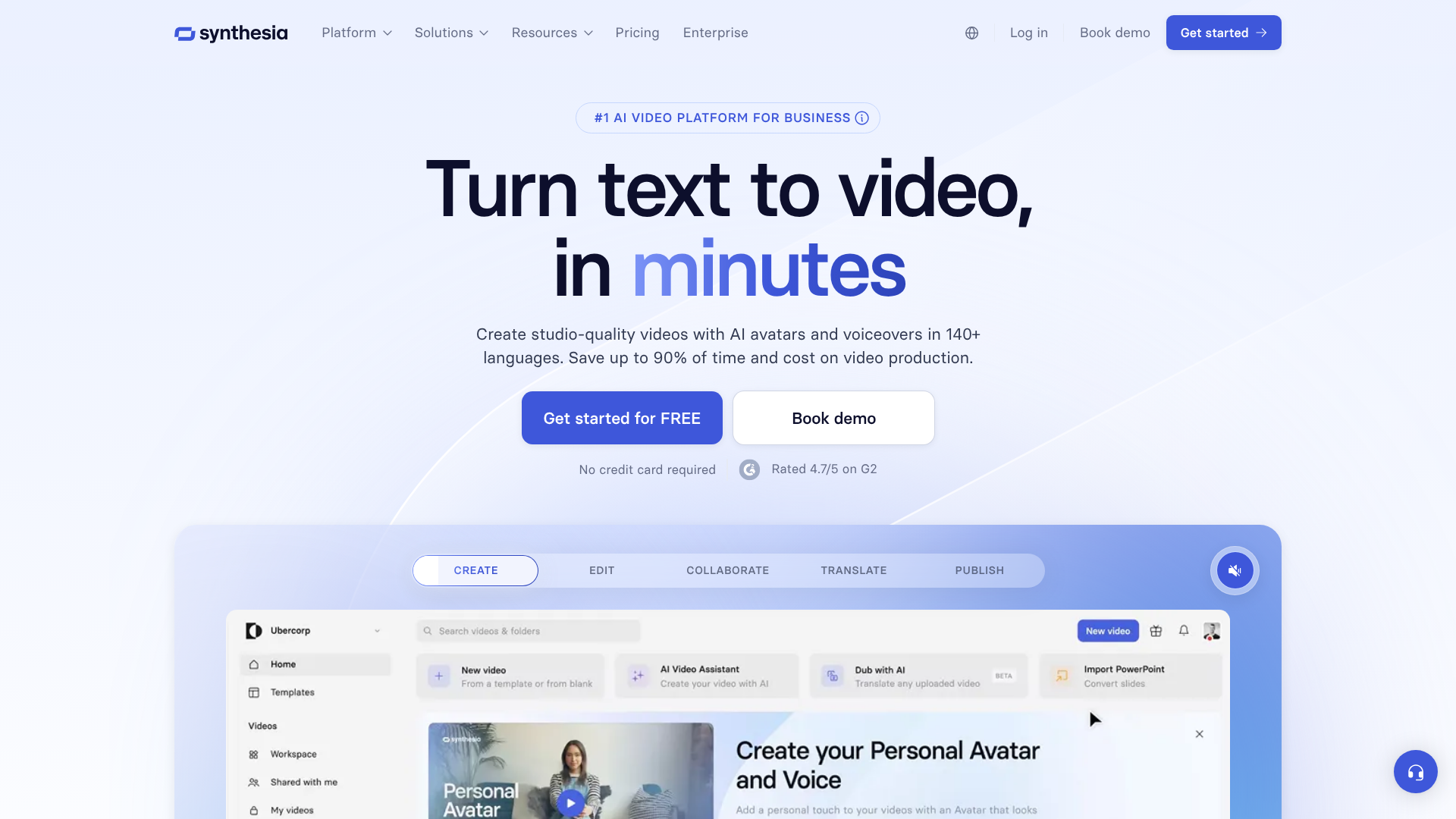
Synthesia AI is a platform that generates video content using artificial intelligence. At its heart, the technology combines several advanced AI disciplines to create a seamless text-to-video experience. Instead of filming a person, you simply type a script, choose a digital presenter (an AI avatar), and the platform produces a video of that avatar speaking your words.
The process is built on two main pillars: AI avatars and text-to-speech (TTS) synthesis. The AI avatars are digital representations of real actors who have consented to have their likeness used. Through machine learning, these avatars can be animated to speak any text with natural-looking facial expressions and lip movements. This isn't a simple deepfake; it's a carefully trained model designed for professional communication.
Here’s a simplified breakdown of the creation process:
Write Your Script: You start by typing or pasting your video script directly into Synthesia's editor. 2. Choose an Avatar: You select from a library of over 160 stock avatars or use a custom-created one for your brand.
Select a Voice and Language: You pick from hundreds of voices across more than 130 languages and accents. You can also clone your own voice for a more personal touch. 4.
Customise Your Scene: You add a background, text overlays, images, and brand elements like your company logo. 5. Generate the Video: With a click of a button, Synthesia's AI engines process your script and visual choices, rendering a complete MP4 video file ready for download and use.
This workflow removes the logistical complexities of traditional video production. There are no schedules to coordinate, no locations to book, and no reshoots needed for simple script changes. You just edit the text and regenerate the video.
The Core Features of Synthesia Video Creation
Synthesia's power comes from a rich set of features designed to make AI video creation flexible, professional, and easy. These tools allow businesses to produce a wide variety of content that aligns with their brand identity and communication goals.
A Diverse Library of AI Avatars
The platform offers a choice of over 160 stock AI avatars. This library is intentionally diverse, featuring people of different ages, ethnicities, and professional attire. This variety ensures you can find a presenter who resonates with your target audience, whether you're creating a formal corporate announcement or a casual product tutorial.
Multi-Language Support
One of the most significant advantages of synthesia video is its global reach. The platform supports text-to-speech in more than 130 languages and a wide range of accents. This allows companies to localise training materials and marketing campaigns at a scale that would be prohibitively expensive with traditional methods. You can produce the same video in English, Spanish, Japanese, and German by simply translating the script.
Custom Avatars and Voice Cloning
For businesses seeking a unique brand identity, Synthesia offers the ability to create a custom AI avatar. This involves a studio session where a chosen person (such as a company executive or brand ambassador) is filmed to create an exclusive digital twin. Paired with voice cloning, this feature allows you to generate videos with a consistent and recognisable company face and voice, without requiring that person to be available for every recording.
Full-Body Avatars and Gestures
Recent updates have moved Synthesia beyond simple "talking head" videos. As noted by users on platforms like LinkedIn, the introduction of full-body avatars and prompted gestures has been a major step forward. Creators can now direct avatars to perform actions like walking into a scene, pointing to an object, or using hand gestures for emphasis. This makes explainer videos and product demonstrations far more dynamic and engaging.
Templates, Media Library, and Branding
To speed up the creation process, Synthesia includes a library of pre-designed video templates for common use cases like training modules, pitches, and reports. You can upload your own brand assets, including logos, fonts, and colour palettes, to ensure every video is consistent with your brand guidelines. The platform also has an integrated media library with royalty-free images, videos, and music to enrich your content.
Real-World Applications: How Businesses Use Synthesia

The applications for ai video creation platforms like Synthesia span across numerous departments and industries. Its ability to produce content quickly and at scale makes it a valuable tool for any organisation looking to improve communication.
Revolutionising Corporate Training and Onboarding
This is one of the most popular use cases for Synthesia. HR and Learning & Development (L&D) teams use it to create engaging and consistent training materials. Instead of relying on text-heavy documents or scheduling live training sessions across different time zones, they can produce video modules on topics like compliance, software tutorials, and company policies.
If a policy or process changes, there's no need for a costly reshoot. The team simply updates the script in Synthesia and generates a new version of the video in minutes. This agility ensures that all employees receive up-to-date and standardised information.
Scaling Personalised Marketing and Sales Videos
Marketing and sales teams use Synthesia to create personalised videos at scale. For example, a salesperson can create a short, customised video for a high-value prospect by including their name and company in the script. This level of personalisation can significantly improve engagement and response rates in outreach campaigns.
For broader marketing, companies can quickly produce product explainer videos, social media content, and video ads in multiple languages to target different international markets. According to Wyzowl's 2024 report on video marketing, 92% of marketers say video gives them a good return on investment, and tools like Synthesia make achieving that ROI more accessible.
Enhancing Internal Communications
Executives and internal communications teams use synthesia ai to deliver company updates, announcements, and messages. A CEO can deliver a weekly update to a global workforce without needing to set up a full studio each time. This ensures messages are delivered with a human touch and consistency, which is often more engaging than a company-wide email.
Case Study Spotlight: How a Global Tech Firm Scaled Training
A large technology firm with over 50,000 employees worldwide faced a challenge in delivering consistent software training across its global offices. Traditional video production was too slow and expensive to keep up with frequent software updates. By adopting Synthesia, their L&D department was able to create a library of over 500 training videos in 15 different languages within six months.
The result was a 40% reduction in training-related support tickets and a 30% increase in employee engagement with learning materials. The ability to update a video by simply editing a text document meant that training content was always synchronised with the latest software version, a feat that was previously impossible.
Synthesia AI Video vs. Traditional Video Production: A Head-to-Head Comparison
To fully appreciate the impact of AI video generation, it's helpful to compare it directly with the traditional video production workflow. While traditional methods still have their place for high-end cinematic or creative projects, Synthesia offers a compelling alternative for most corporate and informational video needs.
Here is a breakdown of the key differences:
| Factor | Traditional Video Production | Synthesia AI Video |
|---|---|---|
| Cost | High (£2,000 – £20,000+ per video) | Low (Subscription-based, predictable monthly cost) |
| Time | Weeks to months | Minutes to hours |
| Scalability | Low (Each video is a new project) | High (Create hundreds of videos from one subscription) |
| Flexibility to Update | Very difficult and expensive (requires reshoots) | Extremely easy (edit text and regenerate) |
| Localisation | Complex and costly (hire new actors/voice artists) | Simple (translate script and select a new language) |
| Human Element | Authentic human performance | Realistic AI performance, but lacks genuine emotion |
Cost and Time are the most obvious differentiators. A professionally shot 3-minute corporate video can easily cost thousands of pounds and take over a month from concept to final delivery. With Synthesia, that same video can be produced in under an hour for a fraction of the cost, included within a monthly subscription.
Scalability and Flexibility are where AI truly excels. Imagine you need to create 50 slightly different versions of a marketing video for different customer segments. Traditionally, this would be a logistical nightmare. With Synthesia, you can use a template and variables to automate the creation of all 50 versions quickly.
If a key statistic in your video becomes outdated, you can update it across all versions in minutes.
However, it's important to acknowledge the Human Element. While Synthesia's avatars are remarkably realistic, they cannot replicate the genuine emotion, nuance, and spontaneity of a talented human actor. For brand campaigns that rely heavily on emotional storytelling or cinematic artistry, traditional production remains the superior choice. For clear, professional, and informational content, the efficiency of AI is hard to beat.
Getting Started: A Look at Synthesia's User Experience
One of the main goals of platforms like Synthesia is to democratise video creation, and that starts with an intuitive user interface. You don't need any video editing experience to get started. The platform is web-based, so there's no software to install, and the entire workflow is designed to be straightforward.
When you first log in, you are greeted with a clean dashboard where you can start a new video from scratch or choose from a variety of templates. The core of the experience is the video editor, which resembles a simple slide-based presentation tool like PowerPoint or Google Slides. Each slide, or "scene," has a script box associated with it.
Here’s the typical step-by-step process inside the editor:
- Choose a Template and Avatar: You select a layout and the AI presenter you want for your video.
- Write the Script Scene by Scene: You type or paste your script into the text box for the first scene. You can add pauses or specify pronunciations for tricky words.
- Add Visual Elements: On the canvas, you can add a background colour, image, or video. You can also add text overlays, shapes, and upload your company logo.
- Create New Scenes: You add more scenes for each part of your video, just like adding new slides to a presentation. The avatar and branding elements remain consistent unless you choose to change them.
- Preview and Generate: You can preview individual scenes to hear how the AI voice sounds. Once you're happy with the entire project, you click "Generate video." Synthesia then processes the video in the cloud, and you'll receive a notification when it's ready to be downloaded.
The learning curve is minimal. Most users can produce their first video within 30 minutes of signing up. This accessibility is a key part of its value proposition, as it empowers employees across an organisation to create video content without needing to rely on a specialised media team.
Pro Tip: When writing your script, read it aloud to catch awkward phrasing. The AI reads exactly what you write, so natural-sounding written text is key to a polished final video. Use punctuation like commas and full stops to guide the pacing of the narration.
Cost Analysis: Is Synthesia Cheaper Than Hiring a Videographer?
For most business use cases, the answer is a resounding yes. The cost difference between using a synthesia ai video platform and hiring a professional videographer or production agency is substantial. Let's break down the economics.
Traditional Videographer Costs:
- Pre-production: Scriptwriting, storyboarding, casting (can range from £200 to £1,000+).
- Production: Videographer day rates (£400 – £1,500), actor fees (£300 – £800 per day), equipment rental (£200+), location fees.
- Post-production: Video editor fees (£300 – £1,000+), motion graphics, music licensing.
A simple, 2-3 minute corporate talking-head video can easily start at £2,000 and quickly climb higher depending on complexity.
Synthesia AI Video Costs:
Synthesia operates on a subscription model. While pricing structures can change, they typically offer different tiers based on the number of video minutes you can generate per month and the features you need (like custom avatars).
For the most up-to-date information, it's best to visit the Synthesia website for their latest pricing plans. However, even their enterprise-level plans often cost less for an entire year than producing just a handful of traditional videos.
A Scenario Comparison: A 5-Minute Onboarding Video
- Traditional Method: A 5-minute video would likely require a half-day shoot and several days of editing. A conservative estimate would be around £3,500. If you need to update one small part of the video six months later, you might have to pay an additional £500-£1,000 for a reshoot and re-edit. * Synthesia Method: This video could be created in about two hours by one person.
The cost would be 5 minutes of your monthly subscription allowance. If you need to update it, you spend 10 minutes editing the text and use another 5 minutes of your allowance to regenerate it. The cost is negligible beyond the fixed subscription fee.
The economic advantage is clear. Synthesia provides a predictable, low-cost model that is ideal for producing content at scale, especially for internal communications and training where information changes frequently.
The Ethics of AI-Generated Video: Navigating the Grey Areas
As with any powerful technology, AI video generation comes with important ethical considerations. The ability to create realistic videos of people saying things they never actually said raises valid concerns about misinformation, deepfakes, and malicious use. Platforms like Synthesia are aware of these risks and have implemented safeguards to promote responsible use.
Synthesia's content moderation policy is a key part of its ethical framework. They explicitly prohibit the creation of content that is political, sexually explicit, violent, or discriminatory. Every video script is automatically scanned for prohibited keywords, and videos are subject to review. Users who violate these terms risk having their accounts suspended.
Furthermore, creating a custom avatar requires the explicit video consent of the person being replicated. You cannot simply upload a photo of someone and create an avatar of them; the person must participate in a formal onboarding process. This prevents the unauthorised creation of digital twins.
Transparency is another crucial ethical principle. It is widely considered best practice to disclose when content is AI-generated, especially in marketing or public communications. This prevents audiences from being misled and helps build trust. While Synthesia doesn't enforce this on all content, they encourage creators to be transparent about their use of AI.
The debate around AI-generated media is ongoing. As the technology becomes even more realistic, the responsibility will fall on both the platform providers and the creators to use it ethically and for positive purposes. For businesses, this means using AI to enhance communication, not to deceive.
The Future of AI Video Creation: What's Next?
The field of AI video generation is evolving at a rapid pace. What seems advanced today will likely be standard in just a few years. Several key trends are shaping the future of platforms like Synthesia and the broader landscape of ai video creation.
Hyper-Realism and Emotional Nuance:
The next frontier for AI avatars is perfecting emotional expression. Future models will be able to convey more subtle emotions like empathy, excitement, or concern based on the context of the script. This will close the gap between AI presenters and human actors, making the content even more engaging.
Interactive and Conversational Video:
Imagine a training module where you can ask the AI avatar a question and receive a real-time, spoken response. The integration of large language models (like those powering chatbots) with AI video platforms will enable the creation of interactive and conversational video experiences, transforming e-learning and customer service.
AI-Powered Creative Direction:
Future tools won't just generate the video; they will also assist with the creative process. As user Dirk Zee mentioned on LinkedIn regarding Synthesia's integration of the FLUX.2 image model, AI is already helping generate visuals and backgrounds. Soon, AI could suggest script improvements, recommend the best camera angles for a scene, or even compose a fitting musical score, acting as an AI creative director.
Democratisation of Content Creation:
Ultimately, the biggest trend is the continued democratisation of high-quality video production. As these tools become more powerful and accessible, small businesses, educators, non-profits, and individual creators will be able to produce professional-grade video content that was once only possible for large corporations. This will lead to a more diverse and vibrant world of digital content.
Best Practices for Creating High-Impact Synthesia Videos
Having access to a powerful tool is one thing; using it effectively is another. To create engaging and professional videos with Synthesia, it's important to follow a few best practices that are tailored to the nuances of AI generation.
Write for the Spoken Word
Scripts for video should be conversational, not formal or academic. Use shorter sentences and simpler language than you might in a written report. Reading your script out loud is the best way to check its flow and ensure it sounds natural when spoken by the AI avatar.
Keep Scripts Concise and Focused
Attention spans online are short. Each video should have one clear objective. Keep your scripts focused and to the point. For longer topics, it's better to create a series of shorter videos (2-3 minutes each) rather than one long monologue.
This micro-learning approach is more effective for retention.
Use Visuals to Support the Narrative
Don't rely solely on the avatar to carry the video. Use on-screen text, images, icons, and screen recordings to illustrate your points and keep the viewer engaged. A well-placed visual can reinforce a key message far more effectively than words alone.
Choose the Right Avatar and Voice for Your Brand
Your choice of avatar and voice has a significant impact on how your message is received. Select an avatar whose appearance and attire match your brand's tone and the video's context. Similarly, choose a voice that is clear, pleasant, and appropriate for your target audience.
Pro Tip: Use the "pause" feature in the script editor to add strategic delays. Adding a 0.5-second pause after an important point or before a new topic can dramatically improve the natural rhythm and pacing of the narration, making it feel less robotic.
Frequently Asked Questions about Synthesia AI
Here are answers to some of the most common questions people have about Synthesia and AI-generated video.
Can I use Synthesia AI video for free?
Synthesia offers a free AI video generator on its website where you can create a short sample video to test the technology. However, this is for demonstration purposes and comes with limitations. To create full-length, unwatermarked videos with access to all features, you need to subscribe to one of their paid plans.
How much does Synthesia AI video cost?
Pricing for Synthesia is based on a subscription model, with different tiers available for individuals, teams, and enterprises. The cost depends on factors like the number of video minutes you can generate per month and access to advanced features like custom avatars. For the most accurate and current pricing, you should visit the official Synthesia website.
Can Synthesia AI create realistic videos?
Yes, Synthesia is known for producing some of the most realistic AI-generated videos available today. The avatars have natural facial expressions, and the lip-syncing is highly accurate. While a discerning eye might still be able to tell it's AI, the quality is more than sufficient for professional corporate and educational content.
Is making AI videos legal?
Yes, making AI videos using platforms like Synthesia is legal. Synthesia operates with the explicit consent of the actors whose likenesses are used for the avatars. As a user, you are responsible for the content of your script and must adhere to the platform's terms of service, which prohibit illegal or harmful content. You own the copyright to the final videos you create on the platform.
What are the limitations of Synthesia AI?
The main limitations are related to emotional range and physical actions. While avatars can perform some gestures, they cannot replicate complex physical actions or the full spectrum of human emotion. The technology is best suited for presenter-style, informational videos rather than dramatic or highly creative storytelling.
Is there anything better than Synthesia?
Synthesia is a leader in the AI avatar video space, but there are other platforms like HeyGen and Invideo that offer similar services. The "best" platform depends on your specific needs and budget. Synthesia is often praised for the realism of its avatars and its robust features for enterprise clients. It's always a good idea to test a few options to see which interface and features work best for you.
Final Thoughts: Is Synthesia Right for Your Business?
Synthesia AI video represents a significant shift in how we approach content creation. By removing the traditional barriers of cost, time, and complexity, it empowers businesses to communicate more effectively and efficiently through the powerful medium of video.
If your organisation frequently produces training materials, internal announcements, or marketing explainers, Synthesia offers a compelling value proposition. The ability to scale video production, localise content for a global audience, and update materials on the fly provides a level of agility that is simply unattainable with traditional methods.
While it won't replace a film crew for your next cinematic brand advertisement, it is an exceptionally powerful tool for the vast majority of corporate video needs. It transforms video creation from a specialised, high-cost project into an accessible, everyday communication tool. If you're looking to enhance your communications strategy while saving significant time and resources, exploring a platform like Synthesia is a logical next step.