

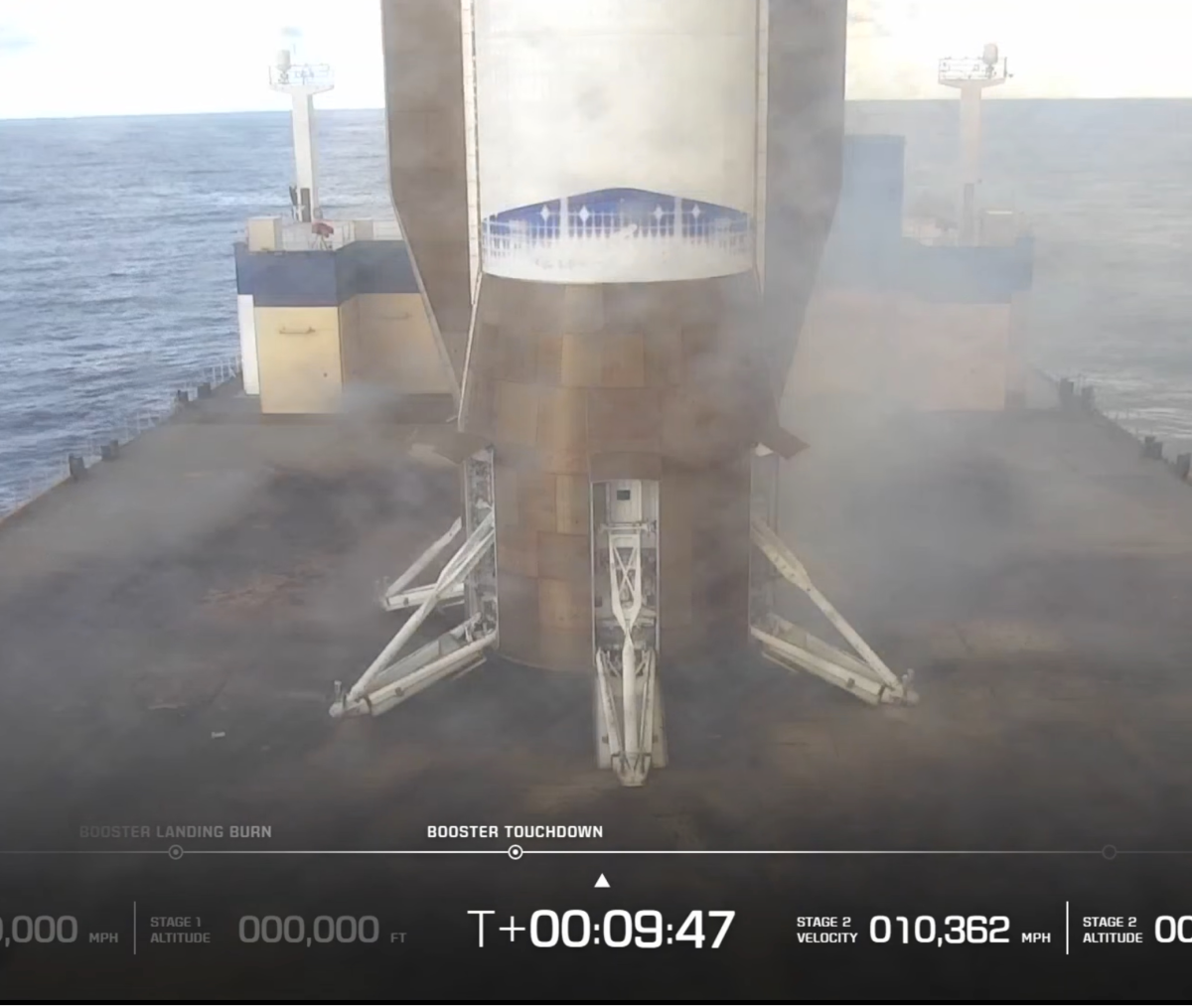

Blue Origin has successfully landed the booster of its New Glenn mega-rocket on a drone ship in the Atlantic Ocean, a major achievement accomplished on only the rocket’s second attempt. This makes Blue Origin just the second company in the world, after SpaceX, to pull off a drone-ship booster landing, marking a key step in developing a fully reusable launch system.
The milestone came during Thursday’s mission from Cape Canaveral, where New Glenn also completed its first commercial task by deploying twin NASA spacecraft headed to Mars. The spacecraft will study the red planet’s atmosphere, adding scientific significance to an already historic flight.
Read Also: Blue Origin Delays New Glenn Launch Again Over Solar Storms
The launch wasn’t without challenges. Blue Origin faced months of delays, and an earlier landing attempt in January ended in an explosion before touchdown. After implementing FAA-recommended fixes and overcoming weather and solar storm setbacks, the company finally lifted off at 3:55 p.m. ET. Ten minutes later, the 189-foot booster touched down smoothly on the drone ship.
The success drew praise across the industry, including from SpaceX executives Gwynne Shotwell and Elon Musk, who both congratulated the company on social media.
The ability to land and eventually reuse New Glenn boosters is essential for lowering launch costs and competing with SpaceX’s Falcon 9 and Starship systems. Blue Origin must now work on refurbishing and re-flying the booster to demonstrate full reusability.
The achievement also supports the company’s long-term ambitions, including NASA lunar missions. Blue Origin CEO Dave Limp recently reaffirmed the company’s commitment to helping NASA accelerate its return to the moon, stating they will “move heaven and Earth” to deliver.
Thursday’s successful mission pushes New Glenn one step closer to becoming a reliable, reusable workhorse for commercial, scientific, and government spaceflight.