
WP Engine vs Bluehost: Which is Better for Your WordPress Site in 2026?
Choosing the right web host is one of the most critical decisions you'll make for your website. A great host boosts your site's speed, security, and reliability, while the wrong one can lead to slow load times and frustrating downtime. When comparing WP Engine vs Bluehost, you're looking at two very different ends of the WordPress hosting spectrum: a premium, managed specialist versus a budget-friendly, all-purpose provider.
- Quick Summary
- What is WP Engine vs Bluehost? An Overview
- At a Glance: WP Engine vs Bluehost Comparison Table
- Performance and Speed: Who is Faster?
- Security Features: Protecting Your Website
- Ease of Use and User Experience
- Customer Support: Who Helps You Better?
- Pricing and Cost Comparison: Which Offers Better Value?
- Pros and Cons: A Balanced View
- Who Should Choose WP Engine or Bluehost?
- Frequently Asked Questions
- Which hosting service is best for WordPress?
- Do I need both Bluehost and WordPress?
- Is Bluehost still good in 2026?
- Which is the fastest hosting for WordPress?
- Is Bluehost or WordPress better?
- Final Thoughts
This decision isn't just about price; it's about matching the hosting environment to your website's specific needs, traffic levels, and your own technical comfort. Whether you're launching a personal blog or managing a high-traffic e-commerce store, understanding the core differences between these two giants will ensure you invest your money wisely and set your site up for success.
Quick Summary
- For Performance & Security: WP Engine is the clear winner, offering a highly optimised, secure, and fast environment specifically for WordPress. It's built for businesses, developers, and sites where speed is critical.
- For Beginners & Budgets: Bluehost is the more accessible option. Its low introductory pricing, free domain name, and user-friendly interface make it an excellent starting point for new websites, bloggers, and small businesses.
- Core Difference: The main distinction in the bluehost vs wp engine debate is specialisation. WP Engine is a managed WordPress expert, handling all technical aspects for you. Bluehost is a generalist host that offers a wide range of services, giving you more control but also more responsibility.
- Who Should Choose Which? If your website is your business and you can't afford downtime or slow performance, choose WP Engine. If you're starting out and need an affordable, easy-to-use solution, Bluehost is a solid choice.
What is WP Engine vs Bluehost? An Overview
Before we dive into a detailed feature comparison, it's important to understand the fundamental philosophy behind each hosting provider. They serve different audiences with distinct approaches to web hosting.
What is WP Engine?

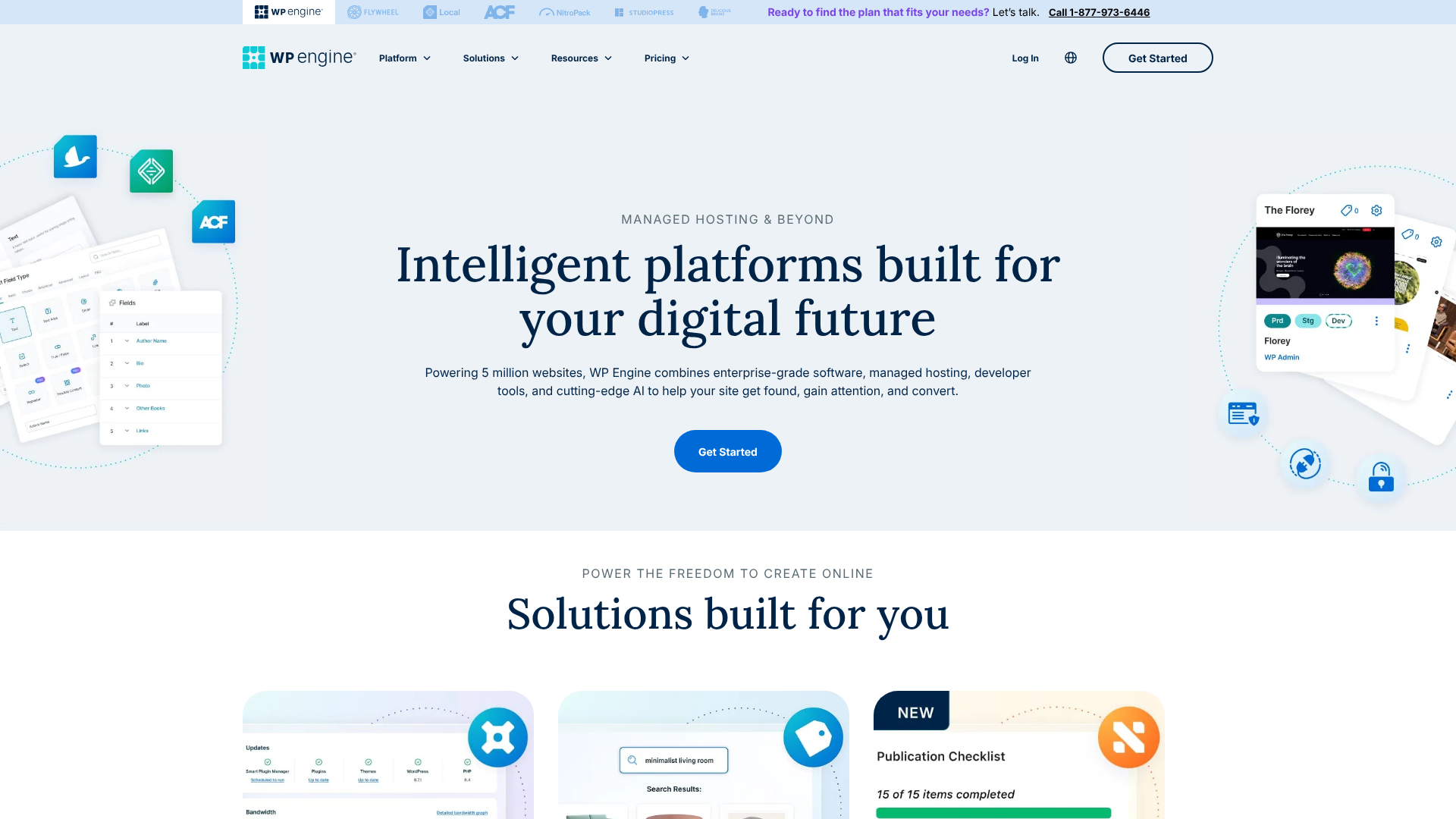
WP Engine is a premium managed WordPress hosting provider. This means they only host WordPress websites and have fine-tuned their entire infrastructure—from servers to software—to make WordPress run as fast and securely as possible. They are not a budget host; they are a high-performance solution.
When you sign up with WP Engine, you're not just renting server space. You're buying a service where their team of WordPress experts manages the technical side of hosting for you. This includes performance optimisations, security monitoring, daily backups, and core WordPress updates. This hands-off approach allows developers, agencies, and business owners to focus on creating content and growing their business, not managing server configurations.
What is Bluehost?

Bluehost is one of the world's largest and most well-known web hosting companies, officially recommended by WordPress.org since 2005. Unlike WP Engine, Bluehost is a generalist host, offering a wide array of services including shared hosting, VPS hosting, dedicated servers, and their own managed WordPress plans.
Their primary appeal is affordability and accessibility, especially for beginners. Bluehost's shared hosting plans are among the most cost-effective ways to get a website online. They typically include a free domain name for the first year, a one-click WordPress installation, and a user-friendly control panel (cPanel) that makes managing your site straightforward, even with no technical experience.
At a Glance: WP Engine vs Bluehost Comparison Table
This table provides a quick side-by-side look at the key differences in the WP Engine comparison with Bluehost.
| Feature | WP Engine | Bluehost |
|---|---|---|
| Hosting Type | Premium Managed WordPress | Shared, VPS, Dedicated, Managed WordPress |
| Target Audience | Developers, Agencies, Businesses | Beginners, Bloggers, Small Businesses |
| Performance | Exceptional; Google Cloud servers | Good; Standard servers, NVMe SSDs |
| Pricing | Premium (Starts around £20/month) | Budget-friendly (Starts around £2-£4/month) |
| Ease of Use | Custom portal, developer-focused | Very beginner-friendly, cPanel |
| Security | Advanced, proactive, hack-fix guarantee | Standard, with optional paid add-ons |
| Support | 24/7 WordPress Expert Support | 24/7 General Support |
| Staging Site | Yes, one-click staging included | Yes, on higher-tier plans |
| Free Domain | No | Yes, for the first year |
| CDN Included | Yes, premium global CDN | Yes, free Cloudflare integration |
Performance and Speed: Who is Faster?
Website speed is not just a convenience; it's a critical factor for user experience and SEO. A slow site can drive visitors away and cause your search engine rankings to drop. In this area, the difference between WP Engine and Bluehost is significant.
WP Engine's Performance Architecture
WP Engine is built from the ground up for speed. They use top-tier infrastructure, including Google Cloud Platform's fastest servers, which provides incredible reliability and low latency. Their entire software stack is optimised for WordPress.
A key feature is their proprietary caching system, EverCache®. It's designed to serve pages to visitors at lightning speed without needing complex caching plugins. WP Engine also includes a premium Content Delivery Network (CDN) with all plans, which caches your site's assets on servers around the world, ensuring fast load times for a global audience.
Because WP Engine manages the server environment, they can ensure that no single website affects the performance of others. This is a common problem in traditional shared hosting environments but is eliminated with WP Engine's isolated architecture.
Bluehost's Performance
Bluehost offers solid performance for its price point, especially on its higher-tier plans (like Choice Plus or Pro) which use NVMe SSD storage for faster file access. They provide a standard server setup that is capable of handling low-to-moderate traffic for blogs, portfolios, and small business websites.
Bluehost also offers a free Cloudflare CDN integration, which helps speed up global load times. However, their performance is based on a shared hosting model. This means your site shares server resources with hundreds of other websites. If another site on your server experiences a sudden traffic spike, it can potentially slow your site down.
Verdict: For raw speed, reliability, and the ability to handle traffic spikes, WP Engine is significantly faster than Bluehost. Its specialised infrastructure is simply in a different league.
Security Features: Protecting Your Website
Website security is non-negotiable. A security breach can destroy your reputation, compromise customer data, and get your site blacklisted by search engines. Here's how the bluehost vs wp engine matchup looks on the security front.
WP Engine's Proactive Security
Security is a cornerstone of WP Engine's service. They take a proactive, managed approach, meaning their team is constantly working to protect your site. Their platform includes a proprietary web application firewall (WAF) that blocks millions of attacks every day before they even reach your site.
Key security features include:
Managed Core Updates & Patches: They test and automatically apply WordPress security patches. * Threat Detection & Blocking: Their system actively scans for and blocks malicious traffic and brute-force attempts. * Daily Automated Backups: Your site is backed up daily, and you can restore it with a single click. * Free SSL Certificates: Automatically installed and renewed to encrypt data.
Hack-Fix Guarantee: If your site somehow gets hacked while on their platform, their team will fix it for free. This provides incredible peace of mind.
Bluehost's Security Measures
Bluehost provides the essential security features needed to run a website. All plans come with a free Let's Encrypt SSL certificate, which is crucial for security and SEO. They also offer basic server-level protection against common threats.
However, many of their more advanced security features are offered as paid add-ons. For example, CodeGuard provides automated daily backups, and SiteLock scans for malware, but these often come at an extra monthly cost. While you can certainly build a secure site on Bluehost, it requires more hands-on management and potentially extra investment compared to WP Engine's all-inclusive approach.
Verdict: WP Engine offers far superior, comprehensive, and proactive security out of the box. The hack-fix guarantee alone makes it the clear winner for any business that cannot afford a security breach.
Pro Tip: Regardless of your host, always use strong, unique passwords for your WordPress admin, FTP, and hosting accounts. Also, keep your plugins and themes updated, as they are the most common entry points for attackers.
Ease of Use and User Experience
How easy is it to manage your website and hosting account? The answer depends heavily on your technical skill level. WP Engine and Bluehost are designed for very different users.
Bluehost: Built for Beginners
Bluehost is renowned for its beginner-friendly experience. Their sign-up process is simple, and they offer a guided WordPress installation that gets you up and running in minutes. The heart of the Bluehost experience is the industry-standard cPanel, a graphical interface that lets you manage everything from email accounts to databases with simple icons and menus.
For new users, Bluehost's dashboard provides a checklist to guide you through building and launching your site. This structured approach removes much of the intimidation factor associated with creating a website for the first time. It's an environment designed to be as straightforward as possible.
WP Engine: Powerful Tools for Professionals
WP Engine does not use cPanel. Instead, they have a custom-built user portal designed for the specific needs of WordPress developers and agencies. While it's clean and well-organised, it presents tools and terminology that a beginner might find overwhelming.
Features like one-click staging environments are incredibly powerful. A staging site is a private clone of your live website where you can safely test updates, new plugins, or design changes without affecting your visitors. Once you're happy with the changes, you can push them to the live site with a single click. Other developer-friendly tools include Git integration for version control and easy access to error logs for debugging.
These are professional-grade tools that beginners simply don't need.
Verdict: For absolute beginners, Bluehost is much easier to use. For developers, agencies, and experienced users, WP Engine's toolset is far more powerful and efficient for managing professional WordPress workflows.
Customer Support: Who Helps You Better?
When something goes wrong with your website, fast and knowledgeable support is essential. Both companies offer 24/7 support, but the quality and specialisation differ.
WP Engine's Expert WordPress Support
Because WP Engine only deals with WordPress, their entire support team are WordPress experts. They are trained to troubleshoot complex issues related to plugins, themes, and performance. When you contact their support via 24/7 live chat, you're talking to someone who deeply understands the platform.
Their support is consistently praised for being fast, knowledgeable, and effective. They don't just point you to a knowledgebase article; they actively help you solve the problem. On higher-tier plans, they also offer 24/7 phone support. This level of specialised support is a key part of the premium price you pay.
Bluehost's General Support
Bluehost also provides 24/7 support via live chat and phone. Their support team is trained to handle a wide range of issues across all their hosting products, from shared hosting to dedicated servers. They are generally helpful for common problems like billing questions, domain issues, or basic WordPress setup.
However, because they support so many different platforms, their agents may not have the deep, specialised WordPress knowledge that the WP Engine team possesses. For complex plugin conflicts or performance debugging, you may find their support to be less effective. The experience can be more hit-or-miss compared to the consistently high-quality support from WP Engine.
Verdict: For WordPress-specific issues, WP Engine's support is in a class of its own. For general hosting questions, Bluehost's support is adequate.
Pricing and Cost Comparison: Which Offers Better Value?
This is often the deciding factor for many people when choosing wp engine or bluehost. The price difference is substantial, reflecting their different service levels.
Bluehost's Pricing: Affordability First
Bluehost is famous for its low introductory prices. You can often get started with a shared hosting plan for just a few pounds per month. These deals usually require you to sign up for a 12 or 36-month term to get the lowest price.
It's crucial to be aware of renewal rates. The low introductory price will increase significantly when your initial term is over. Bluehost's pricing model also relies on upsells for features like advanced backups, security, and professional email, which can add to the total cost.
- Shared Hosting: Typically starts around £2-£5/month (introductory rate).
- Managed WordPress: Starts around £8-£10/month (introductory rate).
For the latest information, it's best to visit the Bluehost website for their current pricing structures.
WP Engine's Pricing: A Premium Investment
WP Engine is positioned as a premium service, and its pricing reflects that. Their entry-level plan starts at a price point that is significantly higher than Bluehost's shared hosting. There are no low introductory deals; the price is for the high-quality managed service you receive from day one.
WP Engine's plans are based on the number of websites, monthly visits, and storage/bandwidth. This means you need to have a good idea of your site's traffic to choose the right plan. While more expensive, their pricing is all-inclusive. All the premium performance, security, and support features are included in every plan.
- Managed Hosting Startup: Typically starts around £20/month.
For accurate and up-to-date costs, please check the official WP Engine website.
Verdict: Bluehost is the undisputed winner on price. However, WP Engine offers better long-term value for businesses that need the performance, security, and support included in their plans. It's a classic case of getting what you pay for.
Pros and Cons: A Balanced View
To help you make a final decision, here is a breakdown of the main advantages and disadvantages of each host.
WP Engine
Pros:
Blazing Fast Speed: Optimised infrastructure on Google Cloud Platform delivers top-tier performance. * Rock-Solid Security: Proactive threat detection, firewalls, and a hack-fix guarantee provide total peace of mind. * Expert WordPress Support: 24/7 access to a team that lives and breathes WordPress. * Powerful Developer Tools: One-click staging sites, Git integration, and other professional tools streamline workflows.
Fully Managed Service: They handle all the technical heavy lifting so you can focus on your site.
Cons:
- Expensive: The premium price point is a significant barrier for new or small websites.
- WordPress Only: You cannot host any other type of website or application.
- Strict Resource Limits: Plans have limits on monthly visits and storage, with overage charges if you exceed them.
- No Email Hosting: You will need a separate service like Google Workspace for email accounts.
Bluehost
Pros:
Highly Affordable: Low introductory prices make it one of the cheapest ways to start a website. * Beginner-Friendly: The guided setup and intuitive cPanel are perfect for new users. * Free Domain Name: You get a free domain for the first year, saving you money upfront. * Versatile: You can host more than just WordPress and have a wide range of hosting types to choose from.
Unmetered Bandwidth: Many plans don't limit the amount of data transfer.
Cons:
- Slower Performance: Shared hosting can't match the speed and reliability of a managed platform like WP Engine.
- Renewal Rates are High: The low introductory price jumps significantly upon renewal.
- Support is Generalist: While available 24/7, support agents may lack deep WordPress expertise.
- Upselling: Many essential features like advanced backups and security are paid add-ons.
Who Should Choose WP Engine or Bluehost?
So, after this detailed wp engine comparison, which one is right for you? The choice comes down to your priorities, budget, and technical needs.
You Should Choose WP Engine If:
- Your Website is Mission-Critical: If your site is a key part of your business (e.g., e-commerce, lead generation), you cannot afford downtime or slow speeds.
- You Have High Traffic: If your site receives or is expected to receive thousands of visitors per month, you need an infrastructure that can handle it.
- You Value Security Above All: For sites handling sensitive data or that are high-value targets, WP Engine's security is worth the investment.
- You are a Developer or Agency: The staging environments and professional tools will save you countless hours and prevent costly mistakes.
- You Want a Hands-Off Experience: You prefer to pay a premium to have experts manage all the technical aspects of hosting for you.
You Should Choose Bluehost If:
- You are a Beginner: You're launching your very first website and need a simple, guided experience.
- You are on a Tight Budget: Your primary concern is keeping costs as low as possible, especially at the start.
- You are Starting a Personal Blog or Portfolio: For smaller sites with low-to-moderate traffic, Bluehost's shared hosting is more than sufficient.
- You Want a Free Domain Name: The included free domain for the first year is a nice perk that saves you money.
- You Want More Control: You are comfortable managing your own backups, security, and updates using cPanel.
Frequently Asked Questions
Which hosting service is best for WordPress?
The "best" hosting service depends entirely on your needs. For beginners and those on a budget, Bluehost is an excellent, officially recommended choice. For businesses, developers, and high-traffic sites that require maximum performance and security, a managed host like WP Engine is considered one of the best in the industry.
Do I need both Bluehost and WordPress?
No, you don't need both in the way you might think. WordPress is the software (the Content Management System or CMS) you use to build and manage your website. Bluehost is the hosting company that provides the server space where your WordPress website's files are stored and made accessible on the internet. You install WordPress on your Bluehost account.
Is Bluehost still good in 2026?
Yes, Bluehost remains a very popular and solid choice, especially for beginners and small businesses. They offer affordable plans, a user-friendly interface, and reliable service for the price. While more advanced users may prefer hosts with better performance, Bluehost continues to be a strong contender in the entry-level market.
Which is the fastest hosting for WordPress?
Generally, premium managed WordPress hosts are the fastest. Companies like WP Engine, Kinsta, and SiteGround (on their higher-tier plans) consistently show top performance in speed tests. This is because they use high-end infrastructure like the Google Cloud Platform and have highly optimised caching systems built specifically for WordPress.
Is Bluehost or WordPress better?
This question confuses two different things. It's like asking if a car or petrol is better. WordPress is the software used to build your website (the car), and Bluehost is the service that powers it and keeps it online (the petrol). You need both.
You use Bluehost to host your WordPress site.
Final Thoughts
Choosing between WP Engine and Bluehost is a clear choice between a premium, specialised service and an affordable, versatile one. There is no single "better" option—only the right option for your specific situation.
If you are just starting, launching a personal project, or have a strict budget, Bluehost offers an incredible entry point into the world of web hosting. It gives you all the essential tools you need to get online quickly and affordably. As your site grows, you can always upgrade to their more powerful plans or migrate elsewhere.
However, if your website is a serious business tool, an e-commerce platform, or a high-traffic publication, the investment in WP Engine is easily justified. The superior speed, impenetrable security, and expert support will save you time, protect your revenue, and provide a better experience for your users. It's a professional-grade solution for those who demand the best.