


Web Hosting for Cheap: A 2026 Buyer's Guide for Beginners
Starting a new website, blog, or online portfolio is an exciting venture, but the costs can quickly add up. Finding quality web hosting for cheap is often the first major hurdle for beginners and small businesses. You need a reliable online home for your project without spending a fortune, but navigating the world of budget-friendly options can feel overwhelming. The good news is that affordable hosting doesn't have to mean sacrificing performance or essential features.
- What to Know
- What Exactly is "Web Hosting for Cheap"?
- Key Features to Look for in Budget Web Hosting
- Performance Essentials: Uptime and Speed
- Storage and Bandwidth: What Do You Really Need?
- Security Must-Haves: SSL Certificates and Backups
- Ease of Use: Control Panels and 1-Click Installers
- How to Choose the Right Affordable Web Hosting Plan
- Step 1: Define Your Website's Needs
- Step 2: Understand Pricing Traps (Intro vs. Renewal)
- Step 3: Evaluate Customer Support
- Step 4: Check for Essential Freebies
- Top Recommendations for Cheap Web Hosting in 2026
- 1. Hostinger: Best Overall Value
- 2. Bluehost: Best for WordPress Beginners
- 3. Namecheap: Best for Tight Budgets & Domain Management
- 4. HostGator: Best for Simplicity and Scalability
- Pricing and Cost Comparison
- Pros and Cons of Using Cheap Web Hosting
- Frequently Asked Questions (FAQ)
- Can I host a business website on cheap hosting?
- Is free web hosting a good idea?
- What is the difference between web hosting and a domain name?
- How much should I expect to pay for budget web hosting?
- Final Thoughts: Finding the Best Value for Your Money
This guide is designed to help you understand what to look for in a budget web hosting plan. We'll break down the key features, compare some of the best providers, and give you a clear framework for choosing the right service for your needs. You can get a professional website live without breaking the bank, and we'll show you how.
What to Know
- Cheap Doesn't Mean Bad: Affordable hosting can be highly effective, but you must check for essential features like 99.9% uptime, reliable customer support, and adequate storage for your needs.
- Beware Renewal Rates: Many providers offer very low introductory prices. Always check the renewal cost to avoid unexpected price hikes after your first term ends.
- Shared Hosting is Your Starting Point: For most new websites, shared hosting is the most common and cost-effective type of budget web hosting. It provides all the necessary resources for sites with low to moderate traffic.
- Prioritise Core Features: Focus on performance (SSD storage), security (a free SSL certificate is non-negotiable), and ease of use (a user-friendly control panel like cPanel or a custom alternative).
- Top Providers Offer Great Value: Companies like Hostinger and Bluehost have built their reputations on providing reliable, feature-rich hosting at a very low price point, making them excellent choices for beginners.
What Exactly is "Web Hosting for Cheap"?
At its core, web hosting is a service that allows you to publish your website on the internet. A hosting provider rents you space on a physical server where you can store all the files and data that make up your website. When someone types your domain name into their browser, that server delivers your website's content to them.
So, what qualifies as "web hosting for cheap"? Generally, this refers to entry-level hosting plans that cost less than £5 per month. The most common type of affordable web hosting is shared hosting. This model is incredibly cost-effective because multiple websites are hosted on a single server, sharing its resources like processing power (CPU), memory (RAM), and disk space.
By sharing the server's costs among many users, providers can offer plans for just a few pounds a month. This is the perfect solution for new websites, personal blogs, online portfolios, and small business sites that don't yet receive massive amounts of traffic. It provides everything you need to get started without the significant financial commitment of more advanced hosting solutions.
How Does it Compare to Other Hosting Types?

To understand the value of cheap web hosting, it helps to know what the alternatives are. As your website grows, you might eventually need to upgrade to one of these:
- VPS (Virtual Private Server) Hosting: This is a step up from shared hosting. While you still share a physical server with others, you get a dedicated virtual partition with guaranteed resources. It offers more power and control but comes at a higher price.
- Dedicated Server Hosting: With this option, you rent an entire physical server for yourself. It provides maximum performance, security, and control but is the most expensive option, typically reserved for very high-traffic websites and large corporations.
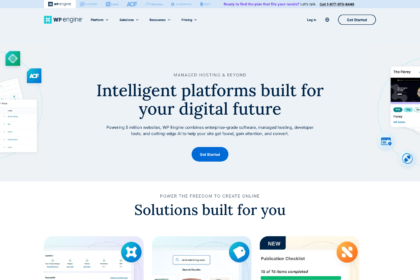
- Managed WordPress Hosting: This is a specialised service for WordPress sites that handles all the technical aspects for you, including security, updates, and performance optimisation. Providers like WP Engine offer incredible speed and support, but their plans are priced at a premium.
For anyone just starting, shared hosting is the logical and most economical choice. It delivers the best balance of price, performance, and features to get your project online successfully.
Key Features to Look for in Budget Web Hosting
When you're searching for an affordable web hosting plan, the low price is attractive, but it shouldn't be the only factor you consider. A cheap plan that's slow, unreliable, or lacks essential features will only cause headaches down the line. Here are the non-negotiable features you should look for to ensure you're getting real value for your money.
Performance Essentials: Uptime and Speed
Performance is critical for user experience and SEO. A slow or unavailable website will drive visitors away and hurt your search engine rankings. Two metrics matter most: uptime and speed.
Uptime is the percentage of time your website is online and accessible. The industry standard is 99.9% uptime, which translates to less than 45 minutes of downtime per month. Anything less is unacceptable, as frequent outages make your site look unprofessional and untrustworthy.
Speed is determined by the server's hardware and software. Look for providers that use SSD (Solid-State Drive) storage. SSDs are significantly faster than traditional HDDs (Hard-Disk Drives), leading to quicker page load times. Also, check if the provider offers a Content Delivery Network (CDN) integration, like Cloudflare.
A CDN stores copies of your site in multiple locations globally, delivering content from the server closest to the visitor, which dramatically improves speed.
Storage and Bandwidth: What Do You Really Need?
Storage refers to the amount of space you have on the server for your website's files, images, and databases. Bandwidth is the amount of data that can be transferred between your site and its visitors. Many budget hosts advertise "unmetered" or "unlimited" storage and bandwidth.
However, these terms almost always come with a "fair use policy" in the terms of service. This means that if your site uses an excessive amount of resources that affects other users on the shared server, the host may ask you to upgrade. For a new website, a plan offering 10 GB to 30 GB of SSD storage and unmetered bandwidth is more than enough to get started.
Security Must-Haves: SSL Certificates and Backups
Website security is not something you can afford to overlook, even on a tight budget. The most fundamental security feature is an SSL certificate. An SSL certificate encrypts the data transferred between your website and its visitors, enabling the secure HTTPS protocol. This is essential for building trust and is a known Google ranking factor.
Reputable hosts provide a free Let's Encrypt SSL certificate with all their plans.
Automatic backups are another crucial feature. Things can go wrong—a bad plugin update or a user error could break your site. Having regular backups allows you to restore your site quickly. Look for a host that offers free, automated weekly or daily backups.
While daily is better, weekly backups are a sufficient safety net for most new sites.
Ease of Use: Control Panels and 1-Click Installers
Your web hosting account should be easy to manage, especially if you're not a technical expert. This is where the control panel comes in. cPanel is the long-standing industry standard—it's a graphical interface that makes it simple to manage your files, databases, email accounts, and domains.
Some hosts, like Hostinger, have developed their own custom control panels (hPanel) that are often even more intuitive and beginner-friendly. Additionally, look for 1-click installers like Softaculous. These tools let you install popular applications like WordPress, Joomla, or Magento with a single click, saving you the time and hassle of manual installation.
How to Choose the Right Affordable Web Hosting Plan

With a clear understanding of the key features, you can now develop a strategy for selecting the perfect plan. Choosing the right affordable web hosting service involves more than just picking the cheapest option. It's about finding the best fit for your specific project, budget, and technical skill level. Follow these steps to make an informed decision.
Step 1: Define Your Website's Needs
First, think about the purpose of your website. The type of site you're building will directly influence the resources you need. Ask yourself a few questions:
- What kind of website is it? A simple personal blog has very different needs from a small e-commerce shop or a portfolio with high-resolution images.
- How much traffic do you expect? If you're starting from scratch, a basic shared hosting plan will be fine. If you're migrating a site with existing traffic, you'll need to ensure the plan can handle it.
- What software will you use? If you plan to use WordPress (which most people do), look for hosts that offer optimised WordPress plans or at least a simple 1-click installer.
Answering these questions will help you narrow down your options. For example, a photographer's portfolio will require more storage space, while a small online store will need robust security and a dedicated IP address might be beneficial.
Step 2: Understand Pricing Traps (Intro vs. Renewal)
This is one of the most critical steps in choosing a budget host. The headline price you see advertised is almost always a low introductory rate that only applies to your first billing cycle. After that initial term, the plan renews at a significantly higher "regular" price.
Before you commit, always find out the renewal rate. A plan that costs £1.99/month for the first year might renew at £7.99/month, a 300% increase. To get the best long-term value, consider signing up for a longer contract (24, 36, or even 48 months). This locks in the low introductory price for the entire period, saving you a substantial amount of money over time.
Pro Tip: Look for providers that offer a 30-day money-back guarantee. This gives you a risk-free period to test their services. If you're not happy with the performance or support, you can cancel and get a full refund.
Step 3: Evaluate Customer Support
When something goes wrong with your website, you need to know that help is available. Good customer support is invaluable, especially for beginners. Look for providers that offer 24/7 support through multiple channels, with live chat being the most convenient for quick questions.
Don't just take the provider's word for it. Do some research. Read recent user reviews on sites like Trustpilot or G2 to see what real customers are saying about the quality and responsiveness of the support team. A cheap hosting plan with terrible support can quickly become a very expensive problem in terms of lost time and frustration.
Step 4: Check for Essential Freebies
Many budget hosting providers bundle valuable extras into their plans to offer more value and attract new customers. These freebies can save you money and simplify the setup process. The most common and useful ones to look for are:
- Free Domain Name: Most top hosts offer a free domain name for the first year when you sign up for an annual plan. This can save you around £10-£15 upfront.
- Free SSL Certificate: As mentioned earlier, this is a security essential. Never pay extra for a basic SSL certificate; it should always be included.
- Free Email Accounts: Look for plans that allow you to create professional email addresses using your domain (e.g.,
yourname[[@yourwebsite](https://[twitter](https://twitter.com/yourwebsite).com/yourwebsite).com](https://www.(https://www.instagram.com/yourwebsite.com/).com/yourwebsite.com/)).
Top Recommendations for Cheap Web Hosting in 2026
After evaluating dozens of options based on price, performance, features, and support, we've narrowed down the list to the top providers that deliver the best value for your money. These hosts are ideal for anyone looking for reliable and cheap web hosting without compromising on quality.
1. Hostinger: Best Overall Value
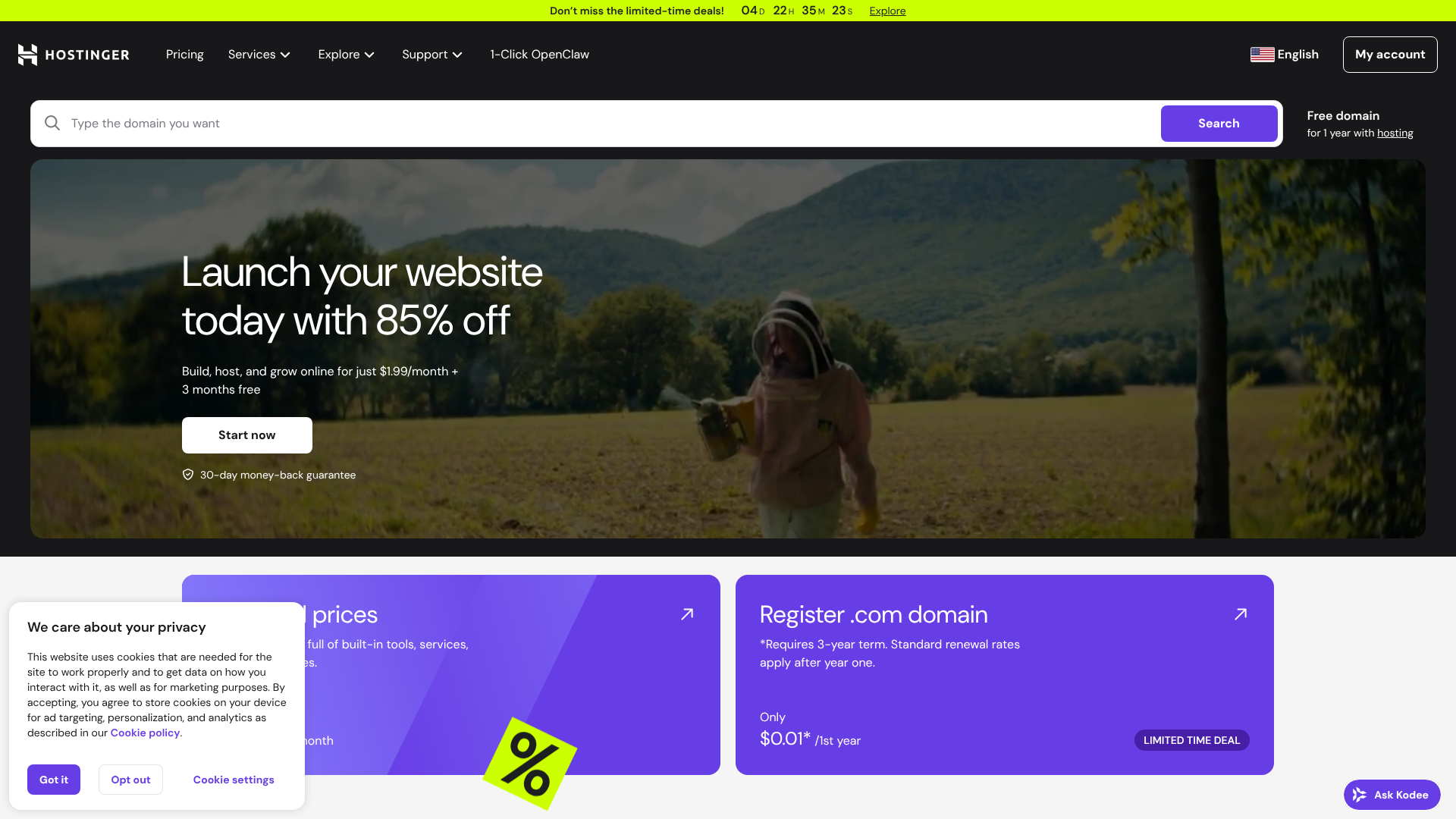
Hostinger consistently stands out as one of the most affordable web hosting providers on the market, but its appeal goes far beyond its low price tag. It offers an exceptional balance of performance, features, and user-friendliness, making it our top recommendation for overall value.
Their plans start at incredibly low prices, especially if you commit to a longer term. Hostinger uses its own custom-built control panel, hPanel, which is clean, intuitive, and arguably easier to navigate than the traditional cPanel. Performance is also a strong point, with LiteSpeed web servers and built-in caching that deliver impressive loading speeds for the price.
Pros
- Extremely competitive pricing, offering some of the best long-term value.
- Excellent performance with LiteSpeed servers and global data centres.
- User-friendly hPanel is perfect for beginners.
- 24/7 customer support via live chat.
Cons
- The lowest price requires a long-term commitment (48 months).
- No phone support, which might be a drawback for some users.
2. Bluehost: Best for WordPress Beginners
Bluehost is one of the most well-known names in web hosting and is one of only three providers officially recommended by WordPress.org. This endorsement is a testament to its reliability and seamless integration with the world's most popular content management system. If you're planning to build your site with WordPress, Bluehost is an excellent choice.
Their onboarding process is tailored specifically for WordPress users, guiding you through the setup process step-by-step. The custom dashboard makes it easy to manage your WordPress site, install plugins, and access key settings. Every plan comes with a free domain for the first year, a free SSL certificate, and a free CDN.
Pros
- Officially recommended by WordPress.org.
- Very beginner-friendly with a guided WordPress setup.
- Free domain name and SSL certificate included.
- Reliable performance and uptime.
Cons
- Renewal rates are significantly higher than the introductory prices.
- Site migrations are not free.
3. Namecheap: Best for Tight Budgets & Domain Management

As its name suggests, Namecheap started as a domain registrar but has since grown into a competitive hosting provider known for its rock-bottom prices. If you're on the tightest of budgets, Namecheap's shared hosting plans are some of the cheapest you'll find from a reputable company.
What makes Namecheap particularly appealing is the value it packs into its low-cost plans. You get unmetered bandwidth, a free SSL certificate, and, uniquely, free domain privacy protection for life with any domain registered through them. This is a feature that many other hosts charge extra for. Their hosting uses the standard cPanel, making it a familiar environment for many users.
Pros
- Extremely low entry-level and renewal prices.
- Free domain name privacy is a huge value-add.
- Solid performance with a 100% uptime guarantee for some plans.
- Includes a free website builder.
Cons
- The cheapest plan has limited storage (20 GB).
- Customer support can sometimes be slower than competitors.
4. HostGator: Best for Simplicity and Scalability
HostGator is another veteran in the hosting industry, known for its reliable service and user-friendly approach. It's a great all-around option that offers a good mix of features, performance, and support, making it suitable for a wide range of projects.
HostGator's plans are straightforward and come with generous features like unmetered bandwidth and a free domain for the first year. They use the traditional cPanel, which is powerful and packed with tools for managing your site. One of HostGator's key strengths is its scalability; it's easy to upgrade your plan to a VPS or dedicated server as your website grows.
Pros
- Generous 45-day money-back guarantee.
- Unmetered storage and bandwidth on all shared plans.
- User-friendly cPanel and 1-click installers.
- Strong and reliable uptime.
Cons
- The user interface feels a bit dated compared to modern competitors.
- Frequent upselling during the checkout process.
Pricing and Cost Comparison
To help you visualise the differences between our top recommendations, here is a side-by-side comparison of their entry-level shared hosting plans. Note that prices are introductory rates and are subject to change; always check the provider's website for the most current pricing.
| Feature | Hostinger | Bluehost | Namecheap | HostGator |
|---|---|---|---|---|
| Starting Price | From ~£1.99/month | From ~£2.34/month | From ~£1.55/month | From ~£2.97/month |
| Renewal Price | Check website | Check website | Check website | Check website |
| Free Domain? | Yes (on premium plans) | Yes (1st year) | Yes (1st year) | Yes (1st year) |
| Free SSL? | Yes | Yes | Yes | Yes |
| Storage | 50 GB SSD | 10 GB SSD | 20 GB SSD | 10 GB SSD |
| Control Panel | hPanel (Custom) | Custom Dashboard | cPanel | cPanel |
| Best For… | Overall Value | WordPress Beginners | Tight Budgets | Simplicity |
This table highlights the importance of looking beyond the initial price. While Namecheap might have the lowest starting cost, Hostinger offers more storage. Bluehost is optimised for WordPress, and HostGator provides a solid, traditional experience. Your choice should align with your priorities.
Pros and Cons of Using Cheap Web Hosting
While budget web hosting is an excellent solution for many, it's important to have realistic expectations. Understanding both the advantages and disadvantages will help you determine if it's the right choice for your project and when it might be time to upgrade.
The Advantages (Pros)
- Extremely Low Cost: This is the most significant benefit. For just a few pounds a month, you can get a fully functional website online. This low barrier to entry makes it possible for students, hobbyists, and new businesses to establish a web presence without a large initial investment.
- Beginner-Friendly: Budget hosting providers know their target audience. They design their services to be as simple as possible, with intuitive control panels, 1-click application installers, and helpful setup wizards. You don't need to be a web developer to get started.
- Sufficient for New Sites: A common misconception is that cheap hosting is inherently bad. In reality, these plans provide more than enough resources to power a new website with low to moderate traffic. For a personal blog or a small business brochure site, a shared hosting plan is all you'll need for the first couple of years.
The Disadvantages (Cons)
- Performance Limitations: Because you're sharing server resources with other websites, a sudden traffic spike on another site could potentially slow yours down. While providers have systems to mitigate this, performance can be less consistent than with more expensive hosting types.
- Limited Resources: Shared hosting plans come with limits on storage, processing power, and memory. While these are usually generous, a rapidly growing website, especially an e-commerce store with many products and visitors, may eventually hit these limits and require an upgrade.
- Aggressive Upselling: To keep their base prices low, many budget hosts rely on upselling additional services during the checkout process and throughout your time as a customer. You may be prompted to buy add-ons like premium security, SEO tools, or professional email that you don't necessarily need.
Pro Tip: Learn to distinguish between essential add-ons and unnecessary upsells. A free SSL is a must, but you can often find free or cheaper alternatives for things like SEO tools and premium backup services.
Eventually, you may outgrow your budget plan. If your site starts receiving thousands of visitors per day, or if you're running a serious online business where speed is directly tied to revenue, it's time to consider upgrading. A high-performance shared host like SiteGround or a managed solution like Kinsta can provide the power and stability your growing site needs.
Frequently Asked Questions (FAQ)
Here are answers to some of the most common questions people have when looking for affordable web hosting.
Can I host a business website on cheap hosting?
Yes, absolutely. Most small business websites, especially those that function as an online brochure or lead generation tool, can run perfectly well on a quality cheap web hosting plan. As long as the provider guarantees good uptime (99.9%+) and includes a free SSL certificate, a shared hosting plan is a very cost-effective way for a new business to get online.
Is free web hosting a good idea?
While the idea of free hosting is tempting, it's generally not recommended for any serious project. Free hosting services are notoriously unreliable, with slow speeds, frequent downtime, and no customer support. They often place intrusive ads on your website, have strict resource limits, and may not provide essential features like a free SSL certificate or the ability to use your own domain name. The small monthly cost of a reputable budget host is a worthwhile investment for a professional and reliable website.
What is the difference between web hosting and a domain name?
Think of web hosting as the house where your website lives, and the domain name as its street address. The domain name (e.g., yourwebsite.com) is what people type into their browser to find your site. The web hosting is the server space where all your website's files are stored. You need both to have a functioning website, and they are typically purchased together, though they can be bought from different companies.
How much should I expect to pay for budget web hosting?
For a good quality entry-level shared hosting plan, you should expect to pay between £1.50 and £4.00 per month for your initial term. Remember to check the renewal price, which will likely be higher, typically ranging from £5 to £10 per month. By signing up for a longer-term plan (2-4 years), you can lock in the lower introductory rate for an extended period.
Final Thoughts: Finding the Best Value for Your Money
Choosing web hosting for cheap doesn't mean you have to settle for a subpar service. By focusing on the right features and understanding the pricing structures, you can find a high-quality, reliable home for your website that fits comfortably within your budget. The key is to look for value, not just the lowest price.
Remember to prioritise the essentials: solid uptime, fast SSD storage, a free SSL certificate, and responsive customer support. Always be mindful of renewal rates to ensure your chosen plan remains affordable in the long run. For most beginners and new projects, a shared hosting plan from a reputable provider is the perfect starting point.
If you're looking for the best all-around value, Hostinger is our top recommendation for its blend of low price and excellent performance. For those starting a WordPress site, the beginner-friendly platform offered by Bluehost provides a seamless and guided experience. By choosing wisely, you can build a strong foundation for your online presence without overspending.