




SiteGround vs WP Engine: Which is Better for Your WordPress Site in 2026?
Choosing the right web host is one of the most critical decisions for your website's success. In the crowded WordPress hosting market, two names consistently stand out: SiteGround and WP Engine. The debate over SiteGround vs WP Engine often comes down to a choice between a versatile, budget-friendly powerhouse and a premium, specialised platform. While both offer exceptional hosting, they cater to very different needs, budgets, and technical requirements.
- The Short Answer
- What Are SiteGround and WP Engine? A Quick Introduction
- SiteGround vs WP Engine: Head-to-Head Feature Comparison
- Performance and Speed: Who Wins the Race?
- Security: Protecting Your Digital Assets
- Developer Tools and Workflow
- Pricing and Cost Comparison: What's the Real Value?
- Pros and Cons: A Balanced View
- How to Choose: SiteGround or WP Engine for You?
- Frequently Asked Questions (FAQ)
- What is the difference between WP Engine and SiteGround?
- Is WP Engine banned from WordPress?
- What is the difference between WordPress and SiteGround?
- Who is better than SiteGround?
- What are the pros and cons of SiteGround?
- Is SiteGround good for beginners?
- Why is SiteGround so expensive?
- Final Thoughts: The Verdict in the SiteGround vs WP Engine Debate
SiteGround has built a reputation for providing feature-rich, reliable hosting at an accessible price point, making it a favourite among beginners, bloggers, and small businesses. On the other hand, WP Engine positions itself as an elite, managed WordPress hosting provider, focusing exclusively on delivering unparalleled speed, security, and scalability for businesses, developers, and high-traffic websites. This guide will break down every critical aspect of the WP Engine vs SiteGround comparison to help you make an informed decision.
The Short Answer
- WP Engine is for Performance-Critical Sites: It's a premium, fully-managed WordPress host ideal for businesses, e-commerce stores, and developers who need top-tier speed, enterprise-grade security, and scalable infrastructure. The higher cost reflects its specialised, hands-off service.
- SiteGround is for Value and Versatility: It offers excellent performance and a rich feature set at a much more affordable price. It's perfect for beginners, bloggers, and small to medium-sized businesses who want a powerful, user-friendly host without the premium price tag.
- Performance Difference: While both are fast, WP Engine's architecture is fine-tuned exclusively for WordPress, giving it an edge under heavy traffic and for large-scale sites. SiteGround offers fantastic speed for its price bracket.
- The Core Choice: If your website is a mission-critical business asset where downtime is not an option and speed directly impacts revenue, WP Engine is the superior investment. If you need a reliable, fast, and affordable all-round host to start or grow your site, SiteGround provides exceptional value.
What Are SiteGround and WP Engine? A Quick Introduction
Before we compare features, it's important to understand the fundamental difference in their approach to web hosting. They aren't just two similar services at different price points; they represent two distinct philosophies.
SiteGround: The Versatile All-Rounder

SiteGround has been a major player in the hosting industry since 2004. While they are highly recommended for WordPress hosting, they are fundamentally an all-purpose hosting provider. They offer shared hosting, cloud hosting, and reseller hosting, catering to a broad audience.
Their primary appeal lies in balancing performance, features, and affordability. They build their platform on Google Cloud infrastructure, develop their own performance-enhancing tools like the SuperCacher, and have created a custom control panel, Site Tools, which is known for being intuitive and easy for beginners to navigate. SiteGround is the choice for users who want a high-quality, reliable host that can handle more than just WordPress and includes features like email hosting out of the box.
WP Engine: The Managed WordPress Specialist
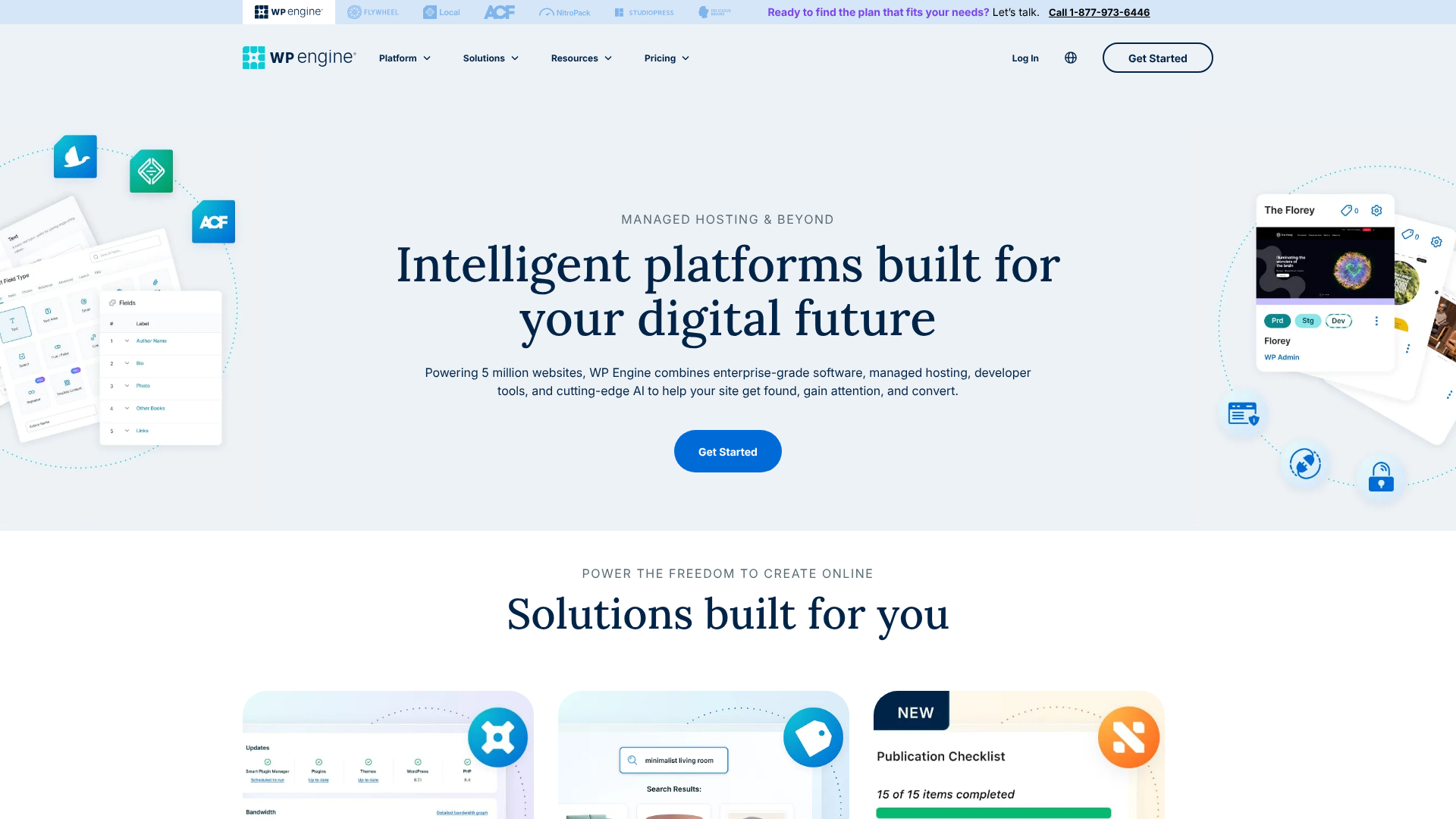
Founded in 2010, WP Engine had a singular mission: to be the best platform exclusively for WordPress websites. They don't offer shared hosting or email services; their entire infrastructure, toolset, and support team are dedicated to optimising the WordPress experience. This is what "managed hosting" truly means.
WP Engine handles all the technical heavy lifting for you. This includes automatic WordPress core updates, daily backups, proactive security monitoring, and performance tuning at the server level. They provide an ecosystem of powerful developer tools, such as one-click staging environments and seamless Git integration, making them a favourite among agencies and professional development teams. Choosing WP Engine is like hiring a team of WordPress experts to manage your site's technical foundation.
SiteGround vs WP Engine: Head-to-Head Feature Comparison
A side-by-side look at the core features reveals the key differences in their offerings. This table provides a quick overview of what each host brings to the table.
| Feature | SiteGround | WP Engine |
|---|---|---|
| Hosting Type | Shared, Cloud, Managed WordPress | Exclusively Managed WordPress |
| Performance | Excellent (Google Cloud, SuperCacher) | Exceptional (Proprietary EverCache, Google Cloud) |
| CDN | Free Cloudflare CDN | Integrated Global CDN (Cloudflare) |
| Security | Custom WAF, AI Anti-Bot, Daily Backups | Managed WAF, DDoS Mitigation, Hack-Fix Guarantee |
| Staging Area | Yes (on GrowBig plans and up) | Yes (1-Click Staging, Development, Production) |
| Control Panel | Custom Site Tools | Custom User Portal |
| Developer Tools | Git, SSH, WP-CLI | Git, SSH, SFTP, Local Dev Environment |
| Email Hosting | Yes, free unlimited accounts | No, requires third-party service |
| Support | 24/7 Phone, Live Chat, Tickets | 24/7 Live Chat (Phone on higher plans) |
| Pricing | Starts low, high renewal rates | Premium pricing from the start |

Performance and Speed: Who Wins the Race?
For any serious website owner, performance is non-negotiable. Both hosts use Google Cloud Platform's premium infrastructure, which means they start from a very strong foundation. However, their optimisation strategies create a noticeable difference, especially under load.
WP Engine's entire technology stack is built for one purpose: making WordPress run as fast as possible. Their proprietary caching system, EverCache, is incredibly aggressive and efficient, serving pages to visitors at lightning speed. It's designed to handle massive traffic spikes without breaking a sweat. Combined with their integrated global CDN, which serves your site's assets from servers closer to your visitors, WP Engine delivers consistently fast loading times across the globe.
Their 99.95% uptime Service Level Agreement (SLA) means they are financially committed to keeping your site online.
SiteGround's performance is nothing to scoff at; in fact, it's one of the fastest in the shared hosting space. They use a custom NGINX-based server setup and their own multi-layered caching system, SuperCacher, to great effect. Their Ultrafast PHP implementation can also provide a significant speed boost. For most blogs, portfolios, and small business websites, SiteGround's speed is more than sufficient and will feel incredibly fast.
The difference emerges when a site experiences high concurrent traffic or runs complex database queries, where WP Engine's specialised architecture provides more stability and raw power.
Security: Protecting Your Digital Assets
Security is another area where the WP Engine vs SiteGround comparison highlights their different philosophies. Both take security very seriously, but WP Engine's approach is more comprehensive and hands-on.
WP Engine offers what can be described as enterprise-grade security for all its customers. This includes a managed Web Application Firewall (WAF) that is constantly updated to block new threats, real-time threat detection, and free DDoS mitigation. Their most significant security feature is the hack-fix guarantee. If your site is ever compromised while hosted on their platform, their team of experts will fix it for free.
This provides incredible peace of mind and can save you thousands of pounds in cleanup costs.
SiteGround also provides a robust security setup. They have their own custom WAF, an AI-powered anti-bot system to prevent brute-force attacks, and server isolation technology. They also perform daily automatic backups and keep 30 days' worth of copies. While this is a very strong security posture for a shared host, the responsibility for cleaning up a hacked site ultimately falls on the user.
The proactive, guaranteed approach from WP Engine sets it in a different league.
Pro Tip: WP Engine maintains a list of disallowed plugins that are known to cause security or performance issues. While some see this as restrictive, it's a key part of their security strategy, preventing you from accidentally installing a problematic plugin that could compromise your site.
Developer Tools and Workflow
For developers and agencies, the tools a host provides can dramatically impact productivity. This is an area where WP Engine has invested heavily.
WP Engine's workflow is built for professionals. Every plan includes separate Development, Staging, and Production environments. This allows you to build a site, push it to a staging area for client review, and then deploy it to the live production server with a single click. They also offer seamless Git integration and SSH access for advanced workflows.
Furthermore, their acquisition of Local (formerly Local by Flywheel) provides a best-in-class local development application that syncs effortlessly with their hosting environments.
SiteGround also offers valuable developer features, but they are less extensive. Their GrowBig and GoGeek plans include a one-click staging tool, which is excellent for testing changes before pushing them live. They also provide Git integration, SSH access, and WP-CLI on all plans. While these tools are sufficient for many users, WP Engine's three-environment system and deep integration with the Local app create a more complete and efficient professional development lifecycle.
Pricing and Cost Comparison: What's the Real Value?
Price is often the deciding factor, and the difference between SiteGround and WP Engine is substantial. It's crucial to look beyond the monthly fee and consider the total value.
SiteGround's Pricing Structure
SiteGround is famous for its low introductory prices, often starting at just a few pounds per month. Their plans (StartUp, GrowBig, GoGeek) are structured to offer more resources and features as you move up. The StartUp plan is for a single website, while GrowBig and GoGeek allow unlimited websites.
The most important thing to note with SiteGround is the renewal price. After the initial term, the price increases significantly, often tripling or more. While the renewal price is still competitive for the quality of service, the initial discount is a marketing strategy. SiteGround offers excellent value for money, especially for those just starting out, but you must budget for the higher cost long-term.
WP Engine's Pricing Structure
WP Engine is transparently a premium service, and its pricing reflects that. Their plans start at a much higher price point and are typically based on the number of monthly visits, storage space, and bandwidth. There are no low introductory offers; the price you see is the price you pay.
While this may seem expensive, the cost includes the full managed service: the expert support, the enterprise security, the automated maintenance, and the high-performance infrastructure. For a business, the cost of WP Engine can be justified by calculating the potential revenue lost from a slow or insecure website, or the cost of hiring a developer to manage the technical aspects that WP Engine handles automatically.
The Value Proposition
Ultimately, the value depends on your needs. SiteGround offers incredible value for money, packing premium features into an affordable package. WP Engine offers business value, providing a service that saves time, mitigates risk, and ensures your website performs at its peak, which can have a direct positive impact on your bottom line.
Pros and Cons: A Balanced View
To make a fair SiteGround or WP Engine decision, it's helpful to summarise their strengths and weaknesses.
WP Engine: Pros and Cons
Pros
Blazing-Fast Performance: Industry-leading speed optimised specifically for WordPress. – Enterprise-Grade Security: Includes a hack-fix guarantee for total peace of mind. – Powerful Developer Tools: Three-environment staging and Local integration create a superior workflow. – Expert WordPress Support: Support agents are true WordPress specialists.
Highly Scalable: Infrastructure designed to handle massive traffic growth.
Cons
- High Cost: One of the more expensive managed WordPress hosts.
- Strict Resource Limits: Plans have defined limits on visits and storage.
- No Email Hosting: You'll need a separate service like Google Workspace or Zoho Mail.
- Plugin Restrictions: A list of disallowed plugins can limit flexibility for some users.
SiteGround: Pros and Cons
Pros
Affordable Pricing: Very low introductory prices make it accessible for everyone. – Excellent All-Round Performance: Great speed and reliability for the cost. – User-Friendly Interface: The custom Site Tools panel is intuitive for beginners. – Includes Email Hosting: Free, unlimited email accounts on all plans.
Good Customer Support: Widely praised for being fast and helpful.
Cons
- High Renewal Rates: The price jumps significantly after the initial term.
- Resource Limits on Cheaper Plans: The StartUp plan can feel restrictive.
- Staging on Higher Plans Only: You need to be on the GrowBig plan or higher to get this feature.
How to Choose: SiteGround or WP Engine for You?
Your choice should be guided by your specific situation. Here’s a simple breakdown to help you decide.
You should choose WP Engine if:
You run a serious business website, an e-commerce store, or a high-traffic publication where performance directly impacts revenue. * Security is your top priority, and you want the assurance of a hack-fix guarantee. * You are a developer or an agency that needs a professional workflow with robust staging and local development tools. * You value a completely hands-off, managed experience where the technical details are handled for you.
Your budget allows for a premium investment in your website's foundation.
You should choose SiteGround if:
You are a beginner, a blogger, or a small business owner launching your first website. * You are working with a limited budget and need an affordable but high-quality host. * You want an easy-to-use control panel and a straightforward setup process. * You need email hosting included with your web hosting package.
You want a great all-round host that provides excellent value for money.
Frequently Asked Questions (FAQ)
Here are answers to some common questions that arise when comparing SiteGround and WP Engine.
What is the difference between WP Engine and SiteGround?
The primary difference is specialisation. WP Engine is a premium, managed WordPress specialist, meaning its entire platform and service are exclusively for WordPress sites, focusing on maximum performance, security, and developer tools. SiteGround is a high-quality all-round host that offers excellent WordPress hosting alongside other services, focusing on providing a balance of features, performance, and affordability.
Is WP Engine banned from WordPress?
No, this is a common piece of misinformation. WP Engine is one of the most respected hosts in the WordPress community and a close partner of WordPress. The confusion likely arises from their policy of disallowing certain plugins that are known to cause performance or security issues. This is a protective measure for their customers, not a ban from WordPress itself.
What is the difference between WordPress and SiteGround?
This question highlights a common point of confusion for beginners. WordPress is the free, open-source software (a Content Management System or CMS) used to build and manage your website. SiteGround is the web hosting company that provides the server space and technology needed to make your WordPress website accessible on the internet. You install WordPress on your SiteGround hosting account.
Who is better than SiteGround?
"Better" is subjective and depends on your needs. For users seeking a more premium, managed WordPress experience similar to WP Engine but perhaps with different features, hosts like Kinsta are often considered a step up from SiteGround. For those on an extreme budget, hosts like Hostinger might be cheaper, though often with trade-offs in performance or support.
What are the pros and cons of SiteGround?
As covered above, the main pros are its affordability, user-friendly interface, strong performance for the price, and included email hosting. The primary cons are the high renewal prices after the introductory period and the fact that some key features, like staging, are reserved for more expensive plans.
Is SiteGround good for beginners?
Yes, SiteGround is an excellent choice for beginners. Their custom Site Tools control panel is much more intuitive than traditional cPanel. They also have a WordPress Starter wizard that walks new users through selecting a theme and essential plugins, making the initial setup process very smooth. Their 24/7 support is also a valuable resource for those new to web hosting.
Why is SiteGround so expensive?
While SiteGround's introductory prices are low, their renewal prices are higher than many budget hosts. This cost reflects the premium infrastructure they use (Google Cloud), their investment in custom performance and security tools, and their highly-rated customer support. Compared to other cheap hosts, you are paying for a higher level of reliability and service.
Final Thoughts: The Verdict in the SiteGround vs WP Engine Debate
There is no single winner in the SiteGround vs WP Engine showdown because they are competing in different leagues. The right choice is not about which host is objectively "better," but which host is the right fit for your specific project, budget, and goals.
SiteGround remains one of the best all-round hosting providers on the market. It offers a fantastic entry point for anyone new to WordPress and provides more than enough power for most small to medium-sized websites, all while maintaining an affordable price point (at least initially). It’s a reliable, fast, and user-friendly option that rarely disappoints.
However, for those whose websites are critical business tools, the investment in a specialised platform like WP Engine is often a wise one. The superior performance, impenetrable security with its hack-fix guarantee, and professional-grade workflow tools provide a level of stability and peace of mind that allows you to focus on growing your business, not managing your server. If your website's success is paramount, WP Engine delivers the power and reliability you need.