

The Attributes of a Good Landing Page Experience: A Marketer's Conversion Guide
You've done the hard work. You've crafted the perfect ad, targeted the right audience, and driven a wave of traffic to your website. But then, nothing. The conversions you expected just aren't happening.
- What to Know
- The Foundation: Why Landing Page Experience Matters More Than Ever
- Attribute 1: Blazing-Fast Page Load Speed
- Attribute 2: Flawless Mobile Responsiveness
- Attribute 3: Crystal-Clear and Concise Messaging
- Attribute 4: The Irresistible Call-to-Action (CTA)
- Attribute 5: Compelling Visuals and Intuitive Layout
- Attribute 6: Effortless, User-Friendly Navigation (Or Lack Thereof)
- Attribute 7: Building Trust with Signals and Social Proof
- Attribute 8: Perfect Alignment with User Intent
- Attribute 9: The Art of Minimising Distractions
- Attribute 10: Continuous Improvement Through A/B Testing
- Tools to Build High-Converting Landing Pages
- Frequently Asked Questions
- What is a good conversion rate for a landing page?
- How many CTAs should a landing page have?
- What is the most important element of a landing page?
- How long should a landing page be?
- Final Thoughts
This frustrating scenario is common, and the culprit is often a poor landing page experience. Understanding which attributes describe a good landing page experience is the first and most critical step towards turning clicks into customers.
A landing page isn't just another page on your website; it's a specialised, standalone page created for a single marketing or advertising campaign. Its only job is to convert visitors. If the experience is confusing, slow, or untrustworthy, your visitors will leave without a second thought, wasting your ad spend and costing you potential revenue.
This guide breaks down the essential landing page experience factors that separate high-converting pages from those that fall flat. We'll explore the ten core traits that define an effective page, giving you a clear checklist to diagnose your own pages and build new ones that deliver results.
What to Know
- Speed is Non-Negotiable: A slow-loading page is a primary reason for high bounce rates. Aim for a load time of under three seconds to keep visitors engaged.
- Message Match is Crucial: The content on your landing page must directly align with the promise made in your ad. Any disconnect creates confusion and mistrust.
- A Single, Clear CTA: Every landing page should have one primary goal, represented by a single, compelling call-to-action. Multiple CTAs can dilute focus and reduce conversions.
- Trust Signals Build Confidence: Elements like testimonials, reviews, security badges, and client logos are essential for persuading visitors to take action.
- Mobile-First Design is Standard: With most traffic coming from mobile devices, your landing page must look and function perfectly on a smaller screen.
The Foundation: Why Landing Page Experience Matters More Than Ever
Before we break down the specific attributes, it's vital to grasp why the overall experience is so important. In digital marketing, a landing page is the moment of truth. It's where a potential customer decides whether your offer is valuable enough to trade their email address, contact details, or money for.
Google Ads even has a “Landing Page Experience” score as part of its Quality Score metric. A poor experience can lead to higher ad costs and lower ad positions, directly impacting your campaign's profitability. Google understands that users want fast, relevant, and easy-to-use pages. By prioritising these factors, you not only please your visitors but also improve your standing with search engines.
A positive experience reduces friction. It makes the user's journey from visitor to lead or customer feel effortless and intuitive. A negative experience, filled with slow load times, confusing messages, or a cluttered design, creates friction at every step, causing visitors to abandon the process. The attributes we're about to cover are all designed to identify and eliminate that friction.
Attribute 1: Blazing-Fast Page Load Speed
Page load speed is the gatekeeper of your landing page experience. If your page doesn't load almost instantly, a significant portion of your visitors will never even see your carefully crafted headline or compelling offer. In 2025, user patience is at an all-time low. Data consistently shows that as page load time goes from one second to three seconds, the probability of a bounce increases by 32%.
Why is speed so critical. It's the first impression you make. A slow page feels unprofessional and untrustworthy. It suggests that the company behind it doesn't care about the user's time or experience.
This negative first impression colours the rest of their interaction with your page, making them less likely to convert even if they stick around.
Here’s how to ensure your landing page is fast:
- Optimise Images: Large, uncompressed images are the most common cause of slow pages. Use modern image formats like WebP and compress them without sacrificing too much quality. Tools like TinyPNG or image editing software can help.
- Minify Code: Reduce the size of your HTML, CSS, and JavaScript files by removing unnecessary characters, comments, and spaces. Most modern website platforms and landing page builders handle this automatically.
- Use a Content Delivery Network (CDN): A CDN stores copies of your page on servers around the world. When a user visits, the content is delivered from the server closest to them, dramatically reducing load times.
- Limit External Scripts: Third-party scripts for analytics, tracking pixels, or chat widgets can add significant load time. Be selective and only use the scripts that are absolutely essential for your campaign's goals.
Attribute 2: Flawless Mobile Responsiveness
More than half of all web traffic now comes from mobile devices. This isn't a trend; it's the standard. If your landing page isn't designed for a mobile-first experience, you're alienating the majority of your potential audience. A good landing page doesn't just work on mobile; it's designed for it.
Mobile responsiveness means the layout and content of your page automatically adapt to fit any screen size, from a small smartphone to a large desktop monitor. This goes beyond just shrinking down your desktop page. A truly mobile-optimised experience considers the user's context. Buttons need to be large enough to be easily tapped, forms should be simple to fill out, and text must be readable without pinching or zooming.
Key elements of a mobile-friendly design include:
- A Single-Column Layout: This is the easiest layout for users to scroll through on a narrow screen.
- Thumb-Friendly Design: Place key elements like CTA buttons where a user's thumb can naturally reach them, typically in the centre or bottom half of the screen.
- Simplified Forms: Ask for the absolute minimum amount of information necessary. Long, complex forms are a major conversion killer on mobile.
- Click-to-Call Functionality: If a phone number is included, make sure users can tap it to initiate a call directly from their device.
Failing to provide a seamless mobile experience is a guaranteed way to lose conversions. Users who have to struggle with a poorly designed mobile page will simply give up and go to a competitor whose site works properly on their phone.
Attribute 3: Crystal-Clear and Concise Messaging

When a visitor lands on your page, you have about five seconds to answer three critical questions: Where am I. What can I do here. Why should I do it. Your messaging is responsible for providing these answers instantly.
If it's vague, confusing, or filled with jargon, visitors will bounce.
One of the most important good landing page traits is message match. This means the headline and primary message on your landing page should directly correspond to the ad or link the user clicked to get there. For example, if your ad promises a "50% Discount on SEO Software," your landing page headline must echo that exact offer. Any disconnect breaks the user's trust and makes them feel like they've been misled.
To achieve clear and concise messaging:
- Focus on One Big Idea: Your landing page should have a single, focused goal. Your headline, subheadings, and body copy should all work together to support this one idea.
- Write a Compelling Headline: The headline is the most important piece of copy on the page. It should be benefit-driven, grabbing the user's attention and clearly communicating the value of your offer.
- Use Scannable Copy: People don't read web pages; they scan them. Break up your text with short paragraphs, bullet points, and bolded keywords to make it easy for users to digest the key information quickly.
- Speak Your Customer's Language: Avoid internal jargon or overly technical terms. Write in a clear, conversational tone that resonates with your target audience. Focus on the benefits of your offer (what the customer gets) rather than just the features (what your product does).
Pro Tip: Use the "5-Second Test." Show your landing page to someone unfamiliar with it for just five seconds. Then, ask them what the page is about and what they were supposed to do. If they can't answer correctly, your messaging isn't clear enough.
Attribute 4: The Irresistible Call-to-Action (CTA)
A landing page without a clear call-to-action is like a car without a steering wheel. It has no direction. The CTA is the element—usually a button—that tells the user exactly what action you want them to take next. It's the bridge between the user consuming your content and becoming a lead or customer.
Effective CTAs are specific, visible, and compelling. The design and copy work together to encourage a click. Vague button text like "Submit" or "Click Here" is far less effective than action-oriented, benefit-driven copy like "Get Your Free Ebook" or "Start My 30-Day Trial."
Here are the key attributes of effective landing pages when it comes to CTAs:
- Singular Focus: The best landing pages have one primary CTA. Offering multiple choices (e.g., "Download Ebook," "Watch Demo," "Contact Us") can cause decision paralysis and reduce the chances of the user taking any action at all.
- Contrasting Colour: Your CTA button should stand out from the rest of the page. Use a colour that contrasts with your page's background and branding but still looks visually appealing. This draws the user's eye directly to the desired action.
- Action-Oriented Copy: The text on the button should start with a verb and describe what the user will get when they click. For example, "Download My Guide" is better than "Guide Download."
- Strategic Placement: Place your CTA in a prominent position, typically "above the fold" (visible without scrolling). For longer pages, it's good practice to repeat the CTA further down the page so the user doesn't have to scroll back up to convert.
Your CTA is the final step in the conversion process on the page. Make it impossible to miss and easy to understand.
Attribute 5: Compelling Visuals and Intuitive Layout
Visual appeal and layout are not just about making a page look pretty; they are about guiding the user's attention and making the information easy to process. A clean, professional design builds trust, while a cluttered or amateurish one can instantly drive visitors away. The layout should create a clear visual hierarchy, directing the user's eye towards the most important elements, like the headline and the CTA.
High-quality images, videos, or graphics that are relevant to your offer can significantly increase engagement and conversions. A video can explain a complex product quickly, while a hero shot of your product can make the offer feel more tangible and desirable. However, visuals should always serve a purpose. Irrelevant stock photos can detract from your message and reduce credibility.
Consider these principles for visual appeal and layout:
- Use Directional Cues: Employ visual elements like arrows or images of people looking towards your CTA button to subconsciously guide the user's gaze.
- Embrace White Space: Don't cram your page with text and images. White space (or negative space) is the empty area around elements. It helps reduce clutter, improve readability, and make the page feel more organised and professional.
- Ensure Visual Consistency: Your landing page's branding (colours, fonts, logo) should be consistent with the ad that brought the user there and with your main website. This reinforces brand identity and builds trust.
- Choose High-Quality Media: Use professional, high-resolution images and videos. Grainy or pixelated visuals make your brand look unprofessional. If you're showcasing a product, ensure the images are clear and show it from multiple angles.
Attribute 6: Effortless, User-Friendly Navigation (Or Lack Thereof)
This attribute might seem counterintuitive, but for a dedicated landing page, the best navigation is often no navigation at all. Remember, a landing page has a single goal. A standard website navigation menu with links to your "About," "Services," and "Blog" pages presents multiple distractions that can pull the user away from the intended conversion path.
By removing the main navigation menu, you create a focused environment where the user has only two choices: convert or leave the page. This dramatically increases the likelihood that they will engage with your offer and complete the desired action. This is one of the most powerful landing page experience factors for boosting conversion rates.
Of course, there are exceptions. For very complex offers or multi-step funnels, you might need some form of on-page navigation, like jump links that allow users to skip to relevant sections of a long page. However, these should be used sparingly and should never link away from the landing page itself.
If you must include links, they should be limited to essential information that builds trust, such as a link to your privacy policy or terms of service, which are often required. These are typically placed discreetly in the page's footer, where they don't compete for attention with the primary CTA.
Attribute 7: Building Trust with Signals and Social Proof
When a user lands on your page, especially for the first time, they are naturally sceptical. They don't know who you are or if they can trust you. Your job is to quickly build credibility and alleviate their concerns. This is where trust signals and social proof come in.
Social proof is the psychological phenomenon where people assume the actions of others reflect correct behaviour. On a landing page, this means showing that other people have used and benefited from your product or service. Trust signals are elements that convey security and legitimacy.
Here are some of the most effective trust signals to include:
- Customer Testimonials: Short, authentic quotes from happy customers are incredibly powerful. Including a name and photo adds a layer of credibility.
- Reviews and Ratings: Displaying an average star rating from a third-party review site (like Trustpilot or G2) can provide unbiased validation.
- Case Studies or Success Stories: For B2B or high-ticket offers, linking to a brief case study that shows real results can be very persuasive.
- Trust Badges: These are logos from well-known companies you've worked with ("As seen on…") or security badges (like SSL certificates or payment processor logos like Visa/Mastercard) that reassure users their data is safe.
- Data and Numbers: Specific numbers can build immense trust. For example, "Join 50,000+ happy customers" is much more powerful than "Join our customers."
Strategically placing these elements near your CTA can provide the final nudge a hesitant visitor needs to convert.
Attribute 8: Perfect Alignment with User Intent
User intent is the 'why' behind a user's search query or click. A good landing page experience is one that perfectly aligns with and satisfies that intent. This goes hand-in-hand with message match but is broader. It's about understanding what the user was hoping to achieve and delivering it to them without friction.
For example, if someone clicks an ad for a "free webinar on social media marketing," their intent is to learn more about the webinar and sign up. Your landing page should immediately provide details about the webinar's content, speakers, and date, followed by a simple registration form. If the page instead tries to sell them a full course or is vague about the webinar details, it fails to meet their intent, and they will leave.
To align with user intent, you must:
- Understand the Source: Where is the traffic coming from? A user clicking from a branded search ad has different intent than someone clicking from a social media ad targeting a cold audience.
- Match the Funnel Stage: Is the user in the awareness, consideration, or decision stage? An awareness-stage user might be looking for an educational ebook (a low-commitment offer), while a decision-stage user might be ready for a free trial or demo (a high-commitment offer).
- Deliver on the Promise: This is the core of user intent. If your ad promises a solution to a problem, your landing page must clearly explain how your offer provides that solution.
Failing to match user intent is a fundamental mistake. It creates a jarring experience and signals to the user that you don't understand their needs.
Attribute 9: The Art of Minimising Distractions
As mentioned when discussing navigation, a key attribute of a great landing page is its singular focus. This means actively removing anything and everything that does not contribute to the single goal of conversion. Every element on the page should be there for a reason; if it doesn't support the conversion goal, it's a distraction and should be removed.
Common distractions to eliminate include:
- Excessive Links: Beyond the main navigation, avoid littering your page with links to other parts of your site. Each link is a potential exit point.
- Competing Offers: Don't promote multiple products or offers on a single landing page. Create a separate, dedicated page for each campaign.
- Cluttered Design: Too many images, colours, or blocks of text can overwhelm the user and make it difficult to focus on the main message and CTA. A clean, simple design is almost always more effective.
- Social Sharing Buttons: While great for blog posts, social sharing buttons can be a distraction on a landing page. You want the user to convert, not to go and browse Twitter.
The goal is to create a tunnel-vision experience. Guide the user from the headline to the body copy to the CTA with as few detours as possible. The more focused the page, the higher the conversion rate will be.
Pro Tip: Think of your landing page like a conversation with a salesperson. A good salesperson stays focused on the customer's needs and guides them toward a single solution, they don't keep bringing up unrelated products or topics.
Attribute 10: Continuous Improvement Through A/B Testing
No landing page is ever perfect from the start. The final, and perhaps most important, attribute of a good landing page experience is that it is constantly being tested and optimised. A/B testing (or split testing) is the practice of creating two versions of your page (an 'A' version and a 'B' version) with one element changed, and showing them to different segments of your audience to see which one performs better.
By continuously testing, you can make data-driven decisions to improve your conversion rates over time. You can test almost any element on your page, but it's best to start with the ones that are likely to have the biggest impact.
High-impact elements to A/B test include:
- Headline: Test different value propositions or emotional triggers.
- Call-to-Action (CTA): Test button colour, size, placement, and copy.
- Images and Videos: Test different visuals or try using a video instead of a static image.
- Form Length: Test asking for more or less information in your lead capture form.
- Page Layout: Test radically different designs or the order of sections.
Over time, these small, incremental improvements can lead to significant gains in your campaign's performance. The best marketers know that optimisation is an ongoing process, not a one-time task.
Tools to Build High-Converting Landing Pages
Understanding these ten attributes is one thing, but implementing them can be a technical challenge. Fortunately, you don't need to be a web developer to create professional, high-converting landing pages. Specialised landing page builders are designed to make this process simple and effective.
These platforms provide drag-and-drop editors, mobile-responsive templates, and built-in A/B testing capabilities, allowing marketers to focus on strategy and copy rather than code.
Here are a few excellent options:
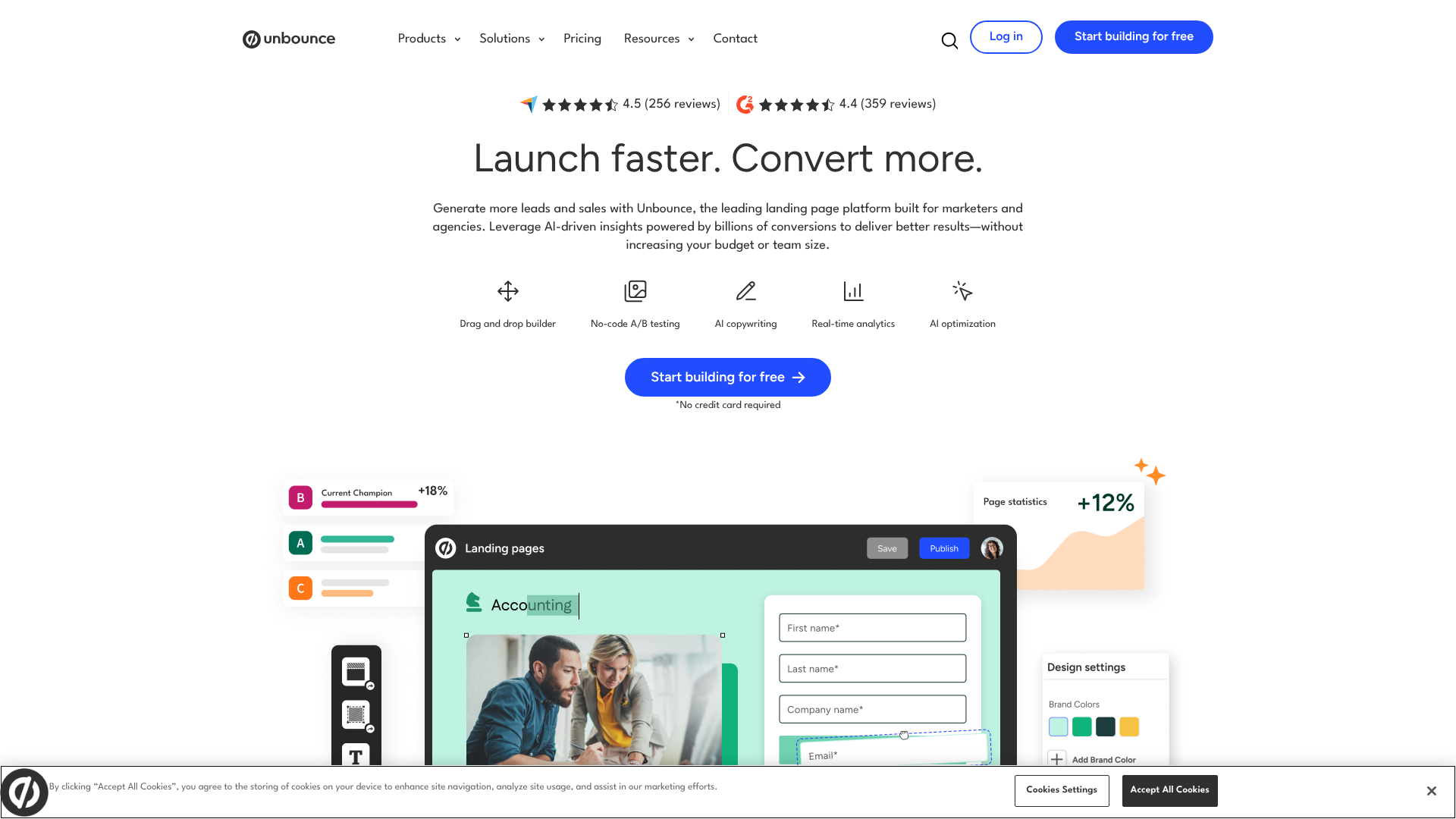
- Unbounce: A powerful and popular choice, Unbounce is fantastic for serious marketers who want to optimise every detail. It offers robust A/B testing and AI-powered features like Smart Traffic, which automatically directs visitors to the landing page variant they're most likely to convert on.
- Leadpages: Known for its ease of use and affordability, Leadpages is an excellent option for small businesses and entrepreneurs. It comes with a huge library of high-converting templates and focuses on generating leads with features like pop-ups and alert bars.
- Instapage: Geared more towards enterprise teams and agencies, Instapage excels at personalisation at scale. It offers features like AdMap for ensuring message match between ads and pages, along with robust collaboration tools for larger teams.
Using a dedicated tool like one of these can significantly speed up your workflow and provide you with the features needed to implement all the best practices discussed in this guide.
Frequently Asked Questions
What is a good conversion rate for a landing page?
There's no single answer, as a "good" conversion rate varies wildly by industry, traffic source, and offer. However, across all industries, the average landing page conversion rate is around 2.35%. A truly good page might convert at 5% or higher, while exceptional pages can reach 10-20% or more. The key is to focus on improving your own baseline rate through continuous testing rather than chasing a universal number.
How many CTAs should a landing page have?
For optimal results, a landing page should have one primary call-to-action. This singular focus prevents decision paralysis and guides the user toward the single most important action you want them to take. While you might repeat the same CTA button on a longer page, you should avoid presenting different, competing offers.
What is the most important element of a landing page?
While all elements work together, the headline and its match to the incoming ad (message match) are arguably the most critical. If the headline doesn't immediately grab the visitor's attention and confirm they are in the right place, they will leave within seconds, never seeing the rest of your page. A strong, relevant headline is the foundation upon which the entire experience is built.
How long should a landing page be?
The ideal length of a landing page is: as long as it needs to be to effectively persuade the visitor, and no longer. For a simple, low-commitment offer like a newsletter sign-up, a short page is sufficient. For a complex, high-ticket product or service, a longer page with detailed explanations, testimonials, and an FAQ section may be necessary to address all of the user's potential questions and objections.
Final Thoughts
A great landing page experience is not the result of a single magic bullet, but the careful combination of multiple user-centric attributes. From the technical foundation of lightning-fast speed and mobile responsiveness to the psychological power of clear messaging, trust signals, and a focused call-to-action, each element plays a vital role in guiding a visitor towards conversion.
By systematically reviewing your pages against these ten core attributes, you can identify areas for improvement and begin making data-driven changes. Remember that optimisation is a continuous journey, not a destination. The most successful marketers are those who are always testing, learning, and refining their approach to create better experiences for their users.
If you're ready to apply these principles without getting bogged down in technical details, consider using a dedicated platform. Tools like Leadpages for ease of use or Unbounce for advanced optimisation can provide the framework you need to build landing pages that not only look great but also deliver measurable results.