


Semrush vs Ahrefs (2026): Which SEO Tool is Best for Your Business?
The debate over Semrush vs Ahrefs is one of the most common discussions in the digital marketing world, and for good reason. Both platforms are powerhouses, offering a suite of tools designed to improve your online visibility. However, they approach this goal from different angles, making the choice between them critical for your business's strategy and budget.
- Quick Summary
- What Are Semrush and Ahrefs? An Overview
- Semrush vs Ahrefs: A Detailed Feature Comparison
- Keyword Research: Semrush's Magic Tool vs Ahrefs' Explorer
- Backlink Analysis: The Core Battleground
- Technical SEO & Site Audits
- Competitor Analysis: Beyond Keywords
- Pricing and Value: A Cost Comparison
- Pros and Cons: The Quick Verdict
- How to Choose: Semrush or Ahrefs for Your Needs?
- Frequently Asked Questions (FAQ)
- Which is better for keyword research, Semrush or Ahrefs?
- Is Ahrefs more accurate than Semrush?
- Can I use Semrush or Ahrefs for free?
- Which tool has a better backlink checker?
- Is Semrush worth the money for a small business?
- Final Thoughts: The Ultimate Decision
Deciding whether to use Semrush or Ahrefs isn't about picking a winner, but about understanding which tool aligns best with your specific marketing needs. Semrush positions itself as an all-in-one marketing toolkit, covering everything from SEO and PPC to social media and content marketing. Ahrefs, on the other hand, maintains a laser focus on being the absolute best tool for SEO, particularly in backlink analysis and competitor research.
This guide breaks down the ahrefs vs semrush comparison in detail. We'll explore their core features, pricing structures, and ideal use cases to give you the clarity needed to make the right investment for your business.
Quick Summary
- Choose Semrush if: You need a comprehensive, all-in-one digital marketing platform. It's the ideal choice for marketing managers, agencies, and businesses that manage SEO, PPC, content, and social media campaigns under one roof.
- Choose Ahrefs if: Your primary focus is on deep SEO analysis. It's the preferred tool for SEO specialists, link builders, and content strategists who demand the most accurate backlink data and a streamlined user experience.
- Core Difference: Semrush offers unparalleled breadth across the entire marketing spectrum, especially in competitor intelligence for paid ads. Ahrefs provides superior depth and accuracy in its core SEO functions, particularly its backlink index.
- The Verdict: For most businesses looking for a single platform to manage their overall online presence, Semrush offers more versatile value. For SEO purists who live and breathe link building, Ahrefs remains the gold standard.
What Are Semrush and Ahrefs? An Overview
Before diving into a feature-by-feature breakdown, it's important to understand the fundamental philosophy behind each tool. They are both leaders in the SEO software industry, but their scope and primary strengths differ significantly, shaping who they serve best.
What is Semrush?
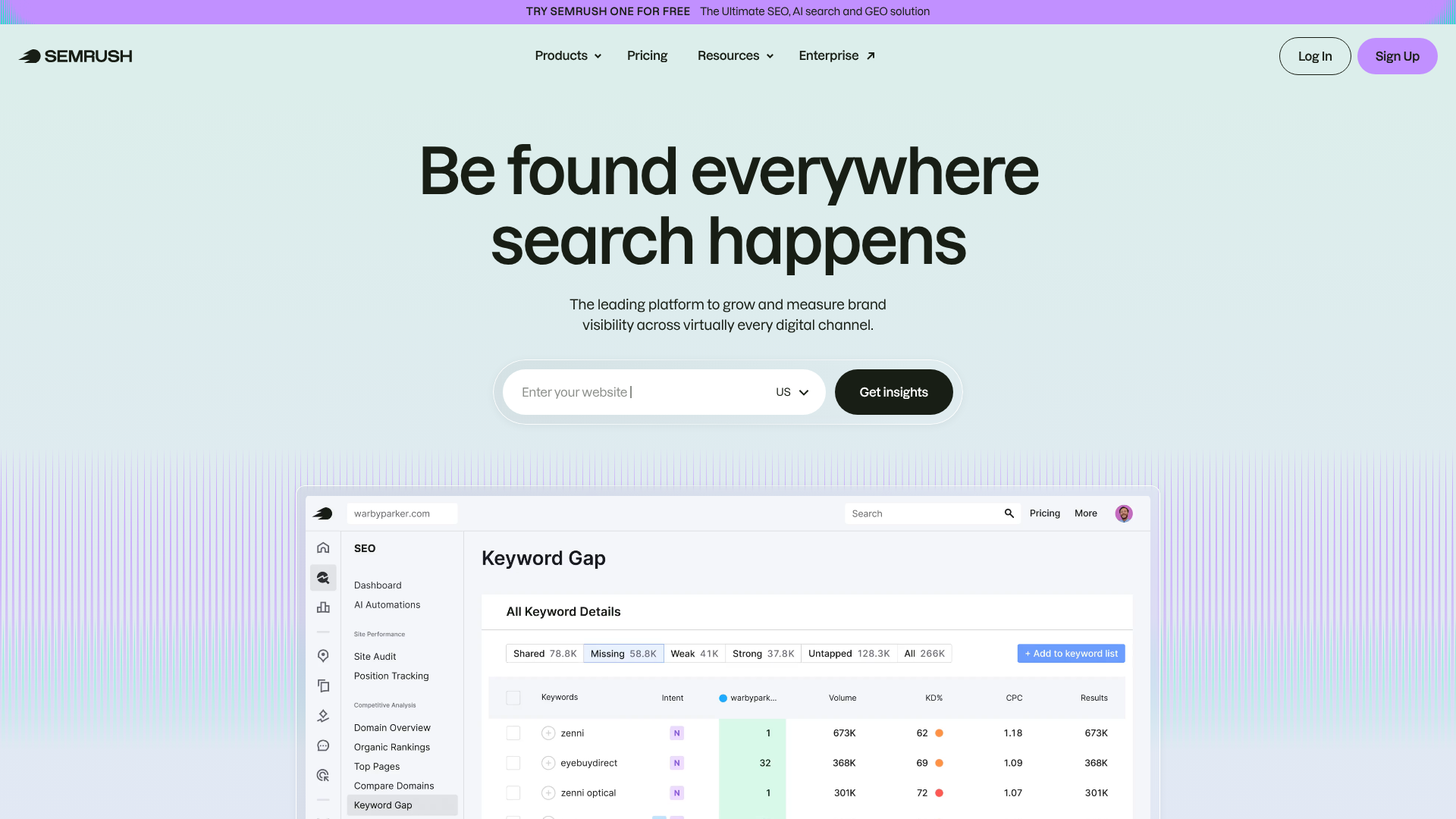
Semrush is best described as a complete online visibility management platform. While it started with a strong focus on SEO and keyword research, it has expanded over the years into a comprehensive suite that caters to nearly every aspect of digital marketing. It's designed to be the central hub for marketers.
The platform is built around several key toolkits: SEO, Advertising, Social Media, Content Marketing, and Competitive Research. This structure allows users to analyse a competitor's entire digital footprint, from their top organic keywords and backlinks to their best-performing Google Ads and social media campaigns. This holistic view is Semrush's main selling point.
Because of its broad functionality, Semrush is favoured by marketing agencies, in-house marketing teams, and enterprise-level businesses that need a single source of truth for performance data across multiple channels. It helps connect the dots between different marketing activities to form a cohesive strategy.
What is Ahrefs?
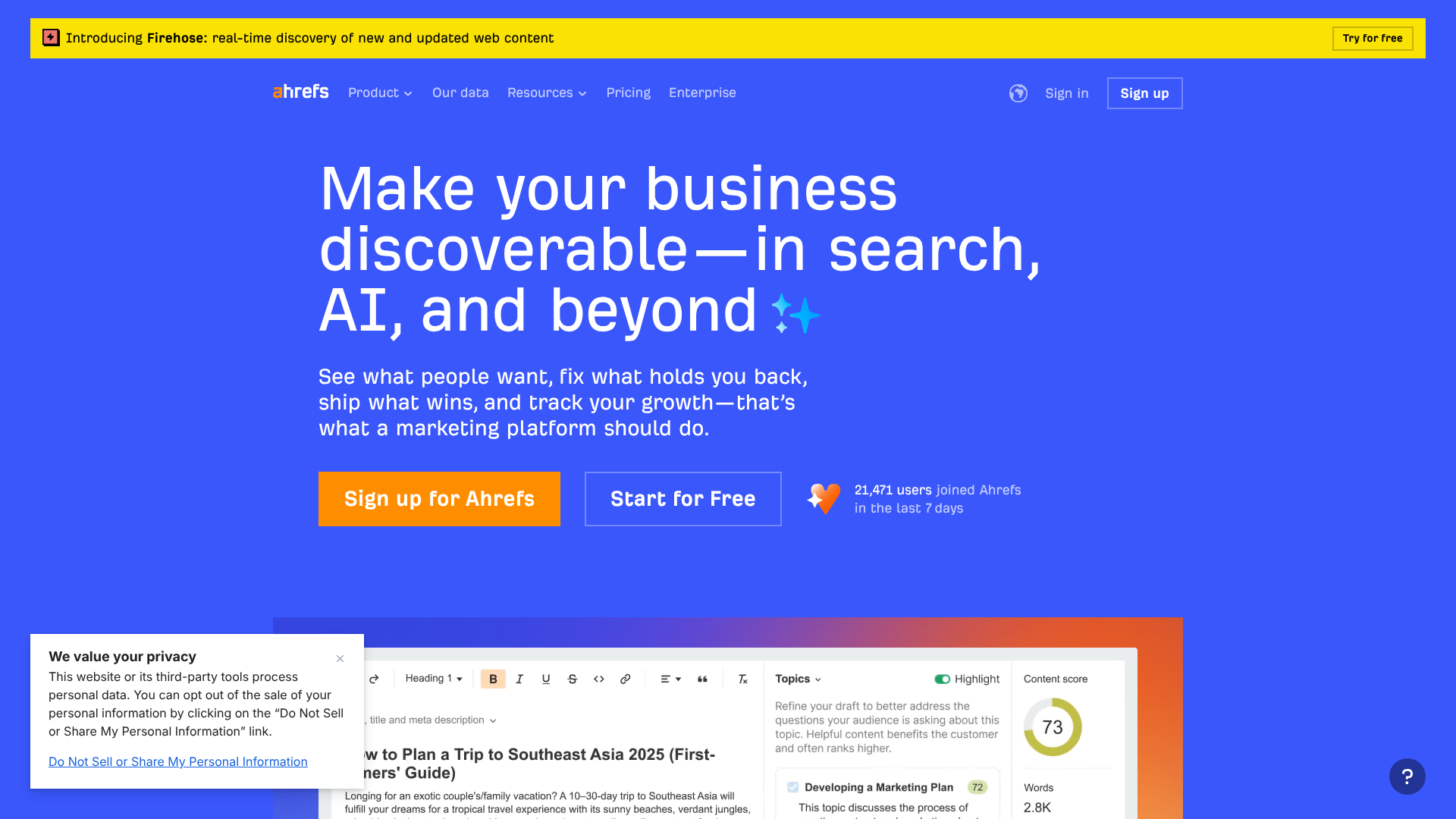
Ahrefs is, first and foremost, an SEO toolset. It has built its reputation on having one of a largest and most accurate backlink indexes in the world, powered by a web crawler that is second only to Google's in terms of size and speed. This makes it an indispensable resource for link building, a cornerstone of modern SEO.
While Ahrefs has added more features over time, such as a powerful Keywords Explorer, a fast Site Audit tool, and a Rank Tracker, its heart remains in SEO data analysis. Its user interface is widely praised for being clean, fast, and intuitive, allowing SEO professionals to find the data they need quickly without unnecessary clutter.
Its target audience consists mainly of SEO specialists, content marketers, and digital PR professionals. These users value the depth and precision of Ahrefs' data for tasks like performing backlink audits, finding high-authority link opportunities, and analysing the SERPs (Search Engine Results Pages) in granular detail.
Semrush vs Ahrefs: A Detailed Feature Comparison
To truly understand the semrush vs ahrefs comparison, we need to look at how their core features stack up against each other. Both tools can perform similar tasks, but their approach, data depth, and user experience vary.
| Feature | Semrush | Ahrefs | Winner |
|---|---|---|---|
| Keyword Research | Massive database, excellent for PPC & content ideas | Highly accurate data, great for multiple search engines | Tie |
| Backlink Analysis | Large database, excellent audit tool | Industry-leading index size and speed | Ahrefs |
| Technical SEO Audit | Comprehensive checks, very user-friendly reports | Extremely fast crawler, great for advanced users | Tie |
| Competitor Analysis | Holistic view (Organic, Paid, Social, Content) | Deep analysis of organic search competitors | Semrush |
| Content Marketing | Full workflow from ideation to optimisation | Powerful content discovery tool | Semrush |
| User Interface | Feature-rich but can be dense | Clean, fast, and highly intuitive | Ahrefs |
Keyword Research: Semrush's Magic Tool vs Ahrefs' Explorer
Keyword research is the foundation of any successful SEO or PPC campaign, and both platforms excel here, albeit with different strengths.
Semrush's Keyword Magic Tool is incredibly powerful, boasting a database of over 25 billion keywords. Its key advantage lies in its advanced filtering capabilities. You can easily sort keywords by search intent (informational, navigational, commercial, transactional), which is invaluable for creating targeted content. It also provides deep integration with its PPC toolkit, offering metrics like cost-per-click (CPC) and competitive density for advertisers.
Ahrefs' Keywords Explorer is celebrated for its data accuracy and clean presentation. It provides a reliable keyword difficulty score that many SEOs trust implicitly. A unique advantage is its ability to pull keyword data from ten different search engines, including Google, YouTube, Amazon, and Bing. This is a massive benefit for content creators who are optimising for platforms beyond traditional web search.
Verdict: It's a tie. Choose Semrush if you're running integrated SEO and PPC campaigns and need deep insights into commercial intent. Choose Ahrefs if your focus is on organic content and you need accurate data across multiple platforms like YouTube.
Backlink Analysis: The Core Battleground
This is where the ahrefs vs semrush debate gets most intense. For years, Ahrefs has been the undisputed king of backlink analysis.
Ahrefs' dominance comes from its proprietary web crawler, which constantly scans the web to update its massive index of live backlinks. This means you get fresher, more accurate data on new and lost links. Its Site Explorer tool is a masterclass in design, presenting complex backlink data in an easy-to-digest format. You can quickly see a website's backlink profile, referring domains, top-linked pages, and anchor text distribution.
Semrush has invested heavily in improving its backlink capabilities and now has a very large database of its own. Its Backlink Audit Tool is a standout feature, automatically assessing the toxicity of your backlink profile and allowing you to create and submit a disavow file directly to Google. This is a fantastic tool for cleaning up a spammy link profile.
Verdict: Ahrefs still holds the crown for the size, speed, and freshness of its backlink data. It's the go-to tool for serious link builders. However, Semrush's audit and analytics tools are excellent for managing and maintaining the health of an existing backlink profile.
Pro Tip: Use Ahrefs for proactive link building and prospecting. Use Semrush's Backlink Audit tool for reactive clean-up and monitoring your site's link health over time. Combining both gives you a complete link management strategy.
Technical SEO & Site Audits
Identifying and fixing technical SEO issues is crucial for ranking well, and both tools offer robust site audit features.
Semrush's Site Audit tool is comprehensive, running over 140 checks on everything from crawlability and HTTPS implementation to site performance and internal linking. Its strength lies in its user-friendliness. It organises issues into clear categories (Errors, Warnings, Notices) and provides helpful tooltips that explain what each issue is and how to fix it, making it accessible even for those who aren't technical SEO experts.
Ahrefs' Site Audit is known for its speed. It's a cloud-based crawler, which means it doesn't use your computer's resources to run. It presents a clear health score and provides detailed reports on all identified issues. For advanced users, the Data Explorer feature is a huge plus, allowing you to create custom filters and reports based on a wide range of data points.
Verdict: Another tie. Semrush is slightly better for beginners or marketing managers who need clear, actionable reports without getting lost in the weeds. Ahrefs is excellent for technical SEOs who want speed and the flexibility to create custom reports.
Competitor Analysis: Beyond Keywords
Understanding your competition is key to winning online, and this is where Semrush truly shines.
Semrush's competitive research toolkit is second to none because it looks beyond organic search. With tools like Traffic Analytics and Market Explorer, you can get estimates of a competitor's website traffic, see their top traffic sources, understand their audience demographics, and identify market-wide trends. Its Advertising Research tool lets you see the exact Google Ads your competitors are running, their ad copy, and the keywords they're bidding on. This 360-degree view is incredibly powerful.
Ahrefs offers strong competitor analysis within the realm of SEO. You can easily identify your main organic competitors, see the keywords they rank for that you don't (Content Gap analysis), and analyse their top-performing pages. This is perfect for reverse-engineering a competitor's SEO and content strategy.
Verdict: Semrush is the clear winner for comprehensive, multi-channel competitor analysis. If you need to understand a competitor's entire digital marketing playbook, not just their SEO, Semrush is the tool to use.
Pricing and Value: A Cost Comparison
Both Semrush and Ahrefs are premium tools with pricing to match. Their plans are structured differently, which can make a direct comparison tricky. The best choice often comes down to your usage patterns and the features you prioritise.
Semrush Pricing Tiers
Semrush typically offers three main plans, aimed at different user types:
- Pro: Designed for freelancers, startups, and in-house marketers with a limited budget. It provides access to all the core tools but with limits on projects, keywords to track, and reports per day.
- Guru: A great fit for small to medium-sized businesses and growing marketing agencies. It offers higher limits, historical data access, and includes the Content Marketing Platform.
- Business: Built for large agencies, e-commerce stores, and enterprises. It comes with much higher limits, API access, and advanced features like Share of Voice metrics.
Semrush's pricing is generally based on the volume of data you can access and the number of reports you can run daily. For the most up-to-date information, it's always best to visit the Semrush website for current pricing.
Ahrefs Pricing Tiers
Ahrefs also offers several tiers, typically Lite, Standard, Advanced, and Enterprise.
- Lite: Suitable for hobbyists or small business owners managing a single site.
- Standard: The most popular plan, aimed at SEO professionals and content marketers.
- Advanced & Enterprise: Designed for agencies and large teams that need to manage many projects and require higher data limits.
A key difference with Ahrefs is its use of a credit system. Many actions within the tool, such as running reports in Site Explorer or pulling fresh data, consume credits. This can make costs less predictable, and heavy users may find themselves needing to purchase additional credits or upgrade their plan sooner than expected. You should check the Ahrefs website for the latest details on their plans and credit system.
Which Offers Better Value?
The question of value depends entirely on your needs. If you need an all-in-one tool that can replace separate subscriptions for PPC research, social media management, and content optimisation, Semrush often provides better overall value. The cost is consolidated into one platform that covers your entire marketing workflow.
If your work is 90% focused on SEO, link building, and organic content strategy, Ahrefs might offer better value. You're paying for the best-in-class data for the specific tasks you perform most often. However, be mindful of the credit system, as intensive usage can lead to higher-than-expected costs.
Pros and Cons: The Quick Verdict

Let's boil down the semrush vs ahrefs comparison into a simple list of strengths and weaknesses for each platform.
Semrush: The All-in-One Marketing Suite
Pros:
- Truly All-in-One: A single platform for SEO, PPC, content, social media, and market research.
- Superior Competitor Intelligence: Unmatched insights into competitors' advertising and overall digital strategy.
- End-to-End Content Workflow: Tools that guide you from topic ideation and creation to optimisation and tracking.
- User-Friendly Reporting: Excellent for creating detailed and easy-to-understand reports for clients or stakeholders.
Cons:
- Can Be Overwhelming: The sheer number of tools and reports can have a steep learning curve for new users.
- Slightly Lagging Backlink Data: While vastly improved, its backlink crawler isn't quite as fast or comprehensive as Ahrefs'.
Ahrefs: The SEO Specialist's Choice
Pros:
- Gold-Standard Backlink Index: The most comprehensive and up-to-date backlink data available.
- Intuitive User Interface: Widely praised for being clean, fast, and a pleasure to use.
- Accurate SEO Metrics: Its Keyword Difficulty and Domain Rating scores are highly trusted in the industry.
- Excellent for Content Research: Keywords Explorer and Content Explorer are fantastic for understanding what content performs well.
Cons:
- Narrower Focus: Lacks the deep PPC, social media, and holistic market research tools of Semrush.
- Restrictive Credit System: Usage limits can be frustrating and lead to unexpected costs for heavy users.
How to Choose: Semrush or Ahrefs for Your Needs?
Your final decision should be based on your role, your team's primary objectives, and your budget. Here are some clear scenarios to help you decide.
Choose Semrush If…
- You're a digital marketing manager or a full-service agency. You need a single tool to manage and report on SEO, PPC, and content marketing campaigns. The ability to see how these channels interact is crucial.
- In-depth competitor analysis is your top priority. You need to know what your competitors are doing across all their digital channels, including their paid ad strategy.
- You want a guided content marketing workflow. The Semrush Content Marketing Platform provides tools that help you at every stage, from finding topics to writing SEO-friendly copy.
- You work in a collaborative team. Semrush's project management and reporting features make it easy to share insights and track progress across a team.
Choose Ahrefs If…
- You are an SEO specialist, consultant, or link builder. Your job revolves around backlinks, technical SEO, and organic search. You need the best data for these specific tasks.
- Link building is a core part of your strategy. Ahrefs' Site Explorer is the best tool on the market for finding and vetting link opportunities.
- You value user experience and speed. You want a tool that is fast, responsive, and lets you find what you need with minimal clicks.
- You create content for platforms like YouTube or Amazon. Ahrefs' ability to research keywords for multiple search engines is a significant advantage.
Frequently Asked Questions (FAQ)
Which is better for keyword research, Semrush or Ahrefs?
Neither is definitively 'better'; they are different. Semrush is excellent for its vast database and its ability to filter keywords by user intent, making it ideal for planning commercial content and PPC campaigns. Ahrefs is praised for its data accuracy and its unique ability to research keywords for platforms beyond Google, such as YouTube and Amazon.
Is Ahrefs more accurate than Semrush?
'Accuracy' can be subjective. Ahrefs is generally considered to have a more accurate and up-to-date backlink index due to its superior web crawler. For keyword search volume, both tools use different data sources and algorithms, leading to slight variations. Many seasoned SEOs develop a preference but use both to get a rounded view.
Can I use Semrush or Ahrefs for free?
Both platforms are premium services. Semrush often offers a limited free trial or a free account with very restricted functionality, allowing you to perform a small number of searches per day. Ahrefs used to have a trial but now offers a set of free tools, like their Backlink Checker and Keyword Generator, which provide a taste of their data but are not a substitute for a paid plan.
Which tool has a better backlink checker?
Ahrefs is widely regarded as having the best backlink checker in the industry. Its crawler is faster and its index of live links is larger and updated more frequently than any competitor. While Semrush has a powerful backlink checker, Ahrefs maintains the edge in this specific area.
Is Semrush worth the money for a small business?
For a small business, Semrush can be an excellent investment if you plan to use its wide range of features. If it replaces the need for separate tools for social media scheduling, PPC analysis, and SEO, it can provide significant value and streamline your marketing efforts. If you only need basic keyword tracking, there may be more affordable options available.
Final Thoughts: The Ultimate Decision
The Semrush vs Ahrefs debate doesn't have a single right answer. Both are exceptional platforms that have earned their place at the top of the industry. The best choice is not the tool with the most features, but the one that best fits your specific workflow, goals, and budget.
To put it simply: Ahrefs is a finely crafted set of specialist tools for the SEO professional. It does its core job—backlink and organic search analysis—better than anyone else. Semrush is a comprehensive, multi-functional marketing army knife, designed for the versatile marketer who needs to conquer multiple fronts at once.
If you're a business looking for a single, powerful platform to manage your entire online visibility strategy—from organic and paid search to content and social media—then Semrush is the most logical and value-packed choice. It provides the breadth and competitive insights needed to build a truly integrated digital marketing plan. If that sounds like the right fit for your goals, you can explore what Semrush has to offer.