


Your Guide to Semrush Competitors Research: 5 Tools to Analyse Rivals
Understanding your competition is fundamental to building a successful digital strategy. Performing thorough semrush competitors research allows you to see what's working for others in your niche, identify gaps in their strategy, and find opportunities to outperform them. While Semrush is a powerhouse in the SEO and marketing world, it's not the only option available. Choosing the right tool depends on your specific goals, budget, and the type of data you need to make informed decisions.
- What You'll Learn
- What is Semrush Competitor Analysis and Why Does It Matter?
- A Deep Look into Semrush's Competitor Research Toolkit
- Domain Overview: The 30,000-Foot View
- Traffic Analytics: Deconstructing Competitor Traffic
- Organic Research: Uncovering SEO Secrets
- Advertising Research: Spying on Paid Campaigns
- Keyword and Backlink Gap Analysis: Finding Your Opportunities
- The Top 5 Semrush Competitors for Comprehensive Research
- 1. Ahrefs: The Backlink Analysis Powerhouse
- 2. SimilarWeb: The Market Intelligence Leader
- 3. SE Ranking: The Affordable All-in-One Solution
- 4. SpyFu: The PPC Specialist
- 5. Moz Pro: The Local SEO Champion
- Feature Comparison: Semrush vs. The Competition
- How to Choose the Right Competitor Research Tool for Your Business
- Define Your Primary Goal (SEO, PPC, or Market Research?)
- Consider Your Budget and Team Size
- Evaluate Data Accuracy and Freshness
- Look for User-Friendliness and Reporting Features
- Frequently Asked Questions (FAQ)
- What makes Semrush good for competitive analysis?
- Can I do competitor research for free?
- How accurate is Semrush's competitor data?
- Which is better for competitor research, Semrush or Ahrefs?
- Final Thoughts: Making Your Decision
This guide provides a deep look into Semrush's competitor analysis capabilities and then explores the top five alternatives on the market. We'll compare their features, strengths, and ideal use cases to help you select the perfect platform for your business. Whether you're a seasoned SEO professional, a PPC manager, or a business owner trying to gain a competitive edge, you'll find the insights needed to make the right choice.
What You'll Learn
- Semrush's Core Strengths: Understand the key features that make Semrush a top choice for competitor analysis, from traffic analytics to keyword gap tools.
- Top 5 Alternatives: Discover the best Semrush competitors, including Ahrefs, SimilarWeb, SE Ranking, SpyFu, and Moz Pro, and learn what makes each one unique.
- Feature-by-Feature Comparison: See a direct comparison of Semrush against its rivals on critical metrics like backlink data, keyword databases, and pricing models.
- How to Choose: Get a clear framework for selecting the right tool based on your specific business goals, whether it's SEO, PPC, or broad market intelligence.
What is Semrush Competitor Analysis and Why Does It Matter?
Semrush competitor analysis is the process of using the Semrush suite of tools to gather intelligence on your rivals' digital marketing strategies. It’s not just about seeing who ranks for a specific keyword; it's a comprehensive examination of their entire online presence. This includes their organic search performance, paid advertising campaigns, backlink profile, content strategy, and overall market share. By dissecting these elements, you can reverse-engineer their success and avoid their mistakes.
This process is crucial because the digital marketplace is incredibly crowded. Without a clear understanding of what your competitors are doing, you're essentially operating in the dark. A detailed semrush rival research provides a roadmap. It helps you answer critical questions: Which keywords are driving the most traffic to my competitors.
Where are they getting their most valuable backlinks. What kind of ad copy are they using in their PPC campaigns. Are there profitable keywords they are missing that I can target.
Ultimately, the goal is to gain a competitive advantage. By identifying gaps in the market, you can create content that fills those voids, target keywords that are less competitive but still valuable, and build a backlink strategy that mirrors the success of top players. This data-driven approach removes guesswork from your marketing efforts, allowing you to allocate resources more effectively and achieve a higher return on investment. It transforms your strategy from reactive to proactive, putting you in control.
A Deep Look into Semrush's Competitor Research Toolkit
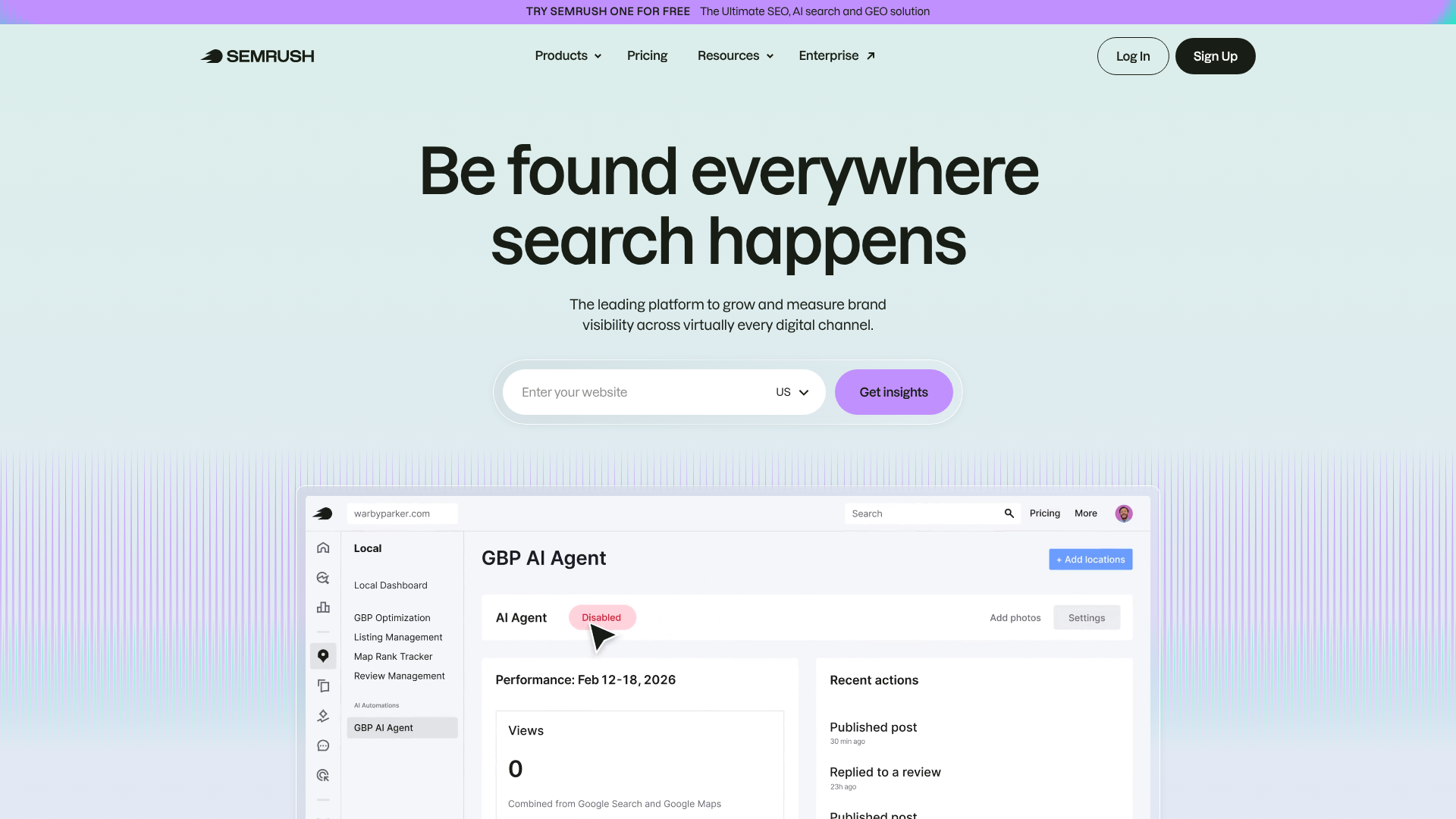
Semrush offers a vast array of tools designed specifically for deep-diving into your competitors' strategies. These tools work together to provide a 360-degree view of any domain's online performance. Understanding these core features is the first step to mastering competitors research in Semrush.
Domain Overview: The 30,000-Foot View
The Domain Overview report is your starting point. You simply enter a competitor's domain, and Semrush provides a high-level dashboard of their key metrics. This includes their Authority Score, estimated monthly organic and paid traffic, and the total number of backlinks. It also shows top organic keywords, main organic competitors, and a visual breakdown of their traffic by country.
This report is perfect for a quick health check on a competitor or for identifying your main rivals in the search results.
Traffic Analytics: Deconstructing Competitor Traffic
While Domain Overview provides estimates, Traffic Analytics offers a more detailed look at a website's traffic. It breaks down visits, unique visitors, pages per visit, and bounce rate. More importantly, it reveals the traffic sources: direct, referral, search, social, and paid. This allows you to see exactly where your competitors are getting their audience from.
Are they heavily reliant on Google, or do they have a strong referral network. This insight is invaluable for shaping your own traffic acquisition strategy.
Organic Research: Uncovering SEO Secrets
This is where you can truly dissect a competitor's SEO performance. The Organic Research tool shows you every keyword a domain ranks for in Google's top 100 results. You can see the keyword, its monthly search volume, the ranking position, the estimated traffic it generates, and the specific URL that ranks. You can filter for keywords that have recently improved or declined in rankings, helping you spot trends and opportunities to target their weakening positions.
Advertising Research: Spying on Paid Campaigns
If your competitors are running Google Ads, the Advertising Research tool is your window into their PPC strategy. It reveals the keywords they are bidding on, the ad copy they are using, and the landing pages their ads point to. You can even view their historical ad data to see which campaigns they've run over time. This information is a goldmine for refining your own paid search campaigns, helping you write more effective ad copy and discover profitable keywords you might have missed.
Keyword and Backlink Gap Analysis: Finding Your Opportunities
The Gap Analysis tools are where strategy truly comes to life. The Keyword Gap tool lets you compare your domain against up to four competitors side-by-side. It will show you keywords that your competitors rank for, but you don't. This is the fastest way to find new content ideas and SEO opportunities.
Similarly, the Backlink Gap tool shows you websites that link to your competitors but not to you, providing a ready-made list of high-value outreach targets for your link-building campaigns.
The Top 5 Semrush Competitors for Comprehensive Research
While Semrush is an excellent all-in-one platform, several other tools offer powerful features, sometimes with a more specialised focus. Depending on your primary needs—be it backlink analysis, market intelligence, or PPC research—one of these alternatives might be a better fit for your team.
1. Ahrefs: The Backlink Analysis Powerhouse
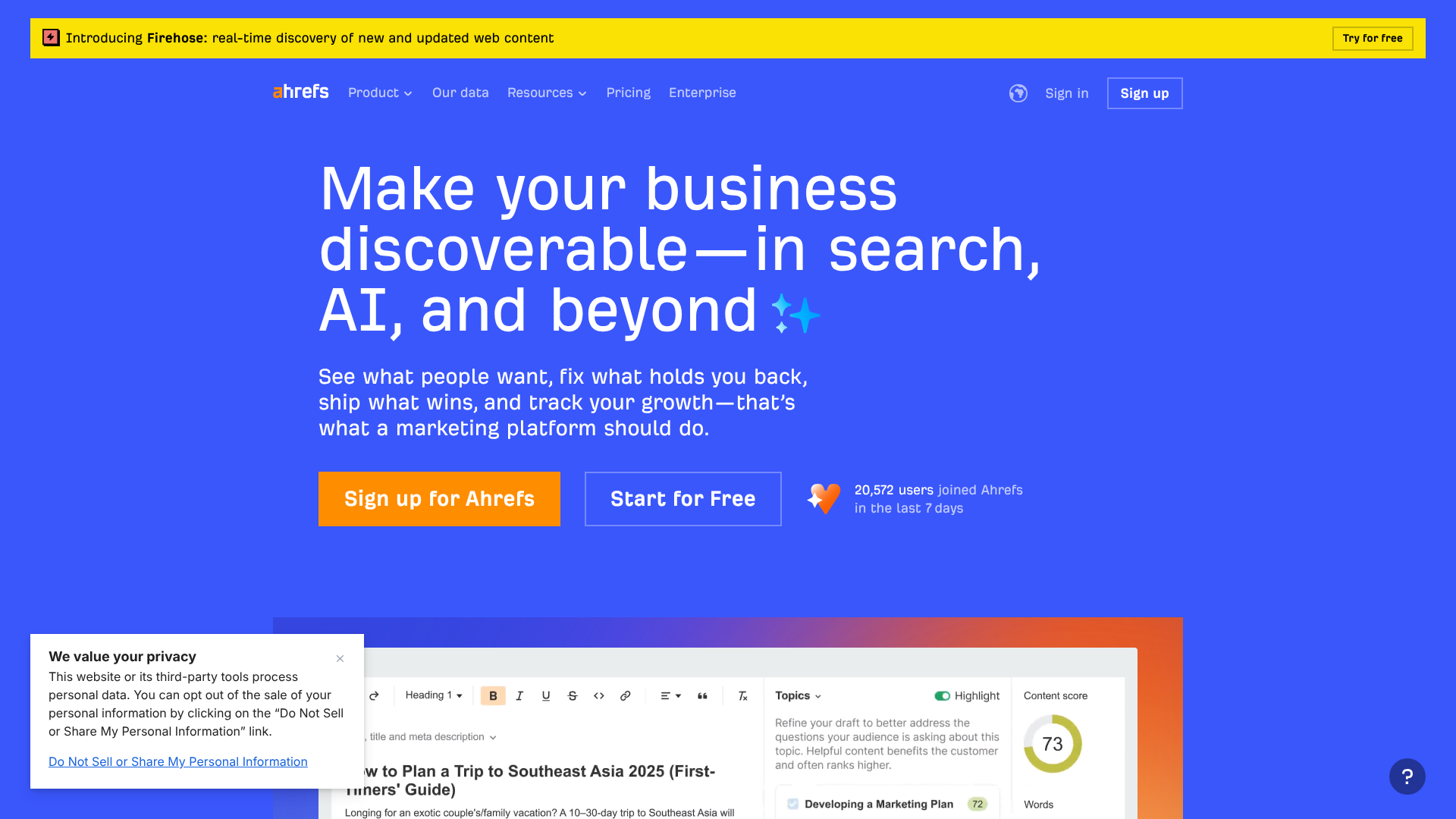
Ahrefs is arguably Semrush's closest and most direct competitor. It started as a backlink analysis tool and still boasts one of the largest and most accurate backlink indexes in the industry. If your competitor research is heavily focused on link building and understanding authority, Ahrefs is a formidable choice.
Its 'Site Explorer' tool is the equivalent of Semrush's Domain Overview but is often praised for the depth of its backlink data. You can see new, lost, and broken backlinks, referring domains, and anchor text distribution with incredible detail. The 'Content Gap' feature, similar to Semrush's Keyword Gap, is excellent for finding topics your competitors cover that you don't.
Pros
- Superior Backlink Index: Widely considered to have the most comprehensive and up-to-date backlink database.
- Intuitive User Interface: The platform is clean, fast, and easy to navigate, making complex data accessible.
- Powerful Content Research Tools: 'Content Explorer' helps you find popular content in any niche, analysing social shares and traffic.
Cons
- Higher Price Point: Ahrefs' entry-level plan is more expensive than some competitors, which can be a barrier for small businesses.
- Limited PPC Data: While it has PPC features, they are not as detailed or extensive as those found in Semrush or SpyFu.
Pricing
- Ahrefs offers several tiers, typically starting from around $99/month for its 'Lite' plan. Visit the Ahrefs website for the most current pricing information.
Best for:
- SEO professionals and agencies whose primary focus is on backlink analysis, link building, and content-driven SEO strategies.
2. SimilarWeb: The Market Intelligence Leader
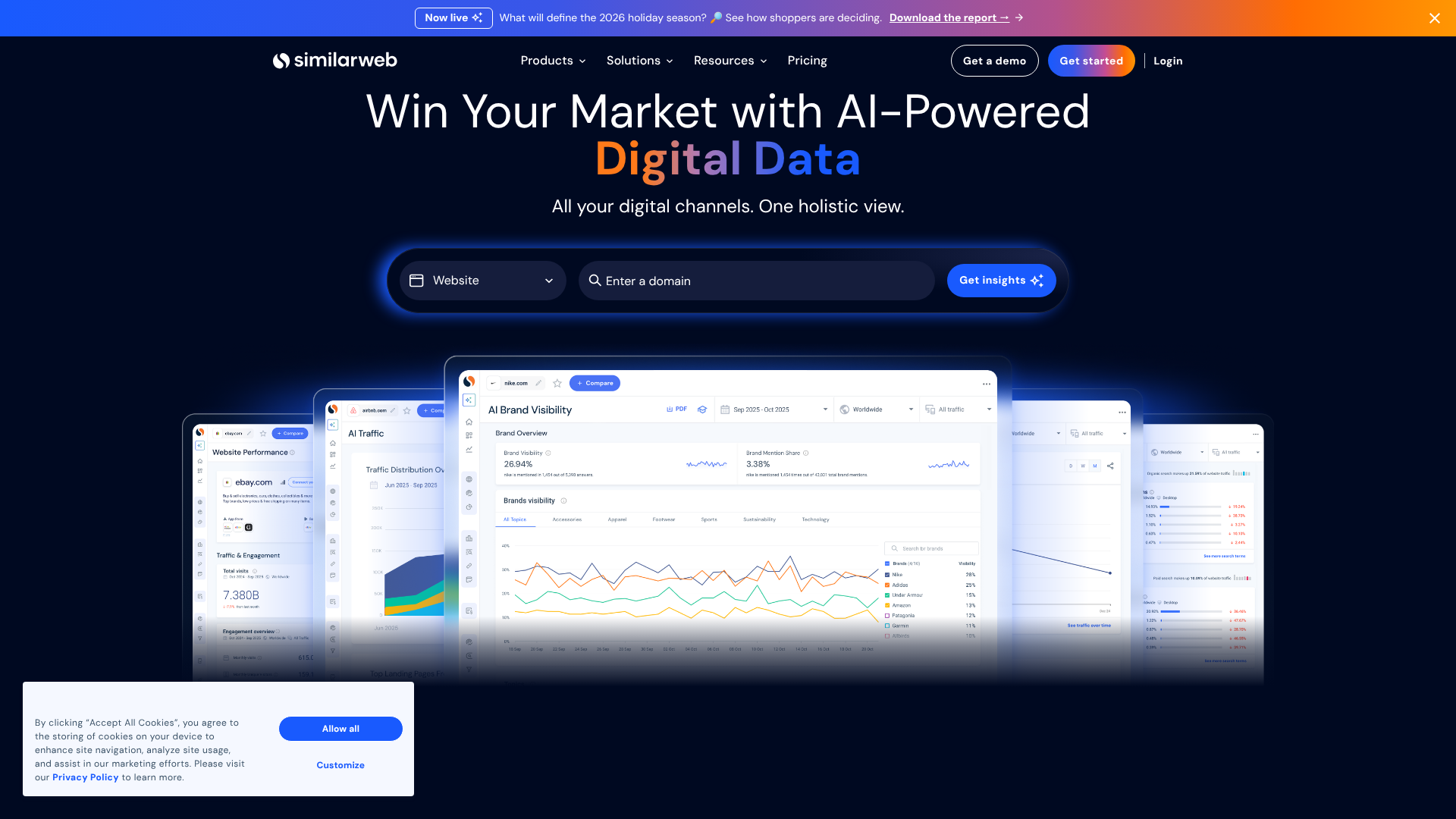
SimilarWeb takes a different approach to competitor research. While Semrush and Ahrefs are SEO-centric, SimilarWeb focuses on broader market and traffic intelligence. It provides highly accurate data on website traffic, audience demographics, and user engagement metrics across entire industries, not just for specific keywords.
Its strength lies in its ability to show you the bigger picture. You can analyse traffic share within a specific market, identify emerging trends, and understand audience interests and behaviour. For example, you can see which other websites your competitor's audience frequently visits. This is invaluable for strategic planning, partnership identification, and understanding the customer journey.
Pros
- Excellent Traffic Data Accuracy: Often considered the gold standard for estimating website traffic and engagement metrics.
- Audience Insights: Provides deep demographic and psychographic data about a competitor's audience.
- Broad Market Analysis: Allows you to analyse entire industries and markets, not just individual domains.
Cons
- Very Expensive: SimilarWeb's full capabilities are geared towards enterprise clients, with pricing that reflects this.
- Less SEO-Specific: It lacks the granular keyword ranking and technical SEO features of Semrush or Ahrefs.
Pricing
- SimilarWeb has a limited free version. Paid plans are custom-quoted and are significantly more expensive than typical SEO tools. Contact their sales team for a quote.
Best for:
- Market researchers, enterprise-level businesses, and investors who need high-level market intelligence and accurate traffic data rather than granular SEO metrics.
3. SE Ranking: The Affordable All-in-One Solution
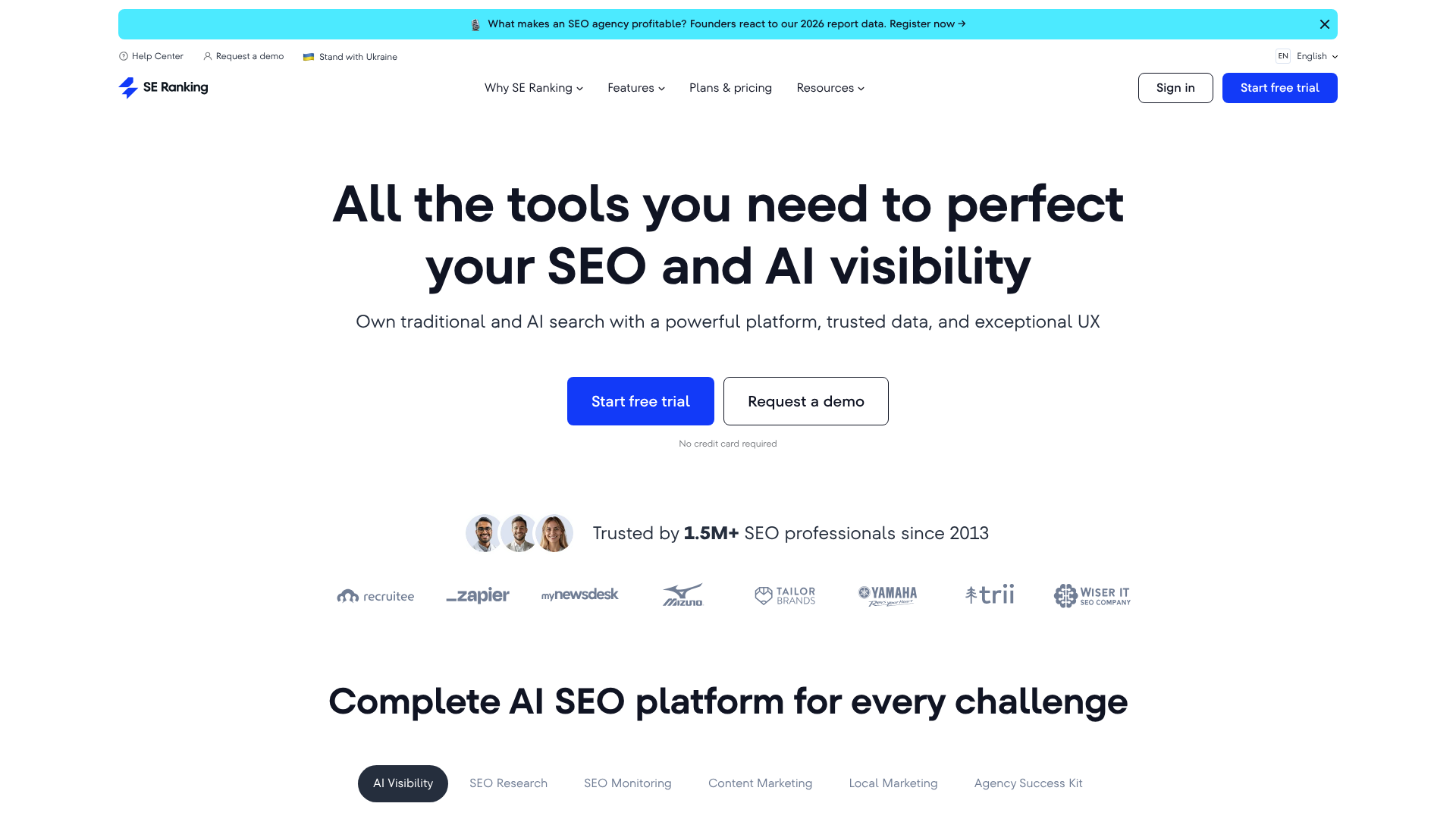
SE Ranking positions itself as a versatile and affordable all-in-one SEO platform, making it an excellent Semrush alternative for small businesses, freelancers, and agencies on a tighter budget. It offers a surprisingly comprehensive set of features for its price point, including competitor research, rank tracking, site audits, and backlink analysis.
Its competitor research tool allows you to analyse any website's organic and paid traffic, see their top keywords, and compare their performance against your own. While its data indexes may not be as vast as Semrush's or Ahrefs', the platform provides more than enough information for effective analysis and strategy development. The pricing model is also highly flexible, based on the frequency of rank tracking checks and the number of keywords.
Pros
- Cost-Effective: Offers a robust feature set at a fraction of the cost of premium competitors.
- Flexible Pricing: Plans can be customised to fit your specific needs and budget.
- Comprehensive Toolset: Includes features for SEO, PPC, and social media management in one platform.
Cons
- Smaller Data Indexes: Its keyword and backlink databases are not as extensive as those of Semrush or Ahrefs.
- Interface Can Be Cluttered: With so many features packed in, the user interface can sometimes feel less intuitive.
Pricing
- SE Ranking's plans are highly customisable, with prices starting as low as £40/month. Check their website for a personalised quote based on your needs.
Best for:
- Small to medium-sized businesses, startups, and marketing agencies looking for a powerful, budget-friendly, all-in-one SEO and competitor research tool.
4. SpyFu: The PPC Specialist
As its name suggests, SpyFu excels at 'spying' on competitors, with a particular emphasis on PPC advertising. If your primary goal is to understand and outperform your rivals in Google Ads, SpyFu is one of the best tools for the job. It has been collecting search marketing data for over 15 years, giving it a deep historical perspective.
You can enter any domain and see every keyword they've ever bought on Google, every ad they've ever run, and every ad variation they've tested. Its 'Kombat' feature is a standout, providing a simple visual comparison of your paid and organic keyword universe against two competitors. It clearly shows keywords your competitors are bidding on that you aren't, making it incredibly easy to spot opportunities.
Pros
- Exceptional PPC Data: Offers some of the most detailed and historical PPC competitor data available.
- Affordable and Unlimited: Most plans offer unlimited data exports and searches, which is rare in this space.
- Strong Lead Generation Features: Includes tools to find potential sales leads based on their advertising behaviour.
Cons
- Weaker on the SEO Side: While it has SEO features, its backlink and organic keyword data are less comprehensive than Semrush.
- Data Accuracy Can Vary: Some users report discrepancies in traffic estimates compared to other platforms.
Pricing
- SpyFu's pricing is very competitive, with plans typically starting around $39/month. Visit their website for the latest details.
Best for:
- PPC managers, digital advertising agencies, and businesses that rely heavily on paid search to drive growth.
5. Moz Pro: The Local SEO Champion
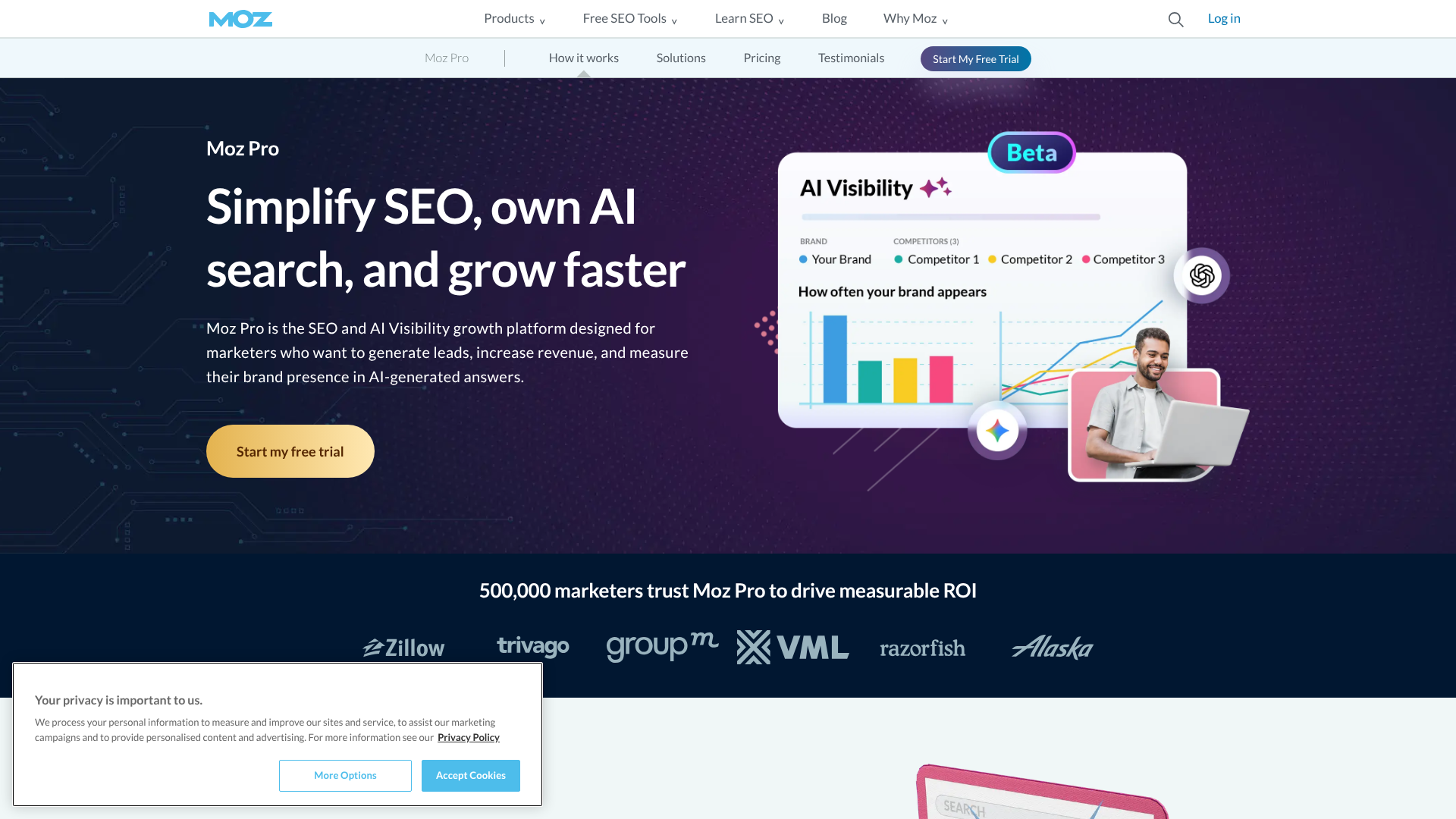
Moz is one of the original players in the SEO software space, known for popularising metrics like Domain Authority (DA). Moz Pro is its all-in-one SEO toolkit that offers solid competitor research features, particularly for businesses focused on local search and building brand authority.
Its 'Keyword Explorer' is excellent for keyword research and provides a unique 'Priority Score' to help you choose the best targets. The 'Link Explorer' tool is powered by a substantial backlink index and is great for analysing competitor link profiles. Where Moz Pro shines for many is its integration with Moz Local, making it a strong choice for businesses that need to manage and optimise their local business listings alongside their national SEO efforts.
Pros
- Strong Educational Resources: Moz offers one of the best blogs and learning centres for SEO.
- Excellent for Local SEO: Strong integration with local search management tools.
- Reliable and Trusted Metrics: Domain Authority (DA) is a widely used industry metric for gauging website strength.
Cons
- Slower to Innovate: Some users feel the toolset hasn't evolved as quickly as competitors like Semrush and Ahrefs.
- Interface Feels Dated: The user interface isn't as modern or fast as some of the other platforms.
Pricing
- Moz Pro plans typically start at $99/month. Check their website for current plans and features.
Best for:
- Small businesses with a local focus, SEO beginners who can benefit from its educational resources, and marketers who rely on the Domain Authority metric.
Feature Comparison: Semrush vs. The Competition
Choosing a tool often comes down to which one excels in the features that matter most to you. A platform might have the biggest keyword database, but that's irrelevant if you only care about PPC ad copy. This table breaks down how Semrush stacks up against its main rivals in key areas.

| Feature | Semrush | Ahrefs | SimilarWeb | SE Ranking | SpyFu |
|---|---|---|---|---|---|
| Primary Focus | All-in-One SEO & Marketing | SEO & Backlink Analysis | Market & Traffic Intelligence | All-in-One SEO (Budget) | PPC & Keyword Research |
| Backlink Index | Very Large | Industry Leading | N/A | Good | Average |
| Keyword Database | Industry Leading | Very Large | Limited | Good | Good |
| PPC Research | Excellent | Average | Good | Good | Excellent |
| Traffic Analytics | Excellent (Add-on) | Good | Industry Leading | Good | Average |
| Ease of Use | Good | Excellent | Good | Good | Excellent |
| Starting Price | ~$129/month | ~$99/month | Custom (Enterprise) | ~£40/month | ~$39/month |
This comparison highlights the strategic positioning of each tool. Semrush and SE Ranking aim to be the all-in-one solution for different budget levels. Ahrefs doubles down on being the best for SEO-focused research, while SpyFu and SimilarWeb dominate the PPC and market intelligence niches, respectively.
Pro Tip: Don't just look at the size of a tool's database. Consider the freshness and accuracy of the data. A smaller, more up-to-date index is often more valuable than a massive but stale one. Many of these tools offer free trials, which are perfect for running the same competitor analysis on each platform to see which one gives you the most actionable insights.
How to Choose the Right Competitor Research Tool for Your Business
With so many powerful options, selecting the right one can feel overwhelming. The best tool is the one that aligns with your specific goals, workflow, and budget. Use these factors as a framework to guide your decision.
Define Your Primary Goal (SEO, PPC, or Market Research?)
First, be honest about what you need to achieve. Are you primarily focused on improving your organic search rankings. If so, a tool with a strong backlink and keyword database like Ahrefs or Semrush is essential. Is your main objective to optimise your Google Ads budget.
Then a PPC-focused tool like SpyFu might provide the most immediate value. If you're making high-level strategic decisions about entering a new market, the broad intelligence from SimilarWeb would be most appropriate. Your primary goal should be the biggest factor in your decision.
Consider Your Budget and Team Size
Your budget is a practical constraint that will immediately narrow your options. Tools like SpyFu and SE Ranking are built for smaller businesses and solo entrepreneurs, offering immense value without a hefty price tag. Platforms like Semrush and Ahrefs are mid-tier, ideal for growing businesses and agencies. SimilarWeb is at the enterprise level.
Also, consider your team. A simple, intuitive tool might be better for a small team where everyone wears multiple hats, while a complex platform might be fine for a team with dedicated analysts.
Evaluate Data Accuracy and Freshness
Actionable insights depend on accurate data. This can be difficult to judge from the outside, but free trials are your best friend here. Run a few of your own domains or well-known competitors through each tool you're considering. Compare the traffic estimates, keyword rankings, and backlink counts.
Do they seem reasonable. How frequently does the tool update its data. For fast-moving industries, a tool that crawls the web more frequently will give you a significant advantage.
Look for User-Friendliness and Reporting Features
The most powerful data in the world is useless if you can't understand it or share it with your team or clients. A clean, intuitive user interface is critical. Can you find the information you need quickly. Are the charts and graphs easy to interpret.
Furthermore, evaluate the reporting capabilities. Does the tool allow you to create custom, white-label reports. Can you schedule reports to be sent automatically. Strong reporting features save time and make it easier to demonstrate the value of your work.
Frequently Asked Questions (FAQ)
What makes Semrush good for competitive analysis?
Semrush is excellent for competitive analysis because of its comprehensive, all-in-one toolset. It allows you to analyse a competitor's SEO, PPC, content, and social media strategies from a single dashboard. Its standout features, like the Keyword Gap and Backlink Gap tools, provide highly actionable data by directly comparing your profile against your rivals to instantly reveal opportunities.
Can I do competitor research for free?
Yes, you can perform basic competitor research for free, but the data will be limited. Most of the tools mentioned, including Semrush, offer free trials or limited free accounts. These allow you to run a small number of reports per day. While not enough for ongoing, in-depth analysis, a free trial is a perfect way to test a platform's capabilities and see if it's a good fit for your needs before committing to a paid plan.
How accurate is Semrush's competitor data?
Semrush's data is among the most accurate in the industry, derived from a massive database of keywords and domains. However, it's important to remember that all third-party SEO tools provide estimates, not exact figures. Their traffic data is calculated using clickstream data and algorithms based on keyword search volume and ranking positions. It's best to use this data for trends, comparisons, and relative performance rather than as an absolute, exact measure of a competitor's traffic.
Which is better for competitor research, Semrush or Ahrefs?
This is a common question, and the answer depends on your focus. If your primary need is deep backlink analysis and link-building research, many SEO professionals give Ahrefs a slight edge due to its superior backlink index. However, if you need a more balanced tool that provides equally strong insights into both SEO and PPC advertising, Semrush is generally considered the better all-around choice. Semrush's toolkit for analysing paid search campaigns is significantly more robust than Ahrefs'.
Final Thoughts: Making Your Decision
Choosing the right tool for competitor research is a critical step in building a winning digital strategy. While Semrush offers an incredibly powerful and well-rounded platform that serves the needs of most businesses, it's essential to recognise that the 'best' tool is subjective and depends entirely on your unique goals and resources.
If you need an all-in-one solution that excels at both SEO and PPC analysis, Semrush remains a top-tier choice. For those who live and breathe link building, Ahrefs presents a compelling alternative with its best-in-class backlink data. For businesses on a tighter budget, SE Ranking provides a surprisingly comprehensive feature set without the premium price tag, while SpyFu is the undisputed specialist for anyone looking to dominate paid search.
Your best next step is to identify your single most important research need and start a free trial with the tool that specialises in that area. By testing these platforms with your own data, you'll quickly see which one provides the clarity and insights you need to outmanoeuvre your competition and achieve your business objectives.