
Semrush Competitors Research: A 2026 Guide for Marketers
Understanding your competition is fundamental to building a successful digital strategy. Conducting thorough semrush competitors research provides the data-driven insights needed to identify opportunities, mitigate threats, and ultimately outperform others in your niche. This process involves using specialised tools to analyse your rivals' SEO, content, advertising, and social media performance, giving you a clear roadmap for your own marketing efforts.
- What You'll Learn
- What is Competitor Research and Why Does It Matter?
- A Deep Dive into Semrush's Competitor Research Toolkit
- Traffic Analytics
- Organic Research & Keyword Gap
- Backlink Analytics & Backlink Gap
- Advertising Research
- How to Conduct a Full Semrush Competitor Analysis (Step-by-Step)
- 1. Identify Your True Competitors
- 2. Analyse Their Website Traffic
- 3. Uncover Their Top Organic Keywords
- 4. Audit Their Backlink Profile
- 5. Deconstruct Their Paid Advertising Strategy
- Top Semrush Alternatives for Competitor Research
- Feature Comparison: Semrush vs. The Alternatives
- How to Choose the Right Competitor Analysis Tool
- Frequently Asked Questions
- Is Semrush good for competitor analysis?
- How accurate is Semrush competitor data?
- Can I do competitor research for free?
- What is the best Semrush alternative?
- Final Thoughts
Semrush stands out as a comprehensive suite for this task, offering a powerful set of features designed to deconstruct any competitor's online footprint. From uncovering their most profitable keywords to analysing their backlink profiles, Semrush equips marketers with the intelligence to make smarter decisions. This guide will walk you through exactly how to perform a detailed semrush competitor analysis and explore the best alternatives if you're considering other options.
What You'll Learn
- The Core of Competitor Research: Understand what a competitor analysis involves and why it's a critical component of any modern marketing strategy.
- Semrush's Key Features: Discover the specific tools within Semrush, such as Traffic Analytics and Keyword Gap, that are essential for deep competitor insights.
- Step-by-Step Analysis: Learn a repeatable process for using Semrush to analyse competitor traffic, keywords, backlinks, and paid ad campaigns.
- Top Semrush Alternatives: Explore the strengths and weaknesses of leading competitor analysis tools like Ahrefs, Moz Pro, and SpyFu for different use cases.
- Making the Right Choice: Get clear guidance on how to select the best tool based on your budget, team size, and specific marketing goals.
What is Competitor Research and Why Does It Matter?
Competitor research is the process of identifying who your key competitors are and evaluating their strategies to determine their strengths and weaknesses relative to your own brand. It's not about copying what others are doing; it's about gathering intelligence to find gaps in the market, anticipate shifts in your industry, and make more informed strategic decisions. In the digital realm, this means looking at everything from their website traffic and search engine rankings to their social media engagement and advertising spend.
Ignoring your competitors is like navigating without a map. You might be moving forward, but you have no context for where you are in relation to everyone else. A solid analysis provides this context, helping you benchmark your performance and set realistic goals. For instance, if you discover a competitor is ranking for a high-value keyword that you've overlooked, you've just found a new opportunity for your content strategy.
Conversely, if you see a rival's traffic suddenly spike, you can investigate the cause—perhaps a successful PR campaign or a new product launch—and prepare your response.
Modern competitor analysis tools have transformed this process from guesswork into a data-driven science. Instead of manually searching for competitor content or ads, these platforms aggregate vast amounts of data, allowing you to see exactly which keywords drive their traffic, where they get their backlinks from, and how much they're spending on PPC ads. This level of insight is invaluable for crafting a strategy that not only competes but dominates.

A Deep Dive into Semrush's Competitor Research Toolkit
Semrush is often considered an all-in-one digital marketing platform, and its capabilities for competitor research are extensive. It doesn't just offer one tool but an entire ecosystem of interconnected features that provide a 360-degree view of your competition. Understanding these core components is the first step to mastering semrush competitor analysis.
Traffic Analytics
This is your starting point for understanding a competitor's overall digital health. The Traffic Analytics tool provides estimates of a website's total traffic, including key metrics like unique visitors, pages per visit, and bounce rate. More importantly, it breaks down the sources of that traffic: direct, referral, search, social, and paid. This allows you to see, for example, if a competitor relies heavily on organic search or if they have a robust referral network driving visitors to their site. You can compare up to five domains side-by-side to benchmark your performance directly against your main rivals.
Organic Research & Keyword Gap
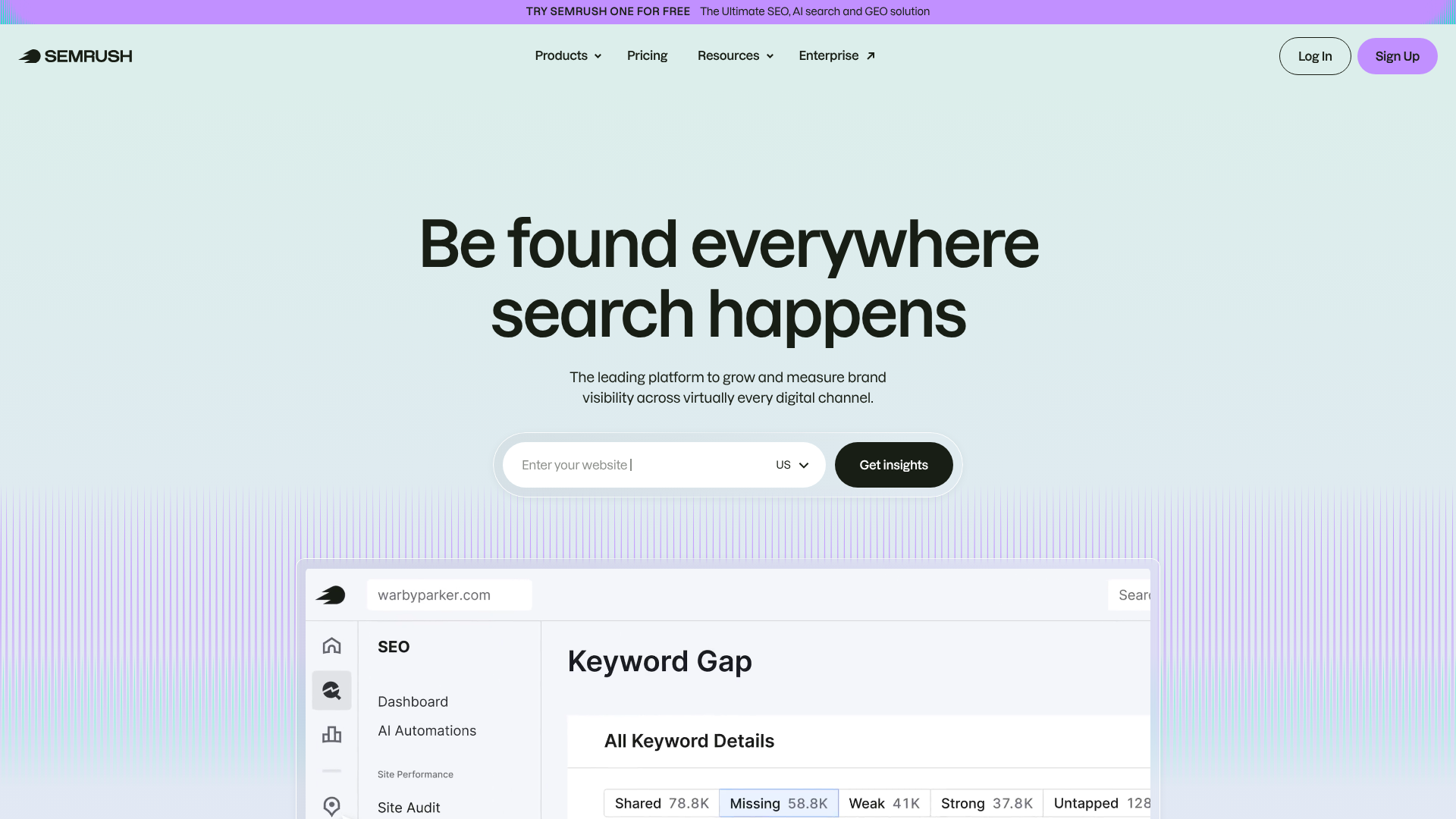
To win at SEO, you need to know which keywords your competitors are ranking for. The Organic Research tool shows you every single keyword a domain ranks for in Google's top 100 results. You can see their ranking position, the estimated traffic each keyword generates, and the difficulty of ranking for it yourself. The real power comes from the Keyword Gap tool, where you can compare your domain against up to four competitors. It instantly reveals keywords that your competitors rank for but you don't, highlighting valuable, untapped opportunities for your content team to target.
Backlink Analytics & Backlink Gap
Backlinks remain a crucial ranking factor, and analysing a competitor's backlink profile can reveal their content marketing and digital PR strategies. The Backlink Analytics tool gives you a complete list of a competitor's backlinks, showing you which high-authority sites are linking to them. You can filter by domain authority, link type (e.g., text, image), and more. Similar to the Keyword Gap tool, the Backlink Gap tool compares your profile to your competitors', identifying websites that link to them but not to you. This creates a ready-made list of high-value outreach targets for your link-building campaigns.
Advertising Research
If you're running paid search campaigns, understanding your competitors' PPC strategy is essential for optimising your budget and ad copy. The Advertising Research tool provides a treasure trove of information. You can see the keywords your competitors are bidding on, view their live ad copy, and estimate their monthly PPC budget. This insight helps you identify gaps in their strategy, find less competitive keywords to bid on, and write more compelling ads that stand out on the search results page.
How to Conduct a Full Semrush Competitor Analysis (Step-by-Step)
Knowing the tools is one thing; using them in a systematic way is another. A structured approach ensures you cover all bases and extract the most actionable insights. Here’s a step-by-step guide to performing a comprehensive competitor analysis using Semrush.
1. Identify Your True Competitors
First, you need to be sure you're analysing the right rivals. Your real-world business competitors might not be your main online search competitors. In Semrush, navigate to the Organic Research tool and enter your domain. Go to the 'Competitors' tab. Semrush will generate a list of domains that compete with you for the same organic keywords, which is a far more accurate way to identify your digital rivals.
2. Analyse Their Website Traffic
Once you have your list of top 3-5 competitors, head over to the Traffic Analytics tool. Enter your domain and your competitors' domains. This will give you a high-level overview, comparing total visits, traffic sources, and engagement metrics. Pay close attention to the Traffic Sources chart. Is a competitor getting a huge amount of referral traffic? Click on it to see which sites are sending them visitors—this could reveal potential partnership opportunities for you.
3. Uncover Their Top Organic Keywords
Next, use the Keyword Gap tool. Enter your domain and up to four competitors. The tool will generate several helpful reports. Start with the 'Missing' tab to see keywords your competitors rank for that you don't. Then, check the 'Weak' tab for keywords where your competitors outrank you. Export these lists; they are your content roadmap for the next few months. Focus on keywords with high search volume and manageable keyword difficulty.
4. Audit Their Backlink Profile
Now, move to the Backlink Gap tool. Again, enter your domain and your competitors'. The tool will show you domains that link to your rivals but not to you. This is link-building gold. These websites have already shown a willingness to link to sites in your niche. Your job is to figure out why they linked to your competitor and create content or an outreach pitch that is even more compelling.
Pro Tip: When analysing competitor backlinks, don't just look at the quantity; focus on quality. A single link from a highly authoritative and relevant website is worth more than hundreds of low-quality links. Use Semrush's Authority Score (AS) to filter for the most valuable link-building targets.
5. Deconstruct Their Paid Advertising Strategy
Finally, if paid ads are part of your strategy, go to the Advertising Research tool. Enter a competitor's domain. You'll see their estimated ad spend, the keywords they're bidding on, and their ad copy history. Look for patterns. Are they consistently bidding on certain long-tail keywords? Are they using specific emotional triggers in their ad copy? This information can help you refine your own campaigns to achieve a better return on investment.
Top Semrush Alternatives for Competitor Research
While Semrush is a powerful all-in-one solution, it's not the only option on the market. Different tools have different strengths, and what works for one business might not be the best fit for another. Exploring semrush alternatives can help you find a platform that aligns perfectly with your specific needs and budget.
1. Ahrefs
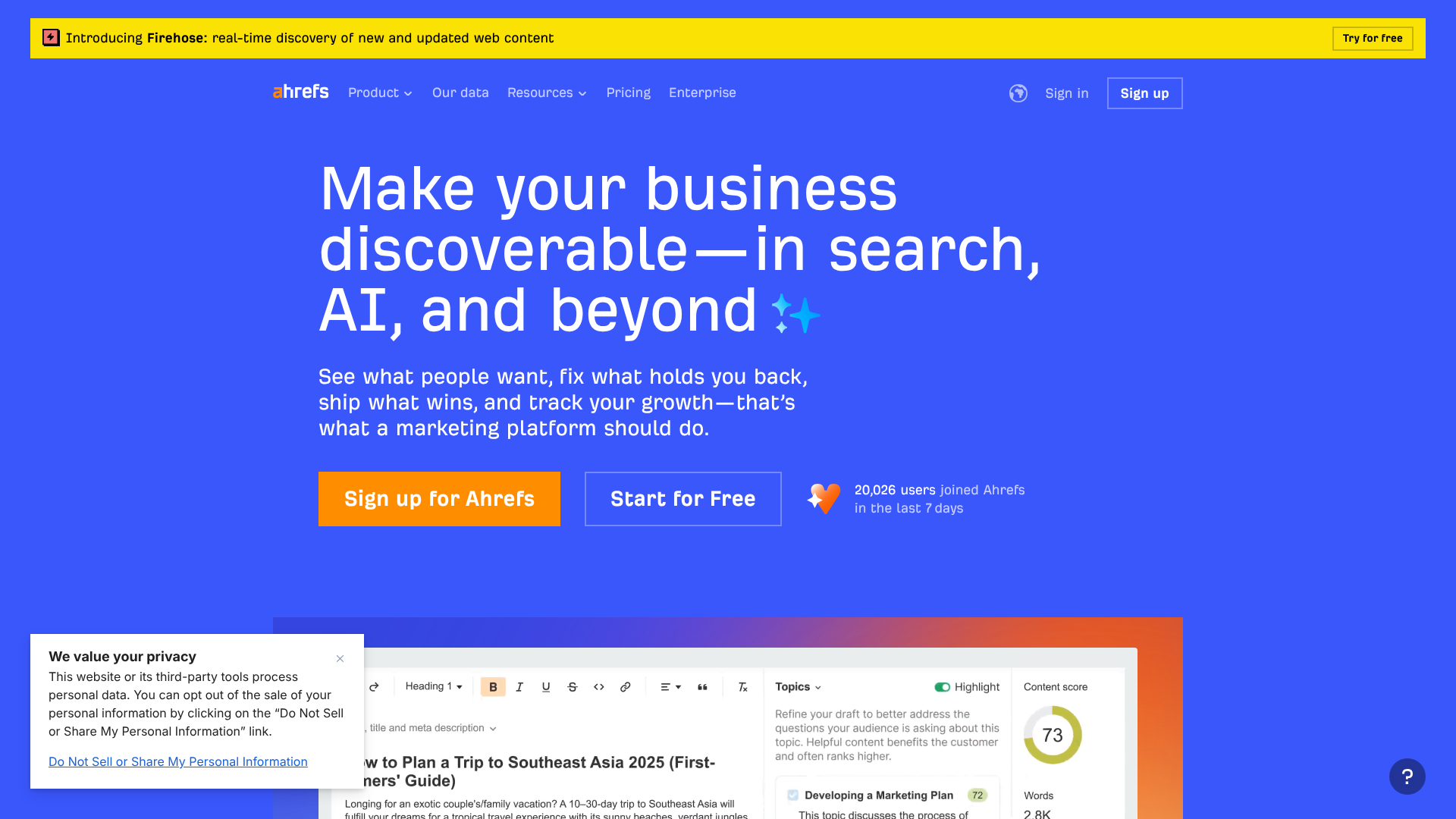
Ahrefs is arguably Semrush's biggest competitor, renowned for its industry-leading backlink index. While it has expanded into a full SEO suite, its core strength remains in link analysis. Its 'Site Explorer' tool provides an incredibly detailed view of any website's backlink profile and organic search traffic.
- Best for: SEO professionals and agencies who prioritise backlink analysis and link building. Its keyword research and content exploration tools are also top-tier.
Pros
- Superior Backlink Data: Ahrefs' crawler is one of the most active on the web, giving it a massive and frequently updated index of live backlinks.
- Intuitive User Interface: The platform is clean, fast, and easy to navigate, making complex data accessible.
- Excellent Content Tools: The 'Content Explorer' feature is great for discovering popular content ideas in any niche.
Cons
- Higher Price Point: Ahrefs' entry-level plan is typically more expensive than Semrush's, which can be a barrier for smaller businesses.
- Limited PPC Features: While it offers some paid search data, it's not as comprehensive as Semrush's advertising research toolkit.
2. Moz Pro
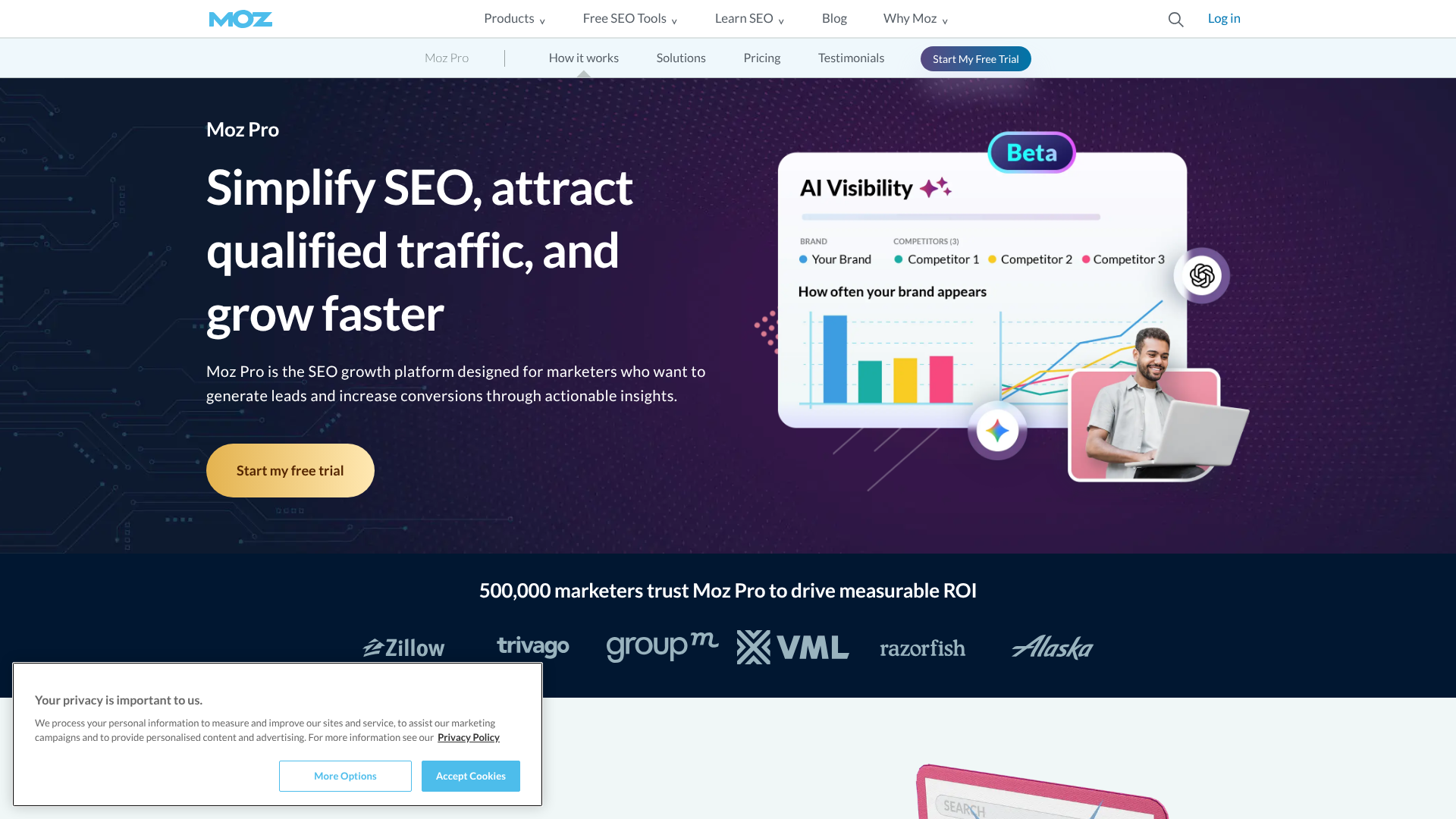
Moz has been a respected name in the SEO industry for years. Moz Pro is their all-in-one SEO software suite, known for its proprietary metrics like Domain Authority (DA) and Page Authority (PA). It offers a solid range of tools, including keyword research, link building, and site audits.
- Best for: Small to medium-sized businesses, freelancers, and those who are newer to SEO. Its focus on core SEO metrics and its user-friendly interface make it less intimidating than more data-heavy platforms.
Pros
- Strong Educational Focus: Moz provides excellent learning resources, making it a great choice for those looking to improve their SEO knowledge.
- Reliable Core Metrics: Domain Authority is a widely used industry metric for gauging a website's strength.
- Good Local SEO Features: Moz offers robust tools for managing and optimising local business listings.
Cons
- Smaller Data Index: Its backlink and keyword databases are generally smaller than those of Semrush and Ahrefs.
- Slower Updates: The platform can sometimes feel slower to update with new data compared to its main competitors.
3. SpyFu
As its name suggests, SpyFu specialises in competitive intelligence. It was one of the original tools focused exclusively on 'spying' on competitors' keywords and ads. It offers an incredible amount of historical data, allowing you to see a competitor's SEO and PPC performance over many years.
- Best for: PPC managers, digital advertisers, and marketers who are heavily focused on keyword research and paid search analysis.
Pros
- Deep PPC Insights: SpyFu provides some of the most detailed competitor PPC data available, including ad spend history and ad variations.
- Generous Plan Limits: Its plans often offer more generous limits on searches and data exports compared to competitors at similar price points.
- Historical Data: The ability to track a competitor's keyword strategy for over a decade is a unique and powerful feature.
Cons
- Less of an All-in-One Tool: Its backlink analysis and technical SEO audit features are not as advanced as those in Semrush or Ahrefs.
- Interface Can Feel Dated: The user interface isn't as modern or streamlined as some of its competitors.

Feature Comparison: Semrush vs. The Alternatives
Choosing the right tool often comes down to a direct feature-to-feature comparison. Here’s how Semrush stacks up against its main rivals in key areas of competitor research. Prices are estimates and subject to change; always check the official websites for current pricing.
| Feature | Semrush | Ahrefs | Moz Pro | SpyFu |
|---|---|---|---|---|
| Primary Strength | All-in-One Marketing Suite | Backlink Analysis | Core SEO & Education | PPC & Keyword Analysis |
| Backlink Index | Very Large | Industry-Leading | Good | Basic |
| Keyword Research | Excellent | Excellent | Very Good | Excellent |
| PPC/Ad Research | Excellent | Good | Basic | Industry-Leading |
| Traffic Analytics | Excellent | Good | N/A | Good |
| Ease of Use | Good | Excellent | Excellent | Good |
| Starting Price (Monthly) | ~$129 | ~$99 | ~$99 | ~$39 |
How to Choose the Right Competitor Analysis Tool
With several powerful options available, the best choice depends entirely on your unique circumstances. Here’s a simple framework to help you decide.
For the All-Rounder: If you need a single platform to manage SEO, PPC, content, and social media, and you want the most comprehensive feature set for competitor research, Semrush is likely your best bet. It provides top-tier data across all key marketing channels.
For the SEO Purist: If your primary focus is on organic search, content marketing, and link building, and you demand the absolute best backlink data, Ahrefs is an outstanding choice. Its user interface is also a major plus.
For the Small Business or Learner: If you're a small business, a freelancer, or are still learning the ropes of SEO, Moz Pro offers a fantastic balance of powerful features, user-friendliness, and educational support.
For the PPC Specialist: If your role revolves around paid search and you need to deconstruct competitor ad strategies with surgical precision, SpyFu offers unparalleled depth in PPC analysis at a very competitive price.
Pro Tip: Before committing to any tool, always take advantage of the free trial. Spend a week using the platform for your actual day-to-day tasks. This hands-on experience is the best way to determine if the tool's workflow, data accuracy, and feature set are the right fit for you and your team.
Frequently Asked Questions
Is Semrush good for competitor analysis?
Yes, Semrush is excellent for competitor analysis. It is widely regarded as one of the leading platforms for this purpose due to its comprehensive and integrated toolkit. It allows you to analyse a competitor's organic traffic, paid ad strategies, backlink profile, content performance, and social media presence all from a single dashboard, providing a complete picture of their digital marketing efforts.
How accurate is Semrush competitor data?
Semrush uses a sophisticated algorithm and a massive database of search data to provide highly accurate estimates. While no third-party tool can provide 100% precise data (only the website owner has that via Google Analytics), Semrush is considered one of the most reliable sources in the industry. Its data is trusted by millions of marketers worldwide for strategic decision-making. It's best used for identifying trends, comparing relative performance, and discovering opportunities rather than for exact traffic figures.
Can I do competitor research for free?
Yes, you can perform basic competitor research for free, but it's often limited and time-consuming. You can use Google searches to manually analyse competitors' content and on-page SEO. Free tools like Google Keyword Planner can provide some keyword ideas. However, free methods lack the scale, depth, and efficiency of a dedicated platform like Semrush, which automates data collection and provides much deeper insights into backlinks, traffic sources, and paid ad strategies.
What is the best Semrush alternative?
Ahrefs is often cited as the best and most direct alternative to Semrush, particularly for users who prioritise SEO and backlink analysis. It boasts an industry-leading backlink index and a very intuitive user interface. However, the 'best' alternative depends on your specific needs: SpyFu is superior for PPC analysis, while Moz Pro is excellent for beginners and small businesses.
Final Thoughts
Mastering semrush competitors research is no longer an option—it's a necessity for anyone serious about growing their online presence. By systematically analysing what your rivals are doing well and where they are falling short, you can uncover a wealth of strategic opportunities. Platforms like Semrush provide the powerful lens needed to see beyond your own website and understand the entire competitive landscape.
Whether you choose the all-encompassing power of Semrush, the backlink-focused precision of Ahrefs, or the specialised PPC insights of SpyFu, investing in a high-quality competitor analysis tool is an investment in your own success. The data these platforms provide empowers you to create more effective content, build a stronger backlink profile, and run more profitable ad campaigns. Start by identifying your key competitors today and begin uncovering the insights that will fuel your growth in 2026 and beyond.