


Ahrefs vs Semrush vs Moz: Which SEO Suite Is Right for Your Business in 2026?
Choosing the right SEO software can feel like a monumental task. With so many options available, three names consistently rise to the top: Ahrefs, Semrush, and Moz. For years, digital marketers and business owners have been comparing Moz, Semrush, and Ahrefs to determine which platform offers the best return on investment. Each is a powerhouse in its own right, but they cater to different needs, budgets, and levels of expertise.
- Quick Summary
- The Big Three of SEO: What Are Moz, Semrush, and Ahrefs?
- Feature Face-Off: A Side-by-Side Comparison
- User Experience and Ease of Use
- Pricing and Value for Money: A Cost Comparison
- Pros and Cons: The Honest Breakdown
- The Verdict: How to Choose the Right SEO Tool for You
- Frequently Asked Questions (FAQ)
- What is the difference between Moz and Semrush?
- Is Moz Pro better than Semrush?
- Is Ahrefs the same as Semrush?
- What is the most accurate SEO tool?
- Why is Semrush so expensive?
- How much does Moz cost?
- Final Thoughts
This guide cuts through the noise. We'll provide a detailed, data-driven breakdown of the moz vs semrush vs ahrefs debate, examining everything from core features and backlink data accuracy to user interface and pricing structures. By the end, you'll have a clear understanding of which tool is the perfect fit for your specific goals, whether you're a solo blogger, a growing agency, or an established enterprise.
Quick Summary
- Ahrefs is for Data-Driven SEOs: It offers the industry's most respected backlink index and powerful competitor analysis tools, making it the top choice for professionals focused on link building and deep technical analysis.
- Semrush is the All-in-One Marketing Suite: It goes beyond SEO to include robust tools for PPC, content marketing, social media management, and market research, making it ideal for marketers who need a single, comprehensive platform.
- Moz Pro is for Accessibility and Local SEO: With the most intuitive interface and a strong focus on core SEO metrics, Moz is perfect for beginners, small businesses, and anyone prioritising local search performance.
- The Best Choice Depends on Your Focus: Your decision should be guided by your primary marketing needs. Choose Ahrefs for link intelligence, Semrush for an integrated marketing toolkit, and Moz for user-friendliness and foundational SEO.
The Big Three of SEO: What Are Moz, Semrush, and Ahrefs?
Before we dive into a feature-by-feature comparison, it's important to understand the identity and core philosophy behind each of these platforms. They weren't all created equal, and their origins still influence their strengths today.
What is Ahrefs?
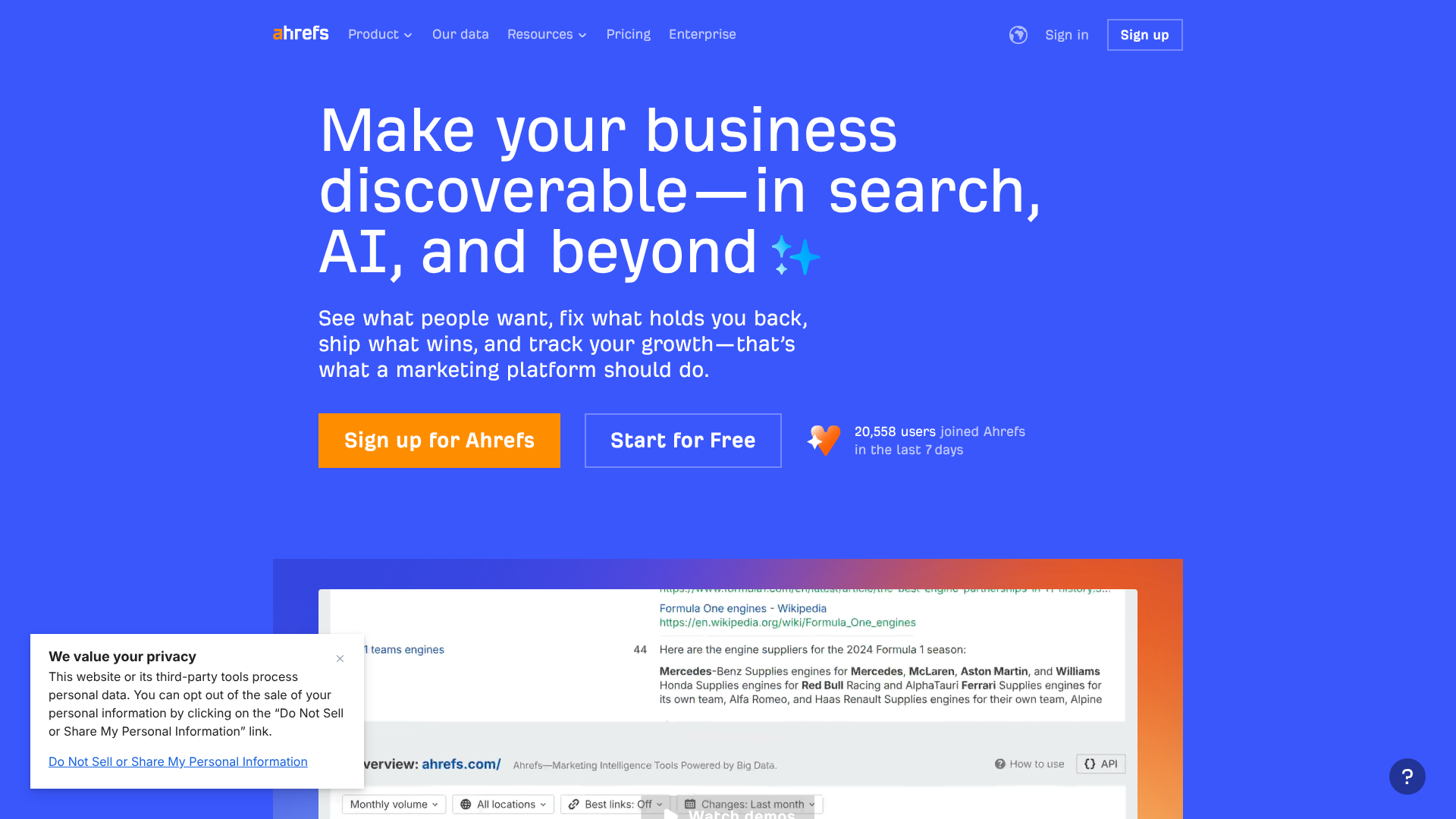
Ahrefs began its journey in 2011 primarily as a backlink analysis tool. It quickly built a reputation for having one of the largest and most accurate indexes of live backlinks, powered by its formidable web crawler. This foundation in link data remains its greatest strength.
Over the years, Ahrefs has evolved into a comprehensive SEO suite, adding tools for keyword research, site audits, rank tracking, and content analysis. Despite this expansion, its soul lies in providing deep, granular data that allows SEO professionals to dissect competitor strategies and build effective off-page SEO campaigns.
What is Semrush?
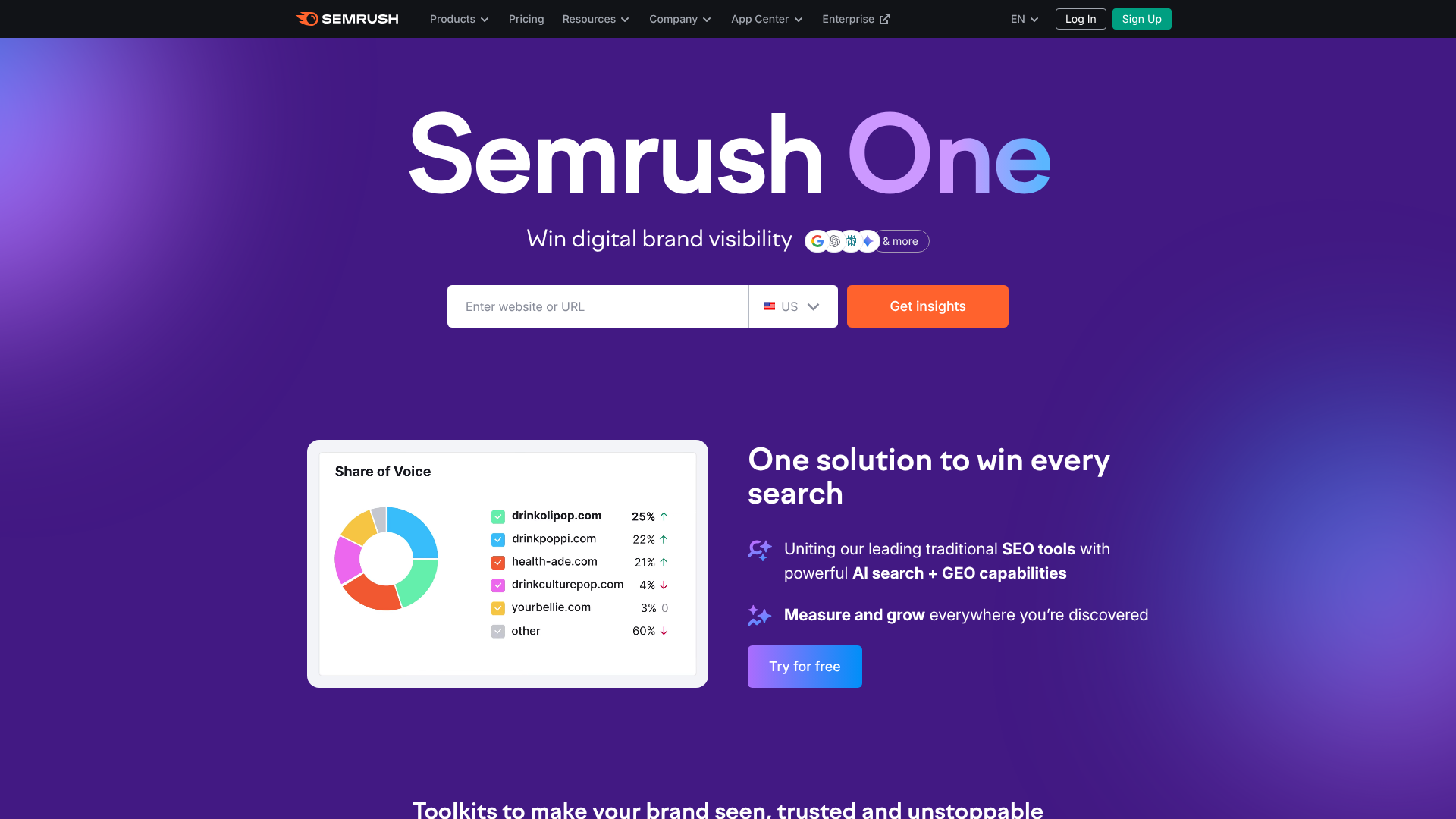
Semrush was founded in 2008 with an initial focus on competitor research for paid search (PPC). This background in analysing the entire search engine results page (SERP), not just organic listings, shaped its destiny as a holistic digital marketing platform.
Today, Semrush is arguably the most versatile tool of the three. It offers an enormous suite of over 50 tools that cover SEO, content marketing, competitor research, PPC, and social media marketing. It's designed to be a central hub for a company's entire digital marketing operation, providing data and workflows for multiple teams.
What is Moz Pro?
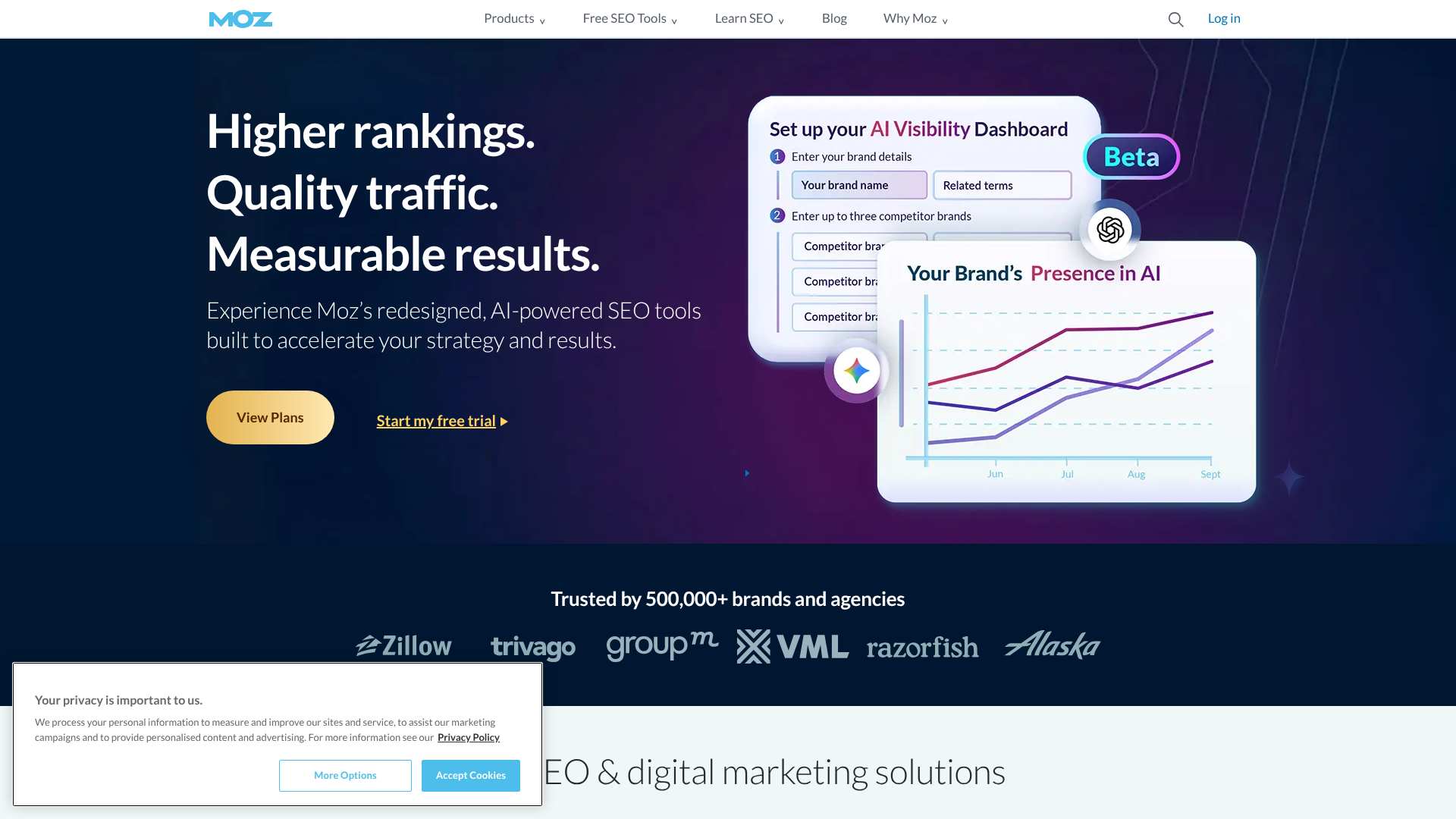
Moz is one of the original pioneers in the SEO software space, founded way back in 2004 as an SEO consulting blog. This educational DNA is still a core part of its identity. Moz is famous for popularising metrics like Domain Authority (DA) and Page Authority (PA), which have become industry standards for gauging a website's ranking potential.
Moz Pro is designed to make SEO accessible. Its tools, from Keyword Explorer to Site Crawl, are known for their clean interfaces and helpful data visualisations. While its raw database size might not match Ahrefs or Semrush, its strength lies in usability, local SEO capabilities, and providing clear, actionable insights for users who aren't necessarily full-time SEO experts.
Feature Face-Off: A Side-by-Side Comparison
To truly understand the semrush vs ahrefs and ahrefs vs moz dynamics, we need to compare their core features head-to-head. While all three platforms cover the basics, their approach, data depth, and unique capabilities vary significantly.

| Feature | Ahrefs | Semrush | Moz Pro |
|---|---|---|---|
| Best For | Backlink Analysis & Competitor Research | All-in-One Digital Marketing | Beginners & Local SEO |
| Keyword Database Size | Very Large (20B+ keywords) | Largest (25B+ keywords) | Large (500M+ keywords) |
| Backlink Index | Industry Leader (Largest & Freshest) | Very Large | Good (Focus on Quality) |
| Site Audit | Comprehensive & Fast | Comprehensive & Detailed | Good & User-Friendly |
| Rank Tracking | Daily Updates | Daily Updates | Weekly/Daily Updates |
| Content Marketing Tools | Good (Content Explorer) | Excellent (Topic Research, SEO Writing Assistant) | Basic (Content Suggestions) |
| PPC & Social Media Tools | No | Yes (Extensive) | No |
| User Interface | Data-Rich, Moderate Learning Curve | Feature-Packed, Moderate Learning Curve | Very Intuitive, Beginner-Friendly |
Keyword Research
Effective SEO starts with understanding what your audience is searching for. All three tools offer powerful keyword research capabilities, but with different strengths.
- Ahrefs' Keywords Explorer is known for its incredible depth. It pulls data from 10 different search engines (including Google, YouTube, and Amazon) and provides excellent metrics like Keyword Difficulty, clicks data, and parent topic analysis. Its ability to show what percentage of searches result in a click is a unique and valuable insight.
- Semrush's Keyword Magic Tool boasts the largest keyword database on the market. Its real strength lies in organisation. You can easily filter and group millions of keywords by topic, search intent (informational, navigational, commercial, transactional), question type, and more. This makes it exceptionally efficient for building out large-scale content strategies.
- Moz's Keyword Explorer is the most user-friendly of the three. It introduces a "Priority" score that combines volume, difficulty, and organic click-through rate to help you identify the best opportunities. While its database is smaller, its interface makes the process of finding and prioritising keywords straightforward for newcomers.
Backlink Analysis
This is where the ahrefs vs moz battle becomes most one-sided. Ahrefs built its empire on backlink data, and it remains the undisputed leader.
- Ahrefs' Site Explorer uses a crawler that is second only to Google's in terms of speed and size. This means its backlink index is incredibly fresh and comprehensive. It provides granular data on new/lost links, broken links, anchor text distribution, and referring domains. For any serious link-building campaign, this level of detail is essential.
- Semrush's Backlink Analytics is a very strong competitor and has improved significantly over the years. Its database is massive, and its Backlink Audit tool is excellent for identifying and disavowing toxic links. However, most independent tests find that Ahrefs still discovers slightly more referring domains and updates its index faster.
- Moz's Link Explorer focuses more on quality over quantity. It relies on its well-respected Domain Authority (DA) metric to assess the value of links. While its index is smaller than its competitors, it's a reliable tool for tracking your authority-building efforts and performing top-level competitor analysis.
Site Auditing & Technical SEO
A healthy website is a prerequisite for ranking well. Each platform offers a tool to crawl your site and identify technical issues.
- Ahrefs' Site Audit is remarkably fast and comprehensive. It crawls your site from the cloud, checks for over 100 pre-defined SEO issues, and presents the data in beautifully designed, easy-to-understand reports. You can see everything from broken pages and redirect chains to hreflang and pagination problems.
- Semrush's Site Audit is equally powerful and highly customisable. It organises issues into thematic reports (Crawlability, Performance, Internal Linking) and provides clear "why and how to fix it" instructions for every problem it finds. Its integration with project management tools like Trello is a nice touch for teams.
- Moz's Site Crawl functions similarly, identifying critical errors, warnings, and notices on your site. Like the rest of the Moz toolkit, its strength is its simplicity. It presents issues in a clear, prioritised list that helps users focus on the most impactful fixes first.
User Experience and Ease of Use
A tool is only effective if you can actually use it. The user interface (UI) and user experience (UX) are key differentiators in the moz vs semrush vs ahrefs debate.
Ahrefs has a clean, modern, and surprisingly intuitive UI given the sheer volume of data it presents. Charts and graphs are used effectively to visualise complex information, and navigating between different reports in the Site Explorer is logical. However, the depth of its data can create a steeper learning curve for absolute beginners.
Semrush faces the challenge of housing over 50 tools under one roof. While its dashboard is customisable and generally well-organised into logical "toolkits," the sheer number of options can be overwhelming for new users. It takes time to discover and master everything the platform has to offer.
Moz Pro is the clear winner for ease of use. It's designed from the ground up to be approachable. The interface is clean, uncluttered, and full of helpful tooltips and explanations. This makes it the best choice for small business owners, marketing generalists, or anyone new to the world of SEO who wants to get up and running quickly without a steep learning curve.
Pricing and Value for Money: A Cost Comparison
Budget is a major consideration for any software purchase. The pricing structures of these three tools reflect their target audiences and feature sets. Note that prices change, so always check the official websites for the most current information.
| Plan Tier | Ahrefs (Standard) | Semrush (Pro) | Moz Pro (Medium) |
|---|---|---|---|
| Approx. Monthly Cost | ~$199/month | ~$129.95/month | ~$179/month |
| Users Included | 1 | 1 | 1 |
| Key Limitation | Credit-based system | Project limits | Keyword/Crawl limits |
| Free Trial | No (Offers free, limited tools) | Yes (7-day trial) | Yes (30-day trial) |
Ahrefs Pricing: Ahrefs is positioned as a premium tool, and its pricing reflects that. It operates on a subscription model with different tiers, but a key factor is its credit-based system. Each report you run or export consumes credits, and running out means you either have to wait for the next month or purchase more. This can make costs unpredictable for heavy users or large agencies.
Semrush Pricing: Semrush's pricing is competitive with Ahrefs, but it generally offers more features for the money. Its plans are tiered based on the number of projects, keywords to track, and reports you can run per day. Because it includes PPC, social media, and content tools at no extra cost, many consider it to offer better overall value for a full-service marketing team.
Moz Pro Pricing: Moz offers a more accessible entry point with its lower-tiered plans. Its pricing is straightforward, based primarily on the number of keywords you can track and pages you can crawl. The generous 30-day free trial is a significant advantage, allowing users to fully explore the platform before committing.
Pro Tip: When comparing costs, don't just look at the monthly price. Analyse the usage limits carefully. Ahrefs' credit system can be a deal-breaker for some, while Semrush's project limits might constrain agencies managing many clients.
Pros and Cons: The Honest Breakdown
No tool is perfect. To make an informed decision, you need to weigh the good against the bad. Here’s a straightforward look at the pros and cons of each platform.

Ahrefs: Pros and Cons
Pros:
Unmatched Backlink Data: Its backlink index is the largest, fastest, and most accurate in the business. This is its killer feature. * Excellent User Interface: Despite its complexity, the platform is well-designed and makes data analysis enjoyable. * Powerful Competitor Analysis: The combination of Site Explorer, Content Explorer, and Keywords Explorer makes it easy to deconstruct any competitor's strategy.
Innovative Features: Ahrefs consistently rolls out useful new features and improves existing ones.
Cons:
- Expensive: It's one of the pricier options on the market.
- Confusing Credit System: The credit-based pricing can be restrictive and lead to unexpected costs for power users.
- Limited Scope Beyond SEO: It lacks the comprehensive PPC, social media, and market research tools found in Semrush.
Semrush: Pros and Cons
Pros:
- True All-in-One Platform: The sheer breadth of tools is its biggest advantage, covering almost every aspect of digital marketing.
- Exceptional Keyword Research: The Keyword Magic Tool, with its intent data and advanced filtering, is a best-in-class feature.
- Strong Content Marketing Toolkit: Features like the SEO Writing Assistant provide actionable advice for creating rank-worthy content.
- Great Value for a Full Team: For the price, you get a suite of tools that could replace 4-5 other subscriptions.
Cons:
- Can Be Overwhelming: The vast number of features can make it difficult for beginners to navigate.
- Backlink Data Isn't #1: While very good, its backlink index is generally considered a step behind Ahrefs in freshness and size.
- Position Tracking Limits: The number of keywords you can track on the lower-tier plans can be restrictive.
Moz Pro: Pros and Cons
Pros:
- Extremely User-Friendly: It's the easiest tool to learn and use, making it perfect for beginners.
- Trusted and Simple Metrics: Domain Authority (DA) is a simple, effective metric for gauging site strength at a glance.
- Excellent Educational Resources: Moz's blog and Whiteboard Friday videos are invaluable learning resources.
- Strong Local SEO Features: Moz Local is a powerful add-on for businesses that rely on local search traffic.
Cons:
- Smaller Data Indexes: Its backlink and keyword databases are not as extensive as Ahrefs' or Semrush's.
- Slower Data Updates: The platform can be slower to report on new backlinks or ranking changes.
- Fewer Advanced Features: It lacks some of the granular, deep-dive features that SEO experts rely on in other tools.
The Verdict: How to Choose the Right SEO Tool for You
After comparing features, pricing, and usability, the final decision comes down to you. The best tool is the one that aligns with your specific role, goals, and budget.
Choose Ahrefs if…
You are a dedicated SEO professional, a link-building specialist, or part of an agency where deep competitor analysis is paramount. Your primary goal is to build a superior backlink profile and perform granular technical audits. You understand that you're paying a premium for the best data available and are comfortable with a credit-based system.
Choose Semrush if…
You are a digital marketing manager, a full-service agency, or a business owner who wears multiple hats. You need a single, integrated platform to manage SEO, content strategy, PPC campaigns, and social media. You value breadth of features and want a tool that can grow with your entire marketing department.
Choose Moz Pro if…
You are a small business owner, a blogger, an in-house marketer new to SEO, or a freelancer. Your priority is having a tool that is easy to understand and provides clear, actionable insights without overwhelming you. You are focused on core SEO tasks, content optimisation, and potentially local search.
Frequently Asked Questions (FAQ)
Here are answers to some of the most common questions people ask when comparing these three SEO giants.
What is the difference between Moz and Semrush?
The primary difference is scope and target audience. Semrush is a comprehensive, all-in-one digital marketing suite with tools for SEO, PPC, social media, and content marketing, aimed at experienced marketers and agencies. Moz Pro is a more focused SEO toolset designed for accessibility and ease of use, making it ideal for beginners and small businesses.
Is Moz Pro better than Semrush?
"Better" is subjective. Semrush is objectively more powerful and has a much larger feature set and data library. However, Moz Pro is significantly easier to use and may be a better choice for someone who finds Semrush overwhelming or doesn't need its extensive non-SEO features.
Is Ahrefs the same as Semrush?
No, they are direct competitors with different core strengths. Ahrefs is widely regarded as having the best backlink analysis tool on the market. Semrush's main strength is its sheer breadth of features, making it a complete marketing toolkit, not just an SEO tool.
What is the most accurate SEO tool?
No single tool has 100% accurate data, as they all use their own crawlers and algorithms. However, for backlink data, Ahrefs is generally considered the industry benchmark for accuracy and freshness. For keyword search volume, Semrush is often praised for its large database and accuracy.
Why is Semrush so expensive?
Semrush's price reflects its value as an all-in-one platform. It aims to replace multiple separate subscriptions for things like PPC analysis, social media scheduling, and content optimisation tools. When you consider the cost of buying all those tools individually, Semrush can actually be quite cost-effective.
How much does Moz cost?
Moz Pro offers several pricing tiers. The entry-level plan, Moz Pro Standard, typically starts around $99 per month. Prices increase with higher tiers that offer more keyword tracking, page crawls, and other features. They also offer a generous 30-day free trial, which is a great way to test the platform.
Always check their official site for the latest pricing.
Final Thoughts
The debate of moz vs semrush vs ahrefs doesn't have a single winner because they aren't competing for the exact same user. They represent three different philosophies on how to approach digital marketing. Ahrefs offers unparalleled depth for the SEO specialist, Semrush provides incredible breadth for the all-around marketer, and Moz delivers accessibility for the business owner and beginner.
Think carefully about your daily tasks, your long-term goals, and your team's level of expertise. Are you spending most of your day analysing backlink profiles? Or are you juggling a content calendar, a Google Ads campaign, and a social media presence? Your answer to that question will point you directly to the right tool.
If deep data analysis and a best-in-class backlink index are your top priorities, Ahrefs is an investment that pays dividends. Explore its features to see how it can elevate your SEO strategy and give you a true competitive edge.