



7 Best Surfer SEO Alternatives for Content Teams (2026 Review)
Surfer SEO has become a go-to tool for content marketers and SEO professionals aiming to create perfectly optimised content. Its data-driven approach helps writers craft articles that align with what Google wants to see. However, it's not the only solution available, and many teams are looking for the best Surfer SEO alternatives to better fit their budget, workflow, or specific strategic goals. Whether you need a more affordable option, advanced AI writing capabilities, or deeper content strategy features, there's likely a tool that's perfect for you.
- In a Nutshell
- What is Surfer SEO and Why Consider an Alternative?
- How to Choose the Right Surfer SEO Substitute
- The 7 Best Surfer SEO Alternatives for 2026 (Ranked & Reviewed)
- 1. NeuronWriter: Best Value Alternative
- 2. Frase: Best for AI Content Briefs & Research
- 3. Clearscope: Best for Enterprise & Large Teams
- 4. MarketMuse: Best for Content Strategy & Topical Authority
- 5. Semrush SEO Writing Assistant: Best for Existing Semrush Users
- 6. Scalenut: Best All-in-One AI Content Platform
- 7. Page Optimizer Pro (POP): Best for Technical On-Page SEO
- Surfer SEO Alternatives: Feature & Pricing Comparison
- Frequently Asked Questions (FAQ)
- Who is the competitor of Surfer SEO?
- Is Surfer SEO better than Semrush?
- What is similar to Surfer SEO?
- Is SEO becoming obsolete?
- Is Surfer SEO any good?
- Final Thoughts: Which Surfer SEO Competitor is Right for You?
Choosing the right content optimisation tool can significantly impact your efficiency and search engine rankings. While Surfer sets a high standard with its comprehensive SERP analysis and user-friendly content editor, various Surfer SEO competitors offer unique strengths. Some focus on creating content briefs at lightning speed, others excel at building long-term topical authority, and some integrate seamlessly into broader SEO platforms you might already be using.
In a Nutshell
- Why Look for Alternatives? Common reasons to seek Surfer SEO substitutes include high pricing, the need for more advanced AI features, or a preference for an all-in-one SEO suite.
- Top Value Option: NeuronWriter stands out as a powerful, budget-friendly alternative, offering similar NLP-driven analysis at a fraction of the cost, making it ideal for freelancers and small teams.
- Best for AI & Briefs: Frase excels at automating content research and generating comprehensive briefs in minutes, which is a massive time-saver for content managers and agencies.
- Enterprise-Grade Choices: For larger organisations, Clearscope provides premium-quality term recommendations with a simple UI, while MarketMuse offers deep strategic tools for building topical authority.
- Making the Choice: The best tool depends on your specific needs. Evaluate your budget, team size, and primary goal—whether it's optimising single articles or planning an entire content strategy.
What is Surfer SEO and Why Consider an Alternative?
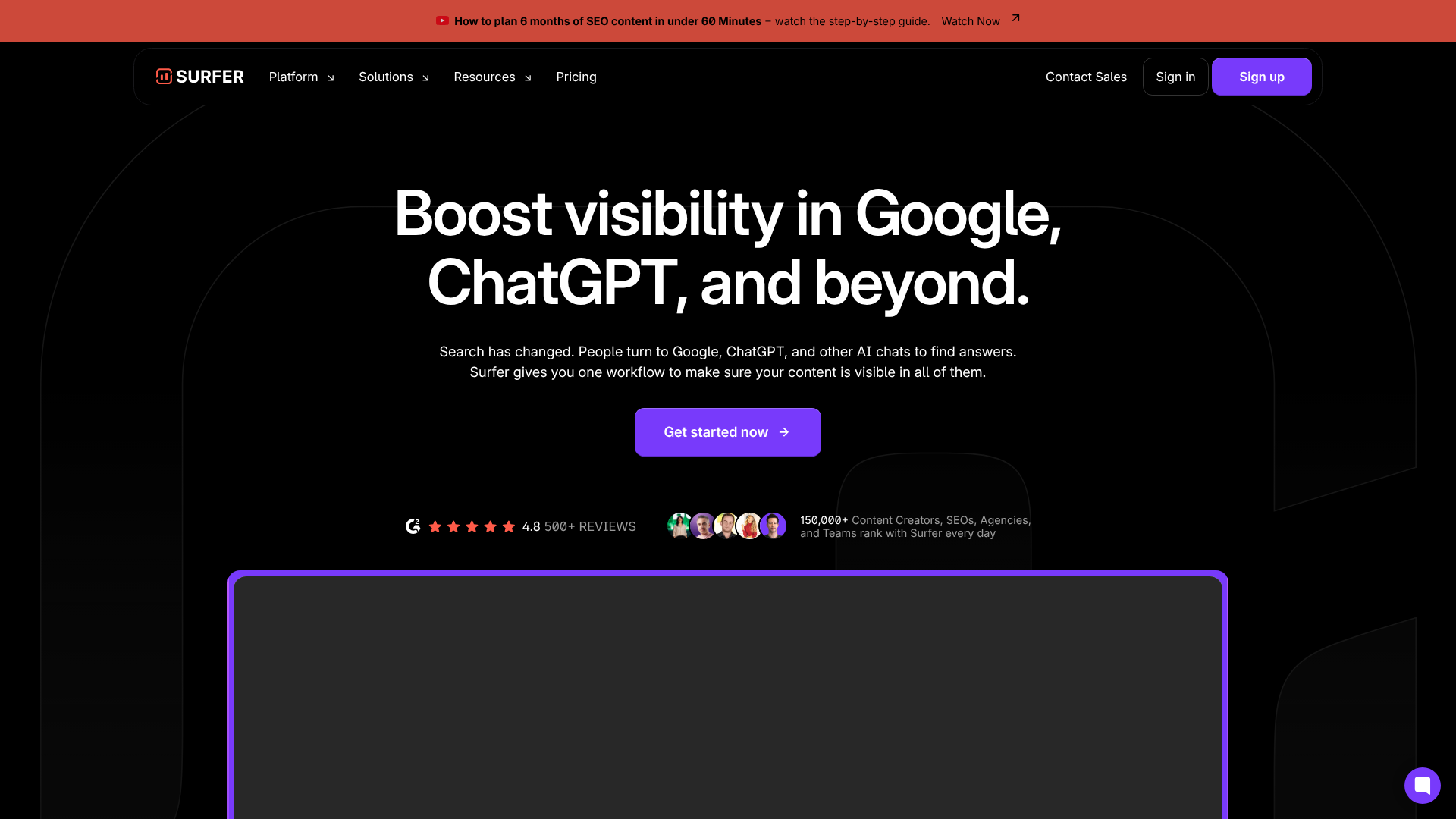
Surfer SEO is a cloud-based tool designed to help you optimise your on-page SEO. It analyses the top-ranking pages for your target keyword and provides a data-backed blueprint for you to follow. Its core features include the Content Editor, which gives you a real-time score as you write, a SERP Analyzer for deep competitor research, and a Content Planner to help build topic clusters.
Surfer's main strength is its ability to turn the abstract art of SEO into a more scientific process. It tells you which keywords and phrases to include, suggests an ideal word count, and recommends a structure for your article based on what's already performing well in search results. For many, it's an indispensable part of their content workflow.
Despite its popularity, there are valid reasons why you might search for top Surfer SEO options. The most common driver is cost; Surfer's subscription plans can be a significant investment, especially for solo content creators or small businesses. Others might find they need more specialised features, such as advanced AI-powered content generation or tools that focus more on high-level content strategy and planning rather than just single-page optimisation.
How to Choose the Right Surfer SEO Substitute
Selecting the right content optimisation tool from a sea of Surfer SEO competitors requires a clear understanding of your own needs. Rushing into a decision can lead to wasted money and a tool that doesn't fit your workflow. Follow these steps to make an informed choice.
1. Assess Your Core Needs and Goals
First, define what you want to achieve. Are you a freelance writer looking to deliver optimised drafts to clients? Or are you part of an in-house marketing team trying to build topical authority and scale content production? Your primary goal dictates the features you should prioritise.
Consider your team size and technical skill level. A solo blogger might prefer a simple, intuitive interface, while a large agency may need a tool with collaboration features and detailed reporting. Be honest about your requirements before you start looking at feature lists.
2. Compare Must-Have Features
Not all optimisation tools are created equal. Make a checklist of the features that are non-negotiable for your workflow. Key features to compare include:
- Content Editor: A real-time editor that scores your content and provides suggestions.
- SERP Analysis: The ability to analyse top competitors for a given keyword.
- AI Writing & Generation: Built-in AI to help draft outlines, paragraphs, or entire articles.
- Content Brief Automation: Tools that automatically generate detailed briefs for writers.
- Content Auditing: Features to analyse and improve existing content on your website.
- Integrations: Compatibility with platforms like Google Docs, WordPress, or Jasper.
3. Evaluate Your Budget
Budget is often the deciding factor. Surfer SEO alternatives range from affordable lifetime deals to expensive enterprise-level subscriptions. Determine how much you can realistically spend per month or year.
Look beyond the sticker price. Some tools might seem cheaper but limit the number of articles you can analyse or the reports you can run. Calculate the cost per article or per user to get a true sense of the value each platform offers. Don't forget to check for free trials to test the software before committing.

The 7 Best Surfer SEO Alternatives for 2026 (Ranked & Reviewed)
After extensive research and analysis, we've compiled a list of the top Surfer SEO substitutes. Each tool offers a unique set of features tailored to different users, from solo bloggers to large enterprise teams.
1. NeuronWriter: Best Value Alternative
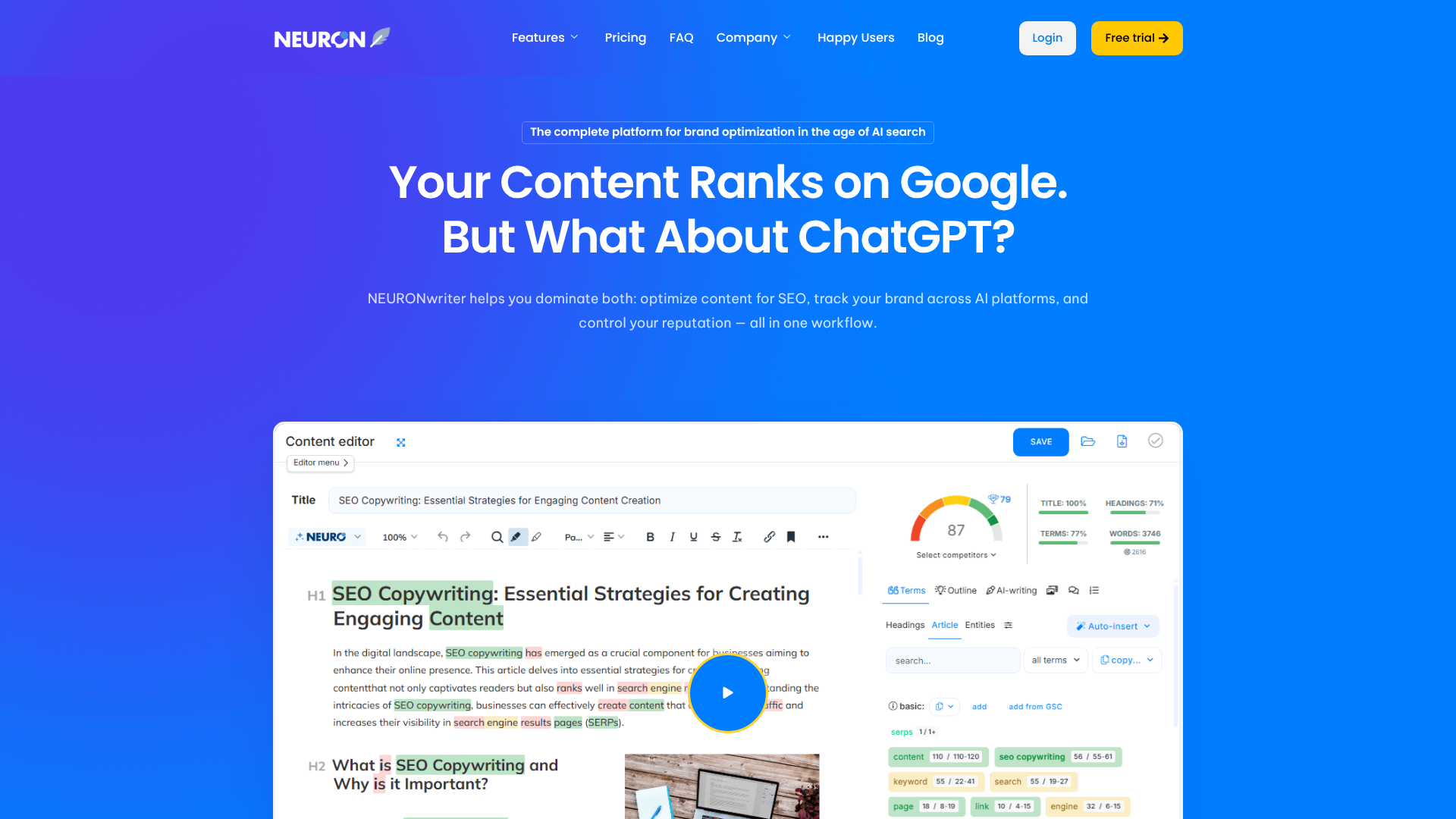
NeuronWriter has quickly gained a reputation as one of the most powerful and affordable Surfer SEO alternatives on the market. It provides a comprehensive suite of tools, including NLP-driven content recommendations, SERP analysis, and content planning features, often at a price point that is significantly lower than its main competitors.
The platform's content editor is intuitive, providing a content score and specific terms to include, much like Surfer. However, NeuronWriter also includes features like internal linking suggestions and content planning with semantic keyword groups, which adds another layer of strategic value. It's frequently available through lifetime deals on platforms like AppSumo, making it an incredibly cost-effective choice for those on a tight budget.
Pros
- Exceptional Value: Offers a feature set comparable to premium tools for a much lower price.
- Comprehensive Toolset: Includes content optimisation, AI writing, content planning, and internal link suggestions.
- User-Friendly Interface: The platform is easy to navigate, even for beginners.
Cons
- AI Writer Can Be Basic: The built-in AI writer is functional but may not be as advanced as dedicated AI writing tools.
- Slight Learning Curve: With so many features, it can take a little time to understand how to use everything effectively.
Best for: Freelancers, bloggers, and small to medium-sized agencies looking for a powerful, budget-friendly optimisation tool.
2. Frase: Best for AI Content Briefs & Research
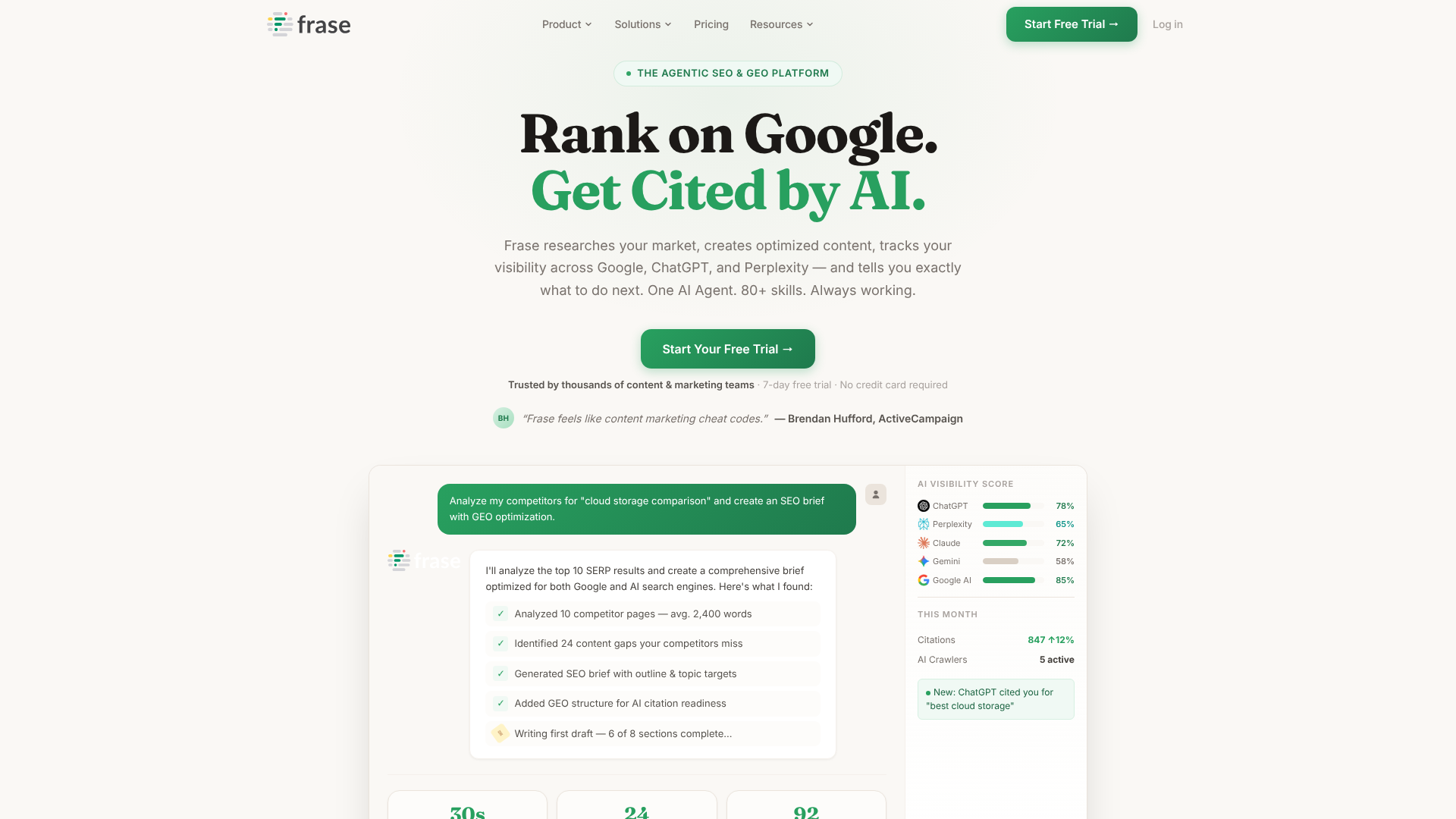
Frase is a content marketer's dream for speeding up the research and briefing process. Its standout feature is the ability to generate a detailed, well-structured content brief from a target keyword in a matter of minutes. It analyses the top 20 search results and pulls in headings, common questions, statistics, and external sources, organising it all into an actionable document.
Beyond briefs, Frase has a solid content editor that provides topic scores and keyword suggestions. It also includes a capable AI writer that can help with everything from writing introductions to answering questions from the SERP. This focus on automating the most time-consuming parts of content creation makes it a fantastic tool for scaling content production without sacrificing quality.
Pros
- Rapid Brief Creation: Automates the research process to create excellent briefs incredibly quickly.
- Strong AI Integration: The AI writer is well-integrated and genuinely useful for drafting and outlining.
- Question-Based Research: Excels at identifying and answering user questions from sources like People Also Ask and Reddit.
Cons
- Optimisation Can Be Less Granular: Its term suggestions are good but sometimes less detailed than those from Surfer or Clearscope.
- Add-on Costs: The most powerful AI features are part of a Pro Add-On, which increases the overall cost.
Best for: Content managers, SEO agencies, and teams that need to produce high-quality content briefs at scale.
3. Clearscope: Best for Enterprise & Large Teams
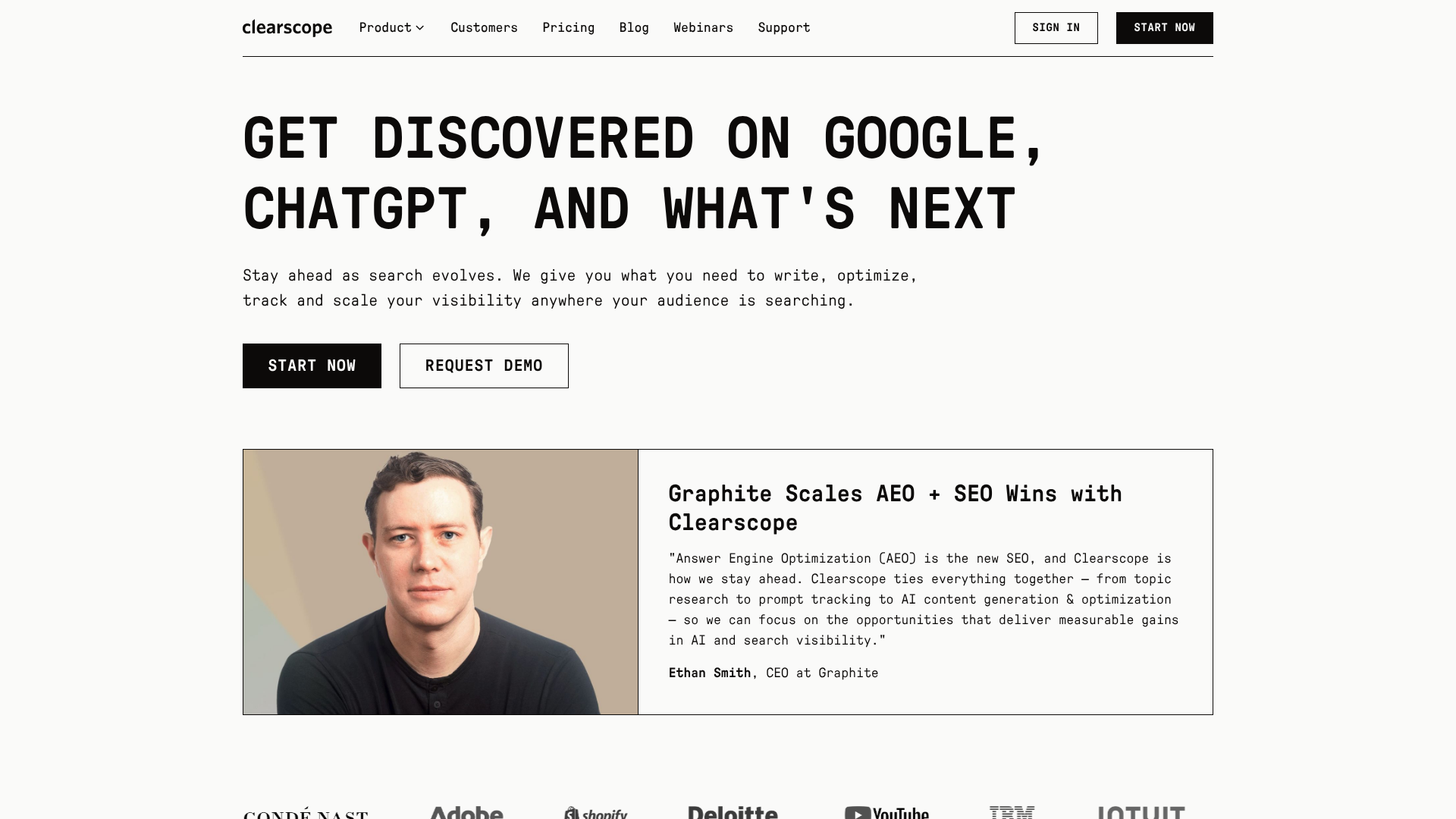
Clearscope is a premium tool in the content optimisation space, trusted by major companies like Adobe, HubSpot, and Shopify. It's known for its high-quality, relevant term suggestions and its clean, minimalist user interface. The platform focuses on one thing and does it exceptionally well: helping you write comprehensive content that covers a topic in its entirety.
Its content editor provides a simple A-F letter grade, which is easy for writers of all skill levels to understand. The tool's recommendations are powered by IBM Watson's NLP capabilities, ensuring a high degree of accuracy. While it's one of the more expensive options, its focus on quality and ease of use makes it a top choice for enterprise teams where content performance is critical.
Pros
- High-Quality Recommendations: Provides extremely relevant and accurate term suggestions.
- Simple and Intuitive UI: The clean interface is very easy for writers to use without much training.
- Excellent Support: Known for having a responsive and helpful customer support team.
Cons
- High Price Point: It is one of the most expensive Surfer SEO alternatives, making it inaccessible for smaller businesses.
- Limited Feature Set: Lacks built-in AI writers or advanced content planning tools found in other platforms.
Best for: Enterprise companies, large content teams, and well-funded start-ups that prioritise content quality above all else.
Pro Tip: When using a tool like Clearscope, focus on incorporating the recommended terms naturally. Don't just stuff them in to raise your score. The goal is to create a comprehensive, readable piece of content, and the grade should be a guide, not the ultimate goal.
4. MarketMuse: Best for Content Strategy & Topical Authority
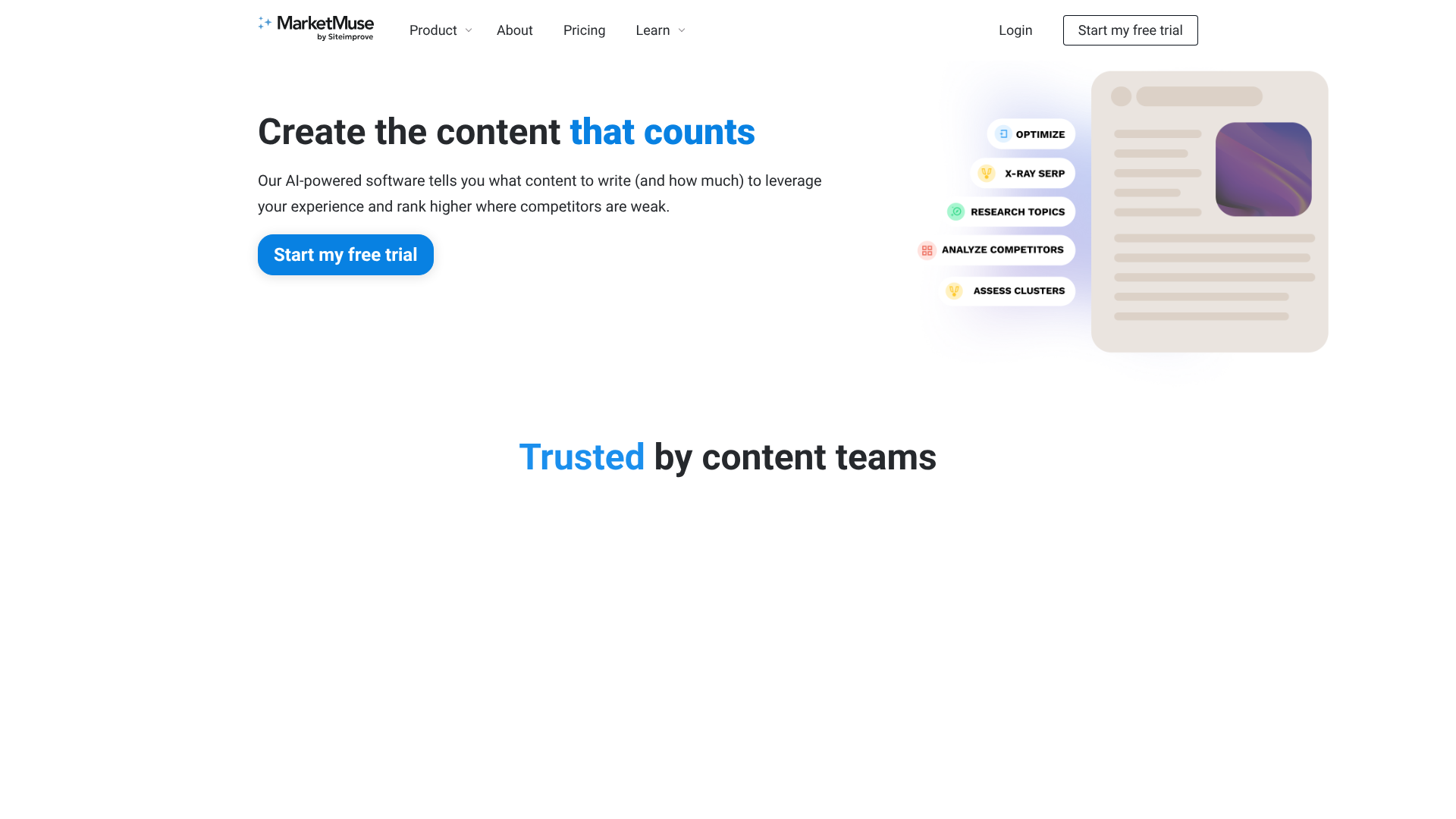
MarketMuse is more than just a content optimisation tool; it's a full-fledged content strategy platform. While it has a content editor similar to Surfer's, its real power lies in its ability to analyse your entire website, identify content gaps, and help you build topic clusters to establish topical authority.
It uses AI to inventory and audit your existing content, providing personalised difficulty scores and suggesting new topics to pursue. The platform is designed for serious SEO strategists who are thinking months or years ahead. It helps you move from writing individual articles to building a content ecosystem that dominates a niche. This strategic depth makes it a unique and powerful Surfer SEO substitute.
Pros
- Advanced Content Strategy: Excellent for planning topic clusters and building topical authority.
- Personalised Difficulty Metrics: Provides data tailored to your website's authority.
- Automated Content Audits: Helps you find and prioritise opportunities within your existing content.
Cons
- Very Expensive: Pricing is geared towards enterprise-level customers.
- Complex Platform: There is a steep learning curve to get the most out of all its features.
Best for: In-house SEO teams and content strategists at large companies focused on long-term, strategic content planning.
5. Semrush SEO Writing Assistant: Best for Existing Semrush Users
For those already using the Semrush platform, the SEO Writing Assistant (SWA) is a logical and convenient choice. It's not a standalone product but rather a feature integrated into the Semrush ecosystem. It provides real-time feedback on your content's SEO, readability, tone of voice, and originality directly within Google Docs or WordPress.
The recommendations are based on your top 10 rivals for your target keyword, and it pulls keyword suggestions from Semrush's massive database. The biggest advantage is the seamless workflow. You can do your keyword research in Semrush, create a template for the SWA, and then write and optimise your content without ever leaving your document. It's a powerful way to streamline your content process if you're already a Semrush subscriber.
Pros
- Seamless Integration: Works perfectly within the broader Semrush toolkit.
- Convenient Workflow: Provides feedback directly in Google Docs and WordPress.
- Powered by Semrush Data: Leverages one of the best keyword and competitor databases available.
Cons
- Requires a Semrush Subscription: Not a standalone tool; you need a Guru or Business plan to access its full potential.
- Less Detailed Than Specialised Tools: The recommendations are good but may not be as in-depth as those from Surfer or Clearscope.
Best for: Marketers, agencies, and businesses that are already subscribed to and actively using the Semrush platform.
6. Scalenut: Best All-in-One AI Content Platform

Scalenut aims to be a complete content lifecycle platform, combining AI writing, SEO optimisation, and content planning into a single interface. Its standout feature is "Cruise Mode," which can generate a near-complete blog post from a single keyword by guiding you through a five-step process of title creation, outlining, and content generation.
Its content editor provides NLP-driven term suggestions and a content grade, similar to other tools on this list. Scalenut also includes a keyword planner to help you build out topic clusters. This all-in-one approach is designed to maximise content velocity, making it a strong contender for teams that need to produce a large volume of optimised content efficiently.
Pros
- All-in-One Platform: Combines AI writing, research, optimisation, and planning.
- Fast Content Creation: Cruise Mode can significantly speed up the drafting process.
- Good Value for Money: Offers a wide range of features for a competitive price.
Cons
- AI Output Requires Editing: Like all AI writers, the generated content needs significant human editing and fact-checking.
- UI Can Feel Cluttered: With so many features packed in, the interface can sometimes feel overwhelming.
Best for: Content teams, affiliate marketers, and agencies focused on scaling content production with the help of AI.
7. Page Optimizer Pro (POP): Best for Technical On-Page SEO
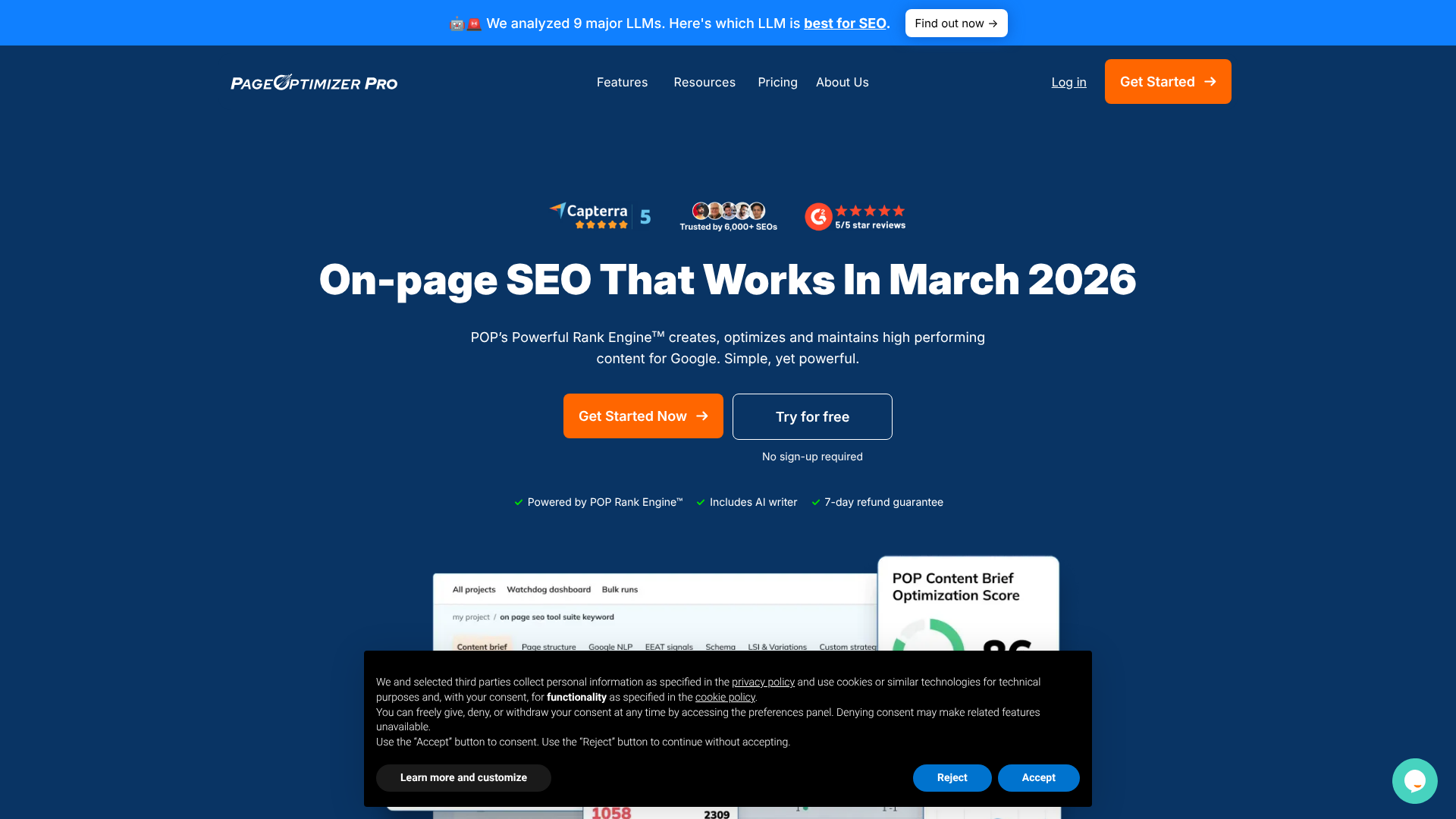
Page Optimizer Pro, or POP, was created by veteran SEO Kyle Roof and takes a highly scientific and technical approach to on-page optimisation. It goes beyond just suggesting keywords and looks at hundreds of on-page factors, including schema, LSI terms, E-A-T signals, and precise keyword placement in key HTML tags.
POP provides very specific recommendations, such as the exact number of times a keyword should appear in your H1, body, and title tag. This level of granularity can be intimidating for beginners but is incredibly powerful for experienced SEOs who want precise control over every element of their page. It's less of a writing assistant and more of a technical SEO tool for fine-tuning your content to perfection.
Pros
- Highly Detailed Recommendations: Provides granular advice on a wide range of on-page factors.
- Based on Scientific SEO Testing: The methodology is backed by extensive testing and data.
- Affordable Pricing: Offers plans that are accessible to freelancers and small agencies.
Cons
- Steep Learning Curve: The interface and reports are highly technical and not beginner-friendly.
- Less Focus on Readability: The primary focus is on technical signals, not necessarily on creating fluid, readable prose.
Best for: Technical SEO professionals and agencies that want to implement a data-driven, systematic approach to on-page optimisation.

Surfer SEO Alternatives: Feature & Pricing Comparison
To help you see how these tools stack up at a glance, here is a comparison table summarising their key attributes. Please note that pricing can change, so it's always best to check the official websites for the most current information.
| Tool | Best For | Standout Feature | Starting Price (Approx.) |
|---|---|---|---|
| Surfer SEO | All-around optimisation | Grow Flow & great UI | Visit website for pricing |
| NeuronWriter | Budget-conscious users | High value for low cost | Visit website for pricing |
| Frase | Content brief creation | Automated research & briefs | Visit website for pricing |
| Clearscope | Enterprise quality | Premium term recommendations | Visit website for pricing |
| MarketMuse | Content strategy | Topical authority planning | Visit website for pricing |
| Semrush SWA | Existing Semrush users | Integration with SEO suite | Included in Guru/Business plans |
| Scalenut | AI-powered scaling | Cruise Mode for fast drafting | Visit website for pricing |
| Page Optimizer Pro | Technical SEOs | Granular on-page signals | Visit website for pricing |
Frequently Asked Questions (FAQ)
Here are answers to some common questions people have when looking for Surfer SEO substitutes and other content optimisation tools.
Who is the competitor of Surfer SEO?
Surfer SEO has several direct competitors, each with a slightly different focus. The most prominent competitors include Clearscope, which targets the high-end enterprise market; Frase, which excels at AI-powered research and brief creation; and NeuronWriter, which offers a similar feature set at a more budget-friendly price point. Other notable competitors are MarketMuse for content strategy and all-in-one suites like Semrush that have their own content optimisation features.
Is Surfer SEO better than Semrush?
This is like comparing a specialised tool to a multi-tool. Surfer SEO is a dedicated content optimisation platform with more in-depth features specifically for on-page SEO, such as its detailed SERP analyzer and content editor. Semrush is an all-in-one SEO platform that does everything from keyword research and backlink analysis to rank tracking. Its SEO Writing Assistant is a good feature, but it's not as comprehensive as Surfer's entire platform.
If your only goal is content optimisation, Surfer is arguably better. If you need a complete SEO toolkit, Semrush offers far more value.
What is similar to Surfer SEO?
Several tools are very similar to Surfer SEO in their core functionality. NeuronWriter is perhaps the most similar, offering an NLP-based content editor, SERP analysis, and content scoring. Scalenut also provides a similar optimisation editor but combines it with heavy AI writing features. Frase shares the content editor and SERP analysis features but puts a greater emphasis on automating the research and briefing stage of the content workflow.
Is SEO becoming obsolete?
No, SEO is not becoming obsolete, but it is constantly evolving. The rise of AI-powered search like Google's AI Overviews and Perplexity is changing how users find information, but the fundamental principles of SEO remain. Creating high-quality, authoritative, and helpful content that answers user questions is more important than ever. Technical SEO, user experience, and building brand authority will continue to be critical ranking factors.
SEO is simply adapting to new technologies, not disappearing.
Is Surfer SEO any good?
Yes, Surfer SEO is an excellent and highly regarded tool. It provides immense value by using data to guide the content creation process, helping writers and marketers create content that is more likely to rank. Its user-friendly interface, comprehensive analysis, and useful features like Grow Flow make it a top choice for thousands of users. The main reasons people look for alternatives are usually related to its price or a need for more specialised features, not a lack of quality in the tool itself.
Final Thoughts: Which Surfer SEO Competitor is Right for You?
Choosing the best Surfer SEO alternative ultimately comes down to your unique situation. There is no single "best" tool for everyone; the right choice is the one that aligns with your goals, workflow, and budget. By carefully evaluating your needs against the features of these powerful platforms, you can find the perfect fit to enhance your content strategy.
To summarise the recommendations:
- For freelancers and small businesses on a budget, NeuronWriter offers unbeatable value.
- For content managers and agencies needing to scale, Frase is a productivity powerhouse.
- For enterprise teams where quality is paramount, Clearscope is the industry standard.
- For those already invested in the Semrush ecosystem, the SEO Writing Assistant is a natural and efficient choice.
While these alternatives are fantastic, don't forget to evaluate the original. If you've reviewed the options and feel that its balanced feature set and polished user experience are still the best fit, it might be worth investing in Surfer SEO itself. The key is to pick a tool and master it, as consistent use of any of these platforms will undoubtedly improve your content's performance.