


9 Best Surfer SEO Alternatives for Any Budget & Workflow
Surfer SEO has become a go-to tool for many content marketers and SEO professionals aiming to optimise their articles for search engines. Its data-driven approach helps writers craft content that aligns with what Google wants to see. However, it's not the only player in the game, and for various reasons—from budget constraints to specific feature needs—you might be searching for an effective alternative to Surfer SEO.
- Quick Summary
- What is Surfer SEO and Why Look for an Alternative?
- Key Features to Look for in a Surfer SEO Alternative
- SERP Analysis and Content Briefing
- NLP Term Suggestions
- Real-Time Content Scoring
- AI Writing and Assistance
- How to Choose the Right Option for Your Needs
- The Top 9 Surfer SEO Alternatives (Tested & Reviewed)
- 1. Frase.io (Best for AI Writing & Briefs)
- 2. Content Harmony (Best for In-Depth Content Briefs)
- 3. Clearscope (Best for Simplicity & Accuracy)
- 4. MarketMuse (Best for Enterprise & Topic Authority)
- 5. NeuronWriter (Best Budget-Friendly Alternative)
- 6. Semrush SEO Writing Assistant (Best All-in-One Suite Integration)
- 7. Scalenut (Strong AI-Powered Contender)
- 8. PageOptimizer Pro (POP) (Best for Technical On-Page SEO)
- 9. Ahrefs (Great for Existing Users)
- Feature & Pricing Comparison of the Best Surfer SEO Options
- Surfer SEO Alternative: A Deep Dive into the Pros and Cons
- Frequently Asked Questions
- What is the best alternative to Surfer?
- Is Surfer SEO better than Clearscope?
- Is Surfer SEO better than Page Optimizer Pro?
- What is the 80/20 rule in SEO?
- Final Thoughts: Choosing Your Surfer SEO Alternative
Finding the right tool depends entirely on your team's workflow, budget, and primary goals. Some teams need powerful AI writing capabilities, while others prioritise the most detailed content briefs possible. This guide breaks down the best surfer seo alternatives to help you find the perfect fit for your content strategy.
Quick Summary
- Why Look for Alternatives? Many users seek alternatives to Surfer SEO due to its pricing structure, a need for more advanced topic authority features, or a preference for a different workflow, especially regarding content brief creation.
- Top All-Rounder: Frase.io is a strong contender, combining SERP analysis, content brief generation, and a powerful AI writer into one platform, often at a more accessible price point.
- Best for Budget-Conscious Teams: NeuronWriter offers many of Surfer's core features, like NLP suggestions and content scoring, but typically at a lower cost, making it an excellent starting point.
- Enterprise & Authority Focus: MarketMuse is the best choice for large teams focused on building deep topical authority across their entire website, going beyond single-page optimisation.
- Key Decision Factors: Your choice should be guided by your budget, whether you need AI writing assistance, the level of detail you require in content briefs, and how the tool integrates with your existing software like Google Docs or WordPress.
What is Surfer SEO and Why Look for an Alternative?
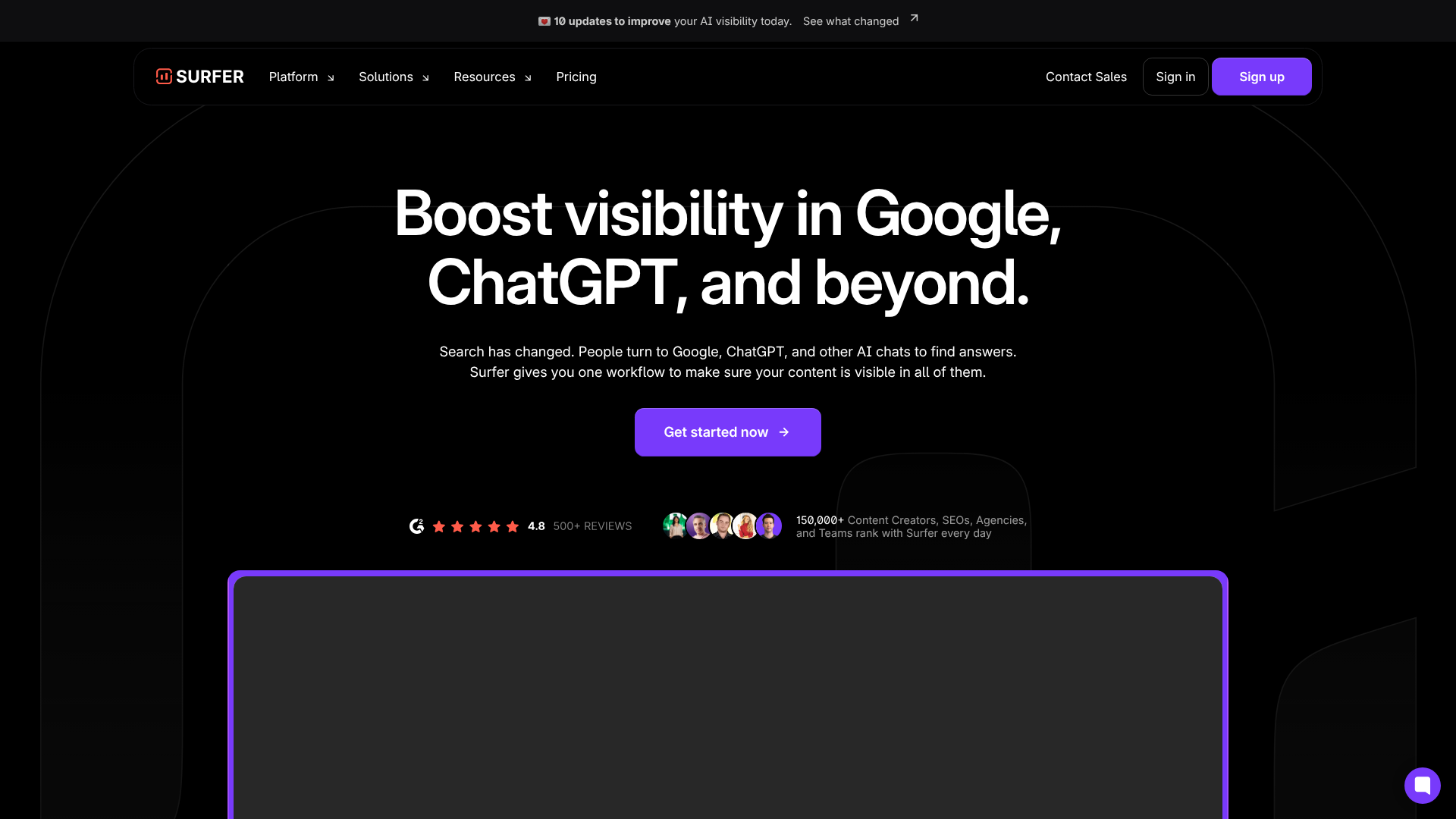
Surfer SEO is a content intelligence platform designed to help you write pages that rank highly in search engine results. It works by analysing the top-ranking pages for your target keyword and providing a data-backed blueprint for your own content. Its core features include the Content Editor, which gives you a real-time optimisation score, NLP term suggestions, and recommendations on structure, word count, and headings.
Despite its popularity, several factors lead users to explore surfer seo substitutes. The most common reason is cost. Surfer's pricing can be a significant investment, especially for freelancers, small businesses, or agencies managing a large volume of content. As your needs grow, the monthly subscription can become quite expensive.
Another reason is the specific feature set. While Surfer is excellent for on-page keyword optimisation, some teams require tools that focus more on building topical authority (like MarketMuse) or offer more robust AI writing and research features integrated into the workflow (like Frase). Your team's unique process for creating content briefs and writing articles might align better with a different platform's interface and capabilities.

Key Features to Look for in a Surfer SEO Alternative

When evaluating different platforms, it's crucial to understand the core features that make these tools powerful. Not every alternative will excel in all areas, so you need to identify which features are most important for your success.
SERP Analysis and Content Briefing
At its heart, any good alternative must be able to analyse the Search Engine Results Pages (SERPs). This involves identifying common themes, questions people ask, important topics covered by competitors, and recommended headings. The output of this analysis is often a content brief, which serves as a roadmap for the writer. Look for tools that create clear, actionable, and comprehensive briefs.
NLP Term Suggestions
Natural Language Processing (NLP) is the technology that allows these tools to understand context and semantics, not just keywords. A strong alternative will provide a list of relevant terms and phrases to include in your content. This helps Google's algorithms recognise your page as a thorough and authoritative resource on the topic, moving beyond simple keyword density.
Real-Time Content Scoring
Similar to Surfer's Content Editor, a real-time scoring system is a vital feature. As you write or edit your content within the tool's editor, it should provide instant feedback, usually in the form of a numerical score. This allows you to see how well your content aligns with the data-driven recommendations and make adjustments on the fly, ensuring you hit your optimisation targets before publishing.
AI Writing and Assistance
Many modern content optimisation tools now include AI writing capabilities. These can range from generating entire article drafts to rewriting sentences, creating outlines, or answering specific questions. If your team wants to accelerate content production, an alternative with a well-integrated and high-quality AI writer can be a significant advantage.
How to Choose the Right Option for Your Needs
Selecting the best tool from a list of best surfer seo options can feel overwhelming. To simplify the process, focus on your specific context and requirements. Here’s a straightforward framework to guide your decision.
1. Define Your Budget
First and foremost, determine what you can afford to spend. Prices for these tools vary widely, from budget-friendly options under £20 per month to enterprise solutions costing hundreds or thousands. Having a clear budget will immediately narrow down your choices and prevent you from spending time evaluating tools that are financially out of reach.
2. Assess Your Team's Workflow
How does your team currently produce content? Are you a solo writer, a small team using Google Docs, or a large agency with a complex project management system? Some tools, like Content Harmony, are built around creating detailed briefs for writers, while others, like Frase, are designed for the writer to do research and writing in one place. Choose a tool that complements and enhances your existing workflow, rather than forcing you to adopt a completely new one.
3. Prioritise Key Features
What is your biggest pain point in content creation? If it's writer's block and speed, an AI-powered tool like Frase or Scalenut is ideal. If it's ensuring comprehensive topic coverage and building authority, MarketMuse is the better choice. If you just need a simple, accurate content editor without extra frills, Clearscope might be perfect. Make a list of your must-have features and use it to filter your options.
Pro Tip: Don't pay for features you won't use. Many all-in-one SEO suites include a content writing assistant, but if you already have tools for keyword research and site audits, a dedicated content optimisation tool might be more cost-effective and powerful for that specific task.
The Top 9 Surfer SEO Alternatives (Tested & Reviewed)
Here is a detailed breakdown of the best Surfer SEO alternatives, each with its own unique strengths, ideal use cases, and pricing considerations.
1. Frase.io (Best for AI Writing & Briefs)
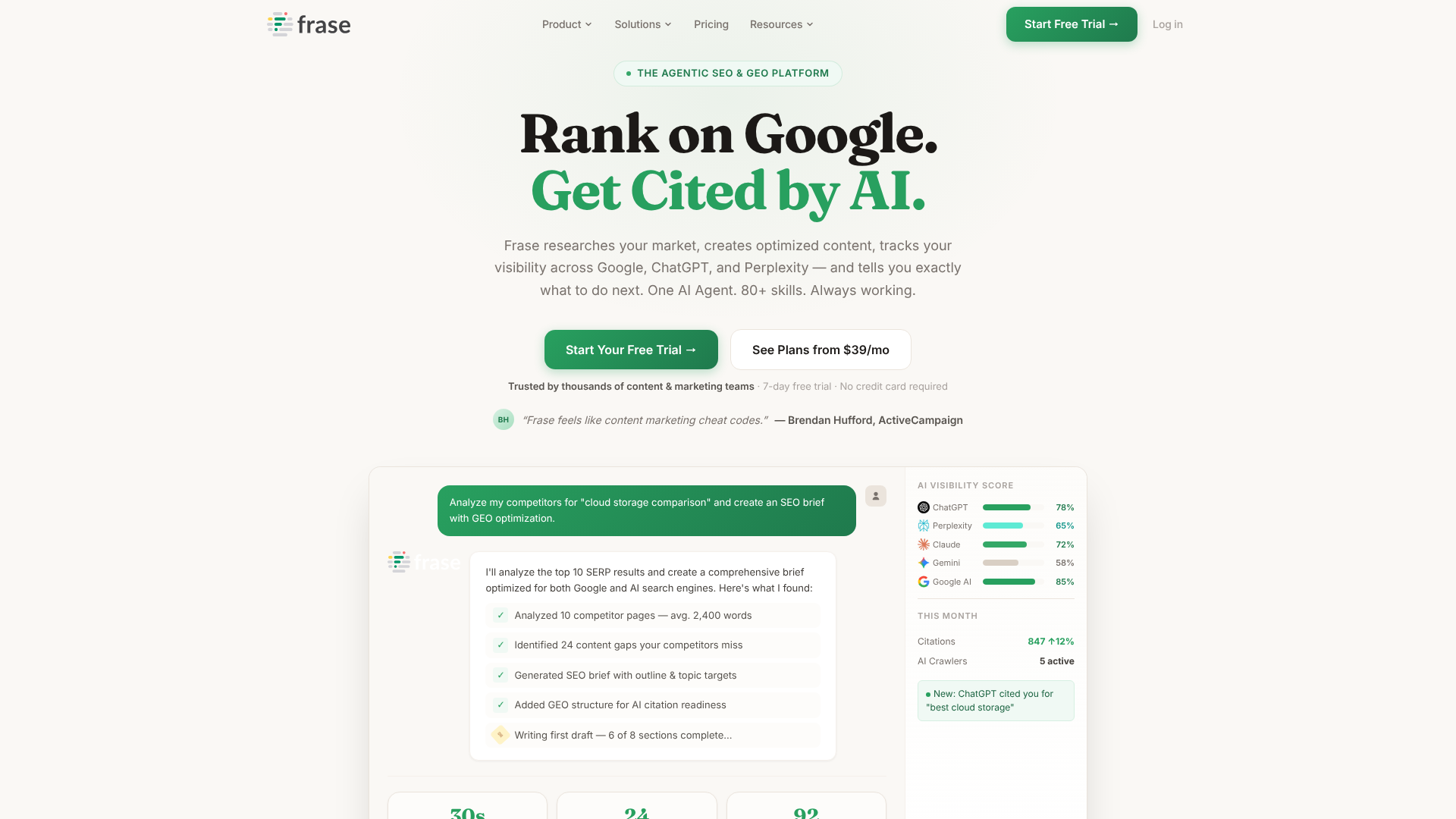
Frase is arguably one of the most direct and powerful competitors to Surfer. It excels at integrating research, outlining, writing, and optimising into a single, fluid workflow. Its standout feature is the way it combines SERP data analysis with a capable AI writer, allowing you to generate high-quality content briefs in minutes and then use AI to help draft the article.
The platform pulls in headings, questions from sources like Reddit and Quora, and relevant statistics, organising them into a research panel right next to the content editor. This makes it incredibly efficient for writers to access all the information they need without constantly switching tabs. Frase is an excellent choice for content teams and individuals who want to significantly speed up their entire content production process.
Pros
- Excellent integration of SERP research and AI writing.
- Automatically generates detailed content briefs very quickly.
- User-friendly interface that combines research and writing panels effectively.
Cons
- The AI writer is an add-on, which increases the overall cost.
- NLP term suggestions can sometimes be less nuanced than those in Clearscope or Surfer.
Pricing
Frase offers several plans, typically starting around $15/month for a single user. The AI writer is an additional monthly fee. Visit their website for the most current pricing details.
2. Content Harmony (Best for In-Depth Content Briefs)
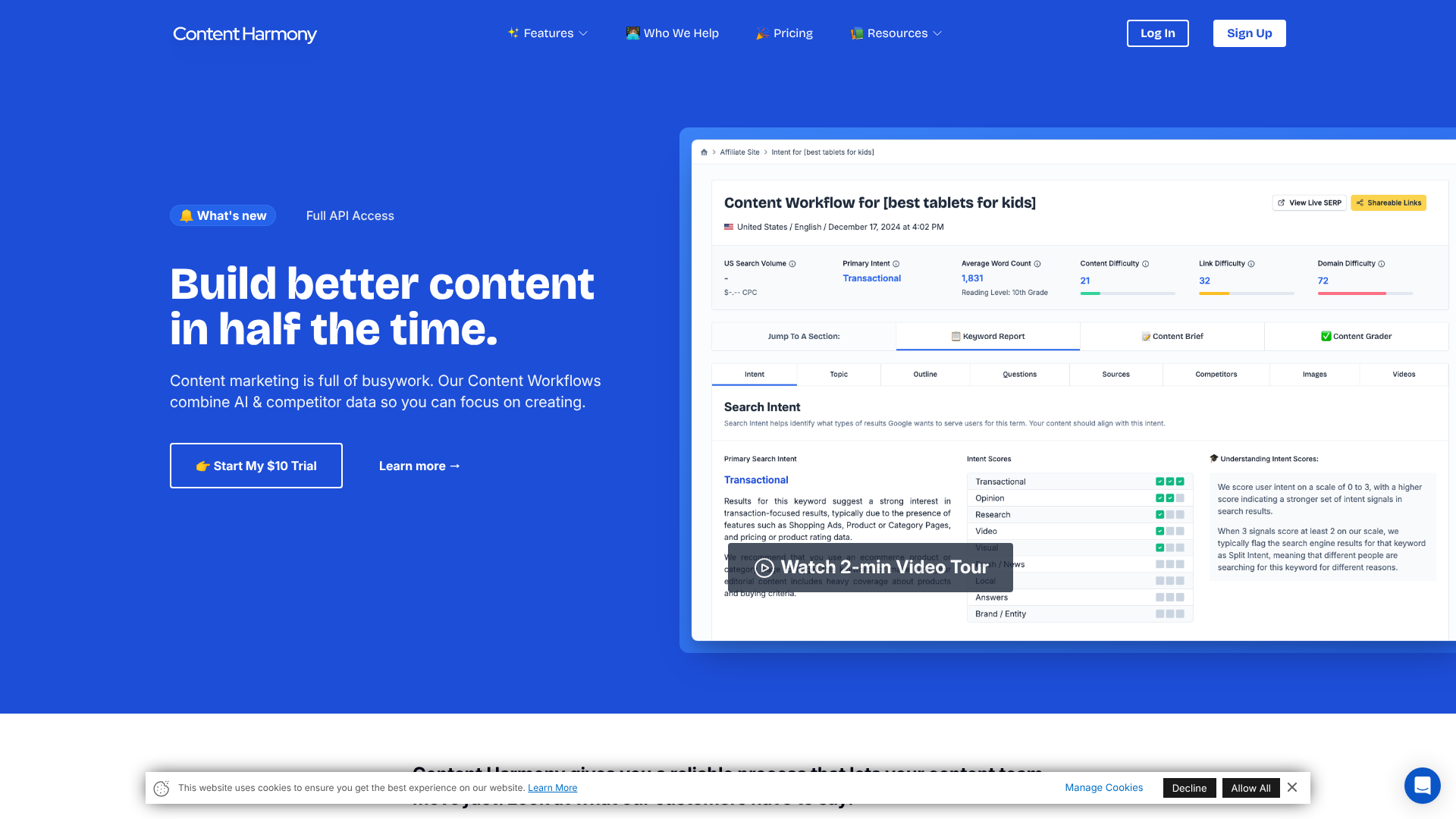
Content Harmony's philosophy is centred on creating the industry's best content briefs. While Surfer and Frase are often used directly by writers, Content Harmony is built for content managers and strategists who need to produce incredibly detailed, data-driven briefs to hand off to their writing team. It provides a comprehensive analysis of search intent, keyword difficulty, topic models, and visual content from top competitors.
Its workflow guides you through each stage of the brief-building process, from analysing SERP results to outlining the article structure. The platform excels at identifying the underlying intent behind a search query, which helps ensure the content you create actually solves the user's problem. If your primary bottleneck is creating high-quality briefs at scale, Content Harmony is an outstanding choice.
Pros
- Produces exceptionally detailed and well-structured content briefs.
- Strong focus on analysing search intent.
- Great workflow for content managers and SEO strategists.
Cons
- Does not have a built-in content editor for real-time scoring like Surfer.
- Can be more expensive than some other alternatives if you produce many briefs.
Pricing
Content Harmony's pricing is based on the number of content briefs you produce each month. Check their official site for the latest plans.
3. Clearscope (Best for Simplicity & Accuracy)
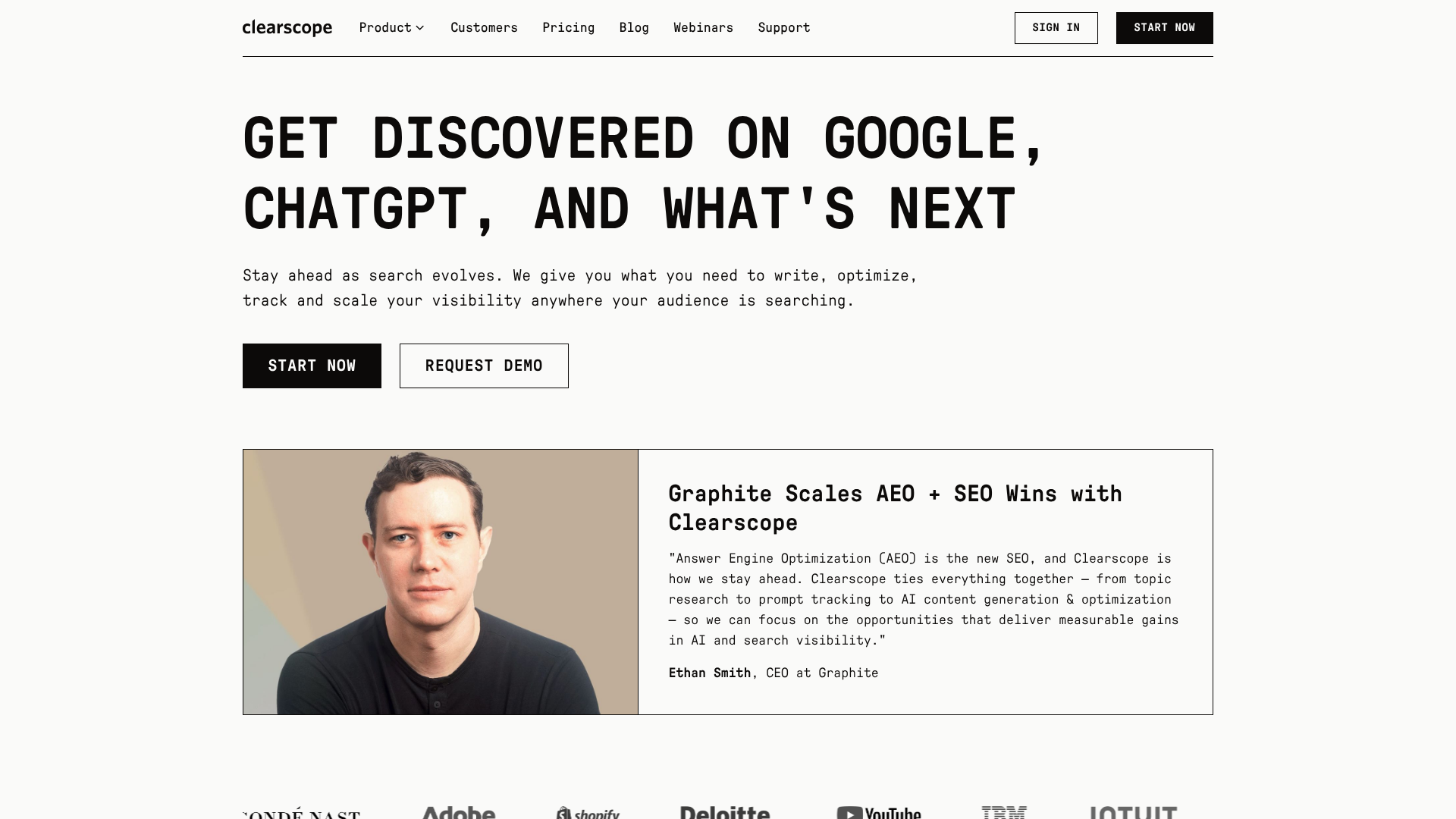
Clearscope is a premium tool known for its simplicity, accuracy, and high-quality term suggestions. It has a reputation for being one of the most effective tools on the market for optimising content, and it's trusted by major companies like HubSpot and Shopify. The interface is clean and straightforward: you run a report for your target keyword, and it gives you a list of relevant terms and a target content grade (e.g., A++).
Unlike some other tools, Clearscope focuses almost exclusively on the content optimisation part of the process and does it exceptionally well. Its term suggestions are often considered among the best in the industry. It's a fantastic choice for teams who have a solid content process in place and just need a reliable, no-fuss tool to ensure every article is optimised to the highest standard.
Pros
- Highly accurate and relevant NLP term suggestions.
- Simple, intuitive, and easy-to-use interface.
- Excellent integrations with Google Docs and WordPress.
Cons
- It is one of the more expensive options, with a high entry price point.
- Lacks the AI writing and extensive brief-building features of competitors.
Pricing
Clearscope's plans start at a premium price point. Visit their website for current pricing information.
4. MarketMuse (Best for Enterprise & Topic Authority)
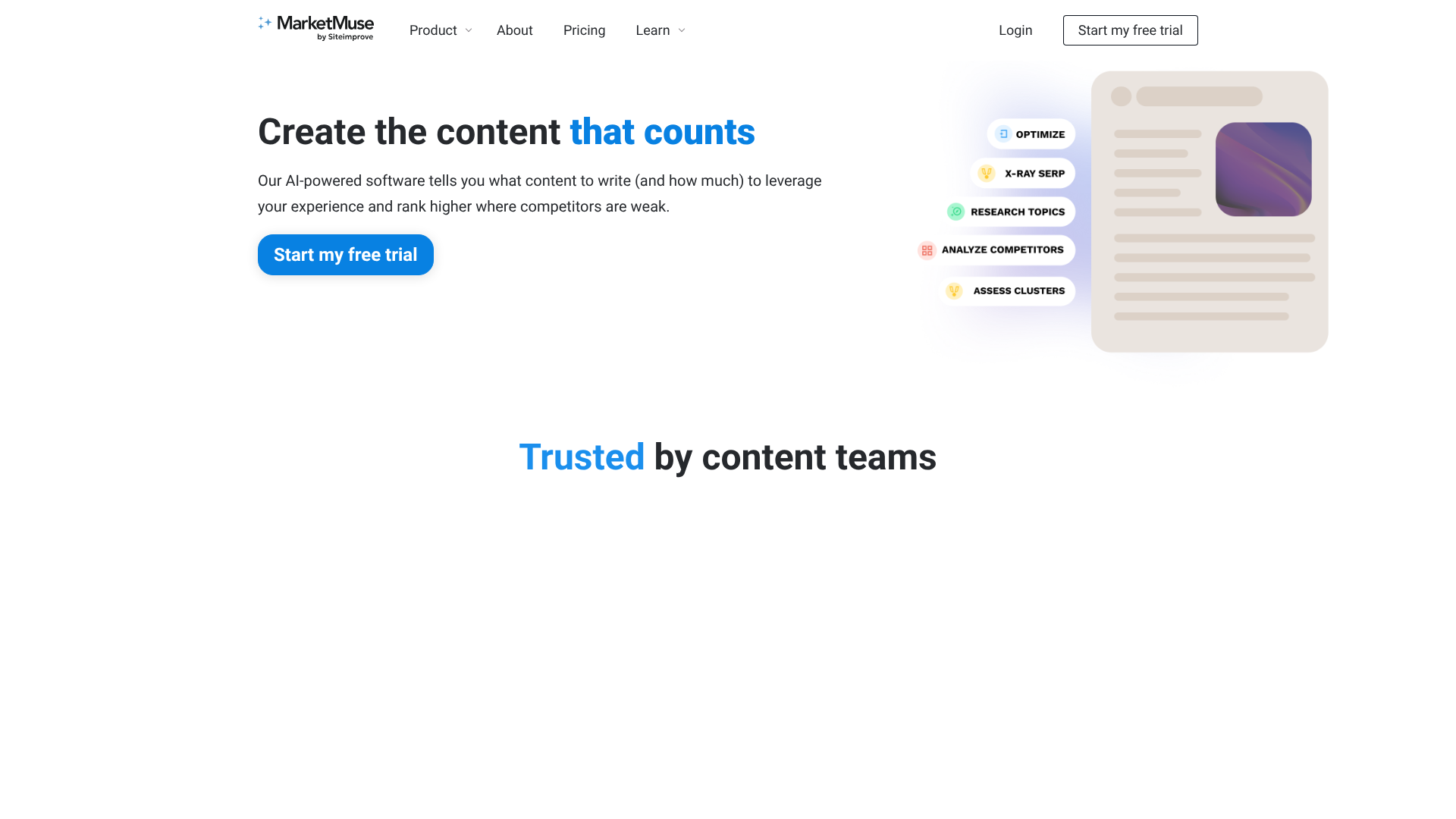
MarketMuse takes a different approach from most other tools on this list. Instead of focusing solely on optimising a single page for a single keyword, it's designed to help you build topical authority across your entire website. It uses advanced AI to analyse your existing content, identify gaps in your topic coverage, and suggest new articles to build out your content clusters.
It's an enterprise-level platform ideal for large content teams and SEOs who are thinking about content strategy from a holistic perspective. MarketMuse can tell you which topics you have the authority to rank for and which ones you need to build up first. If your goal is to become the definitive resource in your niche, MarketMuse provides the strategic roadmap to get there.
Pros
- Unmatched for building topical authority and planning content clusters.
- Provides strategic insights into your entire site's content.
- Powerful content brief generation and optimisation features.
Cons
- Very expensive, putting it out of reach for most small businesses.
- Can have a steep learning curve due to its complexity.
Pricing
MarketMuse offers custom enterprise pricing and has a limited free plan. Contact them directly for a quote.
5. NeuronWriter (Best Budget-Friendly Alternative)
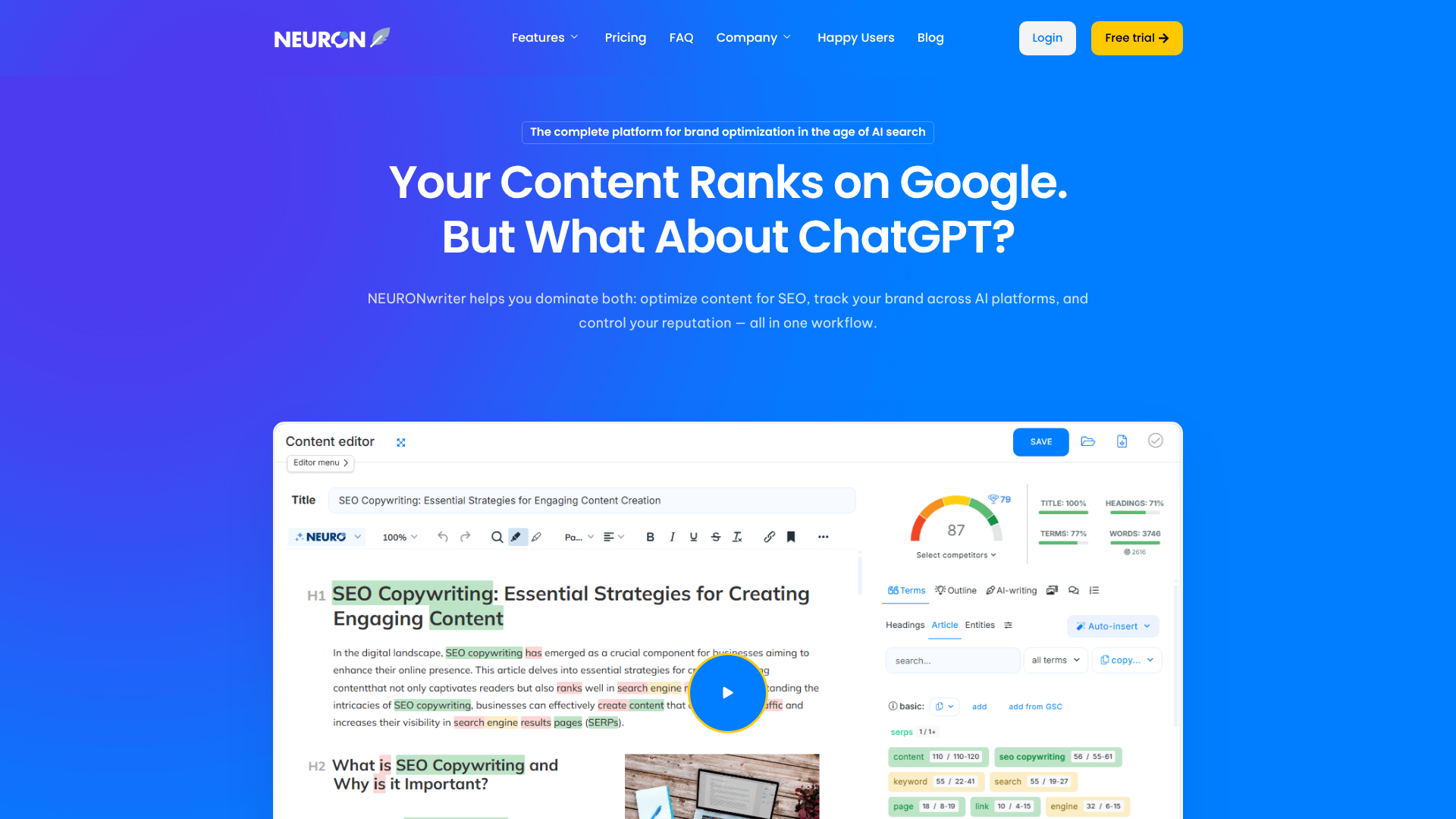
NeuronWriter has gained significant popularity as a cost-effective alternative to Surfer SEO. It offers a surprisingly similar feature set, including SERP analysis, NLP-driven content recommendations, a content editor with a real-time score, and even some AI writing capabilities. It helps you plan, write, and optimise content within a single dashboard.
For freelancers, bloggers, and small businesses on a tight budget, NeuronWriter delivers incredible value. While its NLP analysis might not be quite as sophisticated as premium tools like Clearscope, it is more than capable of helping you create well-optimised content that can compete in the SERPs. Many users find it to be the perfect balance of functionality and affordability.
Pros
- Very affordable, often available through lifetime deals.
- Comprehensive feature set that mirrors many of Surfer's capabilities.
- Includes built-in AI writing and content planning tools.
Cons
- The user interface can feel a bit less polished than premium competitors.
- NLP recommendations are good but may not be as precise as more expensive tools.
Pricing
NeuronWriter offers very competitive monthly plans and is frequently available on platforms like AppSumo for a lifetime deal. Check their website for current offers.
6. Semrush SEO Writing Assistant (Best All-in-One Suite Integration)
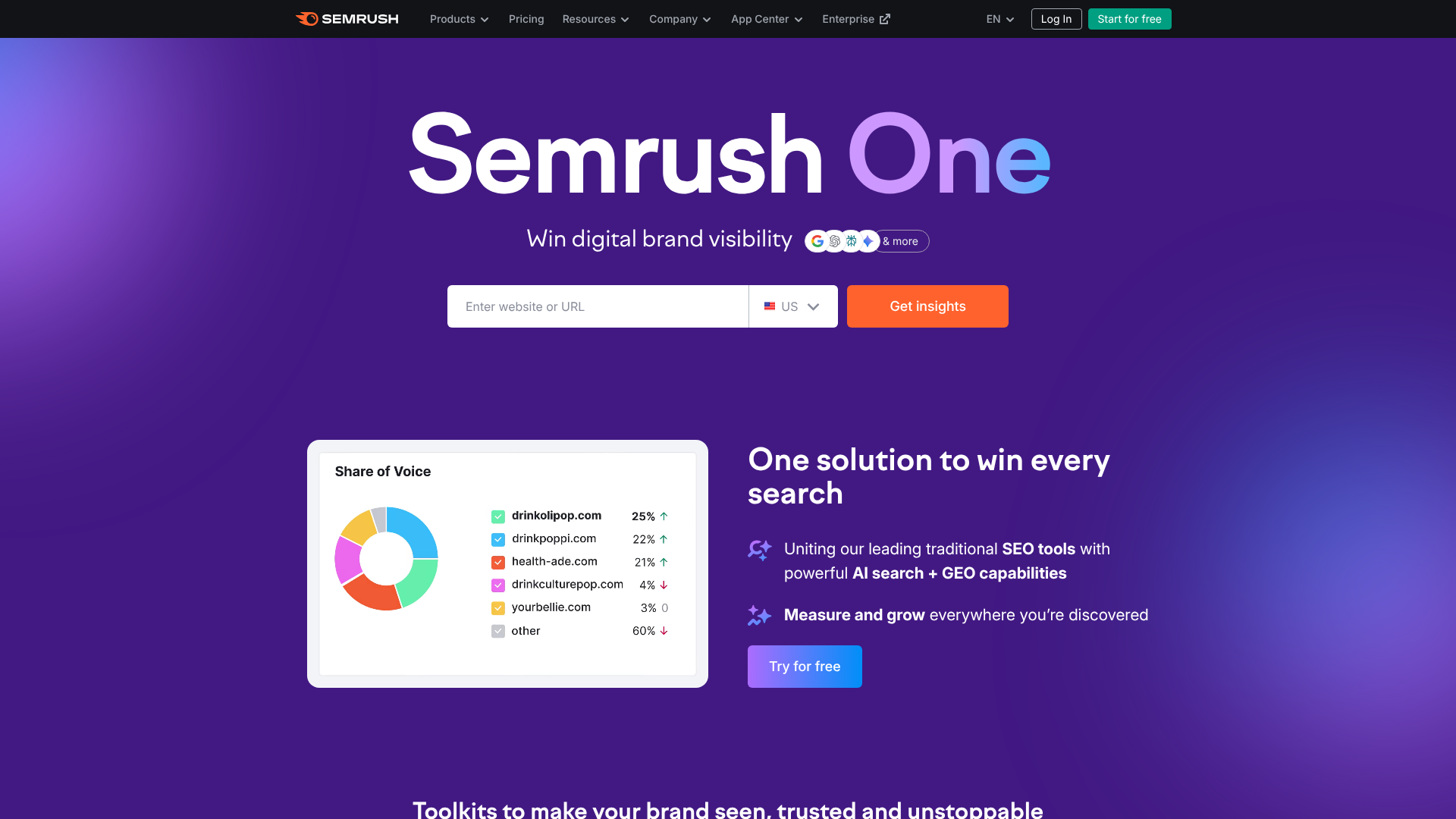
If you're already a Semrush subscriber, you have access to a powerful Surfer alternative: the SEO Writing Assistant. This tool can be used as a standalone editor or as an add-on for Google Docs and WordPress. It provides real-time feedback on your content based on your target keywords, covering readability, SEO, originality, and tone of voice.
The biggest advantage is its seamless integration with the rest of the Semrush ecosystem. You can easily pull keyword recommendations from your research in other Semrush tools and ensure your content aligns with your broader SEO strategy. While it may not be as feature-rich as dedicated tools like Frase or Surfer, it's an excellent and convenient option for existing Semrush users.
Pros
- Perfectly integrated with the comprehensive Semrush SEO toolkit.
- Provides feedback on more than just SEO, including readability and tone.
- Convenient for users who want to keep their tools in one ecosystem.
Cons
- Less detailed NLP analysis compared to specialised content optimisation tools.
- Requires a Semrush subscription, which can be expensive.
Pricing
The SEO Writing Assistant is included with Semrush Guru and Business plans. Check the Semrush website for plan details.
7. Scalenut (Strong AI-Powered Contender)

Scalenut is an AI-powered content marketing platform that combines keyword planning, content creation, and optimisation. Its 'Cruise Mode' can generate a near-complete blog post from a single keyword, creating a title, outline, writing points, and the full draft. It also features a content editor with NLP terms and a quality score, similar to Surfer.
It's a strong choice for those who want to leverage AI heavily in their content production. Scalenut aims to be an all-in-one solution, helping you manage the entire content lifecycle from planning to writing. Its topic cluster generator is also a useful feature for building topical authority.
Pros
- Powerful AI writing features for rapid content creation.
- Includes a topic cluster tool for content strategy.
- All-in-one platform covering research, writing, and optimisation.
Cons
- The quality of the AI-generated long-form content can be inconsistent.
- The interface can feel busy with so many features packed in.
Pricing
Scalenut offers tiered monthly plans based on content and feature limits. Visit their site for current pricing.
8. PageOptimizer Pro (POP) (Best for Technical On-Page SEO)
-13896ab6-a73a-4cdd-8569-e5780bf442c8-1771579163407-6rbfih.png "9 Best Surfer SEO Alternatives for Any Budget & Workflow 12")
Created by veteran SEO Kyle Roof, PageOptimizer Pro (POP) is a highly technical on-page optimisation tool. It takes a more scientific and granular approach than many alternatives, providing very specific recommendations on keyword placement, variations, and E-A-T signals. POP analyses the SERPs and uses its algorithm to tell you exactly what you need to do to compete.
POP is best for SEOs who are comfortable with technical details and want precise, data-driven instructions. It's less of a writing assistant and more of an optimisation tool. If you want to know the exact number of times to use a keyword in your H1, body, or title tag, POP provides that level of detail.
Pros
- Provides very specific and technical on-page recommendations.
- Strong focus on scientific SEO testing and data.
- Offers a Chrome extension for easy editing in any CMS.
Cons
- The user interface is less intuitive and more data-heavy than others.
- Can be overwhelming for beginners or content writers without a deep SEO background.
Pricing
POP offers plans for single users and agencies. Check their website for the latest pricing tiers.
9. Ahrefs (Great for Existing Users)
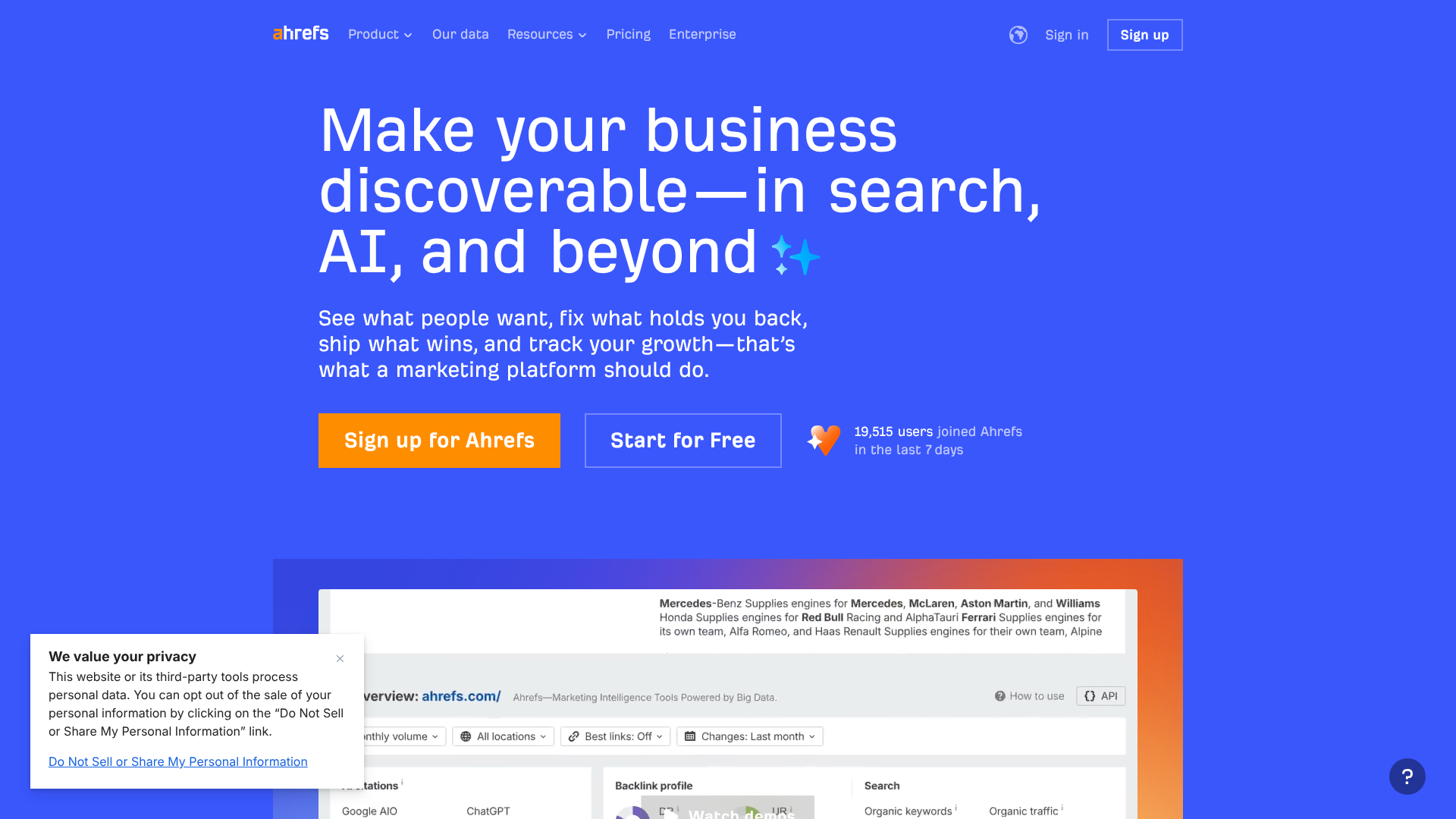
Similar to Semrush, Ahrefs is a complete SEO suite that includes features for content optimisation. While it doesn't have a dedicated 'Content Editor' in the same way Surfer does, you can use its tools to achieve a similar outcome. By using Keywords Explorer to analyse the SERPs and Content Gap to see what competitors are covering, you can build a very effective content brief.
This option is best for existing Ahrefs users who want to maximise the value of their subscription without paying for another tool. The workflow is more manual than with a dedicated content intelligence platform, but the data from Ahrefs is top-tier. It requires you to piece together the insights yourself, but for a savvy SEO, it's a powerful approach.
Pros
- Uses industry-leading data from the Ahrefs crawler.
- Cost-effective for those who already subscribe to Ahrefs.
- Excellent for competitor analysis and identifying content gaps.
Cons
- Lacks a real-time content editor and scoring system.
- The process is more manual and less streamlined than dedicated tools.
Pricing
Content optimisation features are part of the standard Ahrefs subscription plans. Visit their website for details.
Feature & Pricing Comparison of the Best Surfer SEO Options
To help you see how these tools stack up at a glance, here is a comparison table summarising the key details.
| Tool | Best For | Key Feature | Starting Price (Approx.) |
|---|---|---|---|
| Frase.io | AI Writing & Briefs | Integrated Research/AI Panel | ~$15/month + AI Add-on |
| Content Harmony | In-Depth Briefs | Search Intent Analysis | Varies by brief volume |
| Clearscope | Simplicity & Accuracy | High-Quality Term Suggestions | Premium (e.g., ~$170/month) |
| MarketMuse | Enterprise & Authority | Topical Authority Planning | Custom/Enterprise |
| NeuronWriter | Budget-Conscious Teams | All-in-one features at low cost | ~$19/month |
| Semrush Assistant | All-in-One Suite Users | Integration with Semrush | Included in Guru+ plans |
| Scalenut | AI-Powered Creation | 'Cruise Mode' AI Writer | ~$39/month |
| PageOptimizer Pro | Technical On-Page SEO | Granular SEO Recommendations | ~$22/month |
| Ahrefs | Existing Ahrefs Users | Competitor Content Gap Analysis | Included in Ahrefs plans |
Pricing is subject to change. Please visit the official websites for the most up-to-date information.
Surfer SEO Alternative: A Deep Dive into the Pros and Cons
Moving away from a familiar tool like Surfer SEO is a big decision. It's important to weigh the potential benefits against the possible drawbacks to ensure you're making the right choice for your business.
The Advantages of Choosing a Surfer Substitute
One of the biggest advantages is potential cost savings. Tools like NeuronWriter offer a similar core experience for a fraction of the price, freeing up your budget for other marketing activities. This is especially beneficial for freelancers and small businesses where every pound counts.
Another pro is finding a better fit for your specific workflow. If your team lives and breathes content briefs, a tool like Content Harmony is purpose-built for that process and will likely serve you better than Surfer. Similarly, if you want to lean heavily on AI to speed up drafting, Frase's integrated approach might be a more efficient solution.
Finally, some surfer seo substitutes offer a different strategic focus. MarketMuse, for example, encourages a broader, more strategic approach to content by focusing on topical authority. This can lead to more sustainable, long-term SEO success compared to optimising articles in isolation.
Potential Downsides to Consider
Of course, there are potential downsides. You might miss Surfer's polished user interface and its well-regarded integrations, such as the direct connection with Jasper. There's also a learning curve with any new software, which can temporarily slow down your content production as your team gets accustomed to a new tool.
Furthermore, while many cheaper alternatives are excellent, their NLP algorithms and SERP data analysis may not be as robust or refined as Surfer's, which has had years to develop its technology. You might find that the content scores or term suggestions are slightly less accurate, which could impact your results. It's a trade-off between cost, features, and the quality of the underlying data.
Frequently Asked Questions
Here are answers to some common questions people have when looking for an alternative to Surfer SEO.
What is the best alternative to Surfer?
The "best" alternative truly depends on your needs. For a similar all-in-one experience with a stronger AI writing focus, Frase.io is often the top recommendation. For those on a tight budget who still want powerful features, NeuronWriter provides the most value for money. For large teams focused on strategic content planning, MarketMuse is the superior choice.
Is Surfer SEO better than Clearscope?
Neither tool is definitively "better"; they just serve slightly different purposes. Surfer SEO is more of an all-in-one platform with features for auditing, keyword research, and content optimisation. Clearscope focuses almost exclusively on providing the highest-quality term suggestions and content grading within a simple, clean interface. Teams often choose Clearscope for its accuracy and ease of use, while teams who want more features within one tool might prefer Surfer.
Is Surfer SEO better than Page Optimizer Pro?
Again, this comes down to preference and technical expertise. Surfer SEO is generally more user-friendly and geared towards content writers and marketers, providing a guided experience in its Content Editor. PageOptimizer Pro (POP) is a more technical tool favoured by SEO professionals who want granular, scientific data on things like exact keyword counts and placements. If you prefer a straightforward writing assistant, Surfer is better. If you want precise, technical on-page instructions, POP is the superior tool.
What is the 80/20 rule in SEO?
The 80/20 rule, also known as the Pareto Principle, suggests that roughly 80% of your results come from 20% of your efforts. In SEO, this means identifying the few key activities that drive the most traffic and rankings. For content, this might mean that 20% of your articles generate 80% of your organic traffic. Using a tool like Surfer or its alternatives helps you apply this rule by ensuring that the effort you put into creating content (the 20%) is highly optimised and has the best possible chance of producing significant results (the 80%).
Final Thoughts: Choosing Your Surfer SEO Alternative
While Surfer SEO remains a powerful and effective tool for content optimisation, the market is filled with excellent alternatives that cater to different budgets, workflows, and strategic goals. You no longer have to feel locked into a single option. The key is to move beyond asking "what's the best tool?" and instead ask, "what's the best tool for me?"
If you're a solo creator or a small business looking for maximum value, NeuronWriter is an incredible starting point. If your goal is to produce content faster with AI assistance, Frase.io offers a seamless and powerful workflow. And if you're a content strategist at a larger company aiming to dominate a niche, MarketMuse provides the strategic oversight you need.
Take the time to assess your needs, review the options on this list, and take advantage of free trials where available. By matching a tool's strengths to your team's specific requirements, you can find the perfect platform to elevate your content and achieve your SEO goals in 2026 and beyond.